
Can You Jump a Car in the Rain?

Jump-starting a car in the rain is possible but comes with added risks. While modern vehicles and jumper cables are designed to handle moisture, water increases the chance of electrical shock or short circuits. With proper precautions—like wearing rubber gloves and avoiding puddles—you can safely revive a dead battery even in wet conditions.
Key Takeaways
- Yes, you can jump a car in the rain—but safety is critical. Water conducts electricity, so extra caution is needed to avoid shocks or damage.
- Modern jumper cables and car systems are somewhat water-resistant. However, standing water or soaked components increase risk.
- Always wear insulated gloves and avoid touching metal parts. Rubber-soled shoes and dry hands reduce shock risk.
- Keep the battery terminals and cable clamps dry. Wipe them with a clean cloth before connecting.
- Never jump-start a car if the battery is cracked or leaking. Wet conditions can worsen chemical leaks and cause fires.
- Use a portable jump starter for safer wet-weather jumps. These devices reduce reliance on another vehicle and minimize exposure.
- After jumping, let the engine run to recharge the battery. Drive for at least 20–30 minutes to ensure full recovery.
📑 Table of Contents
- Can You Jump a Car in the Rain?
- Understanding the Risks of Jump-Starting in Wet Conditions
- Essential Safety Precautions for Wet Weather Jump-Starts
- Step-by-Step Guide to Jump-Starting in the Rain
- Alternative Solutions: Portable Jump Starters
- Common Mistakes to Avoid
- When to Call a Professional
- Conclusion
Can You Jump a Car in the Rain?
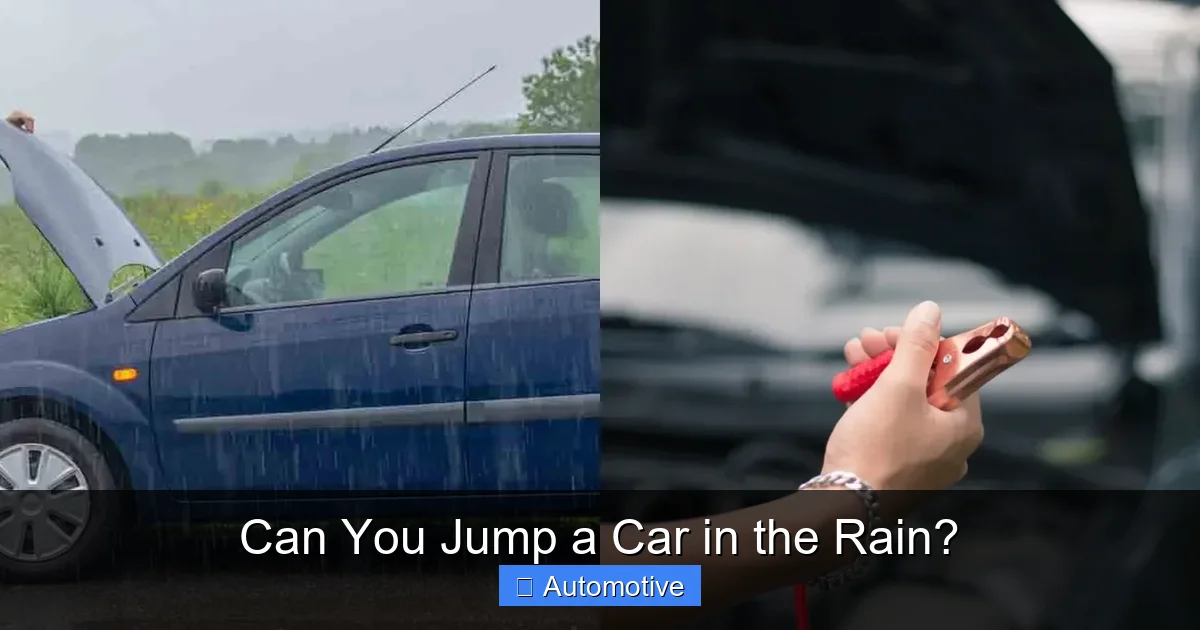
Picture this: It’s a rainy Tuesday morning. You’re running late for work, you turn the key, and… nothing. The engine doesn’t crank. Your car battery is dead. You pop the hood, grab your jumper cables, and look around—only to realize it’s pouring outside. Now you’re wondering: *Can you jump a car in the rain?*
The short answer? Yes, you can. But it’s not as simple as just connecting cables and hoping for the best. Rain introduces electrical risks that don’t exist on dry days. Water is a conductor of electricity, and when you’re dealing with 12-volt car batteries and live currents, even small mistakes can lead to shocks, sparks, or damage to your vehicle’s electrical system.
That said, millions of people safely jump-start their cars in wet weather every year. The key is understanding the risks and taking the right precautions. With the right tools, knowledge, and a calm approach, you can get your car running again—even in a downpour.
In this guide, we’ll walk you through everything you need to know about jump-starting a car in the rain. From the science behind why water matters to step-by-step safety tips, we’ll help you stay safe and get back on the road with confidence.
Understanding the Risks of Jump-Starting in Wet Conditions
Visual guide about Can You Jump a Car in the Rain?
Image source: docerp.s3.amazonaws.com
Before you even think about connecting those jumper cables, it’s important to understand why rain makes jump-starting more dangerous. At first glance, it might seem like water and electricity don’t mix—and you’d be right. But car batteries operate at relatively low voltages (12 volts), which are generally not lethal to humans. However, the real danger comes from short circuits, sparks, and the potential for electrical current to travel through unintended paths—especially when water is involved.
How Water Affects Electrical Systems
Water, especially when mixed with dirt or salt (common on roads in winter), becomes a much better conductor of electricity than pure water. This means that if your jumper cables come into contact with wet surfaces, or if water pools around the battery terminals, electricity can arc or jump across gaps it normally wouldn’t. This can cause sparks, which are dangerous near a car battery because batteries emit hydrogen gas—a highly flammable substance.
Even if you don’t see visible sparks, moisture can create unintended electrical pathways. For example, if your hands are wet and you touch both the positive and negative clamps at the same time, you could complete a circuit through your body. While 12 volts is unlikely to cause serious injury, it can still deliver a painful shock—especially if your skin is wet or you’re standing in a puddle.
The Danger of Hydrogen Gas
Car batteries, especially older ones, can release small amounts of hydrogen gas during charging or discharging. This gas is invisible, odorless, and extremely flammable. Under normal conditions, it disperses quickly into the air. But in wet weather, especially if you’re working in a garage or under a carport, the gas can linger. A single spark from a loose connection or a short circuit can ignite it, leading to a small explosion or fire.
This is why it’s crucial to avoid creating sparks near the battery. That means no smoking, no using electronic devices near the battery, and being extra careful when connecting and disconnecting cables.
Modern Vehicles vs. Older Models
If your car was made in the last 15–20 years, it likely has better electrical insulation and sealed battery compartments than older models. Many newer cars also have smart charging systems that reduce the risk of overcharging or gas buildup. However, this doesn’t mean you can ignore safety protocols. Even modern vehicles can be damaged by improper jump-starting, especially in wet conditions.
Older cars, particularly those with exposed terminals or corroded connections, are more vulnerable to moisture-related issues. If your battery terminals are rusty or corroded, water can seep into the connections and increase resistance, leading to overheating or failure during a jump.
Essential Safety Precautions for Wet Weather Jump-Starts
Visual guide about Can You Jump a Car in the Rain?
Image source: static.pakwheels.com
Now that you know the risks, let’s talk about how to stay safe. Jump-starting in the rain isn’t something to take lightly, but with the right precautions, it’s entirely doable. Here are the most important safety steps to follow.
Wear Protective Gear
Start by dressing appropriately. Wear rubber-soled shoes—these provide insulation from the ground and reduce the risk of electric shock. If possible, wear insulated gloves, especially if you’re handling the cables or battery terminals. Even if your hands are dry, gloves add an extra layer of protection.
Avoid working in bare feet or wet socks. Standing in a puddle while handling live cables is a recipe for trouble. If you’re in a parking lot or on a wet driveway, try to position yourself on a dry surface, like a piece of cardboard or a rubber mat.
Keep the Battery and Cables Dry
Before you begin, inspect the battery and the area around it. If the battery terminals are wet, gently wipe them dry with a clean, lint-free cloth. Avoid using paper towels, as they can leave behind fibers that conduct electricity.
Check the jumper cables too. Make sure the clamps are clean and free of rust or moisture. If the cables are wet, dry them off before use. Never handle wet cables with wet hands.
If it’s actively raining, try to position yourself and the vehicles under cover—like a carport, garage, or even under a large umbrella. This won’t stop all moisture, but it can significantly reduce exposure.
Inspect the Battery for Damage
Never attempt to jump-start a car if the battery is cracked, leaking, or swollen. A damaged battery can release acid or gases, and in wet conditions, this becomes even more dangerous. Water can react with battery acid, creating harmful fumes or increasing the risk of electrical shorts.
If you see any signs of damage—like cracks, bulges, or a strong sulfur smell (like rotten eggs)—do not proceed. Call a professional for assistance. It’s better to wait for help than risk injury or further damage.
Use the Right Equipment
Not all jumper cables are created equal. For wet weather, invest in high-quality cables with thick insulation and strong clamps. Look for cables rated for at least 400 amps—this ensures they can handle the current without overheating.
Even better? Consider using a portable jump starter. These battery-powered devices don’t require another vehicle and are designed to be safer in adverse conditions. Many models are waterproof or water-resistant, making them ideal for rainy days. They’re also compact and easy to store in your trunk.
Step-by-Step Guide to Jump-Starting in the Rain
Visual guide about Can You Jump a Car in the Rain?
Image source: cdn.mos.cms.futurecdn.net
Ready to get started? Follow these steps carefully to jump-start your car safely in wet weather.
Step 1: Park Safely and Turn Off Engines
Position the working vehicle (the one with the good battery) so that the two cars are close enough for the jumper cables to reach—but not touching. Turn off both engines and remove the keys. Apply the parking brake on both vehicles to prevent rolling.
If you’re on a busy road, turn on your hazard lights to alert other drivers. Safety first!
Step 2: Locate the Batteries
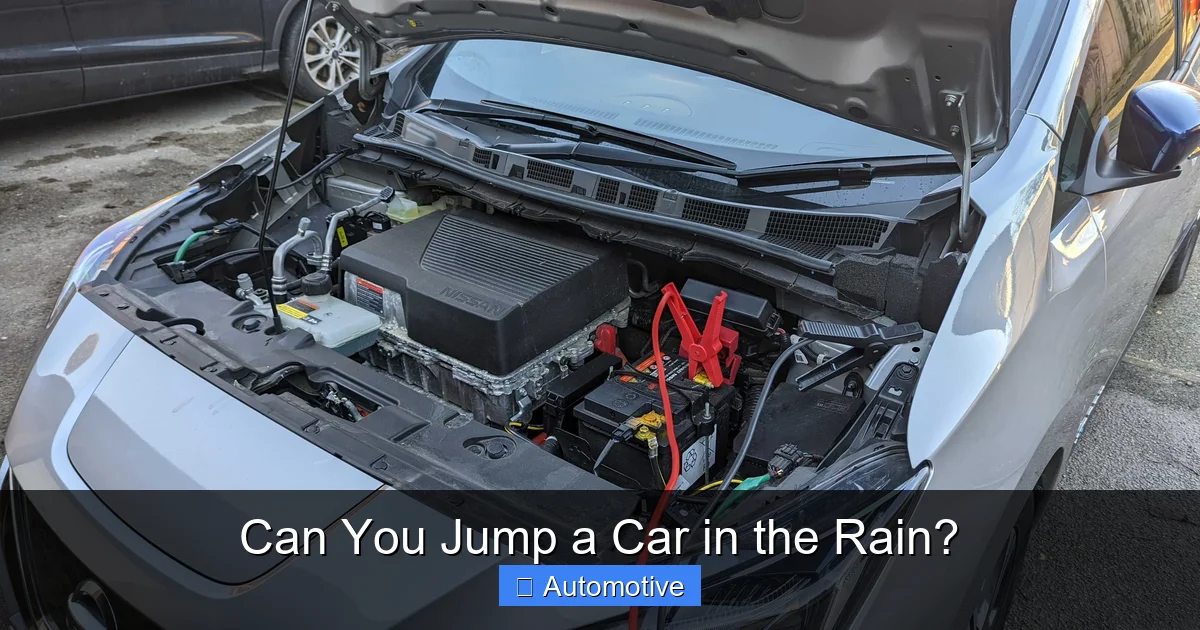
Open the hoods of both vehicles and locate the batteries. In most cars, the battery is under the hood, but in some models (like certain hybrids or EVs), it may be in the trunk or under a seat. Check your owner’s manual if you’re unsure.
Identify the positive (+) and negative (-) terminals. The positive terminal is usually red and marked with a “+” sign. The negative is black and marked with a “-” sign.
Step 3: Connect the Jumper Cables
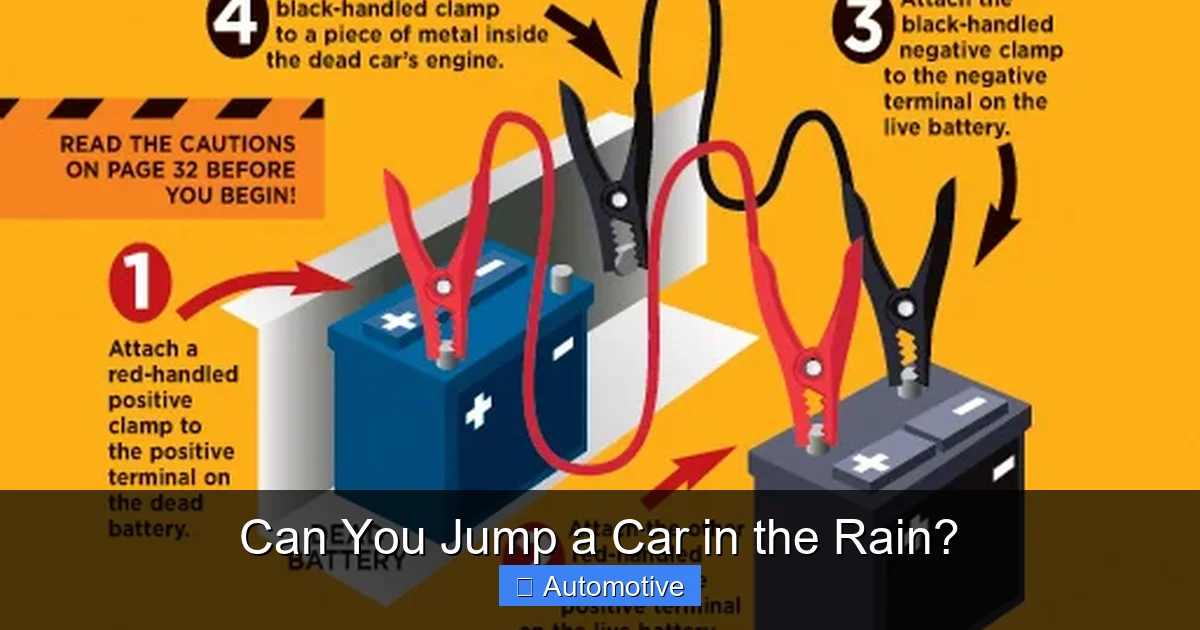
Follow this order exactly:
1. Connect the red (positive) clamp to the positive terminal of the dead battery.
2. Connect the other red clamp to the positive terminal of the good battery.
3. Connect the black (negative) clamp to the negative terminal of the good battery.
4. Connect the final black clamp to an unpainted metal surface on the dead car—like a bolt or bracket on the engine block. This is called grounding, and it reduces the risk of sparks near the battery.
Never connect the negative clamp directly to the negative terminal of the dead battery. This can cause a spark near the battery, which is dangerous in wet conditions.
Step 4: Start the Working Vehicle
Start the engine of the vehicle with the good battery and let it run for 2–3 minutes. This allows the alternator to begin charging the dead battery.
Step 5: Attempt to Start the Dead Car
Try starting the dead car. If it doesn’t start right away, wait another minute or two and try again. Don’t crank the engine for more than 10 seconds at a time. If it still doesn’t start after 3–4 attempts, there may be a deeper issue—like a faulty alternator or a completely dead battery.
Step 6: Disconnect the Cables
Once the dead car is running, disconnect the cables in reverse order:
1. Remove the black clamp from the grounded metal on the previously dead car.
2. Remove the black clamp from the good battery.
3. Remove the red clamp from the good battery.
4. Remove the red clamp from the previously dead battery.
Be careful not to let the clamps touch each other or any metal surfaces while disconnecting.
Step 7: Let the Engine Run
Keep the jumped car running for at least 20–30 minutes to allow the alternator to recharge the battery. If possible, drive the car during this time. Short trips may not provide enough charge, especially if the battery was deeply discharged.
Alternative Solutions: Portable Jump Starters
If you’re worried about the risks of traditional jump-starting in the rain, a portable jump starter is a smart alternative. These devices are essentially large power banks designed specifically for cars. They’re compact, easy to use, and eliminate the need for another vehicle.
How Portable Jump Starters Work
A portable jump starter stores electrical energy in an internal battery. When your car battery dies, you connect the jump starter’s clamps to your battery terminals (following the same positive/negative rules), and it delivers a burst of power to start the engine.
Most models come with built-in safety features like reverse polarity protection, short-circuit protection, and overload protection. Many are also waterproof or water-resistant, making them ideal for rainy conditions.
Benefits of Using a Jump Starter in the Rain
– **No need for another vehicle**: You don’t have to flag down a stranger or wait for roadside assistance.
– **Safer in wet conditions**: No risk of sparks between two cars or exposure to live cables in puddles.
– **Portable and convenient**: Store it in your glove box or trunk and use it anytime, anywhere.
– **Multi-functional**: Many models include USB ports for charging phones, LED flashlights, and even air compressors.
Choosing the Right Jump Starter
When shopping for a portable jump starter, look for:
– **Peak amperage**: At least 1000 amps for most cars; higher for trucks or SUVs.
– **Battery capacity**: Measured in mAh (milliamp hours). 10,000–20,000 mAh is typical.
– **Safety features**: Reverse polarity alarm, spark-proof clamps, and overload protection.
– **Water resistance**: Look for an IP rating (like IP65) that indicates resistance to water and dust.
Popular brands include NOCO, Jump-N-Carry, and Tacklife. Prices range from $50 to $200, depending on features and power.
Common Mistakes to Avoid
Even experienced drivers make mistakes when jump-starting in the rain. Here are some common pitfalls to watch out for.
Connecting Cables in the Wrong Order
Always connect positive to positive, then negative to negative—and ground the final clamp. Reversing the order can cause sparks, damage electronics, or even blow a fuse.
Touching the Clamps Together
Never let the red and black clamps touch while they’re connected to a battery. This creates a short circuit and can cause sparks, overheating, or damage to the cables.
Ignoring Battery Damage
A cracked or leaking battery is dangerous, especially in wet conditions. Water can react with battery acid, creating toxic fumes or increasing the risk of fire.
Standing in Water
Avoid standing in puddles or wet grass while handling cables. Water on the ground can conduct electricity and increase your risk of shock.
Forgetting to Recharge the Battery
After a jump, the battery may still be weak. Drive the car for at least 20–30 minutes to allow the alternator to recharge it. If the battery dies again soon after, it may need to be replaced.
When to Call a Professional
Sometimes, jump-starting isn’t enough. If your car won’t start after multiple attempts, or if the battery keeps dying, there may be a deeper issue. Here are signs it’s time to call a mechanic:
– The battery is more than 3–5 years old.
– The alternator isn’t charging the battery properly.
– There’s corrosion or damage to the battery terminals.
– The car stalls or loses power while driving.
– You smell burning or see smoke.
In these cases, a professional can diagnose the problem and recommend repairs or replacements. Don’t risk damaging your vehicle’s electrical system by repeatedly jump-starting a failing battery.
Conclusion
So, can you jump a car in the rain? Absolutely—but it requires caution, preparation, and the right tools. While water increases the risk of electrical shock, sparks, and short circuits, these dangers can be minimized with proper safety measures.
Start by wearing protective gear, keeping the battery and cables dry, and inspecting for damage. Follow the correct connection order, avoid standing in water, and consider using a portable jump starter for added safety. And remember: if the battery is damaged or the car won’t stay running, it’s time to call a professional.
With these tips, you’ll be ready to handle a dead battery—rain or shine. Stay safe, stay dry, and keep those jumper cables (or jump starter) in your trunk. You never know when you’ll need them.
Frequently Asked Questions
Is it safe to jump-start a car in the rain?
Yes, it can be safe if you take proper precautions. Avoid standing in water, keep the battery and cables dry, and wear insulated gloves. Modern vehicles and quality jumper cables are designed to handle some moisture, but extra care is essential.
Can water cause a short circuit when jump-starting?
Yes, water—especially when mixed with dirt or salt—can conduct electricity and create unintended pathways. This increases the risk of sparks or short circuits, particularly near the battery terminals.
Should I use a portable jump starter in the rain?
Yes, portable jump starters are often a safer option in wet weather. Many are water-resistant and eliminate the need for another vehicle, reducing exposure to live cables and puddles.
What should I do if my battery is cracked or leaking?
Do not attempt to jump-start the car. A damaged battery can leak acid or release flammable gases, which are especially dangerous in wet conditions. Call a professional for assistance.
How long should I drive after jump-starting?
Drive for at least 20–30 minutes to allow the alternator to recharge the battery. Short trips may not provide enough charge, especially if the battery was deeply discharged.
Can I jump-start a hybrid or electric car in the rain?
Yes, but check your owner’s manual first. Some hybrids and EVs have specific procedures or high-voltage systems that require special care. When in doubt, consult a professional.