
Can You Drive a Car with a Salvage Title?

You can legally drive a car with a salvage title in most U.S. states, but only after it passes a rigorous inspection and is re-registered as “rebuilt.” While these vehicles are often more affordable, they come with higher insurance costs, limited coverage options, and potential safety concerns. Always verify the car’s history and ensure it meets state safety standards before driving.
Key Takeaways
- Salvage titles don’t mean the car is illegal to drive: Once repaired and inspected, many states allow salvage-title vehicles to be driven on public roads.
- Rebuilt title status is required for road use: A salvage title must be converted to a “rebuilt” or “reconstructed” title after passing a state-mandated inspection.
- Insurance is harder to get and more expensive: Most insurers offer only liability coverage for salvage vehicles, and premiums are typically higher.
- Resale value is significantly lower: Even after repairs, salvage-title cars lose 20–40% of their market value compared to clean-title equivalents.
- Not all repairs are equal: Poorly repaired salvage cars may have hidden structural or mechanical issues that compromise safety.
- State laws vary widely: Requirements for inspections, documentation, and registration differ by state—always check local DMV rules.
- Buyer beware: Always get a pre-purchase inspection from a trusted mechanic before buying a salvage-title vehicle.
📑 Table of Contents
- Can You Drive a Car with a Salvage Title? The Short Answer
- What Is a Salvage Title, and Why Does It Matter?
- The Road to Rebuilt: Converting a Salvage Title to Street-Legal Status
- Insurance and Registration Challenges for Salvage-Title Cars
- Pros and Cons of Owning a Salvage-Title Vehicle
- Tips for Buying and Driving a Salvage-Title Car
- Conclusion: Is Driving a Salvage-Title Car Right for You?
Can You Drive a Car with a Salvage Title? The Short Answer
So, you’ve found a used car at a surprisingly low price—only to discover it has a salvage title. Your first thought might be: “Can I even drive this thing?” The good news? In most cases, yes—you can legally drive a car with a salvage title. But it’s not as simple as just hopping in and hitting the road.
A salvage title means the vehicle was declared a total loss by an insurance company, usually because repair costs exceeded a certain percentage of its value (often 70–80%). This could be due to severe accident damage, flood, fire, or theft recovery. However, that doesn’t automatically make the car unsafe or illegal. Many salvage-title vehicles are repaired, inspected, and returned to the road—often as reliable daily drivers.
The catch? You can’t drive it until it’s been properly repaired and re-registered. Most states require a salvage vehicle to pass a rigorous inspection and be issued a “rebuilt” or “reconstructed” title before it’s street-legal. This process ensures the car meets safety and emissions standards. So while the answer to “Can you drive a car with a salvage title?” is generally yes, there are important steps—and risks—you need to understand first.
What Is a Salvage Title, and Why Does It Matter?
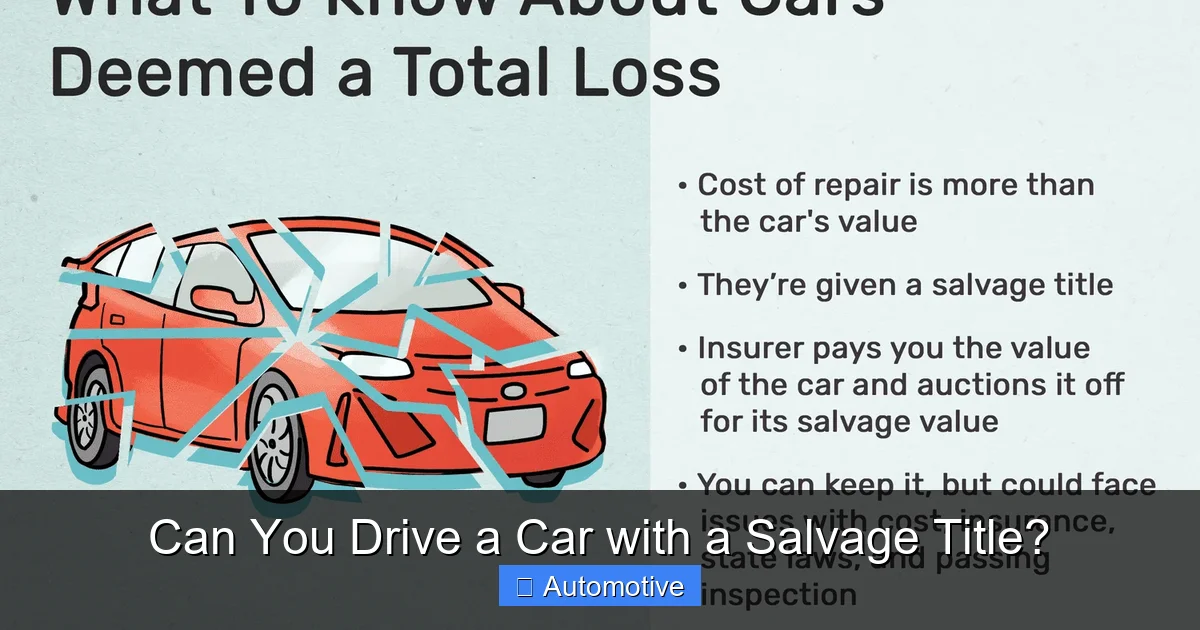
Visual guide about Can You Drive a Car with a Salvage Title?
Image source: thebalancemoney.com
Before diving into whether you can drive a salvage-title car, it’s important to understand what the title actually means—and why it matters.
A salvage title is a designation given by a state’s Department of Motor Vehicles (DMV) when an insurance company declares a vehicle a total loss. This typically happens after a major accident, flood, fire, or other incident where the cost to repair the vehicle exceeds a certain threshold—usually between 70% and 90% of its actual cash value. Once declared a total loss, the insurer takes ownership (in most cases) and sells the vehicle to a salvage yard or auction.
The title status serves as a permanent record that the car has suffered significant damage. It’s a red flag for buyers, insurers, and resale markets. But it doesn’t mean the car is beyond repair. In fact, many salvage vehicles are rebuilt and returned to service. The key difference is transparency: a salvage title ensures future buyers know the car’s history.
Why does this matter? Because a salvage title affects nearly every aspect of car ownership—from insurance and registration to resale value and safety. It also signals that the vehicle may have hidden damage or substandard repairs. That’s why understanding the implications is crucial before you consider buying or driving one.
How Salvage Titles Are Assigned
Salvage titles are typically issued by insurance companies after a claim is processed. When a vehicle is damaged beyond a certain point, the insurer calculates the repair cost versus the car’s value. If repairs exceed the threshold (which varies by state and insurer), the car is declared a total loss.
At that point, the insurer takes possession of the vehicle and applies for a salvage title from the DMV. The car is then sold—often at auction—to rebuilders, junkyards, or private buyers. The new owner can then repair the vehicle and, in many cases, apply to have the title converted to “rebuilt” status.
It’s worth noting that not all damaged cars get salvage titles. Some states use different designations, like “flood,” “fire,” or “hail” damage titles, depending on the cause. These are all forms of salvage titles and carry similar restrictions.
Common Reasons for a Salvage Title
Salvage titles can result from a variety of incidents. The most common include:
- Severe collision damage: High-impact crashes that damage the frame, airbags, or major components often lead to a total loss declaration.
- Flood or water damage: Vehicles submerged in water—especially saltwater—can suffer electrical and mechanical failures that are costly to fix.
- Fire damage: Even small fires can ruin wiring, interiors, and engine components, making repairs uneconomical.
- Theft recovery: If a stolen car is recovered after being stripped or damaged, it may be declared a total loss.
- Hail or weather damage: In some cases, extensive hail damage can trigger a salvage title, especially on older vehicles.
Understanding the cause of the salvage title can help you assess the potential risks. For example, a flood-damaged car may have hidden electrical issues, while a collision-damaged vehicle might have frame misalignment.
The Road to Rebuilt: Converting a Salvage Title to Street-Legal Status

Visual guide about Can You Drive a Car with a Salvage Title?
Image source: tslins.com
So, you’ve found a salvage-title car you’re interested in. Can you drive it? Not yet. To legally operate the vehicle on public roads, it must first be repaired and re-registered with a “rebuilt” or “reconstructed” title. This process varies by state but generally follows a few key steps.
Step 1: Repair the Vehicle
The first step is to repair the damage that led to the salvage title. This can range from replacing body panels and airbags to rebuilding the engine or repairing flood-damaged electronics. The quality of repairs is critical—poor workmanship can lead to safety issues or inspection failure.
It’s highly recommended to have repairs done by a reputable body shop or mechanic with experience in salvage vehicles. Keep detailed records of all work, including invoices, parts receipts, and photos. These documents will be required during the inspection process.
Step 2: Gather Required Documentation
Before applying for a rebuilt title, you’ll need to gather several documents. These typically include:
- The original salvage title
- Proof of ownership (bill of sale or auction paperwork)
- Repair invoices and receipts
- Photos of the vehicle before and after repairs
- Odometer disclosure statement
- Application for rebuilt title (available from your state DMV)
Some states also require a notarized affidavit stating that the vehicle has been repaired to safe operating condition.
Step 3: Pass a State Inspection
Once repairs are complete, the vehicle must pass a state-mandated inspection. This is not a standard safety inspection—it’s a more thorough evaluation designed to verify that the car is safe to drive and that all repairs were done correctly.
Inspections vary by state but often include:
- Structural integrity check: Inspectors look for frame damage, welding, or improper repairs.
- Safety systems test: Airbags, seat belts, lights, brakes, and steering are checked.
- Emissions testing: Required in many states, especially for vehicles older than a certain age.
- VIN verification: Ensures the vehicle identification number matches the title and hasn’t been tampered with.
In some states, the inspection must be performed by a certified inspector or at a designated DMV facility. Failure to pass means you can’t get a rebuilt title—and can’t drive the car legally.
Step 4: Apply for a Rebuilt Title
After passing inspection, you can apply for a rebuilt title at your local DMV. You’ll need to submit all documentation, pay a fee (typically $10–$50), and possibly provide additional forms. Once approved, the salvage title is replaced with a rebuilt title, and the vehicle can be registered and insured.
It’s important to note that a rebuilt title is not the same as a clean title. It still indicates the car was once declared a total loss, which affects resale value and insurance options. But it does mean the car is legally roadworthy.
Insurance and Registration Challenges for Salvage-Title Cars
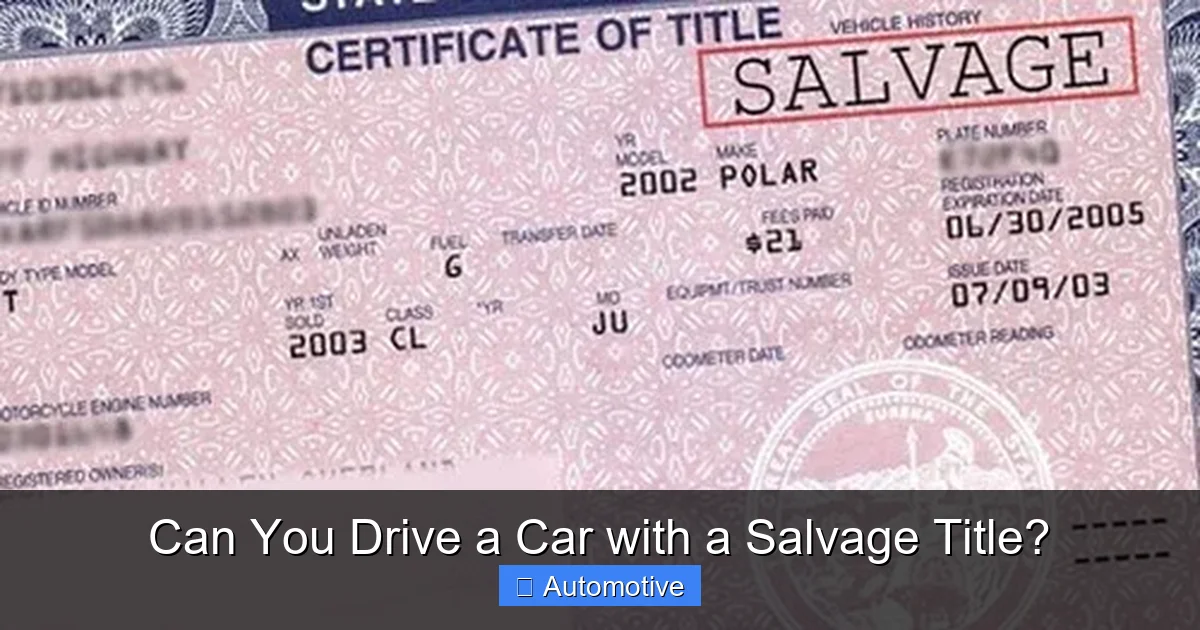
Visual guide about Can You Drive a Car with a Salvage Title?
Image source: images.squarespace-cdn.com
Even after getting a rebuilt title, driving a salvage car comes with unique challenges—especially when it comes to insurance and registration.
Insurance Limitations
One of the biggest hurdles for salvage-title owners is finding affordable insurance. Most major insurers are hesitant to provide full coverage (comprehensive and collision) for salvage vehicles. Why? Because the car’s history increases the risk of future claims, and the lower resale value makes it harder to justify high premiums.
As a result, many drivers of salvage-title cars can only get liability coverage—which covers damage you cause to others but not your own vehicle. This means if you get in an accident, you’ll have to pay out of pocket for repairs.
Some specialty insurers do offer full coverage for rebuilt salvage vehicles, but premiums are typically higher than for clean-title cars. You may also face higher deductibles or stricter terms.
Registration Hurdles
Registering a salvage-title car can also be more complicated. In addition to the rebuilt title process, some states require additional steps, such as:
- Proof of insurance before registration
- Emissions testing (even for older vehicles)
- Notarized repair affidavits
- Inspection by a state-certified mechanic
In rare cases, certain states may not allow rebuilt salvage vehicles to be registered at all—especially if the damage was severe or the repairs are questionable. Always check your state’s DMV website for specific requirements.
Tips for Navigating Insurance and Registration
To make the process smoother, consider these tips:
- Shop around for insurance: Contact multiple insurers, including specialty companies that handle salvage vehicles.
- Get a pre-purchase inspection: Even if you’re not buying, have a mechanic inspect the car before investing in repairs.
- Keep detailed records: Maintain all repair invoices, photos, and inspection reports.
- Check state laws: Visit your state DMV website or call them directly to confirm requirements.
- Consider the long-term costs: Factor in higher insurance, potential repair issues, and lower resale value before committing.
Pros and Cons of Owning a Salvage-Title Vehicle
Deciding whether to buy or drive a salvage-title car comes down to weighing the benefits against the risks. Here’s a balanced look at the pros and cons.
Pros of Salvage-Title Cars
- Lower purchase price: Salvage vehicles can cost 20–60% less than clean-title equivalents, making them attractive for budget buyers.
- Great for project cars: Enthusiasts often buy salvage cars to restore, customize, or use as parts donors.
- Potential for reliable transportation: If properly repaired, many salvage cars run just as well as clean-title vehicles.
- Eco-friendly option: Rebuilding and reusing damaged cars reduces waste and supports sustainability.
Cons of Salvage-Title Cars
- Lower resale value: Even after repairs, salvage cars lose significant value—often 20–40% less than clean-title models.
- Insurance challenges: Limited coverage options and higher premiums can increase long-term costs.
- Safety concerns: Poor repairs or hidden damage can compromise structural integrity and safety systems.
- Inspection and registration hurdles: The process to get a rebuilt title can be time-consuming and costly.
- Financing difficulties: Most banks and credit unions won’t finance salvage-title vehicles, so you’ll likely need to pay cash.
Who Should Consider a Salvage-Title Car?
Salvage-title vehicles aren’t for everyone. They’re best suited for:
- Budget-conscious buyers: Those who need reliable transportation but can’t afford a clean-title car.
- DIY mechanics: People with the skills to inspect, repair, or maintain the vehicle themselves.
- Project car enthusiasts: Hobbyists who enjoy restoring or customizing vehicles.
- Commercial users: Businesses that need work vehicles and don’t plan to resell.
If you’re looking for a long-term family car or plan to finance or resell the vehicle, a clean-title car is usually a safer bet.
Tips for Buying and Driving a Salvage-Title Car
If you’re seriously considering a salvage-title vehicle, these practical tips can help you make a smart decision.
1. Research the Vehicle’s History
Before buying, run a vehicle history report using services like Carfax or AutoCheck. Look for:
- The reason for the salvage title (accident, flood, etc.)
- Number of previous owners
- Odometer readings
- Any reported frame or structural damage
Avoid cars with flood or fire damage unless you’re experienced in diagnosing hidden issues.
2. Get a Pre-Purchase Inspection
Never buy a salvage car without a thorough inspection by a trusted mechanic. They can identify:
- Frame or structural damage
- Electrical problems (common in flood cars)
- Engine or transmission issues
- Signs of poor repairs or counterfeit parts
This inspection can save you thousands in future repairs.
3. Verify the Rebuilt Title Status
If the car already has a rebuilt title, confirm that it was properly inspected and registered. Ask for:
- Inspection certificate
- Repair receipts
- Photos of the repair process
Be wary of sellers who can’t provide documentation.
4. Budget for Higher Costs
While the purchase price is low, factor in:
- Repair costs (if not already done)
- Higher insurance premiums
- Potential maintenance issues
- Lower resale value
Make sure the total cost still makes financial sense.
5. Drive Defensively
Even if your salvage car is safe, it may not perform as well in a crash as a clean-title vehicle. Drive defensively, avoid high-speed situations, and consider upgrading safety features like tires or brakes.
Conclusion: Is Driving a Salvage-Title Car Right for You?
So, can you drive a car with a salvage title? The answer is yes—but with important caveats. Once repaired and re-registered with a rebuilt title, many salvage vehicles are safe, legal, and reliable. They offer an affordable entry point into car ownership, especially for budget buyers, DIYers, and project car enthusiasts.
However, the road to legal driving is not straightforward. You’ll need to navigate inspections, documentation, insurance hurdles, and potential safety concerns. And even after everything is in order, you’ll face lower resale value and limited coverage options.
The key is due diligence. Research the vehicle’s history, get a professional inspection, and understand your state’s requirements. If you’re prepared for the challenges, a salvage-title car can be a smart, cost-effective choice. But if you’re looking for peace of mind, long-term value, or full insurance coverage, a clean-title vehicle may be the better option.
Ultimately, driving a salvage-title car is possible—and for the right person, it can be a great decision. Just make sure you go in with your eyes open.
Frequently Asked Questions
Can you drive a car with a salvage title before it’s rebuilt?
No, you cannot legally drive a car with a salvage title on public roads until it has been repaired, inspected, and issued a rebuilt or reconstructed title. Driving it before this process is complete is illegal in most states and can result in fines or impoundment.
Is it safe to drive a rebuilt salvage car?
It can be safe—if the repairs were done properly and the vehicle passed a rigorous state inspection. However, poorly repaired salvage cars may have hidden structural or mechanical issues. Always get a pre-purchase inspection from a trusted mechanic.
Will insurance cover a salvage-title car?
Most insurers offer only liability coverage for salvage-title vehicles, and full coverage (comprehensive and collision) is often unavailable or expensive. Some specialty insurers do provide full coverage, but premiums are typically higher.
Can you finance a car with a salvage title?
Generally, no. Most banks and credit unions will not finance salvage-title vehicles due to their higher risk and lower resale value. Buyers usually need to pay in cash or secure private financing.
Do all states allow rebuilt salvage cars on the road?
Most states do, but requirements vary widely. Some states have strict inspection rules, while others may not allow certain types of salvage vehicles (like flood-damaged cars) to be re-registered. Always check your state DMV’s guidelines.
How much does it cost to rebuild a salvage-title car?
Costs vary widely depending on the extent of damage and quality of repairs. Minor repairs might cost a few thousand dollars, while major structural or mechanical work can exceed $10,000. Always get multiple repair estimates and factor in inspection and registration fees.