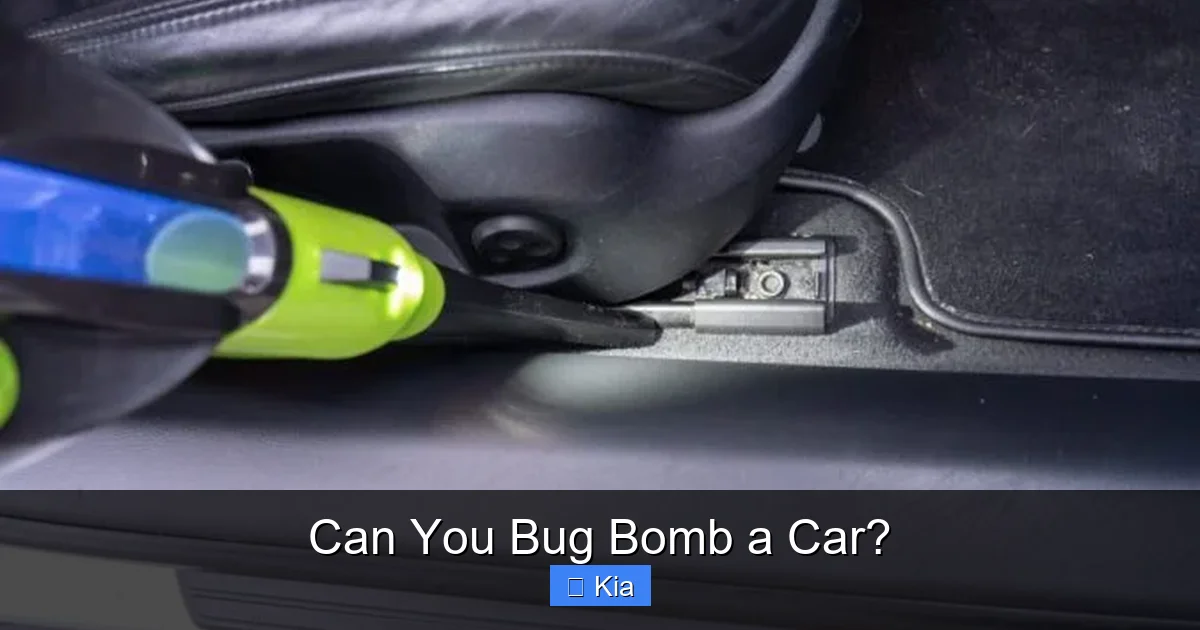
Can You Bug Bomb a Car?

Contents
- 1 Key Takeaways
- 2 📑 Table of Contents
- 3 Can You Bug Bomb a Car? The Truth About Fumigating Your Kia
- 4 What Is a Bug Bomb and How Does It Work?
- 5 Why People Consider Bug Bombing Their Cars
- 6 Risks and Dangers of Bug Bombing a Car
- 7 Step-by-Step Guide: How to Bug Bomb a Car Safely (If You Must)
- 8 Kia-Specific Considerations
- 9 Safer Alternatives to Bug Bombing
- 10 Conclusion
- 11 Frequently Asked Questions
Foam Cannon

Torque Wrench Set

Car Jump Starter

Car Bumper Protector
Bug bombing your car is possible but comes with serious risks if done incorrectly. While effective against pests like bed bugs or fleas, improper use can damage your Kia’s interior, electronics, and air quality. Always follow safety guidelines and consider professional alternatives.
Key Takeaways
- Bug bombs can be used in cars but require extreme caution: The confined space increases chemical concentration, raising health and fire risks.
- Not all bug bombs are safe for vehicles: Look for EPA-approved foggers labeled for indoor or enclosed space use, and avoid oil-based formulas.
- Kia interiors are sensitive to harsh chemicals: Upholstery, plastics, and electronics can degrade or discolor if exposed to strong insecticides.
- Ventilation is critical after fogging: You must air out the car thoroughly—ideally for 24–48 hours—before re-entering.
- Professional pest control is often safer and more effective: Experts use targeted treatments that minimize damage and ensure complete eradication.
- Prevention beats treatment: Regular cleaning, vacuuming, and sealing food help keep pests out of your Kia long-term.
- DIY bug bombing may void warranties: Using unapproved chemicals could affect your Kia’s warranty coverage on interior components.
📑 Table of Contents
- Can You Bug Bomb a Car? The Truth About Fumigating Your Kia
- What Is a Bug Bomb and How Does It Work?
- Why People Consider Bug Bombing Their Cars
- Risks and Dangers of Bug Bombing a Car
- Step-by-Step Guide: How to Bug Bomb a Car Safely (If You Must)
- Kia-Specific Considerations
- Safer Alternatives to Bug Bombing
- Conclusion
Can You Bug Bomb a Car? The Truth About Fumigating Your Kia
So, you’ve noticed tiny bugs crawling across your dashboard or heard suspicious scratching from under the seats. Maybe you brought home a secondhand blanket that had bed bugs, or your dog came back from the park covered in fleas. Whatever the case, your Kia—whether it’s a sleek Sportage, a roomy Sorento, or a compact Rio—has become an unintended host for unwanted guests.
You’ve probably heard about “bug bombs”—those aerosol foggers that fill a room with insecticide mist to kill pests on contact. They’re common in homes, but can you use them in your car? The short answer is yes, but with major caveats. Bug bombing a car isn’t as simple as spraying and walking away. It involves serious safety risks, potential damage to your vehicle, and health concerns if not done correctly.
In this guide, we’ll walk you through everything you need to know about bug bombing your Kia. From understanding how foggers work to weighing the pros and cons, and from step-by-step safety tips to Kia-specific considerations, we’ll help you make an informed decision. Whether you’re dealing with bed bugs, fleas, roaches, or mites, we’ve got you covered—safely and effectively.
What Is a Bug Bomb and How Does It Work?

Visual guide about Can You Bug Bomb a Car?
Image source: shunauto.com
A bug bomb, also known as a fogger, is a pressurized canister that releases a fine mist of insecticide into the air. The mist fills enclosed spaces, coating surfaces and lingering in the air to kill insects on contact or through residual exposure. Most bug bombs contain pyrethroids—synthetic chemicals similar to natural insecticides found in chrysanthemum flowers—which attack the nervous systems of pests.
When activated, the fogger disperses hundreds of tiny droplets that float through the room (or car), reaching cracks, crevices, and hidden areas where pests might hide. The idea is that the insecticide will settle on surfaces and continue killing bugs for hours or even days after application.
But here’s the catch: bug bombs are designed for rooms, not cars. A typical bedroom might be 12 x 12 feet with high ceilings, allowing the mist to disperse safely. Your Kia, on the other hand, is a tightly sealed, compact environment—often less than 100 cubic feet in total volume. That means the concentration of chemicals can become dangerously high in a short amount of time.
Moreover, cars contain materials that react poorly to strong chemicals: leather seats can crack, plastic dashboards can warp, and electronic components like sensors and infotainment systems can malfunction. Even the air conditioning system can circulate residual toxins long after the fogging is done.
So while bug bombs *can* kill pests in your car, they’re not always the best or safest solution—especially for modern vehicles like Kias, which are packed with sensitive electronics and premium interiors.
Why People Consider Bug Bombing Their Cars
Visual guide about Can You Bug Bomb a Car?
Image source: motorverso.com
Despite the risks, many car owners turn to bug bombs out of desperation. Pests like bed bugs are notoriously hard to eliminate. They’re tiny, fast-moving, and can hide in the tiniest of spaces—under seat cushions, inside door panels, even within the headliner. Fleas, too, can lay eggs in carpet fibers and upholstery, creating a cycle of reinfestation that’s tough to break.
Let’s say you picked up a used car seat from a garage sale and didn’t realize it was infested. Or maybe you stayed in a hotel room with bed bugs and unknowingly brought them home in your luggage. Once those pests get into your Kia, they can multiply quickly. A single female bed bug can lay up to 500 eggs in her lifetime, and they thrive in warm, dark environments—like the interior of a parked car on a sunny day.
Traditional cleaning methods—vacuuming, steam cleaning, or spraying surface insecticides—often miss hidden nests. That’s where bug bombs seem appealing. They promise to flood the entire space with insecticide, reaching areas you can’t see or access. For someone dealing with a severe infestation, the idea of a one-and-done solution is tempting.
But here’s the reality: bug bombs are not magic. They don’t penetrate deep into materials like foam or fabric where eggs and larvae may be hiding. And if the pests have already laid eggs, the fogger won’t kill them—only the adult insects. That means you could fog your car today, think the problem is solved, and then see new bugs emerge in a week.
Additionally, many people underestimate how hard it is to fully seal a car. Even with windows closed, air can escape through vents, door seals, and the trunk. This reduces the effectiveness of the fogger and increases the risk of chemical exposure to people and pets nearby.
Risks and Dangers of Bug Bombing a Car

Visual guide about Can You Bug Bomb a Car?
Image source: thesavvycampers.com
Before you grab a can of fogger and head to your driveway, it’s crucial to understand the real dangers involved. Bug bombing a car is not like fogging a closet. The confined space, flammable materials, and sensitive electronics make it a high-risk endeavor.
Health and Safety Hazards
The most immediate concern is human health. Bug bombs release airborne chemicals that can be toxic if inhaled. In a small, enclosed space like a car, the concentration of these chemicals can reach dangerous levels within minutes. Symptoms of exposure include headaches, dizziness, nausea, respiratory irritation, and in severe cases, chemical pneumonia or neurological effects.
Children, elderly individuals, and people with asthma or other respiratory conditions are especially vulnerable. Pets are at even greater risk—dogs and cats can suffer seizures or organ damage from inhaling insecticide fumes.
Even after the fogging is done, residual chemicals can linger on surfaces for days or weeks. Touching contaminated seats, steering wheels, or gear shifts can lead to skin absorption or accidental ingestion, especially if you eat or drink in the car afterward.
Fire and Explosion Risks
Bug bombs are aerosol cans under pressure. They contain flammable propellants like butane or propane. If you’re fogging your car on a hot day, or if there’s any source of ignition nearby—a lit cigarette, a spark from the car’s electrical system, or even static electricity—you risk causing a fire or explosion.
This risk is especially high in older Kias or vehicles with worn wiring. A single spark from a faulty switch or loose connection could ignite the fumes. And because cars are metal boxes with limited ventilation, the buildup of flammable gases can be deadly.
Damage to Your Kia’s Interior and Electronics
Modern Kias are built with advanced materials and technology. Leather seats, touchscreen displays, climate control systems, and even the upholstery are designed for comfort and longevity—but not for exposure to harsh chemicals.
Oil-based foggers, in particular, can leave greasy residues that stain fabrics and degrade plastics. Over time, this can cause discoloration, stickiness, or cracking. The mist can also seep into the HVAC system, coating air ducts and filters with insecticide. When you turn on the AC or heater later, you could be breathing in contaminated air for weeks.
Worse, the chemicals can corrode electrical contacts or damage sensors. If your Kia has lane departure warnings, blind-spot monitoring, or adaptive cruise control, these systems rely on delicate electronics that could be compromised by chemical exposure. Repairing or replacing these components can cost hundreds—or even thousands—of dollars.
Environmental and Legal Concerns
Improper use of bug bombs can also have environmental consequences. If you fog your car in a garage or enclosed space, the chemicals can linger in the air and settle on nearby surfaces, potentially contaminating soil or water if washed away by rain.
In some areas, misuse of pesticides—including foggers—is regulated by law. Using a fogger in a way not specified on the label (like in a vehicle) could violate EPA guidelines and result in fines or penalties.
Step-by-Step Guide: How to Bug Bomb a Car Safely (If You Must)
If you’ve weighed the risks and still decide to proceed, follow these steps carefully to minimize danger and maximize effectiveness. Remember: this is not a recommendation—it’s a cautionary guide for those who choose to go this route.
Step 1: Choose the Right Fogger
Not all bug bombs are created equal. Look for a water-based fogger labeled for indoor use and approved by the EPA. Avoid oil-based formulas, as they leave sticky residues and are more flammable. Check the label to ensure it’s effective against the pests you’re targeting—bed bugs, fleas, roaches, etc.
Some recommended brands include Raid Concentrated Deep Reach Fogger (water-based) or Hot Shot Bed Bug & Flea Fogger. Always read the instructions thoroughly before use.
Step 2: Prepare Your Kia
Start by removing all personal items from the car: bags, clothes, toys, food, and anything else that could absorb chemicals. Take out floor mats and seat covers if possible.
Open all doors and windows to air out the car for at least 30 minutes before fogging. This reduces the initial concentration of any lingering odors or residues.
Cover sensitive areas with plastic sheeting if you can—especially the dashboard, touchscreen, and air vents. Use painter’s tape to secure the plastic, but avoid taping directly onto screens or displays.
Step 3: Seal the Car
Close all windows and doors tightly. Make sure the trunk and glove compartment are shut. Turn off the engine and remove the keys. If your Kia has a sunroof, close it completely.
Do not fog the car while it’s running or plugged into a charger. Disable any automatic systems like remote start or climate control that could activate during the process.
Step 4: Activate the Fogger
Place the fogger in the center of the car, ideally on the floor between the front and back seats. Do not hold the can while activating it.
Follow the manufacturer’s instructions to trigger the fogger—usually by pressing a button or pulling a tab. Once activated, leave the car immediately and close the door behind you.
Do not re-enter the car for at least 2–4 hours, or as recommended on the label. The longer you wait, the more effective the treatment will be.
Step 5: Ventilate Thoroughly
After the waiting period, open all doors and windows and let the car air out for at least 24–48 hours. Use fans to speed up ventilation if possible.
Run the air conditioning on fresh air mode (not recirculate) to help flush out residual chemicals from the HVAC system.
Wipe down all surfaces with a damp cloth to remove chemical residues. Pay special attention to high-touch areas like the steering wheel, gear shift, and door handles.
Step 6: Clean and Inspect
Vacuum the entire interior, including under seats, in crevices, and inside door panels. Dispose of the vacuum bag or empty the canister immediately to prevent re-infestation.
Wash any removable fabrics—seat covers, floor mats, blankets—in hot water.
Inspect your Kia for signs of damage: sticky surfaces, discoloration, or unusual odors. If you notice anything unusual, consult a Kia service center.
Kia-Specific Considerations
Kia vehicles are known for their modern design, advanced technology, and high-quality interiors. But these features also make them more vulnerable to chemical damage.
Leather and Synthetic Upholstery
Many Kias come with leather or synthetic leather seats. These materials can be damaged by oil-based foggers, which leave greasy stains or cause cracking. Even water-based foggers can leave residues that dull the finish.
If your Kia has cloth seats, be extra cautious—fabric absorbs chemicals more readily, increasing the risk of lingering odors and skin irritation.
Infotainment and Electronics
Kia’s UVO infotainment system, touchscreens, and climate controls are sensitive to moisture and chemicals. Fogging can cause screens to malfunction or buttons to stick.
The car’s onboard computers and sensors—used for safety features like forward collision warning and lane keeping assist—are also at risk. Chemical exposure could lead to false alerts or system failures.
Warranty Implications
Using unapproved chemicals in your Kia could void parts of your warranty, especially if damage is traced back to pesticide use. Kia’s warranty typically covers manufacturing defects but not damage caused by external factors like improper cleaning or fumigation.
If you’re still under warranty, consider contacting a Kia service center before attempting any DIY pest treatment. They may offer professional cleaning or pest control services that are safer and warranty-friendly.
Safer Alternatives to Bug Bombing
Given the risks, it’s worth exploring safer, more effective alternatives to bug bombing your car.
Professional Pest Control
Hire a licensed exterminator who specializes in vehicle treatments. Professionals use targeted methods like heat treatment, steam cleaning, or localized insecticide application. These approaches are more precise, less damaging, and often more effective than fogging.
Heat treatment, for example, raises the car’s interior temperature to 120°F or higher—enough to kill bed bugs and eggs without chemicals. It’s safe for electronics and upholstery and leaves no residue.
Steam Cleaning
High-temperature steam can kill pests and their eggs on contact. Use a handheld steamer to treat seats, carpets, and crevices. It’s chemical-free and safe for most Kia interiors.
Diatomaceous Earth
This natural powder dehydrates insects and is safe for humans and pets when used correctly. Sprinkle it in hidden areas, let it sit for a few days, then vacuum thoroughly.
Preventive Measures
The best way to deal with pests is to stop them from getting in. Vacuum your Kia weekly, especially after trips or outdoor activities. Wash pet bedding regularly and inspect secondhand items before bringing them into the car. Use seat covers and floor mats that are easy to clean.
Conclusion
So, can you bug bomb a car? Technically, yes—but it’s a risky move that should be a last resort. While foggers can kill adult pests, they come with serious health, safety, and vehicle damage risks, especially in a compact, electronics-heavy environment like a Kia.
For most people, safer and more effective alternatives exist. Professional pest control, steam cleaning, and preventive care are better long-term solutions. If you do choose to fog your car, follow every safety step meticulously and be prepared for potential consequences.
Your Kia is more than just a mode of transportation—it’s an investment in comfort, safety, and reliability. Protect it by treating pest problems wisely, not recklessly.
Frequently Asked Questions
Can I use a regular household bug bomb in my Kia?
No, not safely. Most household foggers are designed for rooms, not cars. The confined space increases chemical concentration and fire risk. Always use a fogger labeled for enclosed spaces and follow all safety instructions.
Will bug bombing my car kill bed bug eggs?
No, bug bombs typically only kill adult insects and nymphs. Bed bug eggs are resistant to most insecticides and may hatch after fogging. Follow-up treatments or heat methods are needed for complete eradication.
How long should I wait before driving my car after fogging?
Wait at least 24–48 hours and ensure the car is fully ventilated. Run the AC on fresh air mode and wipe down surfaces before use. Never enter the car immediately after fogging.
Can bug bombing damage my Kia’s electronics?
Yes, insecticide mist can seep into sensors, touchscreens, and wiring, causing malfunctions or corrosion. This is especially risky in modern Kias with advanced driver-assistance systems.
Is it safe to fog my car in the garage?
No, never fog a car in an enclosed space like a garage. The lack of ventilation increases health risks and fire hazards. Always do it outdoors with plenty of airflow.
Will Kia cover damage from bug bombing under warranty?
Probably not. Using unapproved chemicals can void warranty coverage on interior components. Contact a Kia service center for safe, warranty-friendly pest control options.