Can Bed Bugs Get in Your Car?

Contents
- 1 Key Takeaways
- 2 📑 Table of Contents
- 3 The Unwelcome Hitchhikers: Understanding Bed Bug Mobility
- 4 How Bed Bugs Find Their Way Into Your Vehicle
- 5 Can Your Car’s Environment Support an Infestation?
- 6 Spotting the Signs: Bed Bugs in Your Car
- 7 Elimination Challenges: Why Cars Are a Tricky Space to Treat
- 8 Prevention and Protection Strategies
- 9 Conclusion
- 10 Frequently Asked Questions

LED Indicator Light

Windshield Cleaning Tool

Side Mirror Rain Guard

Pressure Washer for Car
Yes, bed bugs can absolutely get into your car. These expert hitchhikers latch onto clothing, bags, and items you transport. Your vehicle’s interior provides dark, tight crevices perfect for hiding. While extreme heat or cold can eventually kill them, a car’s temperature fluctuations are often not enough for quick eradication. DIY methods usually fail, making professional inspection and treatment critical for complete elimination. Prevention through careful habits is your best defense against a costly and stressful car infestation.
Key Takeaways
- Bed bugs are hitchhikers: They don’t crawl long distances on their own but are easily transported on personal belongings, clothing, or used items you bring into your car.
- Cars offer ideal hiding spots: Seams in upholstery, carpet edges, seat cracks, and trunk linings provide the dark, protected crevices bed bugs seek for daytime refuge.
- Temperature is not a reliable killer: While bed bugs die in extreme heat (over 122°F/50°C) or prolonged cold, a car’s interior rarely sustains these conditions long enough to kill all eggs and bugs.
- Infestations are hard to detect early: Signs like tiny dark spots (fecal matter), shed skins, or live bugs are often missed until the population grows, typically in seams and hidden areas.
- Eradication is challenging: The complex interior of a car with electronics, fabrics, and tight spaces requires specialized equipment and expertise; DIY sprays are largely ineffective and can be dangerous.
- Professional treatment is usually necessary: Heat treatment or targeted insecticides applied by trained professionals are the most reliable ways to eliminate an infestation from a vehicle.
- Prevention is the most effective strategy: Vigilant habits after travel, careful handling of secondhand items, and regular inspections can prevent bed bugs from ever establishing a foothold in your car.
📑 Table of Contents
- The Unwelcome Hitchhikers: Understanding Bed Bug Mobility
- How Bed Bugs Find Their Way Into Your Vehicle
- Can Your Car’s Environment Support an Infestation?
- Spotting the Signs: Bed Bugs in Your Car
- Elimination Challenges: Why Cars Are a Tricky Space to Treat
- Prevention and Protection Strategies
- Conclusion
The Unwelcome Hitchhikers: Understanding Bed Bug Mobility
Let’s start with the most important fact: bed bugs are not nomadic insects that wander into your car from the great outdoors. They are obligate human parasites, meaning their entire existence revolves around finding and feeding on human blood. They do not fly, jump, or travel significant distances on their own. Their primary mode of transportation is you. Yes, you, your family, and your belongings are the most common vehicles—no pun intended—for bed bug dispersal. This is true for your home, and it is equally true for your car.
Think of a bed bug as a tiny, ruthless stowaway. An adult bug or a nymph (young bug) will climb onto a piece of clothing, into a seam of a bag, or attach itself to a book or electronic device. When that item is placed in your car—whether it’s a suitcase returning from a hotel, a thrift store find, or a coat worn on a bus or train—the bug now has a new address. They are particularly drawn to the carbon dioxide and warmth we emit, so if you or a passenger sit in the car for any length of time, it becomes an attractive “host zone.”
Understanding this hitchhiking behavior is crucial because it shifts the blame away from your car being “dirty” and onto the simple, unfortunate reality of modern life. Infestations spread through proximity and transport. Your car is simply a link in the chain. If you’ve ever wondered, “Can bed bugs get in your car?” the answer is a definitive yes, and they usually arrive as uninvited passengers on you or your stuff.
The Life Cycle That Fuels the Spread
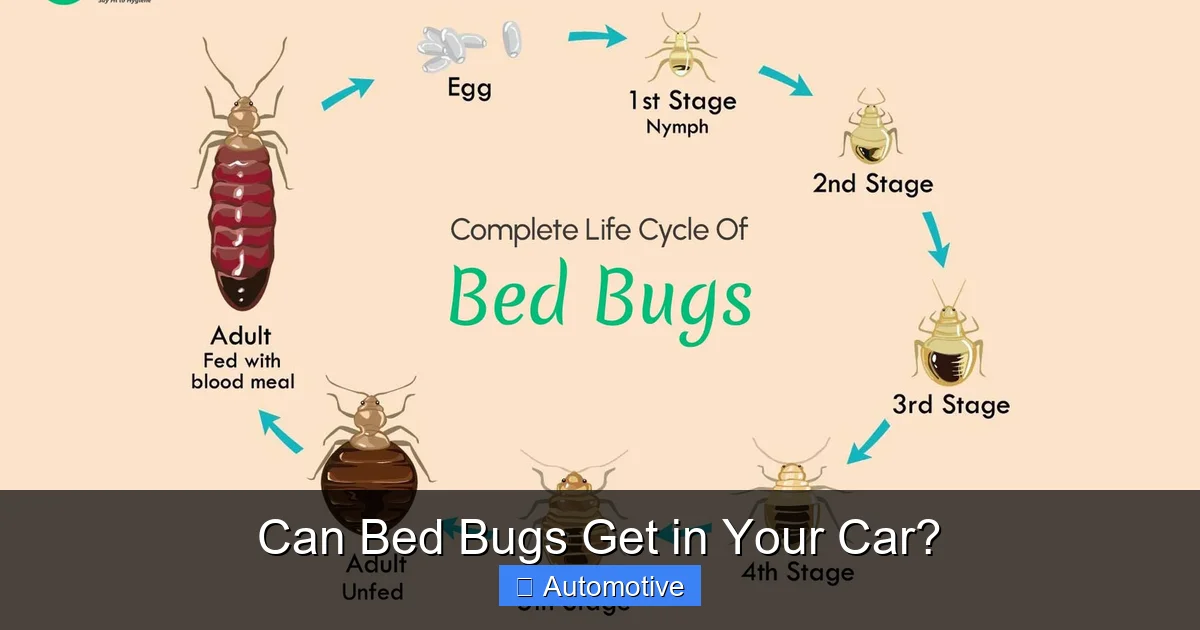
To grasp the urgency of dealing with a potential car infestation, you need to know a little about their life cycle. A single, fertilized female bed bug can lay 1-5 eggs per day, up to 500 in her lifetime. These tiny, pearly-white eggs are barely visible to the naked eye and are glued to surfaces with a sticky substance. They hatch in about 6-10 days, depending on temperature and blood meal availability. The newly emerged nymphs must feed to molt and progress through five stages before becoming reproducing adults.
This rapid reproductive cycle means that a few bugs introduced to your car can, in theory, establish a population if conditions are right—namely, regular access to a blood meal (you or your passengers) and safe harbor. While cars are not their primary habitat (they prefer the bed, hence the name), they will absolutely colonize a vehicle if it offers consistent opportunities. This is why immediate action upon suspicion is so critical; a few weeks can mean the difference between a manageable problem and a full-blown, costly infestation.
How Bed Bugs Find Their Way Into Your Vehicle
Now that we know bed bugs are hitchhikers, let’s map the specific pathways they use to infiltrate your car. These are not obscure scenarios; they are everyday activities that carry significant risk.

Visual guide about Can Bed Bugs Get in Your Car?
Image source: bugstips.com
Common Vectors of Infestation
- Travel and Hotels: This is the number one source. Staying in a hotel, motel, Airbnb, or even a friend’s guest room that has a bed bug problem puts you at high risk. Bugs or eggs on your luggage, clothing, or shoes are brought directly to your car when you load up to leave.
- Public Transportation: Buses, trains, taxis, and ride-shares are high-turnover environments. Bed bugs can hide in seat crevices, seams, and even overhead compartments. When you sit, they can transfer to your clothing or bags and then into your car.
- Secondhand Furniture and Items: Bringing a used couch, mattress, box spring, or even a pile of thrift store clothing directly into your car for transport is a major risk. These items are notorious for harboring bed bugs. You should never bring such items directly into your home without a thorough inspection and heat treatment first.
- Visiting Infested Locations: Sitting on a couch or chair at a friend’s house, a waiting room, or a dorm room that is infested can result in bugs transferring to your clothes. You then carry them to your car.
- Neighbors and Adjacent Units: In multi-unit dwellings like apartments and condos, bed bugs can travel through wall voids, electrical outlets, and plumbing. If your neighbor has an infestation, bugs may crawl into your living space and then onto your belongings, which you later place in your car.
- Your Own Home: If you already have a bed bug infestation in your house or apartment, your car is at constant risk. Every time you get in your vehicle after being in an infested room, you risk transporting bugs. In this scenario, your car becomes an extension of your home infestation.
The takeaway here is that your car’s infestation is almost always a symptom of an exposure event, not a spontaneous generation. Tracing back your activities in the 1-2 weeks prior to noticing signs can often reveal the source. Did you go on a trip? Buy a used item? Have a guest stay over? These are the critical questions to ask.
Can Your Car’s Environment Support an Infestation?
Just because bed bugs can get into your car doesn’t automatically mean they will thrive and multiply. For an infestation to establish, the environment must meet their basic needs: shelter, a blood meal source, and suitable temperature/humidity. Let’s evaluate how a typical car interior measures up.

Visual guide about Can Bed Bugs Get in Your Car?
Image source: paidepo.com
The Perfect Hideout: Seams, Cracks, and Crevices
Bed bugs are masters of concealment. During the day, they retreat to narrow spaces close to where people sleep or rest. In a car, this translates to a treasure trove of hiding spots:
- Upholstery Seams: The stitched lines on seats, especially where the back and bottom meet, are prime real estate. They can slip into the tiny gaps.
- Carpet Edges and Floor Mats: The junction where carpet meets plastic trim, under floor mats, and in the folds of trunk liner carpets are dark and undisturbed.
- Seat Mechanisms: The tracks and levers for adjusting seats offer deep, complex cavities.
- Dashboard and Console Gaps: Around vents, radio openings, and the seams of center consoles provide shelter.
- Door Panels and Pockets: The interior door panel seams and the back of storage pockets are often overlooked.
- Trunk: The spare tire well, under the trunk liner, and around the gas door mechanism are classic hiding spots, especially if you transport luggage or items there.
These locations mimic the bed frame, box spring, and headboard cracks they prefer in a bedroom. They are dark, tight, and within a few feet of a potential host (the driver or passengers).
The Temperature Question: Can a Car’s Heat or Cold Kill Them?
This is a common myth. People think that leaving a car parked in the summer sun will “bake” any bed bugs. While extreme temperatures can kill bed bugs, a car’s interior is a surprisingly poor and inconsistent killing chamber.
The Heat Myth: Bed bugs and their eggs die at temperatures above 122°F (50°C) for sustained exposure (about 90 minutes). On a hot summer day, the inside of a car can certainly reach 140°F or more. However, the critical factor is sustained, uniform heat. The sun heats surfaces (like the dashboard or seats) intensely, but creates hot spots and cool shadows. Bugs will simply migrate to the cooler, shaded crevices (like under a seat or in a deep crack). The core temperature in their hiding spot may never reach the lethal threshold. Furthermore, once the sun moves or clouds cover the sky, temperatures plummet. The short, uneven spikes are ineffective. Professional bed bug heat treatment for homes uses specialized heaters to raise the entire room’s temperature to a lethal level and hold it there, which a car cannot do on its own. You can learn more about the limits of car heat in scenarios like how hot can a car get in the sun, which explains the rapid and uneven temperature changes.
The Cold Myth: Bed bugs can survive freezing temperatures for short periods. While prolonged exposure below 0°F (-18°C) can kill them, a typical winter night, even in cold climates, rarely penetrates the insulated, fabric-lined interior of a car to a depth or duration that guarantees 100% mortality. Bugs will again find the warmest microclimates, like near the engine block or in insulated seat folds.
The Bottom Line: You cannot rely on seasonal weather or parking location to eradicate a bed bug infestation in your car. The temperature fluctuations are too brief and too uneven. It is a dangerous assumption that leads to prolonged infestations.
The Blood Meal Requirement
This is the make-or-break factor. Bed bugs need to feed on human blood to grow, molt, and reproduce. If your car is only used occasionally—say, a weekend project car that sits for months—any bugs introduced will eventually starve. Adult bed bugs can survive without a blood meal for 6-12 months under ideal conditions (cool, dry). Nymphs are less resilient. So, a rarely used car might not develop a large, breeding population, but it can still harbor live bugs for many months, ready to emerge if the car is used regularly again.
For a daily driver or family car, the blood meal is constantly available. Every time you or a passenger gets in, you provide an opportunity for the bugs to feed. This consistent access means a population can not only survive but grow. This is why cars used for commuting, ride-sharing, or as primary transportation are at the highest risk for establishing infestations.
Spotting the Signs: Bed Bugs in Your Car
Detecting bed bugs early in a vehicle is notoriously difficult. The signs are subtle, and people rarely inspect their car interiors with a pest control mindset. However, knowing what to look for is your first line of defense.
Visual guide about Can Bed Bugs Get in Your Car?
Image source: hicare.in
Visual Evidence: What to Look For
- Live Bugs: Adult bed bugs are about the size and shape of an apple seed (4-5 mm long), reddish-brown, and flat if unfed, balloon-like if recently fed. Nymphs are smaller and paler. They are most active at night but can be seen during the day if disturbed.
- Exoskeletons (Exuviae): As bed bugs grow, they shed their outer shells. These translucent to pale yellow, empty shells look like tiny, hollow bugs. They are often found in clusters near harborages.
- Fecal Spots: After digesting a blood meal, bed bugs excrete dark red to blackish spots. These look like tiny dots of marker ink or specks of pepper. On fabric seats, they may smear slightly. On hard plastic or vinyl, they are distinct dots. These are often the most common and overlooked sign.
- Eggs: Extremely small (about 1 mm), white, and sticky. They are nearly impossible to see without magnification and a keen eye, usually laid in clusters in deep crevices.
- Staining: In severe, long-standing infestations, you might notice small, rusty-colored stains on upholstery from crushed bugs or larger smear stains from a digesting bug being disturbed.
Where to Inspect: Conduct your inspection with a bright flashlight. Focus on all seams of the front and rear seats, especially where they join the backs. Remove seat covers if possible (check manufacturer guidelines). Lift floor mats and inspect the carpet underneath and the edges. Feel along the seams of the trunk liner. Check the gaps between the dashboard and center console, and around door panels. Use a credit card or stiff paper to gently probe cracks and crevices; you might dislodge a bug or shell.
Other Clues Beyond Visuals
Sometimes the signs aren’t visual but sensory.
- Unexplained Bites: If you or your passengers wake up with small, red, itchy bites in a line or cluster, especially after being in the car, it’s a red flag. However, many other insects cause similar bites, so this alone is not diagnostic.
- A Sweet, Musty Odor: In very large infestations, bed bugs release pheromones that some people describe as a sweet, musty, or raspberry-like smell. This is rare in car infestations, which are typically smaller than home infestations, but it can occur.
- Feeling of Movement: Some people report a crawling sensation when bugs are active at night.
If you have even a slight suspicion based on any of these signs, act immediately. Early detection makes eradication far simpler and cheaper.
Elimination Challenges: Why Cars Are a Tricky Space to Treat
Many people’s first instinct upon finding a bug or two in their car is to run to the store for a can of bed bug spray. This is almost always a mistake that makes the problem worse. Treating a car for bed bugs is fundamentally different and more challenging than treating a room in a house.
The Complexity of the Automotive Interior
Your car is a compact, intricate maze of electronics, fabrics, plastics, and metals. Standard bed bug insecticides for home use (pyrethroids, neonicotinoids) are often ineffective due to widespread bed bug resistance. More importantly, spraying these chemicals inside a car is hazardous:
- Toxicity Risk: These sprays are not designed for enclosed, poorly ventilated spaces. Inhaling fumes, getting them on skin, or having them coat the steering wheel, controls, and air vents poses a serious health risk. Residue can damage sensitive electronics, touchscreens, and interior plastics.
- Incomplete Coverage: You cannot see or access all the critical harborages. Spraying visible cracks will miss bugs deep inside seat mechanisms, behind door panels, or in the headliner. You will likely only kill a small fraction of the population, including any bugs that have fed and are digesting in hidden spots.
- Egg Resistance: Most over-the-counter sprays do not kill bed bug eggs. The eggs are resilient and protected by a hard shell. Without a product that specifically claims ovicidal (egg-killing) activity and is applied perfectly to every single egg (nearly impossible), the eggs will hatch, and the infestation rebounds.
This complexity is why DIY is a recipe for failure. You may drive bugs deeper into hiding, spread them to new areas of the car via your actions, and create a toxic environment for yourself without solving the core problem.
The Professional Approach
Professionals use two primary, effective methods for vehicle treatment, often in combination:
- Professional-Grade Heat Treatment: This is the gold standard for vehicles. Technicians use portable, controlled heaters to raise the interior temperature of the entire car to a lethal 135°F+ and maintain it for several hours. The heat penetrates every crack, crevice, seat cushion, and cavity. It kills all life stages, including eggs, with no chemical residue. The car is monitored with temperature probes to ensure efficacy. This method requires significant expertise to avoid damaging the vehicle’s electronics or interior components.
- Targeted Insecticide Application: In conjunction with or instead of heat, professionals use EPA-registered, automotive-safe insecticides. These are applied with specialized equipment (like misting or fogging systems) to ensure deep penetration into harborage areas. They use products with different modes of action to combat resistance and often include growth regulators to prevent eggs from hatching. This is applied by trained technicians who understand the product’s safe use in confined spaces.
A reputable pest control company will inspect your vehicle first, present a treatment plan, and often offer a guarantee. The cost is higher than a DIY spray can, but it’s the only reliable path to complete eradication. Considering the cost of replacing a vehicle’s interior or the immense stress of a lingering infestation, professional treatment is an investment in peace of mind.
Prevention and Protection Strategies
Given the difficulty of elimination, your goal should be to never let bed bugs establish a foothold in your car. Prevention is infinitely easier and cheaper than treatment. These habits are non-negotiable for a bed bug-free vehicle.
Travel and Hotel Protocols
Your car is most vulnerable when returning from a trip. Implement a strict “decontamination zone” protocol:
- Pack Smart: Use hard-shelled suitcases if possible, as bed bugs have a harder time climbing smooth surfaces. Use plastic bags to line your suitcase and for dirty laundry.
- Inspect Your Hotel Room: Before unpacking, use a flashlight to check the mattress seams, headboard, and nightstands for live bugs, shells, or spots. Keep luggage on the bathroom tile or on a luggage rack away from the bed.
- Don’t Place Luggage on Beds or Sofas: This is the fastest way to pick up bugs.
- Unpack Outside: When you return home, do not bring your suitcase inside. Unpack it on a driveway, garage floor, or balcony. Dump all clothing directly into a plastic bag, seal it, and take it straight to the washing machine. Wash and dry on the highest heat settings the fabrics allow.
- Isolate and Treat Luggage: Leave suitcases in the garage or trunk. Vacuum the exterior and interior seams thoroughly. Consider using a portable garment steamer (which reaches over 200°F) on all seams and folds. Allow the suitcase to sit for several weeks in an isolated area (like a sealed garage) before bringing it into the house, as any bugs will starve.
Vehicle Hygiene and Vigilance
- Regular Inspection: Make it a habit to quickly check your car’s main seat seams and trunk during gas fills or car washes. A 30-second visual check can catch an issue early.
- Minimize Clutter: Less stuff in your car means fewer hiding places. Keep floor mats, seat covers, and trunk organizers clean and free of accumulated debris.
- Vacuum Frequently: Use a vacuum with a crevice tool to thoroughly clean all upholstery seams, carpet edges, and floor mats. Immediately empty the vacuum bag or canister into a sealed plastic bag and dispose of it in an outdoor trash bin.
- Be Cautious with Secondhand Items: Never bring used mattresses, sofas, or upholstered furniture into your car without a prior, thorough inspection and ideally, a heat treatment in a controlled environment (like a rented portable heater chamber for small items). Treat all thrift store clothing as potentially contaminated—wash and dry immediately.
- Protect Your Car from Infested Homes: If you are helping someone move from an infested home, do not use your personal vehicle. Use a rental truck and discard all moving blankets and boxes afterward. If you must use your car, thoroughly clean and vacuum it immediately afterward.
- Car Seats and Child Safety: Pay special attention to the seams and straps of child car seats, which provide perfect harborages. Remove and wash seat covers regularly. Inspect the hard plastic shell and the fabric straps meticulously.
If you suspect an infestation despite your best efforts, stop using the vehicle if possible (to prevent further spread) and contact a professional pest control company that has specific experience with vehicle treatments. Do not attempt to spray insecticides yourself. The health and safety risks, coupled with the high likelihood of failure, make it a poor choice. For more on maintaining your vehicle’s integrity, understanding how systems like engine oil levels work is crucial, but in this case, entrusting the bug problem to specialists is the correct mechanical decision.
Conclusion
The question “Can bed bugs get in your car?” is not just a yes or no; it’s a gateway to understanding a serious modern pest problem. Your car is a vulnerable extension of your living space, a mobile environment that provides everything a bed bug needs to survive and even thrive: shelter, access to hosts, and a stable microclimate. The key takeaway is that your car does not exist in a vacuum. Its infestation status is a direct reflection of your exposure risk and your preventive habits.
Remember the core truths: bed bugs are passive hitchhikers brought in on your belongings. They hide in the smallest interior seams and are highly resistant to the inconsistent temperatures of a parked car. The signs are subtle but detectable with regular, mindful inspection. Most importantly, DIY eradication is largely a myth. The complexity of a car’s interior and the dangers of improper chemical use mean that professional intervention is not just advisable—it is essential for a complete solution.
Do not feel shame if you discover bed bugs in your car. It is a common, albeit distressing, occurrence in our interconnected world. The power lies in swift, informed action. Isolate the vehicle, cease using it if possible, and engage a qualified, experienced pest control professional. Combine their treatment with an ironclad regimen of preventive habits for all future travel and secondhand item handling. By respecting the bed bug’s biology and the unique challenges of your vehicle’s environment, you can win this battle and reclaim your car as the safe, clean space it should be.
Frequently Asked Questions
Can bed bugs survive in a hot car during summer?
While a car’s interior can get very hot, the heat is often uneven and short-lived. Bed bugs will simply move to cooler, shaded crevices like under seats or in cracks. The sustained, uniform lethal temperature needed to kill all life stages is rarely achieved naturally, so summer heat alone will not eradicate an infestation.
How do I check my car for bed bugs?
Use a bright flashlight to thoroughly inspect all seams of the front and rear seats, especially where the seat backs and bottoms meet. Lift floor mats and check the carpet edges and trunk liner. Probe gaps in the dashboard, center console, and door panels with a credit card to dislodge any hidden bugs or shed skins. Look for tiny dark fecal spots, translucent shed exoskeletons, or live apple-seed-sized insects.
Should I use bed bug spray in my car?
No. Over-the-counter bed bug sprays are not designed for enclosed vehicle spaces and pose serious health risks from inhalation and skin contact. They can also damage sensitive electronics, touchscreens, and interior plastics. Furthermore, they are generally ineffective against resistant bed bug populations and do not reliably kill eggs. Professional treatment is strongly recommended.
What is the most effective way to get rid of bed bugs in a car?
The most effective methods are professional-grade heat treatment, which raises the entire car’s interior to a lethal temperature, or targeted application of EPA-registered, automotive-safe insecticides by trained technicians. These methods are often used together to ensure all life stages, including eggs, are eliminated. DIY attempts have a very high failure rate.
Can I prevent bed bugs from getting into my car after a hotel stay?
Yes, with a strict protocol. Inspect your hotel room before unpacking. Keep luggage on a hard surface, not the bed. Upon returning home, unpack your suitcase outside (garage/driveway). Seal all clothing in plastic bags and wash/dry immediately on high heat. Vacuum and steam-clean your suitcase before storing it in an isolated area like a sealed garage.
Will leaving my car in the sun kill bed bugs?
Unlikely. While the sun can make a car’s interior extremely hot, the heat is not sustained or evenly distributed. Bed bugs will escape to cooler, protected hiding spots. The temperature in their deep crevices may never reach the 122°F+ needed to kill them. Relying on this method allows the infestation to grow and spread.