Can a Subaru Crosstrek Tow a Camper

Contents
- 1 Key Takeaways
- 2 📑 Table of Contents
- 3 Understanding Your Subaru Crosstrek’s Towing Capacity
- 4 What Types of Campers Can a Crosstrek Tow?
- 5 Essential Towing Equipment for Your Crosstrek
- 6 Tips for Safe and Efficient Towing
- 7 Real-World Examples: Crosstrek Owners Who Tow Campers
- 8 When a Crosstrek Isn’t the Right Choice
- 9 Conclusion
- 10 Frequently Asked Questions



Yes, a Subaru Crosstrek can tow a camper, but with important limitations. Most models handle up to 1,500 pounds, while some newer AWD versions reach 2,000 pounds—ideal for lightweight teardrop or pop-up campers. Always check your owner’s manual and use proper towing equipment.
If you’re dreaming of weekend getaways in the woods, lakeside sunsets, or mountain escapes with your Subaru Crosstrek, you’re not alone. The Crosstrek has become one of Subaru’s most popular vehicles thanks to its rugged design, standard all-wheel drive, and car-like comfort. But when it comes to hitting the road with a camper in tow, many owners wonder: *Can my Crosstrek really handle it?*
The short answer is yes—but with caveats. Unlike full-size trucks or SUVs built for heavy-duty towing, the Crosstrek is a compact crossover designed primarily for daily driving and light off-roading. That doesn’t mean it’s useless for camping adventures. In fact, with the right setup and realistic expectations, the Crosstrek can be a surprisingly capable companion for lightweight camping trips. Whether you’re pulling a cozy teardrop trailer or a compact pop-up camper, the Crosstrek can get you—and your gear—to scenic destinations safely and efficiently.
However, it’s crucial to understand the limits. Towing too much weight can strain your engine, overheat the transmission, reduce braking performance, and even void your warranty. This guide will walk you through everything you need to know about towing a camper with your Subaru Crosstrek—from understanding your vehicle’s towing capacity to choosing the right camper and staying safe on the road.
Key Takeaways
- Max Towing Capacity: Most Subaru Crosstreks tow up to 1,500 lbs; select 2018+ AWD models with manual transmission or certain trims can reach 2,000 lbs.
- Best Camper Types: Lightweight teardrop, pop-up, and small travel trailers under 1,500 lbs are ideal matches for the Crosstrek.
- Towing Equipment Required: You’ll need a Class I or II hitch, wiring harness, brake controller (if needed), and possibly sway bars.
- Fuel Economy Impact: Towing reduces fuel efficiency by 20–30%, so plan for more frequent stops and higher fuel costs.
- Safety First: Always distribute weight properly, avoid overloading, and practice towing in empty parking lots before hitting the road.
- Check Your Model Year: Towing capacity varies significantly—always consult your owner’s manual or Subaru’s official specs.
- Consider Upgrades: Adding a transmission cooler or upgraded suspension can improve towing performance and longevity.
📑 Table of Contents
Understanding Your Subaru Crosstrek’s Towing Capacity
Before you even think about hooking up a camper, you need to know exactly how much your Crosstrek can tow. This isn’t a one-size-fits-all answer. The towing capacity of a Subaru Crosstrek depends on several factors, including the model year, engine type, transmission, and whether it has all-wheel drive (AWD).
From 2013 to 2017, most Crosstreks came with a 2.0-liter four-cylinder engine and were rated to tow up to **1,500 pounds**. This applies to both manual and automatic transmissions, though manual models may offer slightly better control under load. Starting in 2018, Subaru made some key changes. The introduction of the updated FB20 engine and improved AWD system allowed certain trims—especially those with manual transmissions or higher trim levels like the Limited—to increase their towing capacity to **2,000 pounds**.
It’s also important to note that not all 2018+ Crosstreks automatically qualify for the 2,000-pound rating. Only models equipped with the proper towing package or factory-installed hitch are officially rated for that higher capacity. If you’re unsure, check your owner’s manual or look up your VIN on Subaru’s official website.
Why does this matter? Because even a small difference in weight can make or break your towing experience. A camper that weighs 1,600 pounds might seem manageable, but if your Crosstrek is only rated for 1,500 pounds, you’re already over the limit. Exceeding your vehicle’s towing capacity can lead to mechanical failure, loss of control, and dangerous situations on the road.
How to Find Your Exact Towing Capacity
Don’t guess—verify. The safest way to determine your Crosstrek’s towing capacity is to consult your owner’s manual. Look for the “Towing” or “Trailer Towing” section, which will list the maximum trailer weight your specific model can handle. You can also find this information on the driver’s side door jamb sticker or by contacting your local Subaru dealer with your VIN.
Another helpful resource is Subaru’s official towing guide, available online. It breaks down towing capacities by model year, trim, and drivetrain. For example, a 2023 Crosstrek Premium with AWD and automatic transmission is rated for 1,500 lbs, while a 2023 Crosstrek Limited with manual transmission can tow up to 2,000 lbs.
Remember: these numbers refer to the **gross trailer weight (GTW)**—the total weight of the camper, including all gear, water, propane, and supplies. Never assume your camper’s dry weight is the final number. Always weigh your fully loaded trailer at a certified scale before hitting the road.
What Types of Campers Can a Crosstrek Tow?
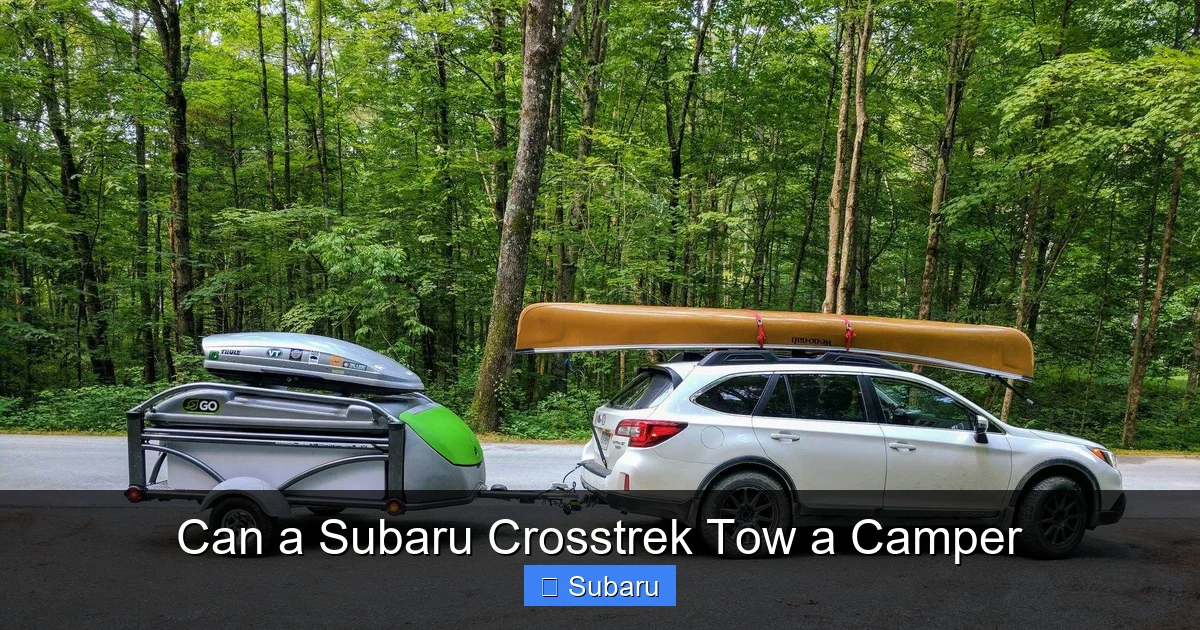
Visual guide about Can a Subaru Crosstrek Tow a Camper
Image source: shunauto.com
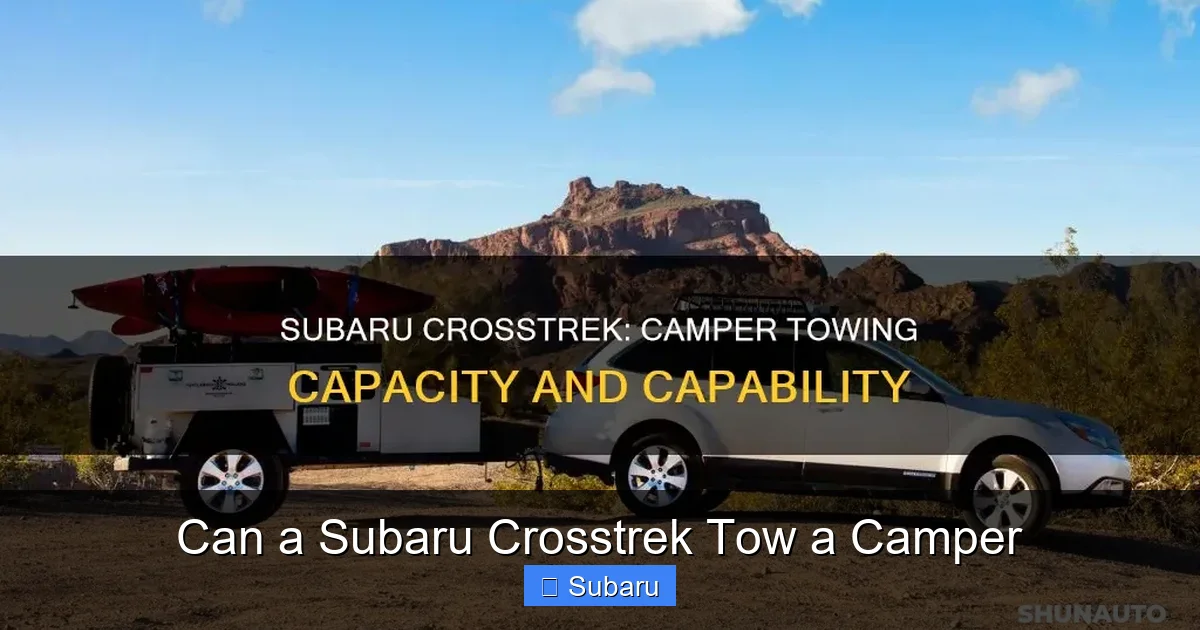
Now that you know your Crosstrek’s limits, let’s talk about what kinds of campers actually fit within those boundaries. The good news? There are plenty of lightweight, compact campers designed specifically for smaller vehicles like the Crosstrek.
The best options are typically under 1,500 pounds—and ideally closer to 1,000–1,200 pounds to leave room for cargo and safety margins. Here are the most compatible camper styles:
Teardrop Trailers
Teardrop trailers are arguably the perfect match for the Crosstrek. These small, aerodynamic campers usually measure 8 to 10 feet in length and weigh between 800 and 1,500 pounds when fully loaded. They feature a sleeping area in the back and a small galley (kitchen) in the front hatch.
Popular models like the **Little Guy Mini Max**, **Hiker Trailer**, or **Scamp 13’ Standard** fall well within the Crosstrek’s towing range. Many teardrops are designed with off-road capability in mind, making them ideal for remote campsites accessible only by gravel roads or mild trails.
Because of their low profile and lightweight construction, teardrops have minimal impact on fuel economy and handling. They’re easy to maneuver, even for first-time towers, and don’t require heavy-duty hitches or brake controllers in most cases.
Pop-Up Campers
Pop-up campers (also called tent trailers) are another excellent choice. These fold-down trailers start at around 1,000 pounds and can expand into full-sized sleeping and living areas when set up. Brands like **Aliner**, **Jayco Jay Series**, and **Forest River Rockwood** offer models that weigh under 1,500 pounds.
One advantage of pop-ups is their compact size when folded—making them easier to store and tow. They also tend to have better ground clearance than hard-sided trailers, which helps on rough terrain. However, keep in mind that pop-ups can be affected by wind due to their larger surface area when raised, so always use sway control devices if towing in windy conditions.
Small Travel Trailers
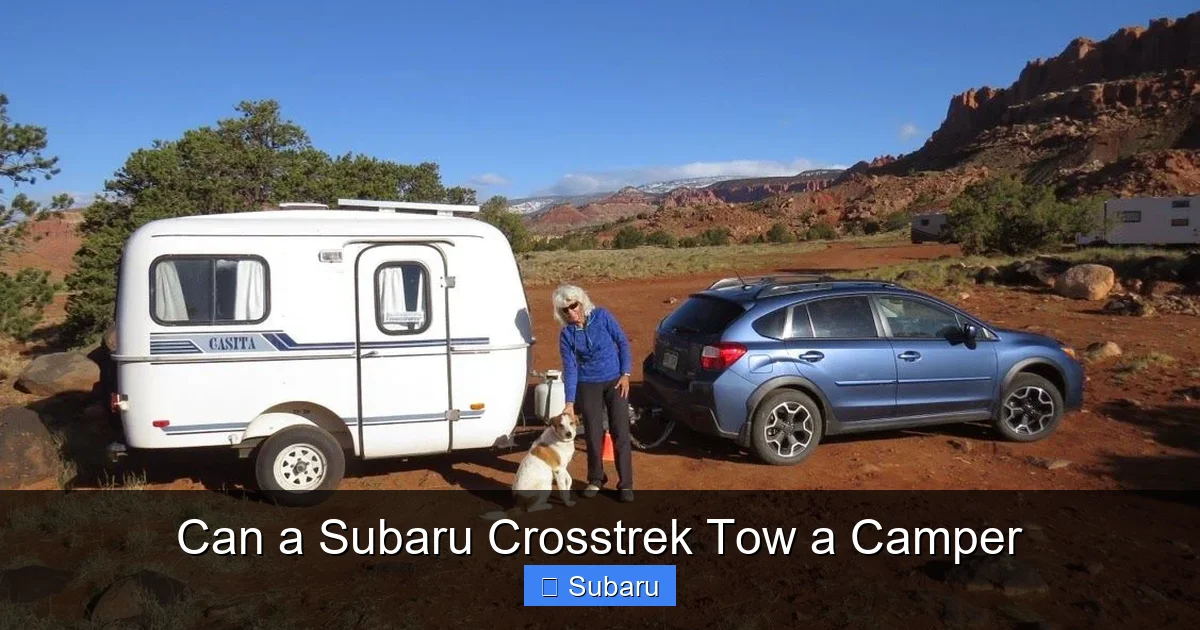
Some ultra-light travel trailers can also work with the Crosstrek, provided they stay under the weight limit. Models like the **Casita Spirit Deluxe** (around 1,400 lbs) or the **Escape 17B** (approximately 1,500 lbs) are borderline but feasible if loaded carefully.
Avoid larger A-frame trailers, fifth wheels, or anything with slide-outs—these almost always exceed 2,000 pounds and are better suited for trucks or larger SUVs.
DIY and Custom-Built Campers
If you’re handy, building your own lightweight camper can be a rewarding project. Many Crosstrek owners have successfully towed custom teardrops or utility trailers converted into mini campers using plywood, foam insulation, and basic amenities. Just remember: safety and structural integrity are paramount. Use proper framing, secure all components, and never exceed your vehicle’s capacity.
Essential Towing Equipment for Your Crosstrek
Visual guide about Can a Subaru Crosstrek Tow a Camper
Image source: vehq.com
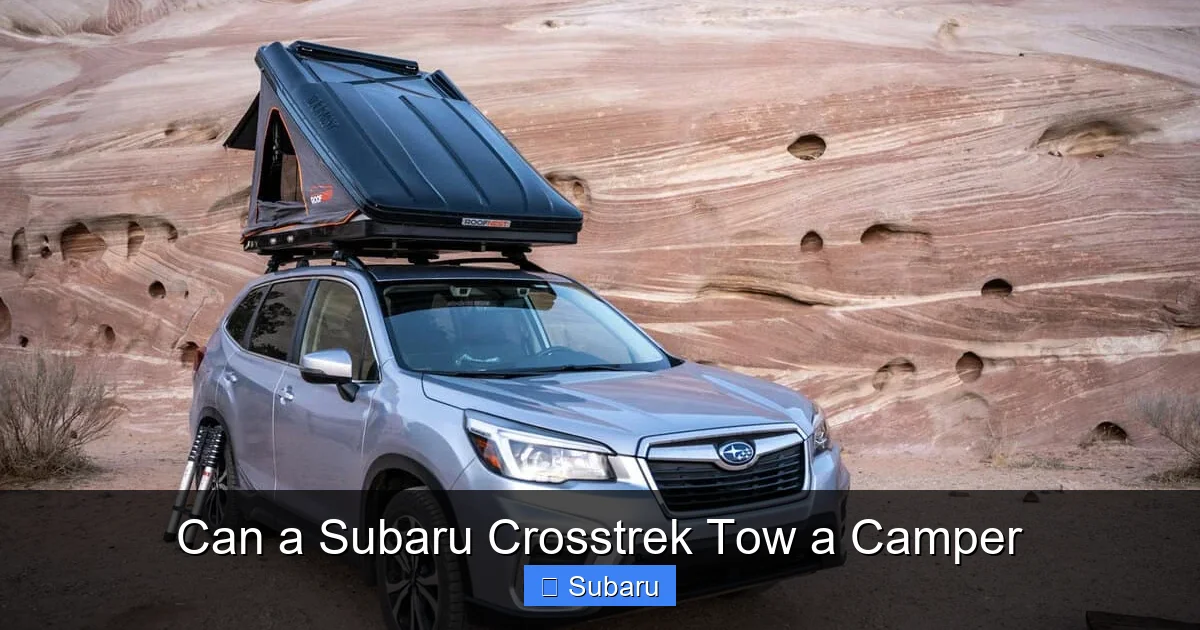
You can’t just hitch up a camper and go—towing requires the right equipment to ensure safety, legality, and performance. Here’s what you’ll need:
Class I or II Trailer Hitch
Subaru offers a factory-installed trailer hitch for the Crosstrek, which is highly recommended. Aftermarket options from brands like **Curt**, **Draw-Tite**, or **Westin** are also reliable. Most Crosstreks use a **Class I hitch** (rated up to 2,000 lbs), which is sufficient for lightweight campers.
Never use a bumper-mounted or strap-style hitch—these are unsafe and not designed for trailer towing.
Wiring Harness
To power your camper’s brake lights, turn signals, and running lights, you’ll need a 4-pin wiring harness. Subaru sells a plug-and-play harness that connects directly to your vehicle’s electrical system. Avoid splicing wires yourself—improper connections can cause electrical issues or fail inspections.
Brake Controller (If Needed)
Most lightweight campers under 1,500 lbs don’t require electric brakes, so a brake controller isn’t necessary. However, if your camper has brakes (common on models over 1,000 lbs), you’ll need a brake controller installed in your Crosstrek. This device allows you to manually adjust brake force from the driver’s seat.
Note: The Crosstrek does not come with a built-in brake controller, so you’ll need an aftermarket unit like the **Tekonsha Voyager** or **Redarc Tow-Pro**.
Sway Control and Weight Distribution
Even small trailers can sway in wind or when passed by large trucks. A **sway control device** (like the Curt Sway Control or Equal-i-zer) helps stabilize your setup. For heavier loads (closer to 1,500 lbs), consider a **weight distribution hitch**, which spreads the tongue weight more evenly across your vehicle’s axles.
Tow Ball and Safety Chains
Use the correct tow ball size (usually 2 inches for lightweight trailers) and always connect safety chains in a crisscross pattern beneath the coupler. This prevents the trailer from detaching completely if the hitch fails.
Tips for Safe and Efficient Towing
Visual guide about Can a Subaru Crosstrek Tow a Camper
Image source: i.pinimg.com
Towing a camper with a Crosstrek isn’t just about hardware—it’s about smart driving and preparation. Follow these tips to make your trips smooth and stress-free.
Distribute Weight Properly
Never load all your gear in the back of the camper. Aim for **60% of the weight in the front half** of the trailer and keep the tongue weight (the downward force on the hitch) between **10–15% of the total trailer weight**. Too little tongue weight causes swaying; too much overloads the rear of your Crosstrek.
Use a bathroom scale to check tongue weight: place the coupler on the scale while the trailer is level.
Practice Before You Go
If you’ve never towed before, practice in an empty parking lot. Get comfortable with turning, backing up, and braking. Remember: wider turns are needed, and braking distances increase significantly.
Check Tire Pressure and Condition
Both your Crosstrek and camper tires should be inflated to the recommended PSI (check the door jamb or trailer tire sidewall). Underinflated tires overheat and can blow out—especially when towing.
Monitor Transmission Temperature
The Crosstrek’s CVT (continuously variable transmission) can overheat when towing, especially on long hills. If your vehicle has a transmission temperature gauge (or you’ve installed an aftermarket one), watch it closely. Consider adding an **auxiliary transmission cooler** if you plan frequent towing.
Plan Your Route
Avoid steep mountain passes, narrow roads, or areas with low bridges. Use GPS apps that support RV or trailer routing (like RV LIFE or CoPilot) to find suitable paths.
Fuel Economy Expectations
Towing reduces fuel efficiency by 20–30%. A Crosstrek that normally gets 30 mpg might drop to 20–22 mpg when towing a camper. Fill up before long trips and budget for extra fuel costs.
Real-World Examples: Crosstrek Owners Who Tow Campers
Still unsure? Hearing from real owners can help. Many Crosstrek enthusiasts share their experiences online.
One owner, Sarah from Colorado, tows a **1,200-pound teardrop trailer** with her 2020 Crosstrek Limited (manual). “It handles beautifully on mountain roads,” she says. “I added a transmission cooler and use sway control—no issues after 10,000 miles of towing.”
Another user, Mike from Oregon, pulls a **1,450-pound pop-up camper** with his 2019 Crosstrek Premium. “I stay under 65 mph and avoid highways when possible,” he notes. “It’s not a truck, but it gets me where I need to go.”
These stories highlight a common theme: success comes from staying within limits, using proper equipment, and driving cautiously.
When a Crosstrek Isn’t the Right Choice
Despite its capabilities, the Crosstrek isn’t for everyone. If you’re planning to tow a large travel trailer, a camper with a bathroom and full kitchen, or anything over 2,000 pounds, you’ll need a more powerful vehicle like a Subaru Ascent, Toyota RAV4 Hybrid (with towing package), or a mid-size truck.
Also, if you frequently tow in hot climates or over mountainous terrain, the Crosstrek’s smaller engine and cooling system may struggle. In those cases, consider upgrading your vehicle or choosing a lighter camper.
Conclusion
So, can a Subaru Crosstrek tow a camper? Absolutely—if you choose the right camper, equip your vehicle properly, and respect its limits. With a towing capacity of 1,500 to 2,000 pounds, the Crosstrek is perfectly suited for lightweight teardrop trailers, pop-up campers, and small travel trailers. It’s a fantastic option for weekend warriors, minimalist campers, and adventurers who value fuel efficiency and maneuverability.
Just remember: towing is a responsibility. Always verify your vehicle’s capacity, use quality equipment, distribute weight correctly, and drive defensively. With the right preparation, your Crosstrek can open up a world of camping possibilities—without needing a heavy-duty truck.
Whether you’re exploring national parks, boondocking in the desert, or chasing fall foliage, your Crosstrek can be a reliable partner on the road to adventure.
Frequently Asked Questions
Can a 2023 Subaru Crosstrek tow a camper?
Yes, a 2023 Subaru Crosstrek can tow a camper, but the capacity depends on the trim and transmission. Most models tow up to 1,500 lbs, while the Limited trim with manual transmission can handle up to 2,000 lbs.
What’s the lightest camper you can tow with a Crosstrek?
You can tow campers as light as 800–900 pounds, such as minimalist teardrop trailers or custom-built micro campers. Always include the weight of gear, water, and supplies in your total.
Do I need a brake controller for my Crosstrek?
Only if your camper has electric brakes. Most campers under 1,000 lbs don’t require brakes, so a controller isn’t needed. For heavier trailers with brakes, a brake controller is essential.
Will towing void my Subaru warranty?
No, towing within the manufacturer’s specified limits will not void your warranty. However, damage caused by overloading or improper towing may not be covered.
Can I tow a camper with a CVT transmission?
Yes, but monitor transmission temperature closely. Consider adding an auxiliary cooler if towing frequently or in hot climates to prevent overheating.
Is it safe to tow a camper with a Subaru Crosstrek?
Yes, as long as you stay within the towing capacity, use proper equipment, and drive cautiously. The Crosstrek’s AWD and stability control help maintain safety when towing lightweight campers.