
Can a Hyundai Tucson Tow a Camper?

Yes, a Hyundai Tucson can tow a camper, but with critical caveats. Its maximum towing capacity ranges from 1,500 to 3,500 pounds depending on the model year, engine, and whether it has the factory tow package. You must match the camper’s fully loaded weight (including gear and water) to your specific Tucson’s rated capacity. Always prioritize safety with the proper hitch, brake controller, and weight distribution setup for a secure and legal towing experience.
Key Takeaways
- Towing capacity varies significantly by model year and trim. Pre-2022 models max out at 1,500-2,000 lbs, while 2022+ models with the 2.5L engine and tow package can handle up to 3,500 lbs.
- The factory tow package is non-negotiable for safe, warranty-protected towing. It includes a heavy-duty radiator, transmission cooler, and wiring harness, which are essential for managing the extra stress.
- “Camper weight” means the complete, loaded weight (GVWR), not just the dry weight. Always add 500-1,000+ lbs for gear, water, propane, and personal items to the manufacturer’s dry weight.
- A lightweight pop-up or teardrop camper is the realistic target. Traditional hard-sided travel trailers typically exceed the Tucson’s limits once loaded, unless they are ultra-lightweight models.
- Payload capacity is a separate, equally important limit. The Tucson’s payload (max cargo + passenger weight) is often the limiting factor when you add the tongue weight of a trailer and your own gear.
- Proper hitch selection and setup are mandatory for stability and safety. A weight-distributing hitch with sway control is highly recommended, especially at the upper end of the Tucson’s capacity.
- Always consult your owner’s manual for your specific vehicle’s ratings. The manual is the final authority and provides the precise GCWR (Gross Combined Weight Rating) for your configuration.
[FEATURED_IMAGE_PLACEHOLDER]
📑 Table of Contents
- So, You Want to Tow a Camper with Your Tucson?
- Decoding the Numbers: Understanding Towing Capacity
- What Kind of Camper Can Realistically Be Towed?
- The Non-Negotiable: The Hyundai Tucson Tow Package
- Safety Gear and Setup: It’s More Than Just a Hitch
- Legal, Insurance, and Warranty Considerations
- What If My Tucson Isn’t Enough? Alternatives to Consider
- The Final Verdict: A Capable Companion for the Lightweight Adventurer
So, You Want to Tow a Camper with Your Tucson?
That pull to hit the open road with a home on wheels is a powerful feeling. You’ve got your trusty Hyundai Tucson, a versatile and capable SUV that handles daily life with ease. But when you start dreaming of weekend adventures at the campground, a big question pops up: Can a Hyundai Tucson tow a camper? It’s a common query for Tucson owners, and the answer isn’t a simple yes or no. It’s a “yes, but…” filled with important details, model-year specifics, and crucial safety considerations. Towing is serious business, and getting it right protects your vehicle, your camper, and most importantly, you and your family. Let’s break down everything you need to know, from the numbers in your owner’s manual to the practical realities of finding a compatible camper.
First, let’s set the stage. The Hyundai Tucson has evolved dramatically over its generations. What was a modest crossover in the early 2000s is now a tech-packed, powerful family hauler. This evolution directly impacts its towing mettle. The ability to pull a camper isn’t just about raw engine power; it’s a system engineered from the ground up. We’re talking about cooling systems, transmission gearing, frame strength, and electronic stability programming. A vehicle not designed for towing can suffer catastrophic failure, from an overheated transmission to a stripped differential. So before you even look at camper brochures, your first stop must be your Tucson’s specifications.
Decoding the Numbers: Understanding Towing Capacity
Before we dive into Tucson-specific numbers, we need to speak the language of towing. You’ll see terms like GVWR, GCWR, and tongue weight. Understanding these is like learning the basic rules of the road for towing.
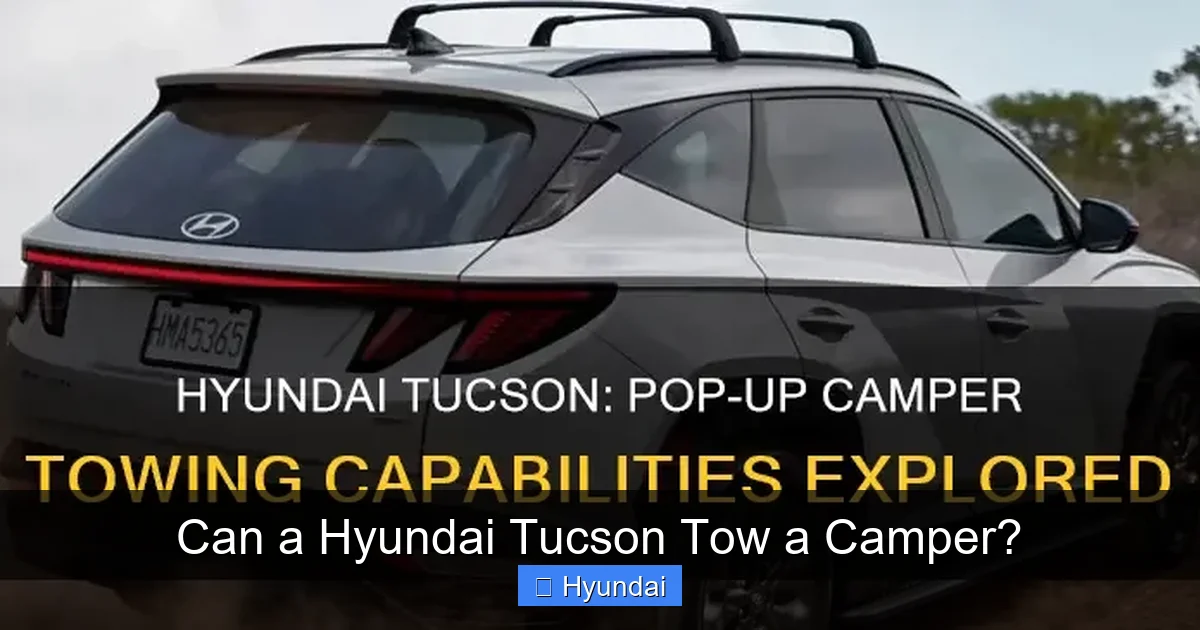
Visual guide about Can a Hyundai Tucson Tow a Camper?
Image source: shunauto.com
The Critical Acronyms: GVWR, GCWR, and More
GVWR (Gross Vehicle Weight Rating) is the maximum safe total weight your Tucson can carry, including its own curb weight, passengers, cargo, and the tongue weight of a trailer. Think of it as the total weight sitting on your Tucson’s wheels. GCWR (Gross Combined Weight Rating) is the magic number for towing. It’s the maximum allowable total weight of your loaded Tucson plus the loaded weight of your trailer. The difference between your Tucson’s loaded weight and its GCWR is your maximum allowable trailer weight. Finally, Tongue Weight is the downward force the trailer exerts on the hitch ball. It should typically be 10-15% of the trailer’s total loaded weight. Too little tongue weight causes sway; too much overloads your Tucson’s rear axle and reduces steering control.
Why does this matter? Because a common mistake is looking only at the “max tow rating” and ignoring payload and tongue weight. Your Tucson might be rated to tow 3,500 lbs, but if that trailer has a 500-lb tongue weight, you’ve now used 500 lbs of your Tucson’s 1,200-lb payload capacity. Add four passengers and a full tank of gas, and you could easily exceed your GVWR before you even hit the road. This is why weighing your fully loaded Tucson and camper at a public scale is the single best practice for safe towing.
Model Year Matters: A Breakdown of Tucson Towing Capacity
Hyundai has incrementally increased the Tucson’s capabilities. Here’s a practical, year-by-year guide. Remember, these are maximums under ideal conditions with the tow package.
- 2016-2021 Models (Third Generation): These are the most common used Tucsons on the road. The standard 2.4L 4-cylinder engine is rated for a maximum of 1,500 lbs when properly equipped. The optional 2.0L turbocharged engine bumps this to 2,000 lbs. These are very modest numbers, suitable only for the smallest of utility trailers or ultra-lightweight campers.
- 2022-Present Models (Fourth Generation): This is where things get interesting. The new generation, especially with the standard 2.5L 4-cylinder engine (187 hp, 178 lb-ft of torque) and the available factory tow package, sees a significant jump to a maximum of 3,500 lbs. The hybrid models are not rated for towing. This 3,500-lb rating opens the door to a much wider range of small to mid-size campers.
For the most precise numbers for your specific vehicle, you must consult your owner’s manual. The manual will list your exact GCWR and provide towing guidelines. If you don’t have it, Hyundai often provides digital copies on their website. You can also find a detailed breakdown of Hyundai Tucson towing capacities by year and trim on our dedicated guide: How Much Can A Hyundai Tucson Tow.
What Kind of Camper Can Realistically Be Towed?
Now for the fun part: matching a camper to your Tucson’s capabilities. With a max of 3,500 lbs on the newer models, we’re firmly in the “lightweight camper” category. Forget about large, full-size travel trailers or fifth-wheels. Your targets are specific, often purpose-built lightweight units.
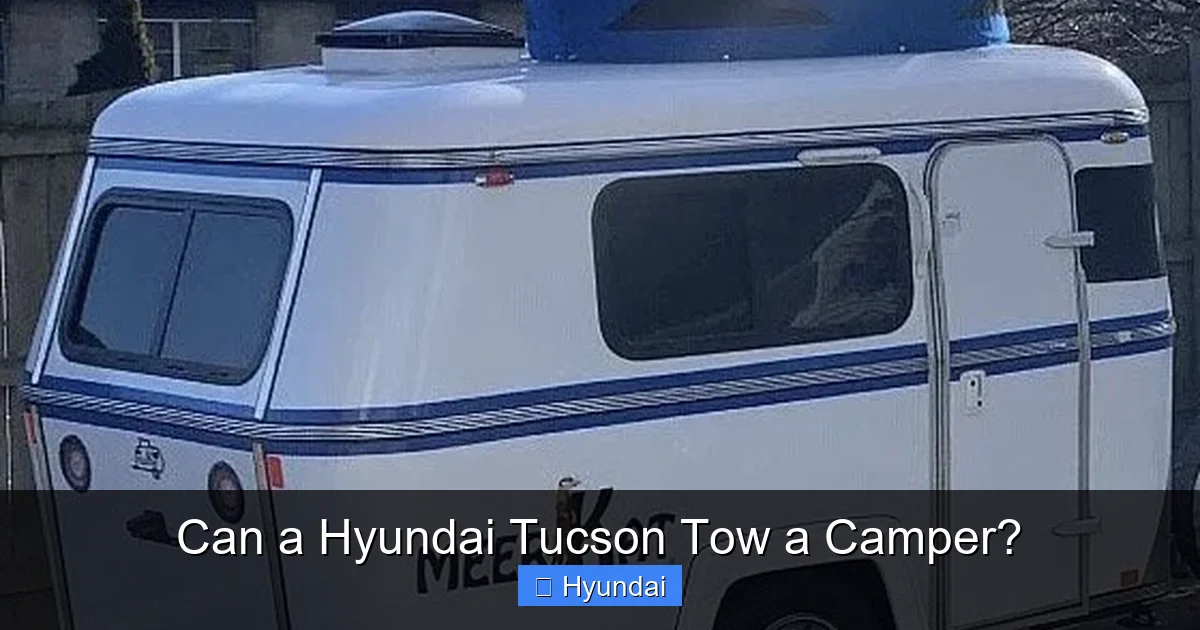
Visual guide about Can a Hyundai Tucson Tow a Camper?
Image source: thefunoutdoors.com
The Perfect Pair: Pop-Up Campers & Teardrops
These are your best and safest bets. Pop-up campers (also called folding campers) are essentially a box on wheels with canvas sides that fold down for easy towing and storage. Their dry weights often start around 1,200 lbs and can go up to 2,500 lbs for larger, feature-rich models. A well-equipped 20-ft pop-up might have a GVWR of 2,800 lbs. This fits perfectly within a 3,500-lb Tucson’s limit, leaving room for gear. They offer the comfort of a hard floor, a small kitchen, and sleeping space for 4-6, but with minimal wind resistance when towing.
Teardrop campers are the minimalist’s dream. These iconic, aerodynamic little trailers are typically 8-12 feet long, with a dry weight between 500 and 1,500 lbs. Their low profile makes them incredibly easy to tow, almost like they’re not even there. They usually sleep two and have a tiny galley in the rear. For a Tucson, even a loaded teardrop (with gear, water, propane) will rarely crack 2,000 lbs, making it an ideal, stress-free match.
The “Maybe” Zone: Small Hard-Sided Campers
This is where you need to be meticulous. There are manufacturers like Aliner (hard-sided pop-ups), Taxa, and Lance that build extremely lightweight (sub-2,500-lb GVWR) hard-sided campers designed for smaller crossovers and SUVs. Models like the Aliner Expedition or Taxa Cricket are engineered from the start to be towed by vehicles like the Tucson. You must verify the specific model’s GVWR and ensure your loaded weight (with all your stuff) stays at least 500 lbs below your Tucson’s maximum rating for a safe buffer. For example, a camper with a 3,200-lb GVWR is a hard “no” for any Tucson. One with a 2,800-lb GVWR might be a “yes” for a 2022+ Tucson, but only if your personal gear load is light.
What to Avoid: Traditional Travel Trailers
Most conventional travel trailers over 16 feet, even “lightweight” models from brands like Jayco or Forest River, will have GVWRs starting around 3,000 lbs and quickly climbing to 4,000-5,000 lbs for a 24-ft unit. Even if you find one rated at 3,400 lbs, the moment you load a couple of bikes, a full propane tank, fresh water (8 lbs/gallon), and your camping gear, you’ll be way over. Towing an overweight trailer is a recipe for disaster: poor acceleration, brake failure, dangerous sway, and severe transmission wear. It is not safe or legal.
The Non-Negotiable: The Hyundai Tucson Tow Package
You cannot simply hook a ball mount to your Tucson’s stock bumper and expect to tow safely at its maximum rating. Hyundai offers an integrated factory tow package for a reason. For the 2022+ models, this package is essential to achieve the 3,500-lb rating.
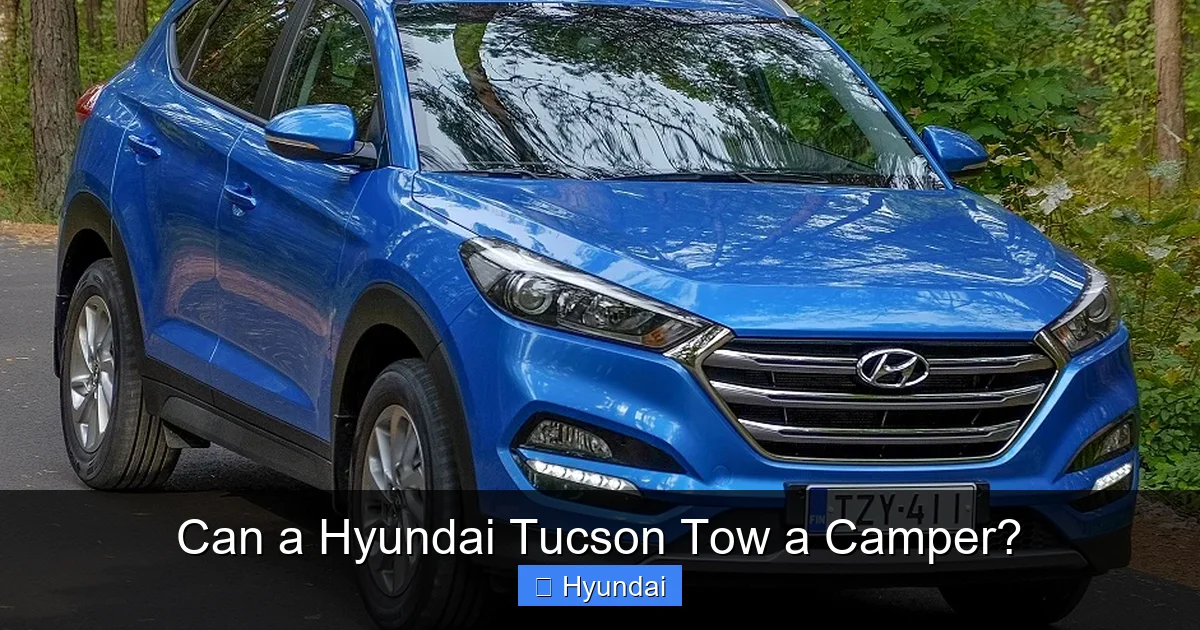
Visual guide about Can a Hyundai Tucson Tow a Camper?
Image source: thefunoutdoors.com
What’s Inside the Package?
The exact contents can vary slightly by year, but the core components are always there. It includes a heavy-duty radiator to handle the extra engine heat. A transmission oil cooler is arguably the most important part, preventing the transmission from overheating and failing prematurely under load. A wiring harness with a 7-pin connector for trailer lights and brakes. A reinforced frame hitch that’s welded directly to the vehicle’s structure, not just bolted to the bumper. And often, it includes a towing-specific tuning for the vehicle’s stability control and transmission shift points. This isn’t an accessory; it’s an integrated system. Installing an aftermarket hitch without the cooling upgrades is a sure way to void your warranty and destroy your transmission. If you’re buying a used Tucson, verify in the window sticker or with a Hyundai dealer that the tow package was factory-installed.
Aftermarket vs. Factory: Don’t Cut Corners
You might see universal hitches for sale. While they can work for very light loads (<1,000 lbs), they are not suitable for achieving your Tucson's full towing capacity. They lack the structural integration and often don't account for the cooling requirements. For your safety and your vehicle's longevity, if your Tucson doesn’t have the factory tow package, you should not attempt to tow a camper near its maximum rating. The cost of a transmission rebuild far exceeds the cost of buying a vehicle with the proper package from the start. This is a critical point we emphasize in all our towing guides, including comparisons with other SUVs like the Subaru Forester or Subaru Outback, where factory towing preparation is also key.
Safety Gear and Setup: It’s More Than Just a Hitch
Assuming you have the correct Tucson and a compatible lightweight camper, your work is half done. The other half is proper equipment and setup.
Choosing the Right Hitch
You need a hitch that matches your trailer’s coupler size (usually 2″ for small campers) and has a weight capacity that meets or exceeds your trailer’s GVWR. For a 3,500-lb setup, look for a Class III hitch (up to 5,000 lbs). More importantly, you need a weight-distributing hitch (WDH). A simple ball mount is fine for very light loads (<1,000 lbs), but for anything approaching 2,500-3,500 lbs, a WDH is essential. It uses spring bars to distribute the trailer's tongue weight across both axles of the Tucson and the axles of the trailer. This prevents the rear of the Tucson from sagging, which steals steering control and causes the front tires to lose grip. A WDH with integrated sway control is the gold standard and highly recommended.
Brake Controller: A Legal and Practical Must
In most states, any trailer over 1,500-3,000 lbs GVWR must have its own braking system. Your camper will have electric brakes. Your Tucson needs a brake controller mounted inside the cabin. This device activates the trailer’s brakes in proportion to your Tucson’s brake application. The factory tow package wiring harness makes connecting a brake controller straightforward. Do not tow a braked trailer without a properly adjusted controller. It’s illegal in many areas and dangerously increases your stopping distance.
Other Essentials
Don’t forget safety chains (crossed under the coupler), a properly sized breakaway switch (applies trailer brakes if it becomes disconnected), and LED trailer lights that are bright and visible. Check all lights (brake, turn, running) before every trip. Ensure your Tucson’s tire pressure is at the manufacturer’s recommended level for loaded towing, often found on a door jamb sticker. Under-inflated tires generate excessive heat and can fail.
Legal, Insurance, and Warranty Considerations
Towing isn’t just about mechanics; it’s about compliance and coverage.
State Laws and Regulations
Laws vary by state regarding maximum trailer length, width, and braking requirements. The 1,500-3,000 lb brake threshold is common but not universal. Some states require a separate trailer license plate or special permits for certain weights. Always check the DMV or highway patrol website for any state you’ll be traveling through. Also, be aware of speed limits for vehicles towing trailers, which are often lower than standard limits.
Insurance and Warranty
Notify your insurance company that you will be towing. While your auto policy may cover liability for the trailer, you might need separate coverage for the trailer itself and its contents. More importantly, understand your vehicle warranty. If you tow a trailer that exceeds your Tucson’s rated capacity, or if you tow without the required tow package components (like the transmission cooler), Hyundai can deny warranty claims for any related damage. A failed transmission or overheating issue will be traced back to the unauthorized stress of towing. Keep all documentation of your tow package installation and your trailer’s weight ticket.
What If My Tucson Isn’t Enough? Alternatives to Consider
Let’s be honest. For many campers, even a 3,500-lb capable Tucson is on the edge. If your dream camper weighs 4,000 lbs loaded, or if you need more space for a family of five, you need a bigger tow vehicle. This is where looking at other models becomes practical. The automotive market is filled with capable crossovers and SUVs that might be a better fit.
For those needing a bit more capacity in a similar-sized package, the Kia Sportage or the Kia Sorento (especially the Sorento with its available V6) offer competitive towing ratings. Moving into the midsize SUV segment, vehicles like the Subaru Forester and Subaru Outback have long been popular for light towing due to their standard all-wheel drive and respectable capacities. For those who prioritize maximum passenger and cargo space alongside towing, a minivan like the Toyota Sienna (especially the hybrid, which has unique towing considerations) can be a surprisingly capable and comfortable tow vehicle. Ultimately, matching the vehicle to the trailer weight is the golden rule. It’s far better to have a vehicle that’s slightly overqualified than one that’s struggling at its absolute limit.
The Final Verdict: A Capable Companion for the Lightweight Adventurer
So, can a Hyundai Tucson tow a camper? The definitive answer is: Yes, but only the right camper. For the 2022 and newer Tucson with the 2.5L engine and the complete factory tow package, towing a lightweight pop-up, teardrop, or ultra-light hard-sided camper under 3,000 lbs loaded is a realistic and enjoyable proposition. It transforms your Tucson from a daily driver into a gateway for adventure. The driving experience with a well-matched, lightweight trailer is stable and confidence-inspiring.
For owners of older Tucsons (2016-2021), the options are much more limited. The 1,500-2,000 lb maximum essentially restricts you to the tiniest of teardrops or a cargo carrier, not a true camper with amenities. If you have one of these models and a camping dream, your best path is to consider a different primary tow vehicle or a rooftop tent on your Tucson itself.
The journey to happy towing starts long before you hitch up. It begins with honest weight calculations, continues with verifying your vehicle’s exact specifications in the manual, and is secured by the proper equipment. Never guess, never exceed ratings, and always prioritize the safety of your family and others on the road. When done correctly, towing a camper with your Tucson opens up a world of memories. When done incorrectly, it leads to breakdowns, danger, and regret. Choose the former, do the homework, and hit the road with confidence.
Frequently Asked Questions
What is the maximum camper weight a Hyundai Tucson can safely tow?
For 2022+ models with the 2.5L engine and factory tow package, the maximum is 3,500 lbs. For 2016-2021 models with the 2.0L turbo, it’s 2,000 lbs, and with the 2.4L, it’s 1,500 lbs. This is the trailer’s loaded weight (GVWR), not its dry weight.
Does my Tucson year and trim level really make that much difference?
Absolutely. The towing capacity jump from the older generation (max 2,000 lbs) to the current one (max 3,500 lbs) is huge. Within the current generation, only the 2.5L non-hybrid engine with the tow package is rated for 3,500 lbs. The hybrid and base engines have lower or no ratings.
Is the factory tow package really necessary?
Yes, it is essential to achieve the maximum tow rating and for safe, warranty-protected towing. It provides the heavy-duty radiator, transmission cooler, and reinforced hitch that your Tucson’s standard cooling system cannot handle under sustained load. Towing without it risks severe transmission damage.
Can my Tucson tow a traditional 24-foot travel trailer?
No. A loaded 24-foot travel trailer typically weighs 4,000-6,000 lbs, far exceeding any Tucson’s capacity. You would need a full-size SUV or pickup truck for that size of camper.
Do I need a weight-distributing hitch and sway control?
For trailers over 1,000 lbs, and especially near the Tucson’s 3,500-lb limit, a weight-distributing hitch with sway control is strongly recommended. It improves handling, braking, and stability by properly distributing weight and counteracting trailer sway.
Are there legal requirements for towing a camper with my Tucson?
Yes. You must comply with state laws on trailer brakes (usually required over 1,500-3,000 lbs), lighting, and speed limits. Your trailer must have its own braking system and a breakaway switch. Always check the regulations for every state you plan to travel through.