
Can a Car Run Without a Catalytic Converter?

Yes, a car can run without a catalytic converter, but it’s not recommended. Removing it may improve exhaust flow slightly, but it leads to failed emissions tests, legal trouble, and environmental harm. Modern vehicles rely on sensors that can trigger warning lights and reduce performance when the catalytic converter is missing.
Key Takeaways
- Mechanical Functionality: A car can technically run without a catalytic converter because it doesn’t directly affect engine operation—it only treats exhaust gases.
- Legal Consequences: Driving without a catalytic converter is illegal in most U.S. states and many countries due to emissions regulations.
- Environmental Impact: Removing the catalytic converter increases harmful emissions like carbon monoxide, nitrogen oxides, and hydrocarbons.
- Check Engine Light & Sensors: Modern cars use oxygen sensors to monitor exhaust flow; removing the converter often triggers a check engine light and may cause limp mode.
- Performance Myths vs. Reality: While some believe removal boosts horsepower, real-world gains are minimal and often offset by drivability issues.
- Resale Value & Inspection Failures: Missing catalytic converters drastically reduce resale value and cause vehicles to fail mandatory smog checks.
- Replacement Options: If damaged, consider OEM, high-flow aftermarket, or used units—but always ensure compliance with local laws.
📑 Table of Contents
- Can a Car Run Without a Catalytic Converter?
- How Does a Catalytic Converter Work?
- Will Your Car Actually Run Better Without It?
- Legal and Regulatory Implications
- Environmental and Health Consequences
- What Happens If Your Catalytic Converter Is Stolen?
- Replacement and Repair Options
- Performance Modifications: Should You Remove It?
- Conclusion
Can a Car Run Without a Catalytic Converter?
You’ve probably heard someone say, “I took off my catalytic converter and my car runs better!” Or maybe you’re wondering if your vehicle will still start and drive if the catalytic converter is missing or stolen. The short answer? Yes—your car can run without a catalytic converter. But before you grab your wrench, there’s a lot more to consider.
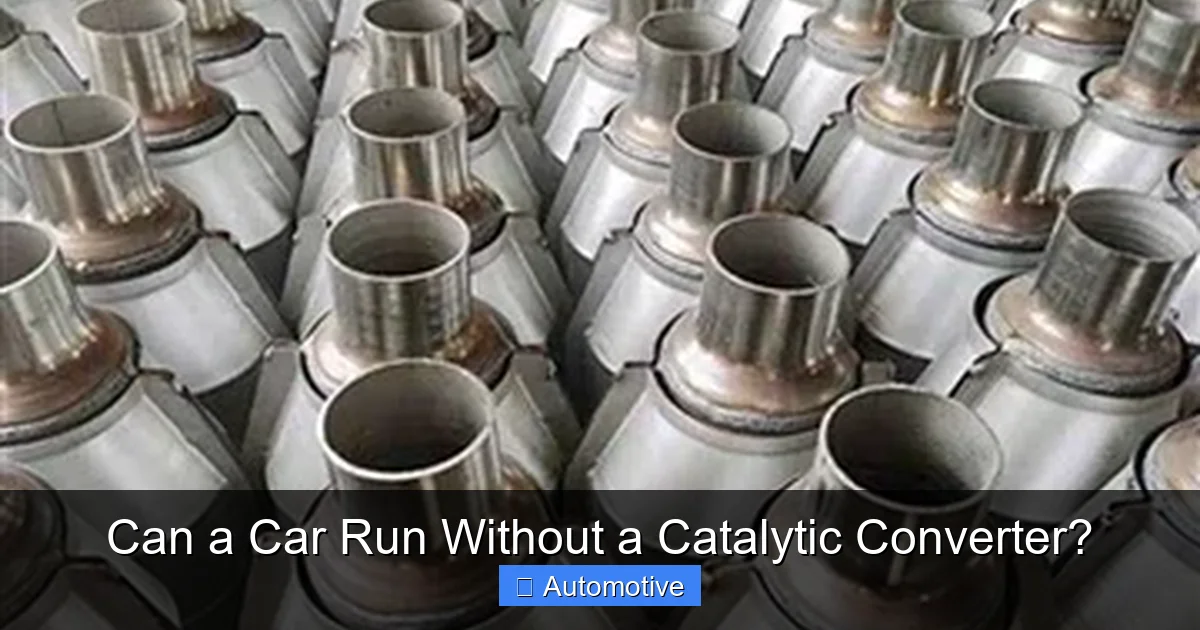
The catalytic converter is a key part of your vehicle’s exhaust system, designed to reduce harmful emissions by converting toxic gases like carbon monoxide, nitrogen oxides, and unburned hydrocarbons into less harmful substances such as carbon dioxide and water vapor. It doesn’t power the engine or control fuel delivery, so mechanically speaking, your engine doesn’t “need” it to run. However, modern vehicles are tightly integrated systems where every component plays a role—even if indirect.
In this article, we’ll dive deep into what happens when you remove or lose your catalytic converter, the legal and environmental implications, performance myths, and practical advice for dealing with a missing or damaged unit. Whether you’re troubleshooting an issue, considering a modification, or just curious, understanding the full picture will help you make informed decisions about your vehicle.
How Does a Catalytic Converter Work?
Visual guide about Can a Car Run Without a Catalytic Converter?
Image source: sefunm.com
To understand why removing a catalytic converter has consequences—even if the car still runs—you first need to know how it functions.
The Science Behind Emission Control
Inside the catalytic converter are ceramic or metallic honeycomb structures coated with precious metals like platinum, palladium, and rhodium. As hot exhaust gases pass through these structures, chemical reactions occur:
– Oxidation: Carbon monoxide (CO) and unburned hydrocarbons (HC) are converted into carbon dioxide (CO₂) and water (H₂O).
– Reduction: Nitrogen oxides (NOx) are broken down into nitrogen (N₂) and oxygen (O₂).
These reactions happen at high temperatures—typically between 600°F and 1,600°F—which is why catalytic converters are located close to the engine in the exhaust manifold or downpipe.
Integration with Engine Management Systems
Modern vehicles don’t treat the catalytic converter as an isolated part. Instead, it’s monitored by oxygen (O2) sensors placed before and after the converter. The upstream sensor measures oxygen levels in the raw exhaust, helping the engine control unit (ECU) adjust the air-fuel mixture. The downstream sensor checks whether the converter is effectively reducing emissions.
If the downstream sensor detects little change in oxygen levels—indicating the converter isn’t working—the ECU logs a diagnostic trouble code (DTC), usually P0420 or P0430, and turns on the check engine light. In some cases, the vehicle may enter “limp mode,” limiting power to protect the engine and emissions system.
So while the engine can physically run without the converter, the car’s computer may interpret its absence as a malfunction and restrict performance.
Will Your Car Actually Run Better Without It?
Visual guide about Can a Car Run Without a Catalytic Converter?
Image source: i0.wp.com
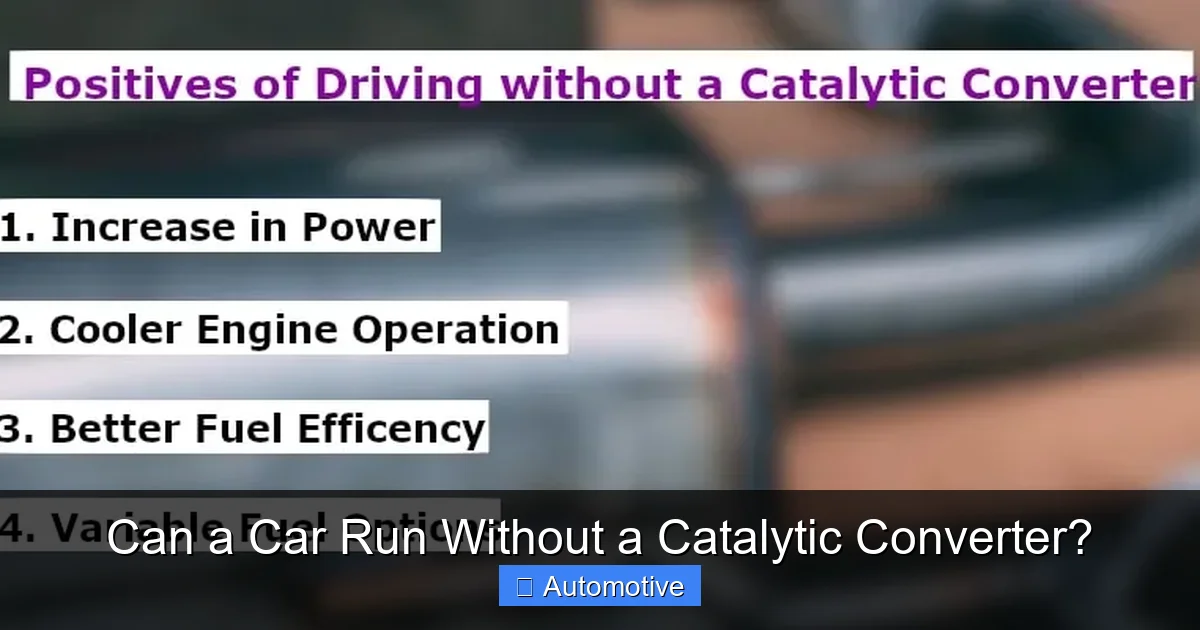
This is where things get controversial. Enthusiasts and tuners often claim that removing the catalytic converter improves horsepower, throttle response, and exhaust sound. But is that really true?
Exhaust Flow and Backpressure
The catalytic converter does create some backpressure in the exhaust system because of its dense internal structure. In theory, reducing backpressure allows exhaust gases to exit more freely, which could improve engine efficiency—especially at high RPMs.
However, modern catalytic converters are engineered to minimize flow restriction. High-flow catalytic converters, often used in performance applications, offer near-stock emissions compliance with significantly better flow than older, clogged units. Removing the converter entirely might reduce backpressure slightly, but the gain is usually negligible—often less than 5 horsepower on a naturally aspirated engine.
Real-World Performance Testing
Dyno tests and real-world driving experiences show mixed results. Some older vehicles (pre-2000s) with restrictive OEM converters may see a small improvement in acceleration after removal. But on newer cars with advanced engine management, the ECU often compensates for the altered exhaust readings by adjusting fuel trims, which can actually hurt performance.
Additionally, without the catalytic converter, the exhaust note becomes louder and more aggressive—which some drivers enjoy. But this “roar” is often mistaken for increased power. In reality, it’s just noise.
The Risk of Engine Damage
Believe it or not, removing the catalytic converter can sometimes harm your engine. Why? Because the O2 sensors rely on accurate readings to maintain the correct air-fuel ratio. If the downstream sensor detects abnormal oxygen levels, the ECU may run the engine too rich (excess fuel) or too lean (excess air), both of which can cause overheating, misfires, or even catalytic converter damage in other parts of the system.
Moreover, without the converter, unburned fuel can enter the exhaust system and ignite, potentially damaging the muffler or exhaust manifold.
Legal and Regulatory Implications
Visual guide about Can a Car Run Without a Catalytic Converter?
Image source: yourgreatcar.com
Even if your car runs fine without a catalytic converter, driving without one is rarely legal.
Federal and State Laws in the U.S.
In the United States, the Clean Air Act requires all vehicles manufactured after 1974 to have a functioning catalytic converter. The Environmental Protection Agency (EPA) enforces these rules, and tampering with emissions equipment is a federal offense.
Most states have their own emissions testing programs (commonly called “smog checks”) that include visual inspections for missing or modified catalytic converters. States like California, New York, and Colorado have especially strict rules. In California, for example, even replacing a converter with an aftermarket unit requires CARB (California Air Resources Board) certification.
Penalties for driving without a catalytic converter can include:
– Fines ranging from $100 to $1,000+
– Registration suspension
– Failed vehicle inspections
– Inability to renew your license plates
International Regulations
Outside the U.S., many countries have similar laws. The European Union, Canada, Australia, and Japan all enforce strict emissions standards. In the UK, for instance, tampering with emissions control systems can result in a vehicle failing its MOT test—and driving an unroadworthy vehicle is a criminal offense.
Even in regions with lax enforcement, insurance companies may deny claims related to emissions tampering or accidents involving modified vehicles.
Environmental and Health Consequences
Beyond legality and performance, removing a catalytic converter has serious environmental and public health implications.
Increased Air Pollution
Without a catalytic converter, your vehicle emits significantly higher levels of:
– Carbon monoxide (CO): A colorless, odorless gas that reduces oxygen delivery in the bloodstream. It’s deadly in enclosed spaces and contributes to smog.
– Nitrogen oxides (NOx): These gases contribute to ground-level ozone, acid rain, and respiratory problems like asthma and bronchitis.
– Hydrocarbons (HC): Unburned fuel vapors that react with sunlight to form smog and are linked to cancer and other health issues.
According to the EPA, a single vehicle without a catalytic converter can emit up to 10 times more pollutants than one with a properly functioning unit.
Impact on Climate Change
While the catalytic converter doesn’t directly reduce carbon dioxide (CO₂)—the primary greenhouse gas—it helps control other pollutants that exacerbate climate change. For example, black carbon (soot) from incomplete combustion absorbs sunlight and accelerates ice melt in polar regions.
By removing the converter, you’re not just polluting the air—you’re contributing to broader environmental degradation.
What Happens If Your Catalytic Converter Is Stolen?
Unfortunately, catalytic converter theft has surged in recent years due to the high value of precious metals inside. If yours is stolen, you’re left with a loud, illegal, and potentially unsafe vehicle.
Immediate Effects
– Loud exhaust noise (often described as a “roaring” or “rattling” sound)
– Check engine light on
– Reduced fuel efficiency
– Possible drivability issues (hesitation, rough idle)
What to Do Next
1. File a police report: This is essential for insurance claims.
2. Contact your insurance company: Comprehensive coverage often covers catalytic converter theft.
3. Get it replaced: Don’t drive the vehicle long-term without one. Even if you plan to replace it yourself, ensure the new unit meets legal standards.
4. Consider anti-theft measures: Install a catalytic converter shield, etch your VIN onto the unit, or park in well-lit, secure areas.
Replacement and Repair Options
If your catalytic converter is damaged, missing, or failing, you have several options—but not all are equal.
OEM (Original Equipment Manufacturer) Converters
– Pros: Guaranteed to meet emissions standards, perfect fit, long warranty
– Cons: Expensive (often $1,000–$3,000+)
– Best for: Daily drivers, leased vehicles, or those in strict emissions states
Aftermarket High-Flow Catalytic Converters
– Pros: Better flow than stock, often CARB-compliant, more affordable ($300–$800)
– Cons: May not last as long as OEM, quality varies by brand
– Best for: Performance enthusiasts who want legal compliance
Used or Salvage Converters
– Pros: Very low cost ($100–$300)
– Cons: Unknown condition, may fail quickly, not always legal
– Best for: Temporary fixes or off-road vehicles (not street legal)
Universal Converters
– Pros: Inexpensive, widely available
– Cons: Poor fitment, often fail emissions tests, not recommended for modern vehicles
– Best for: Older cars or non-street-legal applications
Always consult a trusted mechanic or emissions specialist before choosing a replacement. Installing an illegal or improperly functioning converter can lead to fines, failed inspections, and engine problems.
Performance Modifications: Should You Remove It?
Some car enthusiasts remove the catalytic converter as part of a “straight pipe” or “catless” exhaust system. While this may appeal to those seeking maximum sound and minimal restriction, it comes with major trade-offs.
When It Might Make Sense
– Off-road or race-only vehicles (not driven on public roads)
– Classic cars exempt from emissions testing (varies by state)
– Vehicles with engine swaps where emissions compliance isn’t required
When It’s a Bad Idea
– Daily drivers
– Vehicles in emissions-testing states
– Cars with turbochargers or advanced engine management (risk of sensor errors)
– Anyone concerned about environmental impact or legal compliance
If you’re serious about performance, consider a high-flow catalytic converter instead. Brands like MagnaFlow, Flowmaster, and Eastern Catalytic offer CARB-legal options that improve flow without sacrificing legality.
Conclusion
So, can a car run without a catalytic converter? Absolutely. But just because it *can* doesn’t mean it *should*.
While the engine will continue to operate, removing or disabling the catalytic converter triggers a cascade of problems: legal penalties, environmental harm, check engine lights, reduced resale value, and potential drivability issues. The minor performance gains—if any—are rarely worth the risks.
For most drivers, the best approach is to keep your catalytic converter intact or replace it with a legal, high-quality alternative. If you’re dealing with theft or damage, act quickly to restore your vehicle to compliance. And if you’re modifying for performance, explore legal high-flow options that balance power, sound, and responsibility.
Your car might run without a catalytic converter—but your peace of mind, wallet, and the planet will thank you for keeping it installed.
Frequently Asked Questions
Is it illegal to drive without a catalytic converter?
Yes, in most U.S. states and many countries, driving without a catalytic converter is illegal due to emissions regulations. You can face fines, failed inspections, and registration issues.
Will my car pass inspection without a catalytic converter?
No. Most states require a visual and functional check of the catalytic converter during emissions testing. A missing or tampered converter will cause an automatic failure.
Can removing the catalytic converter improve gas mileage?
Not significantly. While reduced backpressure might slightly improve efficiency in some cases, modern engine management systems often compensate by altering fuel trims, which can negate any gains.
Why is my check engine light on after catalytic converter removal?
The downstream oxygen sensor detects abnormal exhaust gas levels when the converter is missing, triggering codes like P0420. The ECU interprets this as a malfunction and illuminates the check engine light.
How much does it cost to replace a catalytic converter?
Replacement costs vary widely: OEM units can cost $1,000–$3,000+, while aftermarket high-flow converters range from $300–$800. Used or salvage units may cost under $300 but come with risks.
Can I install a catalytic converter myself?
Yes, if you have mechanical experience and the right tools. However, ensure the replacement unit is legal for your vehicle and state. Improper installation can lead to leaks, sensor errors, or failed inspections.