
Can a Car Overheat with Low Oil?

Yes, a car can overheat with low oil—even if the coolant level is fine. Engine oil lubricates moving parts and helps dissipate heat; without enough oil, friction increases, causing excessive heat buildup that can lead to engine damage or complete failure.
Key Takeaways
- Low oil reduces lubrication: Insufficient oil means metal parts grind against each other, generating dangerous levels of heat.
- Oil helps cool the engine: Beyond lubrication, motor oil absorbs and transfers heat away from critical components like pistons and bearings.
- Overheating can occur even with full coolant: Coolant only cools the cylinder head and block—oil is essential for internal engine cooling.
- Ignoring low oil warnings risks engine seizure: Prolonged driving with low oil can warp components or cause the engine to lock up.
- Regular oil checks prevent overheating: Checking oil weekly and changing it on schedule is one of the simplest ways to avoid costly repairs.
- Synthetic oils offer better heat resistance: High-quality synthetic oils maintain viscosity and cooling properties under extreme temperatures.
- Dashboard warnings are critical: Never ignore the oil pressure or check engine light—they’re early signs of trouble.
📑 Table of Contents
Can a Car Overheat with Low Oil?
You’re cruising down the highway, enjoying the breeze through your open window, when suddenly the temperature gauge spikes into the red zone. Your first thought? “Is my coolant low?” That’s a common assumption—and a reasonable one. But what if we told you that even with a perfectly filled radiator, your car could still overheat… because of low oil?
Yes, it’s true. While most drivers associate overheating with coolant issues, engine oil plays a far more critical role in temperature regulation than many realize. In fact, low oil levels can directly cause your engine to overheat—sometimes within minutes of driving. This isn’t just a minor inconvenience; it’s a serious mechanical threat that can lead to thousands of dollars in repairs or even total engine failure.
Understanding how oil contributes to engine cooling—and why neglecting it is so dangerous—is essential for every car owner. Whether you drive a compact sedan, a rugged SUV, or a high-performance sports car, the principles remain the same: oil isn’t just for lubrication. It’s a vital part of your engine’s thermal management system. In this article, we’ll break down exactly how low oil leads to overheating, what signs to watch for, and how you can protect your vehicle from this avoidable disaster.
How Engine Oil Prevents Overheating
Visual guide about Can a Car Overheat with Low Oil?
Image source: takeuroil.com
To grasp why low oil causes overheating, you first need to understand what engine oil actually does—beyond just reducing friction. Think of your engine as a high-speed dance floor filled with metal parts moving at thousands of revolutions per minute. Pistons slam up and down, crankshafts spin, valves open and close—all in perfect harmony. But without proper lubrication, this dance turns into a destructive collision.
Motor oil serves multiple functions, and cooling is one of the most overlooked. As oil circulates through the engine, it absorbs heat from hot components like the pistons, cylinder walls, and bearings. This heat is then carried away and dissipated through the oil pan and, in some vehicles, an oil cooler. In essence, oil acts like a secondary cooling system, working alongside the radiator and coolant to keep temperatures stable.
For example, during heavy acceleration or towing, the engine generates intense heat. Coolant handles the outer surfaces of the engine block and cylinder head, but it can’t reach the tight, internal spaces where pistons and rods operate. That’s where oil steps in. It flows directly over these components, soaking up heat and preventing them from reaching melting points.
Moreover, modern engines are designed with tight tolerances and high compression ratios, which means they run hotter than older models. This makes oil’s cooling role even more critical. Without enough oil, the engine loses its ability to manage this internal heat, leading to rapid temperature increases.
The Science Behind Oil and Heat Transfer
At the molecular level, oil has excellent thermal conductivity and heat capacity. As it flows through the engine, it picks up thermal energy from metal surfaces. The hotter the oil gets, the more it expands—but only up to a point. If oil levels are low, there’s less volume to absorb heat, so temperatures rise faster.
Additionally, oil viscosity (its thickness) changes with temperature. When oil is too hot, it becomes thinner and less effective at forming a protective film between moving parts. This leads to increased friction, which in turn generates even more heat—a dangerous feedback loop.
Synthetic oils are engineered to resist this breakdown better than conventional oils. They maintain their viscosity across a wider temperature range and often contain additives that improve heat dissipation. That’s why many high-performance and newer vehicles recommend synthetic oil—it’s better equipped to handle the thermal demands of modern engines.
Real-World Example: Towing with Low Oil
Imagine you’re pulling a trailer up a steep mountain pass. Your engine is working hard, RPMs are high, and temperatures are climbing. If your oil level is already low—say, half a quart below minimum—the oil pump may not be able to maintain proper circulation. Air can get into the oil pickup, causing momentary loss of pressure.
During these moments, metal parts briefly lose lubrication and heat up rapidly. Even if the coolant system is functioning perfectly, the internal engine components can overheat in seconds. This is why towing, idling in traffic, or driving in hot weather are high-risk scenarios for low-oil overheating.
Signs Your Car Is Overheating Due to Low Oil
Visual guide about Can a Car Overheat with Low Oil?
Image source: imagizer.imageshack.com
Recognizing the symptoms early can save your engine from catastrophic damage. While many overheating signs overlap with coolant issues, there are specific clues that point to low oil as the culprit.
One of the first warning signs is the oil pressure light on your dashboard. This light doesn’t just indicate low oil level—it signals that oil pressure has dropped to dangerous levels. Low pressure means the oil isn’t reaching critical components, leading to increased friction and heat.
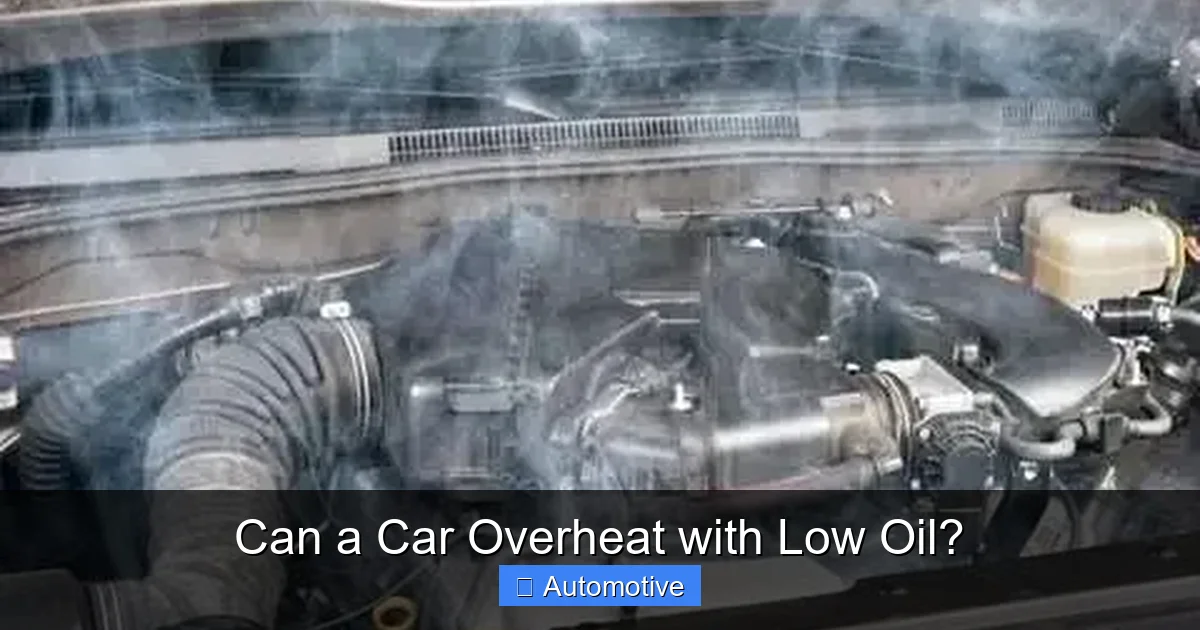
You might also notice a burning smell coming from under the hood. This could be oil leaking onto hot engine parts, but it can also be the scent of overheating metal or degraded oil. If the oil has been low for a while, it may have broken down and lost its ability to lubricate and cool effectively.
Another red flag is unusual engine noises. A knocking or ticking sound from the engine bay often indicates that lifters or bearings aren’t getting enough oil. As these parts heat up, they expand and create gaps, leading to clattering sounds. In severe cases, you might hear a loud bang—this could be a piston seizing due to extreme heat.
The temperature gauge is your most obvious indicator. If it creeps into the red zone, especially during normal driving or idling, pull over immediately. Continuing to drive can warp cylinder heads, crack engine blocks, or destroy the catalytic converter.
Dashboard Warnings You Should Never Ignore
Modern vehicles come equipped with sophisticated sensors that monitor oil pressure, temperature, and level. The check engine light may illuminate if the engine control unit (ECU) detects abnormal operating conditions, including overheating caused by low oil.
Some cars have a dedicated oil level sensor that triggers a warning on the dashboard. If you see a message like “Low Oil Level” or “Check Oil,” don’t delay. Pull over safely and check the dipstick. Even if the oil looks clean, low volume is the issue.
In older vehicles without oil level sensors, the oil pressure light is your best friend. It typically looks like an oil can with a drip. If it comes on while driving, stop the car as soon as it’s safe. Continuing to drive with low oil pressure can destroy the engine in under a minute.
What to Do If You Suspect Low Oil Overheating
If your temperature gauge rises or you see warning lights, follow these steps:
1. **Pull over safely.** Turn off the engine immediately to prevent further damage.
2. **Let the engine cool.** Never open the oil cap or radiator cap while the engine is hot—pressure and heat can cause severe burns.
3. **Check the oil level.** Use the dipstick to see if oil is below the minimum mark.
4. **Add oil if needed.** Use the correct type and grade specified in your owner’s manual. Don’t overfill.
5. **Inspect for leaks.** Look under the car for oil puddles or signs of a leak.
6. **Call for help if unsure.** If the engine was overheating, have it towed to a mechanic for inspection.
Never assume that adding oil will fix the problem if the engine has already overheated. Internal damage may have occurred, and driving it further could make things worse.
Why Coolant Alone Can’t Prevent Overheating

Visual guide about Can a Car Overheat with Low Oil?
Image source: fordrops.com
Many drivers believe that as long as the radiator is full, their engine is safe from overheating. But this is a dangerous misconception. Coolant and oil serve different—but equally important—roles in engine cooling.
Coolant (also called antifreeze) circulates through the engine block and cylinder head, absorbing heat and transferring it to the radiator, where it’s released into the air. It’s excellent at cooling the outer surfaces of the engine, but it can’t reach the internal components like pistons, connecting rods, and camshafts.
Oil, on the other hand, flows directly over these internal parts. It’s the only fluid that comes into contact with the hottest areas of the engine. Without sufficient oil, these components can overheat even if the coolant system is working perfectly.
Think of it like this: coolant is like the air conditioning in your house—it keeps the rooms cool. Oil is like the internal fans and heat sinks in your computer—it manages heat at the source. If the fans stop working, the computer will overheat no matter how cold the room is.
The Limits of the Cooling System
The radiator, water pump, and thermostat are designed to manage coolant flow and temperature. But they have their limits. In extreme conditions—like driving in 100°F weather, towing a heavy load, or idling in traffic—the cooling system can struggle to keep up.
When oil levels are low, the engine generates more heat than usual due to increased friction. This extra heat overwhelms the cooling system, causing the overall engine temperature to rise. Even if the coolant is circulating properly, it can’t absorb enough heat to compensate for the internal overheating.
In some cases, the engine may overheat so quickly that the coolant doesn’t even have time to boil. This is why low oil can cause overheating without the telltale steam or boiling coolant you might expect.
Case Study: Overheating with Full Coolant
A 2018 Honda Accord owner reported that their car overheated on a 20-minute drive, despite the coolant reservoir being full. The temperature gauge spiked, and the check engine light came on. A mechanic discovered the oil level was two quarts low due to a slow leak from the valve cover gasket.
The engine had overheated because the low oil caused excessive friction in the piston rings and bearings. The coolant system was functioning normally, but it couldn’t compensate for the internal heat buildup. The repair included replacing the valve cover gasket, changing the oil, and inspecting for warped components.
This case highlights a crucial point: coolant level is not a reliable indicator of overall engine health. You must also monitor oil levels regularly.
How to Prevent Low Oil Overheating
Prevention is always better than repair—especially when it comes to engine damage. The good news is that avoiding low oil overheating is simple, affordable, and takes just a few minutes a week.
The most effective step is to check your oil level regularly. Most manufacturers recommend checking it once a month, but if you drive frequently, in hot climates, or tow heavy loads, weekly checks are wise.
To check your oil:
– Park on level ground and turn off the engine.
– Wait 5–10 minutes for oil to settle.
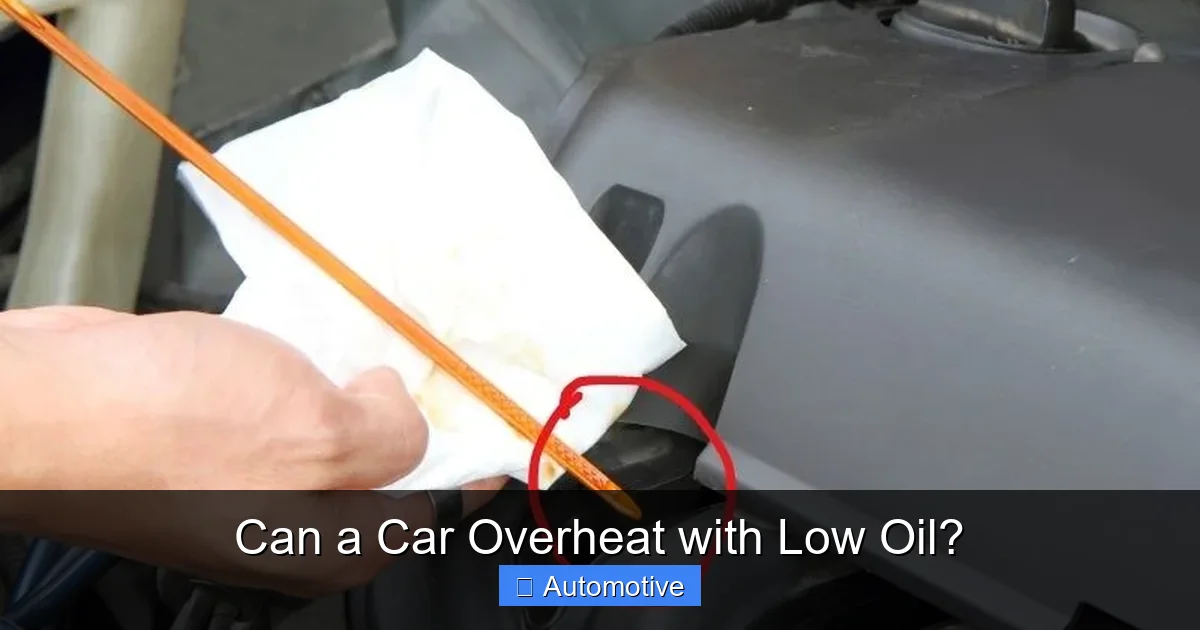
– Pull out the dipstick, wipe it clean, reinsert it fully, then pull it out again.
– Check the oil level against the markings (usually “Full” and “Add”).
– Ensure the oil is clean and not dark or gritty.
If the level is low, add the correct type of oil gradually, checking the dipstick after each addition. Never overfill—too much oil can cause foaming and reduce lubrication.
Follow the Manufacturer’s Maintenance Schedule
Your owner’s manual provides specific guidelines for oil change intervals, typically every 5,000 to 7,500 miles for conventional oil and up to 10,000 miles for synthetic. Sticking to this schedule ensures that old, degraded oil is replaced before it loses its cooling and lubricating properties.
Modern engines with turbochargers, direct injection, or high compression ratios may require more frequent oil changes. Always use the oil grade recommended by the manufacturer (e.g., 5W-30, 0W-20).
Use High-Quality Synthetic Oil
Synthetic oils are engineered for superior performance in extreme temperatures. They resist breakdown better than conventional oils, maintain viscosity under heat, and often contain additives that improve heat dissipation and reduce sludge buildup.
While synthetic oil costs more upfront, it can extend engine life and reduce the risk of overheating. Many mechanics recommend synthetic oil for vehicles driven in hot climates or used for towing.
Inspect for Leaks and Burning Oil
Low oil levels are often caused by leaks or internal burning. Common leak sources include the valve cover gasket, oil pan, oil filter, and rear main seal. If you notice oil spots under your car, have it inspected.
Burning oil can result from worn piston rings or valve seals, allowing oil to enter the combustion chamber. This not only lowers oil levels but also increases emissions and can trigger the check engine light.
Regular inspections by a trusted mechanic can catch these issues early, preventing low oil and overheating.
What Happens If You Ignore Low Oil?
Driving with low oil is one of the fastest ways to destroy an engine. The consequences can be severe and costly.
As oil levels drop, friction between metal parts increases. This generates excessive heat, which can warp or crack engine components. Pistons may seize in their cylinders, connecting rods can bend, and bearings can melt.
In extreme cases, the engine can lock up completely—meaning it won’t turn over at all. At this point, the only solution is a full engine rebuild or replacement, which can cost $5,000 or more.
Even if the engine doesn’t fail immediately, low oil causes cumulative damage. Over time, sludge builds up, oil passages clog, and components wear prematurely. This reduces engine efficiency, increases emissions, and shortens the vehicle’s lifespan.
Real Cost of Engine Damage
A customer in Texas drove their 2015 Ford F-150 with low oil for several weeks, ignoring the oil pressure light. The engine overheated and seized. The repair quote was $7,200 for a remanufactured engine, including labor.
In contrast, a routine oil change costs $40–$80. Checking oil weekly takes less than two minutes. The math is clear: prevention is vastly cheaper than repair.
Environmental and Safety Risks
Overheating engines can leak oil or coolant, creating slippery road hazards. In rare cases, extreme heat can cause fires under the hood. Additionally, burning oil increases harmful emissions, contributing to air pollution.
Protecting your engine isn’t just about saving money—it’s about safety and environmental responsibility.
Conclusion: Protect Your Engine with Regular Oil Care
So, can a car overheat with low oil? Absolutely. And it’s a risk every driver should take seriously. While coolant manages external engine temperatures, oil is the unsung hero that keeps internal components cool and lubricated. Without enough oil, friction skyrockets, heat builds up, and your engine is in grave danger.
The good news? This is entirely preventable. By checking your oil regularly, following your maintenance schedule, and using high-quality oil, you can avoid overheating and extend the life of your engine. Don’t wait for warning lights or strange noises—be proactive.
Your car is a major investment. Treat it with care, and it will reward you with reliable performance for years to come. Remember: a few minutes of prevention today can save you thousands in repairs tomorrow.
Frequently Asked Questions
Can low oil cause overheating even if the coolant is full?
Yes, low oil can cause overheating even with a full coolant system. Coolant only cools the outer engine surfaces, while oil is responsible for cooling internal components like pistons and bearings.
How often should I check my oil to prevent overheating?
Check your oil at least once a month, or weekly if you drive frequently, tow, or live in a hot climate. Regular checks help catch low levels before they cause damage.
What should I do if my car overheats due to low oil?
Pull over immediately, turn off the engine, let it cool, and check the oil level. Add oil if needed, but have the vehicle inspected by a mechanic before driving again.
Can I use any type of oil to top off low levels?
Always use the oil grade recommended in your owner’s manual (e.g., 5W-30). Mixing incompatible oils can reduce performance and increase wear.
Will adding oil fix an overheated engine?
Adding oil may prevent further damage, but if the engine has already overheated, internal components may be warped or damaged. A professional inspection is essential.
Is synthetic oil better for preventing overheating?
Yes, synthetic oil resists heat better, maintains viscosity, and provides superior lubrication and cooling, making it ideal for high-temperature driving conditions.