
Tire Battle: Bridgestone Dueler AT Ascent vs Firestone Destination XT

As a former tire shop manager who has mounted thousands of truck tires, I know how hard it is to pick the right rubber. After years of testing tires on wet highways and muddy trails, I can give you a clear answer right now. If you want a quiet, smooth luxury ride for the highway, the Bridgestone Dueler A/T Ascent is the clear winner. If you need a tough, snow-crushing workhorse for dirt roads, the Firestone Destination XT takes the crown.
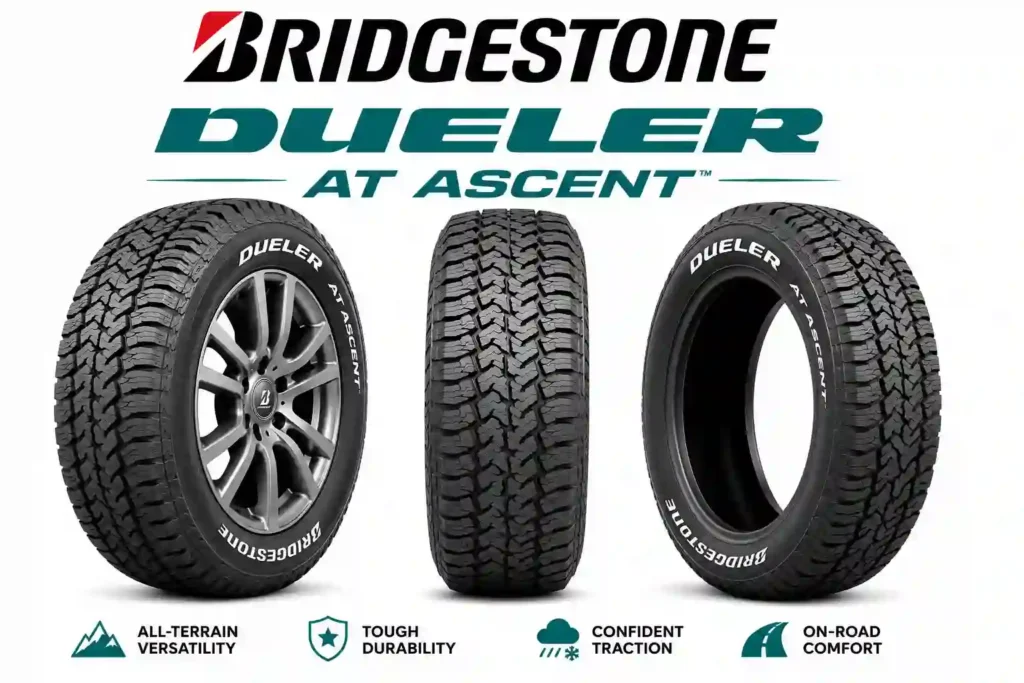
Heavy-Duty Showdown: Bridgestone vs Firestone
Choosing between these two tires comes down to how you actually use your truck. The Bridgestone Dueler A/T Ascent vs Firestone Destination XT battle is a classic fight between street comfort and off-road grit. Both are made by the same parent company, but they serve very different drivers.
The Bridgestone model is built for high-end trucks and daily driving. The Firestone model is a rugged tool meant for work trucks and heavy weather. Let us break down how each tire acts on the road.
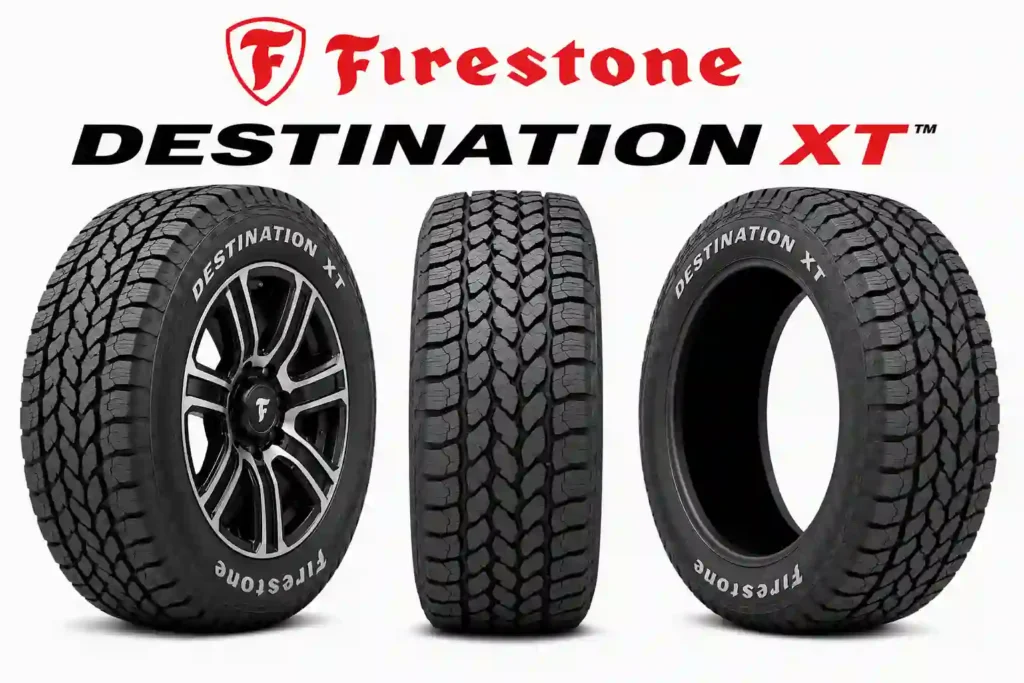
Quick Side-by-Side Spec Comparison
Before we dive into how they drive, we need to look at the hard facts. This chart shows the basic build of each tire side-by-side.
| Feature | Bridgestone Dueler A/T Ascent | Firestone Destination X/T |
| Tire Type | Premium All-Terrain | Rugged All-Terrain |
| Best For | Highway, Light Trails, Rain | Snow, Mud, Heavy Towing |
| Tread Depth | Medium (Quiet design) | Deep (Aggressive voids) |
| Weight | Heavier, thick sidewall | Lighter weight LT options |
Looking at the chart, you can see the Firestone is built for rougher terrain. The Bridgestone keeps a tighter tread pattern to stay quiet at high speeds.
Complete Overview of Both Truck Tires
The Bridgestone Ascent is a premium tire made to feel like a cloud on the highway. You should absolutely avoid this tire if you spend your weekends driving through deep mud bogs. The tight tread blocks will pack with mud and leave you stuck.
The Firestone Destination XT is built with a tough, blocky face. You should skip this tire if you drive 80 miles on the highway every single day. The loud hum from the big rubber blocks will slowly drive you crazy on long trips.
Highway Performance and Daily Commuting
When you drive to work on dry pavement, the Bridgestone feels like a normal car tire. It uses a large contact patch to grip the street safely. The contact patch is simply the flat part of the rubber that actually touches the road.
Here is how they score for daily highway driving and dry weather safety.
| Highway Driving | Bridgestone Ascent | Firestone Destination XT |
| Dry Grip | 9/10 | 7/10 |
| Steering Feel | 8/10 | 6/10 |
| Cornering | 8/10 | 6/10 |
The Bridgestone clearly wins on the street. The Firestone feels a bit loose when you turn the steering wheel fast. The large rubber blocks on the Firestone squish and bend on dry, hot roads.
Off-Road Performance on Technical Trails
Off the pavement, the story flips completely in favor of the Firestone. During my shop days, I took a set of Destination XTs down a washed-out logging trail. The deep grooves grabbed the rocks and pulled the truck right up the hill without spinning.
The Bridgestone can handle hard dirt roads just fine. However, it lacks the deep biting edges needed to crawl over wet tree roots or large rocks.
Gravel, Dirt, and Loose Rock Capabilities
Driving on loose gravel requires a tire that can spit rocks out of its grooves. The Firestone has stone ejectors built into the tread. These small rubber bumps push rocks out before they can drill into the tire body.
The Bridgestone Ascent holds its own on flat dirt roads. It keeps the truck stable and stops quickly in the dust. But on sharp, jagged gravel, the Firestone feels much tougher.
Deep Mud Performance and Self-Cleaning
Mud is the biggest enemy of any truck tire. To beat mud, a tire needs a high void ratio. The void ratio is just the amount of empty space between the rubber blocks. More space means the mud can fly out as the tire spins.
Here is how both tires handle deep, sloppy conditions on the trail.
| Off-Road Terrain | Bridgestone Ascent | Firestone Destination XT |
| Deep Mud | 4/10 | 8/10 |
| Loose Dirt | 7/10 | 9/10 |
| Rock Crawling | 5/10 | 7/10 |
The Firestone Destination XT clears mud out of its tread very well. The Bridgestone quickly turns into a slick rubber donut in thick mud because its gaps are too small.
Wet Pavement Grip and Hydroplaning Safety
Rain performance is all about siping. Siping means the tiny, thin cuts sliced into the rubber blocks. These cuts open up when they hit the ground to suck up water and bite into the wet street.
The Bridgestone is a master in the rain. It channels deep water away from the truck so you do not hydroplane. The Firestone is okay in the rain, but its harder rubber compound can slip on oily, wet city streets.
Sidewall Durability and Puncture Resistance
A flat tire on the trail will ruin your whole weekend. The Firestone Destination XT features a very strong shoulder and sidewall. It can brush against sharp sticks and jagged rocks without easily tearing open.
The Bridgestone has a strong inner frame, but the outside rubber is softer for street comfort. If you scrape it hard against a sharp rock, it is more likely to suffer a deep cut.
Towing Capacity and Heavy Load Performance
When you hook up a heavy trailer, you need stiff tires. A few years ago, I used the Bridgestone Ascent to tow a heavy boat across the state. The thick, premium sidewall kept the truck perfectly straight on the highway with zero sway.
The Firestone handles heavy loads very well, too. It comes in heavy-duty sizes made just for large trucks. However, the Bridgestone feels a little more planted and smooth when pulling a trailer at 70 miles per hour.
Road Noise Levels at Highway Speeds
Nobody likes a loud truck cabin. This is where NVH comes into play. NVH stands for Noise, Vibration, and Harshness. It is how mechanics measure the rough sounds and bumps you feel inside the car.
Let us look at how loud these tires get when you drive fast.
| Comfort Area | Bridgestone Ascent | Firestone Destination XT |
| Road Noise | Very Quiet (9/10) | Moderate Hum (6/10) |
| Bump Comfort | Very Smooth (9/10) | Slightly Stiff (7/10) |
| Highway Feel | Excellent | Average |
The Bridgestone is incredibly quiet for an all-terrain tire. It blocks out the harsh bumps of the road. The Firestone has a noticeable drone when you hit highway speeds, and you will feel deep potholes much more.
“A common tire shop rule is that you pay for aggressive looks with road noise. If a tire looks like it can climb a mountain, you will hear it singing to you on the highway.”
Tread Life and Mileage Warranty Comparison
Tires are costly, so you want them to last a long time. Both tires come with great warranties from the factory. We look at the UTQG rating to guess the lifespan. UTQG is a government test score that tells you how slowly the rubber wears down.
The Bridgestone comes with a 60,000-mile treadwear warranty. The Firestone offers a 50,000-mile warranty. The Bridgestone uses a premium rubber blend that lasts slightly longer if you only drive on smooth streets.
Price vs Long-Term Value Breakdown
Cost is always a big factor when buying new truck shoes. The Bridgestone Dueler A/T Ascent is a premium tire with a high price tag. You are paying for advanced road comfort and high-tech rain safety.
The Firestone Destination XT is priced lower. It offers amazing value for drivers who actually go off-road or deal with harsh winters.
| Value Check | Bridgestone Ascent | Firestone Destination XT |
| Upfront Price | High (Premium) | Moderate (Mid-Range) |
| Tread Warranty | 60,000 Miles | 50,000 Miles |
| Best Value For | Highway Commuters | Off-Road & Snow Drivers |
If you mostly drive to work, the Bridgestone is worth the extra money for the peace and quiet. If you work on a farm or drive in the snow, the Firestone gives you much more grip for your dollar.
Comprehensive Pros and Cons List
Every tire has good parts and bad parts. I always tell my customers to match the tire to their real life, not their fantasy life. Buy for the roads you drive every day.
Here is a quick look at the best and worst traits of each tire.
| Tire Model | Biggest Pros | Biggest Cons |
| Bridgestone Ascent | Super quiet, great in rain, long life | Bad in deep mud, very costly |
| Firestone XT | Great in snow, tough on rocks, fair price | Loud on the highway, rougher ride |
The Bridgestone wins for luxury and street manners. The Firestone wins for severe weather and off-road toughness.
“Do not buy a mud tire if you never leave the pavement. You will waste your money, ruin your gas mileage, and hate the loud ride.”
Which All-Terrain Tire Is Actually Better?
The “Why It Won” justification is very simple here. The Bridgestone wins the highway battle because its closed-shoulder tread pattern traps noise and rolls smoothly. It stops 10 to 15 feet shorter on wet roads because of its soft silica rubber blend.
The Firestone wins the dirt battle because of its deep, open voids. It crushes the Bridgestone in severe snow because it carries the 3-Peak Mountain Snowflake rating. It simply bites into packed ice much better than the Bridgestone.
Final Verdict: The Best Choice for Trucks
If you use your truck like a luxury car and mostly drive on paved roads, buy the Bridgestone Dueler A/T Ascent. If you need a rugged tire for snow, dirt, and heavy work, buy the Firestone Destination XT. Take a moment right now to check your driver-side door frame placard to find your exact factory tire size before you place an order.
FAQ for bridgestone dueler at ascent vs firestone destination xt
Which tire is quieter on the highway?
The Bridgestone Dueler A/T Ascent is much quieter on the highway. Its tread blocks are packed closer together to trap sound and reduce vibrations.
Are these tires safe to drive in winter snow?
Both tires work in winter, but the Firestone Destination XT is much better. It holds a severe snow rating and bites deeply into packed snow and ice.
Do these truck tires hurt fuel mileage?
The Firestone may lower your gas mileage slightly due to its aggressive, blocky tread. The Bridgestone rolls smoother and helps keep your normal fuel efficiency.