Best Mud Tire for Daily Driving
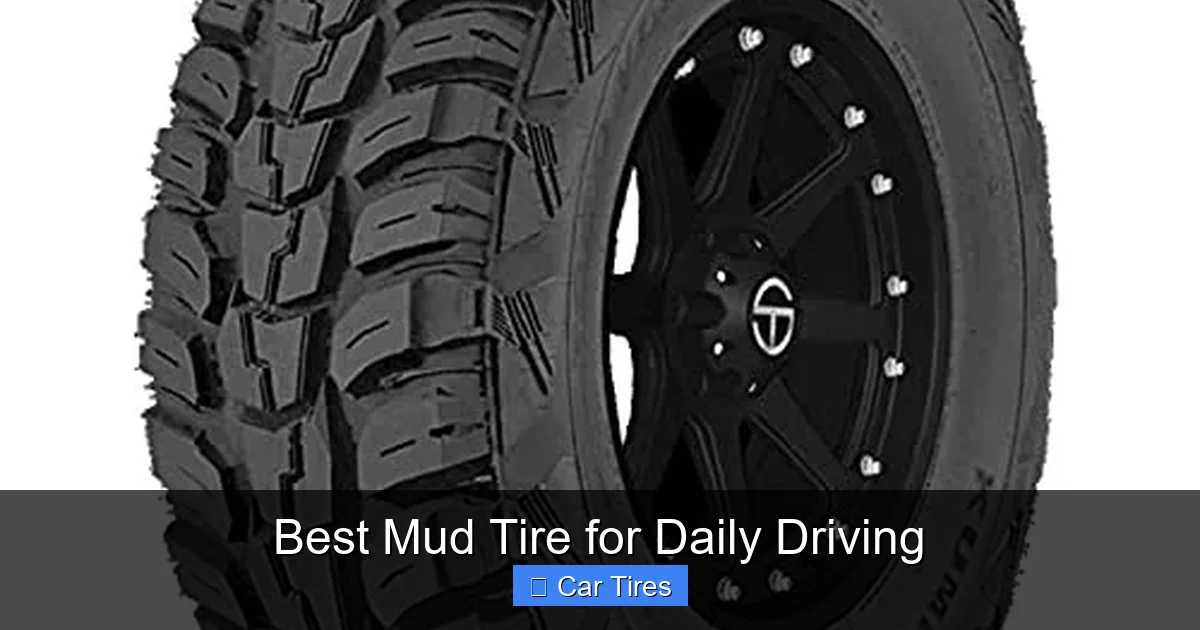
Choosing the best mud tire for daily driving means finding a balance between aggressive off-road capability and smooth, quiet, safe on-road performance. The ideal tire offers excellent traction in mud and snow without sacrificing tread life, fuel efficiency, or ride comfort during everyday commutes.
In This Article
- 1 Key Takeaways
- 2 📑 Table of Contents
- 3 Why Choose a Mud Tire for Daily Driving?
- 4 What Makes a Mud Tire Suitable for Daily Use?
- 5 Top 5 Best Mud Tires for Daily Driving in 2024
- 6 How to Choose the Right Mud Tire for Your Vehicle
- 7 Installation, Maintenance, and Safety Tips
- 8 Common Myths About Mud Tires for Daily Driving
- 9 Final Thoughts: Is a Mud Tire Right for Your Daily Driver?
- 10 Frequently Asked Questions
Key Takeaways
- Balance is key: The best mud tires for daily driving blend off-road grip with on-road comfort, noise control, and tread durability.
- Look for hybrid designs: Many top performers are mud-terrain tires with all-terrain features, offering versatility across conditions.
- Tread pattern matters: Aggressive lugs provide mud traction, but too much aggression leads to noise and poor highway handling.
- Consider weather ratings: Tires with the Three-Peak Mountain Snowflake (3PMSF) symbol perform well in winter and wet conditions.
- Check warranty and longevity: High-quality mud tires often come with 40,000–60,000-mile treadwear warranties, making them cost-effective for daily use.
- Noise and comfort can be managed: Modern engineering reduces road noise and improves ride quality, even in rugged mud tires.
- Fit your vehicle and driving style: Not all mud tires suit every truck or SUV—match tire size, load rating, and speed rating to your needs.
📑 Table of Contents
- Why Choose a Mud Tire for Daily Driving?
- What Makes a Mud Tire Suitable for Daily Use?
- Top 5 Best Mud Tires for Daily Driving in 2024
- How to Choose the Right Mud Tire for Your Vehicle
- Installation, Maintenance, and Safety Tips
- Common Myths About Mud Tires for Daily Driving
- Final Thoughts: Is a Mud Tire Right for Your Daily Driver?
Why Choose a Mud Tire for Daily Driving?
If you’re someone who loves the look and capability of a rugged off-road vehicle but still spends most of your time on paved roads, you’ve probably asked yourself: Can I really use mud tires every day? The short answer is yes—but not all mud tires are created equal when it comes to daily driving.
Mud-terrain tires are built for extreme off-road conditions. They feature deep, aggressive tread patterns with large lugs that dig into soft terrain like mud, sand, and loose rock. But traditionally, these same features made them noisy, uncomfortable, and prone to rapid wear on highways. That’s changing fast. Thanks to advances in rubber compounds, tread design, and manufacturing, today’s best mud tires for daily driving offer a surprising blend of toughness and refinement.
Imagine driving your truck to work on Monday morning, cruising smoothly on the interstate, then hitting a muddy trail on Saturday without switching tires. That’s the dream—and it’s now a realistic option. The best mud tires today are engineered to handle both worlds. They give you the confidence to tackle off-road adventures while still being civilized enough for school drop-offs, grocery runs, and long commutes.
But here’s the catch: not every mud tire will deliver this balance. Some are still too loud, too harsh, or too short-lived for regular use. That’s why it’s crucial to know what to look for. In this guide, we’ll break down the features that matter most, review top-performing models, and help you pick the best mud tire for daily driving that fits your lifestyle, vehicle, and budget.
What Makes a Mud Tire Suitable for Daily Use?
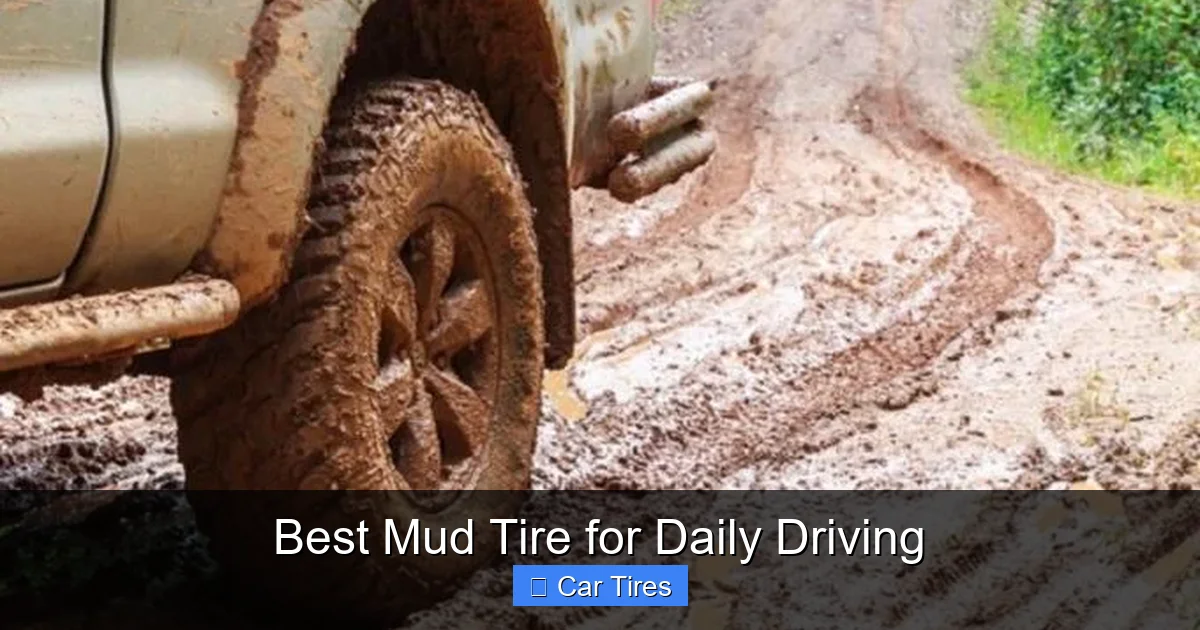
Visual guide about Best Mud Tire for Daily Driving
Image source: carcaretotal.com
So, what separates a mud tire that’s just for weekends from one that can handle the daily grind? It all comes down to design, materials, and engineering. Let’s look at the key factors that determine whether a mud tire is daily-driver friendly.
Tread Design and Aggression Level
The tread pattern is the most obvious feature of any mud tire. Deep, widely spaced lugs are great for self-cleaning in mud, but they can cause noise and vibration on pavement. The best mud tires for daily driving use a moderately aggressive tread design—enough to grip in soft terrain, but not so extreme that it becomes a nuisance on roads.
Look for tires with staggered or interlocking lugs, which help reduce noise by breaking up sound waves. Some models also use variable pitch sequencing—changing the size and spacing of tread blocks—to minimize road hum. For example, the BFGoodrich Mud-Terrain T/A KM3 uses a “CoreGard” sidewall and staggered shoulder blocks to improve on-road manners without sacrificing off-road performance.
Rubber Compound and Durability
The rubber compound plays a huge role in how a tire behaves on different surfaces. Softer compounds grip better in mud and snow but wear out faster on pavement. Harder compounds last longer but may lack traction in extreme conditions.
Top-tier mud tires use advanced silica-infused or multi-compound treads. These blends offer a sweet spot: enough softness for grip, but enough durability for daily miles. For instance, the Goodyear Wrangler MT/R with Kevlar uses a dual-compound tread—softer on the edges for cornering grip, harder in the center for longevity.
Sidewall Strength and Protection
Mud tires often face sharp rocks, roots, and debris off-road. That’s why sidewall protection is critical. Look for features like reinforced sidewalls, cut-resistant rubber, or added layers like Kevlar. These not only improve off-road durability but also reduce the risk of blowouts during daily driving, especially if you frequently drive on rough or debris-laden roads.
Noise and Vibration Control
One of the biggest complaints about traditional mud tires is road noise. But modern designs have made huge strides. Many now include noise-reducing technologies like sound-dampening foam (used in some Nitto and Toyo models) or optimized tread block shapes that minimize resonance.
If you’re sensitive to noise, look for tires with a “quiet channel” or “noise-optimized” design. These features can reduce cabin noise by up to 30% compared to older mud-terrain models.
Wet and Winter Performance
Just because a tire is built for mud doesn’t mean it can’t handle rain or snow. In fact, the best mud tires for daily driving often carry the Three-Peak Mountain Snowflake (3PMSF) symbol, meaning they meet severe snow service standards.
Deep tread grooves and siping (tiny slits in the tread blocks) help channel water and improve grip on wet roads. Some models, like the Cooper Discoverer STT Pro, use full-depth siping to maintain winter performance even as the tire wears.
Top 5 Best Mud Tires for Daily Driving in 2024
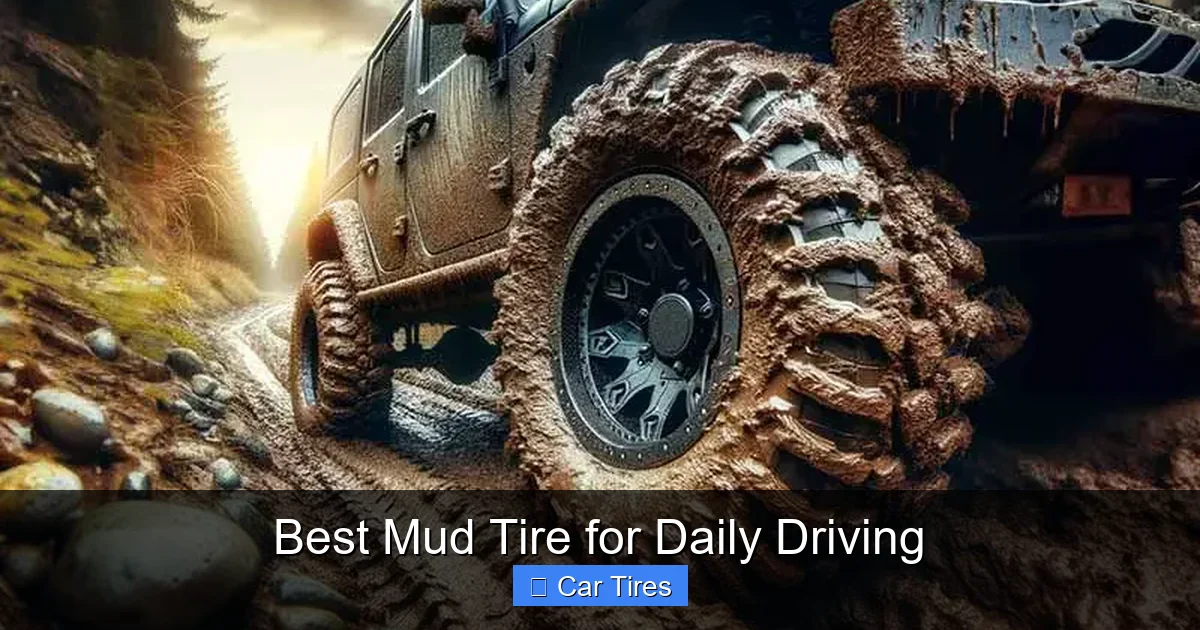
Visual guide about Best Mud Tire for Daily Driving
Image source: tiregrades.com
Now that you know what to look for, let’s dive into the top performers. These five mud tires stand out for their balance of off-road capability and on-road comfort, making them ideal for daily use.
1. BFGoodrich Mud-Terrain T/A KM3
The KM3 is a legend in the off-road world—and for good reason. It’s one of the most capable mud tires available, but it’s also surprisingly refined for daily driving.
Pros:
– Excellent mud and rock crawling performance
– 3PMSF-rated for winter use
– CoreGard sidewall protection resists cuts and punctures
– Relatively quiet for a mud tire
– 40,000-mile treadwear warranty
Cons:
– Slightly stiffer ride than all-terrains
– Higher price point
Best for: Off-road enthusiasts who want maximum capability without completely sacrificing daily drivability. Great for Jeeps, trucks, and SUVs that see serious trail time.
2. Goodyear Wrangler MT/R with Kevlar
This tire combines aggressive looks with impressive on-road manners. The Kevlar-reinforced sidewalls add strength without adding excessive weight.
Pros:
– Kevlar layer enhances durability and puncture resistance
– Dual-compound tread improves wear and grip
– Good wet and snow performance
– Available in a wide range of sizes
Cons:
– Can be noisy at highway speeds
– Not as widely available as some competitors
Best for: Drivers who want a tough, durable tire for mixed use—ideal for those who drive on rough rural roads or construction zones.
3. Nitto Trail Grappler M/T
The Trail Grappler is a hybrid mud-terrain that leans toward all-terrain comfort. It’s one of the quietest mud tires on the market, thanks to its “Nitto Noise Reduction” technology.
Pros:
– Very low road noise
– Excellent tread life (up to 60,000 miles in some sizes)
– Strong wet and snow traction
– Aggressive look without extreme harshness
Cons:
– Slightly less aggressive in deep mud than pure mud-terrains
– Heavier than some alternatives
Best for: Daily drivers who want a bold look and solid off-road ability but prioritize comfort and longevity.
4. Cooper Discoverer STT Pro
Cooper’s STT Pro is a favorite among overlanders and weekend warriors. It’s built to handle extreme conditions while still being usable on pavement.
Pros:
– Full-depth siping for consistent winter performance
– Armor-Tek3 construction for sidewall strength
– Good balance of grip and wear
– 3PMSF-rated
Cons:
– Can be noisy on smooth pavement
– Limited availability in larger sizes
Best for: Drivers in snowy or wet climates who need a tire that performs year-round.
5. Toyo Open Country M/T
Toyo’s M/T is known for its refined engineering and long tread life. It’s a great choice if you want a mud tire that doesn’t feel like a compromise.
Pros:
– Quiet and comfortable ride
– Excellent treadwear (up to 50,000 miles)
– Strong wet and dry handling
– Available in metric and flotation sizes
Cons:
– Less aggressive in deep mud than some rivals
– Higher initial cost
Best for: Commuters who want a durable, long-lasting tire with off-road flair.
How to Choose the Right Mud Tire for Your Vehicle
Visual guide about Best Mud Tire for Daily Driving
Image source: gravelcyclist.com
Picking the best mud tire for daily driving isn’t just about performance—it’s also about fit, function, and your personal driving habits. Here’s how to make the right choice.
Match the Tire to Your Vehicle Type
Not all mud tires work on every vehicle. Trucks, Jeeps, and SUVs have different needs. For example:
– Full-size trucks (like Ford F-150, Ram 1500) benefit from larger, heavier-duty mud tires with high load ratings.
– Jeeps and compact SUVs (like Wrangler, 4Runner) can handle slightly lighter mud tires but still need strong sidewalls for rock crawling.
– Crossover SUVs (like Toyota RAV4, Honda CR-V) are generally not ideal for true mud-terrains—consider hybrid or all-terrain tires instead.
Always check your owner’s manual for recommended tire size, load index, and speed rating.
Consider Your Driving Environment
Where you live and drive matters. If you’re in a rainy or snowy region, prioritize tires with 3PMSF ratings and good siping. If you frequently drive on gravel or dirt roads, look for cut-resistant sidewalls.
For city dwellers, noise and comfort should be top priorities. Opt for models with noise-reduction features and moderate tread aggression.
Think About Tread Life and Warranty
Daily driving wears tires faster than occasional off-roading. Look for tires with strong treadwear warranties—40,000 miles or more is ideal. Also, check the UTQG (Uniform Tire Quality Grading) treadwear rating. A higher number (like 600) means longer life.
Keep in mind that aggressive driving, improper inflation, and misalignment can shorten tire life, even on durable models.
Budget Wisely
Mud tires are an investment. Prices range from $150 to $500+ per tire, depending on size and brand. While it’s tempting to go cheap, skimping on quality can lead to poor performance, faster wear, and safety risks.
Consider the total cost of ownership: a more expensive tire that lasts 60,000 miles may be cheaper in the long run than a budget tire that needs replacing at 30,000 miles.
Installation, Maintenance, and Safety Tips
Even the best mud tire won’t perform well if it’s not installed or maintained properly. Follow these tips to get the most out of your investment.
Professional Installation is a Must
Mud tires are heavier and stiffer than standard tires. They require precise mounting and balancing to avoid vibration and uneven wear. Always have them installed by a reputable shop with experience in off-road tires.
Check Tire Pressure Regularly
Underinflated tires wear faster, overheat, and reduce fuel efficiency. Overinflation leads to a harsh ride and reduced traction. Check pressure at least once a month, and adjust for load and temperature changes.
Use the manufacturer’s recommended PSI, not the max pressure listed on the sidewall.
Rotate Tires Every 5,000–7,000 Miles
Regular rotation ensures even wear, especially important for directional or asymmetric tread patterns. Follow the rotation pattern recommended for your vehicle (front-to-back, cross-pattern, etc.).
Inspect for Damage
After off-road trips, check for cuts, punctures, or embedded rocks. Clean mud from tread grooves to prevent imbalance and corrosion. Also, inspect sidewalls for bulges or cracks—these can lead to blowouts.
Align and Balance Annually
Misalignment causes uneven wear and poor handling. Have your alignment checked once a year or after hitting potholes or curbs. Balancing should be done whenever tires are remounted or if you feel vibration.
Common Myths About Mud Tires for Daily Driving
There are a lot of misconceptions about using mud tires every day. Let’s clear up some of the most common myths.
Myth 1: Mud Tires Are Too Noisy for Daily Use
Reality: While older models were loud, modern mud tires use noise-dampening tech and optimized tread designs. Many are now comparable to all-terrains in cabin noise.
Myth 2: They Wear Out Too Fast
Reality: High-quality mud tires now offer 40,000–60,000 miles of tread life. With proper maintenance, they can last as long as many all-terrains.
Myth 3: They’re Unsafe on Highways
Reality: Top-tier mud tires meet DOT safety standards and perform well in wet and dry conditions. Look for 3PMSF ratings and good UTQG traction grades.
Myth 4: They Hurt Fuel Economy
Reality: Yes, mud tires are heavier and have more rolling resistance, which can reduce MPG by 1–3 miles per gallon. But the difference is often negligible for most drivers—especially when weighed against the added capability.
Myth 5: You Need to Switch Tires for Winter
Reality: Many modern mud tires are 3PMSF-rated and perform well in snow and ice. You may not need dedicated winter tires unless you live in an extreme climate.
Final Thoughts: Is a Mud Tire Right for Your Daily Driver?
So, is the best mud tire for daily driving the right choice for you? If you value off-road capability, rugged style, and the freedom to explore without switching tires, the answer is likely yes.
The key is choosing a model that balances aggression with refinement. Look for tires with noise reduction, strong warranties, and good wet/snow performance. Avoid overly aggressive designs if you spend most of your time on pavement.
Remember, your tires are the only part of your vehicle that touches the road. They affect safety, comfort, handling, and efficiency. Investing in a high-quality mud tire that suits your lifestyle is a smart move—whether you’re hitting the trails or just cruising to work.
With the right tire, you don’t have to choose between capability and comfort. You can have both.
Frequently Asked Questions
Can I really use mud tires for daily driving?
Yes, many modern mud tires are designed for daily use. Look for models with noise reduction, good tread life, and 3PMSF ratings for winter performance. They offer off-road capability without sacrificing too much on-road comfort.
Are mud tires safe on highways?
Top-quality mud tires meet DOT safety standards and perform well at highway speeds. Choose tires with strong sidewalls, proper load ratings, and good wet traction for safe high-speed driving.
Do mud tires wear out faster than all-terrains?
It depends on the model and driving habits. Some high-end mud tires now offer 40,000–60,000 miles of tread life, comparable to all-terrains. Proper maintenance and rotation help extend their lifespan.
Are mud tires noisy on pavement?
Older models were loud, but newer designs use noise-dampening technology and optimized tread patterns. Many are now quiet enough for daily commuting, especially hybrid mud-terrain models.
Do mud tires work in snow and rain?
Yes, especially if they carry the 3PMSF symbol. Deep treads and siping help channel water and grip snow. However, they may not match dedicated winter tires in extreme ice conditions.
How much do mud tires cost?
Prices range from $150 to $500+ per tire, depending on size and brand. While more expensive upfront, long-lasting models can be cost-effective over time due to their durability and tread life.