
Are Kia Parts Expensive?

Contents
- 1 Key Takeaways
- 2 📑 Table of Contents
- 3 Are Kia Parts Expensive? A Comprehensive Look at Repair and Maintenance Costs
- 4 Understanding Kia’s Parts Pricing Structure
- 5 OEM vs. Aftermarket Kia Parts: Which Is Right for You?
- 6 Where to Buy Kia Parts: Dealerships, Retailers, and Online Stores
- 7 Tips to Save Money on Kia Parts and Repairs
- 8 Real-World Examples: How Much Do Kia Repairs Actually Cost?
- 9 The Bottom Line: Are Kia Parts Expensive?
- 10 Frequently Asked Questions

Car Phone Holder

Car Wireless Charger Mount

Anti Rust Spray

Car Cleaning Brush Set
Kia parts are generally affordable compared to many other brands, especially when opting for aftermarket or remanufactured components. While OEM parts can be pricier, smart shopping and regular maintenance help keep long-term costs low.
Key Takeaways
- Kia parts are typically more affordable than luxury or European brands: Most Kia models use shared platforms and common parts, reducing overall repair costs.
- OEM parts cost more but offer reliability: Genuine Kia parts ensure compatibility and longevity but come at a premium price.
- Aftermarket parts provide budget-friendly alternatives: Quality aftermarket brands like Bosch, ACDelco, and Denso offer reliable options at lower prices.
- Routine maintenance prevents expensive repairs: Staying on top of oil changes, brake checks, and tire rotations extends vehicle life and reduces part failure.
- Independent mechanics often charge less than dealerships: Using certified independent shops can save 20–40% on labor and parts markup.
- Warranty coverage reduces out-of-pocket costs: Kia’s 10-year/100,000-mile powertrain warranty covers many major components for new and certified pre-owned vehicles.
- Online retailers offer competitive pricing: Websites like RockAuto, AutoZone, and Amazon often have discounts and free shipping on Kia parts.
📑 Table of Contents
- Are Kia Parts Expensive? A Comprehensive Look at Repair and Maintenance Costs
- Understanding Kia’s Parts Pricing Structure
- OEM vs. Aftermarket Kia Parts: Which Is Right for You?
- Where to Buy Kia Parts: Dealerships, Retailers, and Online Stores
- Tips to Save Money on Kia Parts and Repairs
- Real-World Examples: How Much Do Kia Repairs Actually Cost?
- The Bottom Line: Are Kia Parts Expensive?
Are Kia Parts Expensive? A Comprehensive Look at Repair and Maintenance Costs
When you’re driving a Kia—whether it’s a sporty Soul, a family-friendly Sorento, or the fuel-efficient Niro—you probably appreciate its modern design, solid warranty, and great value. But what happens when something breaks down? Are Kia parts expensive? It’s a question that pops up often among current owners and potential buyers alike.
The short answer? No, Kia parts are not typically expensive—especially when compared to luxury or European brands. In fact, Kia has built a reputation for offering reliable vehicles with reasonable ownership costs. But like any car, the price of parts can vary depending on the model, the type of part, where you buy it, and who installs it. So while Kia isn’t known for sky-high repair bills, it’s still smart to understand the factors that influence part pricing.
In this guide, we’ll break down everything you need to know about Kia parts pricing. From OEM versus aftermarket options to tips for saving money on repairs, we’ll help you make informed decisions that keep your Kia running smoothly without breaking the bank. Whether you’re a new Kia owner or thinking about buying one, this article will give you the real scoop on what to expect when it comes to maintenance and replacement parts.
Understanding Kia’s Parts Pricing Structure
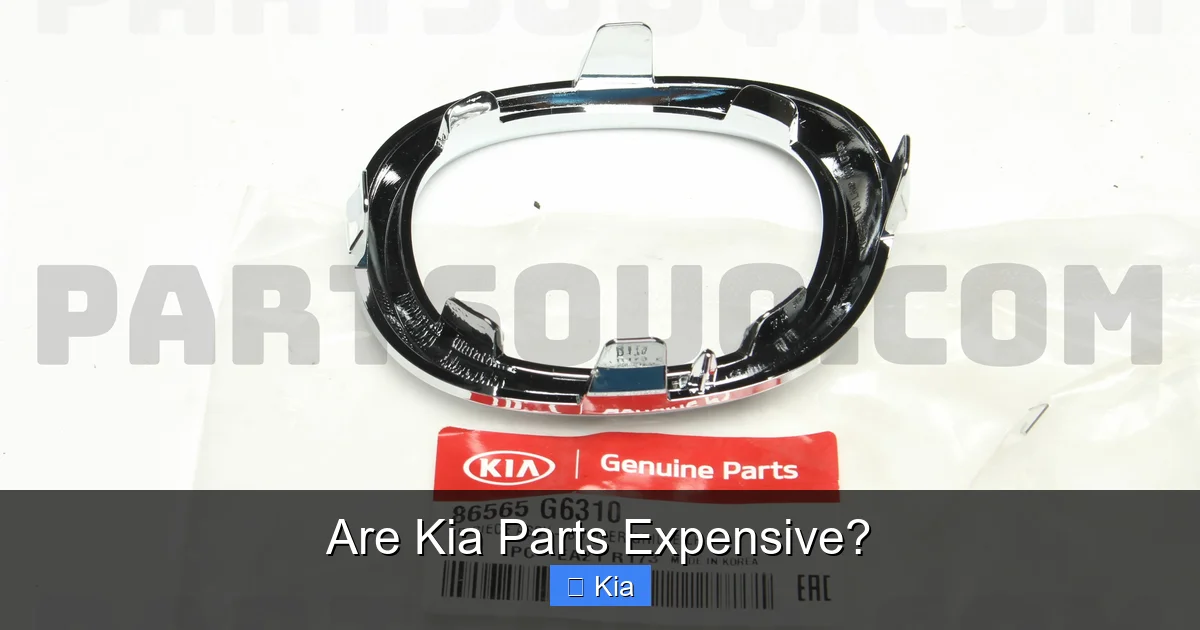
Visual guide about Are Kia Parts Expensive?
Image source: partsouq.com
To answer whether Kia parts are expensive, it helps to understand how the company designs and distributes its vehicles. Kia, along with its sister brand Hyundai, operates on a global platform strategy. This means many Kia models share components, engines, and even entire platforms with other vehicles in the lineup. For example, the Kia Sportage and Hyundai Tucson are built on the same platform and share many interchangeable parts.
This shared architecture has a big impact on pricing. Because parts are produced in high volumes and used across multiple models, manufacturing costs go down. That savings often gets passed on to consumers in the form of lower prices for common components like brake pads, air filters, spark plugs, and suspension parts.
Another factor is Kia’s focus on affordability and mass-market appeal. Unlike luxury brands such as BMW or Mercedes-Benz, Kia targets budget-conscious buyers who want modern features without the premium price tag. As a result, the company designs its vehicles with cost-effective parts that are easy to source and replace.
Common Kia Parts and Their Average Costs
Let’s look at some of the most frequently replaced parts in Kia vehicles and how much they typically cost:
- Oil filter: $10–$25 (OEM), $5–$15 (aftermarket)
- Air filter: $15–$30 (OEM), $10–$20 (aftermarket)
- Brake pads (front set): $80–$150 (OEM), $50–$100 (aftermarket)
- Brake rotors (front pair): $120–$250 (OEM), $80–$180 (aftermarket)
- Spark plugs (set of 4): $40–$80 (OEM), $25–$50 (aftermarket)
- Battery (standard lead-acid): $120–$200 (OEM), $100–$160 (aftermarket)
- Alternator: $300–$500 (OEM), $200–$350 (aftermarket)
- Headlight assembly: $150–$300 (OEM), $100–$200 (aftermarket)
As you can see, most routine maintenance parts are quite affordable—especially when you go with aftermarket options. Even major components like alternators and starters are priced competitively compared to other non-luxury brands.
How Kia’s Warranty Affects Parts Costs
One of the biggest advantages of owning a Kia is its industry-leading warranty. New Kia vehicles come with a 10-year/100,000-mile powertrain warranty and a 5-year/60,000-mile basic warranty. Certified pre-owned (CPO) Kias also include extended coverage.
This means that if a major part like the engine, transmission, or drivetrain fails within the warranty period, Kia will cover the cost of the part and often the labor too. For example, if your Kia Forte’s transmission goes out at 45,000 miles, you likely won’t pay a dime for the repair.
Even after the warranty expires, many Kia owners find that their vehicles require fewer repairs than average. According to reliability studies from J.D. Power and Consumer Reports, Kia consistently ranks above average in dependability. That translates to fewer unexpected breakdowns and lower long-term parts expenses.
OEM vs. Aftermarket Kia Parts: Which Is Right for You?

Visual guide about Are Kia Parts Expensive?
Image source: s3.amazonaws.com
When your Kia needs a replacement part, you generally have two main options: OEM (Original Equipment Manufacturer) parts or aftermarket parts. Understanding the difference can help you decide which is best for your budget and needs.
What Are OEM Parts?
OEM parts are made by Kia or its authorized suppliers and are identical to the parts that came with your vehicle from the factory. They’re designed specifically for your make, model, and year, ensuring a perfect fit and reliable performance.
Pros of OEM parts:
- Guaranteed compatibility
- High quality and durability
- Often covered under warranty
- Peace of mind for critical components
Cons of OEM parts:
- More expensive than aftermarket options
- Only available through dealerships or authorized retailers
- May have longer wait times for rare parts
For example, if your Kia Seltos needs a new oxygen sensor, an OEM part might cost $180, while a quality aftermarket version could be $90. Both may work fine, but the OEM part comes with the assurance that it’s built to Kia’s exact specifications.
What Are Aftermarket Parts?
Aftermarket parts are made by third-party companies and are not affiliated with Kia. They’re designed to fit and function like OEM parts but are often sold at lower prices. Many aftermarket brands—like Bosch, ACDelco, Denso, and Monroe—are well-respected in the automotive industry and produce high-quality components.
Pros of aftermarket parts:
- Lower prices (often 30–50% less than OEM)
- Wider availability online and at auto parts stores
- More choices in terms of performance and features
- Some brands offer enhanced durability or performance
Cons of aftermarket parts:
- Quality can vary between brands
- May not be covered under warranty
- Fit and finish might not be perfect
- Some mechanics are hesitant to install them
For non-critical parts like air filters, wiper blades, or cabin filters, aftermarket options are usually a great choice. But for safety-critical components like brakes, airbags, or suspension parts, many experts recommend sticking with OEM or high-tier aftermarket brands.
When to Choose OEM vs. Aftermarket
Here’s a simple rule of thumb:
- Choose OEM for: Engine components, transmission parts, safety systems (airbags, ABS), and parts under warranty.
- Choose aftermarket for: Filters, belts, hoses, wiper blades, and cosmetic parts.
For example, if your Kia Telluride needs new brake pads, you might go with OEM for the front (where most braking force is applied) and a trusted aftermarket brand like Wagner or Akebono for the rear. This balanced approach saves money without sacrificing safety.
Where to Buy Kia Parts: Dealerships, Retailers, and Online Stores

Visual guide about Are Kia Parts Expensive?
Image source: epcatalogs.com
The price of Kia parts can vary significantly depending on where you buy them. Here’s a breakdown of the most common options and what to expect.
Kia Dealerships
Buying parts from a Kia dealership ensures you’re getting genuine OEM components with full warranty support. Dealerships also have access to technical service bulletins and updated part numbers, which can be helpful for complex repairs.
However, dealerships typically charge the highest prices due to overhead costs and markup. For example, a Kia OEM alternator might cost $450 at a dealership, while the same part could be $320 online.
That said, dealerships often run promotions or offer discounts for service customers. If you’re already getting your car serviced there, ask about package deals or loyalty programs.
Auto Parts Retailers
Stores like AutoZone, O’Reilly Auto Parts, Advance Auto Parts, and NAPA carry a wide range of Kia-compatible parts—both OEM and aftermarket. These retailers often have in-store pickup, price matching, and loyalty rewards.
Prices are usually lower than dealerships, and many locations offer free testing (like battery or alternator checks) and installation help. For example, AutoZone might sell a Kia-compatible brake pad set for $75, compared to $120 at a dealership.
Online Retailers
Online shopping has revolutionized how people buy car parts. Websites like RockAuto, Amazon, eBay, and CarParts.com offer massive inventories, competitive pricing, and detailed fitment guides.
RockAuto, in particular, is a favorite among DIYers because it lists multiple brands and prices side by side. You can compare a $90 OEM fuel pump with a $60 aftermarket one and read customer reviews to help decide.
Amazon and eBay often have deals, especially during sales events like Prime Day or Black Friday. Just be sure to check seller ratings and return policies before buying.
Salvage Yards and Used Parts
If you’re on a tight budget, used parts from salvage yards can be a cost-effective option. Many junkyards now operate online databases where you can search for parts by VIN or part number.
For example, a used Kia Rio door mirror might cost $40 instead of $200 new. Just inspect the part carefully and ask about warranty coverage—some yards offer 30- to 90-day guarantees.
Tips to Save Money on Kia Parts and Repairs
Even though Kia parts are generally affordable, there are still ways to reduce your overall repair and maintenance costs. Here are some practical tips:
1. Follow the Maintenance Schedule
Kia provides a detailed maintenance schedule in your owner’s manual. Sticking to it—like changing the oil every 7,500 miles or replacing the cabin air filter annually—can prevent bigger, more expensive problems down the road.
For example, replacing a timing belt on time can prevent engine damage that could cost thousands to fix.
2. Use Independent Mechanics
Dealerships charge higher labor rates than independent shops. A certified mechanic who specializes in Asian imports can often do the same job for 20–40% less.
Just make sure the shop is reputable and uses quality parts. Ask for a written estimate and check reviews on Google or Yelp.
3. Buy Parts Online and Install Them Yourself
If you’re handy with tools, consider buying parts online and doing the work yourself. Many Kia repairs—like changing spark plugs, brakes, or air filters—are DIY-friendly.
YouTube has countless tutorials for Kia models, and forums like Kia-Forums.com offer step-by-step guides and community support.
4. Take Advantage of Warranty Coverage
If your Kia is still under warranty, don’t hesitate to use it. Even if a part seems minor, having it replaced under warranty saves money and ensures quality.
For CPO vehicles, check the extended warranty terms—some cover wear-and-tear items like brakes and batteries.
5. Compare Prices Before Buying
Prices for the same part can vary widely between retailers. Use price comparison tools or call a few shops to get quotes.
For example, a Kia Optima alternator might be $380 at one store and $290 at another. That $90 difference adds up over time.
6. Consider Remanufactured Parts
Remanufactured (or rebuilt) parts are used components that have been cleaned, tested, and restored to like-new condition. They’re often 30–50% cheaper than new OEM parts and come with warranties.
A remanufactured Kia transmission, for instance, might cost $1,800 instead of $3,500 new—and perform just as well.
Real-World Examples: How Much Do Kia Repairs Actually Cost?
Let’s look at a few common repair scenarios to see how Kia parts pricing plays out in real life.
Example 1: Brake Job on a Kia Sportage
A front brake job (pads and rotors) on a 2018 Kia Sportage might cost:
- Dealership: $450 (OEM parts + labor)
- Independent shop: $320 (aftermarket parts + labor)
- DIY with online parts: $180 (parts only)
That’s a $270 difference between the most and least expensive option.
Example 2: Replacing a Battery in a Kia Soul
A new battery for a 2020 Kia Soul:
- Dealership: $190 (OEM + installation)
- AutoZone: $140 (Duracell + free installation)
- Amazon: $110 (ACDelco, self-install)
Again, DIY and retail options save significant money.
Example 3: Alternator Replacement on a Kia Sorento
A failing alternator in a 2016 Kia Sorento:
- Dealership: $650 (OEM + labor)
- Independent mechanic: $480 (remanufactured + labor)
- DIY with RockAuto part: $280 (part only)
Even with labor, the independent shop saves over $150.
These examples show that while Kia parts aren’t expensive to begin with, smart choices can make them even more affordable.
The Bottom Line: Are Kia Parts Expensive?
So, are Kia parts expensive? The answer is a clear no—especially when compared to luxury brands and even some mainstream competitors. Kia’s focus on affordability, shared platforms, and high reliability keeps parts and repair costs low.
While OEM parts from dealerships can be pricey, there are plenty of ways to save. Aftermarket parts, online retailers, independent mechanics, and DIY repairs all help reduce expenses without sacrificing quality.
Plus, Kia’s excellent warranty coverage means many major repairs are free during the first several years of ownership. And with proper maintenance, Kia vehicles tend to last well beyond 150,000 miles with minimal issues.
If you’re looking for a reliable, budget-friendly car that won’t drain your wallet when something needs fixing, Kia is a smart choice. Just remember to shop around, stay on top of maintenance, and choose the right parts for your needs.
With a little knowledge and planning, owning a Kia can be as affordable in the long run as it is on the showroom floor.
Frequently Asked Questions
Are Kia parts more expensive than Hyundai parts?
No, Kia and Hyundai parts are often similarly priced because the brands share platforms and components. In many cases, the same part fits both vehicles and is sold under either brand name.
Can I use aftermarket parts without voiding my Kia warranty?
Yes, as long as the aftermarket part doesn’t cause the damage, using it won’t void your warranty. The Magnuson-Moss Warranty Act protects consumers from unfair warranty denials.
How long do Kia parts typically last?
Most Kia parts last as long as industry averages—brake pads around 40,000 miles, batteries 3–5 years, and engines often exceed 200,000 miles with proper care.
Are Kia electric vehicle parts more expensive?
Some EV-specific parts like batteries and inverters can be costly, but Kia’s EV warranty (10 years/100,000 miles) covers major components, reducing out-of-pocket expenses.
Where can I find discounted Kia parts online?
Websites like RockAuto, Amazon, and CarParts.com frequently offer discounts, free shipping, and seasonal sales on Kia parts. Sign up for newsletters to get deal alerts.
Should I always use OEM parts for safety-critical repairs?
For critical systems like brakes, airbags, and suspension, OEM or high-quality aftermarket brands (like Bosch or Akebono) are recommended to ensure safety and reliability.