
Are Bmws Easy to Steal?

BMW vehicles are not inherently easy to steal, but they are high-value targets due to their desirability and parts resale value. While advanced security systems like immobilizers and GPS tracking make theft more difficult, determined criminals using relay attacks or key cloning can still bypass protections—making owner vigilance essential.
Key Takeaways
- BMWs have strong factory security: Modern BMWs come equipped with advanced immobilizers, encrypted key fobs, and GPS tracking systems that significantly deter casual theft.
- Relay attacks are a growing threat: Thieves use signal amplification devices to trick your car into thinking the key is nearby, allowing them to unlock and start the vehicle without physical access to the key.
- Keyless entry vulnerabilities exist: Despite encryption, some older or poorly maintained key fobs can be vulnerable to cloning or hacking if left unprotected.
- Location matters: BMWs parked in high-crime areas, especially luxury neighborhoods or urban centers, face higher theft risks regardless of security tech.
- Aftermarket upgrades boost protection: Adding steering wheel locks, Faraday pouches, or GPS trackers can drastically reduce the chances of successful theft.
- Insurance and tracking go hand-in-hand: Comprehensive insurance and real-time tracking services like BMW ConnectedDrive offer peace of mind and faster recovery if theft occurs.
- Owner habits play a big role: Simple habits like never leaving keys near doors, parking in well-lit areas, and using multiple layers of security make a huge difference.
📑 Table of Contents
Are BMWs Easy to Steal? The Truth Behind the Myth
If you own a BMW—or are thinking about buying one—you’ve probably wondered: *Are BMWs easy to steal?* It’s a fair question. These German-engineered machines are sleek, powerful, and undeniably attractive. But does that beauty come with a downside when it comes to security?
The short answer? Not really—but it’s not that simple. While BMWs aren’t sitting ducks for thieves, they *are* prime targets. Why? Because they’re valuable, parts are in demand, and their reputation makes them desirable on the black market. However, thanks to decades of innovation in automotive security, modern BMWs are far from easy pickings. From encrypted key fobs to GPS tracking and immobilizer systems, BMW has invested heavily in keeping your car safe.
But here’s the catch: technology evolves, and so do thieves. While factory-installed security is strong, it’s not foolproof. Sophisticated methods like relay attacks and key cloning have emerged, exploiting weaknesses in keyless entry systems. So while your BMW isn’t “easy” to steal in the traditional sense—no smashing windows or hot-wiring—it can still be vulnerable if you’re not careful.
In this article, we’ll break down everything you need to know about BMW theft risks, how modern security works, and what you can do to protect your investment. Whether you drive a 3 Series, an X5, or a high-performance M model, understanding these risks is the first step toward keeping your BMW where it belongs—in your driveway.
Why Are BMWs Targeted by Thieves?
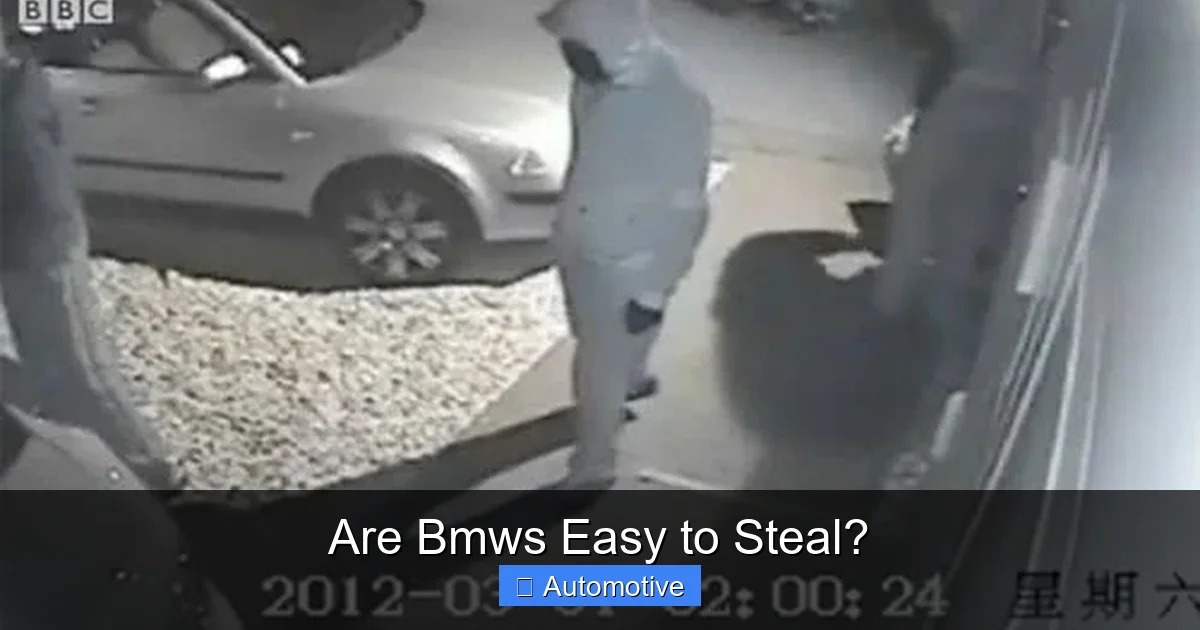
Visual guide about Are Bmws Easy to Steal?
Image source: hothardware.com
BMW vehicles are among the most coveted cars on the road, and that desirability makes them a magnet for thieves. But it’s not just about looks. There are several practical reasons why criminals zero in on BMWs.
First, **resale value**. A stolen BMW, especially a late-model one, can fetch a high price on the black market—either as a whole vehicle or broken down for parts. Components like engines, transmissions, and even infotainment systems are valuable and often easier to sell than entire cars. In fact, some theft rings specifically target certain BMW models for their high-demand parts.
Second, **luxury status**. BMWs are often associated with wealth, and thieves know that owners may be less likely to report minor break-ins or may delay noticing a missing vehicle. This perception of affluence can make BMW drivers seem like easier targets, even if that’s not always the case.
Third, **global demand**. BMWs are popular worldwide, and stolen vehicles can be shipped overseas quickly. Countries with less stringent import regulations or weaker law enforcement make it easier to resell stolen luxury cars without detection. This international market increases the incentive for organized theft operations.
Finally, **keyless entry convenience**. While convenient for owners, keyless systems have introduced new vulnerabilities. Thieves have developed tools that exploit the wireless signals between your key fob and your car, allowing them to unlock and start the vehicle without ever touching the key. This method, known as a relay attack, is fast, silent, and doesn’t leave obvious signs of break-in—making it ideal for stealing high-end vehicles like BMWs.
So while BMWs aren’t “easy” to steal in the traditional sense, their combination of value, demand, and technological vulnerabilities makes them a top target. The good news? Awareness and proactive security measures can drastically reduce your risk.
The Role of Keyless Entry in BMW Theft
Keyless entry systems have revolutionized how we interact with our cars. No more fumbling for keys—just walk up, touch the handle, and the door unlocks. But this convenience comes with a hidden cost: increased vulnerability to electronic theft.
Modern BMWs use a system called Comfort Access, which allows drivers to unlock and start their vehicles without removing the key fob from their pocket or bag. The car communicates with the key via low-frequency radio signals. When you approach, the car sends out a signal, the key responds, and the doors unlock. To start the engine, you simply press a button.
Sounds great, right? The problem is that these signals can be intercepted and amplified by thieves using relay devices. Here’s how it works: one thief stands near your house with a device that picks up the weak signal from your key fob (which might be sitting on a table near the front door). That signal is then relayed to another device near your car, tricking the vehicle into thinking the key is right there. The car unlocks, starts, and drives away—all in under a minute.
This method requires no physical break-in, no damage, and leaves no evidence. It’s silent, fast, and increasingly common. In fact, relay attacks are one of the leading causes of keyless car theft in Europe and North America, with BMWs frequently among the top models targeted.
Parts Theft and the Black Market
Another major reason BMWs are stolen is for their parts. Unlike older cars, where thieves might steal the entire vehicle and strip it later, modern BMWs are often targeted for specific high-value components.
For example, the **N54 and N55 engines**—found in many 3 Series and 5 Series models—are highly sought after for performance builds and swaps. Similarly, **infotainment systems**, **iDrive controllers**, and **LED headlights** can be resold online or to unscrupulous repair shops.
Even **catalytic converters** are at risk. BMWs often use precious metals like platinum, palladium, and rhodium in their exhaust systems, making them prime targets for metal thieves. A single converter can fetch hundreds of dollars on the scrap market.
Because these parts are expensive to replace and often require specialized tools to remove, thieves know they can make a quick profit. And since many of these components aren’t serialized or easily traceable, they can be sold without raising suspicion.
This means that even if your BMW isn’t stolen as a whole, it could still be at risk of partial theft—leaving you with a damaged, unusable vehicle and a hefty repair bill.
How BMW Protects Your Vehicle: Factory Security Features
BMW takes vehicle security seriously. Over the years, the brand has implemented a range of advanced technologies designed to prevent theft and protect your investment. Let’s take a closer look at the key security features built into modern BMWs.
Immobilizer Systems
One of the most effective anti-theft measures in any modern car is the **immobilizer**. This system prevents the engine from starting unless the correct key fob is present. Here’s how it works: when you insert the key or press the start button, the car’s computer sends a unique encrypted code to the key fob. If the key responds with the correct code, the engine will start. If not—nothing happens.
BMW’s immobilizer system uses rolling codes, meaning the encryption changes every time you use the key. This makes it nearly impossible for thieves to clone or replicate the signal using simple scanners. Even if they intercept one code, it becomes useless the next time you drive.
This technology has been standard on BMWs since the late 1990s and has significantly reduced traditional theft methods like hot-wiring. While it doesn’t stop relay attacks entirely, it does prevent the engine from starting unless the key is authenticated—adding a critical layer of protection.
Encrypted Key Fobs
BMW key fobs are not just simple remote controls—they’re sophisticated electronic devices with built-in security. Each fob contains a microchip that communicates with the car using encrypted signals. These signals are unique to your vehicle and change with every use, making them extremely difficult to duplicate.
Modern BMW fobs also use **rolling encryption**, similar to what you’d find in a secure online transaction. This means that even if a thief records the signal from your key, they can’t replay it later to unlock your car. The system expects a new, unpredictable code each time.
Additionally, many BMW key fobs have a **sleep mode** that deactivates the transmitter when not in use. This reduces the risk of relay attacks by minimizing the time the key is broadcasting a signal. However, if the key is left near a window or door, it can still be vulnerable—so proper storage is essential.
GPS Tracking and BMW ConnectedDrive
One of the most powerful tools in BMW’s security arsenal is **GPS tracking** through the **ConnectedDrive** system. This service allows you to monitor your vehicle’s location in real time using a smartphone app. If your car is stolen, you can immediately alert authorities and provide them with its exact location.
ConnectedDrive also includes features like **remote door lock/unlock**, **vehicle status alerts**, and **theft notification**. If the system detects unauthorized movement—such as the car being driven without the key—it can send an alert to your phone and even notify BMW’s security team.
In some regions, BMW offers **Stolen Vehicle Recovery** services, where trained personnel work with law enforcement to track and recover your vehicle. This can significantly increase the chances of getting your BMW back quickly and intact.
While ConnectedDrive requires a subscription, many owners consider it a worthwhile investment for the peace of mind it provides—especially in high-theft areas.
Modern Theft Methods: How Thieves Bypass BMW Security
Visual guide about Are Bmws Easy to Steal?
Image source: motorbiscuit.com
Despite BMW’s robust security systems, thieves have adapted. New technologies and techniques have emerged that exploit weaknesses in keyless entry and electronic systems. Understanding these methods is crucial for protecting your vehicle.
Relay Attacks: The Silent Threat
As mentioned earlier, **relay attacks** are one of the most common and effective ways thieves steal keyless BMWs. These attacks require two people and two relay devices—one near the key, one near the car.
Here’s a real-world example: Imagine you’re at home, and your BMW key fob is sitting on a table near the front door. A thief stands outside with a relay box that picks up the weak signal from your key. That signal is instantly transmitted via a second device to your car, which is parked in the driveway. The car thinks the key is right there, so it unlocks and allows the engine to start.
The entire process takes less than 60 seconds and leaves no physical evidence. There’s no broken glass, no forced entry—just a missing car.
Relay attacks are particularly effective against vehicles parked near homes, where keys are often stored close to doors or windows. Thieves use long-range antennas to amplify the signal, sometimes from over 100 feet away.
Key Cloning and Signal Replay
While less common than relay attacks, **key cloning** is another method used by sophisticated thieves. This involves capturing the encrypted signal from your key fob and storing it for later use. If the encryption isn’t rolling or is poorly implemented, the thief can replay the signal to unlock the car.
Some older BMW models or aftermarket key fobs may be more vulnerable to this type of attack. Additionally, if you’ve had your key replaced or reprogrammed by a non-dealer shop, there’s a risk the encryption wasn’t properly updated.
Cloning requires close proximity to the key—usually within a few feet—so it’s less convenient than relay attacks. But if a thief has access to your key (e.g., while it’s in your pocket at a café), they can clone it in seconds.
OBD Port Hacking
The **OBD (On-Board Diagnostics) port** is a small socket under your dashboard used for diagnostics and software updates. While it’s meant for mechanics, thieves have found ways to exploit it.
Using a device called an **OBD programmer**, criminals can plug into the port and reprogram a new key fob to work with your BMW. This method bypasses the immobilizer and allows them to start the car with a cloned or blank key.
This type of theft is more common in older BMW models or vehicles that haven’t had their software updated. BMW has since added security measures to prevent unauthorized OBD access, but it’s still a risk if your car is left unattended in a vulnerable location.
How to Protect Your BMW from Theft
Now that you know the risks, let’s talk about solutions. Protecting your BMW doesn’t require expensive gadgets or constant paranoia—just smart habits and a few practical upgrades.
Use a Faraday Pouch for Your Key Fob
A **Faraday pouch** is a simple, affordable solution that blocks radio signals. By storing your key fob in one of these shielded bags, you prevent relay attacks from working. The pouch acts like a mini Faraday cage, stopping the key’s signal from reaching thieves’ devices.
You can find Faraday pouches for under $20 online or at electronics stores. Just make sure it’s large enough to fit your key fob and that it’s made with proper shielding material. For extra protection, keep the pouch in a drawer or safe—not near doors or windows.
Install a Steering Wheel Lock
While it may look old-school, a **steering wheel lock** is one of the most effective visual deterrents. Devices like The Club or BMW-specific locks make it physically impossible to drive the car, even if thieves manage to start it.
These locks are cheap, easy to use, and highly visible. Thieves are less likely to target a car that’s clearly protected. Plus, they can’t be bypassed with electronics—only brute force, which takes time and draws attention.
Upgrade to a GPS Tracker
Even with factory tracking, adding a **third-party GPS tracker** gives you an extra layer of security. Devices like the **Vyncs** or **Bouncie** plug into your OBD port and provide real-time location updates, speed alerts, and geofencing.
If your car is stolen, you can immediately track its location and share it with police. Some trackers even have motion sensors that alert you if the car is moved without authorization.
Park Smart
Where and how you park makes a big difference. Always park in **well-lit, secure areas**—preferably in a garage or monitored parking lot. Avoid leaving your BMW on quiet streets or in isolated spots.
If you must park outside, choose locations with **CCTV cameras** or **security patrols**. The more visible your car is, the less likely it is to be targeted.
Disable Keyless Entry When Possible
Some BMW models allow you to **disable keyless entry** through the iDrive menu. While this is inconvenient, it’s a smart move if you’re leaving your car in a high-risk area for an extended period.
You can also turn off the key fob’s transmitter by removing the battery or using the “valet mode” feature, which limits functionality.
Keep Software Updated
BMW regularly releases **software updates** that improve security and patch vulnerabilities. Make sure your car’s systems are up to date by visiting a dealership or using the BMW Connected app.
Outdated software can leave your vehicle exposed to known exploits, so don’t ignore update notifications.
What to Do If Your BMW Is Stolen
Despite your best efforts, theft can still happen. If your BMW is stolen, act quickly to increase the chances of recovery.
First, **call the police immediately**. Provide them with your vehicle’s VIN, license plate number, and any tracking information. File a report—this is required for insurance claims.
Next, **contact your insurance company**. Most comprehensive policies cover theft, but you’ll need a police report to process the claim.
If you have **BMW ConnectedDrive** or a GPS tracker, use the app to locate your vehicle and share the coordinates with law enforcement. Time is critical—the sooner police are involved, the better.
Finally, **monitor online marketplaces** like Craigslist, Facebook Marketplace, or eBay. Stolen BMWs sometimes appear for sale, especially if the thief is trying to offload it quickly.
While recovery isn’t guaranteed, acting fast and using all available tools gives you the best shot at getting your BMW back.
Conclusion: Are BMWs Easy to Steal?
So, are BMWs easy to steal? The answer is nuanced. While modern BMWs are equipped with advanced security systems that make them far from easy targets, they are still attractive to thieves due to their value, parts demand, and keyless entry vulnerabilities.
Relay attacks, key cloning, and OBD hacking are real threats—but they’re not unbeatable. With the right precautions—like using a Faraday pouch, installing a steering wheel lock, and keeping your software updated—you can significantly reduce your risk.
Ultimately, protecting your BMW comes down to awareness and action. Don’t assume your car is safe just because it’s high-tech. Stay vigilant, use multiple layers of security, and make theft as difficult as possible.
Your BMW is more than just a car—it’s an investment, a statement, and a source of pride. With the right mindset and tools, you can keep it safe for years to come.
Frequently Asked Questions
Are older BMW models easier to steal than newer ones?
Yes, older BMWs (pre-2010) are generally easier to steal because they lack modern immobilizers and encrypted key fobs. Many can still be hot-wired or started with a cloned key, making them more vulnerable than newer models.
Can thieves steal my BMW if I leave the key inside?
If the key is inside the car, thieves can start and drive it immediately—even with immobilizers. Always take your key fob with you, even for quick stops. Never leave it in the vehicle.
Does BMW insurance cover theft?
Yes, if you have comprehensive insurance, theft is typically covered. However, you’ll need to file a police report and provide proof of ownership. Check your policy for specific terms and deductibles.
How effective are GPS trackers in recovering stolen BMWs?
GPS trackers are highly effective when used with law enforcement. Real-time location data helps police recover vehicles quickly—often within hours. Many owners report successful recoveries thanks to tracking devices.
Can I disable keyless entry on my BMW?
Yes, many BMW models allow you to disable keyless entry through the iDrive menu. This prevents relay attacks but requires using the physical key to unlock the doors. It’s a useful temporary measure in high-risk areas.
What should I do if I suspect my key fob has been cloned?
Contact your BMW dealership immediately. They can reprogram your key fob and update the encryption to prevent unauthorized access. Avoid using the suspected key until it’s been checked.
