Are 2013 Ford F150 Reliable

Contents
- 1 Key Takeaways
- 2 📑 Table of Contents
- 3 Introduction: The 2013 F150 – A Pivotal Point in a Legend
- 4 Powertrain Performance: Engines That Shine, a Transmission That Stumbles
- 5 Common Issues and Problem Areas: What to Watch For
- 6 Owner Experiences and Long-Term Durability: The Real-World Verdict
- 7 Maintenance Tips for Maximizing Reliability
- 8 Comparison and Context: How Does It Stack Up?
- 9 Final Verdict: Should You Buy a 2013 Ford F150?
- 10 Frequently Asked Questions



The 2013 Ford F150 offers a mixed reliability picture. Its powertrains, especially the 5.0L V8 and 3.5L EcoBoost, are generally robust and long-lasting. However, the model year is notorious for transmission issues, particularly with the 6-speed automatic, and has specific electrical and spark plug problems. With diligent maintenance and awareness of its weak points, a well-kept 2013 F150 can be a capable and dependable workhorse, but a neglected one can become a costly headache. Its reliability is highly dependent on its individual history and how it’s been cared for.
Key Takeaways
- Engines are a major strength: The 5.0L “Coyote” V8 and 3.5L EcoBoost V6 are durable, proven designs with many examples surpassing 200,000 miles with proper care.
- The 6-speed transmission is the Achilles’ heel: The 6R80 automatic transmission, especially in trucks with the 5.0L V8 and higher payloads, is prone to premature failure and expensive repairs.
- Spark plug issues are common on V8s: The 5.0L V8 uses two-piece spark plugs that can break during removal, leading to costly cylinder head repairs if not handled by an expert.
- Electrical gremlins and TSBs exist: Numerous Technical Service Bulletins (TSBs) address problems with the infotainment system, window regulators, and instrument cluster.
- Maintenance history is everything: A 2013 F150 with a complete, verifiable service record—especially for transmission fluid changes—is a far safer bet than one with an unknown past.
- It’s a truck of contrasts: It can be incredibly reliable for a owner who tows occasionally and changes fluids, but unreliable for someone who uses it as a daily heavy-duty work truck without strict upkeep.
📑 Table of Contents
- Introduction: The 2013 F150 – A Pivotal Point in a Legend
- Powertrain Performance: Engines That Shine, a Transmission That Stumbles
- Common Issues and Problem Areas: What to Watch For
- Owner Experiences and Long-Term Durability: The Real-World Verdict
- Maintenance Tips for Maximizing Reliability
- Comparison and Context: How Does It Stack Up?
- Final Verdict: Should You Buy a 2013 Ford F150?
Introduction: The 2013 F150 – A Pivotal Point in a Legend
When you think of a full-size pickup, the Ford F150 is almost certainly the first name that comes to mind. It’s the perennial best-seller, the blue-collar icon. But “best-selling” doesn’t always mean “most reliable,” especially when looking at a specific model year. The 2013 Ford F150 sits at a fascinating crossroads. It was the final year of the twelfth generation, a platform introduced for the 2009 model year. This means it benefited from over four years of refinement, but it also carried forward some of the generation’s lingering issues while introducing a few of its own.
So, are 2013 Ford F150s reliable? The answer isn’t a simple yes or no. It’s a qualified, nuanced “it depends.” This truck is a study in contrasts. On one hand, you have some of Ford’s best gasoline engines, paired with a body that, for its time, was quite corrosion-resistant. On the other, you have a transmission that has built a infamous reputation and some design quirks that can turn into major repair bills. Your experience will be dictated by which engine you have, how the previous owner (or you) treated it, and whether you’re aware of its common pitfalls. Let’s pop the hood, crawl under the chassis, and dive deep into the real-world reliability of the 2013 Ford F150.
Powertrain Performance: Engines That Shine, a Transmission That Stumbles
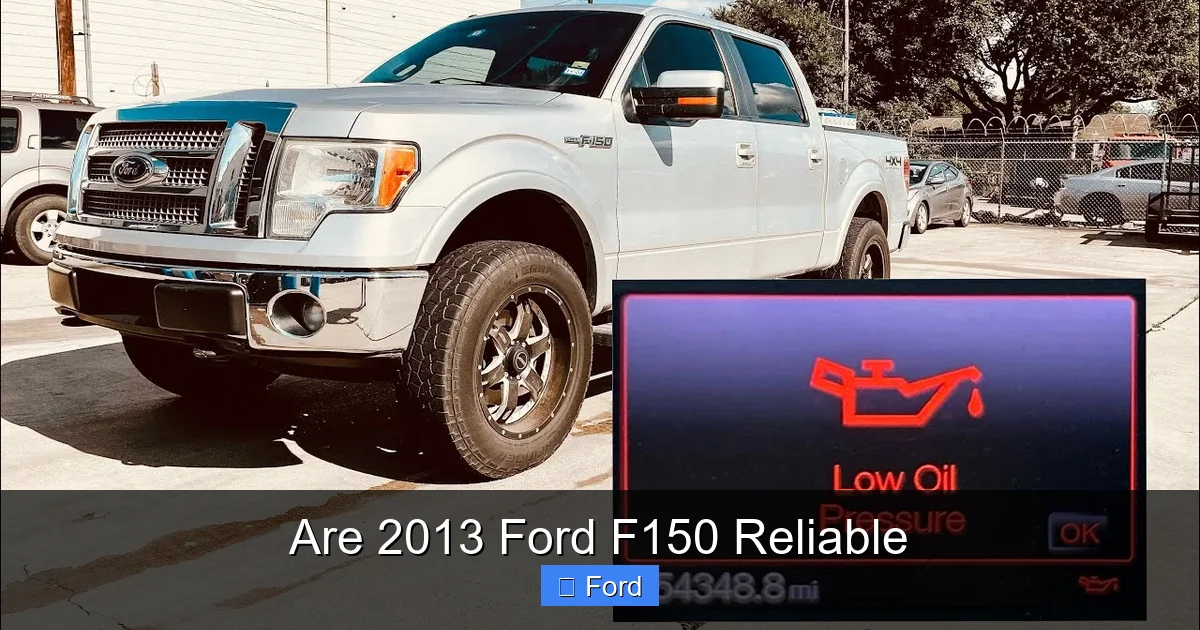
The heart of any truck is its powertrain, and here the 2013 F150 tells two very different stories. The engine lineup was solid, but the gearbox that connects them to the wheels is the single biggest point of failure concern for this model year.
Visual guide about Are 2013 Ford F150 Reliable
Image source: i.ytimg.com
The Mighty V8s: 5.0L “Coyote” and 6.2L “Boss”
The 5.0-liter V8, nicknamed the “Coyote,” is an absolute gem. Ford’s DOHC design with variable valve timing is powerful, relatively efficient for a large-displacement V8, and famously durable. With regular oil changes using the correct 5W-20 or 5W-30 synthetic oil, these engines can easily see 300,000 miles. They are known for their solid block and head construction. The main issue isn’t the engine’s internals but what attaches to it: the two-piece platinum spark plugs. Designed for better combustion, they can be a mechanic’s nightmare. If the plug separates, leaving the porcelain tip in the cylinder head, you’re looking at a costly repair involving specialized tools or even head removal. This is a critical service item to discuss with a trusted mechanic before buying.
The high-output 6.2L V8 “Boss” was available in the SVT Raptor and some Platinum/ Harley-Davidson editions. This is an even more robust, heavy-duty version of Ford’s modular V8. It’s overbuilt and exceptionally reliable, with fewer of the spark plug issues seen on the 5.0L due to different plug design. If you find a Raptor with a well-maintained 6.2L, the engine itself is one of the least of your worries.
The Turbocharged Contender: 3.5L EcoBoost V6
The 3.5-liter EcoBoost V6 was (and is) a revolutionary engine for the F150. Using twin turbochargers and direct fuel injection, it delivers V8-level torque (420 lb-ft in 2013) with better fuel economy. Its reliability reputation is generally positive, but it comes with a different maintenance mindset. The direct injection system can lead to carbon buildup on intake valves over time (a problem port injection avoids), so periodic induction cleaning is recommended. The turbochargers themselves are reliable but depend on strict oil change intervals. Any oil starvation or contamination can damage them. The cooling system, particularly the charge air cooler (intercooler), has had some reports of leaks. Overall, a well-serviced EcoBoost is a fantastic, powerful, and dependable powertrain.
The Transmission Troubles: The 6R80 6-Speed Automatic
Here is the critical, unavoidable truth about the 2013 F150: its 6-speed automatic transmission (the 6R80) is its most significant reliability liability. While many units last the life of the truck, a disproportionate number fail prematurely, especially when subjected to heavy towing, high payloads, or harsh driving. Common failure signs include harsh shifts, slipping between gears (especially 2-3 and 3-4), delayed engagement, and diagnostic trouble codes like P0700 (Transmission Control System Malfunction).
The internal clutch packs for the 2-3 and 3-4 gears are known wear points. The valve body can also develop issues. A complete rebuild or replacement can easily cost $3,000 to $5,000. The single best preventative maintenance you can perform is a **strict transmission fluid and filter change schedule**. Ford’s original “lifetime” fluid recommendation is widely criticized by transmission shops. For a truck used for towing or in hilly terrain, changing the fluid every 50,000 miles is a prudent, cost-saving measure. If you’re looking at a 2013 F150, a verified history of transmission fluid services is a huge green flag. You can also find guides on how to manage the truck’s auto start-stop system, which, while not directly related to transmission failure, is a common feature owners discuss in the context of drivability and component wear.
Common Issues and Problem Areas: What to Watch For
Beyond the powertrain, the 2013 F150 has a list of known issues that prospective buyers and owners should be aware of. Many of these were addressed under warranty via Technical Service Bulletins (TSBs), but if a truck never had the repairs done, they can resurface.
Visual guide about Are 2013 Ford F150 Reliable
Image source: carglassadvisor.com
Electrical System Gremlins
The 2013 model featured Ford’s MyFord Touch infotainment system, which was notoriously buggy. Screen freezes, unresponsive touch controls, and Bluetooth connectivity issues were rampant. Many owners simply replaced it with an aftermarket unit. Beyond the stereo, problems with power window regulators (especially front doors), malfunctioning door ajar warnings, and instrument cluster failures (gauge needles dropping to zero) are frequently reported. Always test every electrical function—windows, locks, mirrors, sunroof, HVAC vents—during a pre-purchase inspection.
Exhaust Manifold Bolts and Spark Plug Seals
The 5.0L V8 is also prone to cracked exhaust manifold bolts. This causes a distinct ticking or popping noise from the engine bay, especially when cold. It’s a known issue, and repair kits with upgraded bolts are available. Additionally, the spark plug tube seals (the rubber gaskets that seal the spark plug wells) can degrade, allowing oil to seep into the spark plug holes. This can cause misfires and is often discovered when a mechanic goes to change the plugs. Both are relatively common and moderately expensive repairs if caught early.
Suspension and Steering Components
Given its truck duty, wear items are expected. However, the 2013 F150 sees higher-than-average reports of front lower control arm bushings wearing out, leading to clunking noises over bumps. The steering shaft intermediate coupling can also develop a clunk or notch feel. While not catastrophic, these are repairs that add up. A thorough inspection of the front suspension and steering linkage is a must for any used example.
Body and Rust
For its era, the 2009-2014 F150 had decent rust resistance, especially compared to earlier generations. However, the steel brake lines are a known corrosion point, particularly in northern states where road salt is used. Inspect the lines running along the frame and to the rear axle. Surface rust on the frame is common and usually cosmetic, but heavy, flaky rust is a red flag. The tailgate and bed corners are also areas to check for rust-through.
Owner Experiences and Long-Term Durability: The Real-World Verdict
Forums, owner surveys, and mechanic anecdotes paint a clear picture. The 2013 F150 is a truck that rewards meticulous owners and punishes neglectful ones. You’ll find countless stories of 2013 F150s with 250,000+ miles on the odometer, still on their original engine and transmission, hauling trailers and serving as daily drivers. These owners almost universally cite two things: religious adherence to maintenance schedules and avoiding constant heavy-duty use without proper cooling and fluid care.
Visual guide about Are 2013 Ford F150 Reliable
Image source: static01.nyt.com
Conversely, you’ll find horror stories of transmissions failing at 80,000 miles, often in trucks that were regularly used for maximum payloads or towing at or near capacity without auxiliary transmission coolers. The key takeaway from owner experiences is that the 2013 F150 is not a “set it and forget it” truck. It demands respect. It’s a tool, and like any tool, its longevity depends on how you use and maintain it. For a family who uses it for occasional hauling, weekend trips, and light towing, it can be a superb, long-lasting vehicle. For a contractor who daily hauls a fully loaded skid steer, the transmission will likely be a major failure point without aggressive preventative measures.
Maintenance Tips for Maximizing Reliability
If you own or are considering a 2013 F150, your maintenance regimen is your best insurance policy. Here is a prioritized list:
- Transmission Fluid: Ignore the “lifetime” claim. Change the fluid and filter every 50,000 miles if you tow or drive hard. Every 60,000-75,000 miles for easy city/highway use. Use only Ford-approved Mercon LV fluid.
- Engine Oil: Stick to the schedule. 5W-20 or 5W-30 full synthetic is mandatory. Change every 5,000-7,000 miles for optimal engine life.
- Spark Plugs on 5.0L V8: When the time comes (around 100,000 miles), have them done by a mechanic experienced with the two-piece design. Anti-seize compound is critical. Consider replacing the tube seals at the same time.
- Cooling System: Replace coolant every 60,000 miles. Inspect the charge air cooler (EcoBoost) and oil cooler lines for leaks.
- Differential Fluid: Change front and rear differential fluid every 75,000 miles, especially if used for towing.
- Inspect Regularly: Listen for new noises (transmission, suspension). Check for fluid leaks. Have a trusted shop look at the transmission pan for excessive metal shavings during oil changes (a magnet on the drain plug can help).
Additionally, investing in quality components for wear items pays off. For example, when replacing brake pads, choosing the best brake pads for Ford models ensures better performance and longevity. Similarly, a reliable battery is crucial, especially with the truck’s electrical demands. You might want to look at guides for the best battery for a 2013 Ford F150 when the time comes for a replacement.
Comparison and Context: How Does It Stack Up?
Is the 2013 F150 more or less reliable than its siblings? Compared to the 2009-2012 models, it’s very similar, with the same transmission concerns. The 2014-2016 models received a revised 6-speed transmission with updated internal components and a different torque converter that addressed many of the early failure points. If transmission reliability is your top concern, a 2014+ model is a significantly better bet. The 2017+ models with the 10-speed transmission are in a different league entirely for both performance and reliability.
Compared to its domestic rivals of the era—the 2013 Chevrolet Silverado 1500 and 2013 Ram 1500—the F150’s 5.0L V8 and EcoBoost V6 were generally considered more advanced and fuel-efficient. The Ram’s 5.7L Hemi is also a very reliable engine, but its multi-displacement system (MDS) had some early issues. The Silverado’s 5.3L and 6.2L V8s are also robust. The F150’s main differentiator, and weakness, remained its transmission. In the context of its own generation, the 2013 is not the best year for reliability, but it’s not the absolute worst either (the 2009-2010 models often see more electrical issues). Its value proposition as a used truck is heavily tied to its maintenance history and whether the transmission has been serviced.
Final Verdict: Should You Buy a 2013 Ford F150?
The 2013 Ford F150 is a capable, powerful, and popular used truck that can be a fantastic purchase—if you go in with your eyes wide open. It is not a perfect vehicle, and its reputation is marred by a specific, expensive weak point. Here is our final breakdown:
- Buy one if: You find a truck with a complete service history, especially proof of transmission fluid changes. You need a powerful V8 (Coyote) or a torquey, efficient EcoBoost for moderate towing and hauling. You are mechanically inclined or have a trusted, knowledgeable mechanic. You understand that this is a tool that requires active maintenance to reach 200,000+ miles.
- Walk away if: The transmission service history is unknown or non-existent. The price seems too good to be true (it often is, masking a pending transmission failure). You plan to regularly tow at or near the maximum rated capacity without an auxiliary transmission cooler. You want a “maintenance-free” truck for the next decade.
For the right owner, the 2013 F150 is a workhorse that can provide years of faithful service. For the wrong owner, it can become a money pit. Your best defense is a pre-purchase inspection by a specialist who knows these trucks’ quirks. Have them check transmission health, scan for all codes (stored and pending), and inspect the spark plug wells if it’s a 5.0L. With a good one in hand, you’re getting a truck with a strong engine, a comfortable cabin, and immense capability—just be prepared to pamper its transmission.
Frequently Asked Questions
Is the 5.0L V8 or 3.5L EcoBoost more reliable in the 2013 F150?
The 5.0L V8 (Coyote) is generally considered more mechanically simple and robust long-term, but has the costly two-piece spark plug issue. The EcoBoost is powerful and efficient but requires more attentive maintenance to prevent carbon buildup and turbo-related issues. Both engines can be very reliable with proper care.
How much does it cost to rebuild or replace the 6-speed transmission in a 2013 F150?
A complete professional rebuild or replacement typically costs between $3,000 and $5,000. A remanufactured unit from a reputable supplier is often recommended over a used one, as failures are common. Adding an auxiliary transmission cooler during the repair is a wise, relatively inexpensive preventative step.
Are there any widespread rust problems on the 2013 F150 frame or body?
Rust is not as catastrophic as on pre-2004 models, but it’s a concern. The steel brake lines are prone to corrosion. Surface rust on the frame is common, but you must check for severe, flaking rust that compromises structural integrity. The tailgate and bed corners are also common rust spots.
What is a reasonable mileage expectation for a well-maintained 2013 F150?
With a strong engine (5.0L, 6.2L, or well-serviced EcoBoost) and a transmission that has had its fluid changed regularly, reaching 200,000 to 250,000 miles is very achievable. The transmission is the primary limiting factor; a neglected one may fail well before 150,000 miles.
Should I avoid the 2013 F150 because of its transmission reputation?
Not necessarily, but you must be cautious. Avoid any truck with an unknown service history. Prioritize models with documented transmission fluid changes. Consider adding an auxiliary transmission cooler if you plan to tow. For many buyers, the excellent power and features of the 2013 are worth the extra due diligence required on the transmission.
What is the single most important thing to check before buying a used 2013 Ford F150?
Without a doubt, the transmission’s service history and current health. Obtain a detailed maintenance record. Have a transmission specialist perform a pan inspection for metal shavings and check for any stored or pending transmission-related trouble codes. A smooth, firm shift pattern during a test drive under various throttle conditions is essential.