Are 2007 Ford F-150 Trucks Reliable?

Contents
- 1 Key Takeaways
- 2 📑 Table of Contents
- 3 Are 2007 Ford F-150 Trucks Reliable? An Honest, Deep-Dive Review
- 4 The 2007 F-150 Powertrain: Your First Major Decision
- 5 Transmission Troubles: The 4R75E’s Fragility
- 6 The Rust Scourge: A Structural Time Bomb
- 7 Other Common Gremlins and Annoyances
- 8 Maintenance: The Key to Longevity
- 9 How It Stacks Up: 2007 vs. Other Years
- 10 Final Verdict: Who Should Buy a 2007 F-150?
- 11 Frequently Asked Questions



The 2007 Ford F-150 has a mixed reliability reputation. It’s a powerful, comfortable truck with known issues like transmission and spark plug problems that require diligent maintenance. With proper care, many examples run well past 200,000 miles, making it a viable used purchase for budget-minded buyers who understand its quirks and are prepared for potential repairs.
Key Takeaways
- KnownWeak Points: The 2007 F-150 is notorious for transmission failures (especially the 4R75E) and spark plug issues (ejecting or breaking) in the 5.4L Triton V8 engines.
- Rust is a Major Concern: Frame and body rust, particularly in the cab corners and along the frame rails, is extremely common and can lead to structural failure if not addressed.
- Maintenance is Non-Negotiable: Strict adherence to oil changes, transmission fluid services, and spark plug inspections is critical to avoid catastrophic and expensive failures.
- Powertrain Variety: Reliability varies significantly by engine. The 4.6L V8 and 5.4L V8 have different issue profiles, while the V6 options are generally simpler but less powerful.
- Parts are Readily Available: As one of the best-selling vehicles ever, aftermarket and OEM parts are plentiful and relatively affordable, which helps keep repair costs manageable.
- High-Mileage Survivors Exist: Many well-maintained 2007 F-150s are still on the road today, proving they can be durable long-term if their specific weaknesses are proactively managed.
- Buyer Inspection is Crucial: A pre-purchase inspection by a trusted mechanic, focusing on the transmission, spark plugs, and frame for rust, is absolutely essential before purchasing any used 2007 model.
📑 Table of Contents
- Are 2007 Ford F-150 Trucks Reliable? An Honest, Deep-Dive Review
- The 2007 F-150 Powertrain: Your First Major Decision
- Transmission Troubles: The 4R75E’s Fragility
- The Rust Scourge: A Structural Time Bomb
- Other Common Gremlins and Annoyances
- Maintenance: The Key to Longevity
- How It Stacks Up: 2007 vs. Other Years
- Final Verdict: Who Should Buy a 2007 F-150?
Are 2007 Ford F-150 Trucks Reliable? An Honest, Deep-Dive Review
So, you’re eyeing a used truck and the 2007 Ford F-150 has caught your eye. It’s a classic, body-on-frame, full-size pickup from a era many consider the last of the “simple” trucks. The price is attractive, and it still looks tough. But that nagging question remains: Are 2007 Ford F-150 trucks reliable? This isn’t a simple yes or no question. The answer is a nuanced “it depends,” heavily influenced by which engine you have, how the previous owner treated it, and whether you’re willing to be a proactive, informed owner. Let’s pop the hood, kick the tires, and get into the gritty details of what makes this generation of America’s favorite truck either a dependable workhorse or a wallet-draining headache.
First, some context. The 2007 F-150 was part of the 11th generation (2004-2008), a complete redesign that brought a new frame, body, and interior. It was a massive success, praised for its comfort, capability, and commanding road presence. But with that redesign came a set of engineering choices and components that have defined its legacy—both good and bad. We’re going to break down the powertrains, the common failure points, what you absolutely must check, and how it compares to its siblings. By the end, you’ll know exactly what you’re getting into.
The 2007 F-150 Powertrain: Your First Major Decision
Reliability in a 2007 F-150 starts and ends with the engine under the hood. Ford offered several options, and they are not created equal. Your experience will be dramatically different based on which one you choose.
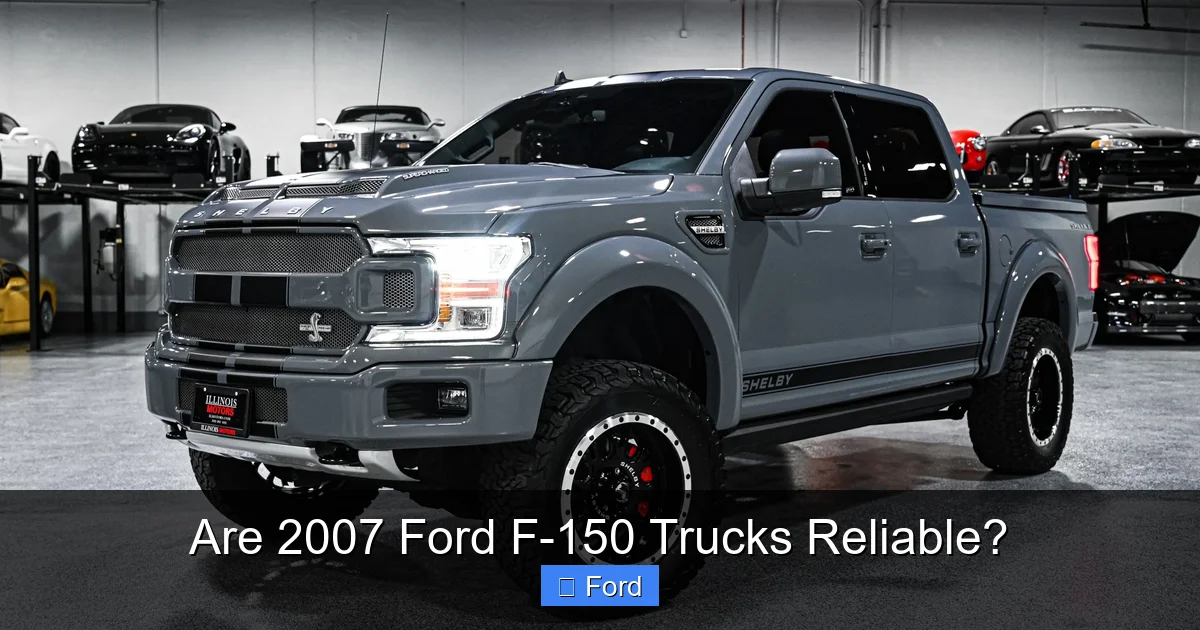
Visual guide about Are 2007 Ford F-150 Trucks Reliable?
Image source: ilmotors.com
The 5.4L Triton V8: The Powerful Problem Child
This is the most common engine in 2007 F-150s and the one with the most significant reputation. The 5.4L three-valve V8 (often called the “3V” or “Triton”) makes great power and torque. But it has two legendary, costly weaknesses.
1. Spark Plug Ejection/Phantom Misfires: This is the 5.4L’s most infamous flaw. The aluminum heads use steel thread inserts for the spark plugs. Over time, with heat cycles and improper torque during changes, the threads can strip. This causes the spark plug to blow out of the head, destroying the threads and requiring an expensive repair (often a “time-sert” kit or a new head). Even if it doesn’t eject, plugs can loosen and cause persistent misfires. The fix is meticulous: using a torque wrench on every change and using the correct, updated platinum plugs. If buying a 5.4L, you must get a definitive history of spark plug servicing or budget for an inspection and potential repair.
2. Cam Phaser and VVT Issues: The variable valve timing (VVT) system uses “cam phasers” that can wear out, leading to rattling noises on cold start, poor performance, and check engine lights. Repair involves replacing the phasers, which is a labor-intensive job.
Verdict: A well-maintained 5.4L with documented spark plug history can be a strong runner. One with a sketchy history is a ticking time bomb. Always insist on seeing service records for spark plug work.
The 4.6L V8: The Underrated Workhorse
The smaller 4.6L two-valve V8 (also from the Modular family) is often overshadowed but is generally considered more reliable than its 5.4L brother. It produces less power but is simpler. Its main weaknesses are aging plastic intake manifolds (which can crack and leak coolant) and, in high-mileage examples, oil pump issues. These are far less catastrophic and less expensive to fix than a blown transmission or ejected spark plug. For a buyer wanting a no-nonsense V8 with fewer landmines, the 4.6L is a smarter play, provided you accept its lower towing capacity.
The V6 Options: Simple, But Not for Everyone
The base 4.2L V6 and the optional 3.5L V6 (in later ’07s) are reliable, fuel-efficient, and mechanically straightforward. They lack the grunt for heavy towing but are perfectly adequate for a daily driver or light-duty truck. They have none of the major, costly design flaws of the V8s. If you don’t need V8 power, a V6 model is the most trouble-free choice in the lineup.
Transmission Troubles: The 4R75E’s Fragility
Let’s be blunt: the 4R75E 4-speed automatic transmission is the single biggest reliability asterisk on the 2007 F-150, especially when paired with the powerful 5.4L V8 or when used for heavy towing/hauling. It’s not that it’s a poorly built unit; it’s that it’s often pushed beyond its limits in a heavy truck.
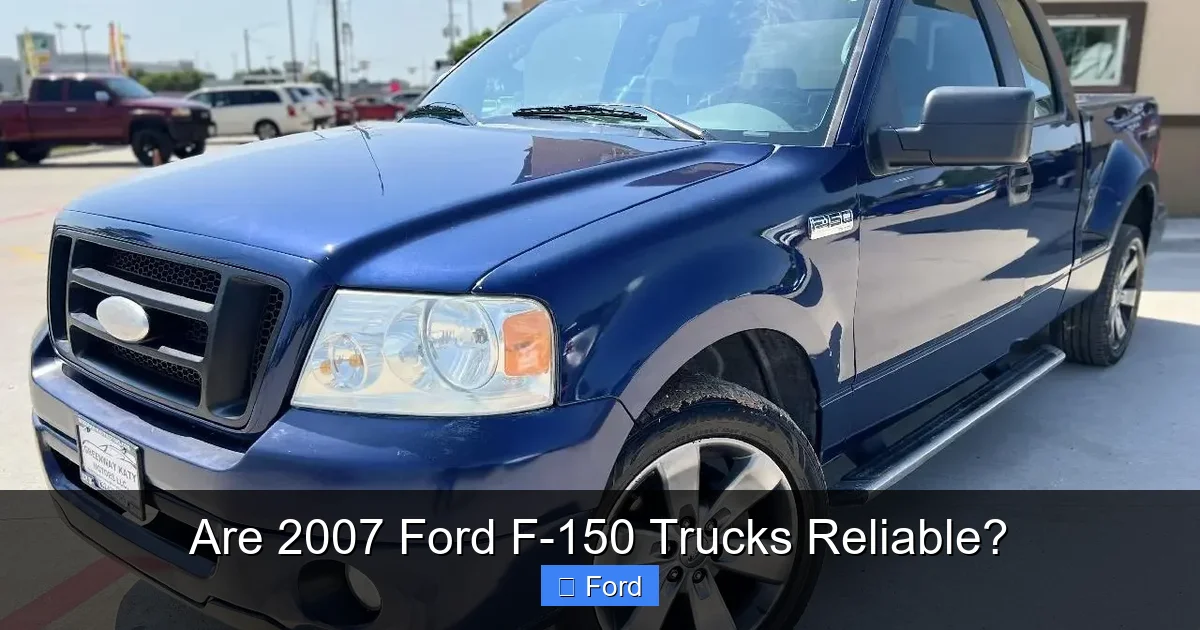
Visual guide about Are 2007 Ford F-150 Trucks Reliable?
Image source: imagescdn.dealercarsearch.com
Common failure signs include harsh shifts, slipping between gears (especially 3rd to 4th), delayed engagement, and eventually, a complete loss of drive. The most common internal failure is the “overdrive band” or related clutch packs wearing out. A rebuild typically costs $2,500-$4,000.
How to Mitigate the Risk: First, avoid trucks with a history of towing near their maximum capacity. Second, and most importantly, transmission fluid and filter changes are critical. The factory “lifetime” fluid is a myth. A severe service schedule (every 30,000-50,000 miles) is necessary to keep the fluid cool and clean. When shopping, ask for transmission service history. A dark, burnt-smelling fluid is a huge red flag. Also, consider adding an auxiliary transmission cooler if you’ll be doing any serious work. For towing needs, you might want to look at the later 6-speed transmissions in 2009+ models, but that’s a different vehicle.
The Rust Scourge: A Structural Time Bomb
This is the issue that can make a 2007 F-150 unsafe to drive. The 2004-2008 generation is infamous for severe, premature frame and body rust. The problem is twofold:
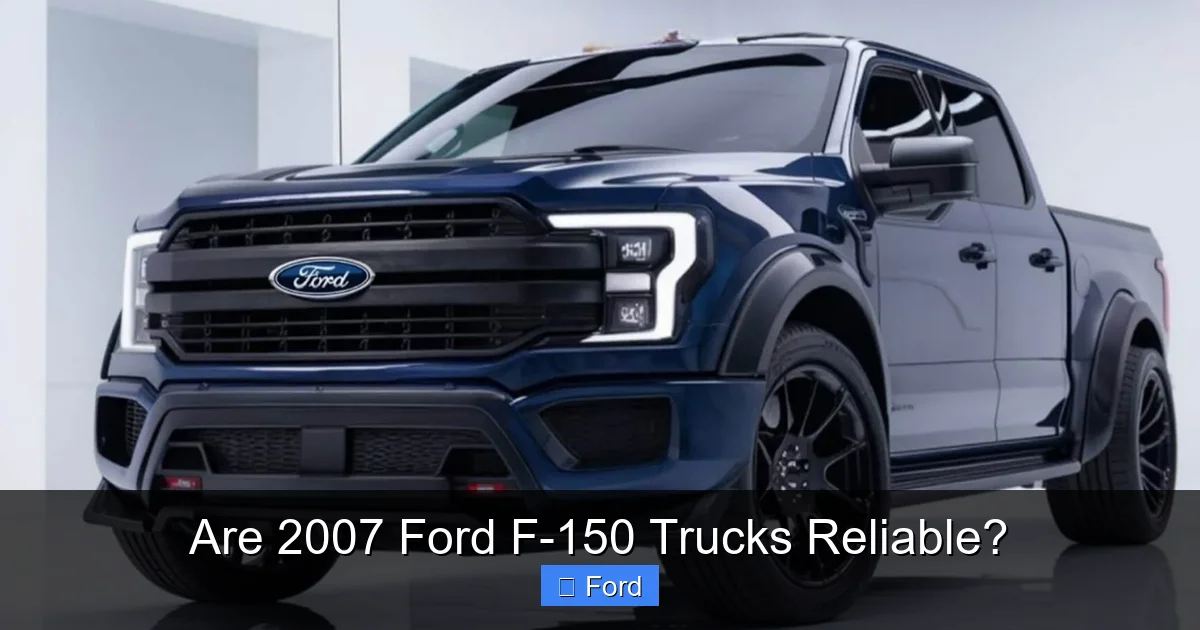
Visual guide about Are 2007 Ford F-150 Trucks Reliable?
Image source: cars2wd.com
- Frame Rust: Rust starts at the rear of the cab, where the frame rails have a seam, and in the front where the frame attaches to the engine crossmember. It can eat through the frame rails, compromising the entire structural integrity of the vehicle. This is not just surface rust; it’s deep, penetrating corrosion.
- Body Rust: The cab corners (behind the rear wheels) are notorious for rusting through, as are the rocker panels. This isn’t just an aesthetic issue; it allows water into the cabin and can weaken the unibody cab structure.
What to Look For: Get underneath the truck with a flashlight and a magnet (or a hammer for a “tap test”). Poke and prod the frame rails, especially behind the cab and near the rear axle. If the metal is flaky, bubbly, or the magnet doesn’t stick strongly, walk away. Check the cab corners from both inside and out. A “rust repair” quote from a body shop can easily exceed the truck’s value. This is the one issue where there is no cost-effective fix for severe cases. Prevention (living in a dry climate, regular washing) is the only cure, but for a 15-year-old truck, you’re assessing existing damage.
Other Common Gremlins and Annoyances
Beyond the big three (5.4L spark plugs, transmission, rust), there’s a playlist of other known issues that, while not always catastrophic, are expensive and frustrating.
Electrical System Quirks
The 2007’s interior is full of gadgets for its time. The instrument cluster can fail (dead gauges, especially the speedometer), the HVAC blend door actuators are prone to failure causing clicking noises and loss of air direction, and the passenger airbag sensor can malfunction. These are annoying and cost $200-$800 each to fix at a shop.
Suspension and Steering Wear
As a heavy-duty truck, suspension components wear out. By 150,000+ miles, expect to replace ball joints, tie rod ends, and possibly wheel bearings. The front lower control arms have a known bushing wear issue that causes a clunk. While not unique to Ford, it’s a maintenance cost to budget for.
Exhaust Manifold Cracks
Particularly on the 5.4L, the cast iron exhaust manifolds can develop cracks. This causes a loud ticking or popping noise from the engine bay and can lead to exhaust leaks into the engine bay. Replacement is labor-intensive due to their location.
Maintenance: The Key to Longevity
If you take one thing from this article, let it be this: a 2007 F-150’s reliability is 90% determined by its maintenance history. A neglected one will fail. A cared-for one will thrive.
The Non-Negotiable Service Schedule
- Oil Changes: Every 5,000 miles with full synthetic oil. The 5.4L is an oil burner as it ages; check the level monthly.
- Transmission Fluid: Every 30,000-50,000 miles, religiously. Use the correct Mercon LV fluid.
- Spark Plugs: On a 5.4L, inspect at 60,000 miles and replace by 100,000 miles with the correct, updated motorcraft plugs, torqued to spec with a torque wrench. Never use aftermarket “extended life” plugs here.
- Coolant: Replace every 50,000 miles. The plastic tank and water pump are wear items.
- Brakes & Tires: These are wear items on any vehicle. For a heavy truck, they wear faster. Invest in quality parts. Speaking of tires, choosing the right set is crucial for safety and performance. You can find excellent recommendations for the best tires for a 2007 Ford F-150 to match your driving conditions.
Pre-Purchase Inspection: Your $200 Insurance Policy
Do not buy a 2007 F-150 without a pre-purchase inspection (PPI) from a trusted, independent mechanic—not the selling dealer. The PPI must include:
- Compression and leak-down test (especially for 5.4L).
- Transmission pan inspection for metal shavings/burnt fluid.
- Thorough frame inspection for rust.
- Scan for stored and pending trouble codes.
- Test drive listening for transmission slips, engine noises, and suspension clunks.
The $200-$300 you spend here could save you $5,000 in a hidden transmission rebuild.
How It Stacks Up: 2007 vs. Other Years
Is the 2007 the most reliable of its generation? Not quite. The 2004-2006 models have similar, if not worse, issues with the 5.4L and transmission. The 2008 model received some minor updates but the core problems remained. The real reliability jump came in 2009 with the 12th generation, which introduced a stronger frame (better rust resistance), a new 6-speed transmission, and updated engines. If reliability is your top priority and budget allows, a 2009-2014 F-150 is a significantly better choice. However, if your budget is fixed at the 2004-2008 price point, understanding the 2007’s specific flaws is your best defense. For a broader view, you can read about the 10 most reliable Ford F-150 model years to see where it stands.
Final Verdict: Who Should Buy a 2007 F-150?
So, after all that, should you buy one? Here’s the breakdown.
It’s a GOOD Choice For:
- The budget-conscious DIYer who enjoys working on trucks, has a garage, and can tackle maintenance and minor repairs.
- Someone wanting a V8-powered, full-size truck for a low price who is educated on the 5.4L’s spark plug issue and gets a unit with a clean history or is prepared to pay for the repair proactively.
- A light-duty user who won’t tow heavy trailers and will stick to a strict maintenance schedule.
- An enthusiast who likes the classic, rugged look of this generation and plans to keep it long-term by investing in preventative care.
It’s a BAD Choice For:
- The first-time truck buyer with no mechanical experience or budget for unexpected $3,000 repairs.
- Someone needing a daily driver for heavy towing (boats, large campers). The transmission is not up to the task long-term.
- Anyone living in the “Salt Belt” (Northeast, Midwest) where road salt accelerates rust. The frame rust risk is simply too high.
- The person who wants a “set it and forget it” reliable vehicle for the next 10 years with minimal upkeep.
The 2007 Ford F-150 is a classic case of a vehicle that is fundamentally sound but plagued by specific, well-documented design flaws. It can be a fantastic, character-filled truck. It can also be a money pit. The difference lies entirely in your knowledge going in and the condition of the specific truck you’re looking at. Go in with your eyes wide open, get that PPI, and if you find a clean, well-maintained example with a documented history, you can enjoy a powerful and capable truck for years to come. Just keep a savings account ready for the inevitable wear-and-tear items any 15-year-old vehicle will throw at you. And while you’re preparing it for the road, consider upgrading the interior with a good set of seat covers to protect the factory seats—you can find great options for best seat covers for a 2007 Ford F-150 that fit the tough, utilitarian vibe.
Frequently Asked Questions
Is the 5.4L V8 engine in the 2007 F-150 a deal-breaker?
Not necessarily, but it’s the biggest red flag. The spark plug ejection issue is serious and expensive if it hasn’t been addressed. A 5.4L with a complete, documented history of proper spark plug servicing (using the correct torque and updated plugs) is acceptable. One without this history should be priced low enough to account for the potential $2,000+ repair.
How much will transmission repairs cost on a 2007 F-150?
A complete rebuild or replacement of the 4R75E transmission typically costs between $2,500 and $4,500 depending on the shop and parts quality. A simpler solenoid pack replacement for shifting issues might be $500-$1,000. These costs are why a pre-purchase inspection focusing on transmission health is critical.
Can I daily drive a 2007 F-150 with high mileage?
Yes, if it has been meticulously maintained. High mileage (200k+) is not a death sentence for these trucks if the scheduled services were performed. The key is verifying that history. Be prepared for normal wear-and-tear repairs like suspension components, water pumps, and brakes, which are standard on any high-mileage vehicle.
Is rust repair on a 2007 F-150 worth it?
Generally, no—especially for frame rust. Structural rust compromises safety and is extremely expensive to repair properly, often exceeding the truck’s value. Minor body rust in non-structural areas (like a fender) can be fixed, but you should heavily discount the purchase price to account for the inevitable ongoing battle with corrosion.
What is the expected fuel economy for a 2007 F-150?
For the common 5.4L V8 4×4, real-world average fuel economy is typically 14-16 MPG combined. The 4.6L V8 and V6 options will be slightly better, maybe 1-2 MPG. Don’t expect fuel efficiency; these are heavy, powerful trucks. The right tire choice can marginally help, but the engine size and weight are the primary factors.
Are there any specific recalls I should be aware of?
Yes. Always check the NHTSA website (nhtsa.gov/recalls) using the VIN. Known recalls for 2007 F-150s have included issues with the passenger airbag inflator (Takata), and in some models, the brake pedal assembly. A reputable dealer can also check for open recalls. Any reputable seller should address open recalls before sale.