
A Mini Jeep

Contents
- 1 Key Takeaways
- 2 📑 Table of Contents
- 3 Understanding the Mini Jeep Phenomenon
- 4 Types of Mini Jeeps on the Market
- 5 Practical Uses and Applications
- 6 Buying Your First Mini Jeep
- 7 Maintenance and Ownership Tips
- 8 Safety, Regulations, and Legalities
- 9 Conclusion: Is a Mini Jeep Right for You?
- 10 Frequently Asked Questions


A mini jeep is a small, rugged, off-road vehicle, often street-legal, that captures the iconic Jeep spirit in a compact package. They are popular for recreation, light utility work, and as a fun, accessible entry into off-roading. This guide explores the different types, key features to consider when buying, essential maintenance, and important safety and legal regulations you must know before hitting the trail or the street.
Key Takeaways
- Definition: A mini jeep is a scaled-down, off-road-capable vehicle, distinct from toys or ATVs, often built to resemble classic Jeep models.
- Primary Uses: They excel in recreational trail riding, property maintenance, farming tasks, and as a unique, practical run-around for large estates or camps.
- Power Source: Models come in both gasoline (typically 150cc-400cc engines) and electric variants, each with different range, power, and maintenance profiles.
- Legal Status Varies: Crucial to verify if a model is street-legal (titled, insured, with DOT tires/lights) or strictly for off-road use on private property or designated trails.
- Cost Considerations: Prices range widely from under $3,000 for basic Chinese imports to over $15,000 for high-end, street-legal models with premium features.
- Safety First: Always wear a helmet and safety gear. Understand the vehicle’s limits, especially regarding stability and rollover risk on slopes.
- Maintenance is Key: Regular upkeep of the engine, drivetrain, and battery (for EVs) is essential for longevity and reliable performance.
📑 Table of Contents
Understanding the Mini Jeep Phenomenon
There’s something undeniably charming about the classic, boxy silhouette of a Jeep. Its go-anywhere attitude has captured hearts for decades. But what if you want that same spirit in a smaller, more nimble package? Enter the mini jeep. It’s not just a toy; it’s a legitimate, functional vehicle that packs a surprising punch. These little bruisers are popping up everywhere, from suburban driveways to rural farms, offering a unique blend of utility and pure fun. Whether you’re maintaining a large property, seeking a trail companion, or just want a conversation starter, understanding the mini jeep landscape is your first step.
What Exactly is a Mini Jeep?
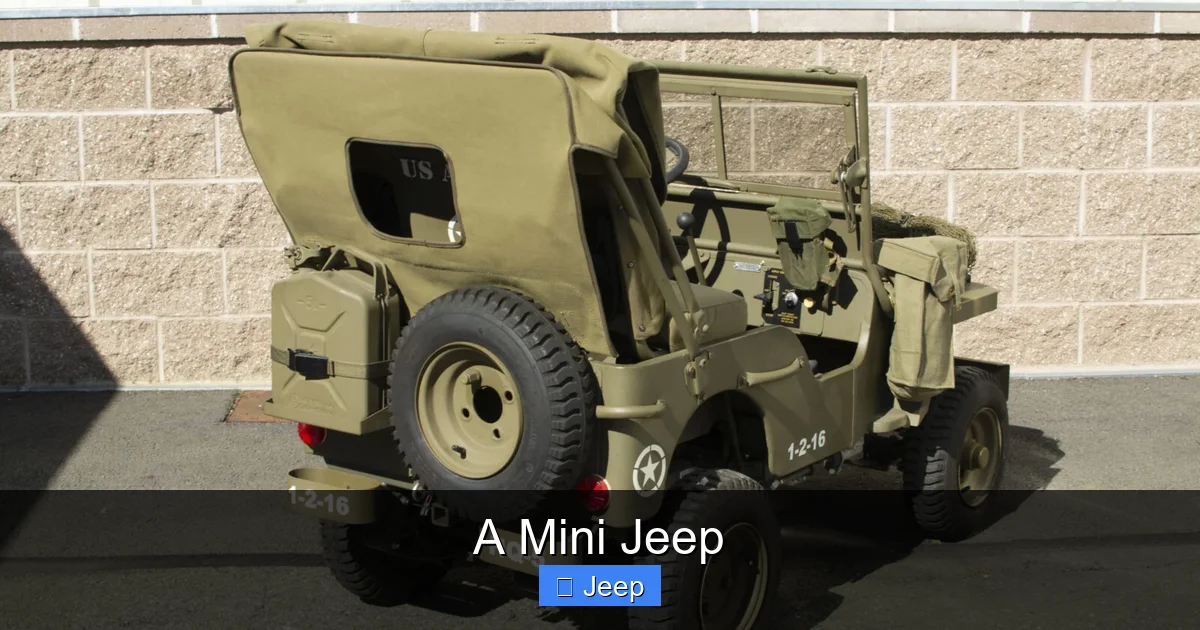
Let’s clarify: a true mini jeep is a motorized vehicle, typically with a steel frame, four-wheel drive (or at least four-wheel steering), and a body style that directly mimics its full-sized namesake. It sits in a fascinating category between a golf cart, an ATV, and a side-by-side (UTV). Most are single-seaters or have a small bench for a passenger. They are powered by small internal combustion engines (often 150cc to 400cc) or increasingly popular electric motors. The key differentiator from a child’s ride-on toy is their robust construction, higher speed (often 25-45 mph), and capability to handle genuine off-road terrain like mud, gravel, and steep inclines.
Many popular models are inspired by the WWII-era Jeep or the classic CJ series, with round headlights and a slat grille. However, the market now includes designs that look more like modern Jeep Wranglers or even futuristic concepts. The appeal lies in that iconic styling combined with a size that can navigate tight spaces, fit in a pickup bed, or be stored in a garage where a full-size SUV simply won’t go.
The Allure of Scaling Down
Why go mini? The advantages are plentiful. First is accessibility. A mini jeep is often far more affordable to purchase and insure than a full-size Jeep Wrangler. The operating costs—fuel or electricity—are dramatically lower. They’re easier to transport; you don’t need a large trailer. Their smaller dimensions make them less intimidating for new drivers and more capable on narrow forest trails or between rows of crops.
For many, it’s about the pure, unfiltered driving experience. With minimal bodywork and a high power-to-weight ratio, you feel every bump and hear every engine note. It’s raw, engaging, and incredibly fun. They also serve a very practical purpose. On a ranch or large estate, a mini jeep can haul tools, tow a small trailer for firewood, or check fence lines much more efficiently than a person on foot and with less wear and tear than a full-size truck. It’s the perfect utility vehicle for tasks that don’t require a ton of hauling power but demand serious off-pavement ability.
Types of Mini Jeeps on the Market
The mini jeep market is diverse. Your choice will primarily hinge on two major decisions: how you plan to power it and where you plan to drive it. Let’s break down the main categories you’ll encounter.
Visual guide about A Mini Jeep
Image source: silodrome.com
Electric vs. Gas-Powered
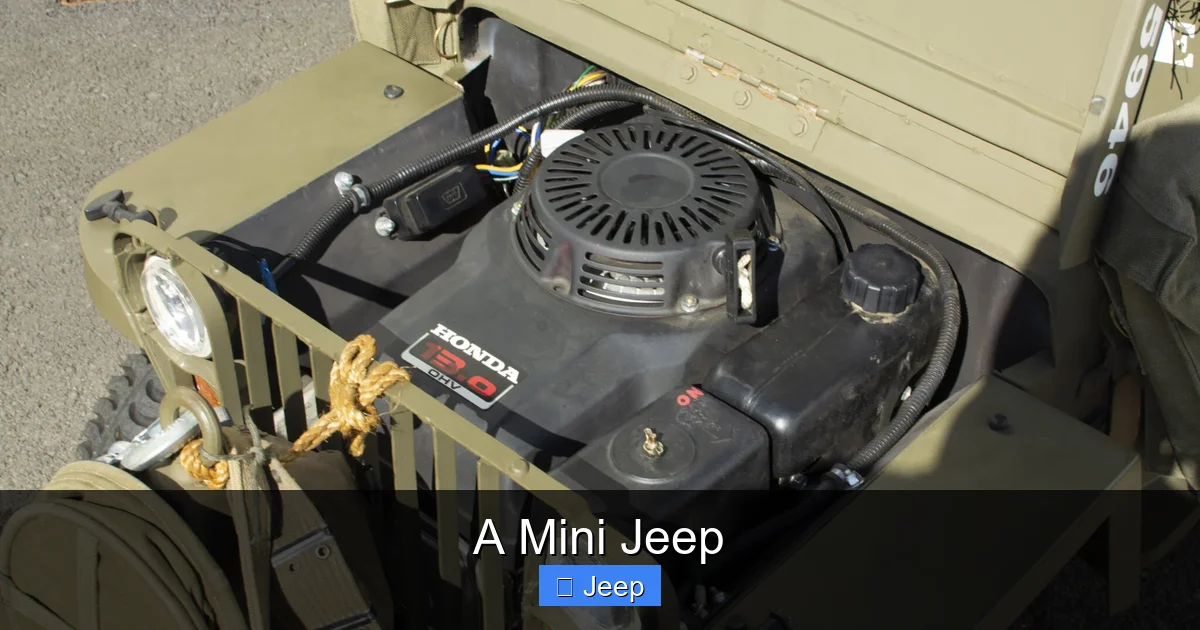
The great debate. Gasoline models use small, often 4-stroke, engines similar to those in lawn mowers or generators. They offer longer range (as long as you have fuel), quick refueling, and a familiar, visceral engine sound. Maintenance involves oil changes, spark plugs, and air filters. They are generally more powerful for their size and can be louder.
Electric mini jeeps are surging in popularity. They are whisper-quiet, have instant torque, and require virtually no routine engine maintenance—just battery care and occasional lubrication. Their range is limited by battery capacity, typically offering 1-3 hours of hard use or up to 50 miles on a charge. They are ideal for shorter, defined circuits like a large property, camp, or golf course. Charging time varies from 4-8 hours on a standard outlet. The choice comes down to your need for range/quiet (electric) versus maximum power/run-time (gas).
Street-Legal vs. Off-Road Only
This is the most critical legal distinction. A street-legal mini jeep is equipped with a Vehicle Identification Number (VIN), comes with a title, and has all the required safety equipment: DOT-approved tires, headlights, taillights, turn signals, a horn, mirrors, and often a windshield. You can register it, get a license plate, and insure it to drive on public roads, usually with a regular driver’s license (but always check your state’s specific rules—some classify them as low-speed vehicles or mopeds with different requirements).
Off-road-only models lack this equipment. They are designed for use on private property, off-road parks, or trails where street vehicles are not permitted. You cannot title or register them for public road use. Buying one as a street-legal vehicle and then removing the lights or tires to make it “off-road only” is often illegal and will void its compliance. Always verify the manufacturer’s stated intent and your local DMV regulations. This is non-negotiable. If you plan to drive from your house to a trailhead, you need a street-legal unit.
Practical Uses and Applications
So, what do people actually do with a mini jeep? The possibilities are surprisingly broad, extending far beyond just playing in the mud.
Visual guide about A Mini Jeep
Image source: silodrome.com
Recreational Adventures
At its heart, the mini jeep is a blast. It’s the ultimate toy for adults who never grew up. Families use them for exploring backyard trails, camping trips, and beach cruising. Clubs and groups organize “jeep-ins” and trail rides specifically for these diminutive rigs. Their small size allows them to access trails that are too narrow or technical for full-size Jeeps. They are also a fantastic, lower-risk way to introduce young teens to off-road driving under supervision. The camaraderie among mini jeep owners is strong, with online forums and social media groups dedicated to sharing mods, ride locations, and troubleshooting.
Work and Utility Tasks
Don’t underestimate the workhorse potential. On a farm or ranch, a mini jeep is perfect for patrolling fences, checking livestock, and hauling light supplies in a rear cargo box or small trailer. Its ability to navigate soft fields, creek banks, and rocky paths without getting stuck (or tearing up the ground like a larger vehicle) is a huge asset. Large estates and vineyards use them for groundskeeping and security patrols. Hunters appreciate them for accessing remote stands quietly (especially electric models) and for game retrieval with a small game cart. They are also used on golf courses, airport tarmacs, and large industrial sites for maintenance and security patrols where a full-size vehicle is cumbersome.
Buying Your First Mini Jeep
Ready to take the plunge? The buying process requires more diligence than for a golf cart. Here are the key factors to weigh before you hand over your money.
Visual guide about A Mini Jeep
Image source: silodrome.com
Key Features to Consider
Start with your intended use. For rugged trails, prioritize ground clearance, approach/departure angles, and tire type (all-terrain or mud tires). For property work, a rear cargo rack and a tow hitch are must-haves. For street use, ensure it has a proper windshield, wipers, and a horn that meets local decibel laws. Drivetrain is crucial: true 4WD with a low range is vastly superior for serious off-roading compared to a simple 4×2 with a limited-slip differential. Suspension travel matters for comfort and capability. Seating comfort and adjustability are important if you plan to spend hours in it. Always check the weight capacity—overloading a mini jeep is a quick way to break components or lose control.
Budgeting and Pricing
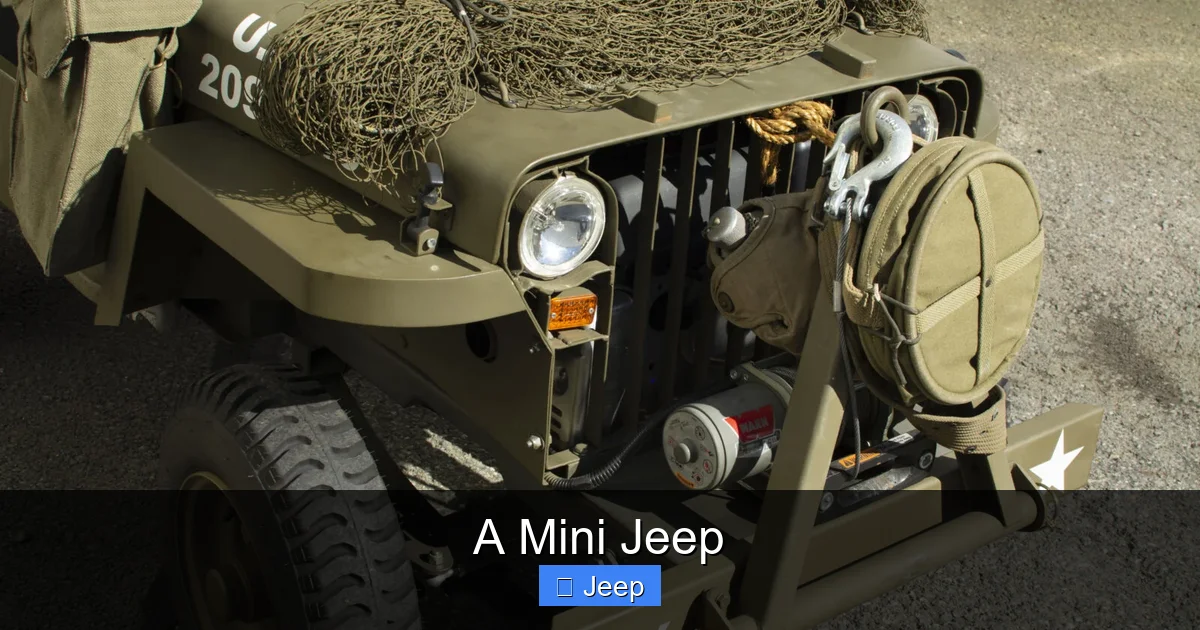
The price spectrum is vast. At the low end ($2,500 – $5,000), you’ll find many Chinese-manufactured models (often sold under various brand names). These can be great value but require careful inspection for build quality and parts availability. Mid-range ($5,000 – $10,000) includes more established brands with better support, warranties, and proven designs. High-end street-legal models from companies specializing in street-legal conversions or premium imports can exceed $15,000. Remember to budget for essential accessories: a fire extinguisher, recovery straps, a winch (if venturing deep), a cover, and a trailer if it’s not street-legal. You can get a detailed breakdown of current pricing trends and what influences cost by reading our guide on how much is a mini jeep.
Maintenance and Ownership Tips
Owning a mini jeep is a commitment. While simpler than a modern car, they still need regular care to perform reliably and last for years. Neglecting basic maintenance is the fastest route to a broken-down rig in the middle of nowhere.
Routine Care Essentials
Create a checklist. For gas models, this means regular oil changes (every 25-50 hours of use or annually), cleaning the air filter after every dusty ride, checking spark plugs, and using fuel stabilizer if stored. The chain or belt drive system needs tension checks and lubrication. For electric models, the “maintenance” is simpler but no less critical: keep batteries charged (even in storage, use a trickle charger), inspect connections for corrosion, and check tire pressure before every use, as under-inflated tires strain the motor. All models require frequent bolt checks—the constant vibration of off-road travel can loosen everything from axle bolts to body mounts. Carry a basic toolkit on every ride.
Upgrades and Customization
The fun doesn’t stop at the stock setup. The aftermarket for mini jeeps is thriving. Common first upgrades include more aggressive tires, a roof rack or rear cargo carrier, upgraded LED light bars for night riding, and a front winch for recovery. Suspension lifts can increase ground clearance. For utility models, adding a hydraulic dump bed or a more powerful battery pack (for EVs) are popular mods. Before you buy parts, research compatibility thoroughly. You can find inspiration and part recommendations for enhancing your rig’s capability and style in our article on the best accessories for a Jeep Wrangler, as many of the same principles—and sometimes even the same parts—apply to mini jeeps.
Safety, Regulations, and Legalities
This section cannot be overstated. The fun of a mini jeep is directly tied to operating it safely and legally. Ignorance is not an excuse with law enforcement or insurance companies.
Street-Legal Requirements
If your mini jeep is meant for public roads, it must be properly registered. This means it came with a title from the manufacturer or was successfully through a state’s titling/registration process for a custom-built or converted vehicle. You will need a valid driver’s license, and the vehicle must be insured. The specific equipment required varies dramatically by state and municipality. Some states treat them as “low-speed vehicles” (LSVs) limited to 25-35 mph on roads with speed limits of 35 mph or less. Others may require a motorcycle endorsement. You must have working DOT-approved tires (not the knobby, non-streET-legal kind), a windshield (often with wipers), mirrors, a horn, and all lighting (head, tail, brake, turn signals). Always check with your local Department of Motor Vehicles (DMV) or equivalent before assuming your vehicle is legal. Driving an unregistered vehicle on public roads can lead to fines, impoundment, and liability issues in an accident.
Off-Road Safety Gear and Practices
Even on private trails, safety is paramount. Always wear a DOT-certified helmet, especially on models that can exceed 30 mph. Goggles are a must to keep dust and debris out of your eyes. Wear sturdy boots, gloves, and long sleeves to protect against branches, falls, and engine heat. Never ride alone; the “buddy system” is crucial for recovery and emergency help. Carry a basic first-aid kit, a fire extinguisher, a tow strap, and a shovel. Know your vehicle’s capabilities and your own limits. Approach steep hills and water crossings with caution. The high center of gravity in many mini jeeps means they can tip more easily than a full-size vehicle on side slopes. Practice in a safe, open area before tackling challenging terrain.
Conclusion: Is a Mini Jeep Right for You?
The mini jeep occupies a special niche. It’s not a replacement for a family hauler or a heavy-duty work truck. But for the right person, it’s an unparalleled source of joy and utility. It delivers the iconic Jeep experience—the open-air feel, the capability, the style—at a fraction of the cost and complexity. If you have a need for a nimble, off-road vehicle for a large property, a camp, or dedicated trail riding, and you’re prepared to learn the maintenance and legal ropes, a mini jeep can be an incredibly rewarding purchase. Do your homework, buy from a reputable dealer if possible, prioritize safety gear, and respect the rules of the road or trail. With that foundation, you’re set for countless adventures in your own pint-sized powerhouse. The trail, whether it’s a backwoods path or a paved country lane, awaits.
Frequently Asked Questions
Are mini jeeps street legal?
It depends entirely on the specific model and your state’s laws. Some mini jeeps are manufactured and sold as street-legal vehicles (LSVs) with proper titling, DOT tires, lights, and safety equipment. Others are sold strictly for off-road use on private property or trails. You must verify a vehicle’s VIN and title status and consult your local DMV to understand registration requirements before driving it on public roads.
How much does a mini jeep typically cost?
Prices vary widely. Basic off-road-only models from overseas manufacturers can start around $2,500. Mid-range, more capable gas or electric models from established brands typically range from $5,000 to $10,000. High-end, fully street-legal models with premium components can cost $15,000 or more. Always factor in the cost of essential safety gear, a trailer (if needed), and insurance.
What is the best mini jeep for a beginner?
For a beginner, prioritize safety and simplicity. A modestly powered electric model is often an excellent start—they are quiet, have instant torque that’s easy to manage, and require minimal mechanical upkeep. Look for a model from a dealer with good customer support and a clear warranty. Avoid highly modified or high-power machines until you have experience. A vehicle with a low seat height and good visibility will also build confidence faster.
How much maintenance does a mini jeep require?
Maintenance needs differ by power source. Gas models require regular oil changes (every 25-50 hours), air filter cleanings, spark plug checks, and chain/belt lubrication. Electric models need battery health monitoring, terminal cleaning, and tire pressure checks. Regardless of type, all mini jeeps need frequent bolt torque checks due to off-road vibration. A basic pre-ride walk-around and post-ride rinse-down are simple habits that prevent 90% of major issues.
Can a mini jeep tow anything?
Yes, most mini jeeps have a small towing capacity, typically between 500 to 1,000 pounds. This is sufficient for a small utility trailer with firewood, a garden cart, or a lightweight boat/dory. Always check your specific model’s manual for its rated towing capacity and never exceed it. Use a proper hitch and ensure your mini jeep’s brakes and suspension are up to the task for the weight you’re pulling.
What safety gear is mandatory for riding a mini jeep?
While legal requirements vary, the following are non-negotiable for safe operation: a DOT-certified helmet (full-face or open-face with goggles), ANSI-approved safety glasses or goggles, sturdy over-the-ankle boots, gloves, and long-sleeved clothing. For off-road use, a fire extinguisher and a first-aid kit should always be carried on board. If driving on public roads, your vehicle must be equipped with all legally mandated lighting, mirrors, and a horn.