
Can a Ford F150 Power a House

Yes, a Ford F150 can power a house, but with important caveats. Models equipped with the Pro Power Onboard system act as built-in generators, providing up to 7.2 kW of clean power. This is perfect for running essential appliances like refrigerators, sump pumps, and lights during short outages. However, it cannot power an entire modern home continuously and requires careful fuel and load management. It’s a fantastic backup for emergencies and job sites, but not a full-time replacement for a standby generator.
Picture this: A fierce storm knocks out power to your neighborhood. The lights go dark, the hum of the refrigerator stops, and the sump pump falls silent. You’re fumbling for flashlights when you remember—your truck in the driveway might just be your lifeline. The question on many F150 owners’ minds is a big one: Can a Ford F150 power a house? The answer is a resounding yes, but… It’s not as simple as just plugging in. It requires understanding your truck’s specific capabilities, the right equipment, and a commitment to safety. Let’s break down everything you need to know about turning your Ford F150 into a reliable backup power source.
Key Takeaways
- Pro Power Onboard is the key: Only Ford F150s with the optional Pro Power Onboard system (standard on some trims) can directly power a house without aftermarket parts.
- Power output varies by model year: Newer trucks (2021+) offer up to 7.2 kW, while older models with an aftermarket inverter provide much less power, typically around 2 kW.
- Runtime is fuel-limited: A full tank can run critical loads for 24-50+ hours, but you must manage fuel consumption and never let the tank run dry to avoid damage.
- It’s for essentials, not everything: You can run a fridge, freezer, sump pump, lights, and a TV, but not central air conditioning, electric stoves, or multiple high-wattage appliances simultaneously.
- Safety is non-negotiable: Always operate the truck outdoors, far from windows and vents, to prevent deadly carbon monoxide from entering the home.
- Setup requires planning: You’ll need heavy-duty extension cords and a proper transfer switch or interlock to safely connect to your home’s circuit panel.
- It’s a mobile power solution: The F150’s greatest advantage is its mobility, making it ideal for job sites, camping, and tailgating, not just home backup.
📑 Table of Contents
- Understanding Your F150’s Power Capabilities
- The Pro Power Onboard System Explained
- Real-World Applications and Limitations
- Setting Up Your F150 as a Backup Power Source
- Safety Considerations: The Non-Negotiables
- Comparing to Traditional Portable Generators
- Conclusion: A Powerful Tool, Not a Magic Bullet
Understanding Your F150’s Power Capabilities
First, not all Ford F150s are created equal in the power generation department. The ability to power a home hinges on one critical feature: Pro Power Onboard. This isn’t just a fancy power outlet in the bed; it’s an integrated system that turns your truck’s engine into a clean, stable generator.
Engine as Generator: How It Works
When you engage Pro Power Onboard, the truck’s engine automatically starts and maintains a specific RPM to drive an integrated alternator and inverter system. This system converts the engine’s mechanical energy into regulated AC power, similar to what you get from a wall outlet, but without the voltage fluctuations that can damage sensitive electronics. It’s a brilliantly engineered solution that leverages the truck’s existing powertrain.
Power Output Specifications
The power you get depends heavily on your model year and engine. For the 2021 and newer F150s equipped with the 3.5L EcoBoost V6 or the 5.0L V8, the available Pro Power Onboard system delivers up to 7.2 kilowatts (kW) of continuous power. That’s a significant amount—more than many portable generators in the 5,000-7,000 watt range. Earlier model years (2015-2020) with the 2.7L or 3.5L EcoBoost could be equipped with a 2.0 kW system, which is useful for smaller tools but much more limited for home use. It’s crucial to check your specific truck’s capabilities in the owner’s manual or window sticker.
Fuel Consumption and Runtime
This is the biggest limitation. The F150’s generator uses the same fuel as the engine. A full 26-gallon tank (in a 4×4 model) with the 7.2 kW system running at a 50% load (about 3,600 watts) can theoretically run for over 30 hours. However, runtime plummets as you increase the load. Running it at full 7.2 kW might only give you 12-15 hours. You must plan for refueling, and you should never let the fuel level drop below a quarter tank to avoid running the fuel pump dry. For extended outages, you’ll need a safe, ventilated way to store and pour extra fuel. This is where a truck’s large tank is a huge advantage over many portable generators with 1-2 gallon tanks.
The Pro Power Onboard System Explained
If you’re shopping for a new F150 or already own one, understanding the Pro Power Onboard system is essential. It’s more than just an outlet; it’s a complete power solution.
Visual guide about Can a Ford F150 Power a House
Image source: i1.wp.com
What is Pro Power Onboard?
Pro Power Onboard is a factory-installed option that includes a high-output alternator, a power inverter, and dedicated 120V and 240V outlets in the truck bed. The system is seamlessly integrated into the vehicle’s computer. When you turn it on via the truck’s infotainment screen or a button, it manages engine speed, monitors loads, and protects against overloads and short circuits. The power is “clean,” meaning it has a low Total Harmonic Distortion (THD), making it safe for laptops, TVs, and other sensitive electronics—something not all cheap portable generators can claim.
Installation and Compatibility
For model years that offer it, Pro Power Onboard is installed at the factory. It’s not an aftermarket add-on you can easily get for any truck. If you have an older F150 without this system, you can install a high-quality pure sine wave inverter connected to the battery, but this has severe limitations. The truck’s standard alternator isn’t designed for continuous high-output charging, and the battery will drain quickly under a significant load. You’d be limited to maybe 1,000-1,500 watts for a short time before the battery dies and the truck stalls. For serious home backup, a factory-installed Pro Power system is the only viable OEM solution. If you’re considering an aftermarket setup, you must research high-output alternators and large auxiliary batteries, which is a complex and expensive project.
Outlets and Connectivity Options
The Pro Power system provides multiple outlets. Typically, you’ll find four 120V 20-amp GFCI outlets (like your home’s standard outlets) and one 240V 20-amp outlet (for larger appliances like well pumps or air conditioners). This 240V outlet is a game-changer, as many critical home systems run on 240V. The outlets are conveniently located in the truck bed, often under a protective cover. You’ll need heavy-duty extension cords rated for the distance and amperage you need to run power into your home.
Real-World Applications and Limitations
So, what can you realistically run? This is where practical experience matters. Let’s separate myth from reality.
Visual guide about Can a Ford F150 Power a House
Image source: cdn.motor1.com
During Blackouts: What You Can Run
Think in terms of “critical loads.” A typical refrigerator/freezer combo might draw 600-800 watts on startup and 100-200 watts to run. A sump pump is a hungry beast, often drawing 800-1,200 watts when it kicks on. A few LED light circuits, a modem/router, and a TV might use 200-300 watts total. A microwave is 1,000 watts but is used briefly. With a 7.2 kW system, you could comfortably run all of these at once, with plenty of headroom. You could even run a small window air conditioner (1,200-1,500 watts) on a 240V circuit. What you cannot run is an entire central air conditioning system (which can draw 3,000-5,000+ watts on startup), an electric oven/range (3,000+ watts), or an electric water heater (4,500+ watts). Trying to run these will trip the F150’s internal overload protection. The strategy is to create a “ prioritized subpanel” in your home with only the essential circuits connected to the transfer switch.
Job Sites and Outdoor Events
Here’s where the F150 truly shines. Contractors have been using trucks as mobile power sources for decades, but Pro Power Onboard makes it effortless. You can run multiple saws, a compressor, and a job site light simultaneously without the noise, fumes, and theft risk of a separate generator. For camping or tailgating, it’s unbeatable. You can power an RV, a sound system, and a food truck from your truck. This versatility is a core reason many buyers opt for the Pro Power package, even if they rarely experience home power outages.
Limitations: Runtime, Load Management, and Noise
We’ve touched on runtime. The other big limits are load management and noise. You must be a power accountant. Add up the starting wattage (surge) and running wattage of everything you want to run. The F150’s system can handle the surge for a moment, but the total running load must stay under its continuous rating (e.g., 7,200 watts for a 7.2 kW system). Overloading it causes it to shut down. Noise is another factor. While quieter than many portable generators, a running F150 engine is not silent. It will be noticeable in a quiet neighborhood, though less obtrusive than a dedicated generator’s exhaust bark. You should position the truck to minimize disturbance and direct exhaust away from all buildings.
Setting Up Your F150 as a Backup Power Source
Having the power available is one thing; getting it safely into your home is another. This setup is not a “plug and play” situation.

Visual guide about Can a Ford F150 Power a House
Image source: jonathanmotorcars.com
Essential Equipment
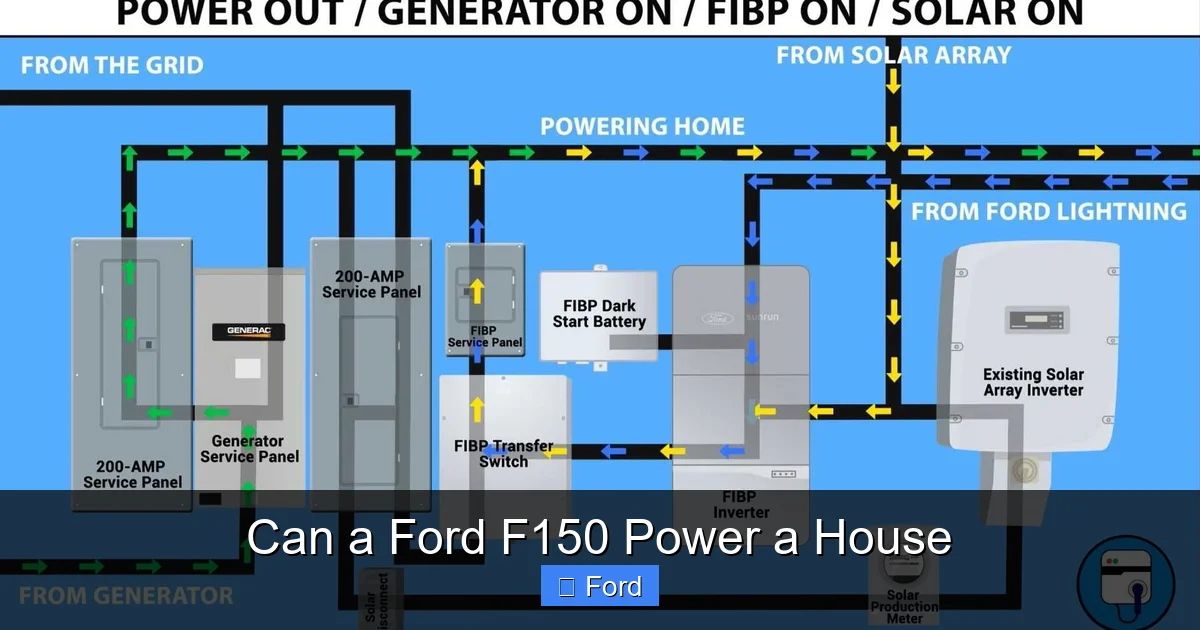
You need more than just a long cord. The most critical piece is a manual transfer switch or an interlock device for your main electrical panel. This is a safety device mandated by electrical code. It physically prevents your home’s main breaker from being on at the same time as the generator/inverter breaker, which would send power back down the utility lines (a deadly process called backfeeding). A transfer switch isolates specific circuits (like your fridge, sump pump, and living room outlets) from the grid and allows you to safely connect the F150’s power to them. You’ll also need heavy-gauge (10-12 AWG) extension cords rated for outdoor use to bridge the distance from your truck (parked safely outside) to the transfer switch or the appliances themselves.
Step-by-Step Setup Guide
1. Plan and Install: Have a licensed electrician install a transfer switch or interlock and designate your critical circuits. This is not a DIY job for most homeowners due to permit and code requirements.
2. Park Strategically: Park your F150 on a stable, level surface, at least 10-15 feet from any windows, doors, or vents of your home. Consider the direction of the wind to keep exhaust away.
3. Connect: Run your heavy-duty extension cord from the F150’s Pro Power outlets to the transfer switch inlet or directly to appliances (for small, temporary setups).
4. Isolate and Start: At the transfer switch, flip the main breaker to “OFF” (utility power). Then flip the designated circuit breakers you want to power to “ON.” Start the truck and engage the Pro Power Onboard system.
5. Monitor: Check the power output display on the truck’s screen. Ensure your total load is under the continuous rating. Listen for any changes in engine pitch that might indicate overload.
Energy Conservation Tips
To maximize runtime, be ruthless about conservation. Run only what you need. Switch all lights to LEDs. Unplug any “vampire” electronics (chargers, TVs on standby). Keep the fridge and freezer full—cold items retain temperature longer. If you have a well pump, consider filling a bathtub or large containers with water for flushing toilets. Use a microwave or toaster oven instead of the electric stove. Every watt saved extends your fuel and your peace of mind.
Safety Considerations: The Non-Negotiables
Using a vehicle as a generator introduces unique dangers that are absent with a stationary generator. Skipping these steps can be fatal.
Carbon Monoxide (CO) is the Silent Killer
An F150’s exhaust contains carbon monoxide, an odorless, colorless gas that can kill in minutes. Never, under any circumstances, run the Pro Power system in an attached garage—even with the door open. The truck must be outside. Position it so exhaust fumes blow away from your home’s windows, doors, and any neighboring buildings. Be mindful of wind direction changes. A battery-powered CO detector placed inside your home is a wise investment during extended use.
Proper Ventilation and Placement
Parking on grass or soft soil is fine, but ensure the exhaust pipe isn’t blocked by snow, leaves, or debris. Do not park near tall grass or shrubbery that could catch fire from the hot tailpipe. If it’s raining, you need a canopy or shelter for the truck’s bed (where the outlets are) and the extension cord connections, but the exhaust must remain completely unrestricted and outdoors.
Electrical Safety and Overload Prevention
Always use outdoor-rated, properly gauged extension cords. A cheap, thin cord can overheat and cause a fire. Never daisy-chain extension cords. Ensure all connections are tight and dry. Familiarize yourself with the F150’s power meter and overload indicators. If the system shuts down, don’t immediately restart it. Unplug some loads first. The system has protection, but it’s better to prevent the overload than rely on the shutdown.
Comparing to Traditional Portable Generators
Is using your F150 better than buying a standalone generator? Let’s compare.
Cost-Benefit Analysis
If you already own a Pro Power Onboard F150, the “cost” is just fuel. A comparable 7,000-watt portable generator costs $500-$1,500. So the truck wins on upfront cost if you need it for other purposes too. However, if you don’t already have the Pro Power option, adding it to a new truck can be a $1,500-$3,000 upgrade. For an older truck, a quality 7,000-watt generator might be a cheaper dedicated solution. The F150’s value is in its dual-use nature.
Convenience and Portability
The F150 is always with you. You don’t need to haul a heavy generator out of the garage, fill it with oil and gasoline (which goes stale), and perform annual maintenance. The truck’s system is ready to go, uses the same fuel as your vehicle, and is maintained as part of your regular service. For job sites, this is a massive advantage—your power source is your vehicle. For home backup, the convenience of not having to store and maintain a separate machine is significant.
Noise Levels and Emissions
Modern portable generators have gotten quieter, but a running F150 engine, especially a V6 or V8, is generally louder at idle than an inverter generator. However, it’s often a deeper, less piercing sound. Emissions-wise, the truck’s engine is subject to strict automotive standards, while many portable generators have much looser regulations. The truck’s catalytic converter does a good job of cleaning exhaust, but CO is still a risk. Noise ordinances in some neighborhoods might be a factor for prolonged use.
Conclusion: A Powerful Tool, Not a Magic Bullet
So, can a Ford F150 power a house? Yes, it can be a superb, even lifesaving, source of backup power for your home’s essential systems. The Pro Power Onboard system in modern F150s is a marvel of integrated engineering, offering clean, substantial power from a vehicle you already own. It excels at powering critical circuits during outages, enabling work on remote job sites, and fueling adventure. However, it is not a whole-house solution. You must be a savvy power manager, strictly adhere to safety protocols, and understand its runtime and load limits. The key is planning: install a proper transfer switch, know your wattage needs, and always prioritize safety over convenience. For the right owner—someone who values mobility, already has the truck, and only needs to keep essentials running—the F150 isn’t just a truck; it’s a mobile power station that provides incredible peace of mind. Before you rely on it in an emergency, test your setup under controlled conditions. Knowing exactly how it works and what it can do is the true power.
Frequently Asked Questions
How long can a Ford F150 continuously power a typical home’s essential circuits?
Runtime varies by model, load, and fuel level. A 2021+ F150 with the 7.2 kW system, powering a 3,000-watt load (fridge, sump pump, lights), can run for 24-40 hours on a full tank. You must monitor fuel and refill as needed, never dropping below a quarter tank.
Can I run my central air conditioning system from my F150?
Generally, no. Central AC units have very high starting wattages (often 5,000+ watts) that exceed the F150’s continuous rating. You might be able to run a small, 240V window unit if its running watts are under 1,800, but it’s not recommended for the whole system.
Do I absolutely need a transfer switch to connect my F150 to my home?
Yes, a manual transfer switch or interlock is required for safe, code-compliant connection to your home’s circuit panel. It prevents dangerous backfeeding into the utility grid, which can kill line workers. Directly plugging a cord into a dryer outlet or similar is extremely hazardous and illegal.
What’s the difference between Pro Power Onboard and using an aftermarket power inverter?
Pro Power Onboard is a factory-integrated system with a high-output alternator and inverter designed for continuous, high-wattage use. An aftermarket inverter connected to the stock battery/alternator is for light-duty, intermittent use (like charging tools). It will quickly drain a standard battery and can damage the stock alternator under heavy, sustained loads.
Is it safe to run the F150’s generator in the rain or snow?
The truck and its outlets are weather-resistant, but you must keep all electrical connections (plug-to-cord, cord-to-transfer switch) dry and off the ground. Use a canopy to shelter the bed and connections. The exhaust must remain completely unobstructed and outdoors. Never operate the truck in an enclosed space.
Can any Ford F150 power a house, or only specific models/years?
Only F150s factory-equipped with the Pro Power Onboard option can safely and effectively power a home. This was available on select 2021+ models with the 3.5L EcoBoost or 5.0L V8 engines. Older models (2015-2020) had a limited 2.0 kW version, which is insufficient for most home backup needs. Always verify your truck’s specific capabilities.
