
Are Jeep Gladiator Capable Off Road

Yes, the Jeep Gladiator is an exceptionally capable off-road machine, especially in Rubicon trim. It combines the legendary Wrangler’s off-road DNA with a useful truck bed, featuring solid axles, locking differentials, and a disconnecting front sway bar. While every Gladiator is trail-ready, the Rubicon model is purpose-built for the most extreme terrain, making it a unique and formidable player in the midsize truck segment.
Key Takeaways
- Solid Axle Advantage: The Gladiator’s solid front and rear axles provide superior durability and articulation over uneven terrain compared to independent suspensions, a core Jeep off-road trait.
- Rubicon is the King: The Gladiator Rubicon comes standard with essentials like electronic locking differentials, a 4:1 transfer case, and 33-inch tires, making it off-road ready from the factory.
- Truck Bed Versatility: Its payload and towing capacity allow you to carry recovery gear, supplies, or even a trailer to the trailhead, a flexibility most pure SUVs lack.
- Aftermarket Ecosystem: The Gladiator benefits from the massive Wrangler aftermarket, offering endless lift kits, armor, and tire options to enhance its capability further.
- Not Without Trade-offs: Its long wheelbase and overhangs can be a limitation on very tight, rocky trails compared to a shorter Wrangler, and on-road manners are truck-like.
- Every Gladiator is Capable: Even the base Sport model with its standard 4×4 system and decent approach/departure angles can handle moderate off-road adventures with skill and the right tires.
📑 Table of Contents
- Introduction: The Truck That Wears a Jeep Badge
- The Off-Road Anatomy: What’s Under the Skin?
- Real-World Off-Road Performance: From Forest Roads to Moab
- Rubicon vs. Sport: Is the Factory Rubicon Worth the Premium?
- Modifications and the Aftermarket: Unlocking Even More
- Practical Tips for Gladiator Owners: Driving and Setup
- Conclusion: A Capable, Unique, and Uncompromising Machine
Introduction: The Truck That Wears a Jeep Badge
So, you’re eyeing a Jeep Gladiator. You love the idea of a rugged, open-air adventure machine, but you also need to haul a dirt bike, a load of firewood, or maybe a small trailer to the campsite. You’ve heard the whispers, the debates in off-road circles: “Is it a real Jeep?” or “Can that long truck really go where a Wrangler can?” Let’s settle this once and for all. Yes, the Jeep Gladiator is profoundly capable off-road. It’s not just a Wrangler with a bed tacked on; it’s a meticulously engineered midsize pickup that borrows the Wrangler’s legendary off-road soul and adapts it for a different kind of adventurer.
When Jeep set out to build its first truck in over 25 years, they didn’t start from scratch. They started from the JL Wrangler Unlimited’s platform. That means from the firewall forward, it’s pure Jeep. This shared DNA is the Gladiator’s greatest strength and its most scrutinized feature. It inherits the solid axles, the legendary Rubicon hardware, and the go-anywhere spirit. But the added length—nearly two feet longer than a Wrangler Unlimited—changes the game. It introduces new challenges in breakover angles but unlocks a world of utility. In this deep dive, we’ll dissect exactly what makes the Gladiator tick on the trail, compare the trims, explore real-world performance, and give you the straight talk on its strengths and its limits. Buckle up; we’re going off the pavement.
The Off-Road Anatomy: What’s Under the Skin?
To understand the Gladiator’s capability, you have to look at its bones. Jeep didn’t just put a truck bed on a Wrangler and call it a day. They reinforced the frame, upgraded the suspension for payload, and carefully integrated the drivetrain. The result is a vehicle that feels incredibly familiar to a Wrangler owner yet behaves like a proper workhorse.
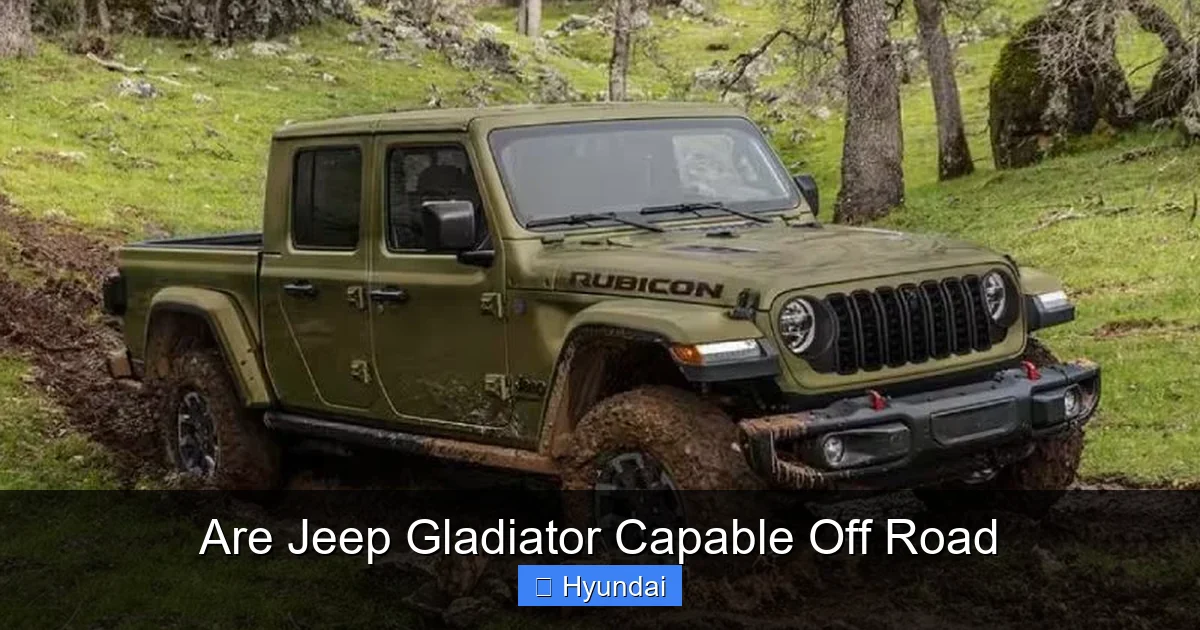
Visual guide about Are Jeep Gladiator Capable Off Road
Image source: scout.customerscout.net
The Legendary Solid Axles
This is non-negotiable for serious off-roading. The Gladiator, like all Wranglers, uses a solid front axle and a solid rear axle. In simple terms, this means the axle tube is one rigid piece. When a wheel drops into a hole, the other wheel can stay planted and maintain traction much better than an independent suspension, which would allow the dropped wheel to rise and the opposite wheel to lose contact. This “articulation” is key for crawling over rocks and navigating whoops. The trade-off is a slightly rougher on-road ride, but for off-road purity, it’s the gold standard. The Gladiator’s axles are robust and built to take abuse.
Drivetrain and Transfer Case: Command-Trac vs. Rock-Trac
Every Gladiator comes with part-time 4×4. The key difference lies in the transfer case. Sport, Overland, and Willys models get the Command-Trac system. It’s a capable, shift-on-the-fly part-time system with a 2.72:1 low-range gear ratio. It’s perfect for muddy trails, steep hills, and moderate rock crawling. The Rubicon steps up to the Rock-Trac system. This is the benchmark. It features a 4:1 low-range ratio, which is significantly lower (more “crawling” power). This means you can go slower over obstacles with more control and torque, a massive advantage on technical rocks. The Rubicon also standardizes front and rear electric locking differentials (Dana 44 axles), which mechanically lock the two wheels on an axle together, ensuring power goes to the wheel with grip, even if the other is in the air.
Approach, Departure, and Breakover Angles
These are the geometry numbers that tell you if you’ll scrape. The Gladiator’s long wheelbase is its biggest factor here.
- Approach Angle (up to 39.6° Rubicon): Excellent. The short front overhang means you can attack steep climbs without the front bumper digging in.
- Departure Angle (up to 40.1° Rubicon): Also excellent. The truck bed design allows for a clean break at the rear tire.
- Breakover Angle (up to 20.3° Rubicon): This is the limitation. At about 20 degrees, it’s lower than a Wrangler’s 25+ degrees. This means on very sharp, rocky crests, the middle of the Gladiator’s chassis is more likely to high-center. Skillful driving and spotting are required here.
The Rubicon’s taller 33-inch tires and available factory lift help mitigate this slightly compared to the Sport’s 32-inch tires.
Sway Bar Disconnect and Selec-Speed Control
The Rubicon’s signature feature is the electronic front sway bar disconnect. At the push of a button (at speeds under 20 mph), the front stabilizer bar disconnects, allowing the front wheels to articulate independently. This is a game-changer for rock crawling, dramatically increasing wheel travel. The Selec-Speed Control is a hill descent/ascend system that modulates throttle and brakes to maintain a set speed on steep grades, taking the shimmy out of technical descents.
Real-World Off-Road Performance: From Forest Roads to Moab
Specs are one thing. How does it actually behave? Let’s break it down by terrain type, because capability isn’t a single number.
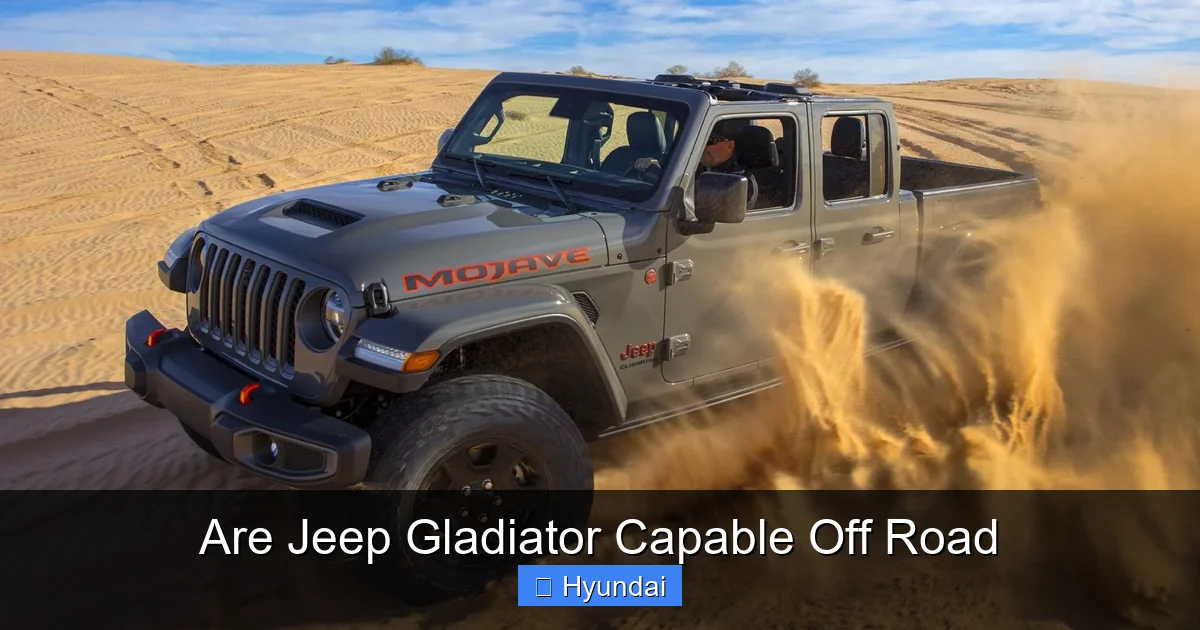
Visual guide about Are Jeep Gladiator Capable Off Road
Image source: wallpaperaccess.com
Rock Crawling: The Rubicon’s Kingdom
If your dream is navigating the rocky switchbacks of Moab or the granite slabs of the Appalachian Mountains, you want the Rubicon. The 4:1 Rock-Trac transfer case gives you that “granny gear” feeling—slow, controllable, and torquey. You can idle over boulders that would stop a Sport model dead in its tracks, forcing you to use more throttle and risk wheel spin. The locking differentials are decisive; you’ll hear and feel them engage, and then you just go. The sway bar disconnect is the final piece, letting the front end “walk” over obstacles. A stock Rubicon on its 33-inch All-Terrain tires is shockingly capable. It’s not a buggy, but it will征服 (conquer) routes rated for most side-by-sides. For the base Sport, rock crawling is possible but requires more finesse, momentum, and likely a tire upgrade to a more aggressive All-Terrain or Mud-Terrain. A driver who knows how to pick a line can achieve amazing things.
Mud and Sand: Power and Flotation
Here, the Gladiator shines regardless of trim. Its solid axles, good ground clearance, and available locking rear differential (standard on Rubicon, optional on Sport) help manage slippage. The key is momentum and tire choice. The stock tires are competent All-Terrains, but for deep, soup-like mud, a dedicated Mud-Terrain tire is a must. The Gladiator’s weight distribution is good for sand, but you’ll need to air down significantly (to 15-18 PSI) to increase the tire’s footprint and prevent digging. Its truck bed is a huge plus here; you can carry a full-size shovel, a recovery board, and a high-volume air compressor without cramping cabin space. For serious sand play, consider a set of dedicated off-road tires designed for flotation.
Forest Roads and Arduous Trails: The Sweet Spot
This is where every Gladiator feels at home. Dirt roads with deep ruts, water crossings, and occasional rock gardens are right in its wheelhouse. The high ground clearance, robust drivetrain cooling, and excellent visibility from the cab make it an effortless and confidence-inspiring machine. The part-time 4×4 system is more than adequate. The long wheelbase actually becomes an advantage here, providing a stable, planted feel on fast, washboard roads where a short-wheelbase vehicle might feel skittish. This is the Gladiator’s natural habitat—adventure touring with a purpose.
Water Fording: A Jeep Tradition
The Gladiator carries on the Jeep tradition of respectable water fording. The official rating is 30 inches (76 cm) of water depth, but real-world capability depends on the water’s flow and the condition of the stream bed. The high-mounted air intake (on non-sport models) helps keep water out of the engine. The key is to go slow, create a bow wave, and never let water splash into the engine bay. The truck bed is a benefit here too; any gear you need on the other side can ride up high and dry.
Rubicon vs. Sport: Is the Factory Rubicon Worth the Premium?
This is the eternal question for Gladiator buyers. The price jump from a well-optioned Sport S to a Rubicon is significant. So, is it worth it for off-road use?
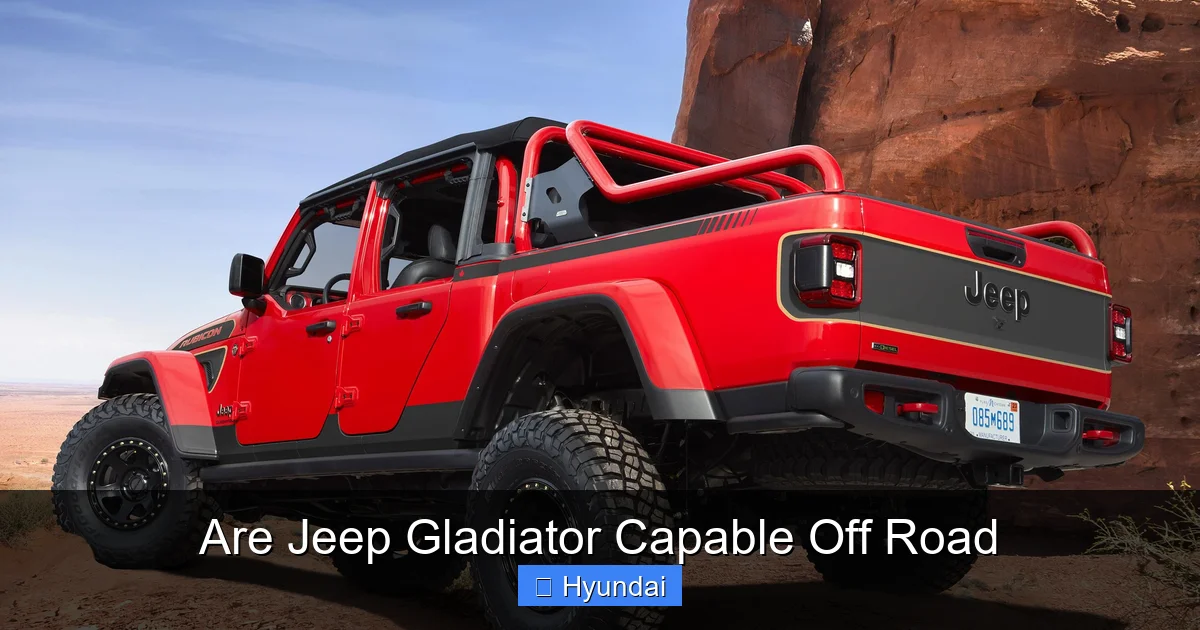
Visual guide about Are Jeep Gladiator Capable Off Road
Image source: images.carexpert.com.au
The Rubicon’s Standard Arsenal
Let’s list what the Rubicon gives you that the Sport does not:
- Rock-Trac 4:1 transfer case (vs. Command-Trac 2.72:1)
- Front & Rear Electric Locking Differentials (Sport has open differentials front/rear, optional rear locker)
- 33-inch Falken Wildpeak All-Terrain tires (vs. 32-inch)
- Electronic front sway bar disconnect
- Heavier-duty front axle shafts
- 17-inch black aluminum wheels with 4-inch backspacing
- Off-road tuned suspension with a slight lift
- Rock rails (instead of standard side steps)
- More aggressive front fascia with tow hooks
When the Rubicon is the Obvious Choice
If your goal is to regularly tackle technical, rocky trails, the Rubicon is not just an upgrade; it’s a different tool. The 4:1 low range and lockers fundamentally change the vehicle’s capability, reducing the need for driver skill and momentum. It lowers the risk of getting stuck or damaging components. The larger tires and factory lift also provide more clearance out of the box. For the enthusiast who plans to use the truck primarily for off-roading and wants a turn-key solution with a warranty, the Rubicon is the answer. The aftermarket support for the Rubicon is also slightly different, with more heavy-duty axle and suspension parts designed for its heavier-duty components.
When a Sport/Rear Locker Might Suffice
If your off-roading consists of forest service roads, sand dunes, mild rock gardens, and muddy two-tracks, a Sport S with the optional rear electronic locking differential (a $495 option) is a formidable machine. Pair it with a set of high-quality All-Terrain tires, and it will amaze you. You save a substantial amount of money that you can invest in other gear—a winch, a protective bed liner for your recovery equipment, or even a modest lift later. The Sport is the “build it yourself” platform. Many owners are perfectly content with its capability and enhance it over time.
Modifications and the Aftermarket: Unlocking Even More
One of the Gladiator’s greatest assets is its shared lineage with the Wrangler. This means an unparalleled ecosystem of aftermarket parts. Think of the stock Gladiator (especially the Rubicon) as a fantastic foundation.
Lifts, Tires, and Wheels
The most common mods. A lift kit (2.5” to 4”) allows for larger tires (35s, 37s) and more clearance. A quality lift kit will maintain good suspension geometry and ride quality. Larger tires are the single biggest upgrade for off-road traction and clearance. Remember, going bigger requires addressing gearing, potential rubbing, and speedometer calibration.
Armor and Protection
Skid plates are essential. The Rubicon comes with good ones, but the fuel tank and transfer case on all models can benefit from aftermarket steel plates. Rock sliders (instead of running boards) are a must for protecting the sills during rock crawls. A front bumper with a winch mount is the ultimate recovery tool for remote areas. The Gladiator’s front end is strong, but a steel bumper provides a solid mounting point and replaces the plastic factory bumper.
Utility Enhancements
The bed is your friend. Consider a secure bed cover to keep gear dry, a bed liner for hauling anything, and a rear tire carrier that swings out, freeing up bed space. Off-road lighting is crucial for night trails; a good light bar or pod lights mounted on a bumper or roof rack are popular upgrades.
Practical Tips for Gladiator Owners: Driving and Setup
Having the hardware is only half the battle. Here’s how to use it effectively.
Mastering 4×4 and Lockers
Don’t use lockers on dry pavement. They bind the drivetrain and can cause damage during turns. Only engage them when you have wheel slip, on loose surfaces like mud, sand, rocks, or snow. The sway bar disconnect is for slow-speed technical maneuvers only. Re-engage it before driving over 20 mph.
Tire Pressure is Your #1 Tool
Airing down is the most effective and free way to improve off-road traction. For rocky trails, drop to 15-20 PSI. For sand, drop to 12-18 PSI. For forest roads, 25 PSI might be enough. You must have a reliable air compressor to air back up for highway driving. A portable off-road tire inflator is non-negotiable gear.
Know Your Angles and Approach
Get to know your Gladiator’s dimensions. When climbing, angle the approach so the front tire hits first, then the bumper. When descending, go slow and let the rear tire touch down first to avoid the rear bumper catching. On a breakover crest, “feather” the throttle to keep momentum but not so much that you launch and slam the center. A spotter is invaluable for tight, rocky sections where you can’t see the obstacle.
Maintenance for the Adventurer
Off-roading is hard on vehicles. After a deep water crossing, check your differentials and transmission fluid for water contamination. After a dusty day, check your air filter. Carry basic fluids. The Gladiator’s solid axles and robust drivetrain are tough, but they still require care. Regular inspections after hard use are part of the ownership experience.
Conclusion: A Capable, Unique, and Uncompromising Machine
So, are Jeep Gladiators capable off-road? The answer is a resounding, unequivocal yes. It is, in fact, one of the most capable stock midsize trucks on the market. The Rubicon model is a factory-built rock-crawling beast that can shame many dedicated off-road SUVs. Even the base models are more than a match for the vast majority of public off-road trails. Its capability is rooted in Jeep’s core DNA: solid axles, part-time 4×4, and a philosophy of durability over comfort.
Its long wheelbase is its defining characteristic—a strength on fast, rough roads and a consideration on tight, rocky obstacles. It is not a replacement for a shorter Wrangler if your sole passion is navigating the most extreme, narrow rock gardens. But for the adventurer who wants to go off-road and also do something when they get there—whether that’s hunting, fishing, camping with a trailer, or hauling a side-by-side—the Gladiator is in a class of its own. It’s a tool, a very capable tool, built for a specific job. It asks for compromises in daily driving comfort and parking ease, but for the right person, those compromises are a small price to pay for the unparalleled freedom and utility it delivers. The Jeep Gladiator doesn’t just go off-road; it works off-road, and it does both exceptionally well.
Frequently Asked Questions
Is the Jeep Gladiator Rubicon significantly more capable than the Sport model?
Yes, the Rubicon is a major leap. Its 4:1 Rock-Trac transfer case (vs. 2.72:1), standard front and rear locking differentials, and electronic sway bar disconnect provide a fundamental increase in technical rock-crawling ability and control that the Sport cannot match without expensive modifications.
What are the best off-road tires for a Jeep Gladiator?
For all-around capability, the stock Rubicon’s Falken Wildpeak All-Terrains are excellent. For more aggressive mud and rock traction, dedicated Mud-Terrain tires like the BFGoodrich KM3 or Nitto Trail Grappler are top choices. For primarily rock crawling, a softer-compound All-Terrain like the Falken Wildpeak or Toyo Open Country AT3 provides great grip.
How much water can a Jeep Gladiator safely ford?
Jeep rates the Gladiator for up to 30 inches of water depth. Real-world safe fording depends on water flow and the stream bed. Always go slowly, create a bow wave, and ensure your air intake (location varies by year/model) remains above water. After fording, check fluids for water contamination.
Can I off-road a base Jeep Gladiator Sport without any upgrades?
Absolutely. The Sport’s Command-Trac 4×4 system, good ground clearance, and solid axles allow it to handle most moderate off-road trails, forest roads, and mild rock gardens. Adding a rear locker and a set of quality All-Terrain tires would dramatically increase its capability, but it’s far from a pavement queen from the start.
What is the biggest limitation of the Gladiator off-road?
Its long wheelbase results in a lower breakover angle (around 20 degrees) compared to a Wrangler. This means the vehicle’s center is more likely to high-center on sharp, rocky ridges. Careful line selection, slow speeds, and the use of a spotter are crucial on these types of obstacles.
Is the Jeep Gladiator comfortable as a daily driver when not off-roading?
It is comfortable for a truck-based, body-on-frame SUV. The ride is truck-like—firm and connected—but not harsh. The cabin is quiet and well-appointed. The main compromises are its length, which makes parking and tight maneuvers more difficult, and fuel economy, which is modest for its class. For those who value utility and capability over car-like refinement, it’s a satisfying daily driver.