
What Wheels Fit Hyundai Elantra?

Finding wheels that fit your Hyundai Elantra isn’t guesswork—it’s about matching four critical measurements: bolt pattern, hub size, wheel diameter/width, and offset. The Elantra uses a 5×114.3 bolt pattern across most recent years, but hub bore and correct offset vary. Using the wrong specs can cause dangerous vibrations, brake issues, and premature wear. Always verify your specific model year’s requirements before buying.
So, you’re thinking about new wheels for your Hyundai Elantra. Maybe the stock steel wheels with hubcaps feel a bit dated. Perhaps you scored a set of used alloys that look amazing. Or you’re just preparing for a future upgrade. The big question that stops most people in their tracks is: what wheels actually fit my Hyundai Elantra? It’s a great question, and the answer is more precise than you might think. This isn’t about style first; it’s about safety, performance, and protecting your investment second. Picking the wrong wheel can lead to vibrations that shake your teeth out, uneven tire wear that costs you hundreds, and even compromised braking and handling. Let’s break it all down, step by step, so you can shop with confidence and install with peace of mind.
Key Takeaways
- Bolt Pattern is Non-Negotiable: Your Elantra’s lug pattern (almost always 5×114.3) must match the wheel exactly. A mismatch is unsafe and impossible to correct with simple parts.
- Hub Bore Must Be Correct: The wheel’s center hole must match your car’s hub size (typically 67.1mm or 67.6mm). Using hub rings is a common fix for a slightly larger bore, but never for a smaller one.
- Size, Width, and Offset Matter: Sticking to OEM-recommended sizes (e.g., 16×6.5, 17×7) and offset (around +45 to +50) ensures proper fitment, steering, and fender clearance.
- TPMS is Mandatory: All post-2007 Elantras have Tire Pressure Monitoring Systems. Wheels must have TPMS sensors installed, or your dash light will stay on.
- Model Year Differences Exist: While patterns are consistent, a 2010 Elantra’s hub size may differ slightly from a 2021 model. Always check for your exact year, trim, and generation.
- Aftermarket Offers More Style: The aftermarket provides countless styles in correct fitment specs. Just ensure the seller provides detailed measurements and verifies compatibility.
- Professional Installation is Key: Even with perfect specs, improper torque, damaged sensors, or unbalanced mounting can ruin a good wheel. Trust experienced installers.
📑 Table of Contents
- Understanding Wheel Compatibility: It’s a Science, Not Magic
- Hyundai Elantra Bolt Patterns & Hub Sizes: The Core Specs
- Wheel Size, Width, and Offset: Fitting Within the Fenders
- TPMS: The Electronic Elephant in the Room
- Popular Aftermarket Wheel Options for the Elantra
- Common Mistakes & How to Avoid Them
- Conclusion: Your Perfect Fit is Out There
Understanding Wheel Compatibility: It’s a Science, Not Magic
Before we dive into Elantra-specific numbers, you need to understand the five core measurements that determine if a wheel will bolt onto your car safely. Think of these as the wheel’s “DNA” that must match your car’s “receiving” specs.
The Five Critical Measurements
1. Bolt Pattern (PCD): This is the arrangement of the lug holes. It’s described by two numbers: the number of lugs (5 for the Elantra) and the diameter of the imaginary circle those lugs sit on (in millimeters). A “5×114.3” pattern means 5 lugs on a 114.3mm circle. This must match perfectly.
2. Hub Bore (Center Bore): This is the diameter of the hole in the center of the wheel that slides over your car’s axle hub. It must be at least as large as your hub’s diameter. If it’s larger, you use a hub ring (a plastic or aluminum spacer) to center it. If it’s smaller, the wheel physically won’t fit over the hub.
3. Wheel Diameter & Width: This is the familiar “16-inch,” “17-inch,” etc., size. The width (e.g., 6.5 inches, 7 inches) is equally important. Larger diameters often require lower-profile tires. Wider wheels can look great but may rub on fenders or suspension components if not paired with the correct offset.
4. Offset (ET): This is the most misunderstood number. Offset is the distance (in millimeters) from the wheel’s centerline to its mounting surface (the pad that sits against the brake hub). A positive offset (+45) means the mounting surface is *in front* of the centerline (toward the wheel face), pushing the wheel inward toward the suspension. A negative offset (-10) means it’s *behind* the centerline, pushing the wheel outward. The wrong offset causes rubbing or affects steering geometry.
5. Lug Nut Size & Type: The thread size (e.g., M12x1.5) and seat type (conical/tapered is standard for Hyundai) must match. Using the wrong lug nuts is a major safety hazard.
Hyundai Elantra Bolt Patterns & Hub Sizes: The Core Specs
Now for the good news: Hyundai has been remarkably consistent with the Elantra’s bolt pattern for two decades. The bad news? You can’t assume everything is interchangeable across all years. Let’s get specific.
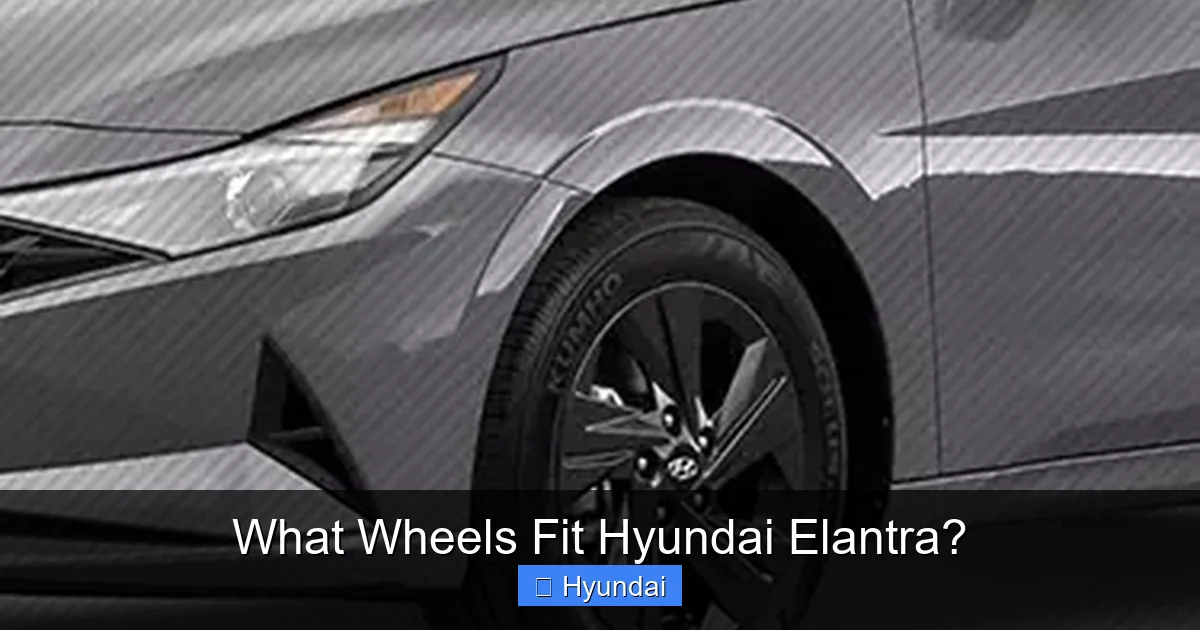
Visual guide about What Wheels Fit Hyundai Elantra?
Image source: discounttire.scene7.com
The Universal Pattern: 5×114.3
Virtually every Hyundai Elantra produced from the 2001 model year (XD generation) through to the current 2024 model (CN7 generation) uses a 5-lug, 114.3mm bolt circle. This is fantastic news for compatibility with a huge range of wheels from other brands. Many vehicles from Mitsubishi, Nissan, Infiniti, older Mazdas, and even some Kias share this pattern. So, if you see a set of “5×114.3” wheels, they are physically capable of bolting onto your Elantra’s studs. But remember, bolt pattern is just the first checkpoint.
Hub Bore: The Hidden Variable
Here’s where years and generations diverge. The hub bore size has shifted slightly over the years. You must know your exact measurement. Here are the most common sizes:
- 2001-2006 (XD): Typically 67.1mm
- 2007-2010 (HD): Typically 67.1mm
- 2011-2015 (MD/UD): Typically 67.6mm
- 2016-Present (CN7): Typically 67.6mm
Critical Tip: Always measure your own hub or check a factory service manual for your specific VIN. A difference of 0.5mm might not seem like much, but it matters. If you buy a wheel with a 67.1mm bore for a 2012 Elantra (67.6mm hub), it will be too small and won’t fit. If you buy a 67.6mm wheel for a 2008 Elantra (67.1mm hub), it will be loose and wobbly unless you use a 67.1mm to 67.6mm hub ring. Most quality aftermarket wheels for the Elantra are bored to 67.6mm (the more common modern size), so owners of older models (2001-2010) should plan on using hub rings.
Wheel Size, Width, and Offset: Fitting Within the Fenders
This is where aesthetics meet practicality. Your Elantra came from the factory with specific wheel and tire packages. Straying too far from these can cause problems.
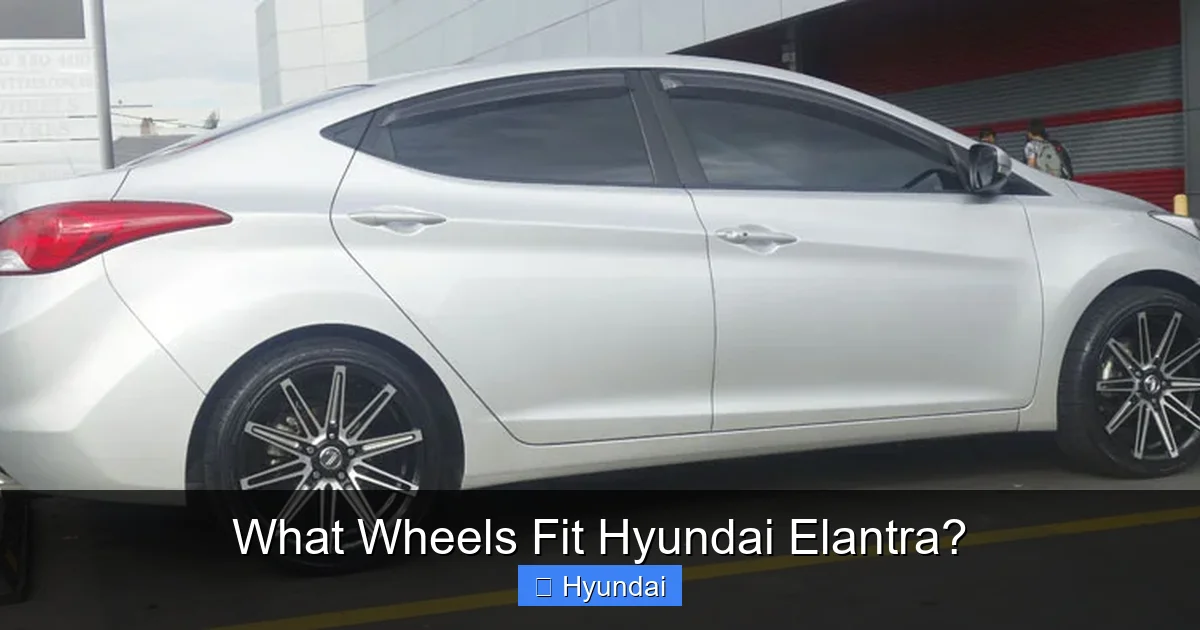
Visual guide about What Wheels Fit Hyundai Elantra?
Image source: tempetyres.com.au
OEM Sizes by Generation (Common Examples)
2007-2010 Elantra (HD): Common sizes were 15×6 (P185/65R15) and 16×6.5 (P205/55R16). Offset was typically +45.
2011-2015 Elantra (MD/UD): Base models often had 15×6 or 16×6.5. SE and Limited trims moved to 17×7 (P215/45R17). Offset was usually +45 to +50.
2017-Present Elantra (CN7): A wider range. Base SE: 16×6.5 (P205/60R16). SEL: 17×7 (P215/50R17). N Line: 18×8 (P235/40R18). Limited: 18×8.5 (P235/40R18). Offsets range from +45 (base) to +50 (N Line).
Your Safe Zone: For a worry-free fit that requires no modifications, stay within ±0.5 inch of the OEM wheel width and within ±6mm of the OEM offset. For example, if your OEM wheel is 17×7 with a +45 offset, a 17×7.5 with a +42 offset might fit, but you must check for tire rub at full lock and over bumps. Going significantly wider or lower in offset (more “poke”) almost always requires fender liner or suspension modifications.
The Tire Size Connection
You cannot think about wheels without thinking about tires. The overall diameter of the wheel+tire combo should stay very close to the OEM size to avoid speedometer inaccuracies and potential rubbing. Use an online tire size calculator to compare. For instance, moving from a 205/55R16 to a 215/45R17 on a 17-inch wheel keeps the overall diameter nearly identical. When you change wheel width, you must adjust tire width accordingly. A 7-inch wheel is ideal for a 215-225mm wide tire; an 8-inch wheel wants a 235-245mm tire. If you’re unsure about tire sizing, our guide on the best tires for specific Elantra model years breaks down the exact OEM and popular plus-size recommendations.
TPMS: The Electronic Elephant in the Room
Since 2007, every Elantra sold in the USA has had a Tire Pressure Monitoring System (TPMS). This means your wheels must have functioning TPMS sensors mounted inside them. When you buy new wheels, you have three options:
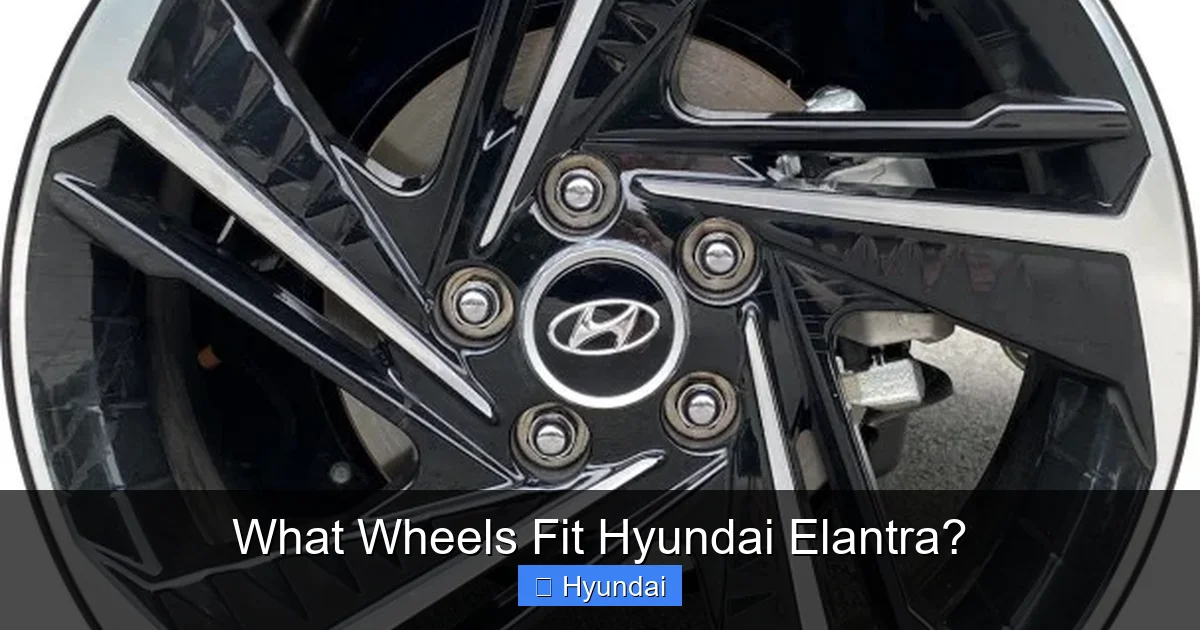
Visual guide about What Wheels Fit Hyundai Elantra?
Image source: hubcaphaven.com
- Transfer Your Old Sensors: If your old wheels are in good shape, a tire shop can remove and reinstall your existing sensors onto the new wheels. This is the cheapest option but sensors have a battery life of 7-10 years.
- Buy New Sensors: Purchase new, compatible sensors (like the popular Hyundai OEM part number 52930-2V500 or aftermarket equivalents). This is recommended if your old sensors are old or damaged.
- Use Sensor Kits: Some aftermarket wheels come with sensor kits. Ensure they are specifically listed for Hyundai Elantra.
You cannot legally or safely ignore TPMS. If your new wheels don’t have sensors, your dashboard will display a constant TPMS warning light. Furthermore, in many states, a vehicle will fail inspection with the light on. Factor sensor cost ($50-$100 per sensor + programming) into your wheel budget.
Popular Aftermarket Wheel Options for the Elantra
Once you have your numbers (5×114.3, correct hub bore, size, offset), a world of options opens up. The Elantra is a popular canvas for styling.
Styles That Shine
Modern Mesh & Spoke Designs: Brands like Enkei, OZ Racing, and Motegi offer lightweight, performance-oriented wheels in 5×114.3 that look fantastic on the Elantra’s sleek lines. Look for sizes like 18×8 +45 for a sporty, flush look on newer models.
Classic Multi-Spoke: Rays, Volk, and SSR make stunning multi-spoke wheels that give a luxury or JDM vibe. These often come in perfect offsets for the Elantra.
Budget-Friendly Cast Wheels: Companies like RPF1 (replica), ARK, and many on Amazon/eBay offer affordable styles in correct fitments. Extreme caution is needed here. Verify the seller provides exact specs (PCD, center bore, offset, load rating) and has good reviews regarding trueness and finish quality. A cheap, poorly made wheel can be dangerous.
A Critical Consideration: Weight
Wheel weight has a direct impact on fuel economy, acceleration, and braking. Unsprung mass (wheels/tires) is especially critical. Lighter wheels make the car feel more agile. For the Elantra, a good quality 17-inch alloy wheel should weigh around 18-22 lbs. If you’re comparing two wheels of the same style, choose the lighter one. This is also a key factor to discuss with your installer, as a significantly heavier wheel and tire package can increase electrical load and slightly reduce battery life over time due to the alternator working harder.
Common Mistakes & How to Avoid Them
We see the same errors again and again. Here’s how to sidestep them.
Mistake 1: Assuming All 5×114.3 Wheels Are Equal
Just because the bolt pattern matches doesn’t mean it’s a fit. You still need the correct hub bore, size, and offset. A wheel from a Mitsubishi Lancer (also 5×114.3) might have a 56.1mm hub bore—far too small for your Elantra—and an offset of +40, which might cause rubbing.
Mistake 2: Ignoring Offset and Going for “Aggressive” Fitment
Ordering a wheel with a +30 offset because you want the wheels to “stick out” is a recipe for disaster on an Elantra. The fenders and suspension are designed for a +45/+50 offset. A lower number pushes the wheel out, and you will almost certainly rub on the inner fender liner during turns and on bumps. This wears through the liner and eventually your tire sidewall. If you want a more aggressive stance, you need to research your specific model’s clearance limits or consider a mild fender roll, which is a permanent modification.
Mistake 3: Forgetting the Lug Nuts
Aftermarket wheels often require different lug nuts. The OEM lug nuts have a conical (tapered) seat. Some aftermarket wheels (especially those with a flat seat) require different seat-type lug nuts. Using the wrong lug nut is a critical safety failure. Always use the lug nuts specified by the wheel manufacturer. If your new wheels have a different seat, you must buy a new set of matching lug nuts.
Mistake 4: DIY Mounting Without Proper Tools
Torque wrenches are not optional. Over-tightening lug nuts can stretch or crack wheel studs and warp brake rotors. Under-tightening can allow the wheel to come off. The torque spec for Elantra lug nuts is typically 65-80 ft-lbs (check your manual). Use a click-style torque wrench and tighten in a star pattern. Also, TPMS sensors are fragile. Improper mounting can damage the sensor or the valve stem.
Conclusion: Your Perfect Fit is Out There
Finding wheels that fit your Hyundai Elantra is a straightforward process of matching data. Your key specs are almost certainly a 5×114.3 bolt pattern and a hub bore of 67.1mm or 67.6mm. From there, select a wheel diameter and width that matches your tire size goals, and an offset that stays close to your original +45 to +50 range. Always factor in TPMS sensors and correct lug nuts. The aftermarket world offers incredible styles in these exact specifications. By doing your homework on these four pillars—bolt pattern, hub bore, size/offset, and TPMS—you can transform your Elantra’s look safely and effectively. When in doubt, consult the wheel manufacturer’s fitment guide for your exact year, trim, and generation, or speak to a reputable wheel and tire shop that specializes in fitment. Your car’s safety and longevity depend on it.
Frequently Asked Questions
Can I use wheels from a Hyundai Sonata or Tucson on my Elantra?
Often, yes. The Hyundai Sonata and Tucson (in many years) also use a 5×114.3 bolt pattern. However, you must still verify the hub bore size, wheel width, offset, and overall diameter. A Sonata wheel might have a different offset that causes rubbing on your Elantra. Always compare the specific measurements, not just the bolt pattern.
What is the biggest wheel I can put on my Elantra without rubbing?
It depends entirely on your specific model year and trim. For a stock suspension, most recent Elantras (2017+) can safely fit an 18-inch wheel with a width of 7.5-8 inches and an offset of +45 to +50. Moving to a 19-inch wheel or a significantly wider 8.5+ inch wheel usually requires minor fender modifications or results in rubbing. The safest method is to search for proven fitments for your exact generation online or consult a shop.
Do I need hub rings for my Elantra?
You only need a hub ring if your new wheel’s center bore is larger than your Elantra’s hub size. For example, if your Elantra has a 67.1mm hub and your wheel has a 73.1mm bore, you need a 67.1mm hub ring to center it. If the wheel bore is smaller than the hub, it won’t fit at all. If the bore is exactly the same or only 0.5-1mm larger, a hub ring is often not strictly necessary but can still help with centering.
Can I use my old TPMS sensors on new wheels?
Yes, in most cases. A professional tire shop can carefully remove the sensors from your old wheels and reinstall them on the new ones, provided the sensors are not damaged or too old (battery life is ~10 years). This is a cost-effective option. Just ensure the sensor’s valve stem is long enough to protrude through the new wheel’s hole.
Are steel wheels an option for the Elantra?
Absolutely. Steel wheels (often called “steelies”) are fantastic for durability, especially in regions that use winter tires or face poor road conditions. They are also the most cost-effective option. You just need to ensure you purchase steel wheels with the correct 5×114.3 bolt pattern, proper hub bore, and correct offset for your Elantra. They typically come in standard sizes like 15×6 or 16×6.5.
My Elantra has different bolt holes (like 4-lug) on older models? Is that true?
No, this is a common myth. Every Hyundai Elantra sold in North America since the 2001 model year has used a 5-lug bolt pattern (5×114.3). There is no 4-lug Elantra. If you own an extremely early 1990s model (like a 1992), that’s a different generation, but for all practical modern purposes (2001+), it’s 5-lug. If your car has 4 lugs, it is not an Elantra.
