
How Much Is a 1995 Ford F-150 Worth?

The 1995 Ford F-150 is a classic American pickup with a loyal following. Its value typically ranges from $2,000 for worn, high-mileage examples to $15,000 or more for pristine, low-mileage, well-equipped models. Key factors like overall condition, rust, engine type, and originality greatly influence price. This guide breaks down everything you need to know to accurately determine your truck’s worth in the current market.
So, you’ve got a 1995 Ford F-150. Maybe it’s been in the family for years, a trusted workhorse that’s seen its share of job sites and camping trips. Or maybe you’re looking at one as a potential project or affordable classic. The big question on your mind is: “How much is this thing actually worth?” It’s a great question, and the answer isn’t a simple number on a sticker. The value of a 1995 F-150 swings wildly based on a dozen different factors. Think of it like a puzzle—condition, mileage, engine, and options all fit together to create the final picture of its price. This guide will walk you through every single piece of that puzzle. We’ll talk about what makes this specific model year special, what buyers are really looking for, and where you can find real pricing data. By the end, you’ll have a crystal-clear understanding of your truck’s place in today’s market, whether you’re buying, selling, or just curious.
First, let’s set the stage. The 1995 model year was the final chapter for the eighth generation of the Ford F-150, a design that ran from 1987 to 1996. This generation is legendary for its rugged simplicity, massive parts availability, and iconic boxy styling. For many, it represents the last of the “old-school” trucks before the massive, luxurious redesigns of the late 1990s and 2000s. That heritage gives it a solid floor of value—it’s not just an old truck; it’s a classic. But within that classic category, prices vary enormously. A runner with 300,000 miles and rust holes will fetch a few thousand dollars, while a garage-kept, low-mileage Eddie Bauer edition with a 5.8L V8 can approach or exceed $15,000. We’re going to find out where your truck, or the one you’re eyeing, falls on that spectrum.
Key Takeaways
- Condition is the top value driver: Rust, especially on the frame and cab corners, and overall mechanical health are the biggest factors that make or break a 1995 Ford F-150’s worth.
- Mileage matters, but maintenance history is king: A well-documented, regularly serviced high-mileage truck can be worth more than a neglected low-mileage one.
- Trim level and options significantly impact price: XLT and Eddie Bauer trims with features like 4×4, tow packages, and V8 engines command premiums over base XL models.
- The classic truck market is hot: Clean, original examples are appreciating, with strong demand from enthusiasts and practical buyers alike.
- Selling privately usually yields the highest return: You’ll often get 10-20% more than a dealership trade-in, but it requires more effort and time.
- Restoration costs often exceed value gains: Major rust repair or engine rebuilds can cost more than the finished truck’s increased market value. Assess ROI carefully.
- Location affects pricing: Trucks from dry, southern states without road salt corrosion typically sell for significantly more than those from the rust belt.
📑 Table of Contents
- Understanding the 1995 Ford F-150: A Lasting Legacy
- Decoding Value: The Critical Factors That Drive Price
- Today’s Market: Supply, Demand, and Pricing Insights
- Where and How to Sell Your 1995 Ford F-150
- To Restore or Not to Restore: Calculating the Return on Investment
- Conclusion: Finding Your Number
Understanding the 1995 Ford F-150: A Lasting Legacy
To truly grasp its value, you need to understand what you’re dealing with. The 1995 F-150 wasn’t a revolutionary year in terms of updates—it was a carryover from 1994—but its position in history is key. It was the penultimate year before the 1997 complete redesign that introduced the more aerodynamic, car-like “PN-96” platform. This makes the 1995 model a sought-after “last of the generation” for purists who prefer the solid axle front suspension, simpler electronics, and arguably more robust construction of the older design. This generational cachet adds a small but measurable premium compared to, say, a 1993 model.
Engine and Drivetrain Options
Under the hood, buyers had three main engine choices, and this is a huge value determinant. The base was the legendary 4.9L inline-six (often called the “300 Six”), known for its immense torque, bulletproof reliability, and simple design. It’s the engine of choice for pure utility and longevity, but it’s not the most powerful. Next up was the 5.0L V8 (302 Windsor), a very common and reliable workhorse offering a good balance of power and efficiency for its era. The top dog was the 5.8L V8 (351 Windsor), which provided the most horsepower and towing capacity. A truck with the 5.8L, especially in a 4×4 configuration, will almost always be worth more than an identical truck with the 4.9L, all else being equal.
Transmission choices paired with these engines were the 4-speed automatic (E4OD) or a 5-speed manual. Automatics are far more common and generally preferred by buyers for ease of use, especially in a heavy truck. A manual can be a niche item for enthusiasts but might narrow your buyer pool. Drivetrain configuration is critical: 4×2 (two-wheel drive) models are more common and slightly less valuable, while 4×4 (four-wheel drive) versions command a significant premium, often $1,000 to $3,000 more for a comparable truck. The 4×4 system on these years is robust and highly desirable.
Body Styles and Cab Configurations
The 1995 F-150 came in several configurations: Regular Cab (two doors, one row of seats), SuperCab (two small rear doors, small jump seats), and Crew Cab (four full doors, full rear seat). Crew Cabs are the rarest and most valuable due to their practicality. Bed length also matters: 6.5-foot and 8-foot beds were available. The shorter bed on a SuperCab or Crew Cab is often more desirable for personal use, while the long bed on a Regular Cab is the classic work truck configuration. An 8-foot bed on a Regular Cab is the most common and typically the baseline for pricing.
Decoding Value: The Critical Factors That Drive Price
Now we get to the heart of the matter. What specific things make one 1995 F-150 worth $3,000 and another worth $12,000? It all boils down to a handful of critical factors. We’ll break them down in order of importance.

Visual guide about How Much Is a 1995 Ford F-150 Worth?
Image source: cdn.dealeraccelerate.com
Condition and Rust: The Ultimate Deal-Breakers
For a 30-year-old truck, condition is everything. And for a truck, the number one condition issue is rust. These trucks were built before modern rust-proofing techniques, and they were work vehicles. Rust in the wrong places can be a deal-killer or a costly repair bill. The most critical areas to inspect are the frame rails (especially where they cross the cab and rear axle), the cab corners (behind the rear wheels), the rocker panels (the panels under the doors), and the floor pans. Surface rust is one thing; structural rust that compromises the frame or body integrity is another. A truck with major frame rot is worth very little, as the repair cost can exceed the truck’s total value. Conversely, a truck from a dry state like Arizona or Nevada with minimal to no rust will command a massive premium, often 30-50% more than an identical truck from Michigan or New York. When assessing a truck, your first question should always be about rust. Get underneath it, poke at suspicious spots with a screwdriver, and be brutally honest.
Beyond rust, overall cosmetic condition matters. Is the interior torn, stained, or missing parts? Is the bed beaten up with dents and rust? Is the paint original or a cheap spray-can job? A clean, original interior with working gauges and a good headliner is a huge plus. A dented, rusted-out bed with a spray-in liner that’s peeling is a minus. The more “original and clean,” the better. A fully restored truck can be valuable, but the quality of that restoration is key. A $5,000 backyard paint job doesn’t add value; a professional, period-correct restoration does.
Mileage and Mechanical Health
Mileage is the second most quoted number, but it’s not the king. A 1995 F-150 with 150,000 miles that has been meticulously maintained with records is a far better buy—and worth more—than a 60,000-mile example that sat unused for a decade with old, degraded fluids and seals. That said, extremely high mileage (300,000+) will scare off most buyers unless the truck is in exceptional shape and has a documented engine rebuild. The sweet spot for these trucks is generally between 100,000 and 200,000 miles, provided maintenance is up to date.
Mechanical health is non-negotiable. Does the engine run smoothly? Any knocking, smoking, or hard starts? How about the transmission? The E4OD automatic is generally reliable but can be expensive to rebuild if it fails. Does it shift smoothly? Any slipping? Check for leaks from the engine, transmission, and differentials. A truck that needs a new engine or transmission is worth the cost of those repairs subtracted from its running value. Always get a pre-purchase inspection from a trusted mechanic if you’re serious about buying. For sellers, having recent service records for major items (timing chain/water pump, fuel pump, transmission service) is worth its weight in gold and will directly increase your asking price.
Trim Levels and Optional Features That Add Value
Not all 1995 F-150s are created equal. Ford offered several trim levels, and each step up added features and value.
- XL: The base work truck. vinyl seats, basic AM/FM radio, minimal extras. It’s the most common and sets the baseline price.
- XLT: The popular mid-level trim. added cloth seats, carpet, better sound insulation, and more options like power windows/locks. A clean XLT is typically worth 10-15% more than a comparable XL.
- Eddie Bauer: The top-of-the-line luxury trim for 1995. It featured unique two-tone paint, leather seats (or premium cloth), special badging, and almost every available option as standard. An Eddie Bauer in good condition is the most desirable non-SVT model and can carry a 20-30% premium.
Beyond the trim, specific options add value. The most sought-after are:
- 4×4: As mentioned, a huge must-have for many buyers.
- V8 Engine (5.0L or 5.8L): More desirable than the I6 for towing and power.
- Towing Packages: Includes heavy-duty radiator, transmission cooler, and trailer brake controller. Highly valued.
- Sliding Rear Window: A surprisingly popular comfort feature.
- Factory Air Conditioning: Essential in most climates and a major value adder over a truck without.
- Aluminum Alloy Wheels: More desirable than steel wheels with hubcaps.
A truck that is a top-trim (Eddie Bauer), 4×4, with the 5.8L V8, towing package, and A/C is the holy grail for many classic F-150 buyers and will sell quickly at a premium price.
Today’s Market: Supply, Demand, and Pricing Insights
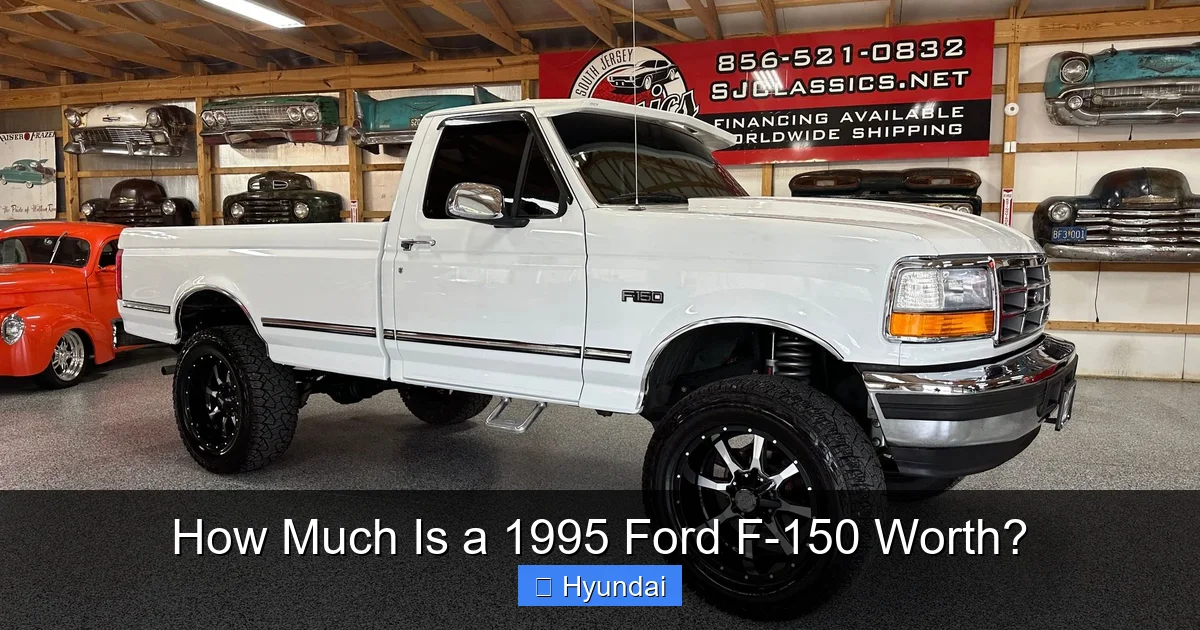
The market for classic American trucks, especially Ford F-150s from the 1980s and 1990s, has been incredibly strong for the past decade. It’s not just collectors; it’s practical people wanting a reliable, simple, and cool truck for a reasonable price. This demand has pushed prices up steadily. But the market isn’t uniform. Understanding current trends is key to pricing your truck correctly.
Visual guide about How Much Is a 1995 Ford F-150 Worth?
Image source: cdn.dealeraccelerate.com
The Classic Truck Boom
There’s a genuine cultural shift. Younger buyers (millennials and Gen Z) are discovering the appeal of analog, repairable vehicles. The F-150, as America’s best-selling truck for decades, has a massive parts supply and a huge community of enthusiasts. This creates a virtuous cycle: high demand means higher prices, which means more people are willing to restore and sell them. You can see this on auction sites like Bring a Trailer and eBay Motors. Clean, well-documented examples frequently sell for more than their original MSRP, adjusted for inflation. A truck that cost $15,000 new in 1995 is easily worth $10,000-$15,000 today if it’s in great shape. This trend shows no signs of slowing down, making these trucks a surprisingly solid investment if you buy and restore wisely.
Regional Price Variations
Where your truck is located (and where it spent most of its life) has a dramatic impact on price. The rust belt states (Michigan, Ohio, Pennsylvania, New York, the Northeast) use road salt heavily in winter. Trucks from these areas almost always have significant frame and body rust, which severely depresses value. A truck from these regions might sell for $3,000-$6,000 depending on severity. In contrast, a truck from a dry, southern, or western state (Arizona, New Mexico, Texas, California, Nevada) that has never seen road salt can command a 30-50% premium. The same truck with the same mileage, one from Phoenix and one from Detroit, will have vastly different price tags. When pricing, always look at sold listings in your geographic region for the most accurate comparison. If you’re selling a rust-free truck, highlight that fact prominently in your ad—it’s your single biggest selling point.
Where and How to Sell Your 1995 Ford F-150
You’ve determined your truck’s value. Now, how do you actually sell it? The method you choose affects both your final price and the effort required.
Visual guide about How Much Is a 1995 Ford F-150 Worth?
Image source: bringatrailer.com
Private Party vs. Dealership Trade-In
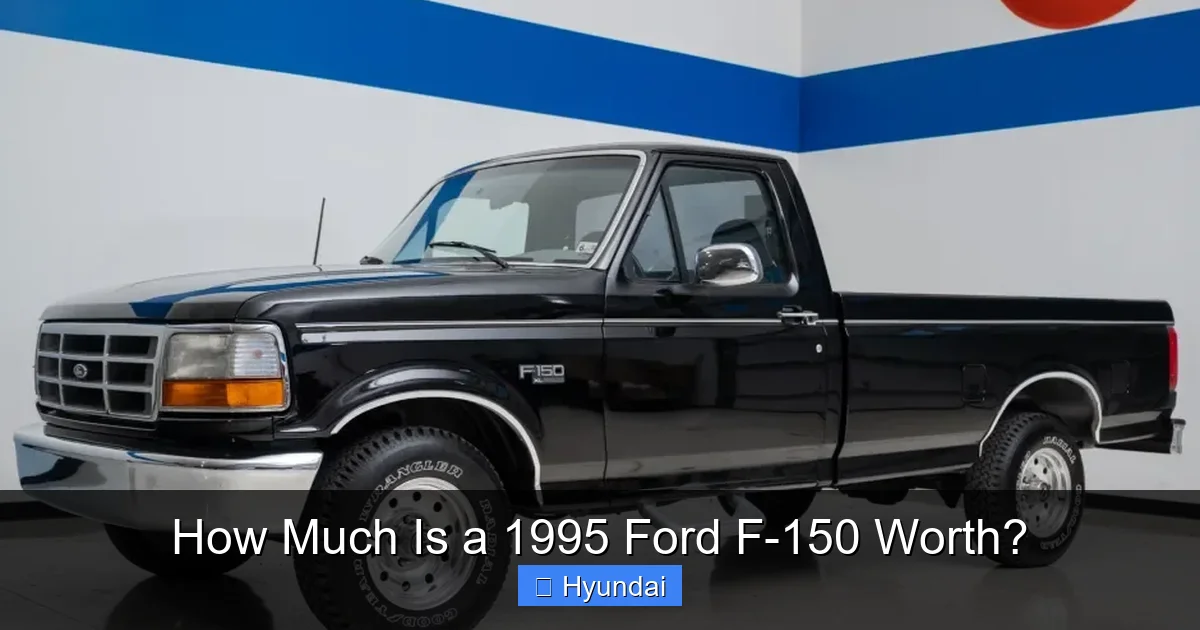
Private Party Sale: This is how you’ll get the most money. You’re selling directly to an enthusiast or practical buyer without a middleman taking a cut. You can expect to get 10-20% more than a dealership will offer. The downsides are you have to handle advertising, meet strangers, handle payment (be wary of scams), and deal with all the paperwork. It takes time and effort. For a classic truck, private party is almost always the financially smarter move.
Dealership Trade-In: This is the fast, easy, but low-ball option. Dealerships need to make a profit, so they’ll offer you wholesale value or less. For a 1995 F-150, they might see it as an old trade they’ll have to wholesale at auction, so their offer could be surprisingly low, sometimes 30-40% below private party value. Only consider this if you need a quick, no-hassle transaction and are willing to sacrifice significant money.
Online Platforms and Auctions
For private sales, you have several excellent options:
- Facebook Marketplace: The most popular for local sales. Free to list, huge audience. Be prepared for lowballers and tire-kickers, but serious buyers are there. Great for trucks because people want to see and drive them locally.
- Craigslist: Still effective, especially in rural areas. Similar pros and cons to Facebook.
- eBay Motors: Excellent for reaching a national audience of enthusiasts. You can set a reserve price. The auction format can drive up prices for desirable trucks, but you have to deal with shipping logistics if the buyer is far away. Fees are higher.
- Specialty Forums & Websites: Sites like Ford-Trucks.com or specific F-150 enthusiast forums have dedicated, knowledgeable audiences. Listing here can attract serious buyers who understand the truck’s value, but your audience is smaller.
Pro Tip: Regardless of platform, your listing is everything. Take 30+ high-quality, well-lit photos from every angle: engine bay, undercarriage (especially frame), interior, bed, VIN tag, and any rust or damage. Be brutally honest in the description. List all known issues and all maintenance done. Provide the VIN so buyers can check for title issues. A transparent, detailed listing builds trust and gets you better offers.
To Restore or Not to Restore: Calculating the Return on Investment
This is the million-dollar question for many owners: “Should I put money into this truck before I sell it?” The answer is almost always: only if the restoration cost is less than the value it adds. Classic trucks are not like modern cars where a fresh paint job adds thousands. They are worth what they are worth based on originality and condition. Throwing $10,000 at a rusted-out truck won’t make it a $15,000 truck; it might make it a $6,000 truck that’s less rusty.
Common Issues and Realistic Repair Costs
Let’s talk about the big-ticket items:
- Frame Rust Repair: This is the most expensive and critical. Cutting out and welding new metal on a frame can easily cost $2,000-$5,000+ at a professional shop. It adds value, but rarely dollar-for-dollar. A truck with a repaired frame is better than one with a rotten one, but buyers will discount for the prior damage.
- Body Rust Repair: Replacing rusted cab corners, rocker panels, or floor pans is also very expensive, often $1,000-$3,000 per section. Again, it makes the truck sellable but may not net a full return.
- Engine/Transmission Rebuild: A full rebuild is $3,000-$6,000. If the engine is failing, a running but tired engine might be worth -$1,000 (i.e., it subtracts value). A freshly rebuilt engine adds value, but buyers will still be cautious without receipts and will factor in the age of the rebuild.
- Interior Restoration: New seat covers, carpet, headliner: $500-$1,500. This is one of the better investments, as a clean interior greatly improves perceived value.
- Paint and Body: A professional paint job is $3,000-$8,000. A cheap job is worse than no paint. On these trucks, a decent-quality repaint in a single color can add $1,000-$2,000, but a show-quality job on a non-show truck is money lost.
The “Sell As-Is” Strategy
For most people, the smartest move is to sell the truck as it is, price it according to its current condition, and let the new owner decide on repairs. This saves you thousands and the hassle of managing a project. If your truck has minor issues (old tires, needs a tune-up, minor dents), fixing those small things (<$500) can be worthwhile as they make the truck more marketable. But if you're facing major rust or mechanical failure, it's usually better to discount the price and sell to a buyer who wants a project. You can find these buyers on forums or on Facebook groups dedicated to F-150 restoration. Be clear: "Project truck, needs engine and frame work, perfect for someone with a welder and garage." You'll get a fair price from the right person.
If you do decide to restore, do the math first. Find sold examples of trucks in “done” condition on Bring a Trailer. Compare them to sold examples of trucks in “as-is” condition like yours. The difference is your potential value gain. If that gain is less than your estimated restoration cost, don’t do it. Save your money and sell as-is.
Conclusion: Finding Your Number
So, how much is a 1995 Ford F-150 worth? The final number lives in a range, not a single point. Start with the baseline: a running, driving, rust-moderate, 4×2, XL model with the 4.9L I6 and 200,000+ miles might be a $2,500-$4,000 truck. From there, add value for every positive factor: +$500 for 4×4, +$500 for a V8, +$1,000 for an XLT trim, +$1,500 for an Eddie Bauer, +$2,000 for being rust-free from a dry state, +$1,000 for under 150,000 miles with good maintenance records, +$500 for a manual transmission (to the right buyer), +$500 for a clean bed and interior. Conversely, subtract for major rust, non-running condition, missing parts, or salvage title.
Your best tool is research. Spend hours on eBay Motors, Facebook Marketplace, and Bring a Trailer looking at sold listings, not just asking prices. Filter for 1995 Ford F-150, and compare trucks with similar engines, 4×4 vs 4×2, and trim levels. Note the condition descriptions and, most importantly, the final sale price. This will give you a real-world market value. The classic truck market is strong, and a nice 1995 F-150 is a rewarding vehicle to own and sell. By understanding these factors—condition, rust, engine, trim, and market trends—you can confidently price your truck, make a smart purchase, or decide if a restoration is worth the sweat and dollars. It’s a simple truck with a complex value equation, but now you hold the key to solving it.
Frequently Asked Questions
What is the typical price range for a 1995 Ford F-150?
Prices range from about $2,000 for a rough, high-mileage, rusty project to $15,000 or more for a pristine, low-mileage Eddie Bauer 4×4 with a 5.8L V8. The average running driver-quality truck sells for $4,000 to $8,000.
Which engine is most desirable and valuable?
The 5.8L V8 (351 Windsor) is the most sought-after for its power and towing capacity. The 5.0L V8 (302) is also very popular and valuable. The 4.9L inline-six is beloved for its durability and torque but is generally worth slightly less than the V8s in the same condition.
How much does rust affect the value?
Extremely. Rust on the frame or cab corners can halve a truck’s value. A rust-free truck from a dry state can sell for 30-50% more than an identical truck with significant rust. Surface rust is manageable; structural frame rot is a major devalue.
Should I restore my 1995 F-150 before selling it?
Usually, no. Major restorations (frame rust repair, engine rebuilds) cost more than they add in value. Fix small, cheap things (tires, brakes, minor dents) to make it a “driver.” For major issues, price it as a project and sell to an enthusiast who wants to restore it themselves.
What are the best places to sell a 1995 Ford F-150?
For the best price, sell privately on Facebook Marketplace or Craigslist locally. For a national audience of enthusiasts, use eBay Motors. Always include extensive photos, the VIN, and a honest, detailed description to attract serious buyers.
How do I know if my 1995 F-150 is a “classic” or just an old truck?
It’s a classic if it’s in good, original, or well-maintained condition. If it’s running, driving, and has minimal rust, it has classic status and value. If it’s non-running, severely rusted, or heavily modified beyond recognition, it’s likely just an old truck with low value, best sold as a project or for parts.
