
How Many Seats Are in a Ford F-150?

The number of seats in a Ford F-150 depends entirely on its cab configuration. The Regular Cab fits 3, the SuperCab fits 4, and the SuperCrew fits 5. However, trim levels and model year specifics can alter this slightly, with some higher trims offering 4 or even 6 seats in rare past configurations. Always verify your specific truck’s configuration for the exact number.
Key Takeaways
- Cab Configuration is King: The primary factor determining F-150 seating is the cab style: Regular Cab (3 seats), SuperCab (4 seats), or SuperCrew (5 seats).
- Trim Level Matters: While cab dictates the max, the trim (XL, XLT, Lariat, etc.) decides if you get a bench front seat (3) or bucket seats (2), affecting the total.
- Model Year Changes: Seating layouts have evolved. For example, pre-2015 SuperCrew models often had a rear bench for 6 seats, while modern ones are fixed at 5 with a 60/40 split rear bench.
- No Factory Third Row: Unlike some SUVs, the F-150 has never offered a factory-installed third-row seat, capping capacity at 5 or 6 passengers maximum.
- Aftermarket Possibilities: While the factory sets the standard, aftermarket seat swaps or custom interiors can alter seating, but this voids warranties and isn’t common.
- Check Your VIN: The absolute surefire way to know your truck’s seating is to decode its VIN or consult the original window sticker (Monroney label).
- Purpose Dictates Choice: A work truck often uses the 3-seat Regular Cab for max cargo bed length, while family-use trucks overwhelmingly choose the 5-seat SuperCrew for space and convenience.
📑 Table of Contents
- Introduction: More Than Just a Number
- The Three Cab Configurations: The Foundation of Seating
- Model Year & Generation Shifts: How Seating Evolved
- Trim Level Influence: XL to Limited and Beyond
- Practical Considerations: What This Means For You
- Special Cases & Frequently Overlooked Details
- Conclusion: Your Perfect Match is Out There
Introduction: More Than Just a Number
So, you’re looking at a Ford F-150, and one of the first practical questions that pops up is: “How many people can this thing actually haul?” It’s a simple question, but the answer is a fascinating journey through Ford’s engineering, market demands, and the evolution of the American Pickup Truck Bed Without Damaging It”>pickup truck. You might think it’s as straightforward as “five seats,” but that’s only part of the story. The seating capacity in an F-150 is a direct reflection of its intended use, from a bare-bones workhorse to a luxurious family hauler.
Understanding your F-150’s seating isn’t just about satisfying curiosity. It impacts your purchasing decision, your family’s safety, your work crew’s logistics, and even your insurance. A truck marketed as a “crew cab” might only seat four if it has front bucket seats instead of a bench. A “regular cab” might squeeze in three, but comfort levels vary wildly. We’re going to break down every variable—cab style, model year, trim level, and special editions—so you’ll know exactly what to expect from any F-150 you encounter. By the end, you’ll be able to walk up to any Ford truck and accurately guess its passenger capacity, a useful skill for any truck enthusiast or buyer.
The Three Cab Configurations: The Foundation of Seating
Ford has, for decades, built the F-150 around three core cab configurations. These are the architectural blueprints that determine the maximum number of occupants. Think of them as the skeleton; the trim packages and options are the skin and muscle that flesh out the final number. The three are: Regular Cab, SuperCab, and SuperCrew. Let’s explore each one in detail.
Visual guide about How Many Seats Are in a Ford F-150?
Image source: katzkin.com
Regular Cab: The Pure Work Truck
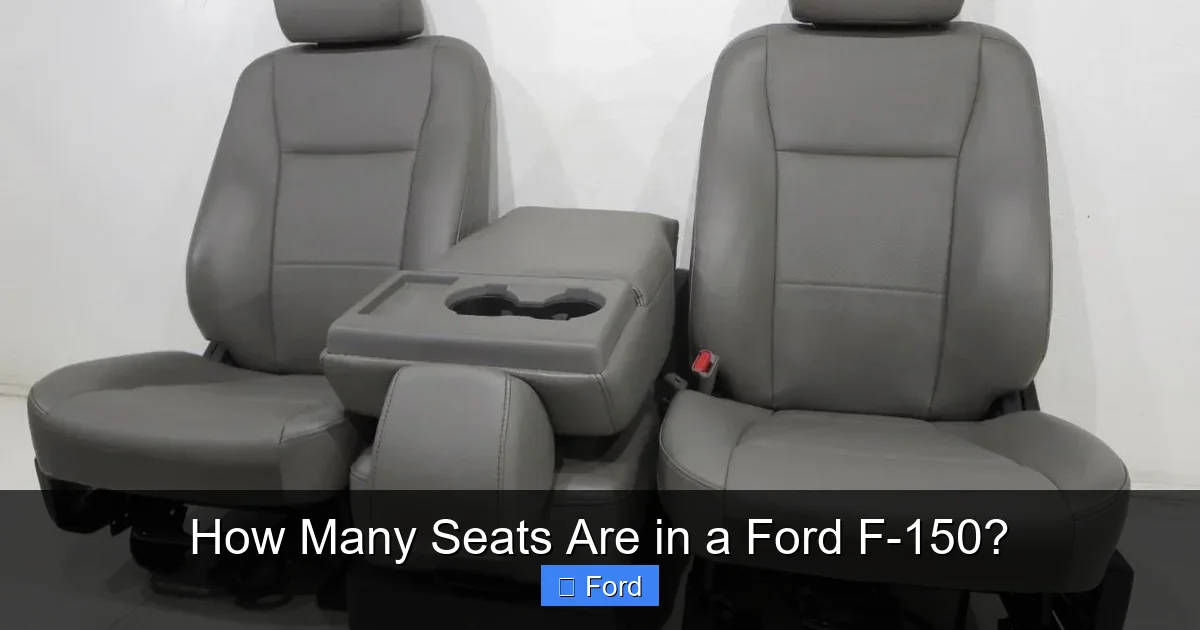
The Regular Cab is the simplest, oldest, and most focused configuration. It features a single row of seats with two full doors. The cabin is compact, designed to get the driver and one or two passengers to the job site with maximum cargo bed length behind them. For many years, the standard was a front bench seat that could comfortably accommodate three adults. This is the classic “work truck” layout.
Typical Seating: 3 passengers (front bench seat).
Modern Reality: In recent model years (roughly 2015 onward), Ford has made the front bench seat a rare option, primarily on base XL and STX trims. Most new Regular Cabs you see today will have two individual front bucket seats (like car seats), reducing capacity to just 2 passengers. This shift reflects changing tastes, where even work truck buyers often prefer the console storage and individual comfort of buckets. If you see a new Regular Cab with three seats, it’s a special-order work-spec truck. The bed length is the trade-off; you gain about 1.5 feet of bed space by opting for the Regular Cab over the SuperCab.
SuperCab: The Compromise with “Access” Doors
The SuperCab is Ford’s term for an extended cab. It has a full-size front row (like the Regular Cab) but adds a second, smaller row of seats behind it. The rear doors are “suicide doors” or rear-hinged access doors that open opposite the front doors, providing easier access to the rear seats but requiring front doors to be open first. The rear seat is typically a solid, non-folding bench, though it often folds up for cargo storage. It’s a great middle ground for those who occasionally need to carry more people but don’t want the full size (and price) of a SuperCrew.
Typical Seating: 4 passengers (2 front + 2 rear). The front can be a bench (3 total) or buckets (2 total). The rear is always a small 2-person bench.
Important Nuance: The rear “seat” in a SuperCab is famously small. It’s often called a “jump seat” or “utility seat.” Adults over 5’8″ will find headroom and legroom extremely cramped. It’s best suited for children, occasional adult use on short trips, or folded up for storage. The front seating configuration is key: a front bench + rear 2-seat bench = 5 total. Front buckets + rear 2-seat bench = 4 total. Most modern SuperCabs (2015+) come standard with front buckets, making 4 passengers the norm.
SuperCrew: The Full-Size Family Truck
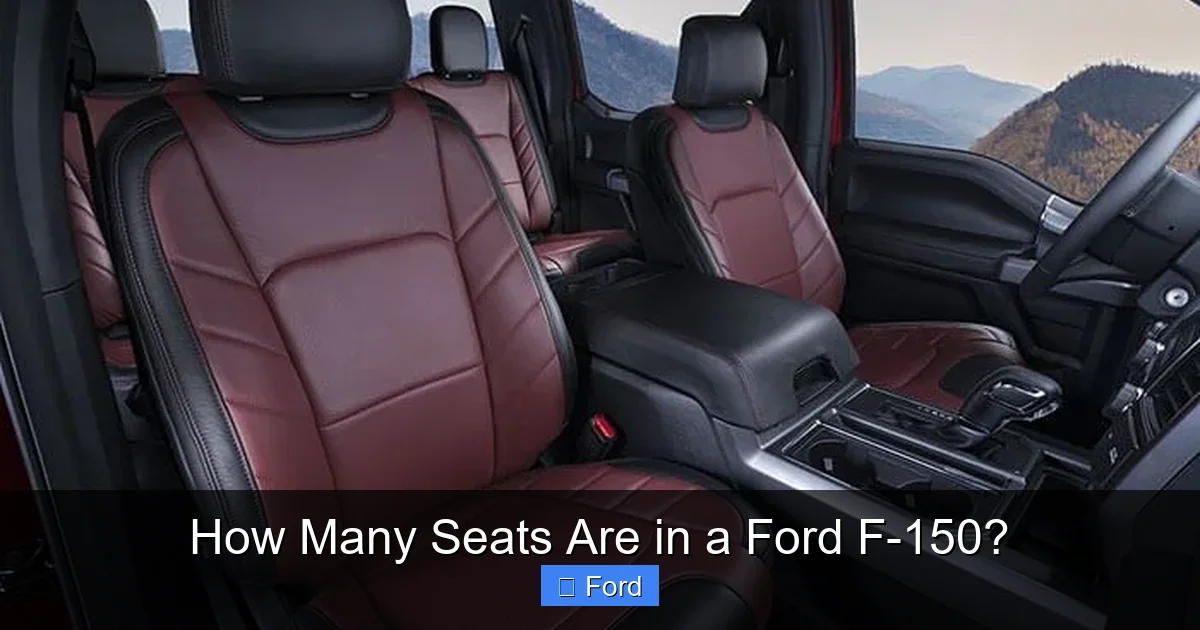
The SuperCrew is the flagship, the most popular configuration for personal use. It features four full-size, front-hinged doors and a full second row of seats that is nearly as spacious as the front. The rear seat is a large, comfortable 60/40 split-folding bench. This configuration gives the F-150 a cabin length comparable to many full-size SUVs, making it a viable family hauler. It’s the choice for anyone who regularly carries adult passengers.
Typical Seating: 5 passengers (2 front + 3 rear). The front can be a bench (3) or buckets (2). The rear is a 3-person bench.
The Classic 6-Seat Layout: Here’s where history gets interesting. From the SuperCrew’s introduction in the 2004-2008 era (on the 12th generation) through the early 2015 models (13th gen), the standard and most common layout was a front bench seat combined with the rear 60/40 bench. This yielded a total of 6 passengers. It was a unique selling point: a full-size truck with SUV-like passenger capacity. Starting around the 2015 mid-cycle refresh and becoming standard in the 2018+ 14th generation, Ford shifted to almost exclusively offering front bucket seats with a center console on all but the most basic trims. This reduced the total to 5 passengers (2+3), but added immense front storage and a more modern, car-like feel. Today, finding a new SuperCrew with a front bench is exceptionally rare and usually requires a special commercial fleet order.
Model Year & Generation Shifts: How Seating Evolved
You cannot talk about F-150 seating without talking about the 2015 model year. It was a watershed moment. Ford completely redesigned the F-150 for 2015 (the 13th generation), switching to an all-aluminum body. With that redesign came a significant change in interior philosophy and, consequently, seating. Let’s map the changes.
Visual guide about How Many Seats Are in a Ford F-150?
Image source: psychoautos.com
Pre-2015 (Gen 12 & Early Gen 13): The Era of the 6-Seat SuperCrew
If you look at a 2014 F-150 SuperCrew, the default setup was almost certainly the front bench seat. Slide into the cabin, and you’d see a wide, flat cushion spanning the entire front, with a transmission tunnel that was lower or even flat in the center. This allowed three adults to sit abreast up front. Combined with the rear bench, this created a genuine 6-passenger capacity. This was a huge selling point against competitors and even some SUVs. The SuperCab in this era also commonly had front benches, making it a 5-seater (3 front, 2 rear).
2015-2020 (Mid-Late Gen 13 & Early Gen 14): The Transition to Buckets
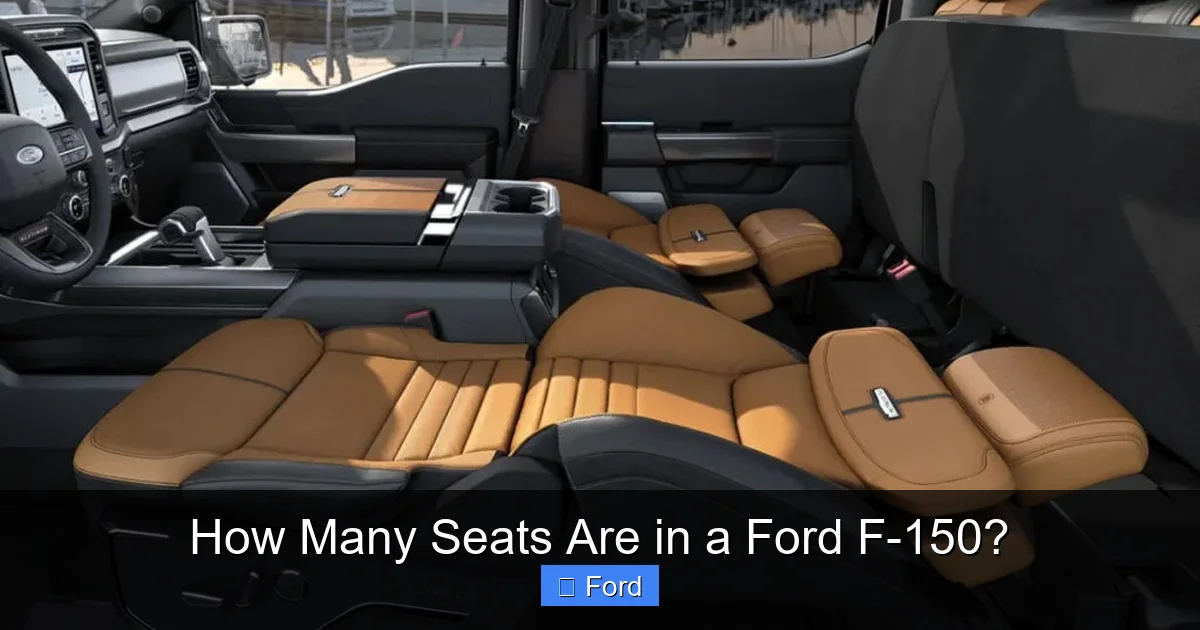
The 2015 redesign introduced a more car-centric interior. The center console became a prominent feature, housing storage, USB ports, and the gear selector (on many trims). This physically prevented a front bench seat in most cases. For the first few years (2015-2017), you could still occasionally find a front bench on XL and STX trims, but it was becoming an outlier. By the 2018 refresh (14th generation), the front bench seat was effectively dead for retail buyers. The new mantra was “2+3” seating in the SuperCrew: two comfortable captain’s chairs up front and a 3-person rear bench. The SuperCab’s rear seat remained unchanged—still a tiny 2-seater.
2021-Present (Current Gen 14): Standardization
Today’s F-150 lineup is highly standardized regarding seating. For all practical purposes:
- Regular Cab: 2 seats (front buckets only) or 3 seats (front bench on rare XL work trucks).
- SuperCab: 4 seats (front buckets + rear 2-seat bench) or 5 seats (front bench + rear 2-seat bench, very rare).
- SuperCrew: 5 seats (front buckets + rear 3-seat bench). A 6-seat configuration (front bench + rear 3-seat bench) is virtually non-existent in the current production line for consumer purchase.
Trim Level Influence: XL to Limited and Beyond
Your cab configuration sets the stage, but your trim level chooses the actors. The trim determines whether you get the front bench or the bucket seats with a center console. Here’s a general guide, but always verify with a specific vehicle.
Visual guide about How Many Seats Are in a Ford F-150?
Image source: cdn.shopify.com
Work Trims (XL, STX)
These are the base models. Historically, they were the last holdouts for the front bench seat. In the current generation, even the XL has largely switched to standard front bucket seats with a center console. However, for 2024, Ford still lists the front bench as a “delete option” for the XL Regular Cab and SuperCab, meaning you can special-order it for commercial or fleet use. For the average buyer at a dealership, an XL SuperCrew will have 5 seats (buckets front, bench rear).
Mid-Range Trims (XLT, Lariat)
These are the volume sellers. The XLT and Lariat have been on the bucket-seat-and-center-console train for many years now. Expect a solid 5-seat layout in a SuperCrew (2+3). In a SuperCab, it’s 4 seats (2+2). The front bench is not an option here. The Lariat’s front seats are often heated and cooled, but the configuration remains the same: two separate seats.
High-End & Luxury Trims (King Ranch, Platinum, Limited)
These trims are all about premium comfort and features. The center console is a major feature, housing more advanced tech, storage, and sometimes even a refrigerated compartment. You will not find a front bench seat here. It’s strictly 2+3 in a SuperCrew. The materials are upgraded (leather, heated/cooled/massaging seats), but the passenger count remains at five. The idea of a third person squeezed between two luxury bucket seats is antithetical to the premium, spacious experience these trims sell.
The Raptor & Special Editions
The high-performance Raptor is interesting. For the 2021+ generation, the SuperCrew Raptor comes standard with 4 seats. Yes, you read that right. The rear seats are deleted to save weight and make room for a full-size spare tire and other off-road gear behind the rear seats. It’s a purposeful, utility-focused choice. The front is still two bucket seats. So a 2024 Raptor SuperCrew seats 4, not 5. Other special editions (like the Tremor or certain Harley-Davidson editions) follow their trim level’s standard seating unless noted otherwise.
Practical Considerations: What This Means For You
Knowing the numbers is one thing. Applying them to your life is another. Let’s talk about the real-world implications of that seat count.
Family Hauling: The SuperCrew is Your Friend
If you have a family with children in car seats or booster seats, the SuperCrew is the only viable option. The rear seat in a SuperCrew is wide and flat, perfect for installing three car seats across (though wide-based seats may be tight). The rear doors are full-sized, making loading and unloading kids and cargo infinitely easier than the tiny, awkward SuperCab rear doors. The 5-seat (2+3) layout is perfect for two parents and three kids. Trying to fit three across in a front bench of a Regular Cab is dangerous and illegal in many places due to seat belt constraints. For families, the choice is clear: SuperCrew.
Work Crews & Contractor Use: Configuring for the Job
Here’s where the older 6-seat layout (front bench + rear bench) was a secret weapon. A contractor could bring a foreman and two apprentices in the truck, all with proper seat belts. Today, that’s harder. A SuperCab (4 seats) might be enough for a small crew, but the rear is uncomfortable for adults on a long commute. A Regular Cab with a front bench (3 seats) is the purest work truck, but you lose all rear passenger capability. Some tradespeople opt for a SuperCrew, use the rear seats for tools and materials, and only carry one passenger up front. The deleted-rear-seat Raptor setup shows how some prioritize cargo/payload over passengers. Your job dictates the best cab.
Comfort & Legroom: The Rear Seat Reality Check
Never underestimate the difference between a “seat” and a “usable seat.” The rear seat in a SuperCrew is genuinely comfortable for adults. Legroom is excellent, and the seat cushion is supportive. The rear seat in a SuperCab is not. It’s upright, has minimal knee room, and the cushion is often thin. It’s a “last resort” seat for adults. Test drive with your intended passengers! Have a tall friend or family member sit in the back of a SuperCab. Their experience will tell you everything. The front bench seat, when available, is also a different experience—it’s a wide, continuous bench, but the center passenger gets a less comfortable ride with the transmission hump and less bolstering.
Special Cases & Frequently Overlooked Details
Now for the fine print and the exceptions that prove the rule.
The elusive 6-Seat Modern F-150
Can you buy a brand-new 2024 F-150 with 6 seats? From the factory, on the retail market, almost certainly no. As of this writing, the only path is a special fleet order for an XL Regular Cab or SuperCab with the front bench seat option delete (from the standard bucket seats). This is not something you’ll find on a dealer lot. It’s a commercial order. For all intents and purposes, the modern F-150 maxes out at 5 seats in a SuperCrew.
Seat Belts & Legal Compliance
Every seating position must have a federally approved seat belt. In older bench-seat trucks, the center front lap belt was sometimes a simple two-point belt, which is not considered safe for adults by modern standards (though it may be legal for children in some states). Modern trucks, even with benches, have three-point seat belts for all outboard positions and a lap belt for the center. This is a critical safety detail that influences design. You cannot legally or safely add extra seats without proper belt anchorages, which is why factory configurations are so important.
Aftermarket & Custom Interiors
The aftermarket world is vast. People have swapped front bench seats into bucket-seat trucks, added jump seats in the bed (illegal for on-road use in most areas), or even converted Regular Cabs into SuperCrews via massive fabrication. These are extreme, expensive, and often unsafe modifications that void warranties and fail safety inspections. For 99% of buyers, the factory configuration is the only one that matters. Stick to what Ford engineered and certified.
Conclusion: Your Perfect Match is Out There
So, how many seats are in a Ford F-150? The answer is a spectrum: 2, 3, 4, 5, or historically, 6. The magic number for you depends entirely on your needs. If you’re a solo contractor or off-road enthusiast who never carries passengers, the 2-seat Regular Cab with maximum bed length is a brilliant, focused tool. If you have a small family or occasionally carry a friend, the 4-seat SuperCab (with its cramped rear) might suffice, offering a good balance of bed length and cabin space. And if you regularly transport adults or children, the 5-seat SuperCrew is the undisputed champion, turning America’s favorite truck into a genuine family vehicle.
The shift from the 6-seat bench-to-bench layout to the modern 5-seat bucket-to-bench layout tells a story about how we use our trucks. They are no longer just tools; they are multi-role vehicles, serving as offices, family cars, and adventure rigs. The center console that killed the front bench also brought wireless charging, more cupholders, and a sense of car-like refinement that buyers demanded. When you’re shopping, look past the advertised “crew cab” label. Peer inside. Count the seats. Feel the rear legroom. Your specific F-150’s seating capacity is written in its cab style, its window sticker, and its very design philosophy. Now you have the key to read it.
Frequently Asked Questions
What is the most common seating capacity in a new Ford F-150?
For the current model years (2021+), the most common configuration is the SuperCrew with front bucket seats and a rear 60/40 bench, seating 5 passengers. This is the default for most XLT, Lariat, and higher trims.
Can I still buy a new F-150 with a front bench seat?
It is extremely difficult. The front bench seat is no longer a standard or even a common option on retail models. It may be available as a special fleet-order delete option on base XL Regular Cab or SuperCab models, but you will not find it on dealer lots for the 2024 model year.
Why does my friend’s 2012 F-150 SuperCrew have 6 seats but my 2020 only has 5?
Your friend’s 2012 likely has the front bench seat combined with the rear bench, a very common pre-2015 layout. Your 2020 almost certainly has the front bucket seats with a center console, which replaced the bench to add storage and modern features, reducing total capacity from 6 to 5.
Is the rear seat in a SuperCab safe for adults?
While it has a proper seat belt and meets all federal safety standards, the rear seat in a SuperCab is very small and best suited for children or short adult trips. It lacks adequate legroom and headroom for most adults on longer journeys, making it a “supplemental” seat rather than a primary one.
Does the Raptor model have a different seating capacity?
Yes. For the 2021+ generation, the Ford F-150 Raptor SuperCrew comes standard with the rear seats deleted, making it a 4-seater (2 front buckets, no rear seat). This saves weight and makes room for off-road equipment. The standard SuperCrew in other trims seats 5.
How can I be 100% sure of my specific truck’s seating capacity?
The only foolproof method is to check your vehicle’s original window sticker (Monroney label) or decode your VIN using an online decoder or through a Ford dealership. The configuration listed under “Seating” will specify the exact layout, such as “Front Bucket Seats / Rear 60/40 Bench” or “Front Bench Seat / Rear Bench.”
