
How Often Does Toyota Recommend Changing Spark Plugs

Toyota’s official spark plug replacement interval isn’t one-size-fits-all. While many models recommend changing them every 30,000 miles, others with iridium or platinum plugs can go 60,000, 90,000, or even 120,000 miles. The absolute best source is your vehicle’s specific owner’s manual. Ignoring worn spark plugs hurts performance, fuel economy, and can cause expensive damage. Always use the correct plug type and gap for your Toyota engine.
Let’s talk about one of the most important—and often overlooked—components under your Toyota’s hood: the humble spark plug. It’s tiny, it’s inexpensive (in the grand scheme of things), but its job is absolutely critical. It creates the spark that ignites the air-fuel mixture in each cylinder, powering your engine. So, the big question on every Toyota owner’s mind is: how often does this vital part actually need to be changed?
The answer, like many things in the automotive world, is: it depends. There is no magic number that applies to every Camry, Corolla, RAV4, and Tundra rolling off the line. Toyota’s engineering and technology have evolved dramatically over the decades, and so have the spark plugs they install. To give you a clear, accurate, and useful answer, we need to break this down into the real factors that determine your spark plug service interval.
Key Takeaways
- There is no single mileage for all Toyotas: Intervals range from 30,000 to 120,000 miles depending on the model year, engine type, and spark plug material specified by Toyota.
- Your owner’s manual is the final authority: Always check the factory maintenance schedule for your specific vehicle’s VIN and engine code for the definitive recommendation.
- Driving conditions matter: Severe driving (frequent short trips, extreme temps, dusty areas) can shorten plug life, sometimes requiring replacement before the standard interval.
- Worn plugs cause real problems: Symptoms include misfires, rough idling, poor acceleration, decreased fuel economy, and failed emissions tests.
- Use the exact OEM-specified plug: The correct heat range and gap are critical. When in doubt, consult what brand of spark plugs Toyota uses from the factory.
- Don’t ignore them: Prolonged use of worn plugs can overheat and damage the ignition coils and potentially the catalytic converter, leading to very costly repairs.
📑 Table of Contents
- The Official Toyota Stance: It’s All in the Manual
- The Mileage Spectrum: From 30k to 120k
- Severe vs. Normal Driving: The Hidden Factor
- Symptoms of Worn or Failing Spark Plugs
- DIY vs. Professional: Should You Do It Yourself?
- Cost Considerations and The “Lifetime” Plug Myth
- Conclusion: Your Toyota’s Heartbeat
The Official Toyota Stance: It’s All in the Manual
Before we dive into general guidelines, we must start with the single most important piece of advice: consult your vehicle’s factory owner’s manual. This isn’t just a suggestion; it’s the definitive source from the engineers who designed your specific engine. The maintenance schedule section will list “Spark Plugs” with a mileage or time interval (e.g., “60,000 miles” or “72 months”). That number is based on extensive testing for your exact model, year, and engine type.
Why is it so specific? Because a 2022 Toyota RAV4 Hybrid with its 2.5L engine uses completely different spark plugs and has different operating characteristics than a 2010 Toyota Tacoma with a 4.0L V6. The manual accounts for the plug material, engine design, and emission system requirements. Ignoring this manual-specific interval is the easiest way to either waste money on premature changes or, worse, cause damage by going too long.
How to Find Your Interval
Finding this info is easier than ever. If you have a physical manual, flip to the “Scheduled Maintenance” or “Maintenance Requirements” chapter. Look for tables that list services at specific mileage marks (30k, 60k, 90k, etc.). If your manual is MIA, Toyota’s official website often has digital copies you can access by entering your VIN. Third-party sites like guides that list the number and type for specific models can also point you in the right direction, but they should supplement, not replace, the official manual.
The Mileage Spectrum: From 30k to 120k
Now, let’s talk general ranges. You can broadly categorize modern Toyota spark plug intervals based on the material of the plug’s electrode. This is the part that wears down over time from repeated sparking.

Visual guide about How Often Does Toyota Recommend Changing Spark Plugs
Image source: img-s-msn-com.akamaized.net
Standard Copper (Resistor) Plugs: ~30,000 Miles
Older Toyotas, and some current base-model applications, still use traditional copper-core spark plugs. These have a copper center electrode and are excellent conductors of electricity. However, copper is a relatively soft metal and wears out faster than other materials. The typical replacement interval for copper plugs is 30,000 miles. You’ll often find these in vehicles from the late 1990s through the 2000s, and in some modern four-cylinder engines where cost is a primary factor. If your Toyota is over 15 years old and you’ve never changed the plugs, assume they are long overdue.
Platinum Plugs: 60,000 – 100,000 Miles
Platinum is much harder than copper. A platinum tip on the electrode dramatically reduces wear. Toyota began using single-platinum plugs widely in the 2000s. Their recommended interval is typically 60,000 miles. Some applications, especially in certain V6 engines, may call for a 100,000-mile interval. The key is that platinum resists erosion better, maintaining a consistent spark gap for longer. If your manual specifies platinum, sticking to the 60k schedule is a safe and effective rule of thumb.
Iridium Plugs: 60,000 – 120,000 Miles
Iridium is the hardest and most wear-resistant of the common spark plug electrode materials. It’s also the most expensive. Toyota uses iridium plugs in many of its newer, high-efficiency engines, including most hybrids and turbocharged models. Intervals for iridium plugs are the longest, often 100,000 or 120,000 miles. The fine iridium tip wears at an incredibly slow rate. However, it’s crucial to note that even iridium plugs can be affected by severe driving conditions (more on that next). Never assume “lifetime” means “never”; it means “for the designed life of the emission warranty,” which is still a finite mileage.
Severe vs. Normal Driving: The Hidden Factor
Your owner’s manual interval is based on “normal” driving conditions. But what constitutes “severe” or “heavy-duty” driving? Toyota defines this for a reason—it accelerates wear on many components, including spark plugs. If your driving habits fall into the “severe” category, you should consider changing plugs at about 70-80% of the recommended interval.
Visual guide about How Often Does Toyota Recommend Changing Spark Plugs
Image source: paulstravelpictures.com
Examples of severe driving include:
- Frequent short trips: Driving less than 5-10 miles per trip, especially in cold weather. The engine never reaches full operating temperature, leading to fuel dilution and increased plug fouling.
- Extreme temperatures: Constant operation in very hot or very cold climates stresses plug ceramics and electrodes.
- Dusty, sandy, or high-pollution areas: Abrasive particles can infiltrate the combustion chamber and erode plug components.
- Extensive idling or stop-and-go traffic: Similar to short trips, this prevents the engine from cycling through its optimal heat range.
- Towing or carrying heavy loads regularly: This increases combustion pressures and temperatures, putting more stress on the ignition system.
If this sounds like your daily driving, don’t wait for the full mileage. Proactive maintenance saves money and prevents problems.
Symptoms of Worn or Failing Spark Plugs
Even if you’re not due according to the manual, your spark plugs can fail early. Recognizing the symptoms is key to preventing secondary damage. Listen and feel for these signs:
Visual guide about How Often Does Toyota Recommend Changing Spark Plugs
Image source: thesupercarkids.com
Engine Misfires and Rough Idle
This is the most common symptom. A worn plug might not generate a hot enough or consistent enough spark. The engine control unit (ECU) will detect this as a “misfire” (P0300-P0304 code). You’ll feel a distinct shake or vibration, especially at idle or low speeds. The engine might sound lumpy or uneven.
Hard Starting and Hesitation
Worn plugs make it harder for the engine to fire up, particularly in cold weather. Once running, you might notice hesitation or a “bogging” feeling when you press the accelerator. The engine feels unresponsive as it struggles to ignite the fuel efficiently.
Poor Fuel Economy
Inefficient combustion means your engine is burning more fuel to produce the same power. If you suddenly notice your Toyota’s MPG dropping without a clear reason (like new tires or roof racks), worn spark plugs are a prime suspect. A healthy ignition system is fundamental to good fuel economy.
Failed Emissions Test
Worn plugs can cause incomplete combustion, leading to higher hydrocarbon (HC) and carbon monoxide (CO) emissions. If your Toyota can’t pass a smog check, the spark plugs are one of the first things technicians will inspect and likely replace.
Check Engine Light (CEL)
While the CEL can mean a thousand things, misfire-related codes (P0300 series) are directly linked to ignition issues. A steady CEL with a misfire code should be addressed immediately. A flashing CEL indicates a severe, catalyst-damaging misfire—stop driving and get it towed.
DIY vs. Professional: Should You Do It Yourself?
Changing spark plugs on a modern Toyota can range from a simple 30-minute job to a complex, multi-hour ordeal. Here’s how to decide.
The Good: Accessible Four-Cylinders
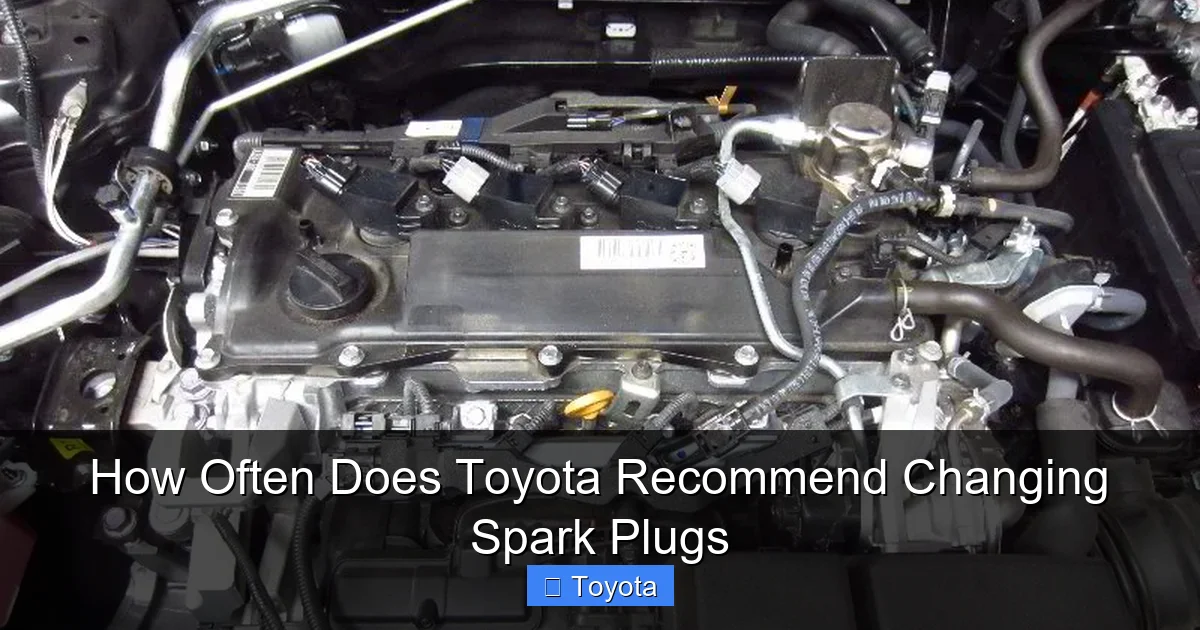
On many older and some newer four-cylinder Toyotas (like a standard Corolla or Camry 4-cyl), the plugs are often on the top or sides of the engine with clear access. You might need to remove an ignition coil cover, but the coils themselves unplug and bolt off easily. If you have basic tools and comfort with minor engine work, this is a great DIY project that saves significant labor cost.
The Challenging: V6/V8 Engines and Turbo/Hybrids
Things get tricky quickly. On V6 engines (like in a RAV4 V6, Tacoma 4.0L, or older Camry V6), the rear bank of cylinders is often tucked against the firewall. Accessing those rear plugs can require removing the intake plenum and other components—a job for an experienced DIYer or a professional. Turbocharged engines (like in the GR Supra or some RAV4s) and hybrids have even tighter packaging and more components to navigate. For these, professional installation is highly recommended to avoid damage.
The Critical DIY Steps (If You Proceed)
If you have an accessible engine, follow these rules:
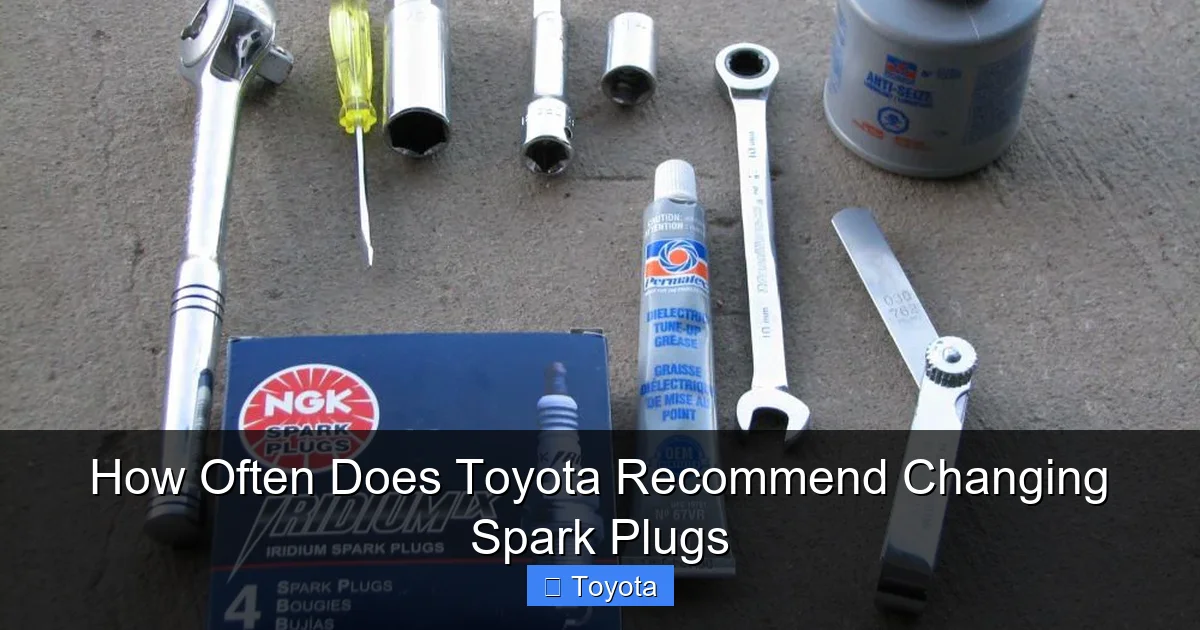
- Work on a cold engine. Aluminum cylinder heads can be damaged if you try to remove plugs from a hot engine.
- Use the exact plug specified. Do not “upgrade” to a different heat range or brand without research. Check model-specific recommendations if you’re considering an aftermarket alternative to OEM.
- Use a torque wrench. Over-tightening can strip the threads in the aluminum head. Under-tightening can cause a plug to blow out or leak compression. The torque spec is critical and found in your service manual.
- Check the gap. Even pre-gapped plugs can be damaged in shipping. Always verify the gap with a feeler gauge before installation.
- Replace in order. Do one plug at a time, noting which coil/plug wire goes to which cylinder. This prevents mix-ups.
- Use dielectric grease. A small dab inside the ignition coil boot prevents the boot from fusing to the plug’s ceramic over time and eases future removal.
Cost Considerations and The “Lifetime” Plug Myth
The cost of a spark plug service varies wildly. For a four-cylinder DIY job, you might spend $40-$80 on a set of quality plugs. For a V6 at a dealership or shop, labor can easily be $300-$600 or more, with parts adding another $100-$200. It’s an investment, but a cheap one compared to the alternatives.
Now, let’s bust a myth: “lifetime” spark plugs. You’ll see this term on some iridium plug boxes. It does NOT mean they last the lifetime of your car. It’s a marketing term that refers to the “useful life” as defined by emission regulations (often 100k+ miles). They still wear out. They still get fouled. They can still be damaged by external factors. Never, ever install a “lifetime” plug and forget about it. Your manual’s interval still applies.
Conclusion: Your Toyota’s Heartbeat
So, how often does Toyota recommend changing spark plugs? The responsible answer is: exactly when your owner’s manual says to, adjusted for your driving conditions. For many post-2000 models, that’s likely every 60,000 to 120,000 miles. For older models, it’s probably every 30,000 miles. This small, regular maintenance item is one of the easiest ways to keep your Toyota running with the smooth, efficient, and reliable performance it’s famous for. It protects your fuel economy, your engine’s health, and your catalytic converter. Don’t guess—check your manual, inspect your plugs if you’re unsure, and when in doubt, consult a trusted mechanic. A timely spark plug change is a tiny price to pay for preserving the heartbeat of your Toyota.
Frequently Asked Questions
Can I use a different brand of spark plug than Toyota OEM?
Yes, but you must use a plug that precisely matches the OEM specifications for heat range, gap, and physical dimensions. Brands like Denso (which often manufactures for Toyota) and NGK are excellent, reliable aftermarket choices that meet or exceed OEM standards. Always cross-reference the part number.
What happens if I go too long without changing my spark plugs?
Worn plugs misfire, causing poor performance, rough running, and drastically reduced fuel economy. The unburned fuel can wash oil from cylinder walls, increasing wear. Most critically, it can overheat and destroy expensive ignition coils and eventually the catalytic converter, leading to repairs costing thousands of dollars.
Do spark plugs affect my Toyota’s fuel economy?
Absolutely. Worn or fouled spark plugs are a leading cause of poor fuel economy. An inefficient spark leads to incomplete combustion, meaning your engine has to burn more fuel to produce the same amount of power. Replacing them on schedule can restore lost MPG.
Is it normal for my Toyota to have a slight miss after changing spark plugs?
No, a properly installed new set of correct spark plugs should result in a smooth-running engine. A misfire after a plug change usually indicates an installation error: a plug not tightened to spec, an incorrect gap, a damaged ignition coil boot, or a plug wire (if equipped) not fully seated. Re-check your work immediately.
How can I tell if my spark plugs are bad without taking them out?
You can’t be 100% certain without removal and inspection, but strong symptoms include: a persistent check engine light with misfire codes (P0300-P0304), a rough or shaking idle, noticeable hesitation when accelerating, hard cold starts, and a significant drop in fuel economy. A professional scan tool can also monitor misfire counts per cylinder.
Should I replace all spark plugs at once, or just the bad one?
Always replace all spark plugs at the same time. They are a service item that wears together. Replacing only one creates an imbalance in combustion efficiency and performance. Since the labor to access them is the same for all cylinders on a given bank, it’s more cost-effective and proper maintenance to do the full set.
