
Are 2005 Ford F-150 Trucks Reliable?

The 2005 Ford F-150 is a capable and popular used truck, but its reliability is a mixed bag heavily dependent on its specific engine, maintenance history, and configuration. The 5.4L Triton V8 (especially the 3-valve version) is its most powertrain, known for expensive spark plug issues and potential cam phaser wear. The 4-speed automatic transmission is generally robust but can falter if neglected. Rust, particularly on the frame and cab corners, is a widespread and serious concern. With meticulous upkeep and a thorough pre-purchase inspection, a well-maintained 2005 F-150 can be a workhorse, but buyers must be prepared for its known weaknesses and potential for costly repairs.
So, you’re eyeing a used truck, and the price and capability of a 2005 Ford F-150 have caught your attention. It’s a classic body style, a true icon of its era. But that nagging question creeps in: “Are 2005 Ford F-150 trucks reliable?” It’s a fair question. This isn’t about buying a shiny new truck with a warranty; it’s about a nearly 20-year-old workhorse that’s seen seasons, miles, and probably a few owners. The answer isn’t a simple yes or no. It’s a “it depends,” and that “depends” hinges on a few critical factors you absolutely need to understand before handing over your cash.
Think of the 2005 F-150 as a rugged, powerful, but aging athlete. In its prime, it could haul and tow with the best of them. Today, that same strength comes with the wear and tear of a long career. Its reliability story is written in two main chapters: the engine under the hood and the steel beneath the paint. Get those two things right, and you could have a fantastic, affordable truck. Get them wrong, and you’re looking at a money pit on wheels. Let’s pop the hood and crawl under the chassis to find out what makes these trucks tick—and what makes them tick sometimes.
Key Takeaways
- The 5.4L Triton V8 defines reliability: The 3-valve (24V) version has notorious spark plug blowout issues and cam phaser wear; the 2-valve (16V) is more durable but less powerful.
- Transmission is generally tough: The 4R75E 4-speed automatic is a proven, heavy-duty unit, but neglect or high mileage can lead to shifting problems and eventual failure.
- Rust is the silent killer: Frame corrosion, cab corner rust, and rocker panel decay are extremely common and can compromise structural integrity, making a rust-free example rare and valuable.
- Electrical gremlins and interior wear: Expect issues with window regulators, door locks, and dash cluster failures. Cloth seats wear quickly, so aftermarket protection like best seat covers for 2005 Ford F-150 is a smart investment.
- Maintenance history is everything: A truck with full, verifiable service records—especially for transmission fluid changes, spark plug service, and undercarriage washing—is worth a significant premium.
- Not a “most reliable” model year: The 2005 F-150 does not appear on lists of the most reliable Ford F-150 model years due to its engine and rust problems.
- Parts are plentiful and affordable: Being one of the best-selling vehicles ever, aftermarket and salvage parts are abundant and relatively cheap, which helps control repair costs.
📑 Table of Contents
The Powertrain: The Heart of the Beast (and Its Aches)
When you ask about 2005 Ford F-150 reliability, 95% of the conversation starts and ends with the engine. For this model year, Ford offered two primary gasoline V8 options: the 4.6L and the 5.4L. The 5.4L, especially in its “Triton” guise, is the engine everyone talks about, for better or worse.
The 5.4L Triton V8: A Legend With a Flaw
The 5.4L three-valve (24-valve) V8 was Ford’s headline performance engine for the F-150 at the time. It made impressive power (up to 300 hp and 365 lb-ft of torque) and had a distinctive growl. But it came with a well-documented, expensive Achilles’ heel: the spark plugs.
Here’s the deal: Ford used aluminum cylinder heads with steel thread inserts for the spark plugs. Over time, due to thermal cycling and improper torque during previous services, the threads in the aluminum head can strip. This leads to the infamous “spark plug blowout,” where the plug literally shoots out of the cylinder head, causing a dramatic loss of compression, misfires, and often catastrophic damage to the ignition coil and oxygen sensor. Fixing this isn’t a simple spark plug swap; it often requires helicoil inserts or, in severe cases, a new cylinder head. This is a $1,000 to $3,000+ repair. It’s not a matter of if for many high-mileage examples, but when.
Beyond the spark plugs, the 3-valve 5.4L also suffers from issues with the variable cam timing (VCT) system, specifically the cam phasers. Wear in these phasers can cause a distinct rattling noise on cold start (the “death rattle”) and trigger check engine lights for camshaft position codes. Repairing the phasers requires significant engine disassembly. Furthermore, these engines are known for consuming oil due to flawed piston rings, leading to oil consumption between changes and potential for premature wear if not monitored closely.
The 2-valve (16-valve) version of the 5.4L, found in some lower-trim models, is a different beast. It lacks the VCT system and the problematic aluminum heads with the spark plug issue. It uses cast-iron heads with traditional threaded spark plug holes. It’s significantly less powerful but far more durable and simpler. If you find a 2005 F-150 with the 4.6L or the 2-valve 5.4L, you’ve already dodged the biggest mechanical bullet.
The 4R75E Transmission: A Workhorse, But Not Invincible
Paired with these engines was Ford’s rugged 4R75E 4-speed automatic transmission. This is a heavy-duty unit borrowed from the Super Duty trucks of the era, and in many ways, it’s the unsung hero of the F-150. It’s built to handle serious torque and, when properly maintained with fluid and filter changes every 30,000-50,000 miles, can easily surpass 200,000 miles.
However, neglect is its kryptonite. The 4R75E does not like old, burned fluid. The most common failure point is the valve body, which can become clogged with debris and worn material, causing harsh shifts, slippage, or a failure to shift into overdrive. A full transmission rebuild or replacement is a $2,500-$4,000 job. Before buying any high-mileage 2005 F-150, you must verify the transmission service history. A transmission fluid change at 150,000 miles is better than never, but it’s not as ideal as a consistent service record.
The Rust Epidemic: A Structural Threat
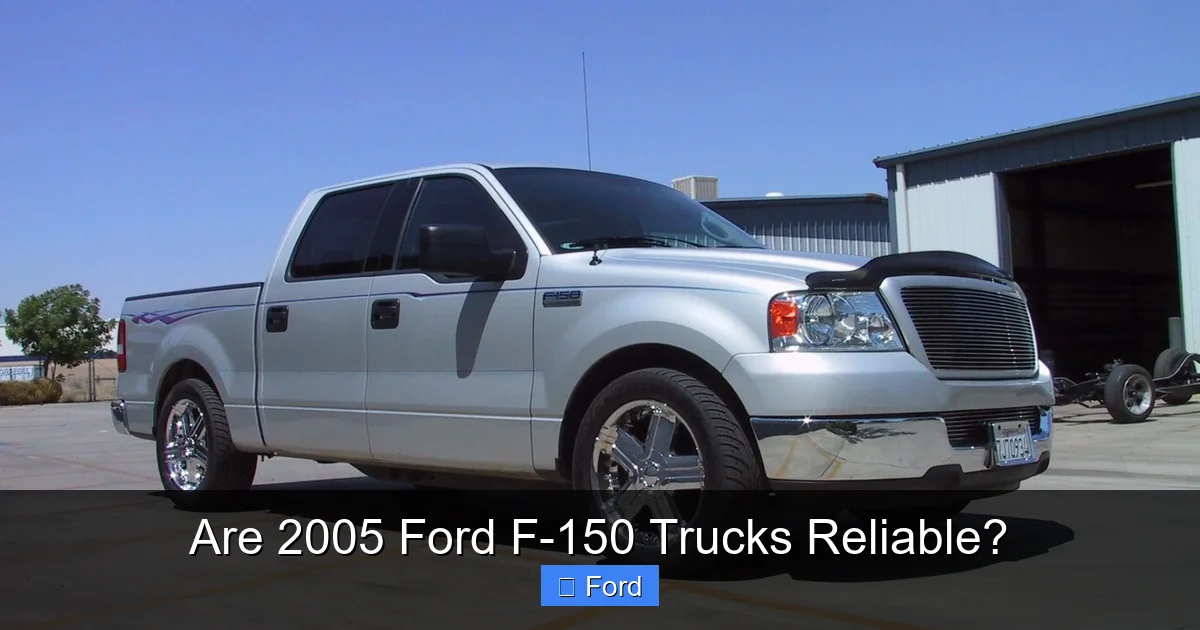
If the engine is the heart, the frame is the skeleton. And for 2001-2008 F-150s, rust is the osteoporosis. This is arguably the single biggest reliability and safety concern for these trucks, far surpassing many engine issues in terms of long-term viability.
Visual guide about Are 2005 Ford F-150 Trucks Reliable?
Image source: mcgaughys.com
Ford’s frame pre-treatment and paint processes in the early-to-mid 2000s were simply not up to par, especially in “rust belt” states where roads are salted in winter. The problem is pervasive:
- Frame Rust: Look for severe bubbling, flaking, and holes, particularly on the rear sections of the frame rails, around the rear axle mounts, and where the frame sections are welded. Surface rust is normal; deep, penetrating rust that compromises the metal’s thickness is a deal-breaker. A compromised frame affects the entire truck’s structural integrity and alignment.
- Cab Corners & Rocker Panels: The sheet metal behind the rear wheels and along the bottom of the doors is notorious for rusting through. This isn’t just an aesthetic issue; it allows water into the cab, leading to mold, ruined interior components, and further corrosion.
- Fender Wells & Battery Tray: Check the inner fender liners and the metal brace that holds the battery. These areas collect road grime and salt and rust out quickly.
Finding a 2005 F-150 from a southern or western state with no rust is like finding a unicorn, and it will command a high price. For most buyers, you will be assessing the level of rust and deciding if it’s a cosmetic issue or a structural one. A truck with significant frame rust is not a reliable long-term purchase, no matter how strong its engine is.
Common Problem Areas & Quirks
Beyond the headline-grabbing engine and frame issues, the 2005 F-150 has a long list of smaller, but annoying and costly, problems that add up. These are the things that will drive you crazy on a daily basis.
Visual guide about Are 2005 Ford F-150 Trucks Reliable?
Image source: lp-auto-assets.s3.amazonaws.com
Electrical System Gremlins
The early 2000s F-150 is famous for its finicky electronics. Expect to deal with:
- Window Regulators: The driver and passenger window motors/regulators fail frequently. The window will drop into the door or move slowly.
- Door Lock Actuators: Power door locks stop working, often on one door first.
- Dash Cluster Failures: The speedometer and tachometer needles can die, go crazy, or get stuck. This requires replacing the entire instrument cluster.
- Ignition Switch Wear: The key tumbler wears out, causing the key to stick or not turn.
None of these are catastrophic, but each is a $200-$600 repair at a shop. In a 20-year-old truck, you should budget for several of these over your ownership period.
Interior & Suspension Wear
The 2005 F-150 interior, especially on lower trims, was not built for eternity. The cloth seats develop permanent sags and rips. The plastic trim cracks and squeaks. The headliner often sags. The suspension components, particularly on 4×4 models, wear out. Control arm bushings, ball joints, and especially the front lower control arms (which have integrated bushings) are common wear items. If you’re looking at a 4×4, budgeting for a suspension overhaul with quality components like the best shocks for 2005 Ford F-150 4×4 and new bushings is a very good idea. The factory components are likely original and tired.
The Maintenance Imperative: Your Best Hope for Reliability
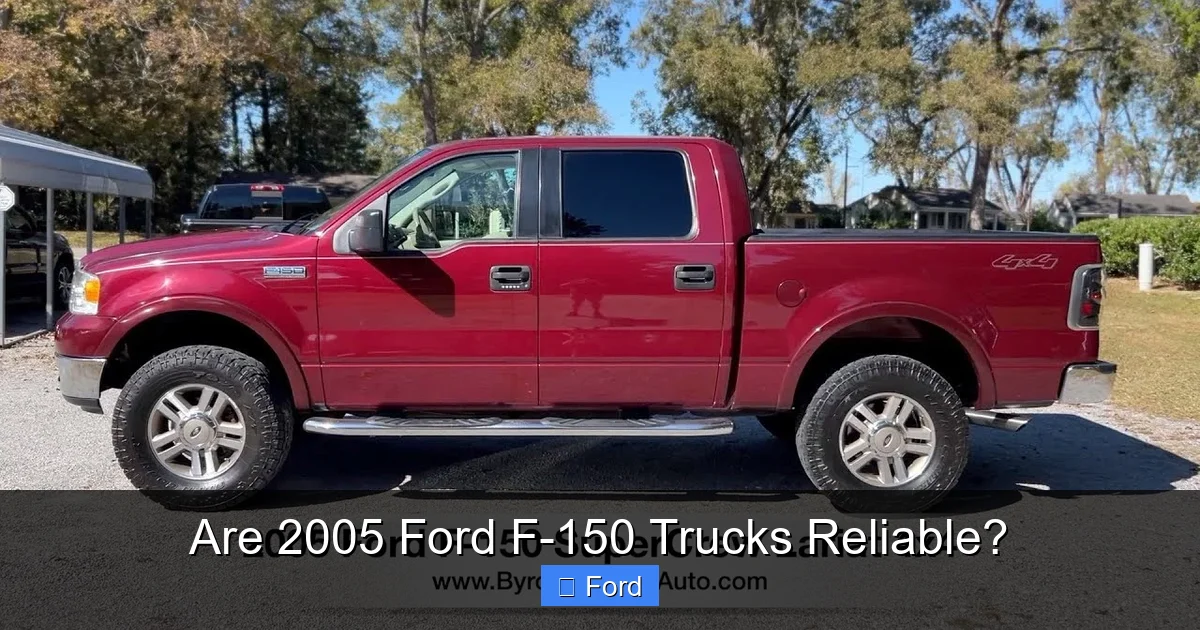
Here’s the gospel truth for any used truck of this age: its reliability is 90% a reflection of its maintenance history, not its inherent design. A neglected 2005 F-150 is a ticking time bomb. A cherished one can be a fortress.
Visual guide about Are 2005 Ford F-150 Trucks Reliable?
Image source: i.ytimg.com
What does “cherished” mean in paperwork? You want to see:
- Regular Oil Changes: Every 5,000 miles, without exception. Look for receipts.
- Transmission Service: At least one fluid and filter change every 50,000 miles. More is better.
- Cooling System: Water pump, thermostat, and radiator replacements around 100,000 miles. A failed cooling system in these aluminum engines leads to warped heads and expensive repairs.
- Spark Plugs: If it’s the 3-valve 5.4L, were the plugs changed with extreme care and proper torque? This is a critical question. A professional service with anti-seize and a torque wrench is mandatory.
- Undercarriage Washing: Did the owner live in a salt state and regularly wash the frame? This is the single best way to prevent the rust that kills these trucks.
A vehicle with a thick, organized stack of service records is worth every penny of its asking price over a similar truck with no history. It tells you the owner cared and invested in preventing the very problems we’ve discussed.
Cost of Ownership & The Verdict
Let’s talk money. Buying a 2005 F-150 is just the first check you’ll write. You must budget for:
- Immediate Needs: A pre-purchase inspection ($150-$250) is non-negotiable. Budget $500-$1,500 for immediate fixes (tires, brakes, fluids, minor rust treatment).
- Major Repair Fund: Set aside at least $2,000-$3,000 for potential spark plug/head work on a 3-valve 5.4L, or a transmission rebuild if its history is unknown.
- Annual Maintenance: Plan for $800-$1,200 per year for oil changes, filters, belts, hoses, and wear items.
So, are they reliable? As a baseline used truck, no, they are not class-leading in reliability due to the engine and rust issues. However, as a project for a knowledgeable owner or a truck with a proven, meticulous service history, they can be incredibly reliable and satisfying. They offer massive aftermarket support, cheap parts, and undeniable capability.
Your buying decision must be a checklist:
- Engine: Prefer the 4.6L or 2-valve 5.4L. If it’s the 3-valve 5.4L, demand proof of a perfect spark plug service history and be prepared for the eventual repair.
- Rust: Walk away from significant frame rust. Minor cab corner rust can be repaired, but budget for it.
- History: Full records are worth more than low mileage.
- Inspection: Have a trusted mechanic put it on a lift. Check for transmission pan metal shavings (a sign of wear), frame integrity, and suspension wear.
The 2005 Ford F-150 is a truck you buy with your head, not your heart. You must be a diagnostician and a willing mechanic, or you must be prepared to pay for one. If you find the right one, you’ll have a formidable, versatile truck. If you rush or ignore its flaws, you’ll learn a very expensive lesson in automotive epidemiology.
Frequently Asked Questions
What is the most common and expensive problem with a 2005 Ford F-150?
The most notorious and costly issue is the spark plug blowout in the 5.4L 3-valve V8 engine. The aluminum cylinder heads can strip their spark plug threads, requiring expensive repairs like helicoil installation or even head replacement, often costing over $2,000.
Is the 4-speed automatic transmission in the 2005 F-150 reliable?
The 4R75E transmission itself is a robust, heavy-duty unit. Its reliability depends almost entirely on maintenance. With regular fluid and filter changes every 30,000-50,000 miles, it can last well over 200,000 miles. Neglect leads to valve body wear, shifting problems, and eventual failure.
How serious is the rust problem on 2005 F-150 frames?
Extremely serious. Rust is the #1 reason these trucks are retired. Frame corrosion, especially on the rear sections and around welds, can compromise structural integrity and safety. A truck with significant, penetrating frame rust is not a safe or reliable long-term purchase, regardless of its engine condition.
Can a 2005 Ford F-150 last past 200,000 miles?
Yes, but it’s not common without major investment. A truck with the 4.6L or 2-valve 5.4L engine, a rust-free frame from a dry climate, and a meticulously maintained transmission and cooling system can reach 200k+ miles. However, the 3-valve 5.4L will likely need its cam phasers addressed, and nearly every wear item (suspension, electrical) will have been replaced at least once by that mileage.
How does the 2005 F-150 compare to other years in terms of reliability?
The 2005 model year is generally considered one of the less reliable in the 2004-2008 generation due to the prevalence of the problematic 5.4L 3-valve engine and severe rust issues. It does not appear on lists of the most reliable Ford F-150 model years, which typically favor later years (2009-2014) with the more durable 5.0L or 6.2L engines and improved rust protection.
What should I absolutely check before buying a used 2005 Ford F-150?
Three things: 1) Get a comprehensive pre-purchase inspection by a Ford specialist. 2) Inspect the frame and cab corners for rust with a magnet and a poke tool. 3) Demand full service records, specifically for transmission fluid changes and, if it has the 5.4L 3-valve, the spark plug service procedure and torque specs used. Also, check for any stored trouble codes with an OBD2 scanner.
