
What Engine Is in a 2002 Ford F-150?

The 2002 Ford F-150 came with three distinct engine choices: a fuel-efficient 4.2L V6, a versatile 4.6L V8, and a powerful 5.4L V8. Each engine was paired with specific transmissions and catered to different owner needs, from daily commuting to heavy towing. Choosing the right one depends entirely on your intended use, payload requirements, and desired balance of power and fuel economy. Understanding these options is crucial for maintenance, repairs, and buying a used model.
So, you’re looking at a 2002 Ford F-150. Maybe you’re buying one used, or perhaps you’re just curious about what makes this legendary truck tick. The F-150 has been America’s best-selling truck for decades, and the early 2000s were a pivotal time. The 2002 model year sits right in the middle of the tenth generation (1997-2004), a design that revolutionized the segment with its fully independent front suspension. But the heart of any truck is its engine, and for 2002, Ford gave buyers a clear, no-nonsense choice of three very different powerplants. Your experience with this truck—its capability, its fuel bills, its long-term reliability—starts and ends with which of these three engines is under the hood. Let’s pop the hood and take a deep dive into each one.
Key Takeaways
- Three Engine Families: The 2002 F-150 offered the 4.2L V6 ( Essex ), 4.6L V8 ( Triton ), and 5.4L V8 ( Triton ), each with different power and torque curves.
- Power vs. Efficiency: The V6 prioritized fuel economy for light-duty use, the 4.6L V8 was the all-around workhorse, and the 5.4L V8 was built for maximum towing and hauling capacity.
- Transmission Pairing: Engine choice dictated the transmission, with the 4.2L V6 typically getting a 4-speed automatic, while V8s often used the heavier-duty 4R75W or manual options in certain trims.
- Known Weaknesses: The 5.4L 3-valve V8 had specific issues like spark plug breakage and cam phaser problems, while the 4.6L 2-valve was generally more robust but less powerful.
- Maintenance is Key: All three engines require diligent oil changes; neglecting this is a primary cause of failure, especially in the high-revving V6 and the complex 5.4L. Learning what happens if engine oil is low can prevent catastrophic damage.
- Value & Identification: The 5.4L models command higher prices in the used market due to towing capacity. Always verify the engine via the VIN or physical inspection under the hood before purchasing.
📑 Table of Contents
- The Workhorse Trio: An Overview of the 2002 F-150 Engine Lineup
- The 4.2L Essex V6: The Efficient Everyday Driver
- The 4.6L Triton V8: The Balanced All-Rounder
- The 5.4L Triton V8: The Max Tow & Haul Powerhouse
- Performance Showdown: Numbers and Real-World Feel
- How to Choose the Right Engine for Your Needs
- Common Issues and Essential Maintenance Tips
- Conclusion: Matching the Heart to the Job
The Workhorse Trio: An Overview of the 2002 F-150 Engine Lineup
For 2002, Ford simplified the F-150 engine lineup compared to earlier years. You had three core options, each targeting a specific buyer. There was no diesel, no high-performance SVT Lightning option this year (that took a hiatus), and no exotic displacements. It was a straightforward, practical menu designed to cover the spectrum from basic transportation to serious work. The choice you—or the previous owner—made defines the truck’s DNA. The engines were all overhead-cam (OHC) designs, a step forward from older pushrod engines, but they varied greatly in complexity and output.
Why These Three Engines?
Ford’s strategy was brilliant in its simplicity. The 4.2L V6 was the entry point, appealing to buyers who saw the F-150 as a comfortable, versatile vehicle but didn’t regularly tow or carry heavy loads. The 4.6L V8 was the default, the sweet spot for most owners who wanted confident acceleration and solid towing without a massive fuel penalty. The 5.4L V8 was the specialist, the tool for contractors, boat owners, and anyone with a large trailer. This clear separation made the buying decision easier and helped Ford manage production and emissions certification efficiently.
The 4.2L Essex V6: The Efficient Everyday Driver
The smallest engine in the 2002 F-150 family was the 4.2-liter Essex V6. This was not a stripped-down, low-torque motor. It was a smooth, reasonably powerful six-cylinder that proved surprisingly capable for lighter duties. It was the standard engine in the XL and XLT trims with the regular cab and 6.5-foot bed configuration.
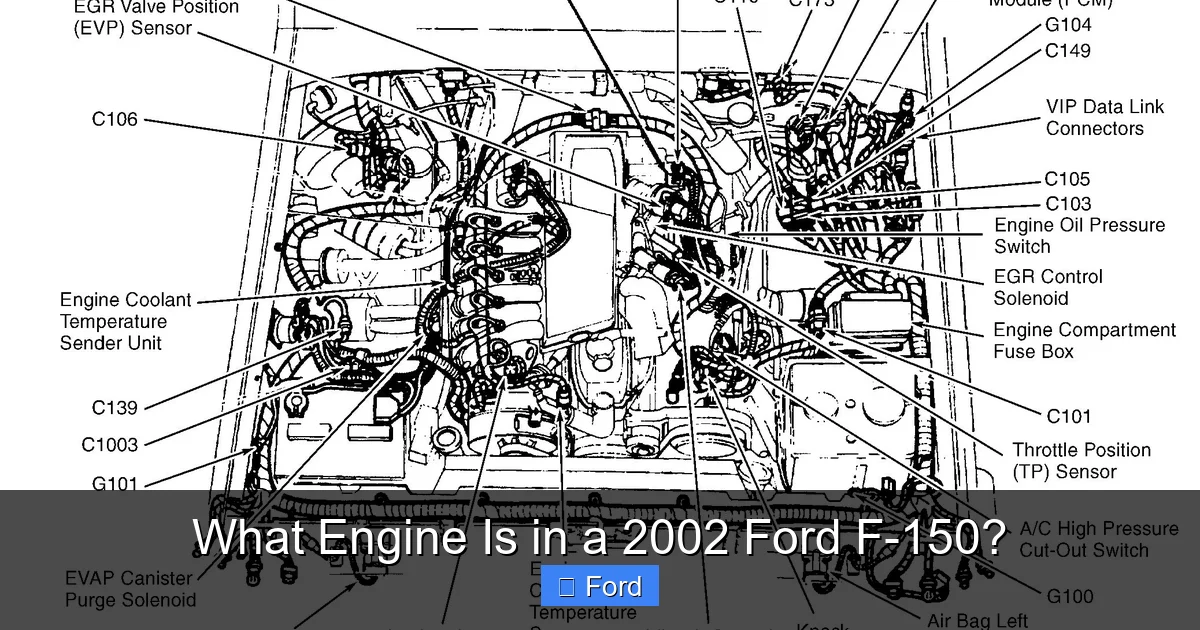
Visual guide about What Engine Is in a 2002 Ford F-150?
Image source: detoxicrecenze.com
Specifications and Character
The 4.2L Essex featured a cast-iron block and aluminum heads. It used a single overhead cam (SOHC) design with 2 valves per cylinder. For 2002, it produced 204 horsepower at 4,500 rpm and 262 lb-ft of torque at 3,000 rpm. These numbers are modest by today’s standards, but in a 2002 F-150, they provided adequate, if not spirited, performance. The power delivery was linear and smooth. It felt most at home during steady-state cruising and light acceleration. Where it truly shined was in fuel economy; the V6 was the clear winner for drivers who prioritized fewer stops at the pump. It was typically paired with the 4-speed 4R44E automatic transmission.
Best Use Cases & Limitations
This is the engine for the person who uses their truck for weekend runs to the hardware store, light landscaping, commuting, and maybe towing a small aluminum boat or a lightweight pop-up camper (under 3,000 lbs). Its limitations become apparent when heavily loaded. On a long hill with a full bed and a trailer, you’d find yourself pushing the accelerator hard, hearing the engine rev, and feeling the transmission downshift frequently. The 4.2L had a maximum towing capacity of around 5,000 lbs, but real-world, stress-free towing was more in the 3,000-3,500 lb range. It’s a fantastic engine for a truck that is 90% a passenger vehicle and 10% a workhorse.
The 4.6L Triton V8: The Balanced All-Rounder
If the 4.2L was the sensible choice, the 4.6-liter Triton V8 was the popular one. It was the volume seller, the engine most people thought of when they pictured a 2002 F-150. Available in two-valve (2V) and, in rare cases for this year, a three-valve (3V) version in the Harley-Davidson edition, the 4.6L offered a huge leap in power and capability over the V6 without the fuel consumption of the 5.4L.
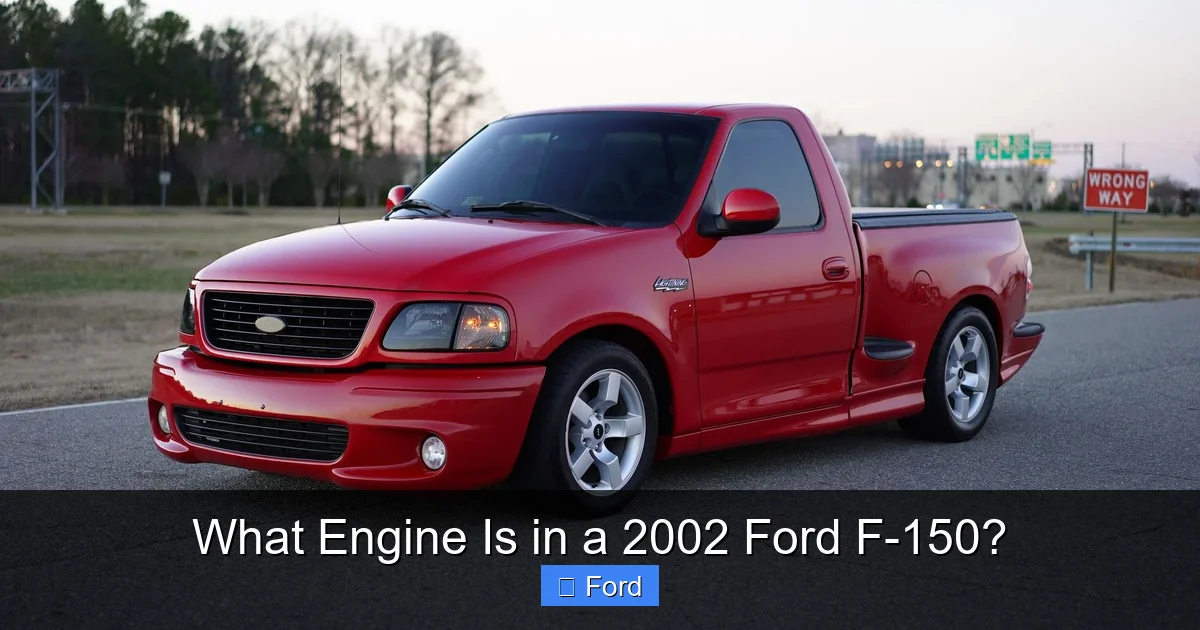
Visual guide about What Engine Is in a 2002 Ford F-150?
Image source: cdn.dealeraccelerate.com
Specifications and Character
The 4.6L Triton shared the same basic architecture as the 5.4L but with a smaller bore and stroke. The common version was the 2-valve SOHC design. It churned out 231 horsepower at 4,500 rpm and a useful 330 lb-ft of torque at 3,250 rpm. That torque number is the key difference from the V6—it arrives lower in the RPM range and pulls much harder. The 2-valve design is simpler, more proven, and generally very reliable. The engine note is a classic, lumpy V8 idle that smooths out under power. It was paired with the heavier-duty 4R75W 4-speed automatic transmission, which could better handle the increased torque.
Best Use Cases & Limitations
The 4.6L V8 is the jack-of-all-trades. It could comfortably tow a medium-sized boat, a larger travel trailer (5,000-7,000 lbs), or a loaded full-size pickup bed for work. It provided confident passing power on the highway and felt significantly more relaxed than the V6 when loaded. Its fuel economy was a noticeable step down from the V6 but still respectable for a V8 of its era. The main limitation is ultimate grunt. If you regularly tow a large fifth-wheel or a heavy equipment trailer, you’ll eventually wish for more. For 95% of F-150 owners, however, the 4.6L 2-valve provides the perfect blend of power, reliability, and reasonable running costs. Its simplicity is its greatest asset.
The 5.4L Triton V8: The Max Tow & Haul Powerhouse
At the top of the 2002 F-150 engine pyramid sat the 5.4-liter Triton V8. This was not a subtle upgrade. It was a seriously capable engine designed for the SuperCrew (4-door) models, the Lariat and King Ranch trims, and any buyer who listed “towing” as a top priority. In 2002, the 5.4L was exclusively the 3-valve (3V) version with variable camshaft timing (VCT).
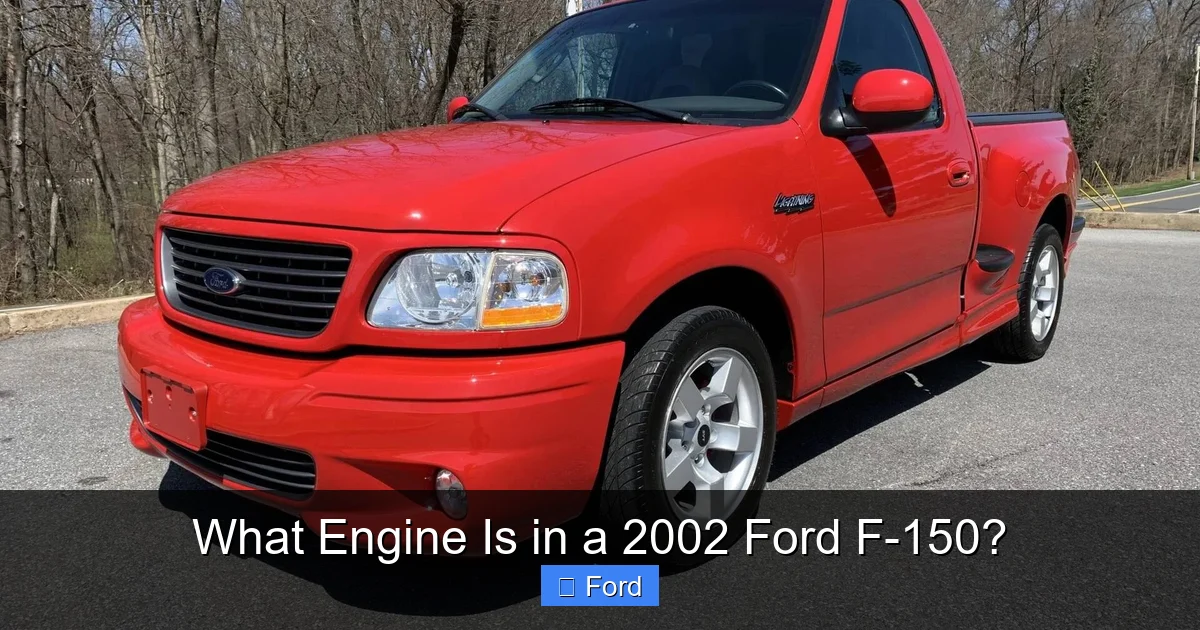
Visual guide about What Engine Is in a 2002 Ford F-150?
Image source: i.gaw.to
Specifications and Character
The 5.4L 3-valve was a technological leap. Its DOHC, 3-valve-per-cylinder head design with VCT allowed it to make 300 horsepower at 5,000 rpm and a massive 365 lb-ft of torque at 3,500 rpm. That torque curve is what makes it a towing beast—it’s strong, low, and broad. The sound is more aggressive and high-strung than the 4.6L’s burble. This engine was always paired with the robust 4R75W transmission. With the proper axle ratio, a 2002 F-150 with the 5.4L could tow up to 9,200 lbs, making it one of the most capable half-ton trucks of its time.
Strengths and Known Weaknesses
The 5.4L 3-valve’s strength is its high-RPM power and massive torque. It makes heavy loads feel manageable. However, its complexity introduced some well-documented weak points. The most infamous is the spark plug issue. The plugs have a long, thin electrode that can break off in the cylinder head during removal, requiring a time-consuming and expensive extraction process. Another common problem is cam phaser wear and failure, which can cause a rattling noise on cold start and eventually trigger a check engine light. These are not “deal-breaker” issues if the engine has been meticulously maintained with high-quality oil and regular changes. Neglecting oil service is a direct path to cam phaser death. For potential buyers, a thorough inspection and a solid service history are non-negotiable. This engine demands respect and proper care.
Performance Showdown: Numbers and Real-World Feel
Let’s put the numbers side-by-side to see the tangible differences. The gap between the 4.2L and 5.4L is significant.
- 0-60 mph (approx.): 4.2L V6: ~10.5 sec | 4.6L V8: ~8.5 sec | 5.4L V8: ~7.5 sec
- Max Towing (Ford Rating): 4.2L V6: ~5,000 lbs | 4.6L V8: ~7,000 lbs | 5.4L V8: ~9,200 lbs
- Max Payload (Ford Rating): 4.2L V6: ~1,400 lbs | 4.6L V8: ~1,900 lbs | 5.4L V8: ~2,200 lbs
- EPA Fuel Economy (Est.): 4.2L V6: 16/20 mpg | 4.6L V8: 15/18 mpg | 5.4L V8: 14/17 mpg
Real-world feel tells the same story. The V6 feels adequate until you load it. The 4.6L V8 feels confident and relaxed in most situations. The 5.4L V8 feels strong and eager, with a noticeable surge of power from 2,500 rpm onward. The transmission choice also plays a role. The 4R44E in the V6 is adequate, but the 4R75W in the V8s is a more robust unit better suited for repeated stress. When considering a used 2002 F-150, matching the engine to the axle ratio (3.31, 3.55, or 4.10) is just as important as the engine itself for achieving the advertised tow ratings.
How to Choose the Right Engine for Your Needs
So, which one should you look for? It all comes down to a few honest questions.
The Commuter / Light-Duty Question
If your truck is primarily a family hauler, a grocery-getter, and you might hook up a small utility trailer a few times a year, the 4.2L V6 is the smart, economical choice. It will be the cheapest to buy, the cheapest to insure, and the cheapest to fuel. Its limitations won’t be a factor in your life. You’ll appreciate the smoother, quieter operation and the better gas mileage. It’s the pragmatic player.
The Balanced Workhorse Question
If you want a truck that can do almost anything without breaking the bank—tow a decent-sized boat, carry a full bed of mulch or drywall, and still be a pleasant daily driver—the 4.6L V8 is your answer. This is the “no regrets” engine for most buyers. Its power is sufficient for the vast majority of recreational and light-commercial towing tasks. Its proven reliability means lower long-term repair costs compared to the complex 5.4L. You get 80% of the towing capacity for 90% of the fuel economy and 100% of the reliability peace of mind.
The Heavy-Duty Specialist Question
If you know you’ll be towing a large travel trailer (over 7,000 lbs), a car on a trailer, or a heavy piece of equipment, or if you frequently carry a maximum payload in the bed, you must look at the 5.4L V8. There is no substitute for its torque. However, you must also budget for potential repairs. A pre-purchase inspection by a mechanic familiar with the 5.4L’s quirks is essential. Check for a clean maintenance record, especially regarding oil changes. Listen for cold-start rattles (cam phasers). Verify spark plug history. This engine is a tool, and like any high-performance tool, it requires diligent care.
One final thought: never judge an engine in isolation. The rear axle gear ratio (found on the axle tag) is critical. A 5.4L with 3.31 gears will feel slow and struggle, while a 4.6L with 4.10 gears will tow much better. Your needs dictate the gear ratio as much as the engine. When shopping, decode the VIN to confirm the original engine and axle ratio.
Common Issues and Essential Maintenance Tips
All engines need love, but the 2002 F-150 trio has specific needs. Following these will save you thousands.
Universal Rule: Oil is Life
This cannot be overstated. All three engines are interference designs, meaning if the timing chain or components fail, the pistons will collide with the valves, destroying the engine. The 5.4L’s cam phasers are lubricated by pressurized oil. Low oil pressure or dirty oil kills them. The high-revving V6 is also sensitive to oil pressure. Use the correct oil (Ford WSS-M2C153-C or equivalent 5W-20 synthetic blend for 2002) and change it every 5,000 miles without exception. Skipping oil changes is the single fastest way to turn any of these engines into a paperweight. Understanding what the oil in your car is for is fundamental knowledge for any vehicle owner.
The 5.4L 3-Valve’s Special Care
As mentioned, spark plugs and cam phasers are the big concerns.
- Spark Plugs: If buying a used 5.4L, ask for receipts showing spark plug replacement. If they haven’t been changed, budget for the job. It’s labor-intensive and requires special tools to avoid breakage.
- Cam Phasers: These are expensive to replace. The best prevention is consistent, high-quality oil changes. Some owners use aftermarket “upgraded” phasers or have them modified to reduce failure risk.
- Oil Consumption: Some 5.4Ls are notorious for burning oil. Check the dipstick condition and look for signs of leaks around the valve covers.
The 4.6L’s Minor Quirks
The 2-valve 4.6L is famously durable, but it has a minor issue: the plastic intake manifold can crack. This causes coolant leaks and poor performance. The fix is an aftermarket aluminum intake manifold, a common and relatively inexpensive repair. Also, the plastic valve covers can become brittle and leak oil over time.
The 4.2L’s Simplicity
The V6 has the fewest major issues. Its main demands are timely oil changes and attention to the exhaust manifold bolts, which can sometimes crack or leak due to thermal cycling. It’s a straightforward, no-nonsense engine that rewards basic care with longevity.
Regardless of engine, always address check engine lights immediately. For the 5.4L, codes related to variable camshaft timing (P0016, P0017) are red flags. For all engines, codes for misfires (P0300-P0306) need diagnosis, as prolonged misfiring can wash cylinder walls and damage catalytic converters, adding to repair bills.
Conclusion: Matching the Heart to the Job
The 2002 Ford F-150’s engine lineup is a masterclass in market segmentation. There is no “best” engine; there is only the best engine for you. The 4.2L V6 is the smart, efficient choice for light use. The 4.6L V8 is the beloved, reliable all-rounder that satisfies the needs of most truck owners. The 5.4L V8 is the specialist’s tool, offering near-super-duty towing in a half-ton package, but with a complexity that requires a knowledgeable owner and a detailed maintenance history.
When you’re looking at a 2002 F-150, start by honestly assessing your needs. Then, use the VIN to verify the engine code. Look for a clean, documented service history, especially regarding oil changes. For the 5.4L, budget for a potential spark plug job and be wary of cold-start rattles. For any truck, ensure the transmission shifts smoothly, as a failing 4R75W is an expensive repair. By understanding these three engines—their strengths, their weaknesses, and their perfect use cases—you can confidently choose, buy, and enjoy a 2002 Ford F-150 that will serve you faithfully for years to come. It’s not just about displacement; it’s about matching the heart of the truck to the work you ask it to do.
Frequently Asked Questions
Which 2002 Ford F-150 engine is the most reliable?
The 4.6-liter V8 (2-valve) is widely considered the most reliable and trouble-free of the three. Its simpler, proven SOHC 2-valve design has fewer complex systems and known failure points than the 5.4L 3-valve, while being far more robust and durable than the high-revving 4.2L V6 when used for work.
What is the towing capacity of a 2002 F-150 with a 5.4L engine?
With the proper axle ratio (typically 4.10), the 2002 F-150 equipped with the 5.4L V8 had a maximum factory-rated towing capacity of 9,200 pounds. This made it one of the most capable half-ton trucks available at the time, suitable for large travel trailers and boats.
What transmission comes with a 2002 F-150 5.4L?
All 2002 Ford F-150 models equipped with the 5.4L V8 engine came with the heavy-duty 4-speed 4R75W automatic transmission. This transmission was also used with the 4.6L V8. The lighter-duty 4.2L V6 was paired with the 4R44E transmission.
Is the 2002 F-150 4.2L V6 good for towing?
The 4.2L V6 can tow, but its capacity is limited. Ford rated it for up to 5,000 lbs, but for safe, stress-free towing, it’s best kept under 3,500 lbs. It is suitable for small utility trailers, jet skis, or light pop-up campers but will struggle and overheat with larger or heavier trailers, especially in hilly terrain.
What are the common problems with the 2002 F-150 5.4L engine?
The two most significant and well-known issues are spark plug breakage during removal (due to a long, thin electrode design) and cam phaser wear/failure (caused by poor oil maintenance or design flaws). Other issues include oil consumption, potential for timing chain tensioner failure, and exhaust manifold cracks. Diligent oil changes with the correct oil are critical for longevity.
How can I tell what engine is in a 2002 Ford F-150?
The easiest way is to check the Vehicle Identification Number (VIN). The 8th character designates the engine. You can decode it using online VIN decoders or Ford-specific resources. Physically, the 4.2L V6 has “4.2L” or “Essex” badges on the valve covers. The 4.6L and 5.4L both have “Triton” badges, but the 5.4L is larger and has 3 valves per cylinder visible on the intake manifold (three holes per cylinder), while the 4.6L 2-valve has two. The 5.4L also typically has “5.4L” or “Triton 5.4” on the air intake duct.
