
What Year Hyundai Tucson Should You Avoid?

Not all Hyundai Tucson model years are created equal. Our research points to significant problems clustered around the first generation (2004-2009) and a troublesome stretch of the second generation (2010-2018), particularly those with the 2.4L Theta II engine. Avoid 2010-2015 models without verified engine recall repairs and be cautious of 2016-2018 models with dual-clutch transmissions. Always get a pre-purchase inspection and check for open recalls before buying a used Tucson.
So, you’re in the market for a used Hyundai Tucson. Smart choice! The Tucson has long been a standout in the compact SUV segment, offering great value, a comfortable ride, and impressive features for the money. But here’s the critical question every savvy used car buyer asks: “What year Hyundai Tucson should I avoid?” It’s not about bad-mouthing a good vehicle; it’s about risk management. Every model year has its strengths and weaknesses, and some Tucson years are burdened with expensive, well-documented problems that can turn your reliable family hauler into a garage queen.
Hyundai has made incredible strides in quality and reliability over the last two decades. However, like any major automaker, they’ve had missteps—specific engine designs, transmission choices, or production runs that led to higher failure rates. The goal of this deep-dive guide is to pull back the curtain on the Hyundai Tucson’s history. We’ll walk through each generation, highlight the specific model years with red flags, explain the why behind the problems, and give you a clear, actionable roadmap to find a used Tucson that brings you joy, not headaches.
Forget vague advice. We’re getting into the nitty-gritty: engine codes, transmission types, recall histories, and real-world owner complaints. By the end, you’ll know exactly which years to cross off your list, which years are golden, and the essential steps to take before handing over your cash. Let’s dive in.
Key Takeaways
- Avoid Early First-Generation Models (2004-2006): These suffer from the most severe and widespread engine failure issues (Theta II engine) and have the oldest, least refined technology.
- Be Extremely Cautious with 2010-2015 Second-Generation Models: This is the peak problem period for the Theta II engine’s catastrophic failure, even after recall campaigns. Verify all recall repairs were completed correctly.
- Investigate 2016-2018 Models with 7-Speed DCT: The optional 7-speed dual-clutch transmission (DCT) in these years is prone to shuddering, hesitation, and premature wear, leading to expensive repairs.
- 2019+ Third-Generation Models Are Generally Reliable: Post-2018 redesigns addressed previous engine and transmission issues, making them the safest used Tucson bets if maintained properly.
- Always Perform a Pre-Purchase Inspection (PPI): Regardless of year, a thorough PPI by a qualified mechanic is non-negotiable to uncover hidden issues, especially engine and transmission health.
- Check and Verify All Recalls: Use the NHTSA website or Hyundai’s recall portal with the VIN. Ensure all recall work, especially the Theta II engine-related recalls, was performed at an authorized dealer.
- Prioritize Full Service History: A well-documented service history, with regular oil changes and transmission fluid services, is a strong indicator of a well-cared-for Tucson and mitigates risk.
📑 Table of Contents
- Understanding the Generations: A Timeline of Trouble
- The Second Generation (2010-2018): The Problem Persists and a New Issue Emerges
- The Third Generation (2019-Present): A Return to Form
- How to Investigate Any Used Tucson Like a Pro
- Practical Examples: What to Do When Shopping
- Conclusion: Your Smart Tucson Buying Strategy
Understanding the Generations: A Timeline of Trouble
The Hyundai Tucson has seen three distinct generations. Problems tend to cluster within specific generations and, more importantly, specific model years within those generations. Here’s a quick roadmap:
- First Generation (2004-2009): The original Tucson. It established Hyundai as a serious player but introduced the infamous Theta II engine family, which would cause major issues.
- Second Generation (2010-2015, and 2016-2018 refresh): A massive redesign that brought modern styling and more power. However, it carried over the problematic Theta II engine and later introduced a troublesome dual-clutch transmission (DCT) in its refresh.
- Third Generation (2019-Present): A complete ground-up redesign. Hyundai addressed the previous generation’s core issues with new engines and transmissions, marking a return to form.
The First Generation (2004-2009): The Theta II Engine’s Infamous Debut
The first-gen Tucson was a bold move for Hyundai. It was spacious, feature-packed, and priced to compete directly with the Honda CR-V and Toyota RAV4. Under the hood, the star was the 2.4L Theta II inline-four engine. This engine was also used across Hyundai and Kia’s lineup in vehicles like the Sonata, Optima, and Sportage. And this is where the trouble began.
The core issue with many early Theta II engines is a manufacturing defect related to the assembly process. Debris from the machining of the crankshaft could contaminate the oil passages. This, combined with normal wear, could lead to catastrophic connecting rod bearing failure. The symptoms are classic: a sudden, loud knocking noise from the engine, followed by a complete loss of power. The repair? A full engine replacement or rebuild, costing thousands of dollars.
Hyundai eventually acknowledged the problem with a series of recalls and extended warranties, but the damage to the first-gen Tucson’s reputation was done. If you’re looking at a 2004-2009 Tucson, you must:
- Verify the engine recall work was done. The most significant recall (related to the Theta II) was 15V-573, covering 2011-2014 models, but the underlying design flaw existed from the start. Earlier models may have had different service campaigns.
- Listen for engine knock on a cold start. This is the classic tell-tale sign.
- Check oil consumption records. These engines were also notorious for burning excessive oil between changes, a precursor to the bearing failure.
Verdict for First Gen: While some survived without issue, the statistical probability of encountering a Theta II failure is highest in these early years. They are now very old vehicles with high mileage, and parts wear is a given. We recommend avoiding the 2004-2006 model years entirely due to age, lack of modern safety features, and the highest concentration of pre-recall engines. A well-maintained 2007-2009 could be considered a high-risk project buyer.
The Second Generation (2010-2018): The Problem Persists and a New Issue Emerges
The second-generation Tucson, launched for the 2010 model year, was a huge leap forward. It was larger, more powerful, and finally competitive in terms of interior quality and tech. However, Hyundai’s engineering team made two critical missteps that define this generation’s “years to avoid.”
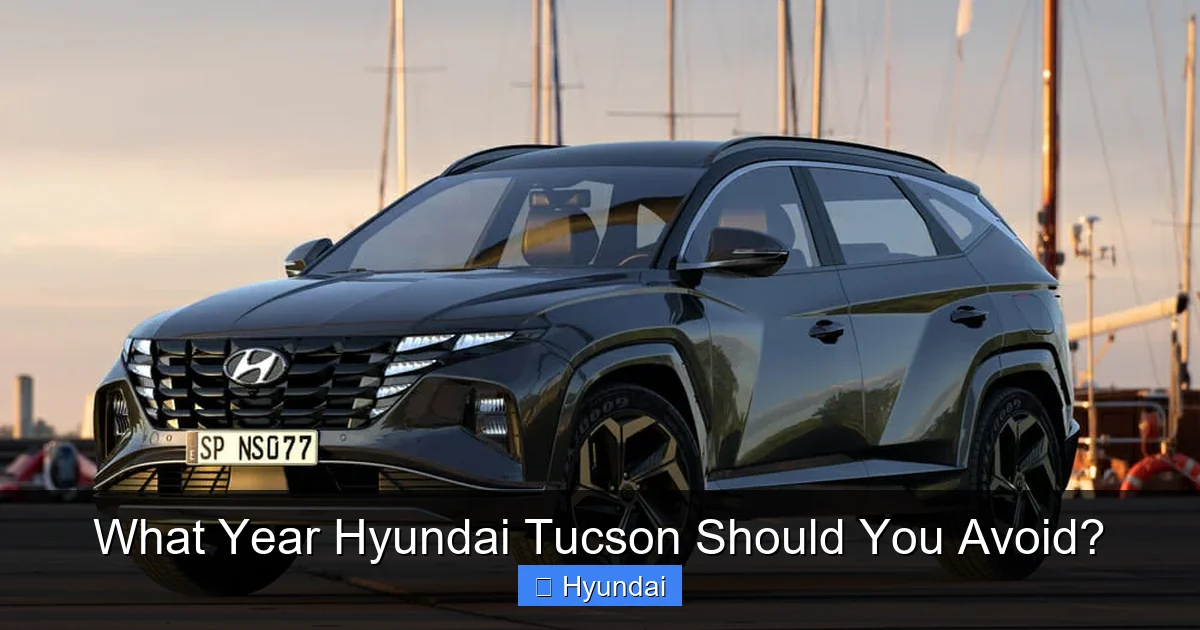
Visual guide about What Year Hyundai Tucson Should You Avoid?
Image source: miramarspeedcircuit.com
The Theta II Nightmare Continues (2010-2015)
Shockingly, Hyundai continued to use the flawed 2.4L Theta II engine in the all-new 2010-2015 Tucson. The manufacturing process was supposedly improved, but the fundamental design flaw with the crankshaft and bearing clearance remained a ticking time bomb for a significant number of engines. This period saw the highest volume of Theta II failures due to the sheer number of vehicles sold.
NHTSA and Hyundai were flooded with complaints. The result was the massive recall mentioned earlier (15V-573), which covered millions of vehicles. The fix involved:
- Installing an improved engine oil cooler.
- Updating the engine control unit (ECU) software to adjust engine RPMs and reduce stress.
- Extending the powertrain warranty to 10 years/100,000 miles for the original owner.
Here is the critical caveat for 2010-2015 Tucson buyers: Just because a recall was issued does not mean it was performed. Many vehicles changed hands multiple times, and the recall paperwork got lost. Some dealerships performed shoddy repairs. You must:
- Always check the recall status by VIN on the NHTSA website or Hyundai’s portal.
- Demand proof of repair. A simple “it was done” is not enough. Get the service record from the dealer.
- Assume the engine has a higher risk. Even with the recall, some repaired engines still failed later. A PPI must include a rigorous check for engine knock, oil consumption, and a scan for any stored engine codes.
If you are looking at a 2010-2015 Tucson and the recall status is “incomplete” or you cannot verify it, walk away. The financial risk is simply too high. These are the most critical years to avoid in the entire Tucson lineup.
The Infamous 7-Speed Dual-Clutch Transmission (DCT) (2016-2018)
For the 2016 model year, Hyundai gave the second-gen Tucson a mid-cycle refresh. New front and rear fascias, an updated interior, and a crucial powertrain change: the introduction of a 7-speed dual-clutch transmission (DCT) as the sole automatic option for the 2.4L engine. This was Hyundai’s attempt to improve fuel efficiency and provide sportier shifts. It backfired spectacularly for many owners.
The DCT, while smooth when working perfectly, is a complex piece of machinery. It uses two clutches (like a manual transmission) to pre-select the next gear. In the 2016-2018 Tucson, these clutches and their associated hydraulic actuators were prone to premature wear and software glitches. The symptoms are frustrating and dangerous:
- Severe transmission shudder/vibration at low speeds, especially when cold.
- Hesitation or jerking when accelerating from a stop.
- Gear selection errors or the transmission getting “stuck” in a gear.
- Warning lights like “Transmission Error” or “Check Transmission.”
The fix often required a full transmission software update (TCM flash) or, in severe cases, a complete transmission replacement or rebuild. Hyundai issued technical service bulletins (TSBs) and eventually extended the warranty on certain components for some model years, but the problem persisted for a subset of owners.
For a used 2016-2018 Tucson, your investigation must be laser-focused on the transmission:
- Test drive extensively. Drive it when the engine is cold and when it’s hot. Feel for any shudder between 15-30 mph. Try to replicate the hesitation from a stop.
- Ask for the vehicle’s service history. Look for any TSB-related repairs or transmission software updates (often called “PCM/TCU reflash”).
- Check for any pending or stored transmission-related trouble codes. A good PPI will do this.
Models from 2016-2018 equipped with the traditional 6-speed automatic (often found on the base models or earlier in the refresh cycle) are generally safer bets, but the DCT became the standard. Our advice is to proceed with extreme caution on any 2016-2018 Tucson and strongly consider avoiding those with the DCT unless you have an impeccable, verified service history proving the transmission was replaced or extensively repaired under warranty.
The Third Generation (2019-Present): A Return to Form
Hyundai started with a clean sheet for the 2019 Tucson. This was a complete redesign, inside and out. Most importantly, they ditched the Theta II engine for the new “Smartstream” 2.4L and 2.5L engines, and they abandoned the problematic DCT in the U.S. market, reverting to a conventional (and much more reliable) 8-speed automatic transmission.
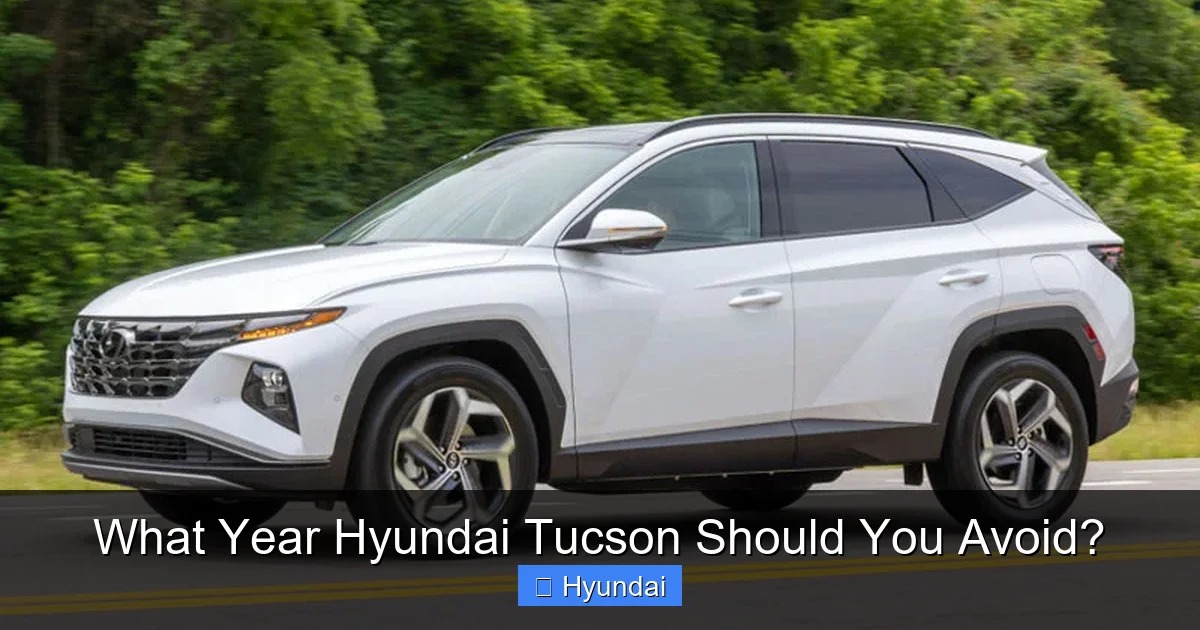
Visual guide about What Year Hyundai Tucson Should You Avoid?
Image source: wipersized.com
The result? A Tucson that is not only more stylish and tech-forward but also fundamentally more reliable. Consumer reports, owner forums, and initial reliability data show a dramatic drop in major engine and transmission complaints for the 2019+ model years. The new engines are smoother, more efficient, and free from the catastrophic failure modes of their predecessor.
This makes the 2019 Hyundai Tucson the first “safe” model year in a long time. You can shop with much more confidence. That said, no car is perfect. You should still watch for:
- General electronics and infotainment system glitches (common in any modern car).
- Normal wear-and-tear items (brakes, tires, suspension) on higher-mileage examples.
- Ensure all recalls (like the recent Hyundai/ Kia theft deterrent recall) are addressed.
For a reliable, worry-free used Tucson, your search should focus primarily on 2019 and newer models, provided they have a clean title and a solid maintenance history.
How to Investigate Any Used Tucson Like a Pro
Knowing the problematic years is only half the battle. Your due diligence is what separates a smart purchase from a costly mistake. Here is your step-by-step checklist, applicable to any year.

Visual guide about What Year Hyundai Tucson Should You Avoid?
Image source: oiltype.co
Step 1: The VIN is Your Best Friend
Before you even look at the car, use the 17-digit Vehicle Identification Number (VIN). Enter it into:
- The NHTSA Recall Lookup: (nhtsa.gov/recalls). This will show all open and completed safety recalls for that specific vehicle. Do not buy if a major safety recall (especially engine-related) is “open” and unaddressed.
- Hyundai’s Own Recall Site: (hyundai.com/recalls). Sometimes more up-to-date on manufacturer-specific campaigns.
- A paid vehicle history report (Carfax/AutoCheck): While not perfect, they can flag reported accidents, title problems (salvage, flood), and sometimes service records. Look for consistent, dealer-serviced maintenance.
Step 2: The Pre-Purchase Inspection (PPI) is Non-Negotiable
Spend $150-$250 on a PPI from an independent mechanic (not a dealer affiliated with the seller). This is the best money you will ever spend on a used car. For a Tucson, especially a 2010-2018, instruct the mechanic to:
- Perform a thorough engine inspection. Check for oil leaks, condition of oil, and listen for any abnormal noises. A borescope inspection (looking inside cylinders) can be worth it for high-mileage Theta II engines.
- Perform a rigorous transmission check. For DCT models (2016-2018), this includes a road test specifically looking for shudder/hesitation, scanning for transmission codes, and checking the fluid condition (if serviceable).
- Check for any outstanding technical service bulletins (TSBs). The mechanic can look these up using the VIN. Unperformed TSBs on known problem areas are a red flag.
- Put the car on a lift. Inspect the undercarriage for rust, fluid leaks, and damage.
Never, ever skip the PPI. It’s your objective, professional assessment of the vehicle’s true health.
Step 3: The Test Drive: Listen, Feel, Smell
During your test drive, be hyper-aware:
- Engine: Does it run smoothly? Any knocking, ticking, or excessive vibration? Does it smoke (blue = burning oil, white = coolant leak)?
- Transmission (DCT years): Does it shift smoothly? Any shuddering at low speeds? Hesitation when you press the gas? Does it feel “slushy” or disconnected?
- Smell: A sweet, syrup-like smell could indicate a coolant leak. A burnt oil smell is a bad sign.
- Electronics: Test every button, screen, climate control, and driver-assist feature. Glitches are common and annoying.
Practical Examples: What to Do When Shopping
Let’s bring this to life with some real shopping scenarios.
Situation A: You find a beautiful, low-mileage 2014 Hyundai Tucson with a great price. It’s a second-generation model in your target price range. What do you do?
Action: Immediately check the VIN for recall status. If the Theta II engine recall (15V-573) shows as “incomplete,” you must find out why. Ask the seller for the repair record. If they can’t produce it, assume it wasn’t done properly or at all and walk away. If it shows “completed,” still get a PPI and specifically ask the mechanic to listen for engine knock and check oil consumption history. This is a high-risk vehicle; the low price is likely reflecting that risk.
Situation B: You’re looking at a 2017 Hyundai Tucson with the 2.4L engine and automatic transmission. The price is good.
Action: You must determine if it has the 6-speed automatic or the 7-speed DCT. This is usually listed on the window sticker or can be confirmed by the VIN or a quick internet search of the exact trim. If it’s the DCT, your test drive must be meticulous. Drive it on a cold start. Feel for shudder between 20-40 mph. Ask the seller point-blank if the transmission has ever been serviced or had software updates. Get a PPI and have the mechanic scan for transmission codes and check fluid condition. If any shudder is present, walk away. The cost to repair a failed DCT can exceed the value of the vehicle.
Situation C: You find a well-optioned 2020 Hyundai Tucson with full service history from a single owner.
Action: This is a prime candidate. Check recalls (likely just minor ones). Get a PPI as a formality to confirm the good history and check for any wear items. This model year should be on your “good” list. The price might be higher than a 2015, but the peace of mind and likely lower cost of ownership are worth it.
Conclusion: Your Smart Tucson Buying Strategy
So, what year Hyundai Tucson should you avoid? The answer is clear, but it comes with nuance.
Hard Avoid (Highest Risk): 2004-2009 (First Gen) due to age and the original Theta II engine’s fundamental flaw. 2010-2015 (Second Gen) if you cannot verify the critical Theta II engine recall was performed correctly at a dealership. The risk of a $5,000+ engine failure is very real.
Proceed with Extreme Caution: 2016-2018 (Second Gen Refresh) equipped with the 7-speed dual-clutch transmission (DCT). This is a known problem area. Only consider if you have a flawless service history showing transmission software updates and no current symptoms, and you get a PPI with a clean bill of health on the transmission.
Smart Buys (Lowest Risk): 2019 and newer (Third Gen). These represent Hyundai’s best work on the Tucson to date. They are free from the major powertrain issues of the past and offer a modern, reliable, and feature-rich driving experience.
Ultimately, buying a used Tucson is about managing risk. For the problematic years, your due diligence—VIN checks, recall verification, and a mandatory PPI—is your only defense. For the safe years, that same diligence ensures you get a well-maintained example. By focusing your search on 2019 and newer, or on carefully vetted pre-2016 models with verified recall work, you can drive off in a fantastic Tucson that lives up to Hyundai’s modern reputation for quality and value. Happy hunting!
Frequently Asked Questions
Is the 2012 Hyundai Tucson reliable?
No, we strongly advise avoiding the 2012 Tucson. It falls squarely in the 2010-2015 range that uses the high-risk 2.4L Theta II engine. Even if the recall was performed, the underlying design flaw means the risk of catastrophic engine failure is statistically significant. A PPI is absolutely critical, but the safer choice is to look at a different year.
What is the most common problem with the Hyundai Tucson?
The most common and expensive problem is engine failure due to the Theta II engine defect, primarily affecting 2010-2015 models and earlier. The second most common major issue is transmission shudder and failure with the 7-speed dual-clutch transmission (DCT) in 2016-2018 models. Other common issues across all years include infotainment glitches and general wear items.
Which Hyundai Tucson years have the best reliability?
The 2019, 2020, 2021, and newer model years have the best reliability. This third-generation redesign introduced new, proven engines (Smartstream) and a conventional 8-speed automatic transmission, eliminating the major powertrain issues of previous generations. These are the safest used Tucson purchases.
Should I buy a used Hyundai Tucson with over 100,000 miles?
It depends entirely on the year and service history. A 2019+ Tucson with 100k miles that has full, consistent service records is a much better bet than a 2013 Tucson with 100k miles and no history. For high-mileage vehicles, a meticulous PPI focusing on engine compression, transmission health, and suspension components is absolutely essential. Prioritize newer, higher-mileage models over older, lower-mileage ones from the problematic years.
How do I check if the engine recall on my Tucson was done?
Go to the NHTSA Recall Lookup website (nhtsa.gov/recalls) and enter your Vehicle Identification Number (VIN). It will list all recalls and their status (Open, Completed). You can also call a Hyundai dealer with your VIN, and they can pull the full service history to confirm if the recall repair (often involving an oil cooler kit and software update) was performed at their facility.
Is the Hyundai Tucson a good SUV to buy used?
Yes, but only certain model years. The Tucson is an excellent, practical, and value-packed compact SUV. However, its used-car reputation is marred by the specific engine and transmission issues in the 2010-2018 range. If you buy a 2019 or newer model with a clean history, it’s one of the best used SUVs you can get. If you’re considering a 2010-2018 model, you must be an extremely diligent investigator to avoid a financial disaster. For a comparison of reliable SUVs from other brands, you might look at our guides on Toyota 4Runner years to avoid or Subaru Forester years to avoid to see how the Tucson’s reliability stacks up against key competitors.
