
Can I Just Add Oil to My Car?

Yes, you can add oil to your car as a temporary measure if the level is low, but it is not a substitute for a full oil change. You must use the correct oil type and avoid overfilling. Topping up addresses low oil levels between changes but does not remove contaminants. Always check your oil properly and follow up with a scheduled service.
That low oil warning light flickers on, or you glance at the dipstick and see it’s below the minimum mark. Your immediate thought might be, “Can I just add oil to my car and be on my way?” It’s a simple question with a nuanced answer. In a pinch, yes, you can add a quart or two to bring the level back into the safe zone. But treating your engine’s oil like a gas tank—just topping it off whenever it’s low—is a dangerous oversimplification that can lead to expensive repairs. Let’s break down exactly what happens when you add oil, how to do it right, and why this common practice is only part of a much larger maintenance picture.
Key Takeaways
- Understanding Can I Just Add Oil to My Car?: Provides essential knowledge
📑 Table of Contents
- Understanding Your Car’s Oil: It’s Not Just a Lubricant
- How to Check Your Oil Properly: The Foundation of Any Decision
- Step-by-Step: How to Add Oil Safely and Correctly
- Choosing the Right Oil: Viscosity, Type, and Specifications Matter
- The Risks of Improper Oil Top-Ups: When “Just Adding Oil” Goes Wrong
- Long-Term Care: Why Adding Oil Is Not a Maintenance Strategy
- Practical Scenarios: When Topping Up Is (and Isn’t) Appropriate
- Conclusion: Knowledge is Your Best Defense
Understanding Your Car’s Oil: It’s Not Just a Lubricant
Before we talk about adding oil, we need to understand what oil actually does in your engine. It’s easy to think of it as just something that stops parts from grinding. While lubrication is its primary job, modern engine oil is a complex, engineered fluid with several critical functions.
The Multifaceted Role of Engine Oil
First and foremost, oil creates a protective film between metal components like pistons, bearings, and camshafts. This film prevents direct metal-on-metal contact, which would cause instant and catastrophic wear. But it does more. Oil also:
- Cooling: It carries heat away from the combustion chamber and moving parts to the oil pan, where it can dissipate.
- Cleaning: Detergents and dispersants in the oil suspend dirt, soot, and microscopic metal particles, carrying them to the oil filter where they are trapped.
- Sealing: It helps piston rings seal against cylinder walls, maintaining compression and preventing combustion gases from leaking into the crankcase.
- Protecting: Additives fight rust, corrosion, and oxidation, and they neutralize acidic byproducts of combustion.
This last point is crucial. Over time, the additives in oil are depleted. The oil itself can break down, becoming thinner or forming sludge and varnish. This is why regular oil changes are necessary. Simply adding fresh oil to old, degraded oil dilutes the remaining additives but does not restore the oil’s overall health or remove contaminants. If you’re unsure about the specifics of oil degradation, a read through our guide on what oil to use for your car provides excellent background on oil specifications and types.
How to Check Your Oil Properly: The Foundation of Any Decision
You cannot make an informed decision about adding oil without a reliable oil level reading. Checking oil seems simple, but doing it incorrectly is a common mistake that leads to both underfilling and overfilling.
Visual guide about Can I Just Add Oil to My Car?
Image source: car-inspectors.com
Park on Level Ground and Let the Engine Rest
The absolute first rule is to park your car on a perfectly level surface. An incline will give you a falsely low reading. Next, you need to consider engine temperature. For the most accurate reading on most modern vehicles, the engine should be turned off and allowed to sit for at least 5-10 minutes. This lets oil drain fully back into the oil pan. Some older vehicles or specific manuals may call for checking with the engine slightly warm but off. Your owner’s manual is the final authority here. Never check oil immediately after a long drive when the engine is scorching hot; you risk a bad reading and potential burns.
The Art of Reading the Dipstick
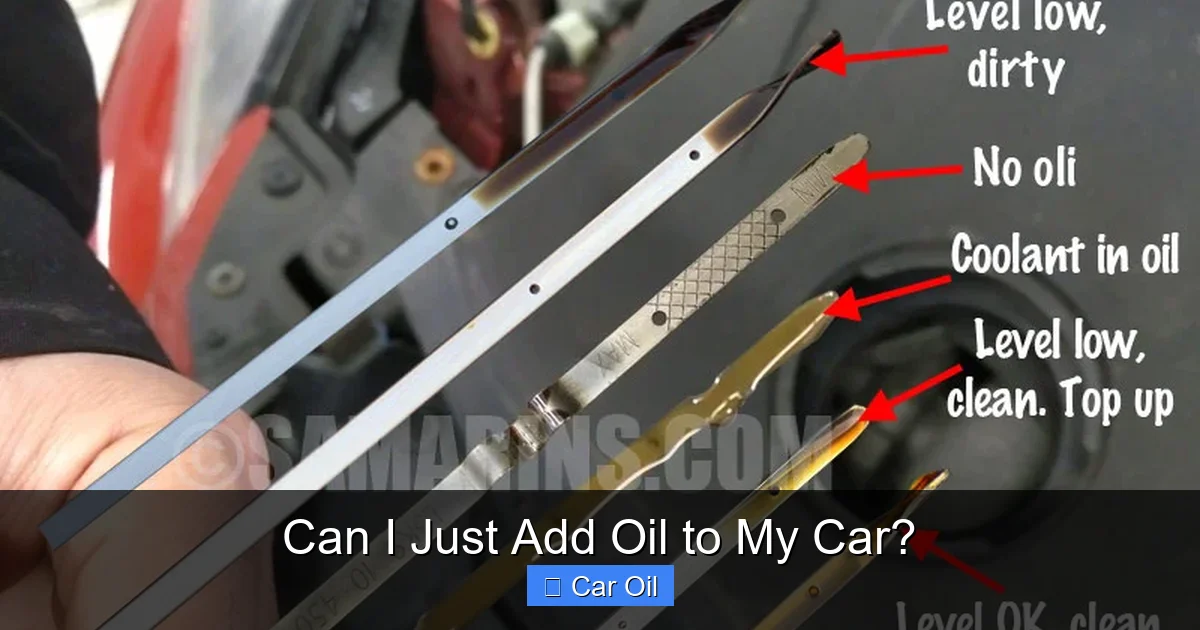
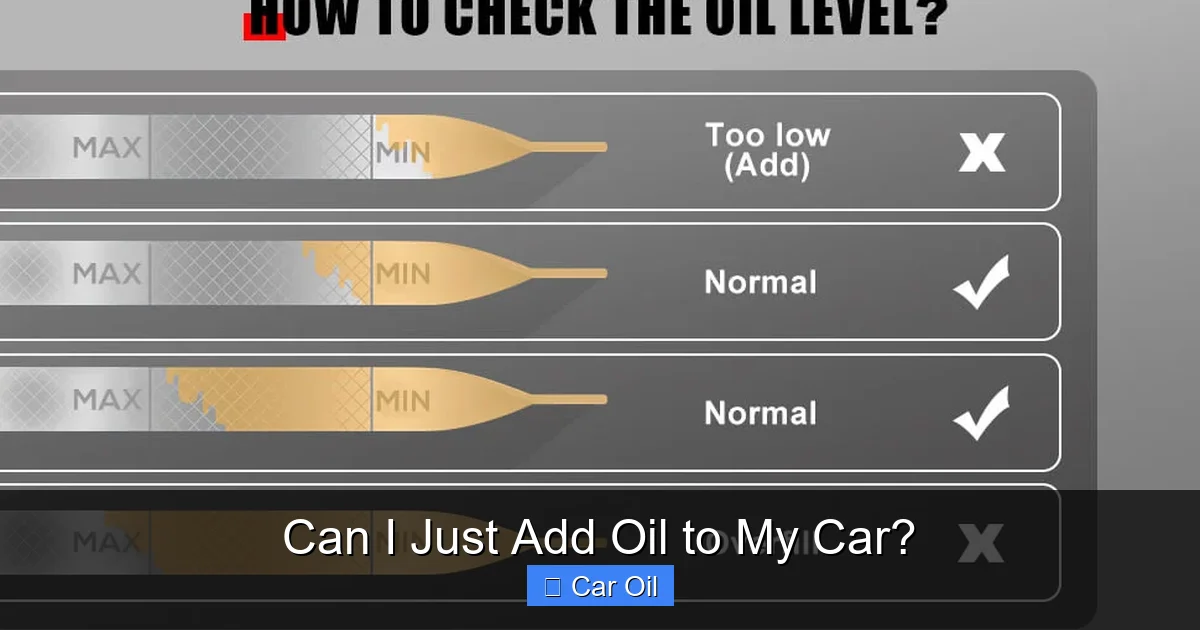
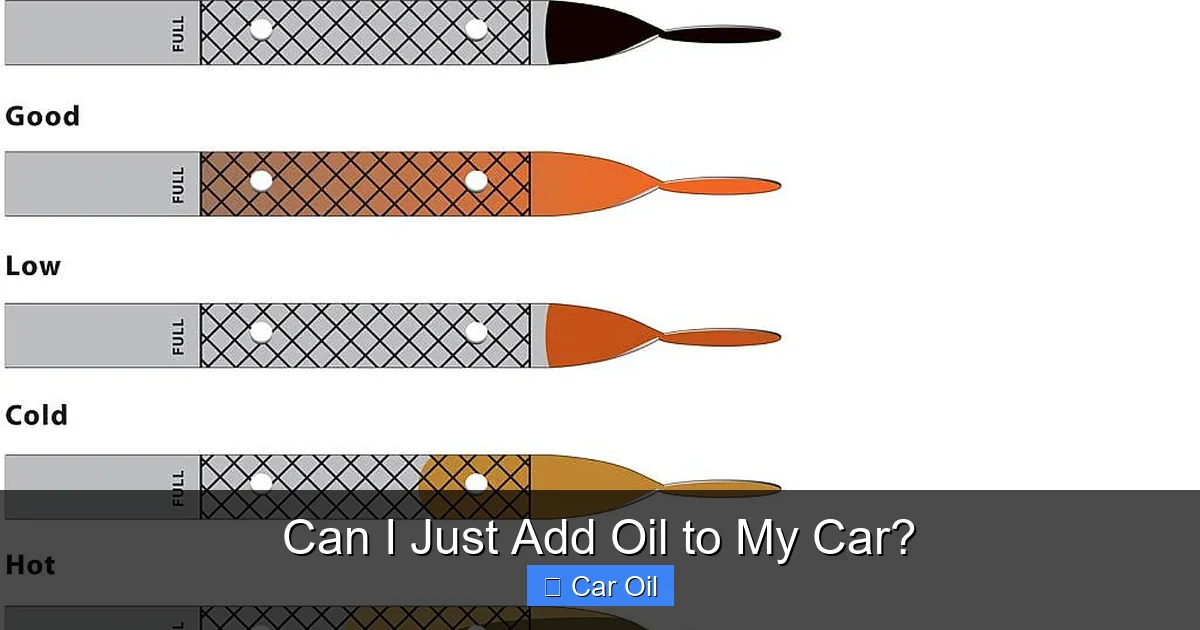
Now, locate the dipstick—usually a looped handle near the front of the engine bay, often yellow or orange. Pull it out, wipe it clean with a lint-free cloth, and reinsert it fully. Pull it out again and observe the level. The dipstick has two marks or a cross-hatched area: “MIN” or “L” (low) and “MAX” or “F” (full). Your oil level should be between these two marks, ideally closer to the full line but never above it. The key is to look at the oil on the *bottom edge* of the film on the dipstick. If it’s a clean break, that’s your level. A smeared or streaky film can be misleading. If the oil is below the MIN mark, you need to add some. If it’s on or above the MAX mark, you have too much oil—this is an urgent problem. For a deeper dive into the practicalities of checking and topping up, including common pitfalls, our article on adding oil until an oil change covers the step-by-step process in detail.
Step-by-Step: How to Add Oil Safely and Correctly
Assuming your check confirmed the oil is low but not bone dry, here is the proper procedure for adding oil. Rushing or skipping steps here is how mistakes happen.
Visual guide about Can I Just Add Oil to My Car?
Image source: freeonplate.com
Gather Your Supplies and Open the Hood
You’ll need the correct oil (more on choosing it in the next section), a clean funnel, and a rag. Open the hood and secure it with the prop rod. Locate the oil filler cap—it’s typically on top of the valve cover, often labeled with an oil can icon. Do not confuse this with the dipstick tube or any other reservoir. The coolant overflow tank, brake fluid reservoir, and power steering fluid bottle are all different. Putting oil in the wrong hole can be disastrous.
Add Oil Gradually and Recheck
Place your funnel in the filler opening. Start by adding about half a quart (or the smaller quantity if you have a 1-quart bottle and your car is just slightly low). Wait 30-60 seconds for the oil to settle down into the pan. Then, pull the dipstick, wipe it, reinsert, and check the level again. Repeat this process of adding a little at a time and rechecking. This is the only way to avoid overfilling. It’s far easier to add more oil than it is to remove excess. If you happen to add too much, our guide on what to do if you overfill engine oil outlines the immediate steps to take.
Final Steps and Cleanup
Once the oil level is perfectly between the MIN and MAX marks (ideally just below the MAX/F line), carefully remove the funnel. Wipe any spills from the filler cap and surrounding area with your rag. Securely replace the oil filler cap, ensuring it’s clicked or screwed on tightly. A loose cap can cause leaks and allow contaminants in. Close the hood. Start the engine and let it idle for about 30 seconds. Then, turn it off and wait another minute before doing a final dipstick check to confirm the level hasn’t dropped (which could indicate a serious leak) or risen (which could mean you overfilled slightly as oil circulated).
Choosing the Right Oil: Viscosity, Type, and Specifications Matter
This is the most critical part of the “can I add oil” question. The answer is a hard no if you don’t use the correct oil. Your engine is designed to operate with oil of a specific viscosity (thickness) and performance standard. Using the wrong oil can void your warranty and destroy your engine.
Visual guide about Can I Just Add Oil to My Car?
Image source: d2hucwwplm5rxi.cloudfront.net
Decoding the Oil Viscosity Code (e.g., 5W-30)
That code on the oil bottle isn’t random. “5W-30” means the oil has a winter viscosity rating of 5 (the “W” stands for winter) and a hot viscosity rating of 30. The first number indicates how easily the oil flows at cold temperatures. A lower number (like 0W or 5W) means it flows better in cold starts, protecting your engine faster. The second number indicates the oil’s thickness at normal operating temperature (around 100°C/212°F). A higher number means it’s thicker when hot. Your manufacturer specifies this based on engineering tolerances and operating conditions. Using a 10W-40 in an engine that calls for 0W-20, for example, can cause poor cold-start lubrication and increased drag, reducing fuel efficiency and potentially causing wear. Conversely, using a thinner oil than specified in a high-stress, high-temperature engine can lead to insufficient film strength and metal-to-metal contact.
Conventional, Synthetic, or Synthetic Blend?
Oil is also categorized by its base stock. Conventional oil is refined from crude. Synthetic oil is man-made from chemical compounds, offering superior performance, stability, and longevity. Synthetic blend is a mix. Your owner’s manual will specify if synthetic is required or recommended. Many modern vehicles, especially turbocharged engines, require synthetic oil. Using conventional oil in an engine that demands synthetic can lead to premature wear, sludge formation, and failure of components like turbochargers. It’s not just about brand; it’s about meeting the specification. Look for the API (American Petroleum Institute) “donut” seal and the specific service classification (like SP for gasoline engines). More importantly, look for the OEM specification, such as “Ford WSS-M2C947-A” or “BMW Longlife-01”. Using oil that meets the manufacturer’s exact specification is non-negotiable. If you’re ever in doubt, consulting your owner’s manual or a trusted guide on oil selection is the safest bet.
The Risks of Improper Oil Top-Ups: When “Just Adding Oil” Goes Wrong
Now we address the core of the question. “Can I just add oil?” Technically, yes. But “just adding oil” without attention to detail is a recipe for disaster. Here are the specific risks.
Overfilling: The Silent Engine Killer
This is the most immediate and dangerous risk of careless topping up. The oil pan has a limited air space. When you overfill, the crankshaft and connecting rods start to whip through the oil, aerating it. This creates a frothy, bubbly mixture of oil and air—essentially a foam. This foam cannot lubricate properly; it’s compressible and doesn’t form a stable film. The result is sudden and severe engine wear. Furthermore, the increased internal pressure can force oil past seals and gaskets, leading to leaks. In extreme cases, it can cause catastrophic failure of seals like the rear main seal, leading to a massive, expensive repair. If you suspect you’ve overfilled, do not start the engine. The oil must be drained to the correct level.
The Wrong Oil: A Slow-Motion Disaster
Using oil with the wrong viscosity can cause problems that might not show up for thousands of miles. Too thick when cold? Your engine suffers from dry starts, where critical parts aren’t lubricated for the first few seconds of operation. This causes accelerated wear on bearings, cam lobes, and piston rings. Too thin when hot? The oil film can rupture under load, again leading to metal contact. Furthermore, using an oil that lacks the correct additive package—especially the necessary levels of anti-wear additives like zinc and phosphorus—can lead to premature failure of flat-tappet camshafts and other sensitive components, a common issue in older engines or those using high-performance oils not suited for daily driving.
Mixing Different Oils: Is It Safe?
In an emergency, adding a different brand or type of oil (e.g., synthetic to conventional) is generally better than running low. Modern oils are all compatible to a degree. However, it’s not ideal. Different additive packages can sometimes interact unpredictably, potentially reducing effectiveness. The bigger issue is when you mix vastly different viscosity oils. Adding a quart of 10W-30 to an engine that requires 0W-20 will temporarily thicken the overall viscosity, especially when cold. While a single quart in a 4-5 quart system is a minor dilution, it’s still not best practice. The goal is always to use the exact specification called for. For more on the specifics of oil compatibility, our piece on synthetic blend versus full synthetic explores the differences and compatibilities in more depth.
Long-Term Care: Why Adding Oil Is Not a Maintenance Strategy
This is the most important conceptual shift. Topping up oil is an emergency response to a low level. It is not maintenance. Maintenance is a planned, comprehensive process.
The Difference Between Topping Up and Changing Oil
When you perform a full oil change, you:
- Drain out all the old, degraded, contaminant-filled oil.
- Replace the oil filter, which is trapping particles and has a limited capacity.
- Refill with fresh, clean oil that has a full complement of protective additives.
When you simply add oil, you are:
- Diluting the remaining old oil and its depleted additives.
- Leaving the old, clogged oil filter in place, which restricts flow and allows contaminants to circulate.
- Not addressing the root cause of why the oil is low.
Think of it like changing the water in a fish tank versus just adding fresh water to a dirty, algae-filled tank. The latter might keep the water level up, but the fish are still living in a toxic environment. Engine oil degrades from heat, shear forces, and contamination. Its additives are consumed. No amount of fresh oil added to old oil can reverse this chemical breakdown.
Diagnosing the Real Problem: Why Is My Oil Low?
If you find yourself needing to add oil between changes, your engine has a problem that needs diagnosis. Normal oil consumption varies by engine, but most modern engines use less than a quart between 3,000-5,000 mile changes. If you’re adding more than a quart every 1,000 miles, you have an issue. Possible causes include:
- External Leaks: Worn seals (valve cover, oil pan, rear main), loose drain plug, or a faulty oil filter.
- Internal Leaks: Worn piston rings or cylinder walls, leaking valve stem seals, or a faulty turbocharger seal. This is often accompanied by blueish smoke from the exhaust.
- Faulty PCV System: A clogged or malfunctioning Positive Crankcase Ventilation valve can cause excessive pressure that forces oil past seals.
Ignoring these issues and just adding oil is like ignoring a fever with aspirin. It treats the symptom but not the disease, which will worsen. A mechanic can perform a leak-down test, check for external leaks, and inspect the PCV system to find the source. Addressing the cause is far cheaper than an engine rebuild.
Practical Scenarios: When Topping Up Is (and Isn’t) Appropriate
Let’s bring this into the real world with some common situations.
The Occasional Minor Top-Up
Scenario: You check your oil during a long road trip and it’s 1/4 quart below the MIN line. The last oil change was 4,000 miles ago. Action: Yes, add the correct oil to bring it to the proper level. This is a normal, minor top-up. Note the mileage and keep an eye on the level. If it happens again before your scheduled change, mention it to your mechanic.
The Chronic Oil Eater
Scenario: Your car’s oil light comes on every 1,500 miles, requiring a full quart to top up. Action: This is not normal. Do not just keep adding oil. Have your vehicle diagnosed for excessive oil consumption immediately. Continuing to drive with low oil, even with top-ups, risks engine seizure. You must find and fix the leak or internal wear.
The “I Forgot to Change My Oil” Scenario
Scenario: Your oil change is 1,000 miles overdue, you check the level, and it’s fine. Can you just keep driving? No. The oil’s protective additives are likely depleted. Even if the level is correct, the oil is ineffective. You need to get an oil change as soon as possible. Adding oil here does nothing to solve the degradation problem.
The Complete Oil Starvation Emergency
Scenario: Your oil pressure light comes on, you pull over, shut off the engine, and check the dipstick. It’s completely dry. Action: If the engine was running with no oil pressure, internal damage has almost certainly occurred. Adding oil now may be too late. However, if the light came on because a sensor failed or a filter was installed incorrectly, adding oil and restarting might be okay. But if you heard knocking or grinding, do not restart. Have the car towed to a shop. The risk of a thrown rod or seized engine is extremely high. This is where knowing the severe consequences of driving with zero oil becomes a stark lesson.
Conclusion: Knowledge is Your Best Defense
So, can you just add oil to your car? The answer is yes, but only with the right knowledge, the correct oil, and the understanding that it is a temporary band-aid, not a cure. Your engine is a complex, high-precision machine that relies on a specific, clean lubricant to survive. Checking your oil regularly is one of the simplest and most important things you can do as a car owner. When you do find it low, take the time to do it correctly: use the right oil, add it slowly, and never overfill. But more importantly, see a low oil level as a diagnostic flag. It’s your car’s way of telling you something is wrong—a leak, a consumption issue, or simply that it’s time for a service. By respecting the process and prioritizing full, scheduled oil changes with a new filter, you protect your engine, your wallet, and your peace of mind on the road. Don’t just add oil; understand oil, and your car will reward you with years of reliable service.
Frequently Asked Questions
Can I add oil to my car when the engine is hot?
It’s best to check and add oil when the engine is warm but has been turned off for 5-10 minutes. This allows oil to drain back to the pan for an accurate reading. Adding oil to a scorching hot engine can lead to spills, burns, and an inaccurate dipstick reading as the oil expands. Let it cool slightly first.
What happens if I accidentally add the wrong oil to my car?
The severity depends on how wrong it is. Adding a different brand with the same viscosity and specification is usually fine. Adding a significantly different viscosity (like 10W-40 in a 0W-20 engine) can cause poor lubrication, especially during cold starts, and may lead to increased wear over time. If you realize the mistake quickly, have the oil changed. For a major error, consult a mechanic immediately.
How often is it normal to need to add oil between changes?
For a healthy engine in good condition, consuming less than a quart of oil every 3,000 to 5,000 miles is considered normal. If you need to add a quart or more every 1,000 miles or less, this indicates excessive oil consumption, which must be diagnosed by a professional to prevent serious engine damage.
How can I tell if I’ve overfilled the oil?
Signs of overfilled oil include: a dipstick reading above the MAX/F line, a rough running engine, excessive smoke from the exhaust (especially blueish-white), oil leaks from seals or the dipstick tube, and a strong oil smell. If you suspect overfilling, do not run the engine. The excess oil must be drained to the correct level.
Can I drive my car right after adding oil?
Yes, but only after you’ve securely replaced the oil filler cap, checked the level again with the dipstick, and ensured it’s within the safe range. Start the engine and let it idle for about 30 seconds, then turn it off and recheck the dipstick one final time to confirm the level is stable and hasn’t dropped (indicating a leak) or risen (indicating overfill).
Is adding oil the same as getting an oil change?
No, they are completely different. Adding oil (topping up) only addresses the oil level. An oil change involves draining all the old, degraded oil, replacing the oil filter, and refilling with fresh oil. Topping up does not remove contaminants, replace the filter, or restore the oil’s depleted additive package. Regular oil changes are essential for engine health.
