
How Much Is a 2007 Ford F-150 Worth?

The value of a 2007 Ford F-150 today ranges from $3,000 for a high-mileage, base model with issues to over $12,000 for a pristine, low-mileage top-trim truck. Its worth is primarily driven by mileage, overall condition, specific trim level, engine, and regional demand. To get an accurate price, you must compare similar trucks in your area on current sales platforms, not just rely on outdated guides.
Key Takeaways
- Price Range is Wide: Expect a broad spectrum from roughly $3,000 to $12,000+, depending entirely on the truck’s specific condition and equipment.
- Mileage is King: A truck with under 150,000 miles will command a significant premium over one with 250,000+ miles, all else being equal.
- Trim Level Matters Hugely: A basic XL work truck is worth far less than a luxurious Lariat or powerful Harley-Davidson edition with the same mileage.
- Condition Over All: A truck with no rust, a clean interior, and a solid maintenance history can be worth thousands more than a neglected example with the same miles.
- Location Influences Price: Trucks sell for more in rural areas and the South/Southwest where they are essential work vehicles, and for less in large urban markets.
- Private Party vs. Dealer: You will pay more at a dealership for a reconditioned truck with a warranty, but can find better deals privately with more risk.
- Do Your Homework: Always get a vehicle history report and have a trusted mechanic inspect any used F-150 before purchasing to avoid costly surprises.
[FEATURED_IMAGE_PLACEHOLDER]
📑 Table of Contents
- So, You’re Wondering What a 2007 Ford F-150 Is Really Worth?
- The Big Picture: Understanding the 2007 F-150 Value Spectrum
- What Truly Drives the Price? It’s Not Just the Odometer
- Where to Find Real, Honest Pricing Data
- A Practical Guide: How to Value YOUR Specific Truck
- The Salvage and Rebuilt Title Reality
- Final Thoughts: Is It a Good Buy?
So, You’re Wondering What a 2007 Ford F-150 Is Really Worth?
Let’s be honest. You’re not just asking for a number. You’re probably looking at a truck in your driveway, a listing online, or maybe you’re planning to sell your own. You want to know if it’s a fair deal, a smart buy, or if you’re holding onto a goldmine or a money pit. The 2007 Ford F-150 is a legend. It was the last of the eleventh generation, a truck so popular it became the best-selling vehicle in America for decades. But that was 17 years ago. Its value today isn’t about nostalgia; it’s about raw utility, survival, and the brutal math of depreciation. This guide will cut through the noise. We’ll talk about real-world prices, the tiny details that change a truck’s worth by thousands, and give you the tools to find the true number for your specific truck, in your specific town.
The Big Picture: Understanding the 2007 F-150 Value Spectrum
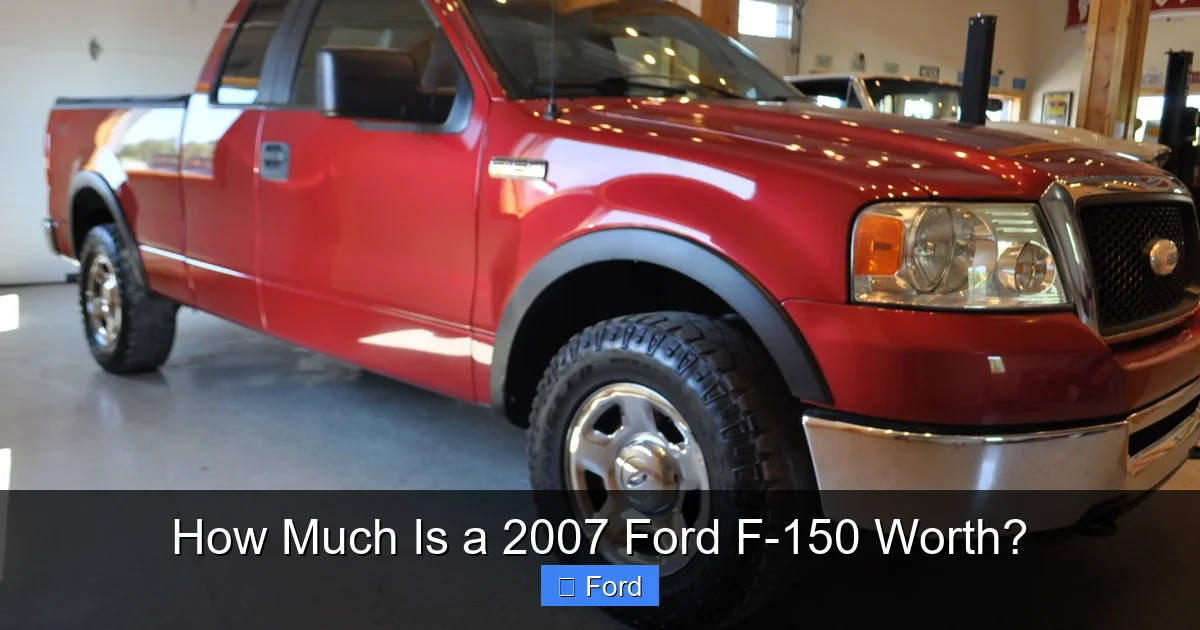
Before we dive into trims and engines, you need to understand the landscape. A 2007 F-150 is not a collector’s item yet. It’s a used workhorse. Its value is dictated by its remaining useful life, not its age. This means the price range is enormous. At the very bottom, you’ll find trucks with 300,000 miles, severe rust, salvage or rebuilt titles, and major mechanical issues. These are project trucks or parts donors, and they trade in the $1,500 to $4,000 range. At the very top, you’ll find exceptionally well-maintained, low-mileage (under 100,000 miles) examples from the top trim levels with clean histories. These can ask $10,000 to $15,000 in a hot market, though $8,000 to $12,000 is more common for a truly outstanding specimen.
Visual guide about How Much Is a 2007 Ford F-150 Worth?
Image source: biscayneauto.com
The “Average” Truck: A Starting Point
For a typical 2007 F-150—say a mid-trim XLT or STX with a V8 engine, around 180,000 miles, and normal wear and tear for its age—you’re looking at a private party value between $4,500 and $7,500. This is the meat of the market. It’s where most transactions happen. Dealerships will often ask $1,500 to $2,500 more for a similar truck because they’ve reconditioned it, may offer a limited warranty, and provide financing. Remember, a dealership’s price is a “retail” number; a private sale is a “wholesale” number. Your goal is to figure out where your truck falls on this spectrum. If you want to see how other 2007 models from different brands depreciated, you can check out our look at the 2007 Dodge Nitro’s value for a comparison point on a different kind of utility vehicle from the same year.
What Truly Drives the Price? It’s Not Just the Odometer
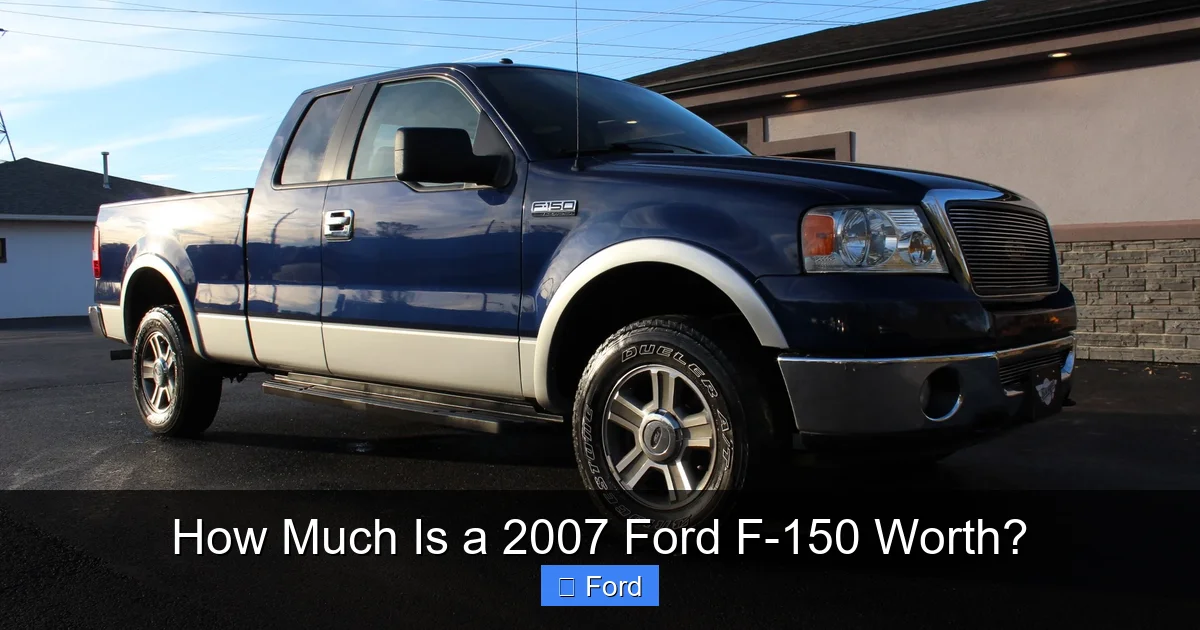
Everyone looks at mileage first. It’s the easiest number to see. But it’s only one piece of the puzzle. A 2007 F-150 with 200,000 miles that has meticulous service records, no rust, and a pristine interior is a better buy—and worth more—than a 150,000-mile truck with a mysterious engine knock, a torn headliner, and a history of neglected maintenance. Let’s break down the key factors, in order of importance.
Visual guide about How Much Is a 2007 Ford F-150 Worth?
Image source: biscayneauto.com
1. Condition, Condition, Condition
This is the #1 value driver. We’re talking about the truck’s overall health and appearance.
- Mechanical: Does the engine run smoothly? Any ticks, knocks, or smoke? How is the transmission? The 4R70E 4-speed automatic in these trucks is robust but can wear out. A transmission rebuild costs $3,000+. Rust on the frame or cab mounts is a serious structural red flag. Buyer beware.
- Body & Rust: The 11th gen F-150 is notorious for rust. Check the cab corners, rocker panels, bed sides, and especially the frame behind the rear wheels. Surface rust is one thing; perforated, flaky rust is another. A truck without significant rust in these areas is worth a premium.
- Interior: Is the cloth on the seats torn? Is the plastic cracked? Does the dash have that greasy, worn look? Does everything—AC, heater, windows, locks—work? A clean, complete, functional interior adds major value.
Pro Tip: Walk around the truck and look for uneven panel gaps. This can indicate prior accident damage, which hurts value.
2. The Right Engine and Configuration
The 2007 F-150 came with several engine options, and they are not equal in value.
- 4.6L Triton V8 (2-valve): The base engine. It’s reliable but underpowered for many. Trucks with this engine are the least valuable.
- 5.4L Triton V8 (3-valve): The most common and sought-after engine for this year. It has good power and torque. However, it has known issues with cam phasers (a ticking noise) and spark plug problems. A well-maintained 5.4L is worth more than a 4.6L.
- 5.4L supercharged (SVT): Found only in the Lightning and some special editions. Very rare and valuable to the right buyer.
- Transmission: The 4-speed automatic is standard. A 5-speed manual was available in some regular cab models. Manuals are less common and can be a polarizing feature for buyers.
3. Trim Level: From Work Truck to Luxo-Rig
This is the second biggest factor after condition. The 2007 F-150 came in a dizzying array of trims. Here’s a simplified hierarchy from least to most valuable:
- XL: The bare-bones work truck. Vinyl seats, basic AM/FM radio, steel wheels. Lowest value.
- STX: A step up. Adds alloy wheels, cloth seats, and some cosmetic upgrades. Still very basic.
- XLT: The ” mainstream” model. Cruise control, power windows/locks, better audio, and more comfort features. This is the most common and holds value well.
- FX4: The off-road package. Adds skid plates, off-road tuned suspension, and badging. Desirable for its capability, adds $500-$1,500 to value over a comparable XLT.
- Lariat: The luxury king. Leather seats, heated/cooled seats (in some), woodgrain trim, upgraded audio, and every convenience feature. Commands the highest prices in the regular lineup.
- Harley-Davidson Edition: A special, limited-production model with unique black/gray paint, badging, and premium audio. Highly sought after by collectors and fans.
- King Ranch & Platinum: These were introduced or became more prominent in later years. A true 2007 Platinum is rare and very valuable.
A Lariat with the 5.4L and a clean history can easily be worth $3,000-$5,000 more than an XL with the same mileage and engine.
4. Cab and Bed Size
This is pure supply and demand.
- Regular Cab (2-door): Shortest bed (6.5 ft). Less desirable for most buyers who need space. Lowest value.
- SuperCab (2+2 doors, small rear doors): The “extended cab.” Has a small rear seating area and a longer bed (6.5 or 8 ft). The 8-foot bed version is highly desirable for work. A SuperCab with the long bed is often worth more than a SuperCrew with the short bed.
- SuperCrew (4 full doors): The family-friendly option. Shorter bed (5.5 ft). Highly desirable for those who need passenger space. Value is high, but a trade-off is made for bed length.
In short: the most valuable configurations are usually SuperCab/Long Bed or SuperCrew/Short Bed with a high trim level.
5. Regional Demand and Seasonality
You cannot ignore geography. In Texas, Oklahoma, and the rural Midwest, a clean, capable 4×4 F-150 is worth its weight in gold. Prices are 10-20% higher than in New York City or San Francisco. In northern states, 4×4 is non-negotiable in winter, adding value. In the sunbelt, 2WD is fine and might be preferred for slightly better fuel economy. Also, prices tend to be higher in spring and summer when people are moving, doing projects, and thinking about trucks. In winter, the market cools a bit.
Where to Find Real, Honest Pricing Data
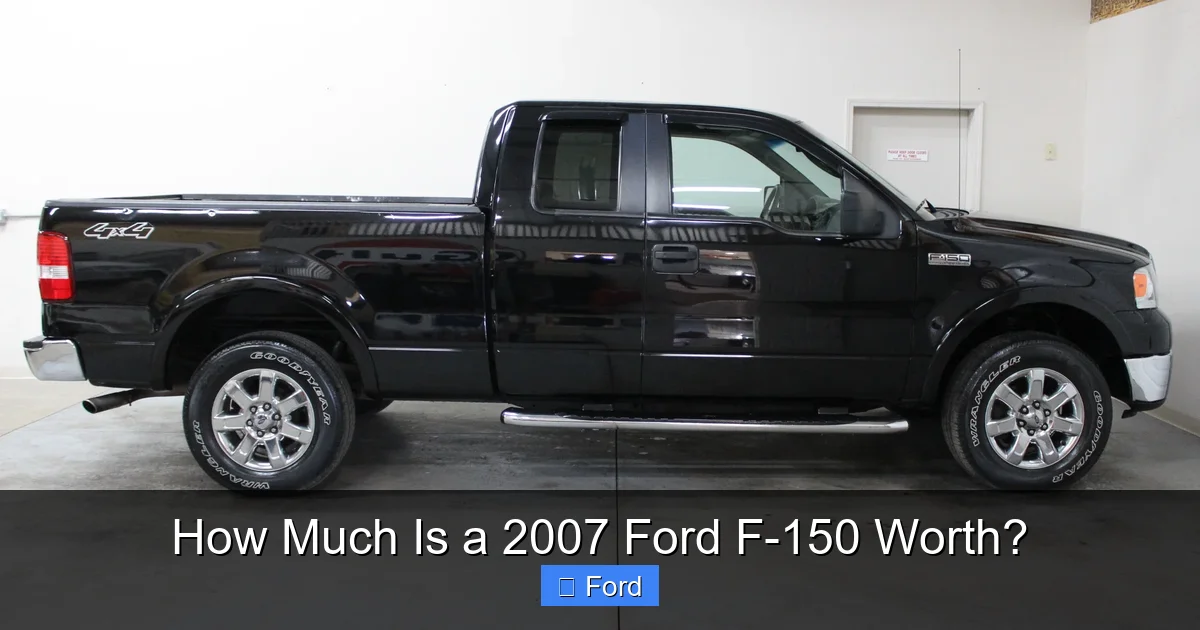
Guides like Kelley Blue Book (KBB) and NADA are great for a ballpark. But they are national averages and often lag the real market by weeks. For a 2007 model, you need to see what’s actually selling.
Visual guide about How Much Is a 2007 Ford F-150 Worth?
Image source: biscayneauto.com
Your Primary Tool: Completed Listings on eBay Motors
This is the single best free tool for used truck valuation. Go to eBay Motors, search “2007 Ford F-150,” and then, most importantly, click the “Sold Items” or “Completed Items” filter. This shows you what people actually paid, not what sellers are asking. You can filter by region, trim, mileage, and engine. Look at 10-20 recent sales (within 3 months) of trucks that match your truck’s configuration. The median of those sale prices is your most accurate number.
Secondary Tools: Facebook Marketplace, Craigslist, and Dealership Inventory
These show “asking” prices.
- Facebook Marketplace: The dominant platform for private party sales. Search your local area and a 200-mile radius. Be realistic—many listings are overpriced and sit for months. Look at the ones that have been posted for a while; they often come down in price.
- Craigslist: Still used heavily in many rural areas. Same rules apply.
- Dealership Websites: See what trucks like yours are listed for. Remember, their prices are inflated for the reconditioning, warranty, and convenience they provide.
A Practical Guide: How to Value YOUR Specific Truck
Let’s put it all together in a step-by-step process.
Step 1: Identify Your Truck’s Exact Specs
Find the door jamb sticker. It will list:
- Cab configuration (Regular, SuperCab, SuperCrew)
- Bed length
- Engine size
- Axle ratio (important for towing/hauling)
- GVWR (Gross Vehicle Weight Rating)
Also, note the trim level (XL, XLT, etc.) and any major packages (FX4, Lariat package, etc.).
Step 2: Be Brutally Honest About Condition
Use this checklist:
- Any rust through on the frame or cab?
- Any check engine lights? Any known mechanical issues?
- Is the interior complete and clean?
- Do all electrical features work?
- What is the maintenance history? Do you have receipts?
- Tire tread depth?
Assign a condition: Excellent (like-new), Good (normal wear, no major issues), Fair (some issues, needs work soon), or Poor (major problems, high rust).
Step 3: Compare and Adjust
Find 5-10 sold/comparable trucks online (using the eBay method). Write down their prices. Now, adjust.
- Is your truck 20,000 miles lower than the average? Add $1,000-$1,500.
- Is it a Lariat instead of an XLT? Add $2,000-$3,000.
- Does it have significant rust the others don’t? Subtract $1,000-$2,000.
- Does it need a transmission? Subtract $3,000+.
This adjusted number is your realistic private party value.
The Salvage and Rebuilt Title Reality
If your 2007 F-150 has a salvage or rebuilt title, its value is drastically lower—typically 50-65% of the value of an identical truck with a clean title. This is because:
- It is very difficult to finance.
- Insurance can be more expensive or limited.
- Resale is very hard, as most buyers avoid them.
- Structural integrity may be compromised.
The exact discount depends on the reason for the salvage (flood, accident, theft recovery). A truck rebuilt from a minor accident with excellent documentation may hold more value than one with a “theft recovery” or “flood” brand. For more on how severely a title brand can affect value, you can read about how we price scrap and salvage vehicles, as the principles of diminished value due to title status are similar across all makes.
Final Thoughts: Is It a Good Buy?
A 2007 Ford F-150 can be an outstanding buy for the right person. If you need a simple, rugged, repairable truck for work or basic transportation, and you find one with a clean title, no major rust, and a straight 5.4L V8 for $5,000-$7,000, it’s a solid deal. You must budget $1,000-$2,000 immediately for brakes, tires, fluids, and any deferred maintenance. These trucks are not cheap to maintain if neglected.
If you are looking for a reliable, trouble-free daily driver with modern features and safety, a 17-year-old truck is not for you. The fuel economy is poor (12-15 mpg typical), the ride is truck-like, and safety is dated. But if you need a tool, not a toy, and understand its needs, a well-priced 2007 F-150 can be the most honest, capable vehicle you’ll ever own. Its value is in its capability and simplicity, not its luxury or refinement.
Frequently Asked Questions
What is the absolute lowest I should pay for a running 2007 Ford F-150?
For a running, driving truck with a clean title and no major safety issues (like crippling frame rust), you should not pay less than $2,500. Anything below that usually has a hidden, expensive problem or a salvage title. Be prepared to spend at least $1,000 on immediate repairs after purchase.
What are the most common and expensive problems to look out for?
The 5.4L 3-valve V8 can suffer from cam phaser wear (a ticking noise that leads to engine failure) and expensive spark plug issues (they can break off in the head). The 4-speed transmission is old and may be on its last legs. Rust in the cab corners and frame is a major structural concern. Always get a pre-purchase inspection.
Is the 4×4 or 2WD version more valuable?
In most of the country, especially in regions with snow or where trucks are used for towing/hauling, the 4×4 version is worth $1,000 to $2,500 more than an identical 2WD model. In warm, flat, urban areas, the difference is smaller or non-existent.
Should I buy from a private party or a dealership?
For a truck this old and inexpensive, a private party is almost always the better value. You avoid dealer markup and can often find motivated sellers. The downside is no warranty and “as-is” condition. A dealership will charge more but may provide a limited warranty (e.g., 30 days/1,000 miles) and have reconditioned the truck. For a novice buyer, the small extra cost for a dealer’s peace of mind might be worth it.
What is a fair price for a 2007 F-150 Lariat with 180,000 miles?
Based on current market data for a clean, well-maintained example with the 5.4L V8 and a functional interior/exterior, a fair private party price would be between $6,500 and $8,500. A dealer would ask $8,500 to $10,500. Adjust up for lower miles or down for any rust, mechanical issues, or interior wear.
Can I still get parts and service for a 2007 F-150 easily?
Absolutely. This is one of the F-150’s greatest strengths. As the best-selling vehicle for decades, parts are abundant and cheap at auto parts stores, junkyards, and online. Any mechanic, from a national chain to a backyard garage, knows these trucks inside and out. Simple repairs are very affordable, which helps maintain its long-term value.
