
What Kind of Gas Does Infiniti Take

Most Infiniti vehicles require premium unleaded gasoline with an octane rating of 91 or higher to meet their high-performance engineering specifications. Using lower-octane fuel can cause engine knock, reduce performance, and potentially trigger check engine lights. Always verify your specific model’s requirement in the owner’s manual or gas door sticker, as some older or certain non-turbo models may have different needs.
Key Takeaways
- Premium Fuel is Standard: The vast majority of modern Infiniti models, especially those with turbocharged or V6/V8 engines, mandate premium unleaded fuel (91 octane or higher) for optimal performance and longevity.
- Check Your Specific Model: Requirements can vary. Always confirm by looking at the sticker inside your fuel filler door or consulting your owner’s manual, as a few base models or older vehicles might differ.
- Regular Gas Can Cause Damage: Using 87 octane (regular) in an engine designed for premium can lead to persistent engine knock, which over time can harm pistons, rods, and other internal components.
- “Premium Required” vs. “Premium Recommended”: Understand the difference. “Required” means you must use premium. “Recommended” means you should for best performance, but the car has knock sensors to protect itself if you occasionally use regular.
- No Benefit from Higher-Than-Required Octane: Using 93 or 94 octane in a car that calls for 91 provides no performance or efficiency benefit. Octane ratings measure resistance to knock, not energy content.
- Top Tier Gasoline is a Plus: Regardless of octane, choose fuel from Top Tier retailers (like Shell, Chevron, Exxon). Their detergents help keep Infiniti’s precise fuel injectors and intake valves clean.
- For Related Maintenance Queries: Just as fuel quality is critical, using the correct oil for your specific vehicle is equally vital for protecting your investment.
📑 Table of Contents
- Introduction: The Premium Question for Infiniti Owners
- Understanding Octane Ratings: It’s All About Knock Resistance
- Infiniti’s Official Stance: What the Manufacturer Says
- What Happens If You Use Regular Gas in a Premium-Required Infiniti?
- Model-by-Model Breakdown: Your Infiniti’s Specific Need
- The Premium vs. Regular Debate: Is It Ever Okay to Skip Premium?
- Practical Tips for Infiniti Owners: Fueling for Success
- Conclusion: Fuel is Part of the Infiniti Experience
Introduction: The Premium Question for Infiniti Owners
So, you’ve got the keys to an Infiniti. That sleek, powerful machine represents Nissan’s luxury division, a brand built on the promise of exhilarating performance, refined engineering, and a silent, composed ride. But there’s one question that nags at every new Infiniti owner at the pump: what kind of gas does Infiniti take? It’s a simple question with a critically important answer. Unlike many mainstream economy cars that happily run on regular unleaded, Infiniti’s performance-oriented DNA almost always points to one clear answer: premium gasoline.
This isn’t just about getting the most out of your 0-60 time; it’s about protecting a complex, high-compression engine designed with tight tolerances. Putting the wrong fuel in isn’t just a minor mistake—it’s a direct contradiction to the engineering principles that make your Infiniti drive like an Infiniti. In this ultimate guide, we’ll cut through the confusion, decode the octane ratings, explain why Infiniti is so insistent on premium, and give you the definitive answers for your specific model. Whether you drive a Q50, QX60, or a vintage G35, this is your fuel manual.
Understanding Octane Ratings: It’s All About Knock Resistance
What Does “Octane” Actually Mean?
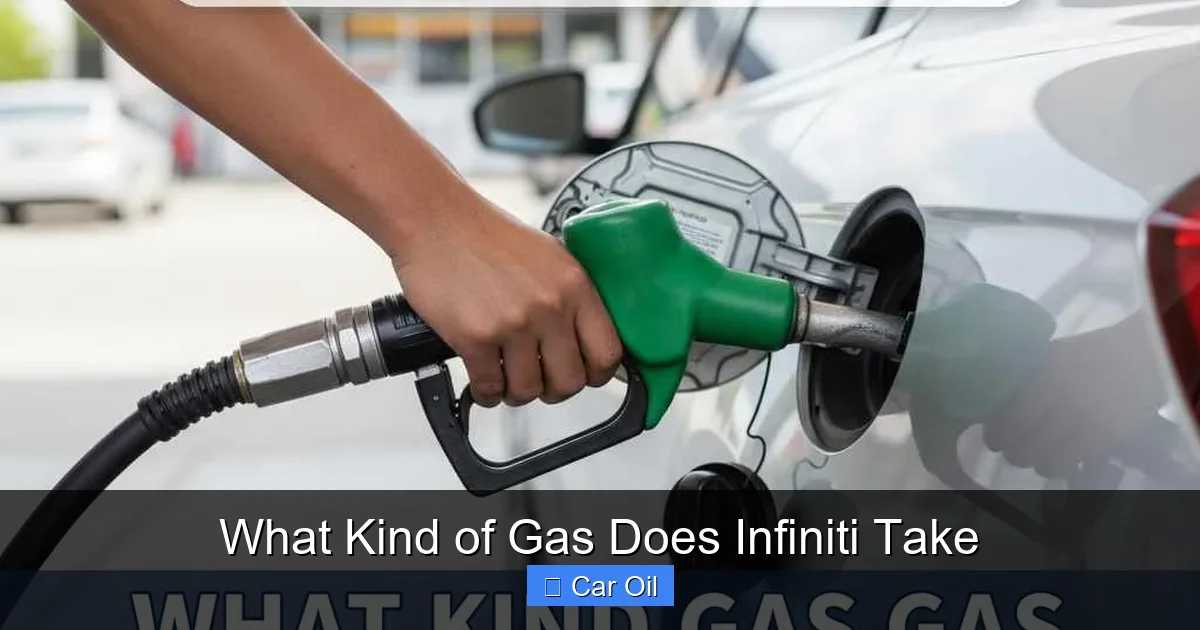
Before we dive into Infiniti’s requirements, we need a quick chemistry lesson. Octane rating is not a measure of a fuel’s power or energy content. All gasoline has roughly the same amount of energy. Instead, the octane number measures a fuel’s resistance to “knock” or “pinging.”
Visual guide about What Kind of Gas Does Infiniti Take
Image source: cdn.thedailyautomotive.com
Engine knock is an uncontrolled, explosive combustion event. In a properly running engine, the air/fuel mixture is ignited by the spark plug at a precise moment. But under high pressure and heat (common in turbocharged or high-compression engines), the mixture can spontaneously ignite from the heat and pressure alone, before the spark plug fires. This creates a secondary flame front that collides with the main one, causing a sharp knocking or pinging sound. This is metal-on-metal detonation, and it’s incredibly damaging.
Higher octane fuel resists this spontaneous ignition longer, allowing the engine to run at higher compression ratios or more boost (in turbos) without knocking. This is why performance and luxury brands like Infiniti, BMW, and Mercedes-Benz specify premium fuel—their engines are designed to extract maximum power and efficiency from this controlled, knock-free combustion.
The Numbers You See at the Pump: 87, 89, 91, 93
In the United States, you’ll typically see three grades:
- Regular (87 AKI): The lowest octane, suitable for most standard economy engines.
- Mid-Grade (89-90 AKI): A blend, often used as a “premium” in some regions or for engines that recommend mid-grade.
- Premium (91-94 AKI): The highest octane, required for high-performance and many turbocharged engines.
AKI stands for Anti-Knock Index, which is the average of the Research Octane Number (RON) and Motor Octane Number (MON). Europe and other regions use RON, so their “95 RON” is roughly equivalent to US “91 AKI.” Always use the AKI number (the one displayed on the pump) as your guide.
Infiniti’s Official Stance: What the Manufacturer Says
The Overwhelming Majority: “Premium Fuel Required”
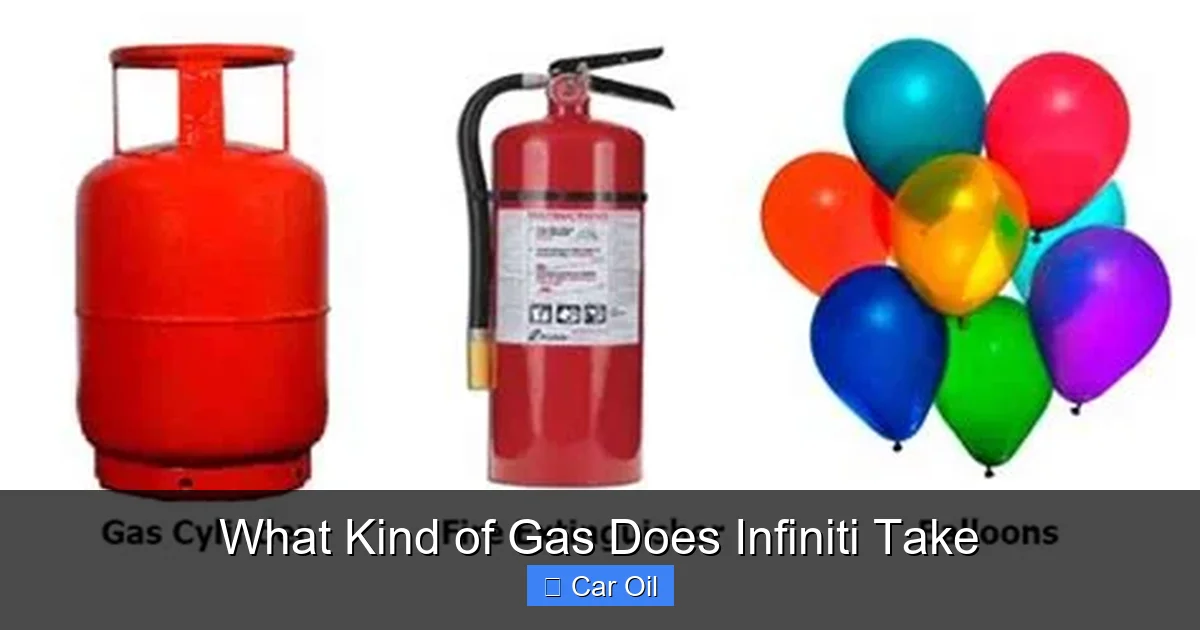
Let’s be blunt: if your Infiniti is from the 2000s onward and has a V6, V8, or any turbocharged 4-cylinder engine, it almost certainly requires premium unleaded gasoline with a minimum octane rating of 91. This includes the entire current lineup:
Visual guide about What Kind of Gas Does Infiniti Take
Image source: autozonic.com
- Q50 / Q60: All models, including the 3.0t V6 twin-turbo, require 91 octane.
- QX50: The variable compression VC-Turbo engine is a masterpiece of engineering that requires premium fuel to manage its unique compression ratios without knock.
- QX55 / QX60: The 2.0L turbo in the QX60 and the 2.0L turbo in the QX55 both require premium. The older QX60’s 3.5L V6 also required premium.
- QX70 / QX80: Their V6 and V8 engines are designed for premium.
- G37 / Q40, G35, M35/45/56, FX35/45, EX35/37, JX35: All these older models with their 3.5L, 3.7L, 5.6L, and V6 engines are unequivocally premium required.
The language in the owner’s manual will be clear: “Use premium unleaded gasoline with an octane rating of at least 91 AKI (95 RON).” You’ll also find this prominently stated on a sticker inside the fuel filler door. Ignoring this is not a suggestion; it’s a directive from the engineers who built your engine.
The Rare Exceptions: “Premium Recommended” or Regular Compatible
There are a few, very specific exceptions, primarily in the very base trim levels of older, naturally aspirated 4-cylinder models. For example:
- Some early 2000s Infiniti G20 models (with the low-output SR20DE engine) were designed for regular unleaded.
- Certain base-model, non-turbo 4-cylinder vehicles in specific markets might have a “Premium Recommended” rating, meaning the engine has knock sensors and can adjust timing to run on 87 octane without immediate damage, but with significantly reduced performance and fuel economy.
The key takeaway: If your sticker or manual says “Premium Required,” you have zero room for error. If it says “Premium Recommended,” you can use regular in a pinch, but you should avoid making a habit of it. When in doubt, default to premium. It’s the safer, smarter choice for your Infiniti.
What Happens If You Use Regular Gas in a Premium-Required Infiniti?
The Immediate Symptoms: Knocking and Pinging
The first and most obvious sign you’ve made a mistake is the sound. You’ll hear a metallic rattling or pinging noise from the engine bay, especially under acceleration, climbing hills, or under load. This is engine knock. Modern Infiniti engines are equipped with sophisticated knock sensors and engine control units (ECUs). When they detect knock, they will automatically retard the ignition timing to protect the engine.
Visual guide about What Kind of Gas Does Infiniti Take
Image source: yardtroop.com
While this saves your engine from destruction, it comes at a severe cost: you lose power, you get worse fuel economy, and your throttle response feels sluggish and unresponsive. The car feels like it’s choking. You’ve essentially neutered the performance your Infiniti was designed to deliver. The check engine light may also illuminate, storing a diagnostic trouble code (like P0325 – Knock Sensor Malfunction) to alert you to the problem.
The Long-Term Risks: Carbon Buildup and Potential Damage
Occasional, accidental use of regular gas followed by a return to premium is unlikely to cause catastrophic harm, thanks to those protective knock sensors. However, making a habit of it is a different story. Constantly running with retarded timing can lead to incomplete combustion, which increases the production of carbon deposits on piston tops, cylinder heads, and spark plugs. This carbon buildup can further increase compression ratios locally, making the engine more prone to knock even when you go back to premium, creating a vicious cycle.
In extreme, prolonged cases of severe knock (often from a faulty sensor or persistent low-quality fuel), the shockwaves can literally damage piston rings, bearings, and connecting rods. This is a multi-thousand-dollar engine rebuild. The cost of a tank of premium is microscopic insurance against this kind of risk. For owners concerned about long-term health, using the correct fuel is non-negotiable, much like using the right oil grade for a Nissan Rogue is for its longevity.
Model-by-Model Breakdown: Your Infiniti’s Specific Need
Current Generation (2020+)
Every single model in Infiniti’s current lineup is premium-required. This is a hard and fast rule. The push towards downsizing and turbocharging (like in the QX50’s VC-Turbo and QX60’s 2.0T) makes premium fuel an absolute necessity due to the higher cylinder pressures. There are no base-model 4-cylinder exceptions in the US market for this generation.
Previous Generations (2010-2019)
This era saw the introduction of several turbocharged engines (like the 2.0L in the Q50 and QX60) and the continued use of powerful V6 and V8 engines. The rule remains: any model with a “t” designation (2.0t, 3.0t) or a V6/V8 requires 91 octane. The only potential gray areas were in the base, naturally aspirated 4-cylinder versions of models like the Q50 (pre-2020) or QX50 (pre-2019 non-turbo). Even these often had a “Premium Recommended” rating. You must check your door sticker.
Classic & Older Models (Pre-2010)
Models like the legendary G35/G37 coupe and sedan, the M35/45, the FX35/45, and the EX35/37 all have high-compression V6 engines (VQ35HR, VQ37VHR) that are famously premium-required. The V8-powered M56 and QX56 are even more demanding. The Infiniti G20 (with the SR20 engine) is the most notable exception, as it was designed for regular unleaded. For any older Infiniti, the safest assumption is premium required unless you have definitive proof otherwise from the manufacturer’s label.
The Premium vs. Regular Debate: Is It Ever Okay to Skip Premium?
Understanding “Premium Recommended”
If your owner’s manual or fuel door says “Premium Recommended” instead of “Premium Required,” your engine is equipped with more advanced knock control. It can detect and compensate for lower octane fuel by adjusting timing. In this scenario:
- For Daily Driving: You will likely get away with using regular unleaded (87 octane) without causing immediate damage. The car will run, and the knock sensors will do their job.
- The Performance & Economy Penalty: You will notice a tangible loss of power and a drop in fuel economy, often by 1-3 MPG. The smooth, responsive feel of your Infiniti will be diminished.
- Long-Term Considerations: While not as risky as in a “Required” engine, consistently running on the minimum octane can still lead to increased carbon buildup over many years and miles.
Our strong advice? If you have a “Recommended” car and are on a tight budget, using regular occasionally is acceptable. But for the vast majority of driving, especially when you want to enjoy your car, use premium. The small extra cost per gallon is worth the retained performance and peace of mind.
Never Use “Regular” in a “Premium Required” Car
This bears repeating. The “Required” designation means the engine’s calibration and hardware are on the edge of what 91 octane can handle. Using 87 octane forces the ECU into a constant protective mode. It’s not designed for that. You are asking the car to operate outside its safe operating parameters. Think of it like putting 5W-20 oil in an engine that calls for 0W-40—it might work for a while, but it’s fundamentally wrong and increases wear. For performance cars like the Toyota Corolla (which is typically regular), the requirements are different, highlighting how Infiniti’s engineering is in a separate class.
Practical Tips for Infiniti Owners: Fueling for Success
Stick to Top Tier Gas Stations
Octane rating is just one part of the equation. The detergent quality of the gasoline is equally important for keeping your direct fuel injection (most modern Infinitis) or port injection system clean. Infiniti engines have very precise fuel injectors with tiny orifices. Deposits from low-quality fuel can clog them, causing rough idle, misfires, and poor performance.
Always choose fuel from a Top Tier retailer. Top Tier is a standard developed by automakers (including Nissan/Infiniti) that mandates higher levels of detergent additives than the federal minimum. Brands like Shell, Chevron, Exxon/Mobil, Costco, and many major regional brands meet this standard. The price difference is negligible, and the protection for your fuel system is invaluable.
Don’t Chase Octane; Follow the Manual
There’s a myth that putting 93 octane in a car that needs 91 will give you more power. This is false. Octane is not a power additive; it’s a knock suppressor. If your engine is tuned for 91, using 93 won’t make it run any better or faster. It’s simply overkill. Save your money and use exactly what’s specified. Conversely, never assume a higher-performance Infiniti (like a Q60 Red Sport 400) needs something *above* 91. It does not. It needs exactly 91 or higher. 93 is fine, but not necessary.
What to Do If You Accidentally Put Regular in a Premium-Required Infiniti
We’ve all been distracted at the pump. If you realize your mistake immediately before starting the car, don’t start it. Have the tank siphoned and refilled with premium. If you’ve already started and are hearing knock:
- Drive Gently: Avoid hard acceleration, high RPMs, and hills. Keep the engine speed low and steady.
- Refill with Premium ASAP: As soon as you can, fill the tank with the correct premium fuel. You don’t need to drain it. The new premium will mix with the regular and raise the overall octane level of the tank’s contents.
- Use an Octane Booster: If you’re far from a gas station, an over-the-counter octane booster (like Seafoam or Lucas) can help raise the tank’s octane rating temporarily until you can fill up with premium.
- Monitor: The knock should subside once you’ve added enough premium. If the check engine light comes on or the knock persists after refueling with premium, have a mechanic read the codes. The knock sensor or other components may need inspection.
Conclusion: Fuel is Part of the Infiniti Experience
The question “what kind of gas does Infiniti take?” has a clear, unwavering answer for nearly every vehicle wearing the Infiniti badge: premium unleaded, 91 octane or higher. This is not a suggestion from the manufacturer to extract a few extra horsepower; it’s a fundamental requirement dictated by the high-compression ratios, turbocharger boost pressures, and sophisticated engine management systems that define Infiniti’s performance character.
Choosing the correct fuel is one of the simplest and most cost-effective forms of maintenance you can perform. It protects your engine from damaging knock, ensures you get the responsive, powerful driving experience you paid for, and helps maintain optimal fuel economy. While the price per gallon is higher, the cost of a single tank of premium is trivial compared to the potential cost of repairing premature engine wear. So, the next time you pull up to the pump, remember: for your Infiniti, premium isn’t a luxury—it’s a necessity. Treat your car with the fuel it was designed for, and it will reward you with years of smooth, powerful, and reliable motoring.
Frequently Asked Questions
Can I put regular gas in my Infiniti if it says “premium recommended”?
Yes, you can. The “recommended” designation means the engine has knock sensors and can adjust timing to run safely on 87 octane. However, you will experience a noticeable drop in power and fuel economy. For best performance and efficiency, you should still use premium 91 octane fuel.
Will using lower octane gas void my Infiniti’s warranty?
If your owner’s manual clearly states “Premium Fuel Required” and you consistently use regular unleaded, causing engine damage, the manufacturer could potentially deny a warranty claim for related engine repairs. Using the specified fuel is part of following the maintenance requirements in your manual.
Is it okay to mix regular and premium gas in my Infiniti?
Yes, mixing is fine and happens naturally when you refuel. If you accidentally put regular in a premium-required car, simply refilling with premium will mix and raise the overall octane level of the tank. The key is to avoid running on a tank with a low average octane for extended periods.
Does a higher octane rating (like 93) make my Infiniti faster?
No. Octane rating measures resistance to knock, not energy content. If your Infiniti is designed for 91 octane, using 93 will not provide more power or better mileage. It simply provides a larger safety margin against knock, which you don’t need. Use the minimum required, 91.
What happens if I ignore the engine knock from using bad gas?
Ignoring persistent knock is dangerous. While modern engines have knock sensors to prevent immediate destruction, prolonged operation with knock will cause the ECU to severely retard timing, killing performance and fuel economy. More importantly, the shockwaves can over time damage pistons, rings, and bearings, leading to very expensive repairs.
Are all gas stations’ “premium” fuels the same quality?
No. While all must meet the minimum octane rating (91 AKI), the detergent additive levels vary widely. Always choose fuel from a Top Tier retailer (like Shell, Chevron, Exxon, Costco). Top Tier gasoline has a higher, standardized level of cleaning agents that are essential for keeping your Infiniti’s fuel injectors and valves free of deposits, which is just as important as octane.
