
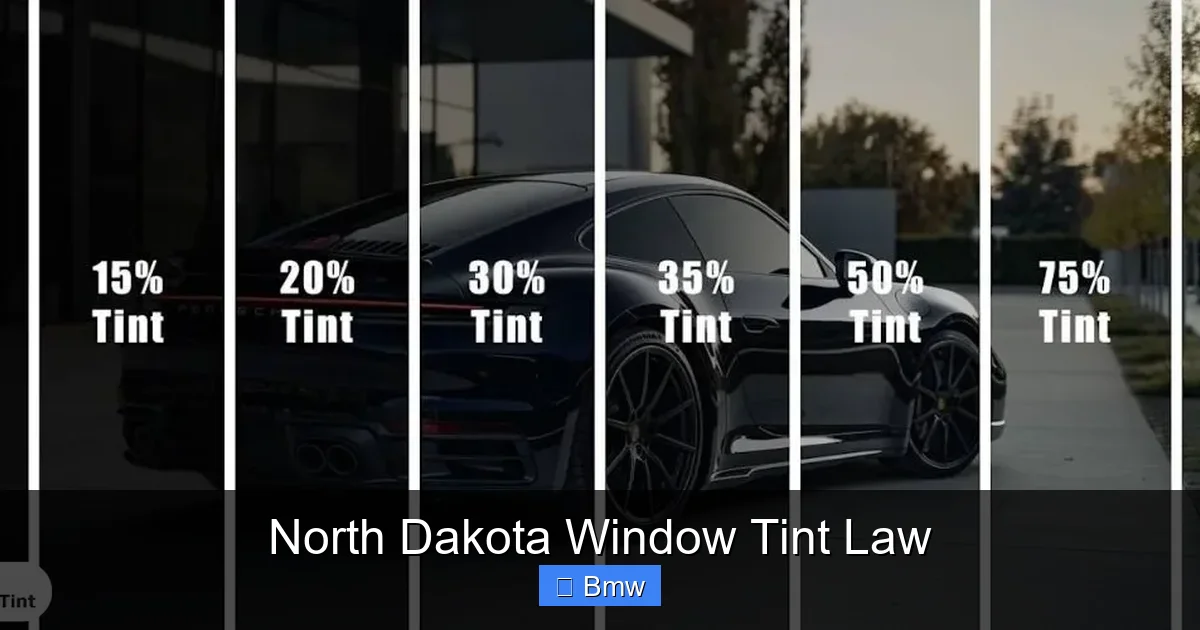
North Dakota Window Tint Law

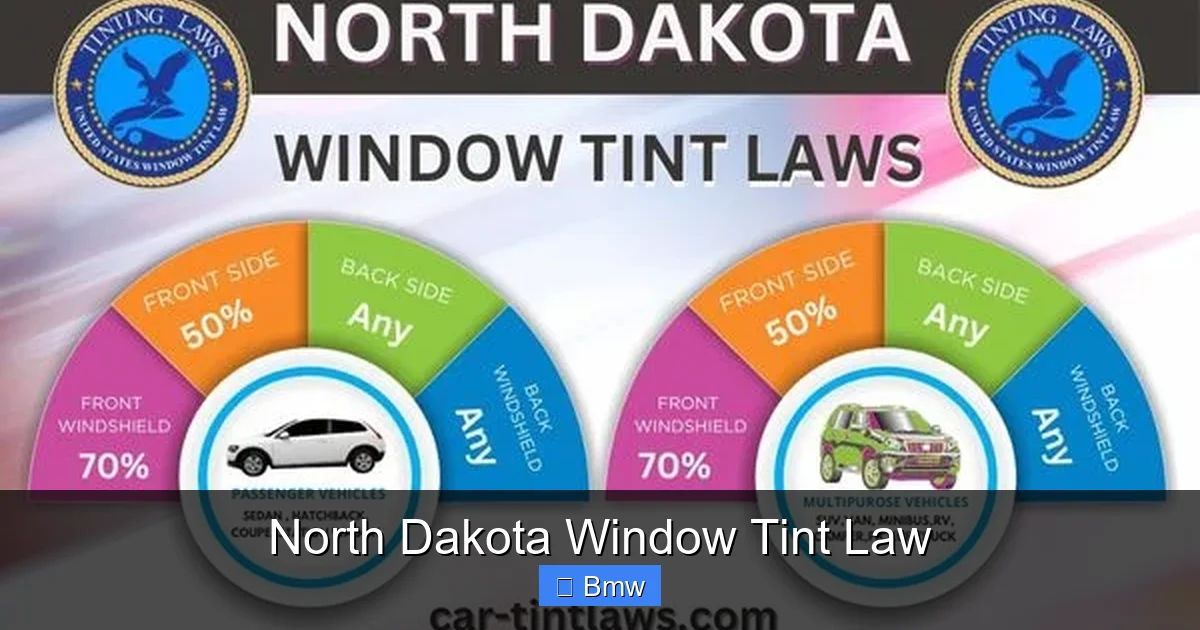
North Dakota’s window tint law allows 50% light transmission for front side windows and 35% for rear sides and back window. The windshield must allow over 70% of light, with tint only allowed above the AS-1 line. Violations can lead to fines and a fix-it ticket. Always verify your tint’s VLT percentage to ensure compliance for your BMW or any vehicle.
So, you’re cruising in your BMW through the wide-open spaces of North Dakota, the sun beaming down, and you think, “My windows could use a little more privacy and cooling power.” That’s a totally fair thought! Before you head to the tint shop, though, you need to know the rules of the road. North Dakota’s window tint law is specific, and getting it wrong can mean an unwanted ticket, a forced removal of your new tint, and a frustrating day. This guide will walk you through every detail of the North Dakota window tint law, from the exact percentages to the little-known windshield rule, so you can tint with confidence and stay on the right side of the law.
Let’s be clear: window tint laws exist for safety—for you, your passengers, and law enforcement. Too-dark tint on front windows can impair a driver’s vision, especially at night or in poor weather. It also makes it hard for police to see inside a vehicle during a traffic stop. North Dakota has found a balance, allowing reasonable darkness for rear windows while keeping front side windows relatively clear. For a BMW owner, this is crucial information. Many modern BMWs come with factory-installed privacy glass on the rear windows, which is typically much darker than the front. Understanding how the law treats factory tint versus aftermarket additions is the first step to a perfect, legal setup.
Key Takeaways
- Front Side Windows: Must allow at least 50% of outside light in (VLT 50% or higher). This is a key difference from many states.
- Rear Side & Back Window: Can be darker, requiring a minimum of 35% light transmission (VLT 35% or higher).
- Windshield Rules: Non-reflective tint is permitted only on the portion *above* the manufacturer’s AS-1 line. The rest must remain clear, allowing over 70% light.
- Reflective & Colored Tint: Metallic/reflective tint is prohibited on all windows. Tint colors must be neutral; red, yellow, or amber are not allowed.
- Enforcement: Police use tint meters. First offenses typically result in a “fix-it” ticket with a deadline to correct the violation, plus a small fine.
- Medical Exemptions: North Dakota does not have a statewide medical exemption for darker tint. All vehicles must comply with the standard limits.
- Aftermarket vs. Factory: Factory tint on rear windows (often ~15-20%) is usually legal, but adding aftermarket tint to front sides must meet the 50% rule. A BMW’s factory tint may differ.
📑 Table of Contents
Understanding Visible Light Transmission (VLT)
Before we dive into the specific numbers, you need to understand the core concept: VLT. It stands for Visible Light Transmission. Simply put, VLT is the percentage of visible light that passes through your window glass and tint film combined. A lower VLT number means darker tint (less light gets through). A higher VLT number means lighter tint (more light gets through). So, a 50% VLT tint is lighter than a 35% VLT tint.
Here’s where it gets tricky and why you must be careful. The law states the combined VLT of your factory glass plus any aftermarket film. If your BMW’s factory side glass already has a slight green or bronze tint (which most do), that factory glass might have a VLT of about 80-85%. If you add a 50% aftermarket film, you don’t get 50% total transmission. You multiply them: 0.85 (85%) x 0.50 (50%) = 0.425, or 42.5% VLT. That would be illegal for a front side window in North Dakota, which requires a minimum of 50% VLT. This calculation is why professional installation with a calibrated meter is so important. A reputable shop will measure your factory glass first and recommend a film percentage that, when combined, meets the legal limit. Don’t just guess based on the film’s rating alone.
The North Dakota VLT Chart: Front vs. Rear
Let’s break down the exact legal limits for different windows on your passenger vehicle, which includes your BMW, trucks, and SUVs. Multi-purpose vehicles (like some vans) have slightly different rules for rear windows, but for your standard car, it’s straightforward.
- Front Side Windows (Driver & Front Passenger): Must allow a minimum of 50% of outside light to pass through. This means the combined VLT of your factory glass and any tint film must be 50% or higher. This is one of the stricter front-side limits in the Midwest. A 50% film on already slightly tinted factory glass will likely put you over the line, so you may need a lighter film, like 70% or even a clear UV-blocking film, to stay legal.
- Rear Side Windows: Can be significantly darker. The minimum VLT here is 35%. This gives you much more flexibility. You can go for a stylish, dark look on the rear doors while remaining fully compliant.
- Rear Back Window: Follows the same rule as the rear side windows—minimum 35% VLT. This applies to the large glass on the trunk or hatch area.
- Windshield: This is a special case with its own set of rules, which we’ll cover in the next section.
For a BMW owner, a common and popular legal configuration is: clear or very light (70%+) film on the front two doors for UV protection and slight glare reduction, paired with a darker 35% or even a factory-matching 20% film on the rear three windows. This gives you the privacy and heat rejection you want in the back without compromising the legal front-side visibility.
Windshield Tinting Rules: The AS-1 Line is Key
The windshield has the most restrictive rules in North Dakota. You cannot apply a full windshield tint that darkens the entire glass. The law is very specific: non-reflective tint is permitted only on the portion of the windshield above the manufacturer’s AS-1 line.
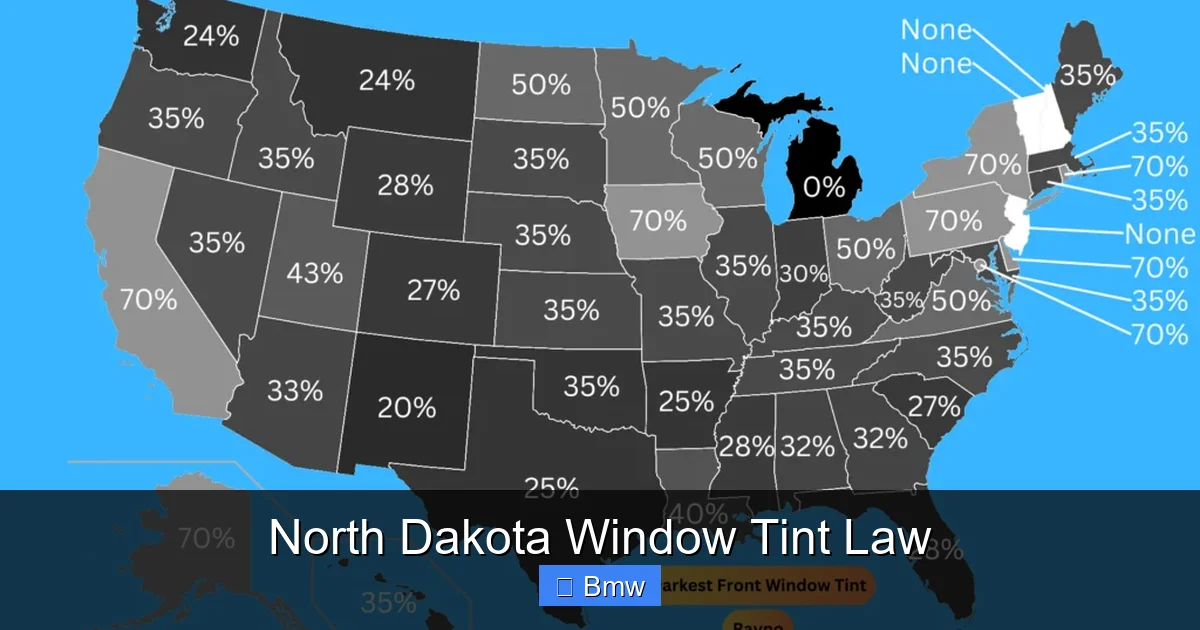
Visual guide about North Dakota Window Tint Law
Image source: brilliantmaps.com
What is the AS-1 line? It’s a small marking, usually a series of letters and numbers (like “AS1” or “M1”), etched into the glass at the top of the windshield, near the headliner. This line indicates the maximum area where manufacturers can place their own sunshade band. North Dakota law allows you to tint up to that line. In practice, this means you can have a “visor” or “eyebrow” tint across the very top few inches of your windshield to block glare from the sun or sky, but the vast majority of your forward viewing area must remain completely clear glass.
Critical details: The tint on this top band must be non-reflective. No mirror finishes, chrome, or highly metallic films that create glare for other drivers. It also must not be a prohibited color (red, yellow, amber). Most standard dyed or carbon films in a very light shade (like 70% or 80% VLT) are used for this purpose. If your BMW doesn’t have an AS-1 line etched (some older models might not), the legal limit is the top 5 inches of the windshield, measured from the top edge downward. When in doubt, a professional installer will know where to find this line and what is permissible.
Prohibited Tint Types & Colors
It’s not just about how dark the tint is. North Dakota law also regulates the type and color of window film you can use.
Visual guide about North Dakota Window Tint Law
Image source: tintinghub.com
Reflective/Metallic Tint is Banned
You cannot use any window film that has a mirrored or metallic appearance. This includes many older “chrome” or “mirror” films and some high-performance films that use metal particles to reflect heat. The reason is safety—these reflective surfaces can create distracting and dangerous glare for other drivers, especially at certain angles. Modern high-quality films for heat rejection often use ceramic or carbon particles instead of metal, which are perfectly legal as long as they meet the VLT requirements and are non-reflective in appearance. Always confirm with your installer that the film they are using is non-reflective and compliant.
Restricted Colors
The statute specifically prohibits tint that is red, yellow, or amber. These colors are reserved for emergency and commercial vehicles. Your tint must be a neutral color—black, grey, bronze, or green are all standard and acceptable. This rule applies to all windows, including that permissible windshield visor. A deep green tint on a BMW can look fantastic and is 100% legal in North Dakota, but a bright yellow or red tint would be a violation.
Enforcement, Penalties, and What to Expect
How does this all play out on the road? North Dakota law enforcement officers are equipped with handheld tint meters. These devices measure the VLT of your windows by shining a light through the glass and reading the amount that passes through. If an officer suspects your tint is too dark—often because it looks very dark from the outside or during a traffic stop for another reason—they can ask you to roll down your windows for a reading.
Visual guide about North Dakota Window Tint Law
Image source: car-tintlaws.com
If your windows fail the meter test and are below the legal VLT, you will likely receive a citation. However, North Dakota generally treats a first window tint violation as a “fix-it” ticket. This means you are given a specific deadline (often 30 days) to remove the non-compliant tint or replace it with a legal film. You must then provide proof of correction to the court or police department, usually in the form of a receipt from a tint shop or a signed affidavit. There is typically a small administrative fine associated with the ticket, often in the range of $20-$50, but the primary goal is correction, not punishment. Repeat offenses, however, can lead to higher fines and no “fix-it” option. It’s simply not worth the hassle. The safest bet is to be legal from the start.
Special Considerations for BMW and Luxury Vehicles
If you own a BMW, there are a few extra things to keep in mind regarding North Dakota’s tint laws.
Factory Tint vs. Aftermarket Tint
Many BMW models, especially from the 2000s onward, come from the factory with “privacy glass” or “sunset glass” on the rear windows (and sometimes the rear quarter windows). This is a deeply dyed glass, not a film. The VLT of this factory glass is often in the 15-20% range. This factory tint is legal and grandfathered in, because it was installed by the manufacturer before the vehicle was sold. The law applies to aftermarket additions. So, if your BMW already has dark rear glass from the factory, you do not need to add any tint there. In fact, adding film over factory tint is generally not recommended, as it can cause problems with heat buildup between the layers and potential glass damage. Your focus should be on the front doors, which almost always come from BMW with very light, clear glass (VLT 80%+). This is where you need to be most careful about adding a film that keeps the combined VLT at 50% or higher.
Heat Rejection and Technology
A big reason people tint their BMWs is for heat rejection, especially in North Dakota’s surprisingly hot summer sun. The good news is that you don’t need dark tint to get great heat rejection. Modern ceramic and carbon films are engineered to block infrared (IR) heat radiation while maintaining a high VLT for visibility. You can install a nearly clear (70%+ VLT) ceramic film on your front windshield and front doors and still block 40-50% of the sun’s heat. This keeps you and your car’s interior cooler, protects your dashboard from UV cracking, and is completely legal. When shopping for tint, prioritize the Total Solar Energy Rejected (TSER) or Infrared Rejection (IRR) numbers over the VLT percentage for performance. Since you’re limited to 50% VLT on the front, you need the most advanced film you can get to maximize cooling.
Resale and Compliance
Keeping your BMW’s tint legal is also a smart move for resale. A potential buyer in North Dakota (or if you move to a state with similar laws) won’t want the hassle of having to remove illegal tint. Having documentation that your tint was installed to meet state law is a plus. Furthermore, if you ever plan to sell a car in North Dakota, having all modifications, including tint, documented and legal makes the process smoother and avoids disputes.
Choosing an Installer and Film in North Dakota
Your choice of installer is almost as important as the law itself. A bad installation—with bubbles, peeling edges, or scratches—looks terrible and can lead you to remove it prematurely, wasting your money. Here’s what to look for:
- Reputation & Reviews: Look for shops with excellent local reviews, especially from BMW or other luxury car owners. Ask in local forums or Facebook groups.
- Meter on Hand: A professional shop will have a calibrated tint meter and will be happy to show you the VLT reading of your factory glass and the film they plan to use. They should be able to calculate the combined VLT for you.
- Warranty: What warranty do they offer on the film and the installation? A good warranty (often lifetime for film, 5+ years for labor) is a sign of confidence in their product and work.
- Film Samples: Ask to see physical samples of the film in different VLT percentages. Hold them up to your car’s window to see the actual look. Remember, a 50% film on your BMW’s already-tinted factory glass will look much darker than 50% on a clear glass.
- Knowledge of Local Laws: A reputable local installer will know North Dakota’s specific statutes cold. They should be able to explain the AS-1 line rule and the color/reflectivity bans without hesitation. If they seem unsure, go elsewhere.
Regarding cost, how much auto window tint costs in North Dakota varies widely based on the film brand (ceramic vs. dyed), the vehicle (a BMW’s complex curved windows cost more than a simple pickup truck), and the shop’s reputation. Expect to pay anywhere from $200-$600+ for a full car on a typical sedan. The front two doors alone might be $100-$250. Don’t just choose the cheapest quote; you’re paying for expertise, quality material, and a legal, long-lasting result.
Also, consider the longevity. How long car window tint lasts depends heavily on film quality and installation. Cheap dyed films may fade to purple or bubble in 3-5 years, especially in extreme North Dakota temperature swings. A premium ceramic film, properly installed, can last 10+ years and maintain its color and clarity, making it a better long-term investment for your BMW.
Frequently Asked Questions
What is the legal tint limit for the front driver and passenger windows in North Dakota?
The front side windows must allow at least 50% of outside light to pass through (VLT 50% or higher). This is the combined darkness of your factory glass and any aftermarket film.
Can I tint my entire windshield in North Dakota?
No. You may only apply non-reflective tint above the manufacturer’s AS-1 line, which is a small band at the very top of the windshield. The rest of the windshield must remain clear.
Are reflective or mirrored window tints legal in North Dakota?
No. Any film with a mirrored or highly reflective appearance is prohibited on all windows of a passenger vehicle.
What are the penalties for having illegal window tint in North Dakota?
For a first offense, you will typically receive a “fix-it” ticket. You’ll have a set period (e.g., 30 days) to remove or replace the illegal tint and provide proof of correction, along with paying a small fine (usually under $50).
Does my BMW’s factory rear tint count as illegal tint?
No. Factory-installed privacy glass is legal and exempt from aftermarket tint laws. The restrictions apply to any film you add to the windows yourself.
How do police measure window tint darkness?
Law enforcement officers use handheld devices called tint meters. These meters send a light through the window and measure the percentage of light that passes through, giving a VLT reading.
