
What Does Hot Oil Mean on a Jeep?

When your Jeep’s dashboard displays “Hot Oil” or an oil temperature warning, it’s a serious alert that your engine oil has exceeded its safe operating temperature. This isn’t just a suggestion—it’s a direct warning of imminent mechanical danger that requires immediate attention to avoid catastrophic engine failure. Ignoring it can lead to seized engines, blown head gaskets, and repairs costing thousands. Understanding the causes, from low oil levels to strenuous driving, and knowing exactly what to do when the light comes on is non-negotiable for protecting your investment.
Key Takeaways
- It’s a Critical Engine Alert: The “Hot Oil” warning means your engine oil is overheating, which destroys its lubricating properties and can cause rapid, severe engine wear or seizure.
- Immediate Action is Required: You must safely pull over, shut off the engine, and let it cool completely. Do not continue driving under any circumstances.
- Common Causes are Often Preventable: Low oil level, incorrect oil viscosity, a faulty oil cooler, or extreme driving conditions (towing, off-roading) are the primary culprits.
- It’s Different from Oil Pressure: A hot oil warning is about temperature, not pressure. You could have normal pressure but oil that’s too hot to protect the engine.
- Diagnosis Requires a Mechanic: After cooling, check oil level and condition. If level is fine, the issue is likely a sensor, cooling system component, or internal engine problem requiring professional diagnosis.
- Prevention is Key: Regular oil changes with the correct Jeep-specified oil, monitoring oil levels monthly, and addressing cooling system issues proactively are your best defenses.
📑 Table of Contents
- Introduction: That Scary Light on Your Dashboard
- Understanding Oil Temperature: Your Engine’s Vital Sign
- What Exactly Triggers the “Hot Oil” Warning?
- Common Causes of Overheating Oil in Your Jeep
- The Real Risks: What Happens If You Ignore the Warning?
- Immediate Action Plan: What to Do When the Light Comes On
- Long-Term Prevention: Keeping Your Jeep’s Oil Cool
- Model-Specific Considerations for Jeep Owners
- Conclusion: Respect the Warning
Introduction: That Scary Light on Your Dashboard
You’re enjoying a trail ride in your Wrangler, or maybe you’re towing a heavy load with your Gladiator up a long hill. The adrenaline is high, the scenery is perfect. Then, it happens. A glaring light on your dashboard catches your eye: HOT OIL. Or perhaps a red oil can icon with a thermometer. Your heart sinks. What does it mean? Is it safe to keep going? Your mind races with images of a smoking hood and a tow truck bill.
First, take a breath. This warning is your Jeep’s most direct and urgent line of communication about a critical engine system. It’s not trying to annoy you; it’s trying to save your engine. In the world of Jeeps, where capability and adventure are the name of the game, understanding this warning is as essential as knowing how to engage 4WD. This guide will break down exactly what “Hot Oil” means on a Jeep, why it happens, the absolute steps you must take when it appears, and how to prevent it from ever happening again. We’ll talk in plain language, no mechanic jargon, so you can drive with confidence and knowledge.
Understanding Oil Temperature: Your Engine’s Vital Sign
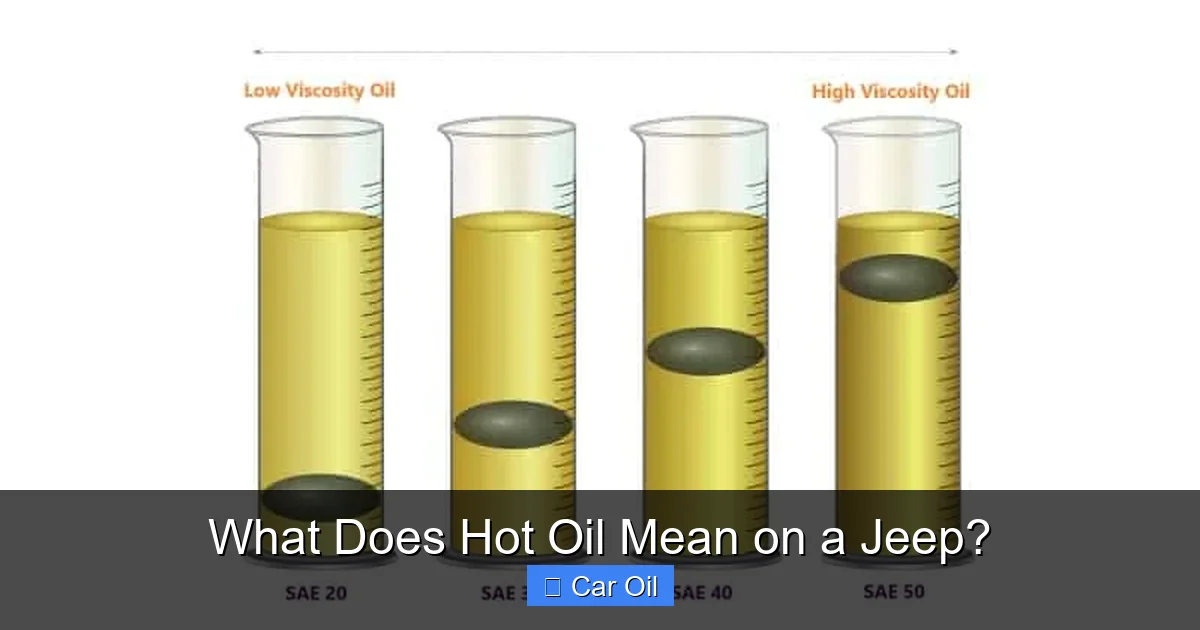
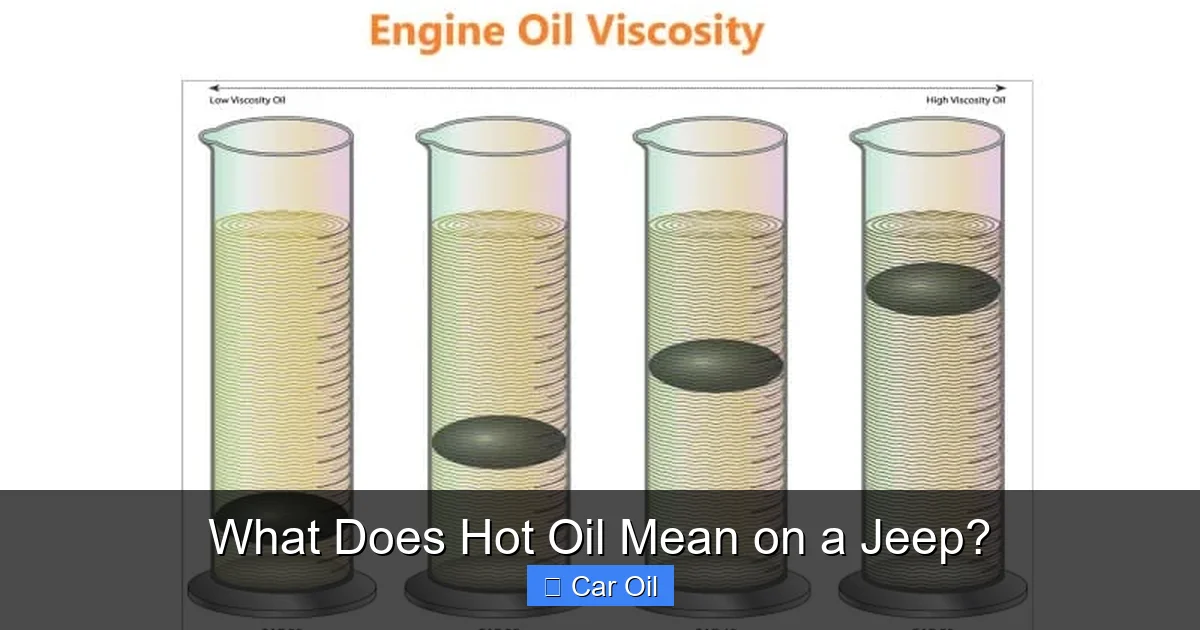
Before we dive into the warning, we need to understand the “why.” Engine oil isn’t just a lubricant; it’s a multi-tasking fluid that cools, cleans, seals, and protects. Its ability to perform these jobs is highly dependent on temperature. Think of it like honey. Cold honey is thick and sluggish. Hot honey is thin and runny. Engine oil behaves similarly.
Visual guide about What Does Hot Oil Mean on a Jeep?
Image source: fourwheeltrends.com
The Goldilocks Zone for Oil
Every engine, including your Jeep’s, is designed to operate with oil within a specific temperature range, typically between 200°F and 250°F (93°C to 121°C). At this “just right” temperature, the oil maintains the perfect viscosity—thick enough to form a protective film between metal parts, but thin enough to flow quickly to all corners of the engine. Your Jeep’s computer and sensors constantly monitor this.
The HOT OIL warning illuminates when the oil temperature sensor detects that the oil has exceeded a preset safe threshold, usually around 260°F to 280°F (127°C to 138°C). This threshold is set well below the point where oil starts to break down and lose its lubricating ability. Once oil gets too hot, two bad things happen very quickly: its viscosity drops (it gets too thin), and it begins to oxidize and degrade chemically. A thin oil can’t maintain the protective film between pistons, cylinder walls, and bearings. The result is metal-on-metal contact, friction spikes, and rapid, devastating wear.
What Exactly Triggers the “Hot Oil” Warning?
The warning itself is the final symptom. The trigger is the sensor, but the root cause is one of several conditions that prevent the oil from staying cool. Your Jeep’s engine has a dedicated cooling system for the oil, separate from the main coolant system in most modern models.
Visual guide about What Does Hot Oil Mean on a Jeep?
Image source: rxmechanic.com
The Role of the Oil Cooler
Many Jeeps, especially those with the Pentastar V6, Hemi V8, or turbocharged four-cylinders, come equipped with an engine oil cooler. This is essentially a small radiator for your oil. Hot oil from the engine is pumped through this cooler, where airflow (from the vehicle’s motion or an electric fan) dissipates the heat before the oil returns to the sump. If this cooler is clogged, damaged, or its fan isn’t working, oil has no way to shed heat efficiently.
Other Jeeps, like some older models or base trims, may rely solely on the oil sump in the oil pan to dissipate heat into the engine block and surrounding air. These systems are less effective under extreme load.
The Sensor and the Computer
An oil temperature sensor, usually screwed into the engine block near the oil filter, provides real-time data to the Powertrain Control Module (PCM). The PCM has programmed limits. When the sensor reports a temperature beyond that limit, the PCM triggers the warning light on the dash. A faulty sensor can, in rare cases, give a false reading, but you should always assume the warning is real until proven otherwise.
Common Causes of Overheating Oil in Your Jeep
Why is your oil getting too hot? Here are the most frequent offenders, from the simple to the complex.
Visual guide about What Does Hot Oil Mean on a Jeep?
Image source: rxmechanic.com
1. Low Oil Level
This is the #1 cause and the easiest to check. Oil’s primary job is to carry heat away from hot engine components and to the oil pan/cooler. If there’s insufficient oil, there’s less fluid to absorb and transfer that heat. The oil that is present circulates faster, gets hotter, and breaks down quicker. A low level can be due to neglect, an oil leak, or an engine burning oil.
2. Incorrect Oil Viscosity
Using the wrong weight of oil is a silent killer. Jeep specifically recommends certain viscosity grades (like 0W-20, 5W-20, 5W-30) based on the engine design and expected operating temperatures. Using oil that’s too thin (e.g., 0W-20 in a high-stress application where 5W-30 is recommended) can cause it to thin out excessively under heat, losing its protective film. Conversely, oil that’s too thick for the climate can cause excessive drag and internal friction, generating more heat.
3. Severe Driving Conditions
Your Jeep is built for this, but it takes a toll. Extended highway towing puts the engine under constant high load, generating massive heat. Dune running or deep water fording can cause the oil cooler to become clogged with sand, silt, or debris, blocking airflow. Extreme ambient heat (desert summer) reduces the cooling system’s overall efficiency. Aggressive off-roading at low speeds reduces airflow through the cooler.
4. Faulty or Clogged Oil Cooler
An oil cooler can fail internally (passages clogged with sludge from neglected oil changes) or externally (the fan clutch fails, the electric fan doesn’t engage, or the cooler is physically damaged). A clogged cooler is like having a radiator with no fins—it simply can’t cool the fluid passing through it.
5. Internal Engine Problems
This is the worst-case scenario. Excessive blow-by (combustion gases leaking past piston rings into the crankcase) can superheat the oil. A failing bearing or other internal component can generate extreme localized heat that quickly contaminates the entire oil sump. These issues are often accompanied by other symptoms like knocking noises or smoke.
6. Cooling System Failure
While the oil has its own system, it’s not entirely isolated. The engine coolant regulates the temperature of the engine block and heads. If the coolant system fails (thermostat stuck, water pump failed, radiator clogged), the entire engine runs hot, which inevitably overheats the oil sitting within it.
The Real Risks: What Happens If You Ignore the Warning?
Driving with the HOT OIL warning illuminated is like running a marathon with no skin on your feet. The damage is swift and irreversible.
Oil Breakdown and Loss of Lubrication
As oil overheats, its molecular structure degrades. Additives that fight wear, corrosion, and sludge burn off. The oil turns from a smooth liquid into a gummy, acidic sludge. This sludge clogs oil passages, starving parts of lubrication. Simultaneously, the thinning oil can no longer maintain the hydrodynamic film between parts.
Catastrophic Engine Failure
The sequence is brutal: Loss of film → Metal-to-metal contact → Friction skyrockets → Temperature skyrockets further → Parts weld together. The most common failures are rod bearing failure (a loud knock, then a rod punching through the block) and piston/cylinder wall scuffing (loss of compression, massive smoke). Both result in an engine that is, for all practical purposes, a paperweight. The cost of replacement or rebuild is often more than the vehicle’s value.
It can also lead to a blown head gasket. Extreme heat causes the aluminum cylinder head to expand more than the iron block, crushing the gasket and allowing coolant and oil to mix—a death sentence for the engine if not caught immediately.
Immediate Action Plan: What to Do When the Light Comes On
Time is not on your side. Follow these steps precisely.
Step 1: Safely Pull Over and Shut Down
As soon as it is safe—use your turn signal, move to the shoulder or a parking lot—bring the vehicle to a complete stop and turn off the engine. Do not idle to “cool it down.” Turning it off stops the heat generation immediately. If you’re on a busy road, you may need to coast a short distance to a safe spot, but keep engine RPMs as low as possible.
Step 2: Do Not Open the Hood Immediately
An overheated engine is a pressurized, boiling cauldron of coolant and oil. Opening the hood or the radiator cap can release superheated steam and fluid, causing severe burns. Wait at least 30-45 minutes for everything to cool down.
Step 3: Check the Oil Level (After Cooling)
Once cool, open the hood. Locate the dipstick. Pull it, wipe it clean, reinsert fully, and pull again. Check the level against the marks. If it is low or empty, do not start the engine. Adding oil may be a temporary fix if the level was just critically low, but it does not address why it was low (leak? burn?). If the level is fine, the problem lies elsewhere.
Step 4: Look for Obvious Issues
While the hood is up, look for major leaks (puddles of oil), a damaged or clogged oil cooler (usually in front of the radiator), or signs of coolant loss. Listen for any strange noises if you briefly crank the motor (do not start it) just to see if it turns over freely.
Step 5: Call for Help
Unless you are a qualified mechanic with the tools to diagnose sensor and cooling system issues, your Jeep needs to be towed to a trusted repair shop. Attempting to drive it even a short distance after the warning is a gamble you will almost certainly lose. A tow is far cheaper than an engine replacement.
Long-Term Prevention: Keeping Your Jeep’s Oil Cool
An ounce of prevention is worth a pound of cure—especially when the cure is a new engine.
Strict Adherence to Oil Change Intervals
This is non-negotiable. Old, degraded oil has lost its ability to resist heat and shear. Use only the oil viscosity and specification (e.g., MOPAR, Pennzoil Platinum, or a high-quality equivalent meeting Chrysler’s MS-6395 standard) specified in your owner’s manual. For Jeeps used for heavy-duty tasks, consider shortening the change interval.
Monthly Oil Level Checks
Make it a habit. Check the oil on level ground, with the engine cold or slightly warm (not hot), at least once a month. Catching a slowly developing leak or burn-off early can save your engine. Also, look at the oil’s color and smell. Fresh oil is amber and translucent. Dark, black, or gritty oil needs changing. Oil that smells like burnt toast is severely overheated.
Maintain the Cooling System
The oil cooler relies on the overall engine temperature being stable. Ensure your coolant is at the proper level, the thermostat is functioning, the radiator is clean and not clogged with bugs or debris, and the cooling fans operate correctly. A check gauges warning on a Dodge Ram or similar system on any vehicle often points to a broader cooling or sensor issue, illustrating how interconnected these systems are.
Upgrade for Severe Use
If you frequently tow at maximum capacity, run deep sand, or live in extreme heat, consider an auxiliary oil cooler kit from companies like Mishimoto or Derale. These add extra cooling capacity. Also, a high-capacity oil pan can hold more oil, providing a larger heat sink.
Address Leaks Immediately
Even a small drip can lead to a dangerous low level over time. Fix oil pan gaskets, valve cover gaskets, and cooler line fittings promptly.
Model-Specific Considerations for Jeep Owners
While the principle is the same, your specific Jeep model has nuances.
- Jeep Wrangler (JL/JT): The 2.0L Turbo, 3.6L V6, and 2.0L Hybrid all have oil coolers. Off-roading in low gear for extended periods reduces airflow to the cooler. The 4xe hybrid’s engine runs more frequently under load to recharge the battery, which can increase heat stress.
- Jeep Grand Cherokee: Models with the 5.7L Hemi or 3.0L EcoDiesel are particularly susceptible when towing due to high load. The diesel variant is especially sensitive to oil temperature; its HOT OIL warning is arguably the most critical light on the dash. Some models have an auxiliary cooler that can fail.
- Jeep Gladiator: Sharing the Wrangler’s platform but with towing duty, it faces the same stresses. Payload and trailer weight are major factors. Ensure your tow package includes the factory oil cooler if equipped.
- Older Jeeps (JK, KK, etc.): Many base models may not have a dedicated oil cooler, relying on sump dissipation. This makes them more vulnerable to overheating in demanding conditions. An aftermarket cooler is a highly recommended modification for any serious use.
Always consult your specific owner’s manual. It will have the exact oil specification, capacity, and any model-specific procedures or warnings.
Conclusion: Respect the Warning
The HOT OIL light on your Jeep is not a “check engine” light that you can investigate at your leisure. It is a STOP NOW signal from your vehicle’s brain. It means the lifeblood of your engine is compromised. The cost of a tow and diagnosis is a fraction of the cost of a new engine. By understanding what causes it—low oil, wrong oil, a clogged cooler, or extreme use—and committing to rigorous preventive maintenance, you can ensure your Jeep is ready for the next adventure, not sidelined by a preventable disaster. When that light comes on, your only correct move is to shut it down. Your engine will thank you.
Frequently Asked Questions
Can I just add oil if the HOT OIL light comes on?
You can check and add oil if the level is low, which may solve the immediate issue if that was the sole cause. However, you must still determine why the oil was low (leak, burn-off) and address that root problem. If the oil level is correct, adding oil will not fix the overheating and you must still stop driving and seek diagnosis.
Is the HOT OIL warning the same as low oil pressure?
No, they are different warnings for different problems. Low oil pressure means there isn’t enough pressure to force oil through the engine’s tight clearances, often due to low level, a failing pump, or a major blockage. Hot oil means the oil temperature is too high. You could theoretically have normal pressure but dangerously hot oil, or vice versa. Both require immediate engine shutdown.
My Jeep has an oil temperature gauge, not just a light. What temperature is too high?
While exact thresholds vary by model and engine, sustained oil temperatures above 250°F (121°C) are a cause for concern. Temperatures consistently above 270°F (132°C) are in the danger zone and risk oil breakdown. If your gauge is in the red zone or approaching it, pull over and let the engine cool.
Can a faulty sensor cause a false HOT OIL warning?
Yes, but it’s rare. A shorted or failed oil temperature sensor can send a false high signal to the computer. However, you should never assume it’s a false alarm. The potential cost of ignoring a real warning far outweighs the cost of having a sensor diagnosed and replaced by a professional.
Why does my oil get hot when towing, even though I have a cooler?
Towing puts the engine under constant, heavy load, which generates immense heat. Even with a functioning cooler, it can be overwhelmed if the load exceeds the cooler’s capacity, if the cooler is partially clogged, or if ambient temperatures are very high. This is why many serious tower’s upgrade to larger auxiliary coolers.
What should I do if the light comes on and the oil level is full?
If the oil level is correct, the problem is almost certainly with the cooling system for the oil (clogged cooler, failed fan), the sensor itself, or a more serious internal engine issue. Do not restart the engine. Have the vehicle towed to a repair shop for a complete diagnosis, which will include checking the oil cooler’s flow and function and scanning for sensor codes.
