
How to Fix the Eps Light on a Hyundai Elantra

The EPS (Electric Power Steering) light on your Hyundai Elantra indicates a problem with the electronic assist system, not a complete failure. While steering will become very heavy, you can still control the car. Common causes range from a simple low steering fluid level (in some models) to faulty sensors, damaged wiring, or a failed EPS motor/control module. Fixing it requires systematic diagnosis with a scan tool, checking fuses and connections, and often professional calibration after any repair. Never ignore this warning; address it promptly for safety and to prevent further damage.
That little steering wheel icon illuminated on your Hyundai Elantra’s dashboard isn’t just trying to get your attention—it’s screaming a vital warning. The EPS (Electric Power Steering) light indicates a fault in the system that makes your steering effortless. When it comes on, your power steering assist is compromised or completely gone. Suddenly, parallel parking or a quick corner feels like moving a sofa single-handedly. It’s a serious safety issue that demands immediate action. In this comprehensive guide, we’ll walk you through everything you need to know about diagnosing and fixing the EPS light on your Hyundai Elantra, from the simplest checks to the most complex component failures.
Key Takeaways
- The EPS light means a fault in the electric power steering system, not necessarily total failure. Your Elantra will have manual steering, but it will be extremely heavy and difficult to turn, especially at low speeds.
- Diagnosis is key and requires more than just guessing. You must read the specific trouble codes from the EPS control module using a compatible OBD2 scanner, as generic readers won’t see these manufacturer-specific codes.
- Simple fixes exist but are less common. Check for low steering fluid (if your model has a reservoir), blown fuses for the EPS system, and damaged wiring harnesses near the steering column or rack.
- Major components like the torque sensor, EPS motor, or control module are frequent culprits. These parts wear out or fail and will trigger the light, often requiring professional replacement and system calibration.
- Safety is paramount. Driving with the EPS light on is dangerous due to the heavy steering. Have the vehicle towed if the steering feels abnormal, and always clear codes properly after a repair to reset the light.
- Professional calibration is often necessary after repairs. The EPS system in modern Elantras requires a specific “steering angle sensor calibration” procedure using a scan tool after any steering or suspension work or after replacing EPS components.
- Don’t confuse it with other lights. The EPS light is distinct from the power steering light (for hydraulic systems) or the check engine light. Its presence is a direct, urgent warning about your steering assist.
📑 Table of Contents
Understanding Your Hyundai Elantra’s EPS System
Before we grab a wrench, let’s understand what we’re dealing with. Unlike older cars with hydraulic power steering (using a pump, belt, and fluid), your Elantra uses an electric motor to provide steering assist. This system is more efficient, but it’s also a complex web of electronics. The core components are the EPS control module (the brain), the torque sensor (detects how hard you’re turning the wheel), the EPS motor (mounted on the steering rack or column), and a series of sensors and wiring. The control module constantly processes data and commands the motor to provide the perfect amount of assist.
How the EPS System Works
When you turn the steering wheel, the torque sensor measures the rotational force. It sends this data to the EPS control module. The module also receives vehicle speed data from the transmission control module. At low speeds, like in a parking lot, the system commands the motor to provide maximum assist, making the wheel easy to turn. At high speeds on the highway, it reduces assist for a firmer, more stable feel. This seamless interaction is why your steering feels so precise. A single glitch in any sensor signal, a broken wire, or a failed motor can break this chain, causing the EPS light to illuminate and the system to shut down to prevent damage.
EPS vs. Hydraulic Power Steering
It’s useful to know the difference. If you have a pre-2010 Elantra, some models might still use a hydraulic system with an electric power steering fluid reservoir under the hood. In that case, low fluid is a common cause of a steering warning light. However, all Hyundai Elantras from the 2011 model year onward exclusively use the electric (EPS) system. For these models, there is no power steering fluid to check. The light is purely an electronic fault. Knowing your model year is your first diagnostic step.
Common Causes of the EPS Light in a Hyundai Elantra
The EPS light is a generic warning; it doesn’t tell you the specific problem. You have to be a detective. Here are the most frequent offenders, ranked from simplest to most complex.

Visual guide about How to Fix the Eps Light on a Hyundai Elantra
Image source: thecarhow.com
1. Faulty Torque Sensor
This is the most common failure point. The torque sensor is a delicate device that can wear out, get contaminated, or have its internal potentiometer fail. When it sends erratic or out-of-range signals to the control module, the module throws a code (like C1600, C1601, etc.) and illuminates the EPS light. Symptoms include a heavy steering feel and sometimes a slight “notch” or uneven feel when turning the wheel.
2. Damaged Wiring or Connectors
Your Elantra’s steering column and rack move with every turn of the wheels. Over years of movement, the wiring harnesses that connect the torque sensor and EPS motor can develop stress points, cracked insulation, or broken wires. Corrosion in connectors is also common. A simple visual inspection of the harnesses from the steering column down to the rack can sometimes reveal the problem—frayed wires, chewed insulation (from rodents), or green/white crusty corrosion on connector pins.
3. Failed EPS Motor
The electric motor itself can burn out or develop internal shorts. If the control module tries to command it and gets no response or an incorrect current draw, it will flag a motor circuit fault. A failed motor means zero power steering assist. Diagnosis requires checking motor resistance and sometimes testing it off the vehicle.
4. Bad EPS Control Module
Less common, but possible. The control module can suffer from internal component failure, water damage, or software glitches. If all sensors, wiring, and the motor test good, the module itself may be the ghost in the machine. This is an expensive part that usually requires professional programming/calibration upon replacement.
5. Blown Fuse
A simple one! The EPS system has its own dedicated fuse in the under-hood fuse box (check your owner’s manual for exact location, often Fuse 30 or 31 in the Engine compartment fuse panel). If this fuse blows, the entire system loses power. Replace it with a new fuse of the same amperage. If it blows again immediately, you have a short circuit in the wiring or a component that needs finding before replacing the fuse again.
6. Steering Angle Sensor Calibration Needed
This is a crucial and often overlooked cause. The steering angle sensor (part of the EPS system) tells the car how far the wheels are turned. This data is vital for stability control (ESC) and even the speedometer. If you’ve recently had any steering, suspension, or wheel alignment work done, or if you disconnected the battery, the sensor’s “zero point” can be lost. The system detects this mismatch and triggers the EPS light. The fix is not a part replacement, but a specific calibration procedure using a professional scan tool. This is why the light can sometimes come on after an alignment.
Diagnostic Steps: How to Find the Problem
You cannot fix what you don’t understand. Guessing and replacing parts will be expensive and frustrating. Follow this logical diagnostic path.
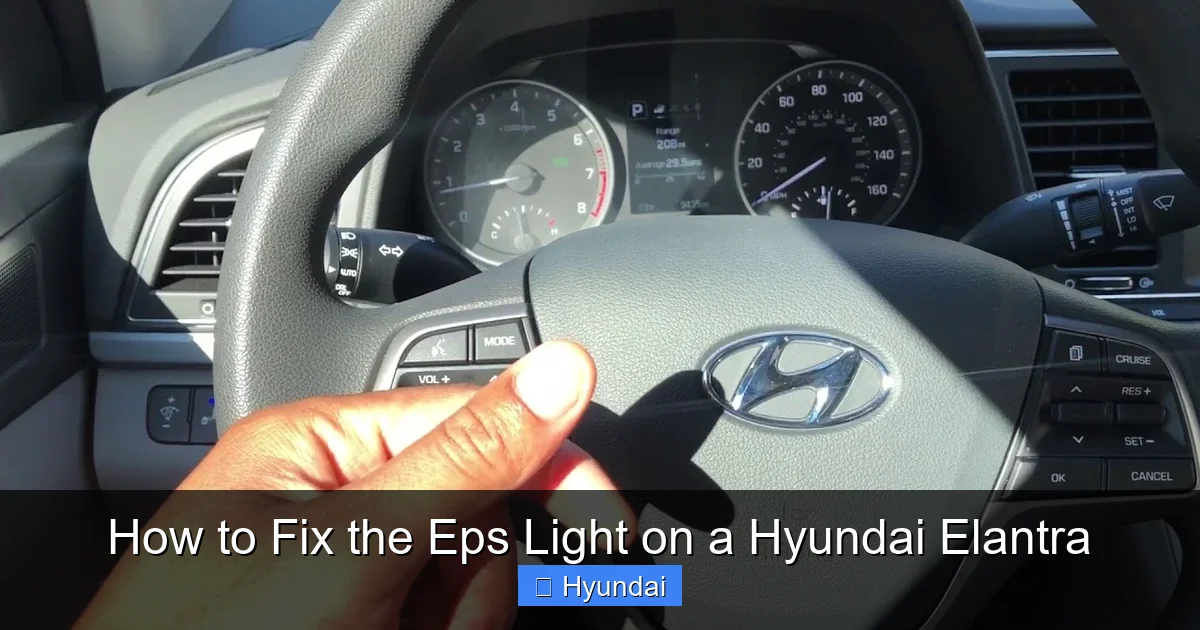
Visual guide about How to Fix the Eps Light on a Hyundai Elantra
Image source: i.ytimg.com
Step 1: The Preliminary Visual & Physical Check
Start simple. With the ignition on (engine off), turn the wheel from lock to lock. Does it feel smooth? Any binding, clunks, or excessive play? Listen for abnormal noises (grinding, whining) from the steering rack area. Pop the hood. If you have a hydraulic system, check the fluid level and condition. For all models, locate the EPS fuse and pull it to inspect. Is it blown? Visually inspect the wiring you can see—from the steering column, behind the steering wheel (after removing covers), and along the rack. Look for damage, chafing, or corrosion. This step takes 10 minutes and can solve 10% of problems.
Step 2: Reading the Trouble Codes
This is non-negotiable. You need the fault code. A generic OBD2 code reader from the auto parts store will not communicate with the EPS control module. You need a more advanced scanner that supports manufacturer-specific systems, like a Launch X431, Autel MaxiSys, or a high-end Snap-on tool. Some local parts stores or independent shops may offer a code read for a small fee. Once you have the code (e.g., C1600 “Torque Sensor Signal Error”), it points you directly to the circuit or component that has failed. This saves you from replacing the wrong part.
Step 3: Component Testing Based on Codes
Let’s say you have a torque sensor code. You’ll need to test the sensor’s resistance (ohms) with a multimeter, following Hyundai’s service manual specifications for your specific model year. A reading of infinity means an open circuit (failed sensor). A reading far outside spec means a bad sensor. You’ll also need to check the wiring from the sensor to the control module for continuity and shorts to ground or power. If codes point to the motor, you’ll test the motor windings’ resistance. If codes point to the control module or show “communication errors,” the diagnosis becomes more complex and often points to wiring issues between modules.
Step 4: The Importance of Calibration
Remember the steering angle sensor? After any repair involving the steering system—replacing a sensor, motor, rack, or even doing a wheel alignment—you must perform the steering angle sensor calibration. This is done with a scan tool that has the “EPS Calibration” or “Steering Angle Sensor Calibration” function for Hyundai. The procedure usually involves turning the wheel from lock to lock a few times while the tool records the endpoints. If this isn’t done, the EPS light will almost certainly return, and your ESC system may be disabled or behave erratically.
Step-by-Step Fixes for Common Scenarios
Armed with a diagnosis, here’s how to tackle the most common fixes yourself, assuming you have basic mechanical skill and tools.
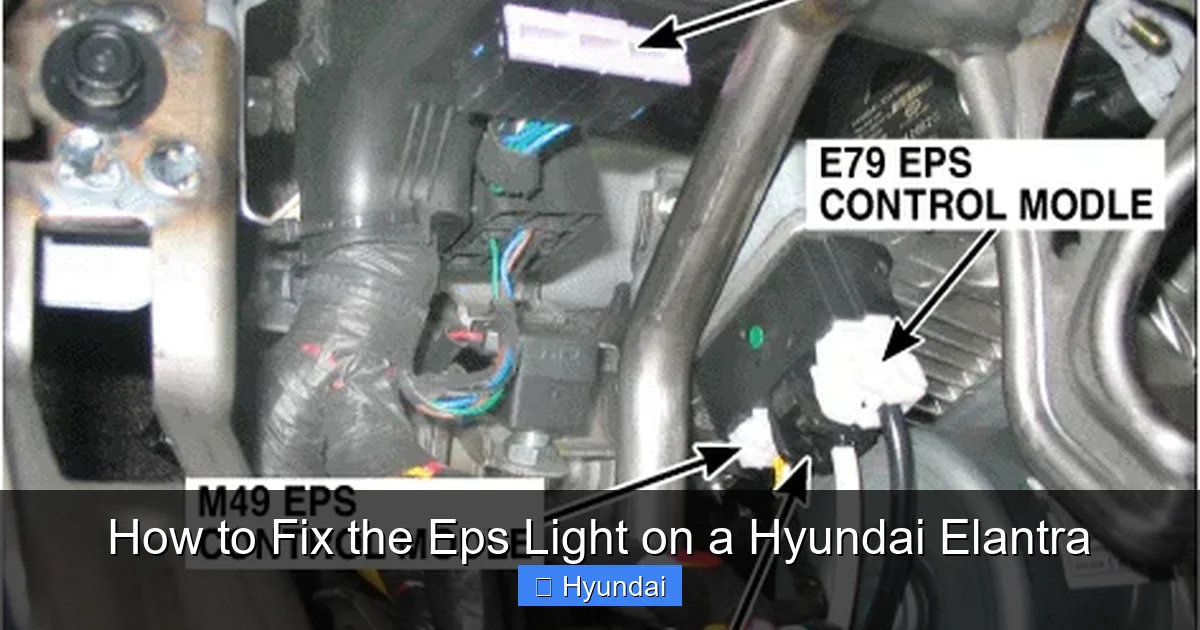
Visual guide about How to Fix the Eps Light on a Hyundai Elantra
Image source: i.ibb.co
Scenario A: Replacing the Torque Sensor
Tools Needed: Socket set, Torx bits (common for sensor bolts), multimeter, trim removal tools, maybe a steering wheel puller.
Process:
- Disconnect the battery. This is critical for safety and to prevent airbag deployment. Wait 15+ minutes before working near the steering column.
- Remove steering column covers. Carefully pry off the plastic covers around the steering column to expose the torque sensor, which is typically mounted on the shaft behind the wheel.
- Disconnect the electrical connector. Press the tab and pull firmly.
- Remove the sensor mounting bolts. They are often Torx screws. Have a helper hold the steering wheel if it wants to spin.
- Install the new sensor. Position it correctly and hand-tighten bolts. Torque them to Hyundai’s specification (usually 8-12 ft-lbs).
- Reconnect the electrical plug. Ensure it’s seated fully.
- Reassemble column covers.
- Reconnect the battery.
- CLEAR THE CODES AND CALIBRATE. This is the final, mandatory step. Use your scan tool to clear all EPS and related codes, then immediately run the steering angle sensor calibration procedure. Failure to do this will cause the light to return instantly.
Scenario B: Repairing Wiring Harness Damage
If you found a frayed or broken wire, you need to repair it properly. Do not just twist and tape.
- Identify the damaged section. Cut out the bad portion.
- Strip about 1/4″ of insulation from each end of the good wire on both sides.
- Use a quality heat-shrink butt splice connector or a solder-and-heat-shrink method. This creates a permanent, waterproof, flexible joint that won’t fail again.
- Protect the repair with a small piece of split loom or electrical tape, ensuring no sharp edges will rub on it.
- After repair, clear codes and perform the calibration.
Scenario C: Replacing the EPS Motor
This is a bigger job. The motor is usually attached to the steering rack. You’ll need to support the steering rack, disconnect the motor’s electrical connector and mounting bolts, and carefully lower it. Installation is the reverse. Be prepared for heavy steering fluid (if hydraulic assist is separate) and alignment changes. This job is best left to professionals unless you have significant experience, as improper installation can lead to dangerous steering issues.
When to Seek Professional Help
You should immediately tow your Elantra to a trusted mechanic or Hyundai dealer if:
- The steering feels physically loose, has clunks, or binds.
- You have codes indicating a failed EPS control module.
- You are not comfortable working with steering/safety systems.
- You lack the advanced scan tool needed for calibration.
Dealerships have the proprietary Hyundai diagnostic software (GDS) that makes this process much smoother. For complex electrical faults, their expertise is invaluable. The cost of a professional diagnosis (often $100-$150) is cheap insurance against a wrong part purchase and ensures the calibration is done correctly.
Costs and Parts Considerations
Budgeting for this repair is important. Costs vary wildly by model year and the specific failed part.
- Torque Sensor: $150 – $400+ for the part. Labor: 1-2 hours.
- EPS Motor: $400 – $1,000+ for the part. Labor: 2-4 hours.
- EPS Control Module: $500 – $1,500+ for the part. Requires programming, adding to cost.
- Wiring Repair: Minimal part cost, 1-2 hours labor.
- Diagnostic Fee: $80 – $150 (often waived if you use the same shop for repair).
Always get a precise diagnosis and quote before authorizing work. Ask for the specific fault code. Be wary of shops that immediately suggest replacing the entire rack assembly—this is a last-resort, very expensive option ($1,500-$3,000+). Often, the issue is a single, replaceable sensor or a wiring problem. You can find quality aftermarket or OEM (Hyundai) parts online, but ensure you get the exact part for your Elantra’s year and engine type.
Conclusion: Safety First, Always
The EPS light on your Hyundai Elantra is not a “check later” warning. It’s a direct message that your primary safety system—your ability to steer the car—is compromised. Driving with it on is difficult, dangerous, and risks a complete failure. The path to fixing it is methodical: get the correct codes, inspect wiring, test components, and never skip the final calibration. While a blown fuse or a repaired wire might be a DIY job, failures of the torque sensor, motor, or control module often require the precision of a professional with the right tools. Your safety and the safety of others on the road depend on responsive, accurate steering. Address the EPS light promptly, diagnose thoroughly, and repair completely. Your future self, navigating a tight parking spot with a light, effortless touch on the wheel, will thank you.
Frequently Asked Questions
Can I drive my Elantra with the EPS light on?
You can physically drive it, but you absolutely should not. Steering will be extremely heavy and difficult, especially at low speeds, making it dangerous to maneuver and increasing the risk of an accident. It also places extra stress on the steering components. Have the car towed to a repair location if the steering feels abnormal.
Will disconnecting the battery reset the EPS light?
Sometimes, but it’s not a fix. The light will almost always return if the underlying fault isn’t repaired. Disconnecting the battery may clear the code temporarily, but the control module will detect the persistent problem and relight the EPS warning. The correct procedure is to repair the issue, then use a scan tool to clear the codes and perform the required calibration.
How much does it cost to fix the EPS light on a Hyundai Elantra?
The cost ranges from under $200 for a simple fuse/wiring fix to over $1,500 for a replacement EPS motor or control module, plus labor. The average repair for a common torque sensor failure is typically $400-$800. Always get a diagnosis first, as the part and labor costs depend entirely on what is actually faulty.
What is the most common reason for an EPS light?
The torque sensor is the most frequent failure point on Hyundai Elantras. This sensor wears out over time and sends bad signals to the computer, triggering the light. Wiring damage from steering column movement or rodent interference is also very common.
Do I need a special tool to turn off the EPS light?
Yes, you need more than a basic OBD2 code reader. You need an advanced scan tool that can communicate with Hyundai’s EPS control module to read the specific codes and perform the mandatory steering angle sensor calibration after any repair. This calibration is essential for the light to stay off.
Is there a recall for Hyundai Elantra EPS problems?
There have been past recalls and service campaigns for certain Hyundai models related to EPS issues. It’s crucial to check your Vehicle Identification Number (VIN) with an official Hyundai dealer or on the NHTSA website (nhtsa.gov/recalls) to see if your specific Elantra is subject to any outstanding safety recalls that might cover the repair at no cost.