
Can I Use Peak Coolant in My Bmw

Using Peak coolant in your BMW is generally not recommended because BMW vehicles require specific coolant formulations that meet stringent engineering standards. Peak coolant may lack the necessary chemical properties, leading to corrosion, overheating, or damage to critical components like the water pump and thermostat. Always consult your owner’s manual or a BMW specialist for the correct coolant type to ensure optimal performance and longevity.
Hey there, BMW owner! Ever found yourself in the auto parts aisle, staring at a wall of coolants, and thinking, “Can I use Peak coolant in my BMW?” You’re not alone. It’s a common question, especially when Peak is on sale or readily available. But before you grab that jug, let’s talk about why your BMW’s cooling system deserves special attention. BMWs are engineering marvels, built for performance and precision. Their engines run hot—really hot—and the cooling system is its unsung hero. Using the wrong coolant is like putting the wrong fuel in a high-performance engine; it might work for a while, but eventually, things go sideways. So, let’s dive in and figure out if Peak coolant is a friend or foe to your Bimmer.
First, understand what coolant actually does. It’s not just about keeping things cold. Coolant, also known as antifreeze, regulates engine temperature, prevents freezing in winter, raises boiling point in summer, and—critically for BMWs—protects against corrosion. BMW engines often use aluminum alloys, which are lightweight but vulnerable to rust and electrolysis if the coolant’s chemical balance is off. That’s why BMW has very specific coolant formulations. Peak is a popular brand, but is it up to the task? We’ll explore Peak’s composition, BMW’s requirements, and what happens if you mix the two. By the end, you’ll know exactly how to keep your BMW’s cooling system happy and healthy.
Key Takeaways
- BMW Coolant Specifications Are Unique: BMW engines, often made of aluminum, require phosphate-free, silicate-free coolants like G48 or HT-12 to prevent corrosion and maintain efficiency.
- Peak Coolant Often Falls Short: Standard Peak coolants may contain additives incompatible with BMW’s cooling systems, risking long-term damage and reduced cooling efficiency.
- Owner’s Manual Is Your Bible: Always check your BMW owner’s manual for the exact coolant specification, as requirements vary by model and year.
- Wrong Coolant Causes Domino Damage: Using non-approved coolant can lead to water pump failure, thermostat issues, radiator leaks, and engine overheating, resulting in costly repairs.
- Maintenance Prevents Disasters: Regularly inspect coolant levels and condition, and flush the system every 2-3 years as per BMW guidelines to avoid buildup and degradation.
- Stick to Approved Brands: Use OEM BMW coolant or reputable aftermarket brands that explicitly state compatibility with BMW LL-98 or LL-12-14 standards.
📑 Table of Contents
- Understanding BMW’s Cooling System: Why Precision Matters
- Decoding Peak Coolant: What’s Inside the Bottle?
- BMW’s Coolant Specifications: The Official Word
- The Domino Effect: What Happens When Coolant Goes Wrong?
- How to Choose the Right Coolant for Your BMW
- Step-by-Step Guide to Checking and Replacing Coolant in Your BMW
- Conclusion: Keep Your Bimmer Cool with the Right Coolant
Understanding BMW’s Cooling System: Why Precision Matters
BMW doesn’t just build cars; they craft driving machines. Every component, including the cooling system, is designed with tight tolerances and specific material pairings. Let’s break down why this matters for coolant choice.
The Engineering Behind BMW Engines
Modern BMW engines, from the tiny turbocharged three-cylinders to the mighty V8s, frequently use aluminum for blocks and heads. Aluminum is excellent for weight savings and heat dissipation, but it’s reactive. If the coolant has the wrong inhibitors, it can cause galvanic corrosion—where dissimilar metals in the system (like aluminum and steel) react electrochemically, leading to pitting and leaks. BMW engineers specify coolants with particular additive packages to prevent this. They often opt for phosphate-free and silicate-free formulations because phosphates can form deposits, and silicates can drop out of solution over time, causing clogging. So, your coolant isn’t just a liquid; it’s a carefully balanced chemical cocktail tailored to your engine’s materials.
Coolant’s Multifaceted Role Beyond Temperature
Sure, coolant stops your engine from melting. But it also lubricates the water pump seal, prevents cavitation (where vapor bubbles form and collapse, damaging components), and maintains pH balance to avoid acidic corrosion. In a BMW, the cooling system is integrated with the engine management, and even minor inefficiencies can trigger check engine lights or reduce performance. For example, if coolant can’t transfer heat properly due to sludge or deposits, your turbocharger might run hotter, shortening its life. That’s why BMW’s specifications, like their LL-98 or LL-12-14 standards, are so detailed—they ensure the coolant plays well with every sensor, gasket, and metal in the system.
Decoding Peak Coolant: What’s Inside the Bottle?
Peak is a well-known brand in the automotive aftermarket, offering a range of coolants for different vehicles. But not all Peak coolants are created equal, and that’s where the confusion lies.
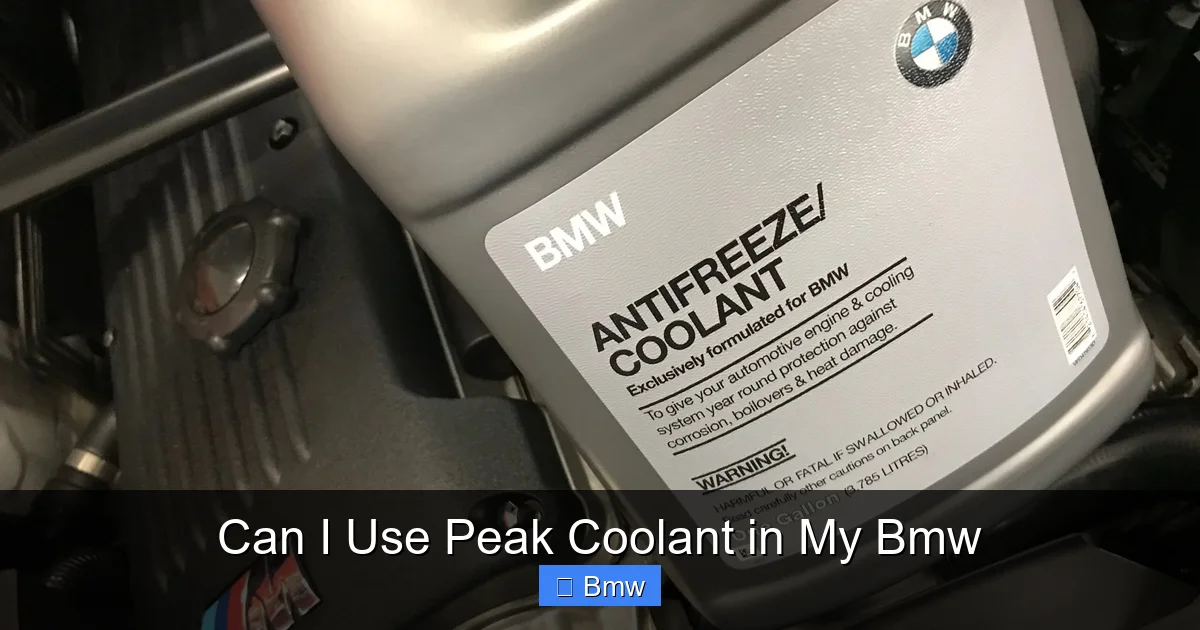
Visual guide about Can I Use Peak Coolant in My Bmw
Image source: bestfordriver.com
Peak’s Product Line: A Mixed Bag
Peak makes several coolant types: traditional green IAT (Inorganic Acid Technology), orange OAT (Organic Acid Technology), and some hybrid HOAT (Hybrid Organic Acid Technology). The green IAT is older tech, with silicates and phosphates for protection but requiring frequent changes. The orange OAT is longer-lasting, phosphate-free, but may still contain silicates. Peak also has “Peak OET” (Extended Life) and “Peak Original Equipment” lines that claim compatibility with certain manufacturers. However, even their “OEM” versions are generic and not tailored to BMW’s exact needs. For instance, Peak’s “European Car Formula” might list some BMW models, but it’s a one-size-fits-many approach that often misses BMW’s specific phosphate-free requirement.
Chemical Composition: Why One Size Doesn’t Fit All
BMW’s approved coolants, like G48 (blue) or HT-12 (greenish-blue), are typically OAT or HOAT but with a critical twist: they are silicate-free and often phosphate-free. Peak’s standard OAT coolants might be phosphate-free but could still contain silicates. Silicates are great for protecting aluminum in some systems but can precipitate out in BMW’s high-temperature environments, forming abrasive particles that wear seals and clog tiny passages. Additionally, BMW coolants use specific organic acids like sebacate or benzoate that are compatible with their materials. Peak’s formulations are designed for broader European applications, like VWs or Audis, which have different material compositions. So, while Peak might not cause immediate disaster, long-term use can lead to subtle corrosion or deposits that only show up after years, costing you thousands in repairs.
BMW’s Coolant Specifications: The Official Word
BMW is very clear about what fluids go into their cars. Ignoring these specs is like ignoring the recipe for a soufflé—you might get something edible, but it won’t be the masterpiece intended.
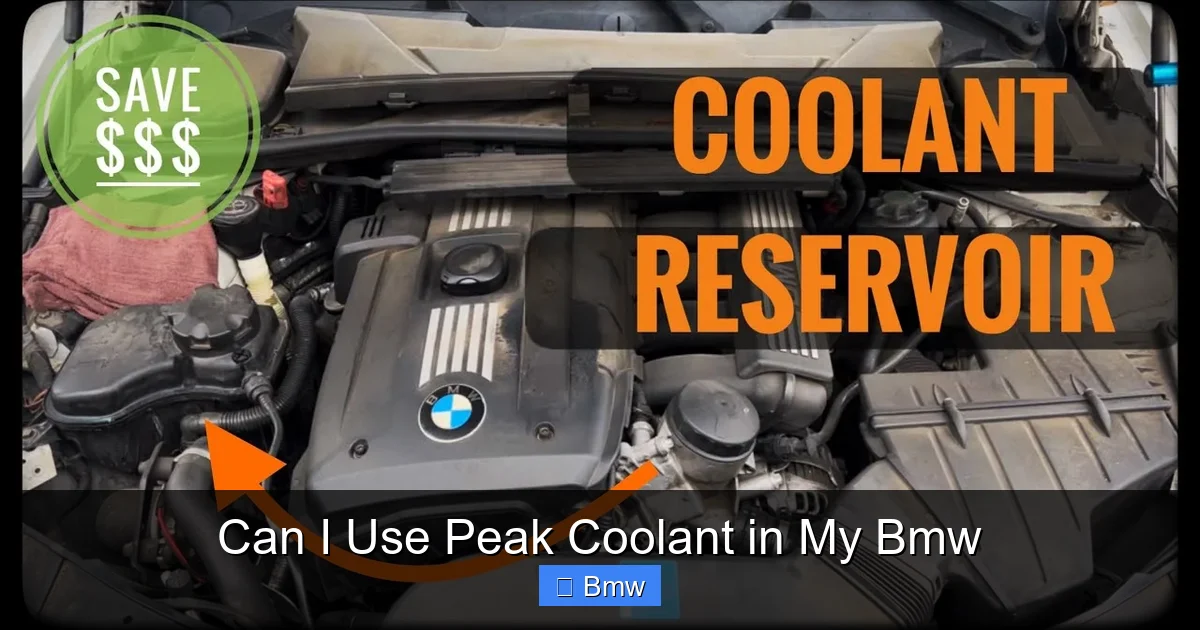
Visual guide about Can I Use Peak Coolant in My Bmw
Image source: i.ytimg.com
BMW-Approved Coolants and Standards
BMW publishes coolant specifications that aftermarket brands must meet to be considered “approved.” The most common are:
- BMW G48 (LL-12-14): A phosphate-free, silicate-free OAT coolant, typically blue. Used in many BMWs from the late 1990s onward.
- BMW HT-12 (LL-98): An older silicate-containing coolant, greenish-blue, for pre-2000 models. Some later models also use it, but G48 is more prevalent.
- BMW MCCA: For high-performance M models, sometimes with additional corrosion inhibitors.
Your owner’s manual will list the exact spec. For example, a 2018 BMW 330i might require G48, while a 1995 325i might use HT-12. BMW also has a “BMW Coolant” sold through dealers, which is essentially G48 or equivalent. When buying aftermarket, look for labels that say “Meets BMW LL-12-14” or “Approved for BMW G48.” Brands like Pentosin, Zerex, and Liqui Moly offer versions that meet these specs.
Why OEM or Equivalent Is Non-Negotiable
You might think, “It’s just coolant; how bad can it be?” But consider this: BMW’s cooling system includes plastic components like the thermostat housing and coolant reservoir, which can degrade if the coolant’s pH is off. OEM BMW coolant is formulated to work seamlessly with these plastics. Aftermarket equivalents that meet BMW standards are tested for compatibility. Generic coolants, including many Peak products, aren’t held to that same level of scrutiny. They might pass general ASTM tests but fail BMW’s specific bench and road tests. Using them is a gamble—sometimes it pays off, but often it leads to gradual wear. For a car that costs as much as a BMW, why risk it? As we discussed in our article about Can I Use Synthetic Oil In My Car, using the right fluid is critical for longevity, and coolant is no exception. Similarly, Can I Use Synthetic Blend Oil In My Car highlights how even oil blends must meet exact specs—coolant is even more sensitive because it circulates through heat exchangers and seals.
The Domino Effect: What Happens When Coolant Goes Wrong?
Using the wrong coolant doesn’t usually cause an immediate explosion. Instead, it’s a slow burn that culminates in catastrophic failure. Let’s trace the domino effect.
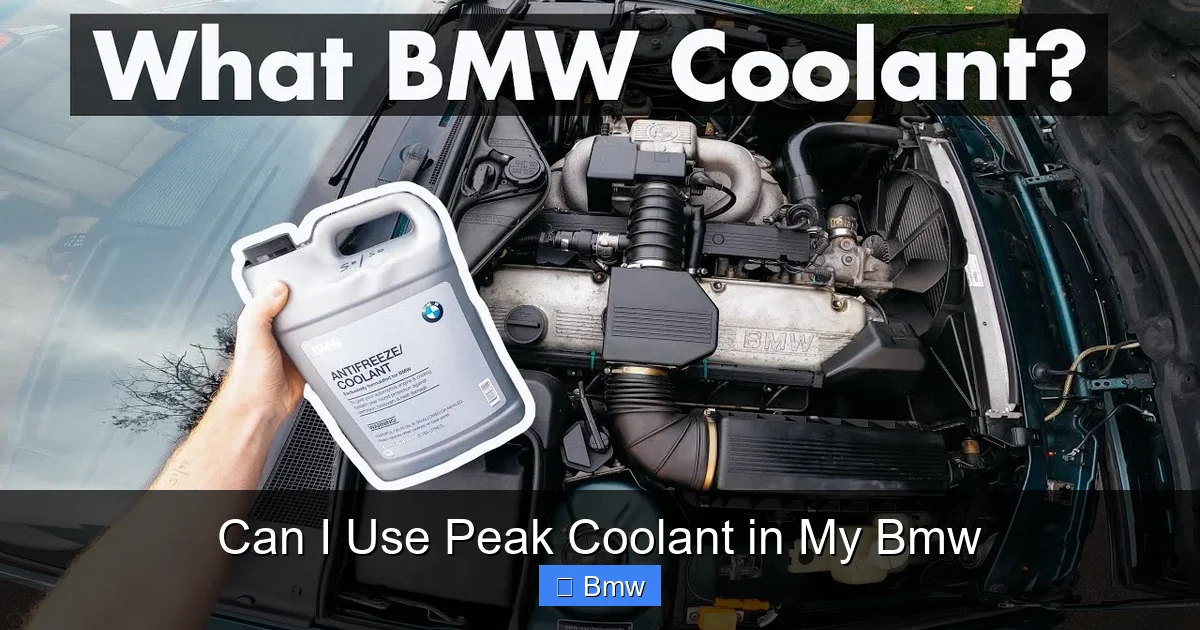
Visual guide about Can I Use Peak Coolant in My Bmw
Image source: i.ytimg.com
Corrosion and Leaks: The Silent Killers
Incompatible coolant can cause electrolysis, where electrical currents flow through the coolant due to impurities or wrong inhibitor levels. This eats away at aluminum radiators, water pump housings, and cylinder heads. You might first notice a slow leak from the water pump or radiator, which seems minor but can lead to overheating. Also, phosphates in some Peak coolants can combine with hard water minerals (if you use tap water to mix) to form scale deposits. Scale insulates heat transfer surfaces, so your engine runs hotter even if the coolant level is full. Over time, this stresses the head gasket, a known weak spot in many BMWs. A blown head gasket means a major repair—thousands of dollars and weeks in the shop.
Component Failure: Water Pumps, Thermostats, and More
BMW water pumps are often driven by the timing chain or belt and are designed for specific coolant lubricity. Wrong coolant can dry out seals or cause bearing wear. Thermostats, which regulate flow, can stick if sludge forms from degraded inhibitors. I’ve seen cases where a car used generic coolant for years, then the thermostat housing cracked due to corrosion, or the heater core clogged, causing no heat in winter. These failures are expensive because they’re labor-intensive to fix. For example, replacing a water pump on a BMW N55 engine can cost $800-$1200 at a dealership. Prevention is vastly cheaper.
Overheating and Engine Damage: The Final Nail
If coolant loses its ability to transfer heat due to deposits or boiling point reduction, the engine temperature spikes. Modern BMWs have tight clearances; overheating can warp the cylinder head, destroy piston rings, or melt sensors. Once that happens, you’re looking at an engine rebuild or replacement. It’s the kind of damage that makes you wish you’d spent an extra $20 on the right coolant. Think of it like this: you wouldn’t put regular 87 octane in a BMW that requires 91 octane, as we noted in Can I Put Premium Gas In My Toyota Corolla—different cars have different needs, and BMW’s cooling system is particularly finicky. Using Peak coolant is akin to using the wrong fuel; it might not kill the engine today, but it’s a ticking time bomb.
How to Choose the Right Coolant for Your BMW
So, if Peak is often a no-go, what should you use? Let’s navigate the options to keep your BMW cool.
Decode Your Owner’s Manual
The easiest step: open your glove box and pull out the owner’s manual. In the “Fluids” section, it will specify the coolant type, often with a part number or specification like “BMW Coolant G48” or “LL-12-14.” If you’ve lost the manual, BMW’s website has digital copies for most models, or you can call a dealership with your VIN. For example, a 2020 BMW X5 might require “BMW Coolant G48,” while a 2007 328i might use “BMW Coolant HT-12.” Write it down. This is your bible.
Aftermarket Options That Meet the Mark
Once you know the spec, shop for aftermarket coolants that explicitly state compliance. Here are some reliable brands:
- Pentosin: Pentosin Coolant G48 is a direct equivalent, often used by BMW themselves in some markets.
- Zerex: Zerex G48 or Zerex European Formula meets BMW LL-12-14.
- Liqui Moly: Their “Kühlerschutzmittel G48” is another solid choice.
- BMW OEM: The safest bet is buying from a BMW dealer or authorized online retailer. It’s pricier but guarantees compatibility.
Avoid generic “universal” coolants or those that say “for all European cars.” BMW is not “all European”; it has its own tribe. Also, beware of counterfeit products online—stick to reputable sellers.
Color Isn’t Everything: Trust the Spec, Not the Hue
Coolant color can be misleading. BMW G48 is blue, HT-12 is greenish-blue, but aftermarket equivalents might be yellow or orange. Some Peak coolants are green or orange. Color is just dye; it doesn’t indicate formulation. Always read the label for the specification, not the color. If a coolant says “Meets G48” or “LL-12-14,” it’s good, regardless of whether it’s blue, pink, or clear. Also, never mix different coolant types. If you’re unsure what’s in your system, a full flush is best before switching to a new type.
Step-by-Step Guide to Checking and Replacing Coolant in Your BMW
Now that you know what to use, let’s talk about how to maintain it. Regular checks are easy and can save you from big problems.
Tools and Materials You’ll Need
For a DIY coolant check or change:
- Gloves and goggles: Coolant is toxic and can irritate skin and eyes.
- Funnel and clean drain pan: For safe draining and filling.
- Correct coolant: Your chosen BMW-approved type.
- Distilled water: Never use tap water; minerals cause scale. Mix 50/50 with coolant unless using pre-mixed.
- Jack and stands (if needed): Some BMWs have the drain plug underneath.
- Vacuum filler (optional): Helps remove air pockets, which are common in BMWs.
The Process: Check and Change
Checking Level and Condition:
- Locate the coolant reservoir (usually a translucent plastic tank with “MAX” and “MIN” marks).
- With the engine cold, check the level. It should be between marks. If low, top up with the correct pre-mixed coolant.
- Look at the color: it should be vibrant (blue, green, etc.). If it’s rusty, brown, or has debris, it’s time for a flush.
Flushing and Replacing (every 2-3 years):
- Drain old coolant: Place pan under radiator drain plug (or lower radiator hose). Open the drain plug and let it empty. Also, drain the engine block by removing the block drain plug if accessible (consult manual).
- Flush with distilled water: Run the engine with distilled water in the system for a few minutes, then drain. Repeat until water runs clear.
- Refill: Close all drains. Mix coolant and distilled water 50/50 (or use pre-mixed). Use a vacuum filler or pour slowly to avoid air locks. Fill to “MAX” mark.
- Bleed air: Start engine, turn heater to max, and let it run until thermostat opens (temperature gauge rises). Watch for bubbles in reservoir; top up as needed. Some BMWs require a specific bleed procedure using the iDrive system or scan tool—check your manual.
- Check for leaks and ensure temperature stabilizes.
If this sounds daunting, consider professional help—but for coolant, it’s a manageable DIY for most enthusiasts with the right tools.
Professional vs. DIY: When to Call a BMW Specialist
DIY saves money, but BMWs can be tricky. If your model has a known cooling system issue (like plastic thermostat housings that crack) or if you’re not comfortable bleeding air, visit a trusted independent BMW shop or dealer. They have scan tools to command the electric water pump (on many modern BMWs) and ensure proper bleeding. A professional flush might cost $150-$300, but it’s worth it for peace of mind. Remember, a mistake here can lead to the domino effect we discussed. So, assess your skill level honestly.
Conclusion: Keep Your Bimmer Cool with the Right Coolant
So, can you use Peak coolant in your BMW? The short answer is: probably not. While Peak makes decent products for many cars, BMW’s specific engineering demands a tailored approach. Peak’s standard coolants often don’t meet BMW’s phosphate-free, silicate-free requirements, risking corrosion and component failure over time. Your BMW is an investment, and using the wrong coolant is like skipping oil changes—it might not bite you today, but it will shorten the engine’s life and hit your wallet hard later.
Stick to the plan: check your owner’s manual for the exact coolant spec (G48, HT-12, etc.), buy OEM or aftermarket brands that explicitly state BMW compatibility, and maintain a regular flush schedule. Don’t be tempted by generic “universal” coolants or bargains that aren’t bargains in disguise. Your cooling system will thank you with reliable performance, no overheating surprises, and a longer-lived engine. And hey, if you’re ever in doubt, a quick call to a BMW specialist or a dealership can save you hours of headache. After all, you didn’t buy a BMW to cut corners—you bought it for the driving experience. Keep it cool, keep it correct, and enjoy the ride.
Frequently Asked Questions
Can I mix Peak coolant with BMW coolant if I’m in a pinch?
No, mixing Peak coolant with BMW-approved coolant is not recommended. Different formulations can react, creating sludge or reducing corrosion protection. If you must add a small amount in an emergency, flush the system as soon as possible with distilled water and refill with the correct coolant.
What are the immediate signs of using wrong coolant in my BMW?
Initially, you might not notice anything. Over time, watch for coolant leaks (puddles under the car), overheating, sweet smells from the engine, or a milky residue under the oil cap (indicating coolant contamination). If you see these, have the system inspected immediately.
How often should I change coolant in my BMW?
BMW typically recommends coolant changes every 2-3 years or every 30,000 miles, whichever comes first. However, check your owner’s manual as some models may have different intervals, especially with newer long-life coolants.
Is there any Peak coolant that is safe for BMWs?
Peak’s “European Car Formula” might list some BMW models, but it’s not guaranteed to meet BMW’s specific standards like G48. For absolute safety, use BMW OEM coolant or brands like Pentosin that are explicitly formulated for BMW. When in doubt, avoid Peak for BMWs.
Can I use distilled water alone in my BMW’s cooling system?
No, distilled water lacks corrosion inhibitors and can cause rust and scale. Always use a proper coolant mixed with distilled water (usually 50/50). In an absolute emergency, you can use distilled water temporarily, but replace it with correct coolant immediately.
What should I do if I already used Peak coolant in my BMW?
If you’ve used Peak coolant, perform a complete flush as soon as possible. Drain the system, flush multiple times with distilled water, and refill with BMW-approved coolant. Monitor for leaks or overheating, and consider having a professional inspect for any early corrosion damage.
