
North Carolina Window Tint Law

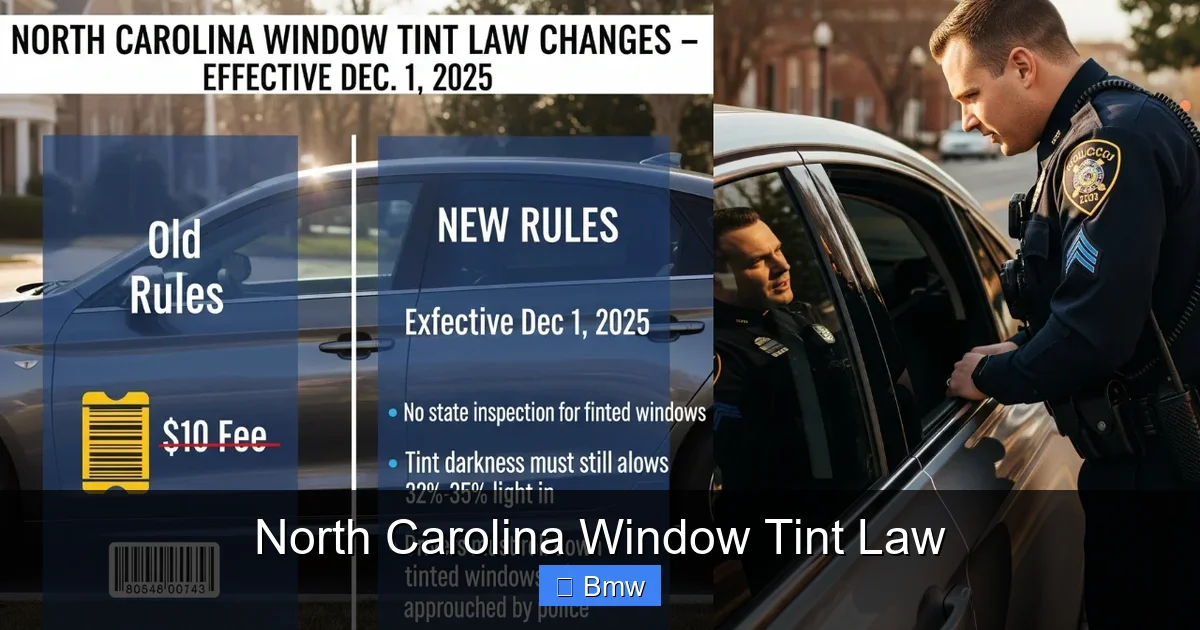
North Carolina window tint law strictly regulates how dark your car windows can be, with different Visible Light Transmission (VLT) limits for front, back, and side windows. The law also limits reflective tint and provides specific medical exemptions. Violations can lead to fines and mandatory tint removal. Understanding these precise rules is essential for any NC driver to avoid tickets and ensure road safety.
So, you’re thinking about getting your car windows tinted in the Tar Heel State. Maybe you want that sleek, cool look. Or perhaps you’re just trying to beat the North Carolina sun and its relentless heat. Before you hand over your keys and your cash, there’s one critical thing you absolutely must know: the North Carolina window tint law. It’s not a vague suggestion; it’s a detailed set of rules with serious consequences for breaking them. This guide will walk you through everything, from the exact percentages to what happens if you get caught, all in plain English. Think of us as your friendly, no-nonsense guide to staying legal and cool on NC roads.
Key Takeaways
- VLT Limits are Specific: North Carolina mandates a 35% minimum light transmission for the front windshield and front side windows. The back side windows and rear window have no darkness limit for passenger vehicles, but must allow more than 35% light if the vehicle is used for transporting passengers for hire.
- Reflection is Restricted: Tint cannot be more than 20% reflective on any window. This prevents excessive glare that could blind other drivers.
- Medical Exemptions Exist: A licensed physician can certify a need for darker tint for specific medical conditions like lupus or porphyria, allowing for darker front-side window tint.
- Enforcement is Active: Law enforcement uses tint meters to check VLT during traffic stops. It’s a primary violation, meaning you can be pulled over solely for an illegal tint violation.
- Penalties Include Fines and Removal: A first offense typically results in a fine and a court order to remove the non-compliant tint. Repeat offenses can lead to higher fines and points on your driving record.
- Factory Tint is Not Always Legal: Many new cars come with a slight factory tint on rear windows. You must verify this factory tint, combined with any aftermarket tint, does not violate the 35% front-side window rule.
- SUVs and Trucks Have Different Rules: The rear window and back side windows on multi-purpose vehicles (like SUVs and trucks) are not subject to the 35% VLT limit, but the front sides must still comply.
📑 Table of Contents
- Understanding the ABCs of VLT: What “35%” Really Means
- Beyond Darkness: The Important Rules on Reflectivity and Color
- The Medical Exemption: How to Get a Darker Front Tint
- The Cost of Going Dark: Penalties and Enforcement
- Practical Guide: Getting Legal Tint in North Carolina
- Special Considerations: SUVs, Trucks, and Aftermarket vs. Factory
- Conclusion: Stay Informed, Stay Legal, Stay Cool
Understanding the ABCs of VLT: What “35%” Really Means
Let’s start with the most important term you’ll hear: VLT. It stands for Visible Light Transmission. Simply put, it’s the percentage of visible light that a window allows to pass through. A 35% VLT tint means 35% of the outside light gets in, and 65% is blocked. The lower the percentage number, the darker the tint. A 5% tint is limo-black; a 70% tint is very light. North Carolina’s law is built entirely around these VLT numbers, and they change depending on which window you’re looking at.
The Front Windshield and Front Side Windows: The Strictest Rule
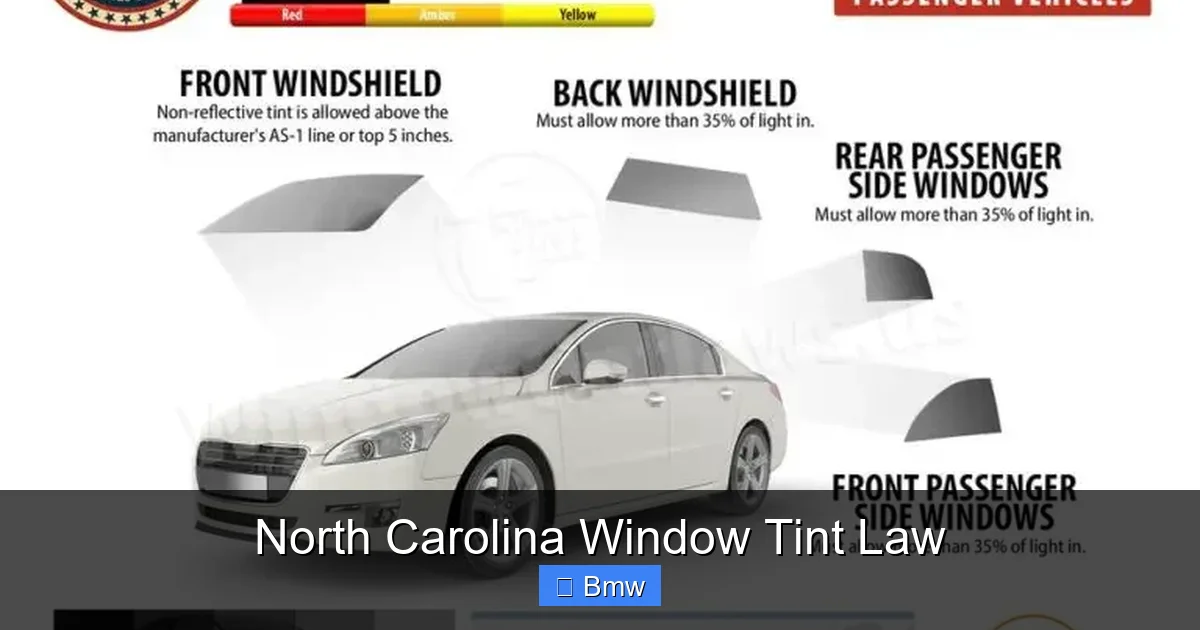
For your front windshield, the law is clear. You can have non-reflective tint on the top 5 inches of the windshield, often called the “AS-1 line” marked at the top of most windshields. Below that line, the windshield must allow at least 35% of light through. For the front driver and passenger side windows, the rule is even simpler: they must allow a minimum of 35% of light to pass through. This is a non-negotiable rule for all passenger vehicles. So, if you’re driving a BMW 3 Series, a Toyota Camry, or a Ford F-150 being used as a personal vehicle, your front side windows must be at least 35% VLT. If you’re considering tinting these windows, you need to know that a “35% tint” film is actually the darkest you can legally go. Many shops will recommend a 35% or even a slightly lighter 40% to be safe and account for factory glass that may already block a tiny percentage of light. For a deep dive into what these percentages actually look like, check out this helpful guide on 35 percent window tint meaning with real-life examples.
The Back Side and Rear Windows: More Freedom (But Not for Everyone)
Here’s where it gets interesting. For the back side windows (behind the driver and passenger) and the rear window, North Carolina law is much more lenient for standard passenger vehicles. There is no specific darkness limit. You can go as dark as you want—5%, 10%, whatever—on these rear windows. This is great for families, for privacy, and for keeping your trunk or cargo area out of sight. However, there’s a crucial exception. If your vehicle is used for “transporting passengers for hire,” like a taxi, limousine, or rideshare vehicle (Uber/Lyft), then those rear windows must also allow at least 35% of light through. For most people in their personal cars, SUVs, and trucks, the rear is a free-for-all in terms of darkness.
Beyond Darkness: The Important Rules on Reflectivity and Color
It’s not just about how dark the tint is. North Carolina also regulates how reflective your windows can be and what colors you can use. These rules are just as important and are often overlooked.
Visual guide about North Carolina Window Tint Law
Image source: overcomeopioids.org
The 20% Reflectivity Cap
Your window tint cannot be more than 20% reflective. This means the film can’t act like a mirror. This rule applies to all windows on the vehicle. The reason? Highly reflective tint, especially on large rear windows, can create dangerous glare for drivers following you. It can essentially blind them for a moment, especially at night or when the sun hits it just right. Most quality, non-reflective or low-reflective dyed or hybrid films easily meet this standard. But some of the very dark, metallic, or “mirror” tints will fail this test. When you get your tint installed, the shop should be able to tell you the reflectivity rating of the film they’re using.
No Red, Yellow, or Amber Tint
North Carolina law explicitly states that no red, yellow, or amber tint is allowed on any window. The reasoning is to prevent confusion with emergency vehicles or to maintain clear visibility for law enforcement to see inside a vehicle during a traffic stop. You’ll find most standard tints are shades of black or charcoal. Some premium films offer a slight bronze or gold hue, which is generally acceptable as long as it doesn’t fall into the prohibited color spectrum. If a shop tries to sell you a “cherry red” or “canary yellow” tint for your front windows, it’s an automatic red flag that it’s not street legal in NC.
The Medical Exemption: How to Get a Darker Front Tint
What if you have a legitimate medical condition that makes you extremely sensitive to sunlight? Conditions like systemic lupus erythematosus, porphyria, xeroderma pigmentosum, or severe photosensitivity caused by certain medications can make even a short drive agonizing. North Carolina recognizes this and offers a medical exemption.
Visual guide about North Carolina Window Tint Law
Image source: windowtintlaws.us
Who Qualifies and What’s Required
To qualify, you must obtain a signed statement from a licensed physician (MD or DO) or an advanced practice registered nurse (APRN). This statement must clearly diagnose your condition and explicitly state that you require a darker window tint for treatment or protection. It must also specify which windows need the exemption—typically, this is for the front side windows, allowing them to be darker than the standard 35% VLT. The statement must be on official letterhead and include your name, the date, and the provider’s signature and license number.
How to Use the Exemption
You must carry this signed medical statement in your vehicle at all times. It’s your legal protection if you are stopped and your tint is below the 35% VLT threshold for the front windows. The law does not specify a maximum darkness for the exempted windows, but the tint must still be “non-reflective” and not a prohibited color. It’s also wise to ensure your tint shop is aware of the exemption so they install a film that meets all other legal requirements. This exemption is for the individual named on the statement and does not transfer if you sell the car.
The Cost of Going Dark: Penalties and Enforcement
So, what happens if you’re driving around with illegal tint? North Carolina takes this seriously, and enforcement is common. It’s considered a “primary violation,” which is a big deal.
Visual guide about North Carolina Window Tint Law
Image source: windowtintlaws.us
Primary vs. Secondary Violation
A primary violation means a police officer can pull you over solely because they suspect your window tint is illegal. They don’t need any other reason, like a broken taillight or speeding. This is different from a secondary violation, where an officer can only ticket you for tint if they’ve already stopped you for something else. In NC, tint is primary. Officers often carry handheld tint meters (called photometers) that instantly measure the VLT of your window. They’ll ask you to roll down your front window and place the meter on it. It gives a digital readout. If it’s below 35%, you’re getting a ticket.
The Real Consequences: Fines, Fees, and Forced Removal
The standard penalty for a first offense is a fine, typically around $200 or more, plus court costs. But the fine is often the least of your worries. The court will almost certainly issue an order for you to remove the non-compliant tint from the offending windows within a specified timeframe (usually 30 days). You’ll have to provide proof of removal, like a receipt from a tint shop showing the film was taken off. If you don’t comply, you could face additional fines or even a license suspension. A second offense within a short period (like 3 years) will likely result in a higher fine and could add points to your driver’s license, affecting your insurance. It’s a hassle and an unexpected expense. Speaking of insurance, while a tint ticket itself usually doesn’t directly raise your premium, the points on your license might. For a look at how driving records affect costs in the state, you can read about how much is car insurance in North Carolina.
Practical Guide: Getting Legal Tint in North Carolina
Okay, so you know the rules. Now, how do you actually get tinted without breaking the law? The process is straightforward, but you have to be an informed consumer.
Step 1: Know Your VLT Before You Buy
Don’t just walk into a shop and say “I want dark tint.” You need to know the legal limit for your specific windows. For your front sides and windshield (top 5″), the film you buy must be rated for 35% VLT or higher (meaning lighter). Remember, factory glass already blocks a small amount of light (usually 5-15%). A reputable shop will test your factory glass with a meter first. If your glass blocks 10% of light, and you put on a 35% film, the combined VLT will be around 31.5% (0.35 * 0.90), which is illegal. A good shop will account for this and recommend a film with a higher VLT rating (like 38% or 40%) to achieve a legal combined result. Always ask to see the film’s certification and have them test the final installation with a meter before you pay.
Step 2: Choose a Reputable, Legal-Compliant Shop
This is the most critical step. Not all tint shops are created equal. Some may knowingly install illegal tint, betting that you won’t get caught, or they might not understand NC’s specific rules. Look for shops that advertise their compliance with state laws. Read reviews. Ask them directly: “Are you familiar with the 35% front-side VLT rule in North Carolina? Will you provide a certificate of compliance and test the windows with a meter after installation?” A professional, legitimate shop will welcome these questions. They want you to be legal so you don’t come back angry with a ticket. They should also use high-quality film that won’t bubble, fade, or peel prematurely. For an idea of how long a good tint job should last, you can research how long car window tint lasts.
Step 3: Understand the Installation Process
Professional installation typically takes a few hours. The installer will meticulously clean the inside of your windows, cut the film to shape, and apply it using a squeegee and heat gun to remove air and moisture. They will then install the defroster lines (if applicable) and give you aftercare instructions. You usually cannot roll down the windows for 2-7 days to allow the film to cure and adhere properly. A good installation is key to both longevity and legality—poorly applied film can bubble, which can actually make the window appear darker in spots and lead to a ticket.
Special Considerations: SUVs, Trucks, and Aftermarket vs. Factory
The rules aren’t one-size-fits-all. Your vehicle type and the origin of your tint matter.
Multi-Purpose Vehicles (MPVs) vs. Passenger Cars
North Carolina law makes a distinction between “passenger vehicles” and “multi-purpose vehicles” (MPVs). MPVs are defined as vehicles designed to carry 10 or fewer people and built on a truck chassis or with an enclosed cargo area, like most SUVs, minivans, and pickup trucks. The big difference? For MPVs, there is NO VLT limit on the rear side windows and the rear window. They can be as dark as you want, period. However, the front side windows on an MPV are still held to the same 35% VLT minimum as a passenger car. So, if you drive a BMW X5 (an SUV), your front sides must be 35%+, but your back sides and rear can be jet black. If you drive a BMW 3 Series sedan (a passenger car), your back sides can also be as dark as you want, but your rear window… well, that’s a point of confusion for many.
The Passenger Car Rear Window Loophole (and Its Practical Reality)
The statute for passenger cars is silent on a VLT limit for the rear window. Technically, this means there is no legal minimum. However, this is where practicality and enforcement collide. A completely blacked-out rear window on a sedan makes it nearly impossible to see behind you when reversing or checking your blind spot, creating a major safety hazard. More importantly, it can draw the attention of law enforcement. While the letter of the law might not forbid it, an officer could reasonably argue that a 0% VLT rear window on a sedan creates an unsafe driving condition or violates the spirit of the law. Most tint shops and legal advisors strongly recommend keeping rear windows on sedans at least somewhat visible, often suggesting 35% or even 50% for safety and to avoid being a target. For SUVs with a rear hatch and large cargo area, a dark rear window is standard and less likely to be questioned.
Factory Tint: Don’t Assume It’s Legal
Many new vehicles, especially SUVs and trucks, come with a slight factory tint on the rear glass. This “privacy glass” is often around 20-25% VLT. It is legal from the manufacturer. The problem arises when you add aftermarket tint to it. If your factory rear glass is 25% VLT and you add a 20% aftermarket film, the combined VLT could be 5% (0.25 * 0.20). That’s fine for an SUV’s rear window. But if you add that same 20% film to your front side windows, and your factory front glass is 80% VLT, the combined result is 16% (0.80 * 0.20), which is wildly illegal. You must always consider the factory glass’s VLT as part of the total equation. Reputable shops will measure your factory glass first.
Conclusion: Stay Informed, Stay Legal, Stay Cool
Navigating the North Carolina window tint law doesn’t have to be a headache. The core principles are simple: 35% minimum VLT for front sides and most of the windshield, no excessive reflection, no funky colors, and freedom for rear windows on most vehicles. The key is to go into the process with your eyes open. Do a little research, choose a professional tint shop that prioritizes legal compliance, and don’t be afraid to ask questions. A proper, legal tint job will enhance your driving comfort, protect your car’s interior from UV damage, and give you that great aesthetic look without the constant anxiety of a ticket. Remember, the cost of a fine and forced removal is far higher than the cost of doing it right the first time. So, enjoy the shade, but do it by the book. Your wallet and your driving record will thank you for it.
Frequently Asked Questions
Can I have 20% tint on my front windows in North Carolina?
No. North Carolina law requires front side windows to allow at least 35% of light to pass through. A 20% VLT tint blocks too much light and is illegal for these windows, resulting in a ticket if caught.
What happens if I get a window tint ticket in NC?
You will receive a fine (often over $200) and a court order to remove the illegal tint from the offending windows within a set period, usually 30 days. You must provide proof of removal to the court. Repeat offenses carry higher penalties.
Do I need a medical exemption for darker front tint?
Yes, if you need front side window tint darker than the legal 35% VLT limit. You must obtain a signed statement from a licensed physician or APRN diagnosing a qualifying condition like lupus or severe photosensitivity. You must carry this document in your vehicle at all times.
How do police check my window tint?
Officers use a handheld device called a tint meter or photometer. They will ask you to roll down your front window and place the meter on the glass. It instantly measures the VLT percentage. If it reads below 35% on the front sides, it’s a violation.
Are the rules different for SUVs and trucks?
Yes. For SUVs, trucks, and other multi-purpose vehicles, there is no VLT limit for the rear side windows and the rear window. However, the front side windows must still meet the 35% VLT minimum, just like on a passenger car.
Can I tint my windows myself to save money?
While it’s legal to purchase and install your own tint, you are 100% responsible for ensuring the final VLT meets state law. DIY jobs often result in bubbles, uneven application, and incorrect VLT, leading to tickets. Professional installation is recommended for both quality and compliance.
