
40 Percent Window Tint Explained

40 percent window tint means 40% of visible light passes through the glass, offering a balanced mix of privacy, heat rejection, and visibility. For BMW owners, it’s a popular choice that enhances the vehicle’s sleek aesthetic while providing significant UV protection and interior preservation. However, legality varies by state, so always check local window tint laws before installation to ensure compliance and avoid tickets.
Key Takeaways
- VLT Explained: 40% VLT (Visible Light Transmission) means 40% of outside light enters the car, providing moderate shade without severely darkening the cabin.
- BMW Benefits: This tint level perfectly complements BMW’s design language, reduces glare, protects the interior from sun damage, and improves cabin comfort.
- Legal Compliance: Many states have specific VLT limits for front, rear, and side windows. 40% is often legal for rear windows but may be too dark for front sides in some regions.
- Professional Installation: For optimal results on a BMW’s complex curves, professional installation is highly recommended to avoid bubbles, peeling, and poor fit.
- Heat & UV Rejection: Quality 40% ceramic or metallic films block over 99% of UV rays and a significant portion of infrared heat, keeping the cabin cooler.
- Visibility & Safety: Unlike darker tints, 40% maintains excellent daytime and nighttime visibility, crucial for safe driving and navigating poor weather conditions.
- Comparison Point: It’s darker than a typical factory tint (often ~70-80%) but lighter than limo tint (5%), striking a practical middle ground for daily drivers.
📑 Table of Contents
- Understanding Window Tint percentages: What Does 40% VLT Really Mean?
- Why BMW Owners Love 40% Window Tint: The Perfect Balance
- The Legal Landscape: Navigating Tint Laws with Your BMW
- The Installation Process: Why Professional Tinting is Non-Negotiable for a BMW
- 40% Tint vs. Other Common Shades: A Practical Comparison
- Maintenance and Care: Keeping Your 40% Tint Perfect
- Conclusion: Is 40% Window Tint Right for Your BMW?
Understanding Window Tint percentages: What Does 40% VLT Really Mean?
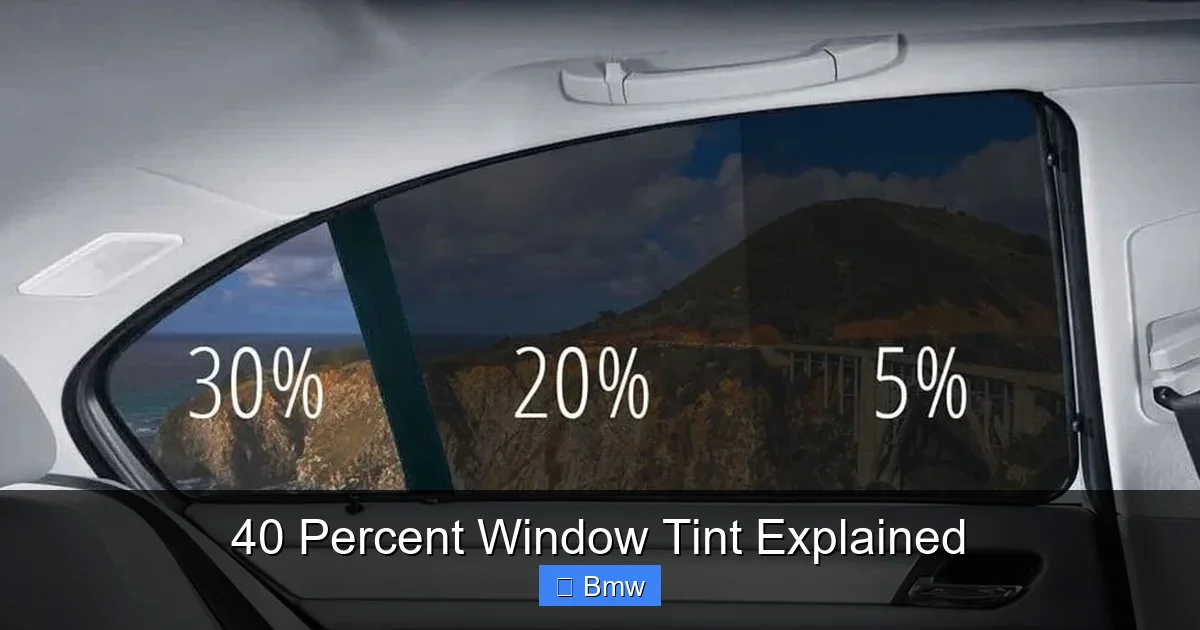
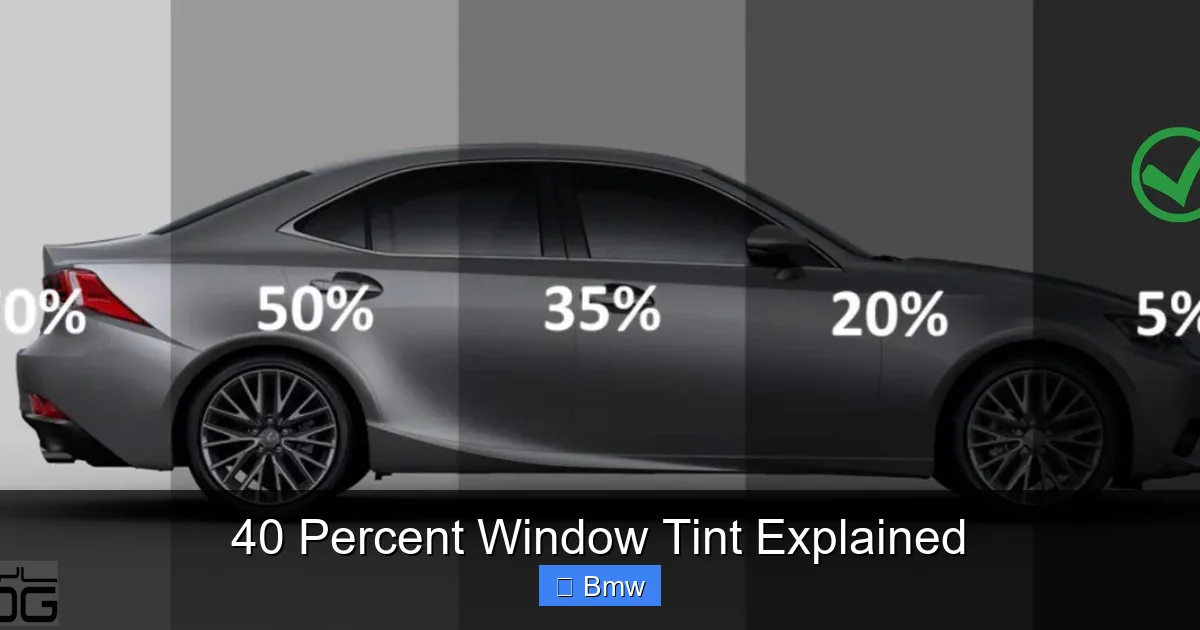
Let’s cut through the confusion right away. When you see “40 percent window tint,” it refers to the film’s VLT rating, or Visible Light Transmission. This is a simple but critical number. A 40% VLT film allows 40% of the sun’s visible light to pass through your car’s glass. The other 60% is blocked, reflected, or absorbed by the tint film. So, it’s not a “40% dark” tint; it’s a “40% light” tint. The higher the percentage, the lighter and more transparent the tint. A 70% tint is very light, barely noticeable, while a 5% “limo” tint is extremely dark, allowing only 5% of light through.
For a BMW, this 40% shade sits in a very sweet spot. It’s visibly darker than the often-clear factory glass you get on many models, providing a noticeable cosmetic upgrade that makes the car look more cohesive and sporty. The windows appear richer, and the car’s lines are drawn more sharply. But it doesn’t turn your cabin into a cave. You can still see clearly in and out, which is essential for safety, parking, and overall driving confidence. This balance is why it’s a perennial favorite among luxury car owners who want both form and function.
The Science of Light: How Tint Films Work
Modern window tint isn’t just a dark sticker. It’s a sophisticated multi-layered product, often made from polyester or other polymers. The magic happens in these layers, which can contain metallic particles (for heat rejection) or ceramic nanoparticles (for both heat and electronic signal clarity). These particles are designed to target specific parts of the solar spectrum. High-quality films will aggressively block ultraviolet (UV) rays—the primary cause of interior fading and skin damage—and infrared (IR) radiation, which you feel as heat. A good 40% film will block over 99% of UV rays and a substantial portion of IR heat, even though it lets in 40% of visible light. This selective blocking is what makes a tint effective without needing to be pitch black.
Why BMW Owners Love 40% Window Tint: The Perfect Balance
BMWs are engineering masterpieces focused on the driving experience. A great window tint should enhance, not hinder, that experience. The 40% VLT level does exactly that. It provides a meaningful upgrade in comfort and protection while respecting the brand’s ethos of clear visibility and connected driving. Let’s break down the specific advantages for a BMW owner.
Visual guide about 40 Percent Window Tint Explained
Image source: richsautobodyshop.com
Aesthetic Enhancement and Brand Consistency
One of the first things people notice about a tinted car is its appearance. A 40% tint gives your BMW a finished, premium look. It reduces the “glass house” effect of stock windows, making the car seem more substantial and intentional. For models like the 3 Series, 5 Series, or X5, this darker side glass complements the black trim, kidney grilles, and often dark alloy wheels, creating a more aggressive, cohesive, and expensive appearance. It’s a cosmetic modification that delivers high visual return for relatively low cost.
Superior UV and Interior Protection
Your BMW’s interior is a sanctuary of leather, wood, and soft-touch plastics. The sun is its mortal enemy. Prolonged exposure to UV rays will crack leather dashboards, fade fabric seats, and degrade electronic screens. A quality 40% ceramic tint acts as a sunscreen for your car’s interior, blocking over 99% of harmful UV radiation. This preservation is not just about keeping things looking new; it’s about protecting a significant financial investment. The cabin will stay cooler, materials will last longer, and you won’t have to worry about getting a sunburn on your left arm during a long drive.
Effective Heat Rejection Without Compromise
Getting into a car that’s been sitting in the sun can be brutal. A 40% tint with good IR rejection can lower cabin temperatures by 10-20 degrees Fahrenheit or more. This means your air conditioning doesn’t have to work as hard, which can slightly improve fuel efficiency (or range in an electric BMW i-series) and reduces wear on the AC system. The key is that this heat rejection comes from advanced film technology, not from extreme darkness. You get the cooling benefit without the “tunnel vision” or difficulty seeing at night that comes with much darker films.
Glare Reduction for Enhanced Safety
Glare from the sun or other vehicles’ headlights is a major safety hazard. The 40% tint level effectively cuts down on this blinding light. It softens the harshness of low-angle sun during sunrise and sunset, making it easier on your eyes and reducing fatigue on long journeys. It also dampens the glare from headlights at night, though not to the point of impairing your vision. For a driver-focused brand like BMW, this improvement in visual comfort directly contributes to a more relaxed and safer driving experience.
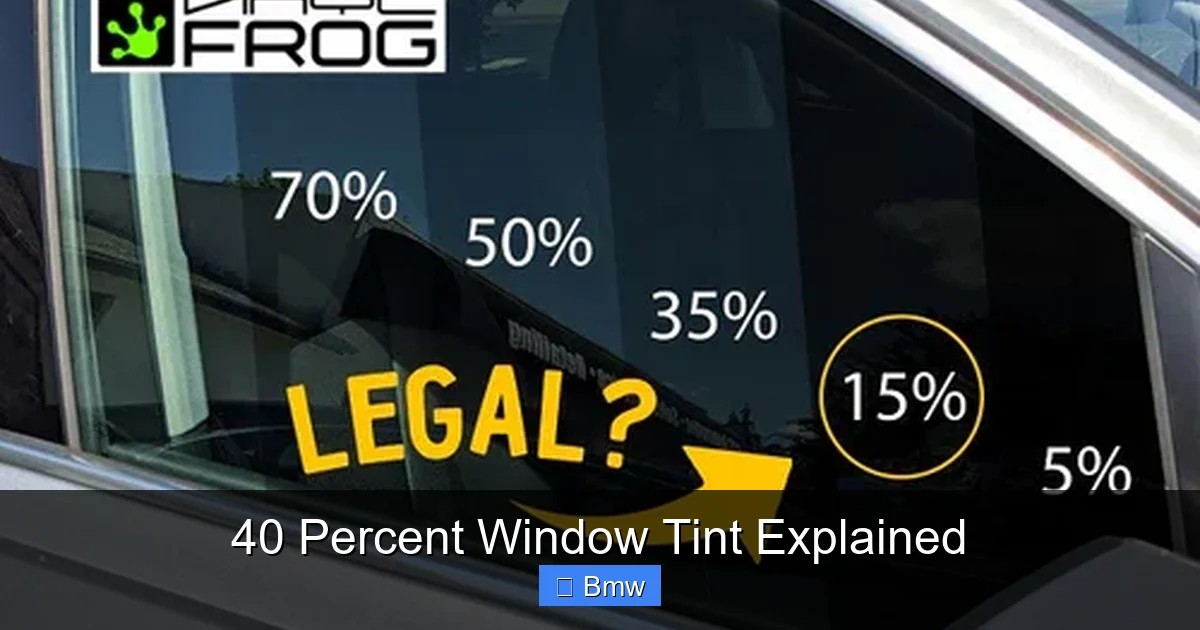
This is the non-negotiable part. Window tint laws are not federal; they are set by each state (and sometimes by local municipalities). They specify the minimum VLT percentage allowed for the front windshield, front side windows, rear side windows, and rear window. Violating these laws can result in fines, a fix-it ticket, and even a court appearance. For a BMW owner, this is crucial because you’re likely to drive across state lines, and a legal tint in your home state might be illegal just over the border.
Visual guide about 40 Percent Window Tint Explained
Image source: cdn.shopify.com
Common Legal Patterns for 40% Tint
While you must always check your specific state’s law, patterns emerge. A 40% tint is generally:
- Rear Windows (Sides & Backlight): Permitted in almost all states. Many states have no VLT limit for rear windows on passenger vehicles.
- Front Side Windows: This is the common restriction zone. Many states mandate that front side windows must allow more than 70% or even 75% of light through. In these states, a 40% film on the front doors would be illegal. States like California, New York, Illinois, and Virginia have strict front-side limits (often 70%).
- Windshield: Almost universally, tint is only allowed on the top portion (the “AS-1” line), and even then, it must be non-reflective and usually very light (70%+). A 40% tint on the windshield is illegal everywhere.
Before you tint your BMW, you must know your state’s front-side window limit. If your state allows 40% all around, you’re golden. If it only allows 70% in front, you have two legal options: install a 40% tint only on the rear windows and a 70%+ tint on the front, or install a 40% tint all around and accept the risk of a ticket if you frequently drive in stricter states. Some states offer medical exemptions for those with sun-sensitive conditions.
State-Specific Examples for the BMW Driver
Let’s look at a few popular BMW states:
- California: Front side windows must allow 70%+ VLT. Rear windows can be any darkness. A 40% tint on the front of your BMW 3 Series in LA would be a ticketable offense.
- Texas: Allows 25% VLT on front sides and any darkness on rear sides. A 40% tint is perfectly legal on all windows of your BMW X5.
- Florida: Allows 28% on front sides and 15% on rear sides. 40% is legal front and rear.
- New York: Requires 70% on front sides. 40% is illegal on the front doors of your BMW parked in Manhattan.
The safest approach is to tint your car to the strictest standard of any state you regularly visit. For the truly meticulous, you can consult the comprehensive state-by-state guide that details every regulation. Remember, law enforcement uses a tint meter to measure VLT on the spot. There is no “it looks light enough” argument. It’s a numerical measurement.
The Installation Process: Why Professional Tinting is Non-Negotiable for a BMW
You might be tempted by a DIY kit to save money. For a BMW, this is a false economy. The installation is arguably more important than the film itself. A poor installation will look terrible, develop bubbles and peeling, and potentially damage your car’s expensive interior trim. BMW windows are often complex, with steep angles, tight corners, and embedded antennas and sensors (for rain, defrost, etc.). This demands a skilled professional.
Visual guide about 40 Percent Window Tint Explained
Image source: cdn.shopify.com
What a Professional Installation Entails
A reputable tint shop will follow a meticulous process:
- Thorough Cleaning: The inside of the glass is scrubbed with a special solution and razor blades to remove every speck of dust, dirt, and oil. Any debris left will be trapped under the film.
- Precision Cutting: The film is cut to shape, either by computer plotter (for perfect accuracy) or by hand on the glass. For a BMW, computer-cut patterns are ideal to ensure a perfect fit around the door panels and mirrors.
- Application: The installer sprays the glass with a slip solution, lays the film, and uses a squeegee to push out all the water and air. This requires immense skill to avoid creases and to properly seat the film in curved areas.
- Heat Shrinking: For complex curves (common on BMW rear windows), the film is heat-shrunk with a heat gun to conform perfectly to the glass contour without stretching or distorting.
- Trimming and Final Squeegee: Excess film is trimmed with a sharp blade, and the edges are sealed. The car is then cleaned, and you’re given aftercare instructions.
Look for a shop with specific experience on European luxury cars. They will have the patterns and know-how to deal with your BMW’s specific quirks. Ask to see examples of their work on similar vehicles.
Choosing the Right 40% Film for Your BMW
Not all 40% films are created equal. The base VLT is just one spec. You need to consider:
- Material: Ceramic films are the gold standard. They offer the best heat rejection (especially IR), no signal interference (important for BMW’s keyless entry, GPS, and antennas), and excellent clarity. Metallic films also reject heat well but can interfere with radio and cell signals. Dyed films are the cheapest but offer minimal heat rejection and can fade/purple over time.
- Warranty: Reputable brands offer a lifetime warranty against peeling, bubbling, and color change. Get this in writing. A good warranty is a sign of a quality product.
- Brand: Stick with known, reputable brands like 3M, Llumar, SunTek, or Huper Optik. Avoid “budget” films from unknown manufacturers. For a BMW, you want a product that will last and perform.
When you get a quote, it should specify the film manufacturer, model, and warranty. A professional installer will help you choose the best film within your budget that meets your needs for heat rejection and clarity.
40% Tint vs. Other Common Shades: A Practical Comparison
To truly understand 40%, it helps to see how it stacks up against other popular VLT levels. Let’s compare it to the very light 70% and the very dark 20%.
40% vs. 70% Tint: The “Factory Tint” Look
A 70% tint is extremely light. On many new cars, especially SUVs, the rear glass comes from the factory with a very light tint, often in the 70-80% range. Adding a 70% film to clear glass will give a very subtle, almost imperceptible darkening. It provides a small boost in UV protection but minimal heat rejection or privacy. For a BMW owner who wants the absolute maximum visibility and zero chance of legal issues (even in strict states), 70% is the safest, most invisible upgrade. However, it won’t dramatically change the car’s appearance or provide significant cooling. If your goal is a noticeable cosmetic change, 40% is the minimum you should consider.
40% vs. 20% Tint: The “Dark” Look
A 20% tint is significantly darker. It offers excellent privacy—you can’t see into the car easily during the day—and strong heat rejection. However, it comes with major drawbacks for a daily-driven BMW. Visibility at night and in poor weather (rain, fog, snow) is noticeably reduced, which can be a safety concern. It’s also illegal for front side windows in most states. The 20% shade gives a very aggressive, “aftermarket” look. While some BMW owners prefer this stealthy aesthetic, the 40% tint provides a more sophisticated, balanced, and practical alternative that still looks great.
To truly visualize the difference between these shades, using a visualization tool can be incredibly helpful before you make a decision. Seeing the side-by-side comparison on a car image that resembles your BMW can solidify your choice.
The “Sweet Spot” Verdict
For the vast majority of BMW owners who want a tint that is legal in many places for rear windows, provides a clear aesthetic upgrade, maintains excellent visibility, and offers real heat/UV protection, 40% is the undisputed sweet spot. It’s the “no-regrets” choice. You get the benefits of tint without the constant worry about nighttime visibility or frequent run-ins with the law on your front doors (depending on your state).
Maintenance and Care: Keeping Your 40% Tint Perfect
Once your BMW’s windows are beautifully tinted, proper care ensures they last for years. Newly installed film needs a curing period—usually 2-7 days—where you should avoid rolling down windows, washing the inside, or touching the film excessively. After it’s fully cured:
- Cleaning: Use a soft, lint-free microfiber cloth and an ammonia-free cleaner (like a dedicated automotive interior cleaner or a mild soap and water solution). Never use abrasive pads, paper towels, or harsh chemicals (Windex, etc.) on the inside of tinted windows. They can degrade the film’s adhesive and surface.
- Scratches: The film is on the *inside* of the glass. Scratches on the *outside* of the glass are on the glass itself and are not fixable. Scratches on the *inside* that are on the film can sometimes be polished out by a professional, but prevention is key. Be gentle when cleaning and with seatbelt buckles.
- Longevity: A high-quality, professionally installed film with a good warranty can last 10+ years. It may slowly darken slightly over time due to UV exposure, but it shouldn’t peel, bubble, or turn purple. If you experience bubbling, it’s usually due to poor installation or contamination during install, and the warranty should cover it.
- Sunshades: Using a windshield sunshade when parked is still a good idea. It protects the dash and reduces overall heat load, taking some stress off the tint film.
For specific care questions, especially regarding your BMW’s unique interior materials, your installer is the best resource. They know the film they used and its specific requirements.
Conclusion: Is 40% Window Tint Right for Your BMW?
After this deep dive, the answer for most BMW enthusiasts is a resounding yes. A 40% VLT window tint represents the ideal compromise for a premium daily driver. It delivers a sophisticated, sportier appearance that enhances the car’s design language. More importantly, it provides tangible functional benefits: it protects your valuable interior from sun damage, significantly reduces cabin heat and glare, and maintains excellent visibility for safe driving.
The single most important step is verifying your state’s window tint laws, particularly for the front side windows. When in doubt, err on the side of caution for the front and consider a lighter shade or dual-tint approach (darker rear, lighter front). Then, invest in a high-quality ceramic film from a reputable brand and, most critically, have it installed by a seasoned professional with experience on European vehicles. This combination ensures your BMW gets a flawless, long-lasting tint that you’ll enjoy every time you get behind the wheel. It’s not just an accessory; it’s a smart upgrade that preserves your car’s value and your driving pleasure.
Frequently Asked Questions
Is 40% window tint legal on the front windows of my BMW?
It depends entirely on your state. Many states, including California, New York, and Illinois, require front side windows to allow at least 70% of light through, making 40% illegal. States like Texas and Florida allow much darker tints. You must check your specific state’s VLT limit for front side windows before installing.
Will 40% tint affect my BMW’s keyless entry, GPS, or radio signal?
Not if you choose a ceramic-based film. High-quality 40% ceramic films are designed to be non-metallic, meaning they do not interfere with radio frequency signals. Cheaper metallic or dyed films can sometimes block or weaken signals. Always specify you want a ceramic film for your BMW to avoid any electronic interference.
How long does it take to tint a BMW, and what is the curing time?
The actual installation on a typical BMW sedan or SUV takes 2-4 hours for all windows. After installation, the film needs to cure and fully adhere to the glass. This curing period is typically 2-7 days, depending on climate (heat and humidity speed it up). During this time, avoid rolling down windows or aggressively cleaning the inside.
Can I tint the sunroof of my BMW with 40% film?
Yes, you can tint a sunroof, but it requires special consideration. Sunroof glass is often tempered and can have different heat properties. You must use a film specifically rated for sunroof use, as standard window film can crack or fail due to the extreme temperature cycling. Discuss this with your installer; many recommend a specific “sunroof” film or even a different VLT for optimal performance and safety.
Will 40% tint significantly lower my BMW’ fuel efficiency or electric range?
The impact is minimal but positive. By reducing solar heat gain, the cabin stays cooler, so your air conditioning doesn’t have to work as hard. This can lead to a very slight improvement in fuel economy (maybe 1-2%) or, more notably, extended range in an electric BMW like an i4 or iX by reducing AC power draw. The primary benefit is comfort, not major efficiency gains.
Does having aftermarket window tint affect my BMW’s resale value?
3
It can, but usually positively if done professionally with a quality film. A clean, legal, high-quality tint is seen as a desirable feature by many buyers, as it implies the previous owner cared for the car’s interior. A poor-quality, bubbled, or illegal tint, however, is a major red flag and can hurt value. Always keep receipts and warranty info to prove it was done correctly.
