
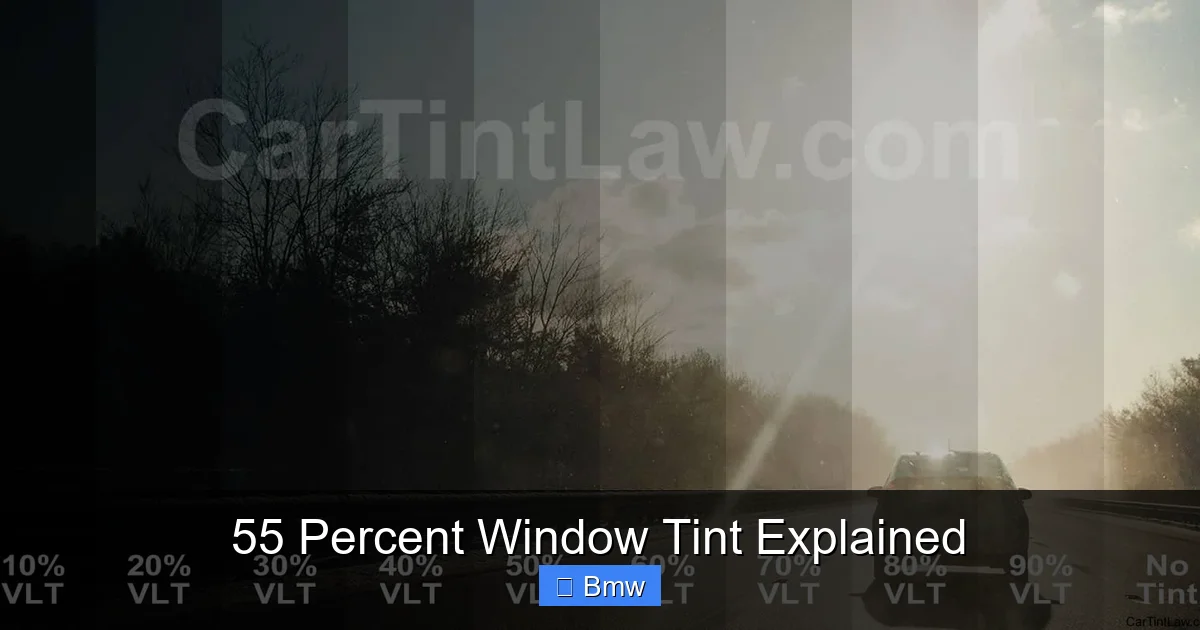
55 Percent Window Tint Explained

55 percent window tint offers a subtle, factory-like appearance while providing meaningful UV protection and heat rejection for your BMW. It’s legal in most states for front sides, making it a popular, balanced choice. Proper installation by a professional is crucial to avoid bubbles and ensure compliance with your specific BMW model’s regulations and sensor compatibility.
Key Takeaways
- Understanding 55 Percent Window Tint Explained: Provides essential knowledge
📑 Table of Contents
- What Does “55 Percent Window Tint” Actually Mean?
- Why 55% Tint is a Top Choice for BMW Owners
- The Legal Landscape: Is 55% Tint Legal on My BMW?
- The Real Benefits: Beyond Just “Looking Cool”
- Installation is Everything: Why Professional Tinting for Your BMW is Mandatory
- Maintenance and Care: Keeping Your 55% Tint Perfect
- Cost Considerations and Value for Your BMW
What Does “55 Percent Window Tint” Actually Mean?
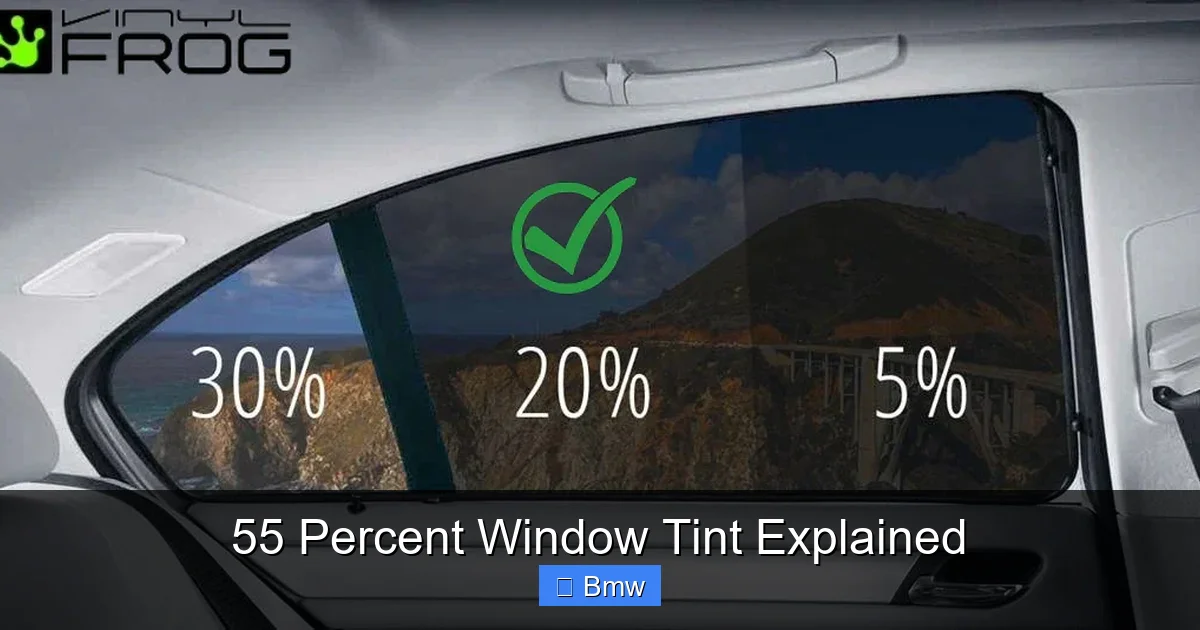
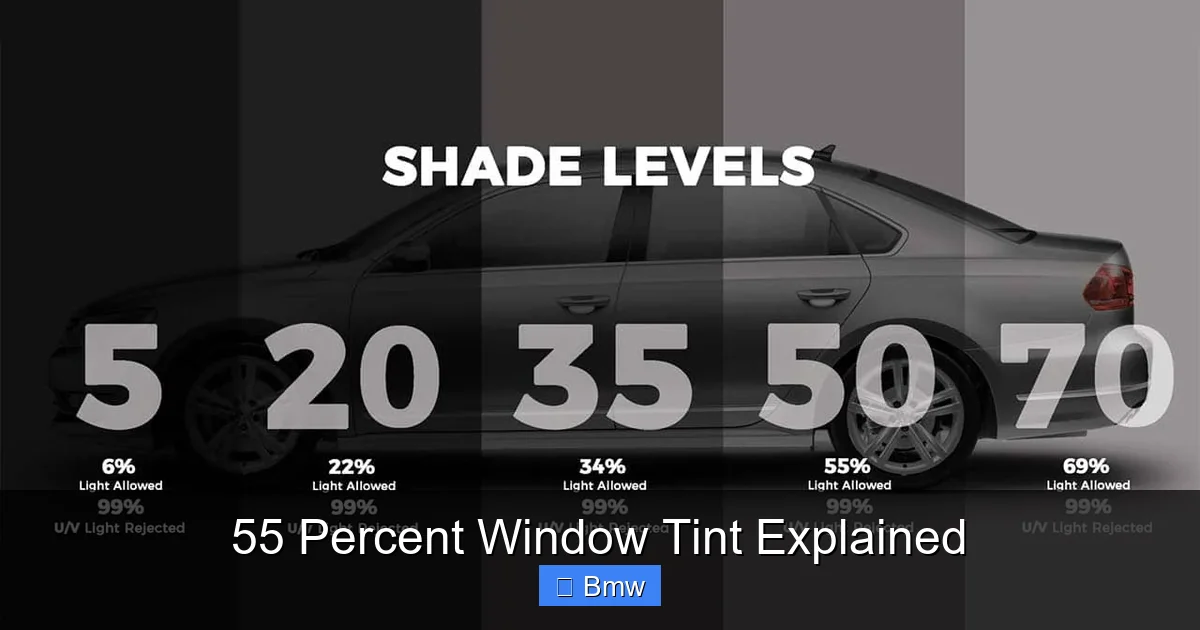
Let’s cut through the jargon right away. When you see “55% window tint,” it refers to the film’s Visible Light Transmission, or VLT. This is a percentage that tells you how much visible light can pass through your car’s window. A 55% VLT tint allows 55% of the outside light to come in and blocks the remaining 45%. It’s a relatively light shade. To put it in perspective, factory glass on most cars, including many BMWs, usually has a VLT of around 70-80%. So, 55% tint is only slightly darker than what you might already have from the manufacturer, but it makes a noticeable difference in glare and heat.
Think of it like a pair of lightly tinted sunglasses for your car. You can see perfectly clearly in all lighting conditions—day, night, rain, or fog—but that annoying sun glare during your evening commute or the relentless heat baking your leather seats on a summer afternoon is significantly tamed. For a BMW owner, this is a golden middle ground. It enhances comfort and protects the interior without the “tinted car” look that can sometimes clash with a vehicle’s sophisticated lines. It’s a subtle upgrade that feels premium, not extreme.
How VLT is Measured and Why It Matters
VLT is measured with a specialized device called a tint meter. It’s a scientific measurement, not an estimate. This is critical because what looks “light” to the human eye might actually be darker, especially if the glass itself already has a slight tint from the factory. When you buy film rated at 55%, that’s the rating for the film alone. The final, combined VLT of your window is a calculation of the factory glass VLT multiplied by the film VLT. For example, if your BMW’s side glass is 80% VLT from the factory and you add a 55% film, the combined result is roughly 44% VLT (0.80 x 0.55 = 0.44). This is why it’s essential to consult with your installer about your specific model. A 55% film on a BMW with standard glass will look and perform differently than on one with factory-tinted glass.
This measurement matters immensely for legal compliance. Every state has its own laws dictating the minimum VLT (maximum darkness) allowed on different windows. Using the wrong percentage can lead to tickets, failed inspections, and a forced removal of your tint. For a BMW, which often comes with complex window regulator systems and embedded antennas, a ticket is just the start of your problems.
Why 55% Tint is a Top Choice for BMW Owners
BMW drivers are a particular bunch. We appreciate engineering, driving dynamics, and a design ethos that blends sportiness with luxury. Our car choices reflect that. So, when it comes to modifying a BMW, we tend to be selective. We want enhancements that integrate seamlessly, that feel like they could have been optioned from the factory. This is precisely where 55% window tint shines.
Visual guide about 55 Percent Window Tint Explained
Image source: cdn.shopify.com
First, it’s aesthetic harmony. A 55% shade maintains the clean, uncluttered look of a BMW’s glass surfaces. It doesn’t create a harsh, dark band between the body-colored pillars and the windows. The side profile remains elegant and purposeful. It subtly deepens the color of the glass, making the car look slightly more substantial and finished, without screaming for attention. For models like the 4 Series Gran Coupe or the X5, this subtlety is key to preserving the intended design language.
Second, and perhaps more importantly for a performance brand, is uncompromised visibility. BMWs are built to be driven—enthusiastically. Whether navigating a tight canyon road, merging onto a highway, or parking in a tight urban space, you need crystal-clear sightlines. Darker tints, especially on the front sides, can reduce peripheral vision and make it harder to see pedestrians, cyclists, or obstacles in low-light conditions. 55% tint virtually eliminates this concern. You get the comfort benefits without sacrificing the safety and engagement that come with excellent outward visibility. This also makes it a safer choice for those who frequently drive at dawn, dusk, or in inclement weather.
Third, it’s the path of least resistance with modern technology. Today’s BMWs are packed with sensors: cameras for the Driving Assistant Professional system, rain and light sensors behind the rearview mirror, GPS and radio antennas embedded in the glass. Heavily tinted films, especially metallic ones, can interfere with radio frequency signals and disrupt sensor operation. A high-quality, non-metallic (dyed or ceramic) 55% film is far less likely to cause issues with your BMW’s sophisticated electronics. You protect your investment in technology while still getting the benefits of tint.
The Legal Landscape: Is 55% Tint Legal on My BMW?
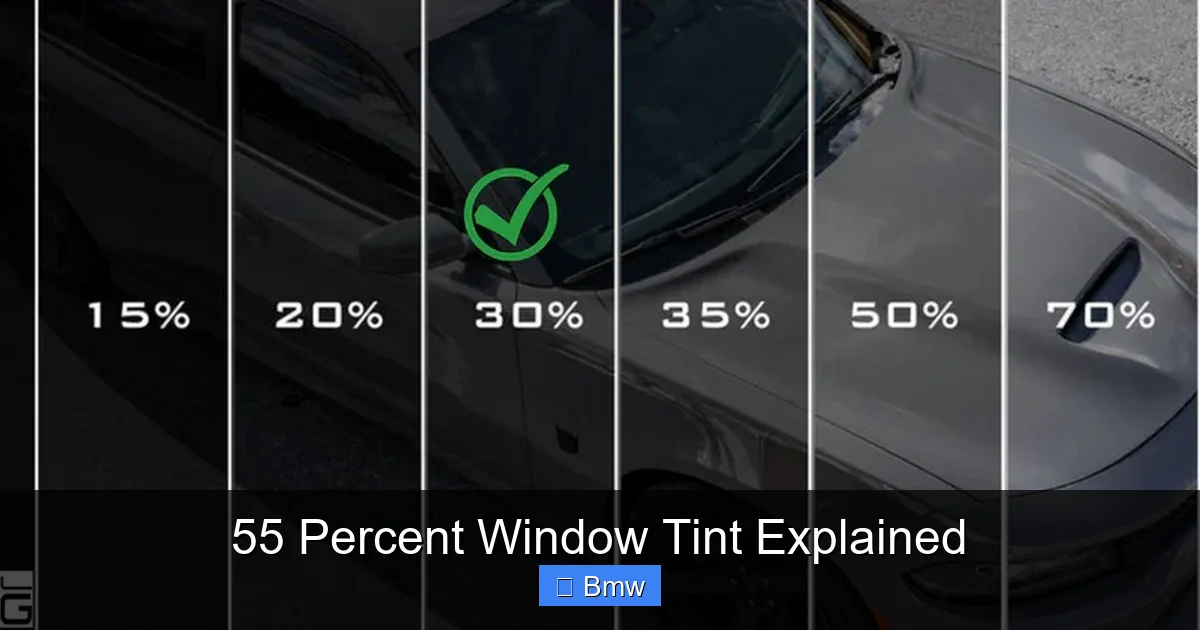
This is the single most important practical question you must answer before spending a dime. The short answer is: almost always, yes, for front side windows. 55% VLT is, by a wide margin, the most common legal limit for driver and front passenger windows across the United States. States like California, Florida, Texas, New York, and Illinois all set their front side window minimum VLT at 70% or higher, meaning 55% is darker than allowed and would be illegal. However, many other states, including Pennsylvania, Virginia, and Washington, set the limit at 70%. But a significant number of states—think Georgia, Arizona (for front sides), and many others—allow as dark as 32% or even 25% for front sides. In these states, 55% is well within the legal bounds and is actually a lighter, more conservative choice.
Visual guide about 55 Percent Window Tint Explained
Image source: cdn.shopify.com
The rear side windows and rear windshield have different, often more permissive, rules. In many states, there is no VLT limit at all for rear windows, meaning any darkness is legal. This is where you could go darker if you wanted extra privacy for passengers or cargo. But for the front, 55% is your safe, smart bet unless you know your specific state law allows darker. You should always double-check your own state’s regulations. A fantastic resource for this is our comprehensive guide to window tint laws by state, which is updated regularly.
For BMWs, there’s an extra layer: factory tint. Many BMW models, especially higher trims or packages, come with “Privacy Glass” from the factory. This is usually a deep tint (often around 20% VLT) applied to the rear passenger and hatch windows during manufacturing. It’s important to know this because if your BMW already has privacy glass, adding 55% film to the front sides will create a noticeable gradient from light front to dark rear. Some people love this look; others prefer a more uniform appearance and might choose a slightly darker front tint (if legal) to match the rear. Discuss this aesthetic with your installer.
Navigating State-Specific Nuances
Let’s look at a couple of concrete examples. In Illinois, the law states front side windows must allow more than 35% of light in. A 55% film on standard 80% factory glass gives you about 44% combined VLT, which is perfectly legal. In California, the law is stricter: front sides must allow at least 70% of light. That same 55% film on 80% glass (44% combined) would be illegal. You would need a much lighter film, perhaps a 85% or 90% film, to achieve a legal combined VLT over 70%. This calculation is why using a reputable, local installer who knows your state’s laws is so critical. They will select the correct film percentage to ensure your BMW is street-legal from day one.
There are also other legal stipulations. Some states require a certain percentage of light transmission for the windshield (usually only a non-reflective strip at the top is allowed). Some have rules about the reflectivity of the film (metallic tints can cause glare). And some states require a sticker certifying the tint’s legality to be affixed to the window. Your installer should handle all of this compliance paperwork for you. Never assume a film is legal just because it’s sold; it’s your responsibility as the vehicle owner to comply with the law.
The Real Benefits: Beyond Just “Looking Cool”
Okay, we’ve established 55% is a legal, subtle, BMW-friendly shade. But what does it actually do for you? The benefits are substantial and directly impact your ownership experience.
Visual guide about 55 Percent Window Tint Explained
Image source: low-offset.com
1. Superior UV Radiation Protection: This is the #1 reason to tint any car, regardless of darkness. The sun’s ultraviolet (UV) rays are the primary cause of interior fading, cracking, and deterioration. Your BMW’s beautiful leather, sophisticated dashboard, and electronic screens are all under constant assault. A high-quality window film, even at 55%, blocks over 99% of UV-A and UV-B rays. This is a promise from reputable ceramic film manufacturers. It’s like sunscreen for your car’s interior, preserving its value and luxurious feel for years. It also protects your skin if you’re a daily driver.
2. Significant Heat Rejection: This is where technology matters. Basic dyed films primarily block visible light but are less effective at infrared (IR) heat. Modern ceramic films, which are highly recommended for a BMW, use nano-ceramic particles to selectively block IR radiation—the part of sunlight that generates heat. A good 55% ceramic film can reject 40-60% of total solar heat energy. This translates to a dramatically cooler cabin on hot days, reduced strain on your A/C system (improving fuel efficiency/range), and instant comfort the moment you get in the car. Your leather seats won’t be scalding, and you won’t need to let the car run for 10 minutes to cool down.
3. Glare Reduction: The 45% light blockage directly reduces blinding glare from the sun, headlights at night, and reflective surfaces. This reduces eye strain and fatigue on long drives, contributing to a more relaxed and safer driving experience. The reduction is significant enough to notice but not so much that you feel like you’re driving in a cave after dark.
4. Privacy and Security: While not “limo tint” dark, 55% does make it harder for casual onlookers to see detailed items inside your car. It obscures the view into the cabin, deterring opportunistic theft. People are less likely to try to steal a laptop or bag if they can’t easily see it. It adds a layer of visual privacy for you and your passengers without feeling secluded.
5. Shatter Protection: Window film does not make your glass unbreakable, but it does hold shattered glass together in the event of an accident or attempted break-in. The film’s adhesive layer binds the glass fragments, reducing the risk of dangerous shards flying inside the cabin. It’s a valuable safety feature.
Installation is Everything: Why Professional Tinting for Your BMW is Mandatory
Let’s be brutally clear: do not attempt a DIY tint job on your BMW. The risks of a poor installation far outweigh any perceived savings. A professional installation is an investment in a flawless, lasting result and the protection of your vehicle’s components.
The Perils of DIY: Window tint is a precise, skill-based craft. It requires meticulous preparation, flawless glass cleaning (any speck of dust or debris becomes a permanent blemish), expert cutting (often by computer plotter for perfect fitment), and expert application using heat guns and squeegees. A DIY kit will almost certainly result in bubbles, wrinkles, dust specks, and peeling edges. These flaws are not just ugly; they impair visibility and will guarantee the film’s premature failure. Furthermore, BMW windows are complex. They contain delicate antenna lines, defroster grids, and sometimes even moisture sensors. A slip with a razor blade or improper technique can severely damage these components, leading to costly repairs—we’re talking hundreds or even thousands of dollars to replace a window regulator or fix a broken defroster line. That $100 DIY kit could turn into a $1500 window repair bill.
The Professional Process: A certified installer for European vehicles will follow a meticulous process. First, they’ll discuss your goals and confirm local laws. They’ll show you film samples—ceramic vs. hybrid dyed, different brands like Llumar, 3M, or Suntek. They’ll then meticulously clean the interior of your windows, often using a two-step chemical and razor blade process to remove all contaminants. The film is then precisely cut to the exact shape of your BMW’s windows, usually using a computer template for your specific model year. The application is done in a controlled, dust-free shop environment. The installer uses a slip solution to position the film, then expertly squeegees out all moisture and air, working from the center outward. Heat guns are used strategically to activate the adhesive and conform the film to complex curves (like on a BMW i8 or 4 Series). Finally, they’ll squeegee the edges meticulously, trim any excess, and apply a protective plastic to prevent scratches during the critical curing period. They will also advise you not to roll the windows down for 3-7 days.
Choosing the Right Shop: Seek out shops with specific experience on German vehicles, particularly BMWs. Look at their portfolio of past work on 3 Series, 5 Series, X models, etc. Read reviews that mention clean installation and attention to detail. A good shop will offer a warranty on the film (usually 5-10 years for fading, peeling, bubbling) and on the labor. They should also be transparent about the film’s specifications (VLT, TSER – Total Solar Energy Rejected, UV rejection). Don’t be swayed solely by the lowest price; for a BMW, you are paying for expertise and a guarantee of quality.
Maintenance and Care: Keeping Your 55% Tint Perfect
Once your professional tint is installed and cured, maintenance is straightforward but requires a slight adjustment to your cleaning habits. The goal is to avoid scratching or degrading the film’s surface.
The First Week: This is the critical curing period. The adhesive is still bonding to the glass. Do not roll down any windows for at least 3-5 days, and up to a week if the weather is cool or humid. You may see a slight haze or small water bubbles during this time. This is normal moisture trapped between the film and glass and will evaporate as the film cures. Do not try to poke or pop them.
Cleaning Products: This is the most important rule. NEVER use ammonia-based cleaners (like Windex) or abrasive chemicals on your tinted windows. Ammonia is a solvent that will degrade the film’s adhesive and cause it to dry out, crack, and peel from the edges. It can also cause discoloration (a purple or bubbly appearance). Stick to dedicated automotive window cleaners that are ammonia-free, or a simple solution of water and a drop of mild baby shampoo. Brands like Chemical Guys and Meguiar’s make excellent window-specific cleaners safe for tint.
Tools: Use a clean, soft microfiber cloth. A high-quality, plush microfiber is essential to avoid scratches. Some detailers prefer a dedicated window squeegee for a streak-free finish. Avoid paper towels or rough terry cloths, which can scratch the film’s surface over time.
Routine Care: Clean your windows regularly to prevent buildup of dirt and grime, which can be abrasive. Pay special attention to the edges. If you notice the film starting to lift or peel at the corners, contact your installer immediately. Small issues can often be repaired before they become big problems. With proper care, a high-quality 55% ceramic tint on your BMW will easily last 10+ years, continuing to look great and perform its function.
Cost Considerations and Value for Your BMW
You’re likely wondering about the investment. The cost to tint a BMW with 55% film varies based on three main factors: the film quality/technology, the specific BMW model (window size and complexity), and the geographic location/reputation of the shop.
Film Tiers:
- Basic Dyed Film: The most economical option. It provides good UV protection and some heat rejection, but the dye can fade over time (often turning purple), and its heat rejection is inferior to ceramic. Cost: ~$150-$250 for a full car.
- Hybrid/Metallic Film: Mixes dye with metallic particles for better heat rejection. Can interfere with electronics/radio reception. Cost: ~$250-$400.
- Premium Ceramic Film (Recommended): The gold standard. Uses nano-ceramic technology for superior, stable heat rejection, maximum UV protection, no signal interference, and excellent clarity. It does not fade or turn purple. This is what you want for a BMW. Cost: ~$350-$600+ for a full car.
BMW Model Impact: A compact BMW 2 Series Gran Coupe has fewer, smaller windows than a large BMW X7 or an iX with its massive panoramic roof. More surface area means more material and more labor time, increasing the price. Cars with complex curves, like the BMW Z4, require more skill and time to apply the film without wrinkles, also affecting cost.
Is It Worth It? Absolutely. For a BMW, it’s about total cost of ownership. The protection of your interior preserves thousands in resale value. The reduced heat rejection saves on A/C wear and improves comfort (and efficiency in an i-series). The glare reduction makes every drive more pleasant. When you factor in the longevity of a ceramic film (10+ years), the annual cost is very low. It’s a high-value modification that pays for itself in comfort, preservation, and aesthetics. For a specific quote on your model, you’d need to contact local shops, but this framework gives you a realistic expectation. You can also get a general sense of national averages from our article on how much auto window tint costs.
Frequently Asked Questions
Is 55% window tint legal on all BMW models in every state?
No. Legality depends on your state’s specific VLT laws for front side windows, not your car model. 55% is legal for front sides in many states but is darker than the allowed limit in states like California and New York (which require 70%+). Always check your state’s current law. Rear window rules vary more widely.
Will 55% tint affect my nighttime visibility or BMW’s rain-sensing wipers?
Nighttime visibility with 55% tint is excellent; it’s very close to factory glass and does not create a dangerous “tunnel vision” effect. A high-quality ceramic film will not interfere with your BMW’s rain-sensing wipers or light sensors, which are typically located behind the rearview mirror on the windshield, not the side glass.
Can I tint my BMW’s sunroof or panoramic roof with 55% film?
Technically yes, but it’s a specialized application. Sunroof glass is often curved and can get very hot. You must use a film specifically rated for sunroofs (often with higher heat rejection and a different adhesive) and have it installed by an expert to avoid bubbling and peeling. Some owners prefer to leave the sunroof clear for maximum light.
How long does the tint installation take on a typical BMW like a 3 Series?
A professional installation on a standard 4-door BMW (like a 3 Series or 5 Series) with 55% tint on all four side windows and rear glass usually takes 2-4 hours. More complex models with many small windows or a panoramic roof will take longer. It’s a careful, hands-on process that cannot be rushed.
Will window tint void my BMW’s warranty?
No, a professionally installed, high-quality film will not void your BMW’s new car warranty. However, if an installer damages a window regulator, antenna, or defroster line during installation, the repair of that specific component would not be covered. This is why using a reputable, experienced installer is crucial. The tint film itself is an aftermarket add-on and is not covered by the BMW warranty.
What’s the difference between 55% ceramic and 55% dyed film for my BMW?
Both have the same 55% VLT (light transmission). The difference is in heat rejection and longevity. Dyed film uses color to absorb heat, which can lead to slight fading/purpling over years and offers moderate IR heat rejection. Ceramic film uses non-metallic ceramic particles to reflect and reject IR heat without absorbing it, resulting in superior, stable heat rejection, no signal interference, and no color change over time. For a BMW, ceramic is the superior long-term investment.
