
What Type of Oil Does a Chrysler 300 Use?

Your Chrysler 300 almost certainly requires a specific full synthetic 0W-20 motor oil that meets Chrysler’s MS-6395 specification. Using the correct oil is non-negotiable for protecting its modern Hemi or V6 engine, ensuring fuel efficiency, and preventing costly damage. Always double-check your owner’s manual, as requirements can vary slightly by model year and engine type.
So, you’re staring at the dipstick or opening the hood of your Chrysler 300, and the big question hits you: “What type of oil does a Chrysler 300 use?” It’s a simple question with a critically important answer. Getting this wrong isn’t just a minor oversight—it’s a direct path to accelerated engine wear, poor performance, and potentially catastrophic failure. The Chrysler 300, especially the modern iterations with their sophisticated Pentastar V6 and Hemi V8 engines, is a precision instrument. It demands a specific lubricant to operate at its peak. This guide will cut through the confusion, giving you the exact specifications, the reasoning behind them, and the practical steps to ensure you’re always putting the right oil in your car. Think of it as the ultimate owner’s manual supplement for your 300’s lifeblood.
Key Takeaways
- Primary Recommendation: Most post-2015 Chrysler 300 models with 3.6L V6 or 5.7L/6.4L Hemi engines require full synthetic 0W-20 oil meeting Chrysler MS-6395 specification.
- Viscosity is Critical: The “0W-20” number isn’t arbitrary; it’s engineered for precise cold-start flow and high-temperature protection tailored to your engine’s tight tolerances.
- Synthetic is Mandatory: Chrysler’s modern engines are designed for synthetic oil’s superior properties. Using conventional oil can void your warranty and cause long-term harm.
- Oil Capacity Varies: A standard oil change typically requires 6 quarts (with filter) for V6 models and 7 quarts for Hemi V8s, but always verify for your specific engine.
- Change Intervals are Extended: With full synthetic oil, Chrysler often recommends changes every 8,000 to 10,000 miles or annually, but severe driving may require more frequent service.
- Always Consult Your Manual: The owner’s manual is the final authority. Some early 2005-2010 models or special editions may have different requirements, like 5W-20.
- Wrong Oil Causes Damage: Using incorrect viscosity or a non-approved oil can lead to increased wear, poor fuel economy, sludge buildup, and trigger oil pressure warnings.
📑 Table of Contents
Decoding the Oil Specification: More Than Just a Number
When you see “0W-20” on an oil bottle, it’s not a marketing gimmick. It’s a carefully engineered code. The “W” stands for winter, and the number before it (0) indicates the oil’s cold-weather flow rate. A lower number means the oil remains more fluid in frigid temperatures, ensuring it reaches critical engine components like the crankshaft and camshaft bearings the moment you turn the key. This is vital for preventing “dry start” wear, which causes a significant portion of an engine’s lifetime damage. The “20” is the high-temperature viscosity rating. It measures the oil’s thickness at 100°C (212°F), the typical operating temperature of your engine. A 20-weight oil is relatively thin, which reduces internal friction. Less friction means better fuel economy—a key design goal for Chrysler’s engineers—and improved power delivery.
The Chrysler MS-6395 Standard: Your Oil’s Secret Handshake
Choosing an oil with the correct viscosity (0W-20) is only half the battle. Chrysler has its own rigorous specification, MS-6395. This is a performance standard that oils must pass to earn Chrysler’s seal of approval. It tests for things like:
- Wear Protection: Ability to prevent metal-on-metal contact under extreme stress.
- Sludge & Varnish Prevention: Keeping the engine clean by resisting breakdown products.
- Fuel Economy: Formulated to minimize friction, helping your 300 meet its EPA ratings.
- High-Temperature Stability: Not thinning out too much under severe heat and load.
Look for bottles that explicitly state “Meets Chrysler MS-6395” or “Chrysler Approved.” Major brands like Pennzoil, Mopar (Chrysler’s own brand), Mobil 1, and Valvoline have specific lines that meet this standard. Using an oil that only meets generic API (American Petroleum Institute) standards but not MS-6395 is a risk you shouldn’t take with such a specific engine design. For a deeper dive into why your car needs a specific oil type and not just any “synthetic,” you can read our comprehensive guide on whether your car requires synthetic oil.
Model Year & Engine-Specific Breakdown
The Chrysler 300 has been in production since 2005, and its oil requirements have evolved, especially with the major redesign in 2011. Here’s a clear breakdown by generation and engine type.
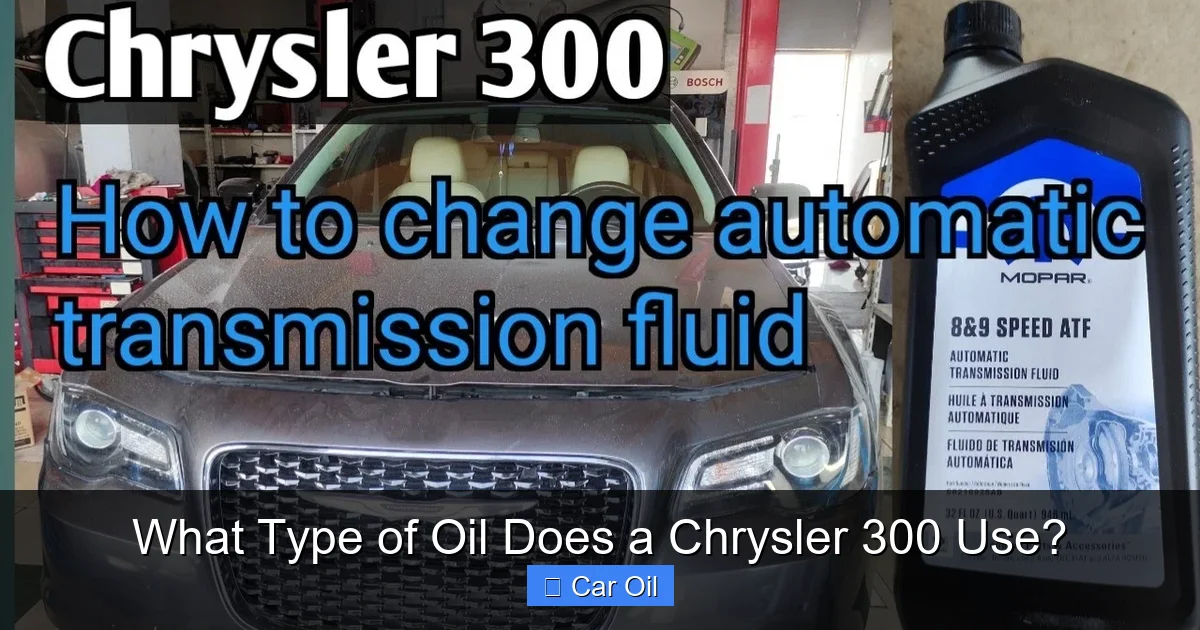
Visual guide about What Type of Oil Does a Chrysler 300 Use?
Image source: i.ytimg.com
2011–Present (LD) Platform: The Synthetic Era
This is the generation most people think of when they hear “Chrysler 300.” It’s sleek, powerful, and almost universally requires full synthetic 0W-20.
- 3.6L Pentastar V6: The workhorse engine. Requires SAE 0W-20 meeting Chrysler MS-6395. Oil capacity is typically 6.1 quarts (5.8L) with filter.
- 5.7L HEMI V8: The iconic muscle engine. Also requires SAE 0W-20 meeting MS-6395. Oil capacity is typically 7.0 quarts (6.6L) with filter.
- 6.4L 392 HEMI V8: Found in the SRT 300. Same specification: 0W-20, MS-6395. Capacity is usually 7.0 quarts.
Important Note: For these models, using 0W-20 is not optional. The engine’s hydraulic valve lifters, variable valve timing (VVT) systems, and tight piston ring designs are calibrated for this specific oil. Thicker oil like 5W-30 can cause VVT system malfunctions, noisy lifters, and poor cold-start performance.
2005–2010 (LX) Platform: A Slight Variation
The first-generation 300 is more forgiving but still has clear requirements.
- 2.7L V6: Requires SAE 5W-20 or 5W-30 meeting Chrysler MS-6395. (Note: Some early specs may differ).
- 3.5L V6: Requires SAE 5W-20 meeting Chrysler MS-6395.
- 5.7L HEMI V8: Interestingly, the first-gen Hemi often specifies SAE 5W-20 or 5W-30 meeting Chrysler MS-6395. It did not require 0W-20 until the second generation.
If you own a first-gen 300, your owner’s manual is your best friend here. The difference between 5W-20 and 0W-20 is significant in terms of cold-flow properties. While 5W-20 is acceptable for these older engines, upgrading to a high-quality full synthetic 0W-20 that meets MS-6395 is generally considered safe and can provide better protection, especially in colder climates. However, for absolute certainty, stick to the manual’s recommendation. You might also find helpful comparisons by looking at oil specs for other Stellantix products, like the Dodge Journey, which shares some engine families.
How to Check and Change Your Oil: A Practical Guide
Knowing the spec is useless if you don’t know how to verify and maintain it. Let’s get practical.
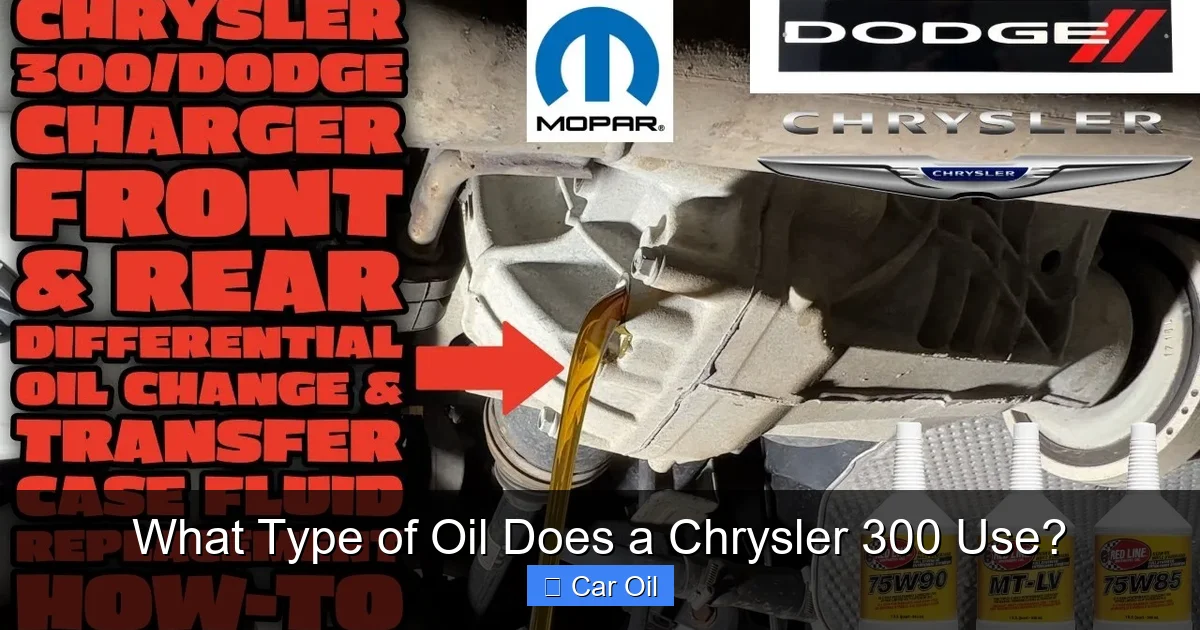
Visual guide about What Type of Oil Does a Chrysler 300 Use?
Image source: i.ytimg.com
Step 1: Find Your Definitive Source
The absolute best source is your owner’s manual. Look in the “Fluids and Lubricants” or “Capacities and Specifications” section. It will list the exact oil viscosity, specification (MS-6395), and capacity. If you’ve lost your manual, Chrysler offers digital versions online, or you can call a dealer with your VIN. The oil cap under your hood sometimes lists the viscosity (e.g., “0W-20”), but it rarely lists the MS specification, so the manual is key.
Step 2: Purchasing the Right Oil
When at the auto parts store, don’t just grab any “0W-20 Synthetic.” Read the label carefully. You need to see:
- Viscosity: SAE 0W-20
- Specification: “Meets Chrysler MS-6395” or “Chrysler MS-6395 Approved” or lists it on the back label in the approvals list.
- Type: “Full Synthetic.” Do not use “Synthetic Blend” or “Conventional.”
Mopar SAE 0W-20 is the factory-fill oil and is guaranteed to meet the spec. Brands like Pennzoil Platinum Euro L, Mobil 1 Extended Performance, and Valvoline SynPower are also excellent, approved choices. Don’t be tempted by a cheaper oil that meets API SP but not MS-6395; the formulation differences matter for your Hemi’s VVT system.
Step 3: The Oil Change Process (Key Checks)
Whether you DIY or go to a shop, these steps are crucial:
- Warm the Engine: Run the car for 5-10 minutes. Warm oil flows better and carries more contaminants out.
- Lift Safely: Use jack stands on solid frame rails. Never rely on a jack alone.
- Drain Completely: Let the old oil drain fully. This takes 10-15 minutes.
- Replace the Filter: Always use a high-quality filter (Mopar, Wix XP, Mobil 1, K&N Performance Gold). Pre-lubricate the new filter’s gasket with fresh oil.
- Torque the Drain Plug: Use a torque wrench! Over-tightening strips the pan, under-tightening causes leaks. Typically 20-25 ft-lbs, but check your manual.
- Fill Precisely: Pour in about 90% of the specified capacity (e.g., 5.5 quarts for a V6). Wait 2 minutes, check the dipstick, and add in 0.25-quart increments until the level is at the full mark. Do not overfill. Overfilling by even 0.5 quarts can cause aeration (foamy oil), leading to severe wear.
- Reset the Oil Life Monitor: Your 300 has a sophisticated system. After the change, you must reset it via the vehicle settings menu. If you don’t, the reminder will come on prematurely.
If you’re not comfortable doing this yourself, a reputable independent shop or dealership is a good investment. Just specify the exact oil and filter you want. The cost of a proper Chrysler 300 oil change with full synthetic will be higher than a conventional change but is essential maintenance.
Common Mistakes and Misconceptions
Even well-meaning owners can fall into traps. Here’s what to avoid.
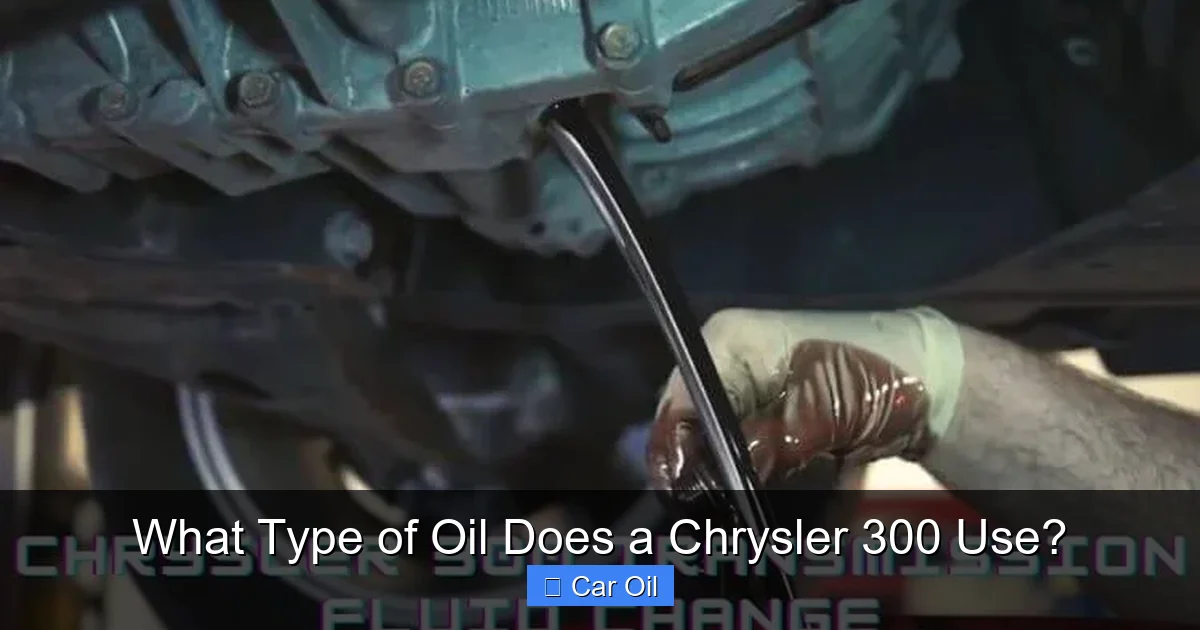
Visual guide about What Type of Oil Does a Chrysler 300 Use?
Image source: engineauditor.com
“It’s Just Oil, Any 0W-20 Will Do”
This is the most dangerous myth. Not all 0W-20 synthetics are created equal. An oil that meets only the latest API SP standard may lack the specific additive packages required by Chrysler’s MS-6395 for VVT system durability and turbocharger lubrication (if applicable). Always verify the MS-6395 approval on the bottle.
“I Can Use 5W-30 in the Summer for Better Protection”
This is a firm no for post-2011 models. Your engine’s hydraulic lash adjusters (lifters) and VVT solenoids are designed for the flow characteristics of 0W-20. Thicker oil at startup (even in summer) can cause delayed lifter pressurization, leading to ticking noises and potential wear. The system is engineered as a unit; changing the oil viscosity disrupts that engineering.
“The Oil Looks Clean, I Can Go Longer”
Modern oils and engines are good, but they aren’t magic. Oil degrades due to heat, fuel dilution, and acid buildup. The oil life monitor (OLM) is a great tool, but it’s based on average conditions. If you do a lot of short trips (where the oil never gets fully hot), live in a very dusty area, or tow frequently, consider changing at 75% of the OLM interval. The OLM doesn’t test oil condition; it calculates based on algorithms.
“High Mileage Oil is the Best Choice for My Older 300”
High Mileage oils have seal conditioners and additives to reduce leaks and consumption in engines with worn seals. If your 300 is burning or leaking a significant amount of oil (a quart every 1,000 miles), a high-mileage version of the correct 0W-20 MS-6395 oil can help. However, if your engine is in good shape, sticking with the standard formulation is perfectly fine and may even be preferable, as some high-mileage additives can be unnecessary.
The Tangible Benefits of Using the Correct Oil
Why go through all this trouble? The payoff is substantial.
Engine Longevity and Reliability
This is the biggest one. The Chrysler Hemi and Pentastar engines, when properly maintained with the correct oil, are known for lasting well beyond 200,000 miles. The MS-6395-approved synthetic provides a robust film strength that protects bearings, cam lobes, and piston rings from wear. It also keeps the VVT components clean and functioning smoothly, preventing expensive repairs that can cost thousands.
Optimal Fuel Economy
The low 0W-20 viscosity is a key part of Chrysler’s strategy to meet stringent CAFE (Corporate Average Fuel Economy) standards. The oil’s low friction reduces parasitic drag on the crankshaft and other rotating assemblies. You might not notice a difference from one tank to the next, but over the life of the vehicle, using the correct oil can save you significant money at the pump compared to a thicker oil.
Performance and Driveability
Notice how your 300 feels on a cold morning? With the right 0W-20, the engine starts quicker, idles smoother, and the lifters are quiet from the first revolution. It ensures the VVT system can advance and retard camshaft timing instantly for optimal power and torque across the RPM range. Using the wrong oil can lead to a slight hesitancy on throttle, a lumpy idle, and annoying lifter tick.
Warranty Protection
If your 300 is still under the powertrain warranty, using the specified oil is part of your maintenance contract. If an engine failure occurs and an investigation reveals the use of non-approved oil, Chrysler could deny your warranty claim. It’s a simple way to protect your investment.
Conclusion: Your Chrysler 300’s Best Friend
So, what type of oil does a Chrysler 300 use? The resounding answer for the vast majority of models on the road today is full synthetic 0W-20 that meets Chrysler MS-6395. This isn’t a suggestion; it’s an engineering requirement. It’s the lifeblood that allows your powerful, sophisticated engine to deliver its best performance, fuel economy, and longevity without complaint. Making the correct choice at the parts store and ensuring a precise, careful oil change is one of the most impactful maintenance tasks you can perform. It costs a little more upfront but pays dividends in reliability, smooth operation, and peace of mind. Remember, when in doubt, your owner’s manual is your ultimate guide. Treat your Chrysler 300 with the specific care it was designed for, and it will reward you with years of confident, comfortable driving. For any other fluid questions, like what coolant a Dodge Ram uses or Toyota brake fluid types, our library has you covered.
Frequently Asked Questions
Can I use 5W-30 oil in my Chrysler 300 instead of 0W-20?
For models from 2011 onward, no. 0W-20 is specifically required for the VVT system and hydraulic lifters to function correctly. Using 5W-30 can cause lifter noise, poor performance, and potential damage. For first-generation (2005-2010) models, 5W-20 or 5W-30 was originally specified, but always confirm in your manual before deviating.
Is it okay to use conventional oil in a Chrysler 300?
No, it is not recommended. All Chrysler 300s from 2011 onward explicitly require full synthetic oil. Even for earlier models, using synthetic provides vastly superior protection, especially for the Hemi engines. Conventional oil cannot meet the MS-6395 specification and will not protect the engine as designed, potentially voiding your warranty.
How many quarts of oil does a Chrysler 300 take?
It depends on the engine. A 3.6L V6 typically takes 6.1 quarts (5.8L) with a filter change. A 5.7L or 6.4L Hemi V8 typically takes 7.0 quarts (6.6L). Always check your owner’s manual for the exact capacity for your specific VIN and engine, as it can vary slightly.
What happens if I accidentally put the wrong oil in my Chrysler 300?
If you accidentally added the wrong viscosity (e.g., 5W-30 in a 2015 300), don’t start the engine if possible. Have it drained and refilled correctly. If you did start it, change the oil and filter as soon as possible. Short-term use likely won’t cause immediate disaster, but prolonged use with incorrect oil can lead to VVT system faults, increased wear, and sludge formation.
How often should I change the oil in my Chrysler 300?
When using the correct full synthetic 0W-20 oil, Chrysler’s oil life monitor typically allows for changes every 8,000 to 10,000 miles or once per year. However, this is based on ideal driving conditions. If you frequently drive in severe conditions (extreme temps, stop-and-go traffic, short trips, towing), you should shorten this interval to 5,000-7,000 miles. Never ignore the OLM, but use it as a baseline and adjust for your driving style.
Where can I find the exact oil specification for my Chrysler 300?
The first and best place is your owner’s manual in the “Fluids and Lubricants” section. You can also find it on the oil cap (which lists viscosity) and sometimes on a sticker under the hood. If those are missing, contact a Chrysler dealer with your Vehicle Identification Number (VIN) for the definitive specification. Look for the “MS-6395” requirement on the oil bottle you purchase.
