
When Did Ford Change the F-150 Body Style?

The Ford F-150 has undergone seven major body style redesigns since its 1975 inception, with significant changes occurring in model years 1997, 2004, 2009, 2015, and 2021. Each generation brought distinct styling, aerodynamics, and capability upgrades, reflecting Ford’s response to market demands and technological advancements. Understanding these generational shifts is crucial for owners, buyers, and enthusiasts to identify their truck’s era and appreciate its engineering heritage.
If you’ve ever found yourself squinting at a pickup truck, trying to figure out if it’s a 2012 or a 2016 model, you’re not alone. The Ford F-150, America’s best-selling vehicle for over four decades, has a styling history that can be a bit of a puzzle. The short answer is that Ford changes the F-150’s body style—its exterior sheetmetal, grille, headlights, and overall silhouette—on a major generational cycle, typically every 5 to 7 years. But the full story is a fascinating journey through American automotive evolution, filled with bold bets, subtle tweaks, and designs that defined an entire industry.
To truly understand “when” Ford changed the F-150 body style, we need to define our terms. A “body style change” or “redesign” refers to a ground-up, from-the-ground-up engineering and styling overhaul. This is different from a “refresh” or “facelift,” which might include a new grille, bumper, or headlights but keeps the core doors, roof, and fundamental structure. For the F-150, the major redesign years that created entirely new, identifiable generations are 1997, 2004, 2009, 2015, and 2021. Let’s dive into each transformative era.
Key Takeaways
- The F-150’s body style changes follow a generational cycle, typically every 5-7 years. Major redesigns occurred for the 1997 (10th gen), 2004 (11th gen), 2009 (12th gen), 2015 (13th gen), and 2021 (14th gen) model years.
- The 1997 redesign was revolutionary, moving from a boxy, car-derived look to a modern, aerodynamic “lightning bolt” shape. This set the template for modern trucks and drastically improved fuel efficiency.
- The 2004 and 2009 refreshes were evolutionary, not revolutionary. They focused on minor sheetmetal tweaks, interior upgrades, and powertrain improvements while keeping the core 1997 architecture.
- The 2015 redesign marked a return to a more rugged, squared-off aesthetic with the “Ford Tough” design language. It introduced an all-new high-strength steel frame and aluminum-intensive body.
- The 2021 redesign emphasized a “dual-purpose” look, blending capability with a more sophisticated, SUV-like front end. It brought massive interior tech upgrades and a new hybrid powertrain option.
- Identifying your F-150’s generation by body style is key for parts compatibility. For example, a 2007 model (11th gen) has vastly different exterior and interior parts than a 2013 model (12th gen), affecting everything from tire fitment to seat cover designs.
- Body style changes directly influence aftermarket accessory availability. A 2018 F-150 owner (13th gen) will look for different phone mounts, floor mats, or tonneau covers than a 2005 owner (10th gen).
📑 Table of Contents
- The Revolutionary Leap: The 1997 Redesign (10th Generation)
- The Evolutionary Era: 2004 and 2009 Refreshes (11th & 12th Generations)
- Back to the Future: The 2015 Ground-Up Redesign (13th Generation)
- The Dual-Purpose Design: The 2021 Overhaul (14th Generation)
- How to Identify Your F-150’s Generation: A Practical Guide
- Why Body Style Changes Matter More Than You Think
The Revolutionary Leap: The 1997 Redesign (10th Generation)
Before 1997, the F-150 (and its F-Series siblings) wore a boxy, almost car-like two-door or two-door-with-a-small-window “extended cab” look. It was functional but dated. The change for the 1997 model year was seismic. Ford threw out the old blueprint and introduced a completely new, wind-sculpted design led by then-chief designer Jack Telnack. The new F-150 was lower, wider, and featured dramatic curves—most famously the “lightning bolt” character line that flowed from the front wheel arch up and over the rear fender.
The “Lightning Bolt” and Its Impact
This 1997 design wasn’t just about looks; it was an engineering mandate. The sleek shape reduced aerodynamic drag by nearly 20% compared to its predecessor. For a full-size truck, this translated directly to better fuel economy, reduced wind noise, and improved high-speed stability. It was a radical departure that initially polarized traditional truck buyers but was quickly accepted as the new industry standard. The 1997-2003 (10th gen) F-150 is instantly recognizable by its rounded fenders, integrated headlights (no separate bezel), and that sweeping side line. Its cab architecture remained the basis for the next two generations, making it one of the longest-running basic truck designs in history.
Practical Legacy of the 10th Gen
For owners and shoppers today, the 1997-2003 body style defines a specific era. Parts for this generation, from batteries to body panels, are distinct from later models. The rounded fenders and specific grille designs (like the 1999-2000 “three-slot” and 2001-2003 “two-slot”) are key identifiers. This generation also cemented the F-150’s move into the luxury and family-hauler market with the introduction of the King Ranch and Platinum trims, which required a more refined, less utilitarian interior—a trend that continues.
The Evolutionary Era: 2004 and 2009 Refreshes (11th & 12th Generations)
After the monumental 1997 redesign, Ford entered a period of evolution. The fundamental cab, floor, and basic structure from the 1997 truck were carried through the 2004 and 2009 model years with significant but not wholesale body style changes.
Visual guide about When Did Ford Change the F-150 Body Style?
Image source: cdn.dlron.us
2004 Model Year (11th Generation): A Major Facelift
For 2004, Ford gave the F-150 its first major visual update since 1997. The changes were substantial enough to create a new generation in the eyes of many, but technically, it was a profound refresh on the 1997 platform. The body style became more aggressive and chiseled. The most obvious change was the new “three-bar” grille, which became a Ford truck icon for the next decade. The headlights grew larger and more rectangular, and the front fenders were squared off slightly. The iconic lightning bolt character line was softened but remained. Inside, the cabin was almost entirely new, with a more modern, car-like dashboard and center stack. This 2004-2008 body style is easier to spot by its prominent, three-slot grille and more angular front end compared to the rounded 1997-2003.
2009 Model Year (12th Generation): Refining the Formula
The 2009 redesign continued the evolutionary path. The body style changes were again focused on the front and rear ends. The grille became even larger and more complex, often described as “three-dimensional.” The headlights became more swept-back and angular, and the front bumper was more integrated. The side profile remained very similar to the 2004 model, but the rear tailgate and taillights were redesigned for a more modern look. The 2009-2014 F-150 (12th gen) is identifiable by its very large, protruding three-bar grille and more squared-off front corners. This generation also saw the introduction of the popular SVT Raptor, which had its own unique, wider-body style with a distinct grille and skid plates.
Why Evolution, Not Revolution?
Ford’s strategy here was cost-effective and customer-savvy. The core 1997 cab architecture was proven, roomy, and safe. Reinventing it cost billions. Instead, Ford invested in powertrains (like the legendary 5.4L and later 5.0L Coyote V8s), interiors, and front-end styling to keep the truck feeling fresh. This means that, for example, a 2010 F-150 shares its fundamental cab structure with a 2005, but its body style is distinctly different up front. This era also highlights how body style changes can affect aftermarket parts; a 2007 (11th gen) and a 2013 (12th gen) require different seat covers, wiper blades, and even tire chains due to fender and bumper shape changes.
Back to the Future: The 2015 Ground-Up Redesign (13th Generation)
After nearly 18 years on the same basic cab architecture, Ford finally returned to a clean-sheet design for the 2015 model year. This was the biggest change since 1997. The 13th-generation F-150 abandoned the evolutionary curve and went back to a more traditional, rugged, and squared-off “Ford Tough” aesthetic. It was a deliberate move to appeal to core truck buyers who felt the previous generations had become too soft.
Visual guide about When Did Ford Change the F-150 Body Style?
Image source: cdn.dlron.us
A New Architecture: Aluminum and High-Strength Steel
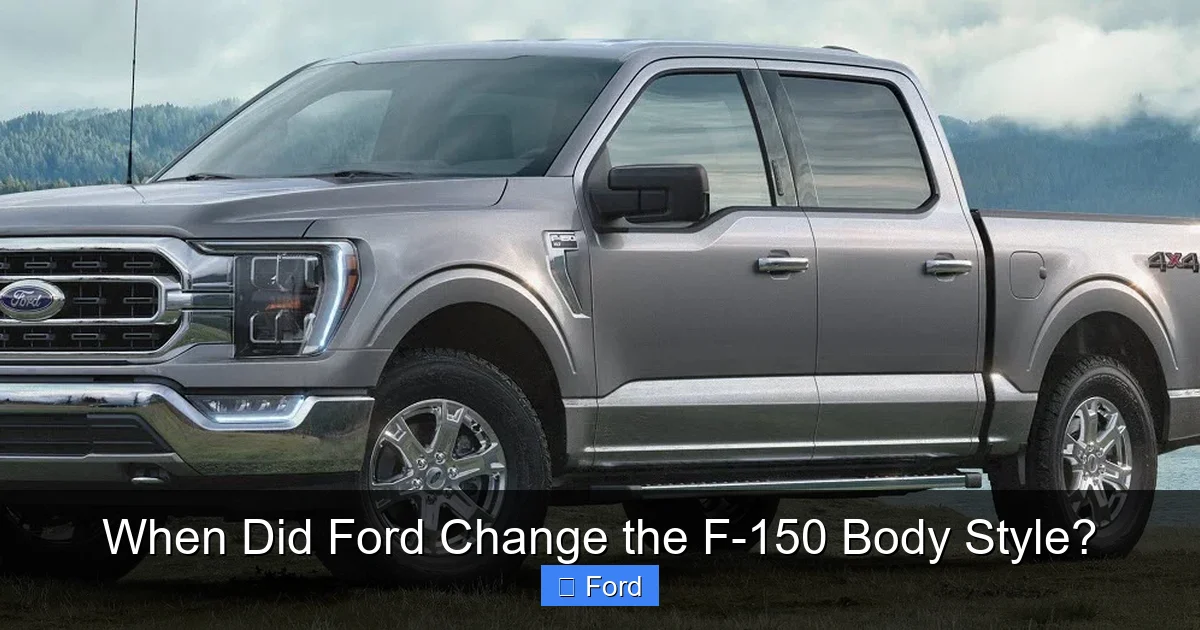
The most significant change wasn’t visible in the sheetmetal first—it was in the frame and body. Ford introduced an all-new, fully boxed, high-strength steel frame. But the headline-grabbing move was the switch to an all-aluminum alloy body (cab and bed). This was a monumental risk for a full-size truck. The body style was designed to showcase the material’s advantages: crisp, sharp creases, tight panel gaps, and a more premium feel. The front end featured a massive, two-bar grille (a departure from the three-bar), with a prominent, squarish hood and flat, vertical front fenders. The side profile was straighter, with a more horizontal character line. The overall look was purposeful, strong, and less “aerodynamic-rounded” than the 1997-originated designs.
Generational Identifiers
The 2015-2020 F-150 is easy to spot. Look for the very flat, almost vertical front grille with the large “FORD” lettering across it (on higher trims). The headlights are large, rectangular, and often feature a distinctive LED daytime running light signature (on newer years). The rear tailgate is flat with a prominent “F-150” badge, and the taillights are large and rectangular. This body style’s shift to aluminum also created a new ecosystem for owners; considerations for batteries (weight savings affect battery choices) and off-road tires (different wheel well clearances) became generation-specific.
The Dual-Purpose Design: The 2021 Overhaul (14th Generation)
For the 2021 model year, Ford once again delivered a complete redesign, this time aiming for a “dual-purpose” truck. The goal was to create a vehicle that looked equally at home on a construction site and in a country club parking lot. The body style reflects this blend of rugged capability and sophisticated design.
Visual guide about When Did Ford Change the F-150 Body Style?
Image source: sarasotaford.com
Softer Lines, Bolder Presence
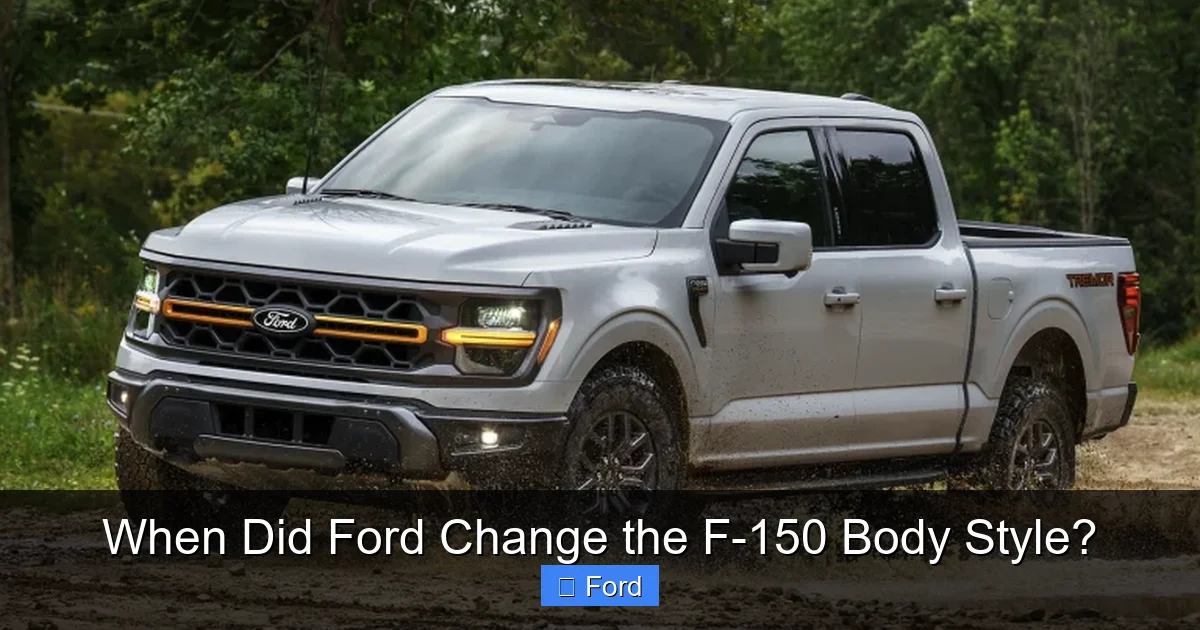
The 2021+ F-150 retains the overall squared-off, tough stance of the 2015 model but softens many of the hard edges. The front grille is still massive but features more complex surfacing and a wider, more horizontal shape. The headlights are now more sculpted and often feature a full-width LED light bar on higher trims, giving it a modern, high-tech face. The hood has subtle power domes, and the front fenders are slightly more flared. The side profile introduces a more pronounced character line that runs from the front wheel arch to the rear, adding visual interest. The rear tailgate is now available with a revolutionary Pro Power Onboard generator system, which is integrated into the design, and the taillights are more three-dimensional.
Interior as a “Command Center”
While the exterior is a clear evolution, the interior change is revolutionary. The 2021 body style introduced an optional massive 15.5-inch touchscreen running the new SYNC 4A system, effectively turning the cabin into a mobile office or entertainment hub. The physical buttons were drastically reduced, and the overall design is more car-like and luxurious than any previous F-150. This generation is also the first to offer a full hybrid powertrain (PowerBoost), which influences under-hood packaging and, consequently, the shape of the hood and front end.
How to Identify Your F-150’s Generation: A Practical Guide
Knowing the body style generation is more than trivia. It’s essential for ordering correct replacement parts, understanding your truck’s capabilities, and even determining its value. Here’s a quick field guide:
- 1997-2003 (10th Gen): Look for the rounded fenders, the sweeping “lightning bolt” side line, and small, rectangular headlights that are part of the fender (no separate headlight bucket). The grille is relatively simple and often has a small oval Ford logo.
- 2004-2008 (11th Gen): The first with the iconic three-bar horizontal grille. Headlights are larger and rectangular with a separate amber turn signal lens on the corner. Front fenders are less rounded, more squared. The side line is still present but less dramatic.
- 2009-2014 (12th Gen): The grille is massive, three-dimensional, and often protrudes significantly. The headlights are swept-back and angular. The rear tailgate is flat with horizontal taillights. The overall shape is boxier than the 2004-2008 model.
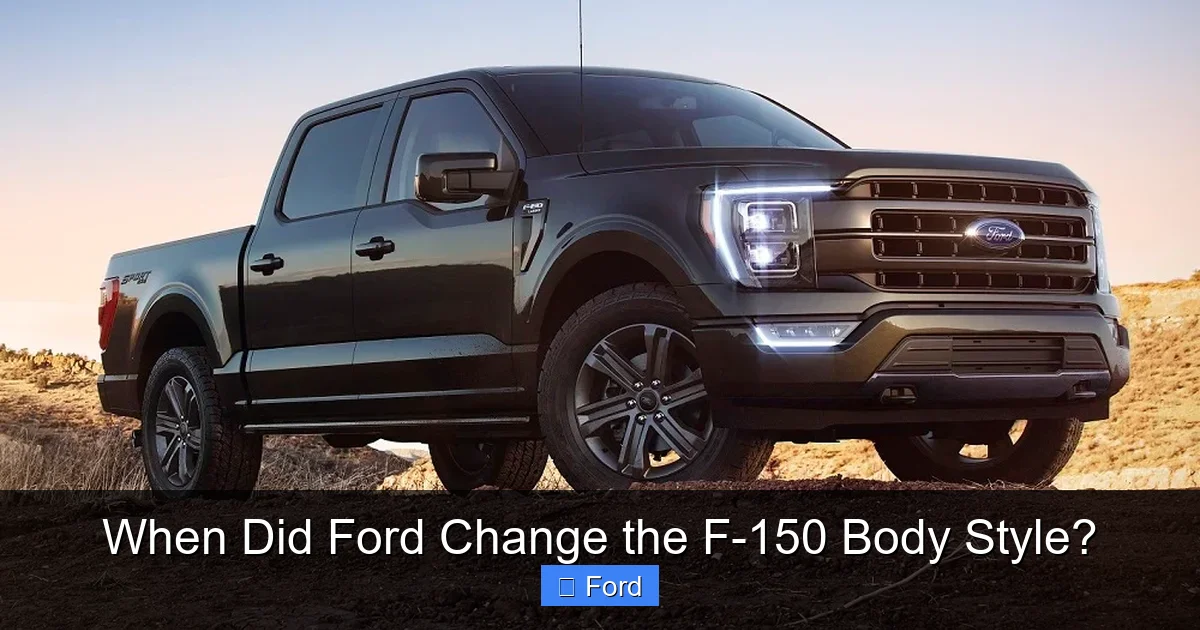
- 2015-2020 (13th Gen): The flat, two-bar grille with large “FORD” lettering is the dead giveaway. The hood is very flat and wide. The body has sharp, crisp creases everywhere. The cab corners are very square. Look for the aluminum body badging (though not always present).
- 2021-Present (14th Gen): Similar overall shape to 2015 but with a more complex, sculpted grille and often a full-width LED light bar. The hood has subtle power domes. The side profile has a more pronounced character line. The interior is dominated by the giant touchscreen.
Why Body Style Changes Matter More Than You Think
Beyond aesthetics, each body style change represents a fundamental shift in the truck’s engineering philosophy, which directly impacts owners.
Capability and Engineering
The 2015’s aluminum body wasn’t just a weight-loss gimmick; it allowed Ford to increase payload and towing capacity without a proportional increase in size or weight. The 2021’s design accommodates the heavy PowerBoost hybrid battery under the truck bed. The aerodynamic shapes of the 1997 and later models directly influence fuel economy at highway speeds. The 2009’s wider track and revised suspension geometry improved handling.
Aftermarket and Accessory Ecosystem
This is where the rubber meets the road for owners. Your F-150’s specific body style year dictates what will fit. A brush guard for a 2018 (13th gen) will not bolt onto a 2012 (12th gen) because the mounting points and bumper shape are different. LED headlight assemblies are generation-specific. Even simple things like the shape of the door panels affect aftermarket speaker sizes. When shopping for accessories, always filter by your exact model year range, not just “F-150.” For instance, the best floor mats for a 2019 (13th gen) will have different contours than those for a 2022 (14th gen).
Resale Value and Desirability
Certain body styles become iconic. The 1997-2003 “PN-96” (its internal code) is now a classic, sought-after by enthusiasts for its unique styling and simplicity. The 2015-2020 aluminum-body trucks have carved out their own reputation for capability and tech. The 2021+ models are prized for their interior tech and hybrid efficiency. Knowing which body style era you’re in helps you understand its place in the market and what future buyers might be looking for.
Frequently Asked Questions
How can I quickly tell what generation my F-150 is?
The easiest way is by the front grille and headlight shape. A rounded, integrated headlight points to a 1997-2003 (10th gen). A large three-bar grille suggests 2004-2008 (11th gen). A massive, 3D three-bar grille means 2009-2014 (12th gen). A flat, two-bar grille with “FORD” lettering is 2015-2020 (13th gen). A sculpted grille, often with a full-width LED light bar, indicates a 2021+ (14th gen).
Did the 2004 model year have a completely new body style?
It was a massive, generation-defining facelift, but not a full ground-up redesign from a clean sheet. Ford kept the core cab structure, floor, and basic door architecture from the 1997 model but changed nearly every exterior panel, the entire front end, and the entire interior. For parts and identification, it’s treated as a new generation (11th).
What was the biggest engineering change tied to a body style redesign?
The 2015 redesign’s switch to an all-aluminum body and high-strength steel frame was the most significant engineering change directly tied to a new body style. It was a industry-shocking move that reduced weight by up to 700 pounds, allowing for increased capability without a size increase. This change alone defines the 13th generation’s identity.
Is the 2021 F-150 body style significantly different from the 2015?
It’s an evolution, not a revolution. The overall cab structure and dimensions are very similar, but the front end is more sculpted and sophisticated, often featuring a full-width LED light bar. The interior is completely redesigned around massive touchscreens. The rear tailgate is functionally different with Pro Power Onboard options. To the casual observer, it’s a refresh, but to an enthusiast, the differences are clear.
Why did Ford go back to a more squared-off design in 2015?
Market research showed that core truck buyers felt the previous generations (1997-originated) had become too “car-like” and soft. Ford responded by returning to a more traditional, rugged, and squared-off “Ford Tough” design language with the 2015 redesign, emphasizing strength and capability through sharp lines and a massive grille.
Do body style changes affect the truck’s interior space?
Significantly. The 1997 redesign dramatically increased cab space and comfort, moving the F-150 into the family vehicle segment. The 2015 redesign, despite similar overall dimensions, used the new architecture to improve front-seat legroom and add more interior storage nooks. The 2021 redesign focused on rear-seat legroom and tech integration, making the cabin feel more like an SUV’s. Each new body style rethinks the interior packaging.
