
New York Window Tint Law Explained

New York has some of the strictest window tint laws in the U.S., with non-reflective tint allowed only on the front side windows up to 70% VLT. Rear windows can be darker, but all vehicles must pass a yearly inspection that includes a tint check. Violations can lead to fines, removal orders, and failed inspections, making it crucial for every vehicle owner, especially BMW drivers who often prefer darker tint, to understand these specific regulations before modifying their car.
So, you just bought a sleek new BMW, or maybe you’ve had your favorite ride for a while and you’re thinking about adding some privacy and style with window tint. It’s a popular mod for a reason—it looks great, keeps the cabin cooler, and reduces glare. But before you book that appointment, you need to become an expert on one thing: the New York window tint law. Trust me, navigating these rules is way more critical than picking the perfect shade of ceramic film. New York isn’t just strict; it’s famously, rigorously specific. Getting it wrong means wasted money, failed inspections, tickets, and the hassle of removing it. Let’s break down everything you need to know, from the confusing VLT numbers to what happens if you get pulled over.
Key Takeaways
- Front side windows must allow over 70% of light in (VLT >70%), meaning very light tint is the only legal option for the driver and front passenger windows in New York.
- Rear side windows and the rear window can be any darkness, but if the rear window is tinted, the vehicle must have side mirrors providing a view of at least 200 feet behind.
- No tint can be more reflective than a standard glass window, and red, yellow, or amber tint is prohibited on the front side windows.
- Medical exemptions exist for specific conditions but require a valid physician’s statement and a special permit from the NYSDMV; they are not automatically granted.
- Window tint is checked during the annual vehicle inspection, and a failed tint test will prevent you from getting your inspection sticker, making your car illegal to drive.
- Fines for violations start around $150 and can require immediate correction, and you can be pulled over solely for an illegal tint violation.
📑 Table of Contents
- Decoding the Legal Limits: What VLT Means for Your NY Vehicle
- Special Rules for SUVs, Trucks, and Multi-Purpose Vehicles
- Medical Exemptions: Is Yours Valid in New York?
- Enforcement, Inspections, and Penalties: The Real Consequences
- Practical Tips for BMW Owners: Getting It Right in New York
- What Happens If You Get a Window Tint Ticket in New York?
Decoding the Legal Limits: What VLT Means for Your NY Vehicle
The heart of any window tint law is the Visible Light Transmission, or VLT, percentage. This number tells you how much light can pass through your tinted window and into your car. A lower percentage means darker tint (less light gets through), and a higher percentage means lighter tint (more light gets through). It’s a simple concept, but New York’s rules about where different percentages apply are where people get tripped up. The law makes a clear distinction between your front side windows and your rear windows.
The 70% Rule for Front Side Windows
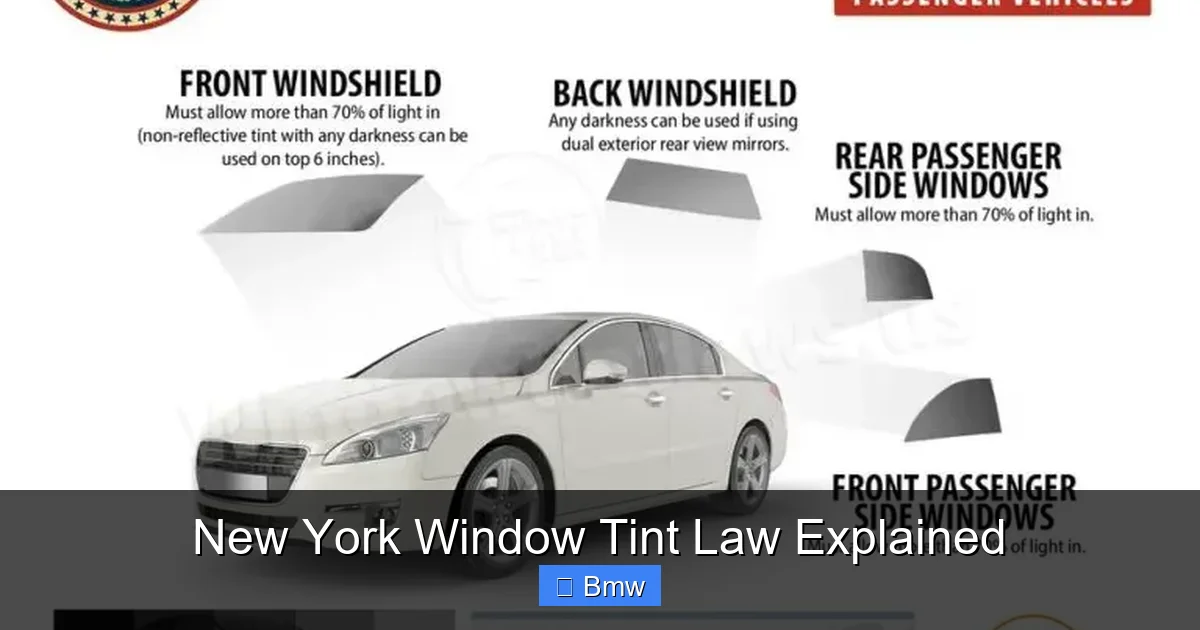
In New York, the front driver and front passenger side windows are held to a very strict standard: they must have a VLT of more than 70%. Let that sink in. “More than 70%” means the tint itself can only block a maximum of 30% of the light. In practice, this often means the factory glass on many modern cars, which already has a slight tint, is about as dark as you can legally go. Adding any aftermarket film that further darkens these windows is a violation. This is the single most common mistake people make, assuming they can put a “limo” tint up front. You cannot. For a BMW with its typically large glass area, this rule applies just as strictly. You might see cars on the road with darker front tint, but they are likely from out of state or are rolling the dice on a ticket.
Unlimited Darkness for Rear Windows (With a Catch)
Here’s where you get some freedom. The rear side windows (behind the driver and passenger) and the rear window (back glass) can be tinted to any darkness. You can go 50%, 20%, or even 5% (limo tint) back there and be perfectly within the law. This is where you create that sleek, private, “bandit” look for your BMW’s rear cabin and trunk area. However, there’s a very important safety catch tied to this rule. If you tint the rear window, New York law requires that your vehicle have side mirrors that provide the driver with a view of at least 200 feet to the rear. This is to compensate for the reduced visibility out the back. Most cars come with mirrors that meet this standard, but it’s a legal requirement you must meet if you opt for that dark rear window.
Windshield and Sunstrip Rules
New York is also very clear about the windshield. Non-reflective tint is allowed only on the top six inches of the windshield. This is often called an “eyebrow” or “sunstrip.” You cannot tint the entire windshield, not even with a very light percentage. That strip at the top is meant to block glare from the sun or overhead lights without obstructing the driver’s primary view. Anything below that six-inch line on the windshield must remain clear. For a BMW with a large panoramic sunroof, the glass roof itself is considered a window and is subject to the rear window rules—it can be tinted to any darkness.
Special Rules for SUVs, Trucks, and Multi-Purpose Vehicles
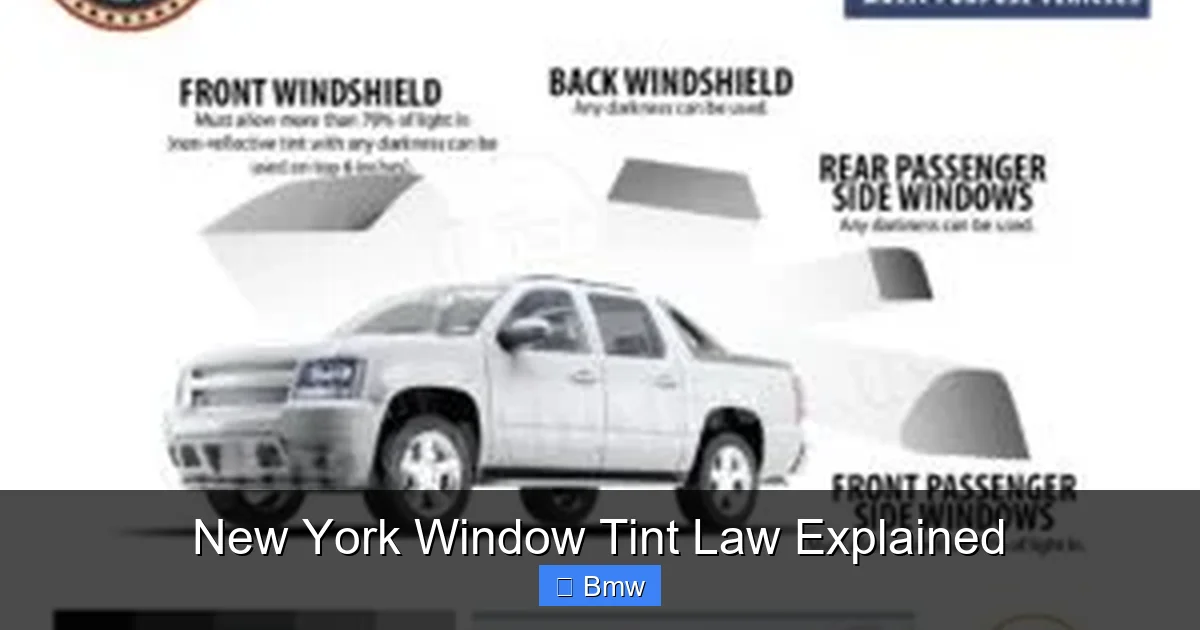
The law differentiates between passenger cars and multi-purpose vehicles (MPVs) like SUVs, vans, and trucks. The rules for the front side windows are the same for all: over 70% VLT. But the rules for the rear windows differ significantly based on your vehicle’s classification.
Visual guide about New York Window Tint Law Explained
Image source: loupedetailing.com
Passenger Cars vs. MPVs: Why It Matters
For a standard passenger car (like a BMW 3 Series, 5 Series, or X5 if classified as a car), the rear window and rear side windows can be any darkness, as long as the side mirror rule is followed. For a vehicle that is officially classified as an MPV (such as many larger SUVs, vans, or trucks), the law is different. On an MPV, the rear side windows (the ones behind the driver) must also allow more than 70% of light in, just like the front. However, the rear cargo window (the back-most window, often on a hatch or tailgate) can be any darkness. This is a crucial distinction. If you own a BMW X7 or a BMW iX, which are large SUVs, you need to verify how New York classifies your specific model year and trim. The rear side windows behind the driver may need to stay light, while the very back hatch window can be dark. Always check your vehicle’s official classification with the NYSDMV or a professional tint shop that knows NY law.
The “Behind the Rear Seat” Interpretation
There’s a common point of confusion. Some installers interpret the law to mean that any window behind the driver’s seating position can be dark. This is not the official interpretation from the New York State Department of Motor Vehicles (NYSDMV) or the State Police. The law is based on the vehicle’s body style classification (passenger car vs. MPV) and the specific window’s location (front side, rear side, rear cargo). Assuming your BMW SUV’s rear side windows can be dark because they are “behind the seat” could lead to a failed inspection. When in doubt, assume the stricter rule or get written confirmation.
Medical Exemptions: Is Yours Valid in New York?
New York does allow for medical exemptions from the standard tint laws, but they are not easy to get and are heavily regulated. You cannot simply have a note from your doctor. The process is formal and requires specific documentation.
Visual guide about New York Window Tint Law Explained
Image source: windowtintlaws.us
Qualifying Conditions
The law lists specific medical conditions that may qualify for an exemption. These include, but are not limited to: lupus, photosensitivity due to certain medications, xeroderma pigmentosum, and other severe light-sensitive skin disorders. The condition must be documented by a licensed physician as requiring the limitation of exposure to sunlight or artificial light. Conditions like simple migraine headaches or general sun sensitivity typically do not qualify for the exemption that would override the 70% front window rule.
The Application Process
To get an exemption, you must apply for a special permit from the NYSDMV. This involves:
- Obtaining a signed statement from your physician (on their letterhead) that includes your name, address, diagnosis, specific condition, and the physician’s license number.
- Completing the NYSDMV “Application for Medical Exemption from Window Tinting Requirements” (Form MV-15.1).
- Submitting both documents to the NYSDMV for review and approval.
If approved, you will receive a medical exemption certificate that must be carried in the vehicle at all times. The tint installed must be the minimum darkness necessary as specified by the physician. Even with an exemption, the tint must still be non-reflective and cannot be red, yellow, or amber on the front side windows. This exemption is for the front side windows only; the rear window rules still apply.
Enforcement, Inspections, and Penalties: The Real Consequences
This isn’t just about following rules for the sake of it. New York enforces its tint laws actively through traffic stops and, most importantly, through the mandatory annual vehicle inspection. Your car’s legal status hinges on this inspection.
Visual guide about New York Window Tint Law Explained
Image source: windowtintlaws.us
The Annual Inspection is Your Tint Checkpoint
Every registered vehicle in New York must pass an annual safety and emissions inspection at a licensed station. This inspection always includes a check of the window tint using a calibrated photometer. The inspector will measure the VLT of your front side windows. If they read below 70%, your car fails the inspection. You will not receive a new inspection sticker. Driving with an expired inspection sticker is a separate violation. To get your sticker, you must have the illegal tint removed or replaced with compliant film, then pay for a re-inspection. This creates a direct financial and practical incentive to comply. For BMW owners, this is a critical step—don’t assume your tint is okay; have it measured by a pro before your inspection.
Traffic Stops and Fines
You can be pulled over solely for having illegally dark front window tint. An officer can visually suspect it and will use a meter to confirm. The fine for a first offense is typically in the range of $150 to $200. The ticket will often include a “fix-it” option, requiring you to remove or replace the tint and provide proof of correction to the court within a set timeframe (usually 30 days) to avoid additional penalties. However, the officer can also issue a “correctable” violation that, once fixed, you can show to the court to have the fine dismissed. The key is you must act. Ignoring it leads to higher fines, potential court costs, and a warrant for your arrest. Repeat offenses can lead to higher fines and less leniency.
Practical Tips for BMW Owners: Getting It Right in New York
Knowing the law is one thing. Applying it correctly to your specific BMW is another. Here’s how to make smart, legal choices.
Choosing the Right Tint for Your Model
For your front windows, you must select a film with a VLT of 70% or higher. Many high-quality ceramic films come in 70% or 75% options. This will give you a very slight, almost imperceptible tint that provides UV protection and a tiny bit of heat rejection without breaking the law. For the rear, you have full range. A common and legal look for a BMW is 70% front and 20% rear. This provides a noticeable contrast while staying 100% compliant. If you have a large SUV like an X5 or X7, double-check the rear side window rules based on its MPV classification. When in doubt, choose a lighter percentage (like 50%) for the rear sides to be safe, saving the darkest tint for the rear cargo window only. Always get the VLT percentage in writing from your installer before they begin work.
Professional Installation vs. DIY Kits
While DIY window tint kits are cheaper, the risk of a poor installation is high. bubbles, peeling edges, and uneven application are common. A bad install can look terrible and may even fail inspection if the film is bubbled or scratched, affecting clarity. For a premium car like a BMW, a professional installation is highly recommended. A certified installer will know the exact laws for your specific model and county, use the correct tools for a flawless finish, and often provide a warranty on both the film and the labor. The cost of professional window tint varies based on film quality and vehicle size, but it’s an investment in a legal, long-lasting result. A botched DIY job that needs to be removed and redone will cost you more in the long run.
Maintenance and Longevity
Quality ceramic or metallic films can last 10 years or more with proper care. To maximize the life of your tint and keep it looking clear, avoid using ammonia-based glass cleaners (like Windex) on the inside. These can degrade the film’s adhesives over time. Use a soft microfiber cloth and an automotive-specific glass cleaner or a mild soap and water solution. Be gentle when cleaning to avoid scratching the film. Also, be mindful of seatbelts—when you unbuckle, the metal clip can strike the window and potentially chip or scratch the tint if it’s not fully dried or is of lower quality. A good installer will cure the tint properly, but it’s a habit to be aware of.
What Happens If You Get a Window Tint Ticket in New York?
So, you got pulled over and the officer’s meter says your front windows are at 50%. Now what? First, don’t panic. It’s a fixable situation.
The “Correctable Violation” Process
In many jurisdictions, the officer will issue a “correctable” or “fix-it” ticket. This means you have a set period (often 30 days) to bring the vehicle into compliance. You must have the illegal tint removed or replaced with compliant film. Then, you need to get proof of the correction. This is usually done by visiting a police station, a designated inspection station, or sometimes a court office, where an authorized person (like a police officer or a licensed inspector) will sign off on your ticket or a separate correction form, verifying the tint now meets legal standards. You then mail this proof or present it to the court to have the ticket dismissed. There is typically no fine if you correct it within the timeframe. Do not ignore the ticket. If you do, the court will assume you didn’t correct it and will enter a guilty plea, assess the full fine, and add court costs.
Failed Inspection: The Sticker Problem
This is the more common and often more frustrating scenario. Your car goes for its annual inspection and fails because the tint is too dark. The inspection station will give you a failed inspection report. You now have a limited time (usually until your current sticker expires, which is on the last day of the month indicated on the sticker) to fix the tint and get a re-inspection. During this period, your car is technically uninspected and illegal to drive on public roads if the sticker is expired. You must fix the tint, then return to an inspection station (often the same one) for a re-check. They will charge a small re-inspection fee (usually $10-$20). Once they confirm the tint is legal, they will issue your new sticker. The cost here is the re-inspection fee plus the cost to fix the tint. This is why getting a pre-inspection tint check from a professional is so valuable—it saves you this whole cycle.
Frequently Asked Questions
Can I tint my front windows darker in New York if I have a medical condition?
Yes, but only with a formal medical exemption permit issued by the NYSDMV. You must apply with a detailed physician’s statement for a qualifying condition like lupus. The permit must be carried in the vehicle, and the tint must be the minimum darkness specified.
What happens if my BMW’s factory tint is already at 70% and I add more?
Adding any aftermarket film to the front side windows will lower the VLT below 70%, making it illegal. Factory glass typically has a VLT around 70-75%. You cannot legally add tint to these windows. You must leave them as-is from the factory.
Is reflective or mirrored tint legal on any windows in New York?
No. New York law prohibits any window tint that is more reflective than a standard glass window. This means mirrored, chrome, or highly metallic reflective films are illegal on all windows, front and rear.
My car failed inspection for tint. How long do I have to fix it?
You have until the expiration date on your current inspection sticker to correct the illegal tint and pass a re-inspection. Driving with an expired sticker is a separate violation. Once fixed, get a re-inspection promptly to receive your new sticker.
Are there different tint laws for rental cars or commercial vehicles in New York?
Yes. The standard 70% front window rule applies to most passenger vehicles. However, certain commercial vehicles and limousines may have different standards. For rental cars, they must comply with the same NY laws as any other vehicle on the road. Always assume the standard rules apply.
How can I check my window tint’s VLT before going for inspection?
The most accurate way is to use a professional-grade tint meter. Many reputable auto detailing and tint shops will measure your existing tint for free or a small fee. You can also buy a handheld meter, but professional tools are more precise. Don’t rely on your eyes or the film’s advertised percentage, as factory glass already has some tint.
