
How Often Should I Change the Oil on a Toyota Corolla

Determining the right oil change interval for your Toyota Corolla isn’t a one-size-fits-all answer. While the traditional 3,000-mile rule is outdated, following your owner’s manual is the golden rule. Factors like your driving style (severe vs. normal), the type of oil you use (synthetic vs. conventional), and your Corolla’s specific model year and engine all play a crucial role. Modern Corollas with oil life monitors often tell you exactly when to change it, but understanding the “why” behind the schedule is key to long-term engine health. Always reset your maintenance light after an oil change to keep the system accurate.
Let’s be honest: the “oil change” is one of the most famous—and sometimes most confusing—pieces of car maintenance advice out there. For decades, we’ve been told “every 3,000 miles or three months,” a rule drilled into our heads by quick-lube shops. But if you drive a modern Toyota Corolla, that advice is not just outdated, it’s potentially wasteful and costly. So, how often should you change the oil on a Toyota Corolla? The answer is a satisfying, “It depends.” But don’t worry, we’re going to break down every single factor so you can move from confusion to confidence, protecting your engine and your wallet.
Key Takeaways
- Your Owner’s Manual is the Final Authority: The factory recommendation for your specific model year and engine type is the primary guideline. Never ignore it.
- Synthetic Oil Allows for Longer Intervals: If your Corolla uses full synthetic oil (as most modern ones do), you can typically go 7,500 to 10,000 miles, far beyond the old 3,000-mile myth.
- “Severe” Driving Shortens the Interval: Frequent short trips, extreme temperatures, dusty conditions, towing, or heavy traffic count as severe service and may require changes every 5,000 miles or sooner.
- Time Matters, Not Just Mileage: Even if you don’t hit the mileage limit, oil degrades over time. Most manufacturers recommend changing oil at least once a year.
- Trust the Oil Life Monitor (If Equipped): Newer Corollas have an intelligent system that calculates oil life based on engine revolutions, temperature, and driving patterns. Change the oil when the light comes on.
- Always Reset the Maintenance Light: After changing the oil, you must reset the engine oil maintenance required light. Failing to do so will cause the reminder to illuminate prematurely.
- Use the Correct Oil Specification: Always use oil that meets Toyota’s specification, typically marked as “ILSAC GF-6” or “API SP” and the correct viscosity (e.g., 0W-16, 5W-30). Using the wrong oil can harm your engine and void warranty coverage.
📑 Table of Contents
- 1. The Foundation: Your Factory Guidelines
- 2. The Oil Itself: Synthetic vs. Conventional
- 3. Your Driving Habits: Normal vs. Severe Service
- 4. The Two Clocks: Mileage vs. Time
- 5. The Smart Assistant: Understanding Your Oil Life Monitor (OLM)
- 6. Doing It Right: The Reset Procedure and DIY Considerations
- Conclusion: Your Personalized Schedule
1. The Foundation: Your Factory Guidelines
Before you listen to any friend, mechanic, or internet forum, open your glove compartment. The single most important document for your Corolla’s care is the Owner’s Manual. Toyota engineers spent thousands of hours testing your specific engine under various conditions to determine the optimal service interval. This isn’t a guess; it’s a science-based recommendation.
Finding Your Specific Interval
In your manual, look for the “Scheduled Maintenance” or “Maintenance Requirements” section. There will be a clear chart or table. It will almost always list two separate schedules: “Normal” driving conditions and “Severe” driving conditions. You need to be honest about which category your driving fits into. For example, a 2023 Toyota Corolla with a 2.0L engine and using synthetic oil might list a 10,000-mile interval for normal driving and a 5,000-mile interval for severe driving. A 2015 Corolla with a 1.8L engine might list 7,500 miles for normal and 5,000 for severe. The year, engine, and oil type all matter. If you’ve lost your manual, Toyota often provides digital copies on their website, or you can find the information through reputable automotive databases.
2. The Oil Itself: Synthetic vs. Conventional
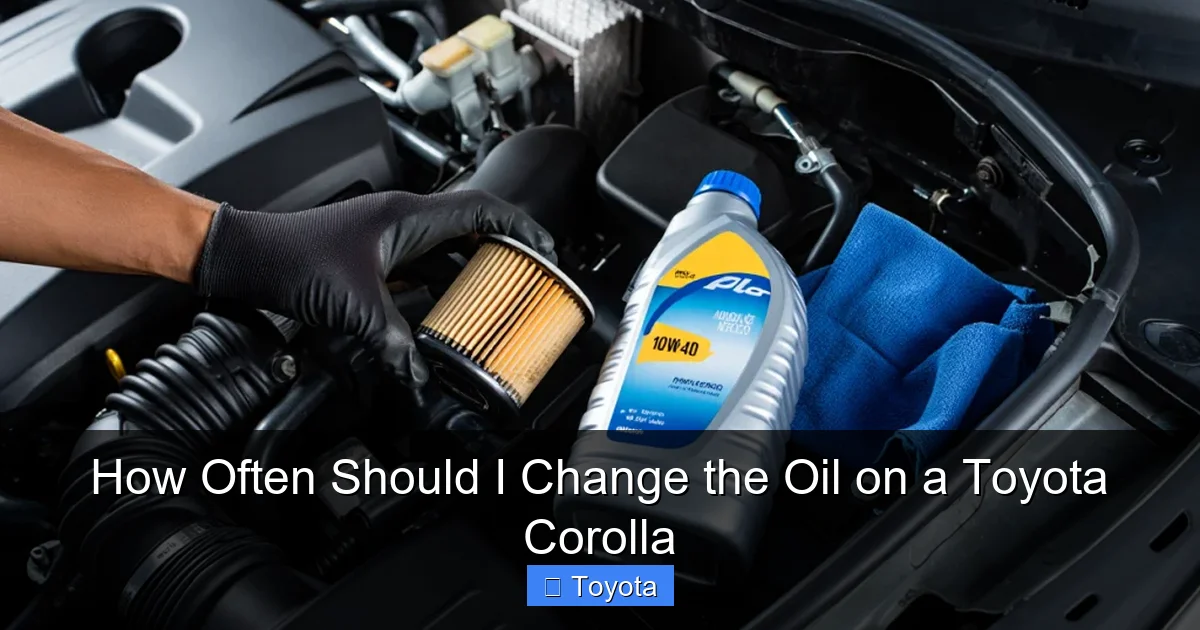
This is the biggest game-changer in the last 20 years of automotive maintenance. The type of oil in your engine directly dictates how long it can effectively lubricate, clean, and cool internal components.
Visual guide about How Often Should I Change the Oil on a Toyota Corolla
Image source: carpartsadvisor.com
Why Synthetic Oil is the Standard for Modern Corollas
Since the early 2010s, virtually all new Toyota Corollas have been factory-filled with and require full synthetic oil. Synthetic oil is engineered at the molecular level. It has a more uniform structure, superior resistance to breakdown from heat (thermal stability), and better flow in cold temperatures. This means it maintains its protective viscosity and additives for a much longer period and under harsher conditions than conventional mineral oil. For a Corolla requiring synthetic, changing it at 3,000 miles is like throwing away a perfectly good, high-tech product. It’s expensive and environmentally unnecessary. The longer drain intervals (7,500-10,000+ miles) are one of the primary benefits of using synthetic.
What if I Use Conventional Oil?
While not recommended for modern Corollas designed for synthetic, some older models (pre-2010) or budget-conscious owners might use conventional oil. If you do, you must revert to a much shorter interval, typically 3,000 to 5,000 miles. The oil simply cannot withstand the same duration of heat and shear forces without significant degradation. Mixing the two is also not ideal; stick to one type and change it according to that type’s capabilities.
3. Your Driving Habits: Normal vs. Severe Service
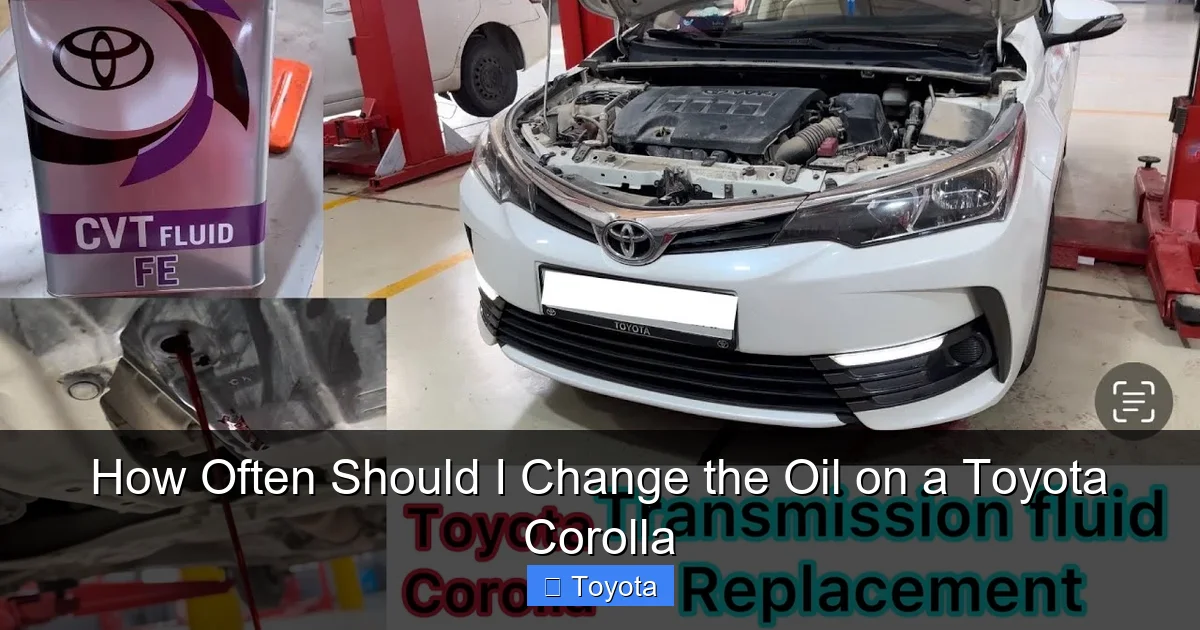
“Severe” driving doesn’t mean you drive aggressively on the highway. In Toyota’s engineering terms, “severe service” describes a pattern of driving that is exceptionally hard on engine oil. Most drivers, especially those in cities, actually fall into this category.
Visual guide about How Often Should I Change the Oil on a Toyota Corolla
Image source: i.ytimg.com
What Qualifies as Severe Driving?
- Frequent Short Trips: Driving less than 5-10 miles in cold weather. The engine never fully warms up, allowing fuel dilution and moisture to contaminate the oil.
- Extreme Temperatures: Consistently driving in very hot (above 90°F/32°C) or very cold (below 0°F/-18°C) climates.
- Dusty, Sandy, or Polluted Areas: Driving in conditions where the air filter works overtime, allowing fine particulates to enter the oil.
- Heavy Traffic / Stop-and-Go: Constant idling and low-speed operation increases engine heat and fuel dilution.
- Towing or Carrying Heavy Cargo: Puts extra load and heat on the engine.
- Extended Idling: Like taxi or fleet use.
If you check two or more of these boxes, you should follow the “Severe” service schedule in your manual, which is often half the interval of the “Normal” schedule. For a Corolla with a 10,000-mile normal interval, that means changing oil around 5,000 miles.
4. The Two Clocks: Mileage vs. Time
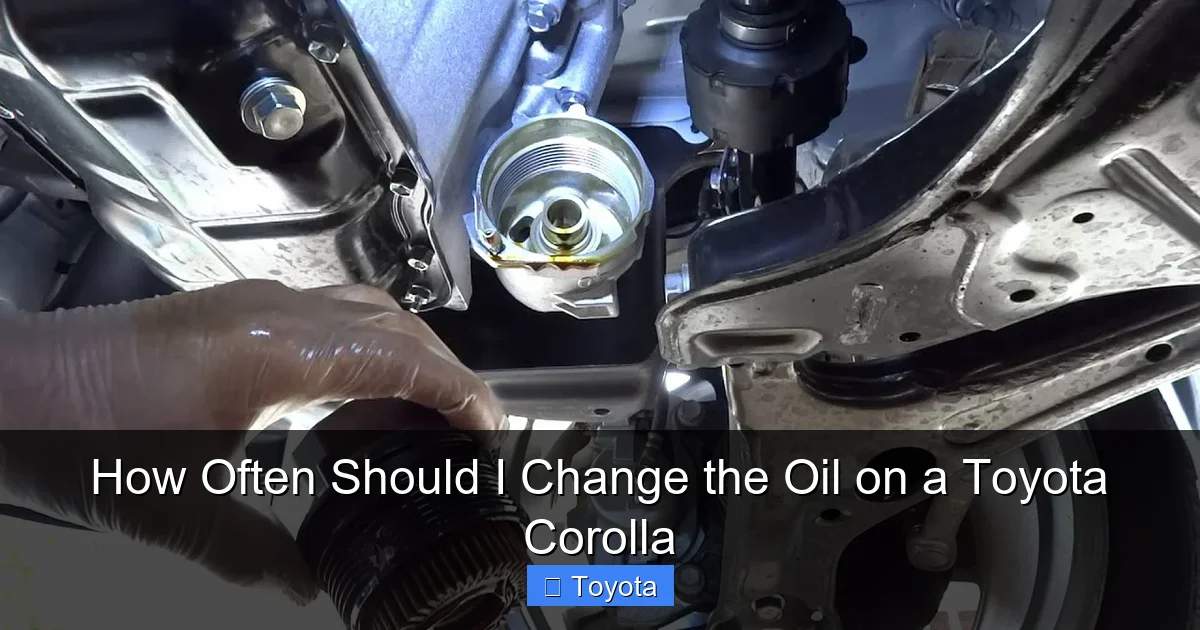
Oil change intervals are a combination of distance driven AND time passed. Oil degrades even when the car is sitting in the garage.
Visual guide about How Often Should I Change the Oil on a Toyota Corolla
Image source: i.ytimg.com
The Time Factor is Non-Negotiable
Additives in oil, such as detergents and anti-wear agents, slowly break down over time. Moisture can accumulate from combustion byproducts. Even if your Corolla has only driven 2,000 miles in the last 12 months, that oil is not as effective as it was a year ago. The general rule is: do not exceed 12 months between oil changes, regardless of mileage. For many drivers with low annual mileage, the time limit will be the binding constraint. Set a calendar reminder if your odometer moves slowly.
5. The Smart Assistant: Understanding Your Oil Life Monitor (OLM)
If your Corolla is a 2015 model year or newer, it almost certainly has an Oil Life Monitor (sometimes called Maintenance Required light). This isn’t just a simple timer; it’s an algorithm-based computer system.
How Does the OLM Actually Work?
The system doesn’t just count miles. It monitors engine revolutions (RPM), engine operating temperature, and driving patterns. A long highway cruise at steady speed adds very little “oil life usage.” A week of freezing morning starts and short city errands will burn through oil life much faster. The OLM calculates a percentage. When it reaches 15% or 0%, the “Engine Oil Maintenance Required” light will illuminate on your dashboard.
You Should Still Follow the Manual’s Maximum
The OLM is a fantastic tool, but it’s calibrated for “normal” driving. If you know you drive in severe conditions (as defined above), you should still manually change your oil at the severe service interval, even if the OLM hasn’t given you a warning yet. The system is a guide, not a complete replacement for understanding your driving environment. When the light does come on, change the oil promptly and then reset the system. The process is simple and detailed in your manual. For specific Toyota models, you can also find guides online, like how to reset the oil light on a Toyota, which covers the general procedure for many models.
6. Doing It Right: The Reset Procedure and DIY Considerations
Changing the oil is only half the task. The other half is ensuring your car’s computer knows the job is done.
How to Reset the Oil Maintenance Light
The procedure varies slightly by model year but is generally: Turn the ignition to “ON” (do not start engine). Turn the odometer/trip meter display to “ODO” using the button on the instrument cluster. Turn the key to “OFF.” Press and hold the trip meter reset button (the same button) while turning the key back to “ON.” Continue holding until the light blinks and goes off. Release the button. Start the engine to verify the light is off. Always consult your owner’s manual for the exact steps for your Corolla.
Should You Change Your Own Oil?
It’s a great way to save money and learn about your car. You’ll need basic tools (socket wrench, oil filter wrench, drain pan), the correct oil (check cap or manual for viscosity and specification), and a new oil filter. A critical first step is knowing how to open the hood on a Toyota Corolla safely and correctly. If you’re not comfortable, a professional technician at a reputable shop is a fine choice. Just ensure they use the correct oil and filter and reset the light for you. While you’re thinking about maintenance, don’t forget other vital fluids. For instance, knowing how often to change antifreeze in a Toyota is also crucial for long-term engine health, as coolant prevents corrosion and overheating.
Conclusion: Your Personalized Schedule
So, how often should you change the oil on your Toyota Corolla? Start with your owner’s manual. Then, honestly assess your driving. Are you in the “Normal” or “Severe” category? Do you have an Oil Life Monitor? Use it as a helpful guide, but don’t let it override the severe service rule. If you use synthetic oil (which you should), plan on a minimum of 5,000 miles for severe driving and up to 10,000 miles for gentle, highway driving—but never more than one year. By tailoring the schedule to your real-world use, you’ll give your Corolla’s engine the precise care it needs to run reliably for hundreds of thousands of miles. It’s not about a magical number; it’s about understanding the principles behind the maintenance.
Frequently Asked Questions
Can I go 10,000 miles between oil changes in my Corolla?
You can if your owner’s manual recommends that interval for your specific model year and engine, you exclusively use full synthetic oil that meets Toyota’s specification, and your driving is classified as “normal” (mostly highway, mild temperatures). Most modern Corollas are designed for this interval under ideal conditions.
What happens if I go too long without an oil change?
Oil degrades and loses its lubricating and cleaning properties. This leads to increased engine wear, sludge buildup, higher operating temperatures, and eventually, catastrophic engine failure. The cost of a new engine far exceeds the price of regular oil changes.
My Corolla has an oil life monitor. Can I just wait for the light?
Yes, for the most part. The OLM is an excellent tool. However, if your driving is “severe” (frequent short trips, extreme temps, towing), you should consider changing the oil at the severe service interval in your manual, which may be sooner than the OLM’s warning.
Does towing a trailer affect my Corolla’s oil change interval?
Absolutely. Towing is considered severe service due to the extra load and heat generated. If you tow even occasionally, you should follow the “Severe” maintenance schedule in your manual, which typically halves the normal mileage interval.
How can I check my oil level between changes?
Park on level ground, wait a few minutes after turning off the engine for oil to settle. Open the hood, pull the dipstick, wipe it clean, reinsert it fully, then pull it out again to read. The oil level should be between the “Min” and “Max” marks. If it’s low, add the correct oil type in small amounts.
My 2010 Corolla’s maintenance required light is on. How do I reset it after an oil change?
The procedure for older models is: Turn key to “ON.” Turn odometer to “ODO.” Turn key to “OFF.” While holding the trip meter reset button, turn key back to “ON.” Hold until the light blinks and goes off (about 5-10 seconds). Release button, start engine. The exact steps are in your 2010 owner’s manual.
