
Possible Engine Control System Condition in Hyundai

The engine control system is your Hyundai’s brain. When it develops a condition, it can cause poor performance, warning lights, and even leave you stranded. This guide breaks down the common signs, underlying causes like faulty sensors or software glitches, and the critical steps for diagnosis and repair. Ignoring these issues can lead to severe engine damage, so understanding them is key to keeping your Hyundai reliable and on the road.
Key Takeaways
- The Check Engine Light is your first warning: A illuminated light is the most common sign of an engine control system issue and should never be ignored.
- Symptoms range from subtle to severe: Watch for rough idling, poor fuel economy, hesitation, or a “limp mode” that drastically limits power.
- Root causes are often sensors or wiring: Faulty oxygen sensors, mass airflow sensors, or damaged wiring harnesses are frequent culprits behind ECU errors.
- Professional diagnosis is non-negotiable: Reading stored diagnostic trouble codes (DTCs) with a scan tool is the essential first step to pinpoint the exact problem.
- Software can be as problematic as hardware: Sometimes, a simple ECU software update or reflash from the dealer can resolve erratic behavior without physical repairs.
- Prevention through maintenance is key: Regular oil changes, using quality fuel, and addressing small issues early can prevent many engine control system failures.
📑 Table of Contents
What Exactly Is the Engine Control System?
Think of your Hyundai’s engine control system as the car’s central nervous system and brain combined. At its heart is the Engine Control Unit (ECU), a sophisticated computer that processes data from dozens of sensors all over the engine and vehicle. It uses this information in real-time to adjust fuel injection, ignition timing, air intake, and emissions controls. Its sole job is to keep the engine running efficiently, cleanly, and reliably under all driving conditions.
When we talk about a “possible engine control system condition,” we’re referring to any fault, error, or malfunction within this complex network. This could be a bad sensor sending wrong data, a broken wire interrupting a signal, a software bug in the ECU, or even a failing component the ECU is trying to control. The ECU is designed to detect these inconsistencies and log them as Diagnostic Trouble Codes (DTCs), which often trigger the dreaded Check Engine Light. Understanding this system is the first step to diagnosing what’s truly wrong with your Hyundai.
Common Warning Signs and Symptoms
Your Hyundai will give you clues when its engine control system is struggling. Recognizing these symptoms early can save you from a small repair becoming a major engine rebuild. The signs can be obvious or deceptively mild.
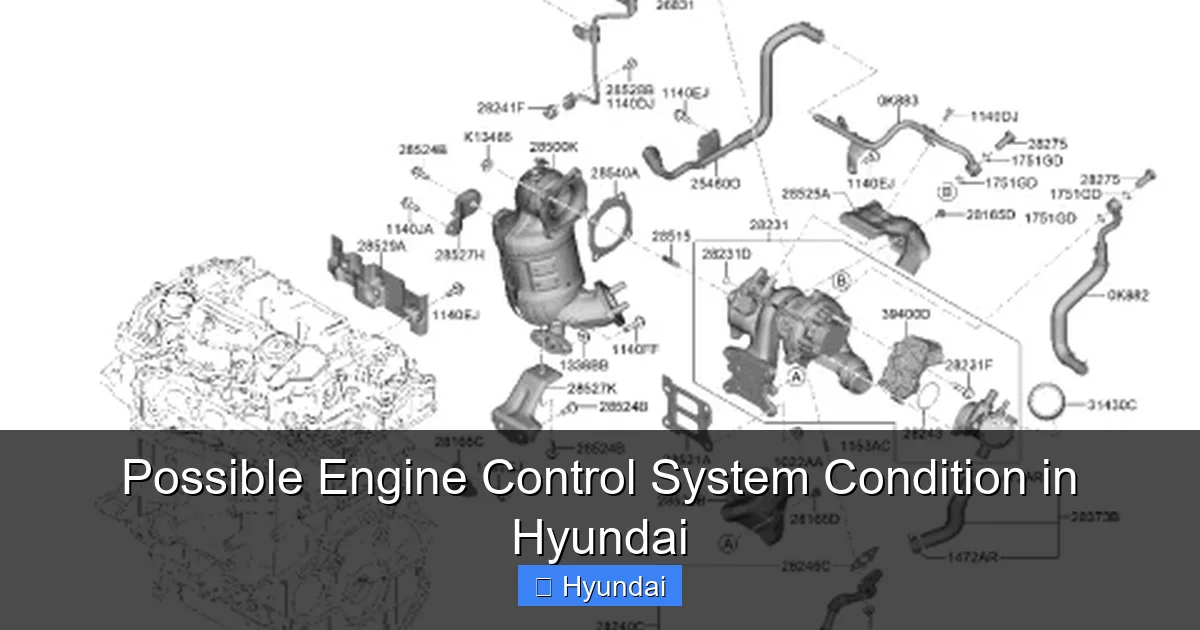
Visual guide about Possible Engine Control System Condition in Hyundai
Image source: hyundaipartsdeal.com
The Illuminated Check Engine Light
This is the most universal signal. A steady light means a problem that needs attention soon. A flashing light indicates a severe issue, like a misfire that could damage the catalytic converter—stop driving immediately and get it checked. The light is the ECU’s cry for help.
Performance Issues and Poor Driveability
You might notice your Hyundai feels “off.” This includes:
- Rough Idling: The engine shakes, vibrates, or runs unevenly when stopped.
- Hesitation or Stumbling: A delay in response when you press the accelerator, or a feeling that the engine is “missing” under load.
- Reduced Power and Acceleration: The car feels sluggish and struggles to gain speed, especially on hills.
- Engine “Limp Mode”: A safety feature where the ECU drastically limits engine power and RPM to prevent damage. The car will feel extremely slow and unresponsive.
Fuel Economy and Emissions Problems
Because the ECU meticulously controls the air-fuel mixture, a fault often leads to inefficiency. You’ll find yourself visiting the gas station more often. You may also fail an emissions test due to incorrect fuel mixture or a malfunctioning emissions control component.
Unusual Noises and Smells
Backfiring (a popping sound from the exhaust) or a persistent fuel smell can indicate the ECU is not properly controlling ignition timing or fuel injection. These are serious symptoms requiring immediate attention.
Top Causes of Engine Control System Conditions
So, what actually goes wrong? While the list is long, a few causes are statistically very common across Hyundai models, from the Accent to the Palisade.
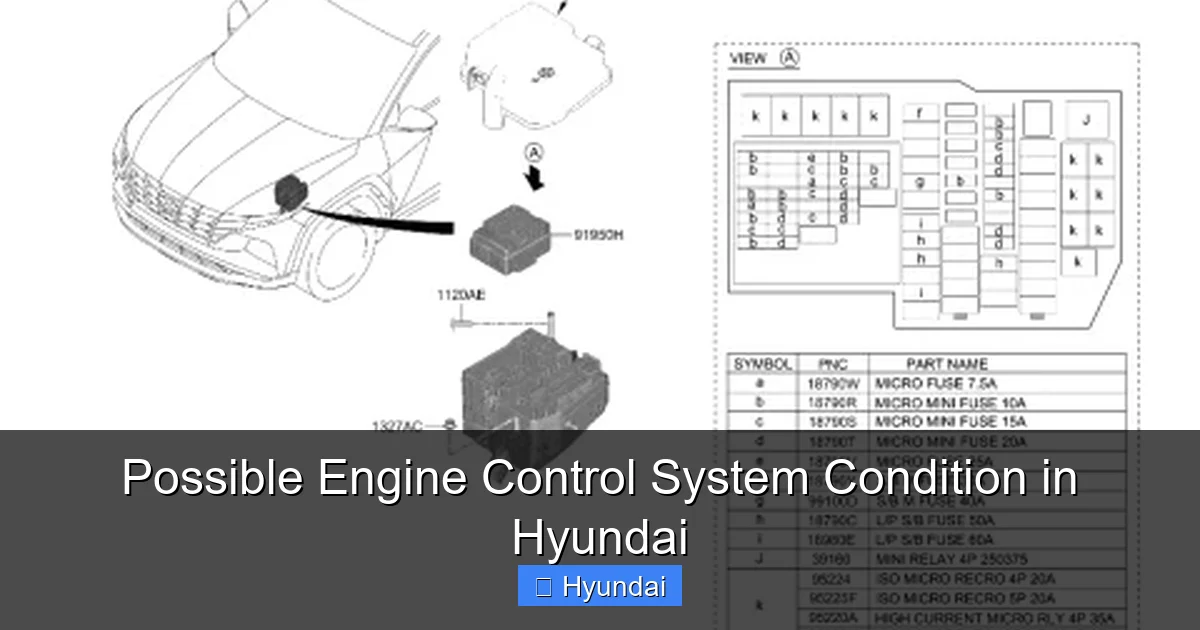
Visual guide about Possible Engine Control System Condition in Hyundai
Image source: hyundaipartsdeal.com
Faulty Oxygen (O2) Sensors
The O2 sensors monitor oxygen levels in the exhaust. The ECU uses this data to adjust the fuel mixture. A failing O2 sensor sends incorrect data, causing a rich (too much fuel) or lean (too little fuel) condition. This triggers codes like P0130-P0134 and significantly hurts fuel economy and performance. Replacing an O2 sensor is a common repair.
Mass Airflow (MAF) Sensor Issues
The MAF sensor measures the amount of air entering the engine. If it’s dirty, damaged, or fails, the ECU doesn’t know how much air is present and cannot calculate the correct fuel amount. This leads to rough running, stalling, and poor acceleration. Sometimes, a simple cleanup can help, but replacement is often needed.
Exhaust Gas Recirculation (EGR) System Problems
The EGR system reduces emissions by recirculating a small amount of exhaust gas. A clogged EGR valve or a faulty EGR position sensor can cause rough idling, stalling, and a Check Engine Light. Codes in the P0400 range are typical.
Ignition System Failures
Worn spark plugs, failing ignition coils, or bad spark plug wires can cause engine misfires. The ECU detects these misfires (codes P0300-P0304) and will flash the Check Engine light. Prolonged misfiring can overheat and destroy the catalytic converter, a very expensive repair.
Wiring Harness and Connector Problems
Over time, engine heat, vibration, and moisture can degrade wiring insulation and corrode connector pins. A loose or corroded connection to a critical sensor like the crankshaft position sensor can cause a no-start condition or severe running issues. These can be tricky to diagnose as the component itself may be fine.
Software Glitches and ECU Needs
Not all problems are physical. Sometimes, the ECU’s software has a bug or needs an update to properly manage new conditions (like after a battery replacement). A reflash or update from a Hyundai dealer’s diagnostic system can sometimes resolve mysterious, intermittent issues.
The Critical Diagnostic Process
Guessing is a costly and frustrating way to repair your car. A methodical diagnostic approach is essential.
Visual guide about Possible Engine Control System Condition in Hyundai
Image source: blogmedia.dealerfire.com
Step 1: Retrieve the Diagnostic Trouble Codes (DTCs)
This is the absolute starting point. A mechanic (or you, with a good OBD-II scanner) plugs a tool into the port under your dashboard. The scanner reads the stored codes in the ECU. A code like “P0171 – System Too Lean (Bank 1)” tells you the ECU has detected a lean air-fuel condition, but it doesn’t tell you *why*. It’s a starting point, not a final diagnosis.
Step 2: Live Data Analysis and Symptom Correlation
The real diagnostic work happens here. A technician uses advanced scan tools to view “live data” streams from all sensors—oxygen sensor voltages, MAF sensor readings, fuel trim values, etc. They compare these readings to manufacturer specifications and look for values that are out of range or not reacting as they should. They also correlate this data with the symptoms you reported (e.g., “it hesitates only when warm”).
Step 3: Targeted Component Testing
Based on the codes and live data, the technician performs targeted tests. If the data points to an O2 sensor, they might test its response time by introducing a propane enrichment test. If it points to a fuel issue, they might check fuel pressure. This step isolates the faulty component within a system.
Why Professional Diagnosis Saves Money
It’s easy to see a P0420 code (Catalyst System Efficiency Below Threshold) and immediately order a new catalytic converter. But the root cause is often a faulty O2 sensor or an engine misfire that poisoned the catalyst. Replacing the expensive converter without fixing the root cause is a huge waste of money. Professional diagnosis finds the *source* of the code.
Repair Options and What to Expect
Once the problem is identified, repair paths become clear. Costs vary wildly based on the issue.
Sensor Replacement
This is one of the most common and often affordable repairs. Replacing an O2 sensor or MAF sensor typically involves part cost plus 1-2 hours of labor. Always use high-quality, OEM-spec or OEM parts for these critical sensors.
Wiring and Connector Repair
Fixing corroded connectors or repairing chafed wires is labor-intensive but usually inexpensive in parts. It requires meticulous work to ensure the repair is durable in the hot, dirty engine bay environment.
ECU Reprogramming/Replacement
If the diagnosis points to a software issue, a simple update may be performed. If the ECU itself is physically failed (rare), it will need to be replaced and programmed to your vehicle’s VIN and security system, which is a more involved process.
Addressing Related System Failures
If a misfire damaged the catalytic converter, you must replace the failed ignition component (coil, spark plug) *first*, then address the converter. Ignoring the root cause guarantees a repeat failure.
Prevention and Long-Term Care
You can’t prevent every possible fault, but you can dramatically reduce your risk with proactive care.
Strict Adherence to Maintenance Schedules
This is the single most important thing. Changing your engine oil and filter on time is paramount. The ECU monitors oil pressure and quality; low oil or degraded oil can trigger warnings and cause sensor issues. Follow Hyundai’s severe or normal service intervals based on your driving habits. Forgetting an oil change is one of the quickest paths to engine trouble.
Use Quality Fuels and Cleaners
Poor-quality gasoline can lead to carbon buildup on intake valves and fuel injectors, confusing the MAF and O2 sensors and causing lean conditions. Periodically using a high-quality fuel system cleaner can help keep injectors and valves clean, maintaining optimal sensor readings.
Never Ignore Small Problems
A slight rough idle that comes and goes, or a single Check Engine Light that went off on its own, is still a stored code in the ECU. Have it scanned. Catching a failing MAF sensor early is cheap. Waiting until it causes a lean condition that burns a valve is catastrophic.
Be Mindful of “Too Much of a Good Thing”
Overfilling your engine with oil can cause aeration (foaming), which the oil pressure sensor may detect as low pressure, triggering a warning. It can also cause excessive crankcase pressure. Always check your oil level correctly when the engine is cool and on level ground. Understanding proper oil levels is a simple yet critical skill.
Conclusion: Knowledge is Power (and Savings)
A “possible engine control system condition” in your Hyundai is not a death sentence for your wallet, but it is a serious message from your car’s computer that should not be ignored. The system is designed to protect the engine from damage by alerting you to problems. By understanding the common symptoms—from the Check Engine Light to performance dips—and the frequent causes like sensor faults or wiring issues, you become an informed consumer. You can have productive conversations with your mechanic and avoid unnecessary repairs. Remember, the diagnostic process is key. Always start with a professional code reading and live data analysis to find the root cause. Finally, embrace preventive maintenance. Regular oil changes, quality fuel, and addressing minor concerns immediately are the best investments you can make in your Hyundai’s long-term health and reliability. A well-maintained engine control system means a smoother, more efficient, and longer-lasting driving experience.
Frequently Asked Questions
Can I keep driving with the Check Engine Light on?
If the light is steady, you can drive a short distance to a repair shop but should avoid long trips. If it’s flashing, stop driving immediately as it indicates a severe misfire that can destroy your catalytic converter. Any Check Engine light indicates a problem that needs diagnosis.
What is “limp mode” and why does my Hyundai go into it?
Limp mode is a safety feature where the ECU drastically reduces engine power to prevent damage from a serious fault, like a failed sensor or major misfire. It allows you to slowly drive to a safe location or repair shop. The underlying cause must be diagnosed and fixed to exit limp mode.
Could a bad battery cause engine control system codes?
Yes. A weak or failing battery can cause voltage drops that confuse the ECU and set multiple, sometimes unrelated, codes. It’s a good practice to have the battery and charging system tested when diagnosing complex electrical issues.
How much does it typically cost to fix an engine control system problem?
Costs vary enormously. Replacing a faulty sensor might cost $150-$400. Wiring repairs can range from $100-$500+. Replacing a major component like a catalytic converter due to an unresolved misfire can exceed $1,500. Diagnosis itself usually costs $100-$200 for the initial scan and analysis.
Can I diagnose these problems myself with a cheap code reader?
You can read the basic trouble codes with an inexpensive OBD-II scanner, which is a good first step. However, professional diagnosis requires interpreting those codes alongside live sensor data, performing specific tests, and having the experience to distinguish between a bad sensor and a wiring problem. DIY diagnosis often leads to misdiagnosis and wasted money.
What’s the best way to prevent engine control system failures?
Stick to your Hyundai’s maintenance schedule, especially for oil changes. Use high-quality fuel from reputable stations and consider periodic fuel system cleaning. Address small symptoms (odd noises, slight rough running) immediately before they cascade into larger problems that trigger multiple ECU codes.