
How Long Will a Toyota Highlander Transmission Last?

With diligent maintenance and mindful driving habits, a Toyota Highlander transmission can reliably last 200,000 miles or more. Key factors include regular fluid changes, avoiding extreme stress like heavy towing, and addressing minor issues immediately. Neglecting these areas can drastically shorten its lifespan, but proactive care ensures this critical component supports your SUV for the long haul.
Key Takeaways
- Average Lifespan: A well-maintained Toyota Highlander transmission can last 200,000–300,000 miles, with many owners exceeding 250,000 miles through proper care.
- Maintenance is Everything: Regular transmission fluid changes, using the correct fluid type, and following the service schedule are the single most important factors for longevity.
- Driving Habits Matter: Aggressive acceleration, frequent heavy towing, and constantly driving in extreme conditions significantly increase wear and tear.
- Fluid Changes Are Non-Negotiable: Old, degraded fluid loses its lubricating and cooling properties, leading to premature wear. Adhere to the 60,000–100,000 mile interval.
- Model Year Plays a Role: Transmissions in model years from 2014 onward (6-speed and 8-speed automatics) are generally more robust than early 2000s models, which had more reported issues.
- Heed Early Warning Signs: Symptoms like delayed shifting, slipping gears, unusual noises, or fluid leaks should be inspected immediately to prevent catastrophic failure.
- Overall Vehicle Health is Key: A failing engine or other drivetrain component can over-stress the transmission. Keeping the entire powertrain in good shape protects the transmission.
📑 Table of Contents
- Understanding Your Highlander’s Transmission
- The Million-Mile Question: What’s the Average Lifespan?
- The #1 Factor: Maintenance (And What It Really Means)
- Your Driving Style: The Silent Transmission Killer
- Model Year Matters: Generational Differences
- Red Flags: Recognizing Transmission Trouble Early
- Conclusion: Your Highlander’s Legacy is in Your Hands
Understanding Your Highlander’s Transmission
When you slide behind the wheel of a Toyota Highlander, you’re commanding a sophisticated machine. At its heart is the transmission, a marvel of engineering that translates engine power into motion. Knowing what type of transmission your specific Highlander has is the first step in understanding its potential lifespan. Over the years, Toyota has equipped the Highlander with several transmission types, each with its own characteristics and reliability profile.
Automatic Transmissions: The Workhorses
For the vast majority of Highlander owners, the vehicle features a conventional automatic transmission. Early models (2000–2003) used a 4-speed automatic, which was adequate for its time but is now known for being less efficient and, in some high-mileage cases, prone to wear. From 2004–2013, a 5-speed automatic became standard, offering smoother shifts and better fuel economy. The most common and well-regarded transmissions are the 6-speed automatic (used from 2014–2020) and the current 8-speed automatic (introduced in 2021). These later units are built with tighter tolerances, better solenoid designs, and more advanced computer control, contributing significantly to their reputation for durability.
CVT: A Different Approach
For the 2021+ hybrid models, Toyota employs an electronically controlled continuously variable transmission (e-CVT). This isn’t a traditional automatic with gears; instead, it uses a belt and pulley system to provide an infinite number of gear ratios. The e-CVT in the Highlander Hybrid is specifically designed for the hybrid system’s power-split device. These transmissions are generally very reliable and are built for efficiency rather than high-performance stress. Their longevity depends heavily on proper hybrid system maintenance, especially the health of the traction battery and engine.
So, what does this mean for you? If you own or are considering a non-hybrid Highlander from 2014 onward, you have one of the most robust automatic transmissions Toyota has ever produced. The earlier 4- and 5-speed units, while still capable of high mileage with perfect maintenance, have a higher statistical chance of requiring rebuilds past 150,000 miles. The hybrid’s e-CVT has a different failure mode but is generally considered very stout.
The Million-Mile Question: What’s the Average Lifespan?
This is the big question, and the answer isn’t a single number. It’s a range shaped by care, luck, and engineering. Based on extensive owner surveys from sources like Consumer Reports, mechanic forums, and long-term reliability studies, here’s a realistic breakdown.
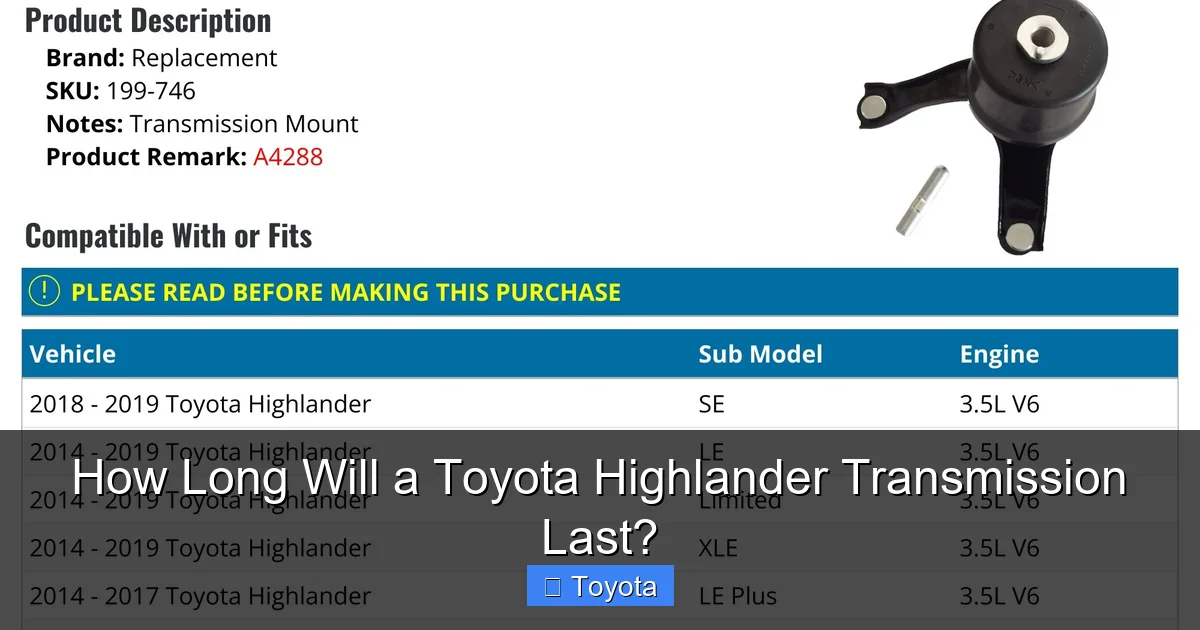
Visual guide about How Long Will a Toyota Highlander Transmission Last?
Image source: partsgeek.com
The 200,000-Mile Benchmark
For a Toyota Highlander transmission that receives all recommended maintenance on time and is driven conservatively, reaching 200,000 miles without major issue is not just possible—it’s probable. Many owners regularly report their Highlanders crossing this threshold with the original transmission still functioning perfectly. This benchmark has become a standard for modern Toyota reliability. The 6-speed automatic found in 2014–2020 models is particularly celebrated for hitting this mark and beyond. You’ll find countless anecdotes of Highlanders with 250,000+ miles on original transmissions, especially those used as family haulers on highways rather than as frequent tow vehicles.
The 300,000-Mile Club: Is It Real?
Yes, the 300,000-mile club is real for the Highlander, but membership requires exceptional circumstances. This typically involves: a model year with the robust 6-speed (2014–2020), a strict regimen of fluid changes every 60,000 miles (or even more frequently), primarily highway driving with minimal cold starts, no towing beyond light loads (like a small utility trailer), and a bit of good fortune. These are the unicorns—the Highlanders that become family heirlooms. Achieving this requires viewing transmission care not as a suggestion, but as a critical religion.
Factors That Can Cut Lifespan Dramatically
On the flip side, a neglected transmission can fail well before 100,000 miles. The most common culprits are: skipped fluid changes leading to burnt, gritty fluid; consistent heavy towing (over 3,500 lbs) without an auxiliary cooler; aggressive driving that causes excessive heat and shock loads; and ignoring early symptoms like slipping or harsh shifts. A transmission rebuild can cost $3,000–$5,000, making preventive care a financially savvy choice. It’s the difference between a 20-year ownership cost and a 5-year ownership cost.
The #1 Factor: Maintenance (And What It Really Means)
We can’t say it enough: maintenance is everything. But “maintenance” is more than just a checklist item. For your Toyota Highlander transmission, it’s a multi-layered commitment.
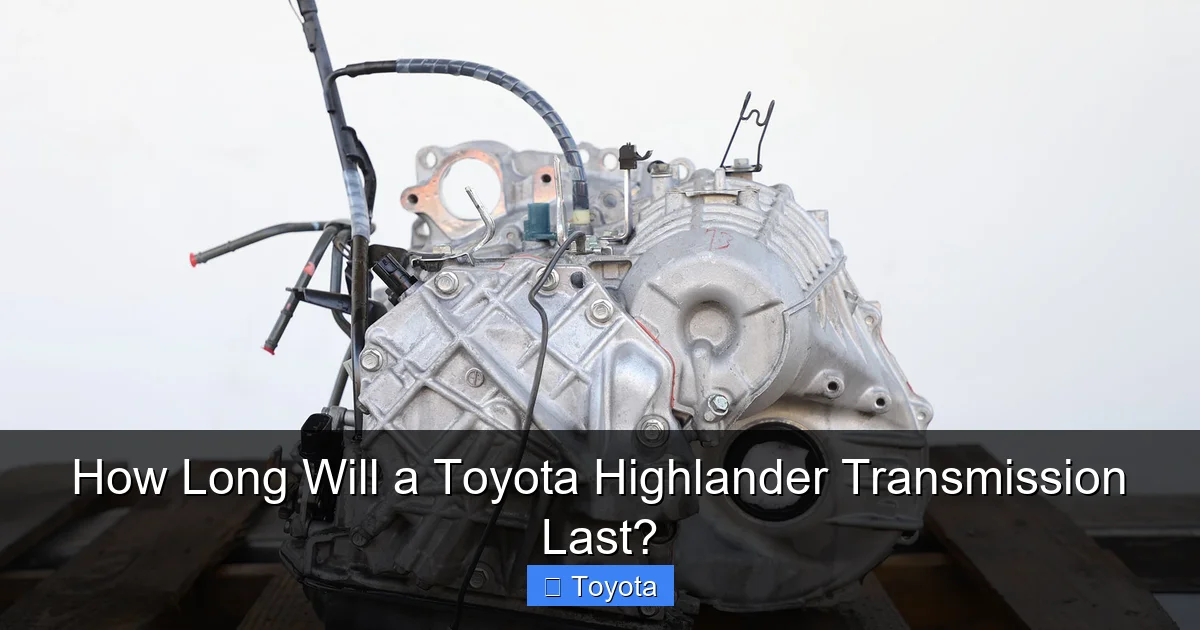
Visual guide about How Long Will a Toyota Highlander Transmission Last?
Image source: assets.suredone.com
Transmission Fluid: The Lifeblood of Your Gearbox
Transmission fluid does three critical jobs: it lubricates all the moving parts, it cools the transmission by carrying heat away, and it operates hydraulic circuits and solenoids for shifting. Over time, this fluid breaks down. It gets contaminated with metal particles from normal wear, loses its viscosity, and its chemical additives deplete. Old fluid is abrasive, ineffective at cooling, and can cause varnish buildup that jams valves. The result is increased friction, heat, and ultimately, failure.
The Golden Rule: Change your fluid on time. Toyota’s official interval for most Highlanders is every 60,000 miles under “normal” driving. However, “normal” is a tricky term. If you do a lot of stop-and-go city driving, live in a very hot climate, or occasionally tow, you should consider changing it every 30,000–45,000 miles. Use only Toyota Genuine ATF (Type T-IV for most pre-2021 models) or a premium fluid meeting the exact specification. Using the wrong fluid can cause immediate damage. For a deep dive into the exact process and benefits, check our comprehensive guide on how often to change transmission fluid in a Toyota Highlander.
Beyond the Fluid: Filters, Pan Gaskets, and More
A full transmission service isn’t just a fluid drain and fill. Many Highlander models have a transmission filter located in the oil pan. This filter traps debris. Replacing it during a fluid change is a cheap insurance policy. Also, the pan gasket should be replaced to prevent leaks. While you’re there, a mechanic can inspect the pan for excessive metal shavings—a red flag for internal wear. Don’t forget the external filter (if equipped) and the condition of the cooler lines. A small leak that drips a quart a month will, over a year, lead to a significant fluid level drop and potential damage.
The Holistic Maintenance Mindset
Think of your Highlander as a system. A poorly maintained engine that misfires or runs excessively rich can dump unburned fuel into the exhaust, which in some models can affect transmission control logic. Worn engine or transmission mounts cause violent shifts that stress components. Even your brake system plays a role; a stuck caliper creates drag that forces the transmission to work harder. That’s why following a complete maintenance schedule—including brake inspections and engine health—is crucial for transmission longevity. A healthy engine, such as the robust Toyota 4.7 V8 found in some Highlanders, operates smoothly and doesn’t send harmful shock loads through the drivetrain.
Your Driving Style: The Silent Transmission Killer
You can have the most meticulously maintained Highlander, but if you drive it like a stolen car, the transmission will suffer. Your right foot is one of the most powerful tools in determining its lifespan.
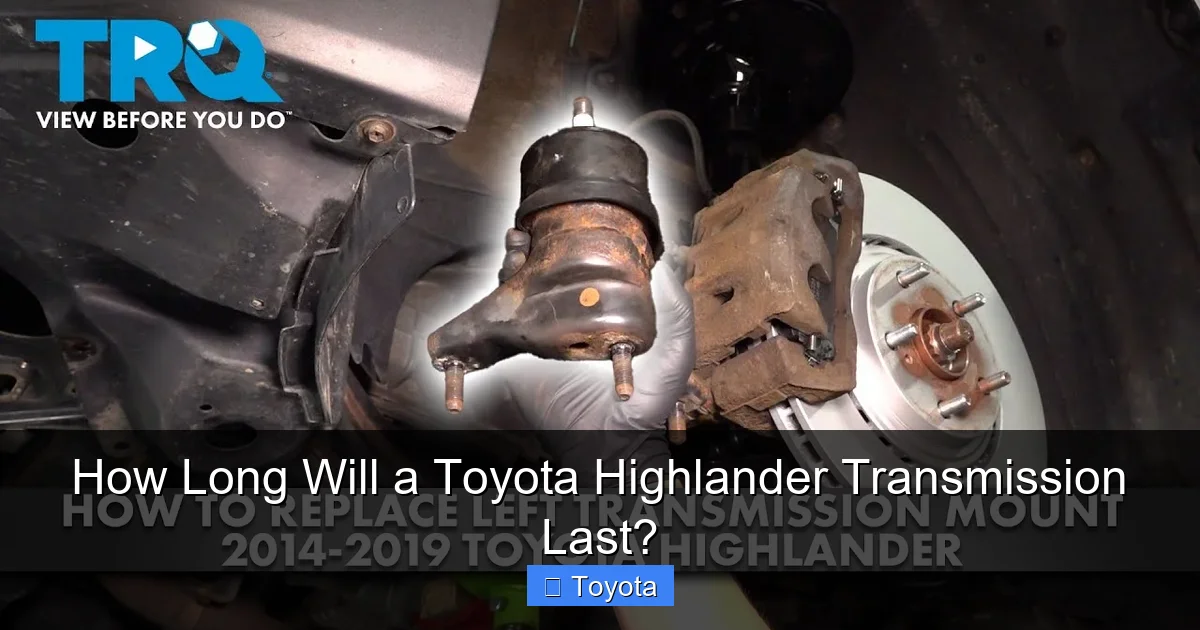
Visual guide about How Long Will a Toyota Highlander Transmission Last?
Image source: i.ytimg.com
The Heat is On: Managing Operating Temperature
Heat is the number one enemy of any automatic transmission. It degrades fluid rapidly and warps internal components. Certain driving habits generate excessive heat: constant aggressive acceleration from a stop, riding the brakes while descending long hills (which forces the transmission to downshift and rev high), and frequent short trips where the transmission never fully warms up, leading to water condensation and fluid contamination. To combat this: accelerate smoothly, use cruise control on highways, and if you do a lot of mountain driving, consider an auxiliary transmission cooler. If you’re frequently in stop-and-go traffic, let the transmission warm up for a minute in the morning before demanding power.
Towing: Know Your Limits
The Highlander is a capable SUV, but it’s not a heavy-duty truck. Towing puts enormous strain on the transmission, generating immense heat and forcing it to work in lower gears for extended periods. Exceeding the manufacturer’s rated towing capacity (typically 3,500–5,000 lbs depending on model and engine) is a direct path to premature failure. If you tow regularly (more than a few times a year), you must have an auxiliary transmission cooler installed. This is not optional; it’s a critical upgrade. Also, use the “Manual” or “Sequential” shift mode to manually control gears, preventing the transmission from hunting and overheating in hilly terrain. Keep a close eye on the transmission temperature gauge if equipped.
Cold Starts and Short Trips
On cold mornings, transmission fluid is thick. Shifting immediately after startup causes harsh, grinding shifts that wear synchronizers and bands. Let the engine idle for 30–60 seconds, then drive gently for the first few minutes until everything warms up. Similarly, if your daily commute is only 2–3 miles, the transmission may never reach its optimal operating temperature, leading to moisture buildup and sludge formation. Occasionally take a longer highway drive to burn off condensation and fully heat the fluid.
Model Year Matters: Generational Differences
Not all Highlanders are created equal in the transmission department. Engineering improvements over the decades have led to significant gains in durability.
First Generation (2000–2007): The Learning Curve
These early models, particularly the 4-cylinder and early V6 versions with the 4-speed automatic, have the highest incidence of transmission issues in the Highlander lineage. Common problems include solenoid failures, valve body wear, and in some cases, premature clutch pack failure. While many of these transmissions are still on the road, they require the most vigilant maintenance. If you’re looking at a used Highlander from this era, a thorough pre-purchase transmission inspection—including a scan for solenoid codes and a fluid condition check—is absolutely essential. Budget for a potential rebuild if the fluid is dark or smells burnt.
Second Generation (2008–2013): Steady Improvement
The switch to a 5-speed automatic (U660E) was a major upgrade. This transmission is generally quite reliable, with fewer common failure points than the 4-speed. It paired well with the 2GR-FE V6 engine. The main vulnerabilities remain heat-related, especially in towing applications or extremely hot climates. With proper fluid changes every 60,000 miles, these transmissions regularly see 200,000 miles.
Third Generation & Beyond (2014–Present): The Gold Standard
This is where Toyota truly refined the formula. The 6-speed automatic (UA80E/UA80F) introduced in 2014 is considered one of Toyota’s best-ever mainstream automatics. It features a more efficient gearset, better solenoid design, and improved thermal management. It’s overbuilt for the Highlander’s power output, which contributes to its legendary lifespan. The current 8-speed automatic (Direct Shift-8AT) in 2021+ models continues this trend, offering even quicker, smoother shifts. The hybrid e-CVT is a different animal but is also proving exceptionally reliable due to its simpler design and reduced mechanical stress. For the absolute best long-term odds, target a 2014 or newer Highlander.
Red Flags: Recognizing Transmission Trouble Early
Catching a problem early can mean the difference between a $500 repair and a $4,000 rebuild. Your Highlander will give you warnings. Heed them.
Driving Symptoms You Should Never Ignore
- Delayed Engagement: When you shift from Park to Drive or Drive to Reverse, there’s a noticeable pause (2+ seconds) before the vehicle moves.
- Slipping Gears: The engine RPMs surge as if you’ve downshifted, but the vehicle doesn’t accelerate accordingly. It feels like the transmission is briefly disconnecting.
- Harsh or Jarring Shifts: Shifts that feel like a kick or a clunk, especially between 1st and 2nd gear, indicate worn bands or solenoids.
- Failing to Shift: The transmission stays stuck in one gear (often “limp mode” or 2nd gear) to prevent further damage. This is a critical failure mode.
- Unusual Noises: Whining, humming, or clattering sounds that change with engine speed or gear selection. A constant whine in neutral that goes away in drive/reverse can indicate a worn pump or bearing.
Physical Signs and Checks
Regularly inspect your parking spot for fresh fluid leaks. Transmission fluid is typically red or amber (though it turns brown with age). A puddle of any size needs investigation. Check the fluid level and condition monthly if your model has a dipstick. The fluid should be clear red, not dark brown or black, and should smell slightly sweet, not burnt. If it’s low, find the leak. If it’s dirty, plan a change immediately. Also, watch for a transmission overheating warning light on your dash. This is your Highlander’s emergency alarm—stop driving and let it cool down immediately.
If you experience any of these, get a diagnosis from a reputable transmission specialist immediately. A scan for solenoid and pressure-related trouble codes is the first step. Catching a failing solenoid or a valve body issue early can save the core transmission.
Conclusion: Your Highlander’s Legacy is in Your Hands
The Toyota Highlander has earned its reputation as a reliable, long-lasting family SUV. The transmission, when treated with respect and care, is a testament to that engineering. While the average lifespan hovers around the 200,000-mile mark, achieving this—or even surpassing it—is not a matter of luck. It’s the direct result of a simple, disciplined approach: use the correct fluid, change it on time (or sooner), drive smoothly, avoid exceeding towing limits, and respond instantly to any unusual behavior. The most reliable Highlanders on the road today are those whose owners viewed maintenance as an investment, not an expense. By following these principles, your Highlander’s transmission will likely outlive your desire to keep the vehicle, providing decades of dependable service for you and your family. Treat it right, and it will never let you down.
Frequently Asked Questions
How often should I change the transmission fluid in my Toyota Highlander?
Toyota recommends changing the transmission fluid every 60,000 miles under normal driving conditions. However, for severe conditions like frequent stop-and-go traffic, extreme heat, or regular towing, reduce this interval to every 30,000–45,000 miles. Using the correct Toyota Genuine ATF Type T-IV fluid is critical for performance and longevity.
Does towing a trailer shorten my Highlander’s transmission life?
Yes, consistent heavy towing significantly increases heat and stress on the transmission. Always stay within your model’s rated towing capacity (check your owner’s manual). For frequent towing, installing an auxiliary transmission cooler is essential. Use the manual shift mode on hills to control gears and prevent excessive hunting, which generates heat.
Are CVT transmissions in the Highlander Hybrid as reliable as the conventional automatics?
The e-CVT in the Highlander Hybrid is a different design but is proving to be very reliable. It has fewer moving parts than a traditional geared automatic and is specifically engineered for the hybrid system’s power-split device. Its longevity is tied to the health of the hybrid battery and engine. With proper hybrid system maintenance, it can last just as long as the conventional automatics.
How much does it cost to rebuild or replace a Highlander transmission?
A full transmission rebuild for a Toyota Highlander typically costs between $3,000 and $5,000, depending on the shop, region, and whether any major internal parts need replacement. A remanufactured or used replacement unit can range from $2,500 to $4,500 plus installation. These costs underscore the value of preventive maintenance.
What should I check when buying a used Highlander regarding its transmission?
First, obtain a vehicle history report to check for any recorded transmission repairs. During a test drive, listen for delayed shifts, slippage, or harsh clunks when accelerating or shifting between drive and reverse. Check the fluid (if dipstick equipped) for color and smell—it should be red and not burnt. Finally, have a trusted mechanic perform a pre-purchase inspection that includes a transmission scan for any stored solenoid or pressure codes.
Do manual transmissions last longer than automatics in the Highlander?
The Toyota Highlander has not been offered with a manual transmission in the North American market for many years; all recent models are automatic or e-CVT. Historically, well-driven manual transmissions can be more durable and cheaper to repair, but this is a moot point for Highlander buyers. Focus on the health of the automatic transmission through the maintenance steps outlined above.
