
What Is Inverter Coolant on a Hyundai Tucson Hybrid?

Inverter coolant in your Hyundai Tucson Hybrid is a specialized, high-dielectric fluid that cools and insulates the power inverter—the component that converts battery DC power to AC for the electric motor. It is NOT the same as your engine coolant and requires specific handling. Neglecting this unique system can lead to expensive inverter failure and loss of hybrid functionality.
Key Takeaways
- Unique Purpose: Inverter coolant specifically cools and electrically insulates the power inverter, a component that doesn’t exist in conventional gasoline-only vehicles.
- Specialized Fluid: It uses a glycol-based, non-conductive (dielectric) formula, unlike the ethylene glycol-based, conductive engine coolant. Never mix them.
- Separate System: The inverter has its own closed-loop cooling circuit with a dedicated pump, reservoir, and heat exchanger, completely separate from the engine’s cooling system.
- Critical Maintenance: Following Hyundai’s specific service intervals for inverter coolant is vital for the longevity and performance of your hybrid system.
- Professional Service: Due to the high-voltage components and precise fluid requirements, this service should almost always be performed by a trained Hyundai technician.
- Failure Signs: Overheating warnings, reduced electric vehicle (EV) mode operation, or a check engine light can indicate issues with the inverter cooling system.
- Cost of Neglect: Inverter replacement due to coolant neglect is one of the most expensive repairs on a Tucson Hybrid, often costing thousands of dollars.
📑 Table of Contents
- Demystifying the Inverter Coolant: It’s Not Your Granddad’s Antifreeze
- The Inverter: Your Hybrid’s Electric Powerhouse
- What’s Actually In That “Inverter Coolant” Bottle?
- The Separate Cooling Loop: How It All Works Together
- Service, Maintenance, and What Happens When It Goes Wrong
- The High Cost of Neglect: Inverter Replacement
- Professional Service: Why This Isn’t a Typical DIY Job
- Conclusion: A Critical, Often Overlooked Fluid
Demystifying the Inverter Coolant: It’s Not Your Granddad’s Antifreeze
So, you pop the hood of your Hyundai Tucson Hybrid and see two coolant reservoirs. One is familiar—the classic engine coolant tank. But what’s that other one labeled “Inverter Coolant” or sometimes “Hybrid Coolant”? It’s a mystery liquid for a mystery component. Let’s clear the fog. Inverter coolant is the lifeblood of your Tucson Hybrid’s power electronics cooling system. Its job is to keep the inverter cool and, just as importantly, to prevent it from short-circuiting. This isn’t just a fancy name for regular antifreeze; it’s a chemically distinct fluid engineered for a very high-stakes job inside your hybrid.
Think of your Tucson Hybrid’s heart as two parts: the gasoline engine and the electric drive system. The bridge between them is the hybrid system’s brain and nervous system. The inverter is a core part of that. It takes the high-voltage DC electricity from the traction battery and meticulously converts it into the AC electricity the electric drive motor needs to spin. This process generates a significant amount of heat. If that heat isn’t managed, the inverter’s sensitive power modules (usually made of silicon carbide or IGBTs) can overheat and fail catastrophically. That’s where the inverter coolant comes in, circulating to absorb this heat and carry it away to a radiator, much like your engine coolant, but for a different, electrified heat source.
The Inverter: Your Hybrid’s Electric Powerhouse
To truly understand why inverter coolant is so special, you need to meet the component it protects. The power inverter (also called the Motor Control Unit or MCU in some contexts) is a solid-state electronic module packed with power transistors. In your Tucson Hybrid, it’s typically located near the transmission or integrated with the hybrid drive unit. Its sole mission is power conversion and control.
Visual guide about What Is Inverter Coolant on a Hyundai Tucson Hybrid?
Image source: hyundaimaintenance.com
From Battery to Motor: The Inverter’s Critical Role
The high-voltage battery pack stores energy as Direct Current (DC). The electric motor, however, runs on Alternating Current (AC). The inverter acts as a sophisticated, high-frequency switch, rapidly turning the DC power on and off in a specific pattern to simulate AC waves. It also controls the speed and torque of the motor by varying the frequency and amplitude of this simulated AC power. This process is called Pulse Width Modulation (PWM). All this switching happens thousands of times per second, and each switch event generates heat. The cumulative thermal load is substantial, making active cooling non-negotiable.
Why Heat is the Enemy of Electronics
Semiconductor devices like those in the inverter have a maximum operating junction temperature. Exceeding this limit, even briefly, can cause immediate failure or drastically shorten the component’s lifespan. Heat also increases electrical resistance, reducing efficiency and creating a vicious cycle of more heat generation. Unlike an engine, which can withstand high temperatures with proper oil and coolant, these solid-state electronics are far more sensitive. Their failure mode is often sudden and permanent. This is why the cooling system for the inverter is engineered with such precision and why the coolant itself has unique properties.
What’s Actually In That “Inverter Coolant” Bottle?
Here’s where we get into the chemistry. The fluid in your Tucson Hybrid’s inverter cooling system is almost always a glycol-based dielectric fluid. Let’s break down what that means and why it’s fundamentally different from the green, orange, or pink stuff in your engine’s cooling system.
Visual guide about What Is Inverter Coolant on a Hyundai Tucson Hybrid?
Image source: wonder007.com.tw
The “Dielectric” Difference: Insulation is Key
The single most important property of inverter coolant is its electrical insulation capability (dielectric strength). The inverter’s power electronics operate at hundreds of volts. The coolant flows in direct contact with these live components. If the coolant became electrically conductive (like standard engine coolant), it would create a short circuit between the power terminals, leading to immediate and catastrophic failure—essentially turning the coolant into a liquid conductor that fries the system. Engine coolant, while a good heat transfer fluid, is electrically conductive due to its ionic additives (corrosion inhibitors, etc.). Using it in the inverter circuit would be like pouring salt water on a circuit board. Dielectric fluid is formulated to have extremely low electrical conductivity while still transferring heat effectively.
Glycol Base: Propylene vs. Ethylene
Most inverter coolants use propylene glycol as the base, not the more common ethylene glycol found in many traditional antifreezes. Propylene glycol is less toxic, which is a safety consideration given the potential for minor leaks in a system that might be near other components. However, toxicity is a secondary concern to its performance. The glycol base provides the freeze protection and boiling point elevation needed for an automotive cooling circuit. But the real magic is in the proprietary additive package that maintains its dielectric properties, prevents corrosion on aluminum and copper components within the inverter cooling loop, and inhibits biological growth.
Why You Can’t Mix or Substitute
This cannot be stressed enough: Never, under any circumstances, add standard engine coolant to the inverter reservoir. Even a small amount of contamination can compromise the dielectric strength. Conversely, using a pure dielectric fluid meant for transformers in your inverter system might lack the necessary corrosion inhibitors for the specific metals (aluminum heat sinks, copper tubing) used in the Tucson’s hybrid cooling circuit. You must use the fluid specified by Hyundai. For most modern Tucson Hybrids (2016+), this is typically a Hyundai-specific long-life inverter coolant, often identified by part numbers like 07100-2A100 or similar. Always consult your owner’s manual or a dealership for the exact specification for your model year.
The Separate Cooling Loop: How It All Works Together
The inverter coolant operates in a completely independent, closed-loop system. It does not share fluid with the engine cooling system or the air conditioning refrigerant. Understanding this separation is key to diagnosing issues and performing correct service.
Visual guide about What Is Inverter Coolant on a Hyundai Tucson Hybrid?
Image source: cdn.shopify.com
System Components: A Mini Cooling Circuit
Your Tucson Hybrid’s inverter cooling system is a miniature version of the engine’s system, but with some distinct parts:
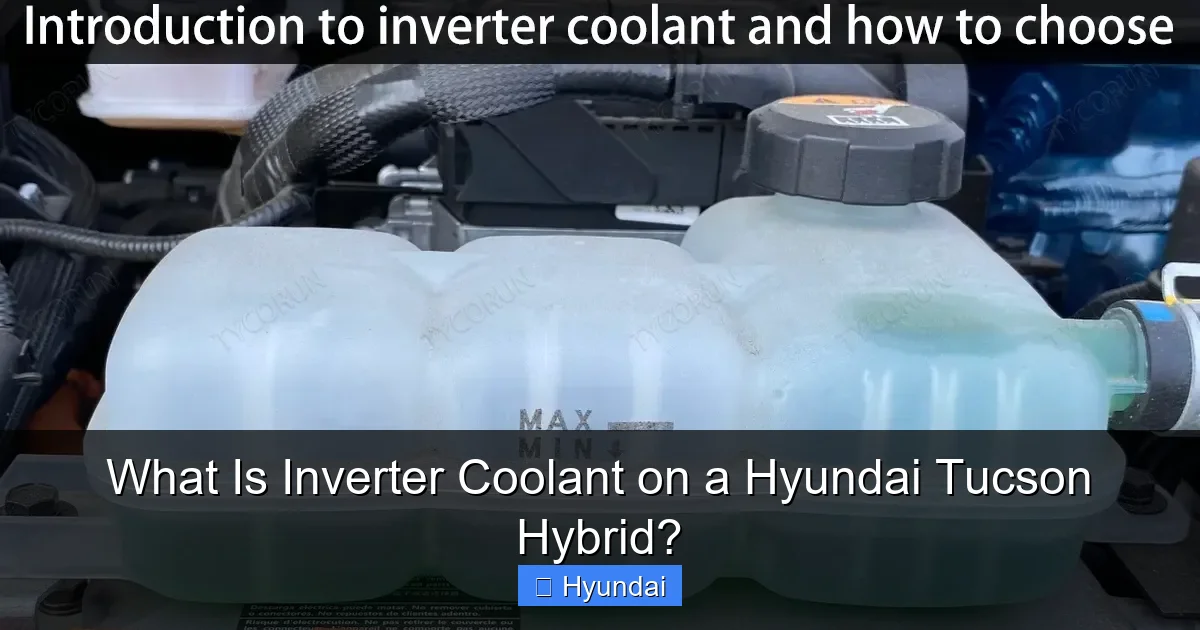
- Inverter/Converter Coolant Reservoir: The plastic overflow tank, usually clearly labeled. This is where you check the fluid level when the system is cold.
- Electric Coolant Pump: A dedicated, electrically powered pump (often 12V) that circulates the dielectric fluid. It’s controlled by the hybrid system’s computer and may run even when the engine is off.
- Inverter/Converter Assembly: The main heat-generating unit. The coolant flows through internal channels or around a cold plate attached to the power modules.
- Heat Exchanger / Radiator: This is the “radiator” for the inverter system. It’s often a small, finned aluminum core, sometimes integrated into the main engine radiator assembly or mounted separately in the front of the vehicle. Airflow from the vehicle’s movement and cooling fans dissipates the heat from the inverter coolant into the atmosphere.
- Thermostat & Hoses: Like any cooling system, it has a thermostat to regulate flow based on temperature and a network of specialized, often dark-colored hoses rated for dielectric fluid.
Heat Flow Path: From Silicon to Sky
1. Heat Generation: Power transistors in the inverter switch on/off, generating heat.
2. Absorption: The circulating dielectric fluid flows over the hot power modules, absorbing the thermal energy.
3. Transport: The now-hot fluid is pumped by the electric pump to the heat exchanger.
4. Dissipation: Airflow (from vehicle motion and electric fans) cools the fluid as it passes through the radiator fins.
5. Recirculation: The cooled fluid returns to the inverter to repeat the cycle. The system’s thermostat regulates this flow to maintain the inverter in its optimal temperature range, typically between 60°C and 90°C (140°F – 194°F).
Service, Maintenance, and What Happens When It Goes Wrong
Now that you know what it is and how it works, let’s talk about keeping it healthy. This system is generally “fill-for-life” in Hyundai’s marketing, but “life” in engineering terms is often defined by specific service intervals, especially in severe conditions.
Checking the Level and Condition
Checking the inverter coolant level is simple but must be done correctly:
- Park on Level Ground: Ensure the vehicle is parked on a flat surface.
- Cold System: The engine and hybrid system must be completely cold. Hot coolant is under pressure and can cause severe burns.
- Locate Reservoir: Find the translucent plastic tank labeled for inverter/hybrid coolant. It will have “MIN” and “MAX” marks on the side.
- Visual Check: The fluid level should be between the marks. The fluid itself is usually a distinct color (often blue, green, or yellow—check your manual) and should be clear, not cloudy or rusty.
Never open the reservoir cap when the system is hot or warm. The system is pressurized. If you suspect a leak or low fluid, the best practice is to have it inspected by a professional. A low fluid level often indicates a leak, which must be found and fixed before simply refilling.
Flush and Replace Intervals
Hyundai’s official maintenance schedule for the Tucson Hybrid (e.g., 2016-2021 models) often lists the inverter coolant as “Inspect” at certain intervals and “Replace” at a much later date, sometimes 100,000 miles or more, or even “Life of Vehicle.” However, this is predicated on ideal conditions. Many hybrid specialists recommend a proactive replacement every 60,000 to 80,000 miles as a preventative measure. Why? Because over time, the dielectric fluid can degrade. It can lose its insulating properties, its corrosion inhibitors can be depleted, and it can become acidic. This acidic fluid can then start to corrode the very aluminum components it’s meant to protect from within. A fluid analysis (like a test strip) can check pH and inhibitor levels. For most owners, following the severe service schedule (which includes frequent short trips, extreme temperatures, etc.) is a wise conservative approach.
Warning Signs of Inverter Cooling System Failure
Your Tucson Hybrid will try to tell you something is wrong. Be alert for:
- Dashboard Warning Lights: A hybrid system warning light (often a triangle with an exclamation point or a specific “Hybrid System” message), a check engine light, or an “Engine Overheated” message (even if the gasoline engine temperature is normal). A new, dedicated “Inverter Coolant Temperature” warning on some models is a direct red flag.
- Reduced or No EV Mode: The car may prevent you from driving in electric-only mode, forcing the gasoline engine to run constantly to compensate for the perceived risk of inverter overheating.
- Reduced Power and Performance: The hybrid system may go into a limp mode, significantly reducing engine and motor power to prevent damage.
- Visible Leaks: Puddles of the distinctively colored fluid under the front of the car, near the transmission or front radiator area.
- Sweet Odor: A slightly sweet smell (from the glycol) from the front of the vehicle, especially after driving.
- Unusual Noises: A failing electric coolant pump may whine or not run at all, which the system will detect as a loss of cooling flow.
If you see any of these, stop driving if it’s safe to do so and have the vehicle towed to a qualified shop. Continuing to drive with an overheating inverter is a direct path to a multi-thousand-dollar repair. A related concern is the hybrid battery cooling system, which is a separate system (often using a different fluid or refrigerant) but can have similar warning symptoms. A professional diagnosis is essential to differentiate between them.
The High Cost of Neglect: Inverter Replacement
Let’s be blunt. The inverter is one of the most expensive components in your Tucson Hybrid. A failed inverter due to thermal damage or internal shorting from contaminated coolant requires a full replacement. The part itself from Hyundai can easily range from $2,500 to $4,000+, and with the several hours of labor required for removal and installation (often involving dropping the transmission or major disassembly), the total repair bill at a dealership can hit $5,000 to $7,000 or more. For a used or remanufactured unit, you might save a thousand or two, but it’s still a major expense.
This cost is why maintaining the inverter coolant is arguably more important than your engine oil changes for the long-term viability of your hybrid powertrain. An engine can be rebuilt or replaced for less than a failed inverter. The inverter is the gateway to your electric drive; without it, you have an expensive, heavy gasoline car with a dead battery pack. Proactive coolant service at a fraction of the cost of an inverter is the definition of smart ownership. This principle of maintaining complex hybrid systems extends to other components, like understanding the VCM motor on Hyundai engines, which also has specific lubrication and maintenance needs to avoid costly failure.
Professional Service: Why This Isn’t a Typical DIY Job
We’re big fans of DIY car care here. But inverter coolant service is one area where we strongly advise hiring a professional, specifically a technician with Hyundai hybrid training. Here’s why:
High-Voltage Safety
The inverter is connected to the high-voltage traction battery system (typically 270V+). While the inverter coolant system itself is low-voltage (12V), the proximity to high-voltage components during service is significant. Technicians must follow strict Hyundai safety protocols, including using insulated tools and, in some cases, disabling the high-voltage system using a service plug. An untrained individual risks severe electrical shock or arc-flash injury.
Precise Fluid and Procedure
Using the wrong fluid is a disaster. A professional shop will have the correct Hyundai-specified dielectric coolant on hand. The procedure also often requires a specific bleeding or air-purge process. Air trapped in this small, sensitive cooling circuit can cause pump cavitation, overheating, and erratic system behavior. This purge may require using a vacuum filler tool or following a precise sequence of pump activation and reservoir adjustments that are spelled out in Hyundai’s technical service bulletins.
System Diagnostics
A good service isn’t just a drain-and-fill. A technician will scan the hybrid system for any stored fault codes related to coolant temperature, pump performance, or flow sensors. They will inspect the entire circuit for leaks, check the condition of hoses and connections, and verify the electric pump’s operation. They are looking for the root cause of any problem, not just treating the symptom. If your coolant was low, they must find and repair the leak before refilling. This diagnostic step is critical and is part of why professional service is valuable. If your vehicle has other dashboard warnings, like a mysterious panic alert on Hyundai, it could be related to hybrid system diagnostics that a full-service check would uncover.
Conclusion: A Critical, Often Overlooked Fluid
Inverter coolant in your Hyundai Tucson Hybrid is far more than just “another coolant.” It is a mission-critical, highly engineered dielectric fluid safeguarding one of the most expensive and sophisticated parts of your vehicle. It operates in a dedicated, high-voltage-adjacent cooling loop with unique requirements. Understanding its purpose—electrical insulation and heat removal for the power inverter—helps you grasp why neglecting its service is so risky. While Hyundai may label it “lifetime,” the smart money is on a proactive replacement every 60,000-80,000 miles as insurance against a $6,000 repair. Always use the correct Hyundai-specified fluid, and due to the high-voltage safety risks and precise bleed procedures, entrust this service to a qualified Hyundai technician. By respecting this unique fluid and system, you’re investing directly in the long-term reliability and value of your hybrid SUV. Keeping a close eye on it, alongside other maintenance items, ensures your Tucson remains the efficient, tech-forward machine it was designed to be for years to come.
Frequently Asked Questions
Is inverter coolant the same as engine coolant in my Tucson Hybrid?
No, they are completely different fluids and are not interchangeable. Inverter coolant is a dielectric (non-conductive) fluid specifically designed to insulate and cool high-voltage electronics. Engine coolant is electrically conductive and would cause a short circuit if used in the inverter system.
How often does the inverter coolant need to be replaced?
Hyundai’s official manual may list it as “life of vehicle,” but many hybrid specialists recommend a proactive replacement every 60,000 to 80,000 miles as a preventative measure, especially in severe driving conditions. Always check your specific owner’s manual for your model year’s interval.
Can I check the inverter coolant level myself?
Yes, you can visually check the level in the clearly labeled reservoir when the vehicle is completely cold and parked on level ground. The fluid should be between the MIN and MAX marks. Never attempt to open the reservoir cap when the system is hot or warm, as it is pressurized.
What happens if the inverter coolant runs low?
A low fluid level will trigger dashboard warnings (hybrid system, check engine). The vehicle will likely disable all-electric (EV) driving and may go into a reduced-power “limp mode” to prevent the inverter from overheating. Continuing to drive risks permanent, costly inverter failure.
What are the signs of bad or failing inverter coolant?
Signs include: dashboard warning lights related to the hybrid system, loss of EV mode capability, reduced overall power, visible leaks of the distinctively colored fluid (often blue or green) under the car, or a sweet smell from the engine bay. A technician can also test the fluid’s condition and dielectric strength.
Can I use water or regular antifreeze in an emergency?
No. Using water or engine coolant is extremely dangerous and will almost certainly destroy the inverter. The system requires a specific Hyundai-approved dielectric fluid. If you have a leak, the system should be repaired and refilled with the correct fluid by a professional. Driving with an empty system is also unsafe for the inverter.
