
How to Check Oil Percentage in a 2022 Hyundai Sonata

Checking the oil percentage in your 2022 Hyundai Sonata is a simple, electronic process done through the vehicle’s digital gauge cluster. This intelligent feature tells you the exact condition of your engine oil, not just the level, helping you prevent costly damage. You can also perform a traditional manual dipstick check for verification. Regular monitoring ensures optimal engine performance and longevity.
Hello there, fellow Sonata owner! Have you ever glanced at your dashboard and wondered what that little oil can icon with a percentage next to it actually means? You’re not alone. Many drivers of the sleek, tech-packed 2022 Hyundai Sonata see that number—maybe it’s at 15%, 30%, or even blinking at 0%—and feel a moment of confusion. Is it the oil level? Is it the oil quality? Do I need to panic? Take a deep breath. Understanding how to check and interpret your Sonata’s oil percentage is one of the easiest and most important things you can do to keep your engine purring like a kitten for years to come. It’s not just about avoiding a breakdown; it’s about smart, modern maintenance that saves you time and money. So, let’s pop the hood on this digital feature and demystify it together.
First, a crucial distinction: your Sonata’s oil percentage is a measure of your engine oil’s remaining useful life, not the amount of oil sitting in your sump. That’s a job for the old-school dipstick. This percentage is calculated by your car’s sophisticated computer, the ECM (Engine Control Module), using a complex algorithm. It tracks things like engine runtime, engine revolutions (RPM), coolant temperature, and even your driving style. A series of quick errands with cold starts? That’s brutal on oil and will shave percentage points faster than a steady highway cruise. Think of it as your oil’s “best by” date, personalized to your exact driving habits. In this complete guide, we’ll walk through exactly how to find that number, what it means, how to verify oil levels the traditional way, and what steps to take based on what you see. Let’s get started.
Key Takeaways
- The 2022 Sonata uses an electronic oil life monitor, not a traditional dipstick for percentage readings. The system calculates oil degradation based on engine revolutions, temperature, and driving habits.
- You check the oil percentage via the steering wheel buttons and digital instrument cluster. It’s a quick, clean process that takes under 30 seconds.
- “Oil Percentage” refers to oil *quality* or *life*, not the oil *level*. A low percentage means the oil has broken down and needs changing soon.
- Always perform a manual dipstick check to verify oil *level* if the percentage is low or you suspect a leak. The electronic system does not measure volume.
- Resetting the oil life monitor is mandatory after every professional or DIY oil change. Failure to reset will give you inaccurate future readings.
- Driving conditions like extreme heat, short trips, and towing drastically reduce oil life percentage faster. Your monitor accounts for this, but it’s good to be aware.
- Ignoring a “0% Oil Life” warning can lead to severe engine wear or failure. Schedule an oil change immediately when the warning appears.
📑 Table of Contents
- Understanding Your Sonata’s Oil Life Monitoring System
- The Primary Method: Checking Oil Percentage via the Digital Gauge Cluster
- The Traditional Backup: Checking Oil Level with the Dipstick
- Interpreting the Readings and Taking Action
- When and How Often Should You Check?
- Common Issues, FAQs, and Pro Tips
- Conclusion: Your Simple Path to Engine Longevity
Understanding Your Sonata’s Oil Life Monitoring System
Before we dive into the “how,” let’s quickly cover the “why” and “what.” The 2022 Hyundai Sonata, especially in its popular SE, SEL, and Limited trims, comes standard with a maintenance reminder system. This isn’t a simple timer that says “change oil every 5,000 miles.” It’s an adaptive, intelligent system. Hyundai (and many other manufacturers) realized that not all oil changes are created equal. The oil in a taxi that idles all day in a hot city degrades much faster than oil in a car that only sees long, warm highway runs.
How the Algorithm Works
The system uses a combination of sensor data and mathematical modeling. The ECM knows your engine’s operating temperature. It knows how often you start from a cold state. It counts the total number of engine revolutions. All this data feeds into an algorithm that estimates the oxidation rate of the oil, the accumulation of contaminants, and the depletion of vital additives. When the system calculates that the oil’s ability to lubricate, cool, and clean has fallen below a threshold, it triggers a warning. The percentage you see is a direct reflection of this calculation. 100% means fresh, new oil. 0% means the oil is effectively spent and continuing to run the engine with it is risking significant internal wear.
Oil Percentage vs. Oil Level: A Critical Difference
This is the most common point of confusion. The oil percentage display tells you nothing about how much oil is in your engine. You could have 100% oil life but be a quart low on oil due to a small leak or burn-off. Conversely, you could have a perfect oil level but a 5% oil life reading, meaning the oil itself is degraded and must be changed immediately. You must check the oil level separately using the dipstick, which we will cover in detail later. Always remember: Percentage = Quality/Health. Dipstick = Quantity/Level.
The Primary Method: Checking Oil Percentage via the Digital Gauge Cluster
This is the main event. Checking your oil percentage on a 2022 Sonata is a purely electronic, button-press procedure. You do not need to pop the hood or get your hands dirty. It’s designed to be done from the driver’s seat. Here is the step-by-step process, broken down clearly.
Visual guide about How to Check Oil Percentage in a 2022 Hyundai Sonata
Image source: automotiveaddicts.com
Step-by-Step Instructions
Step 1: Prepare the Vehicle. Ensure your Sonata is parked on level ground. The ignition should be in the ON position (all dash lights on, but engine not started). For the most accurate reading, it’s best to do this after the engine has been warmed up and then turned off for about 5-10 minutes. This allows the oil to settle in the pan fully. However, the system can be read at any time with the ignition on.
Step 2: Navigate to the Vehicle Settings Menu. On your steering wheel, locate the mode or menu button. This is typically the button with an icon that looks like a car or says “MODE.” Press this button repeatedly until you see the “Vehicle Settings” menu appear on your digital instrument cluster or central infotainment screen, depending on your Sonata’s specific trim and display configuration.
Step 3: Access the Maintenance Menu. Once inside “Vehicle Settings,” use the arrow buttons (often the same mode/scroll wheel) to navigate through the options. Look for an entry called “Maintenance” or “Service”. Select it and press the enter button (usually the center of the mode wheel or a separate “OK” button).
Step 4: Select “Oil Life.” Inside the Maintenance menu, you should see several options like “Tire Rotation,” “Air Filter,” and, most importantly, “Oil Life.” Select this option.
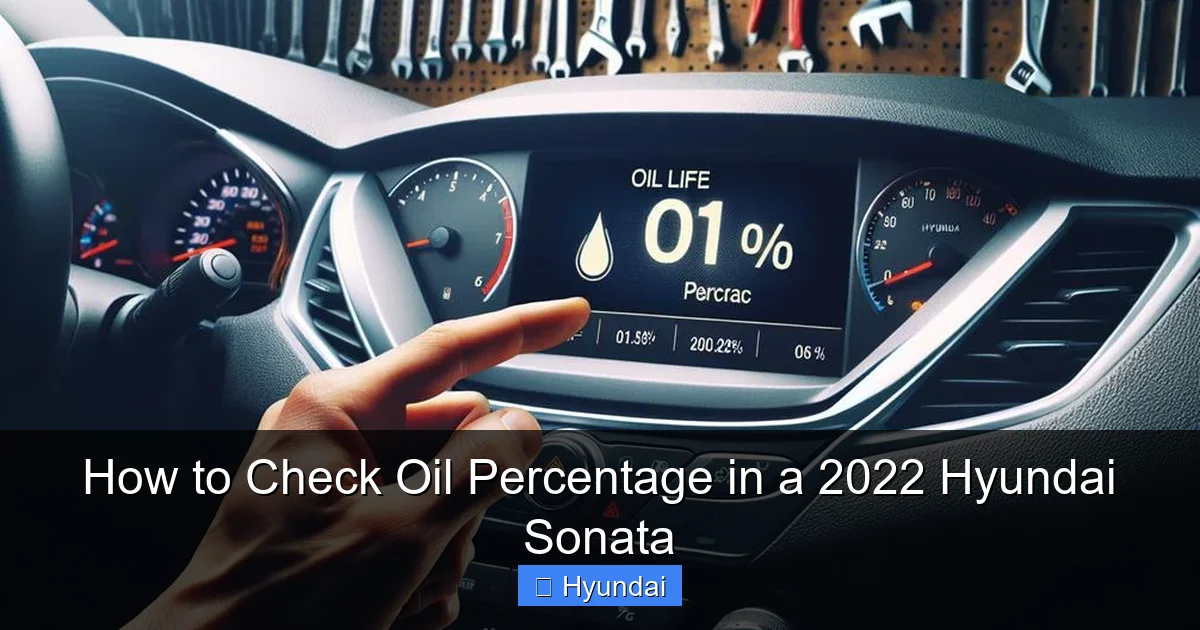
Step 5: Read the Percentage. The screen will now display the current oil life percentage. It will typically show a large number (e.g., “42%”) and may also have a graphic of an oil can. This is your real-time oil health reading. If it’s above 15-20%, you have plenty of life left. If it drops into the single digits, it’s time to start planning an oil change. If it reads “0%” or an oil can icon is blinking, you must change the oil as soon as possible.
What to Do With This Information
Hyundai’s general recommendation is to change the oil when the system indicates 15% oil life remaining. This is a safe buffer. However, if your driving is exceptionally harsh (constant stop-and-go in extreme heat, frequent short trips in winter, towing), you might want to consider changing it when it reaches 25%. The system is conservative but not perfect for every single scenario. The key is not to wait until 0%. At 0%, the oil has little to no effective additive package left and is likely contaminated with fuel dilution, soot, and moisture.
The Traditional Backup: Checking Oil Level with the Dipstick
As emphasized earlier, the digital percentage does not tell you if you have enough oil. A low oil level is a separate, urgent issue that can cause catastrophic engine damage in minutes, regardless of the oil’s quality percentage. Therefore, you must know how to check the oil level manually. The 2022 Sonata still retains a traditional dipstick for this very purpose. It’s your failsafe and a critical skill for any car owner.
Visual guide about How to Check Oil Percentage in a 2022 Hyundai Sonata
Image source: images.customwheeloffset.com
Locating and Using the Dipstick Correctly
Step 1: Park and Cool. Park on level ground. For an accurate reading, the engine should be off and have been off for at least 10-15 minutes if it was recently driven. This allows oil to drain back into the oil pan. (Some manuals say to check when engine is warm but off; consult your owner’s manual for the definitive procedure, but the 10-15 minute cool-down is the most universally accurate method).
Step 2: Locate the Dipstick. Open the hood. The dipstick is a long, thin metal rod with a bright yellow or orange plastic handle. It’s usually located near the front of the engine bay, often on the driver’s side, and is labeled with an oil can icon. Pull it out completely.
Step 3: Wipe and Reinsert. Use a clean lint-free cloth or paper towel to wipe the entire dipstick clean. This removes all old oil, giving you a clear baseline. Now, fully reinsert the dipstick back into its tube until it seats completely. Do not just drop it in; push it all the way down.
Step 4: Read the Level. Pull the dipstick out again and look at the oily section at the bottom. You will see two marks, holes, or a cross-hatched area. This is the “Full” and “Add” or “Low” range. The oil level should be between these two marks, ideally right at or near the “Full” mark. If it’s at or below the “Add/Low” mark, you need to add oil immediately. If it’s above the “Full” mark, you have too much oil, which is also dangerous and needs to be corrected.
Choosing the Correct Oil
If you need to add oil, it’s vital to use the correct specification. Your 2022 Sonata’s engine (most likely a 2.5L 4-cylinder or optional 1.6L Turbo) requires oil that meets Hyundai specification API SP or higher and viscosity 5W-20 or 5W-30 (check your door jamb sticker or owner’s manual for the exact requirement). Using the wrong oil can damage emissions components and void your warranty. When in doubt, use a high-quality oil that meets the specified standard. For a deeper dive on oil types and capacities for different Sonata years, you can explore resources like this guide on 2017 Sonata oil capacity, which illustrates how specifications can vary by model year and engine.
Interpreting the Readings and Taking Action
So you have your two data points: the Oil Life Percentage (quality) from the digital menu and the Oil Level from the dipstick (quantity). Now, what do you do? Here’s how to combine this information to make smart decisions.
Visual guide about How to Check Oil Percentage in a 2022 Hyundai Sonata
Image source: hyundaimaintenance.com
The Ideal Scenario
Oil Life: 40%+ | Oil Level: Between Full and Add marks. This is perfect. No action needed. Just make a mental note to check again in a few weeks or after a long trip. Continue driving normally.
The “Change Soon” Scenario
Oil Life: 15% – 5% | Oil Level: Normal. Your oil is degraded and needs to be changed. The oil filter should also be replaced at this time. You have a small window of safe operation. Schedule an appointment with your mechanic or plan your DIY oil change. Do not ignore this. Driving with oil below 15% life increases engine wear.
The “Change NOW” Scenario
Oil Life: 0% or blinking warning light | Oil Level: Normal. The oil is effectively dead. Continued driving is actively harmful to your engine. Get an oil change immediately. Avoid hard acceleration and long trips until the service is complete.
The “Low Level, Any Life” Scenario
Oil Level: At or below the “Add” mark | Oil Life: Any percentage. This is an urgent situation, regardless of oil quality. Low oil level means insufficient lubrication, which can cause bearing failure, piston scuffing, and catastrophic engine seizure in a very short time. Add oil immediately to bring it to the proper level. Then, investigate why the level is low (leak? burning oil?). If the oil life is also low, you will need a full change after addressing the leak or consumption issue. A persistent low oil level warning might be related to sensor issues; you can read more about diagnosing such problems in guides like how to fix low oil pressure in a car, as the symptoms can sometimes overlap.
Resetting the Oil Life Monitor After a Change
This is non-negotiable. After you or your technician changes the oil and filter, you must reset the oil life monitor to 100%. If you don’t, the system will continue to think you have old oil and will give you inaccurate warnings too soon or too late. The reset procedure is the same as the check procedure: go to Vehicle Settings > Maintenance > Oil Life. Then, instead of just viewing it, you will press and hold the “OK” or “Reset” button (usually for about 5 seconds) until the display confirms it has been reset to 100%. Your owner’s manual will have the exact steps for your specific trim.
When and How Often Should You Check?
Making oil checks a habit is the hallmark of a proactive car owner. With the Sonata’s digital system, it’s so easy you can do it monthly as part of a quick dashboard check.
Recommended Check Frequency
- Digital Oil Life Percentage: Check at least once a month and before any long road trip. It takes 10 seconds. This keeps you aware of your oil’s health.
- Manual Oil Level (Dipstick): Check at least once a month, and every time you get gas if your car is older, burns oil, or you suspect a minor leak. It’s a quick habit that can save your engine.
- After Severe Driving: If you’ve been driving in extreme conditions (very hot/cold, dusty, mountainous, or while towing), check both the percentage and level sooner than your usual schedule.
Integrating Checks into Your Routine
Pair your oil check with another monthly task. Maybe you check tire pressures one weekend and oil life/level the next. Or, make it part of your gas station routine: while the pump is running, pop the hood and pull the dipstick. Many modern cars, including the Sonata, also have a dedicated oil level indicator that can be checked via the same digital menu (often called “Oil Level” or showing a graphic of a dipstick). If your Sonata has this feature, use it! It’s even easier and eliminates the need for the physical dipstick check for level, though the physical check is still a good backup. For a comprehensive overview of all fluid checks, a resource like checking coolant in a Toyota Camry demonstrates the universal importance of regular fluid maintenance, a principle that applies perfectly to your Hyundai.
Common Issues, FAQs, and Pro Tips
Even with a straightforward system, questions arise. Let’s address the most common concerns and share some expert tips to keep your Sonata’s heart healthy.
What if the Oil Percentage Drops Extremely Fast?
If your oil life goes from 60% to 20% in a week of normal driving, something is wrong. The algorithm is generally reliable. A drastic drop can indicate a fuel dilution issue (where unburned fuel washes the oil), a faulty sensor, or that your driving has been exceptionally severe without you realizing it (e.g., lots of idling). First, check your oil level. If it’s high, that’s a classic sign of fuel dilution. Have a mechanic diagnose the cause—it could be a leaking fuel injector or a problematic PCV system.
Can I Just Ignore the Warning Until I Have Time?
Absolutely not. The “0% Oil Life” warning is your engine’s last polite request for service. It is not a suggestion. Driving beyond this point is a gamble with your engine’s internal components. The protective film of oil is gone, metal-on-metal contact increases, and heat buildup accelerates. The cost of an engine rebuild or replacement dwarfs the cost of a simple oil change. When you see that warning, treat it as a red alert and schedule service immediately.
Is the Digital Reading Always Accurate?
It is highly accurate for its intended purpose—tracking oil degradation based on the parameters it’s given. However, it can be “fooled” by extreme, anomalous conditions. It also assumes you are using the correct oil specification. If you or a previous owner used the wrong oil (e.g., conventional instead of full synthetic, or wrong viscosity), the degradation rate will be different, and the percentage may not reflect the true state of the oil. Always use oil meeting Hyundai’s specs. If you question the reading, a manual dipstick check for level and a visual/tactile inspection of the oil (is it dark, gritty, or smell like gasoline?) can provide supplemental clues.
Pro Tip: The Reset Button Location
On the 2022 Sonata, the reset confirmation is almost always done by pressing and holding the center “OK” button on the steering wheel while on the Oil Life screen. You’ll feel a haptic feedback or see a message like “Oil Life Reset to 100%.” If you can’t find it, your owner’s manual’s index will have “Oil Life Reset” listed. Bookmark that page!
Pro Tip: Use High-Quality Oil and Filters
The oil life monitor is calibrated for use with high-quality oils that meet the specified standards. Using a budget conventional oil in an engine that calls for full synthetic will almost certainly cause the oil life percentage to drop prematurely and provide inferior protection. Invest in a good oil and a quality filter (like Hyundai OEM or a reputable brand like Mobil 1, Pennzoil Platinum, or Castrol EDGE). It’s the cheapest insurance you can buy for your engine. If you’re considering a DIY change, a great resource is this beginner-friendly guide to changing oil in a car, which covers the universal steps and safety precautions.
Conclusion: Your Simple Path to Engine Longevity
Checking the oil percentage in your 2022 Hyundai Sonata is one of the easiest maintenance tasks you’ll ever learn. It requires no tools, no mess, and less than a minute of your time. By simply pressing a few buttons on your steering wheel, you gain invaluable insight into your engine’s vital fluid health. Remember to pair this digital check with a traditional dipstick check for oil level at least once a month. Together, these two quick actions form a powerful defense against premature engine wear, expensive repairs, and unexpected breakdowns.
Your Sonata is a sophisticated machine designed to make driving enjoyable and ownership relatively painless. Its oil life monitoring system is a perfect example of that. Embrace it. Make checking that percentage a monthly habit. When it tells you to change the oil, listen. And when you do, don’t forget the all-important reset. A well-maintained engine will reward you with years of smooth, reliable, and efficient service. You’ve got this! Now, go give your Sonata a little dashboard check—it’s probably thanking you already.
Frequently Asked Questions
Can I rely solely on the digital oil percentage and skip the dipstick check?
No. The digital percentage only measures oil quality, not quantity. You must check the dipstick regularly to ensure the oil level is correct. A low oil level is an emergency, regardless of the percentage reading.
What does it mean if my oil percentage is at 0% but the dipstick shows full and clean-looking oil?
The oil has likely degraded to the point where its chemical additives are depleted, even if it looks okay. The system bases this on engine data, not appearance. You must change the oil and filter immediately, even if the oil doesn’t look terribly dark.
My oil percentage dropped from 50% to 10% in just 500 miles. Is my car broken?
This indicates a problem. Possible causes include severe driving conditions you didn’t account for, incorrect oil being used, or a mechanical issue like fuel dilution. First, check the oil level. If it’s high, fuel dilution is likely. Have a professional mechanic diagnose the issue promptly.
Do I need to reset the oil life monitor if I have a mechanic change my oil?
Yes, you should always verify it was reset. Many reputable shops will reset it as part of the service, but it’s a good habit to check yourself. If it’s not reset, your next oil change warning will come too early. The reset procedure is found in your vehicle settings menu.
Will using a different brand or type of oil affect the percentage reading?
Using oil that does not meet Hyundai’s specifications (e.g., wrong viscosity or not API SP certified) can affect the accuracy of the algorithm. The system is calibrated for the recommended oil. Always use oil that meets the specifications listed in your owner’s manual or on your oil cap.
Is the oil percentage the same for all 2022 Sonata engines (2.5L and 1.6L Turbo)?
Yes, the principle and calculation method are the same. Both engines use the same oil life monitoring system logic. However, the turbocharged 1.6L engine generally operates under higher stress and temperatures, which can cause the oil life percentage to decrease slightly faster under similar driving conditions compared to the naturally aspirated 2.5L.
