
Does the Check Engine Light Come on for Oil Change in Volkswagen?

No, the check engine light in a Volkswagen does not come on specifically for a routine oil change. Volkswagen uses a separate, dedicated service reminder system—typically a wrench icon or a “Service Now” message—to notify you when an oil change is due based on mileage and time intervals. The check engine light (the yellow engine-shaped icon) is part of the On-Board Diagnostics (OBD) system and illuminates for emissions-related issues, engine malfunctions, or sensor failures, which can range from a loose gas cap to serious internal problems. Confusing these two lights can lead to unnecessary worry or, worse, ignoring a genuine engine problem. Always consult your owner’s manual and address the check engine light promptly with a professional diagnosis.
Key Takeaways
- The check engine light and oil change reminder are two separate systems. The service reminder (often a wrench) handles maintenance schedules like oil changes, while the check engine light warns of operational faults.
- Volkswagen’s service reminder is based on complex algorithms. It calculates oil life using mileage, engine runtime, and driving conditions, not just a simple mileage counter.
- A check engine light for low oil pressure is a critical, immediate warning. This is a distinct red or amber oil can icon, not the standard check engine light, and requires you to stop the engine immediately.
- Ignoring the check engine light can cause severe damage. What starts as a minor emissions issue can lead to catalytic converter failure, poor fuel economy, or engine damage if left unchecked.
- Always diagnose the specific fault code. A simple OBD2 scanner read will reveal the exact reason the light is on, saving you from guessing and potentially costly repairs.
- You can reset the service reminder after an oil change. This is a manual process that does not affect the check engine light; it only clears the maintenance notification.
📑 Table of Contents
- Introduction: The Great Dashboard Confusion
- Decoding Your Volkswagen’s Dashboard Lights
- How Volkswagen Tracks Oil Change Needs (The Service Reminder System)
- What Actually Triggers the Check Engine Light in a VW?
- What to Do When the Check Engine Light Comes On
- Proactive Maintenance: Keeping Your VW’s Systems Happy
- Conclusion: Knowledge is Power (and Saves Money)
Introduction: The Great Dashboard Confusion
You’re cruising down the road in your Volkswagen Jetta, Golf, or Tiguan, and suddenly, a glowing yellow light on your dashboard catches your eye—the unmistakable outline of an engine. Your heart sinks a little. “Is it the oil?” you think, remembering it’s been a while since your last service. This moment of panic is incredibly common among VW owners, and it stems from a fundamental confusion about what your car’s various warning lights actually mean. The big question we’re tackling today is: Does the check engine light come on for an oil change in a Volkswagen? The short, clear answer is no. But understanding the why behind that answer is crucial for every VW driver. It’s the difference between addressing a simple maintenance task and potentially ignoring a serious, expensive engine problem. Let’s clear up the confusion once and for all.
Volkswagen, like all modern car manufacturers, employs a sophisticated array of dashboard indicators. Each light has a specific job. The light that looks like an engine is the Check Engine Light (CEL), part of the car’s emissions and engine management computer. The reminder that it’s time for an oil change is handled by a completely different system, often indicated by a wrench icon or a text message like “Service Now” or “Oil Change Service.” Mixing these up is easy, but the consequences of doing so can be significant. This guide will walk you through Volkswagen’s specific systems, explain what truly triggers that engine-shaped light, and give you a clear action plan for when it illuminates.
Decoding Your Volkswagen’s Dashboard Lights
Before we dive into specifics, we need to establish a basic vocabulary. Your Volkswagen’s instrument cluster is a communication hub. Understanding the icons is like learning a new language—it prevents miscommunication and ensures you respond appropriately to your car’s needs.
Visual guide about Does the Check Engine Light Come on for Oil Change in Volkswagen?
Image source: automotiveglory.com
The Service Reminder: Your Friendly Maintenance Nudge
This is the light you’re thinking of when you wonder about an oil change. In most modern Volkswagens, this is not the check engine light. It’s typically represented by:
- A wrench icon.
- A text display reading “Service Now”, “Service Due”, or “Oil Change Service”.
- On older models, you might see a generic “Service” light.
This system is a maintenance scheduler. It uses complex algorithms that factor in your mileage, the engine’s operating hours, and even your driving style (stop-and-go city vs. steady highway) to calculate the remaining life of your engine oil and other fluid/component wear. When it calculates that the oil has degraded to a certain threshold, it illuminates this reminder. It’s a proactive, scheduled maintenance alert. Resetting it is a manual procedure you (or your technician) perform after the oil change is completed. If you’re curious about the exact process for your specific model, resources like guides for other brands can illustrate the general concept of a service light reset, even if the steps differ slightly for your VW.
The Check Engine Light: The Urgent Mechanic’s Morse Code
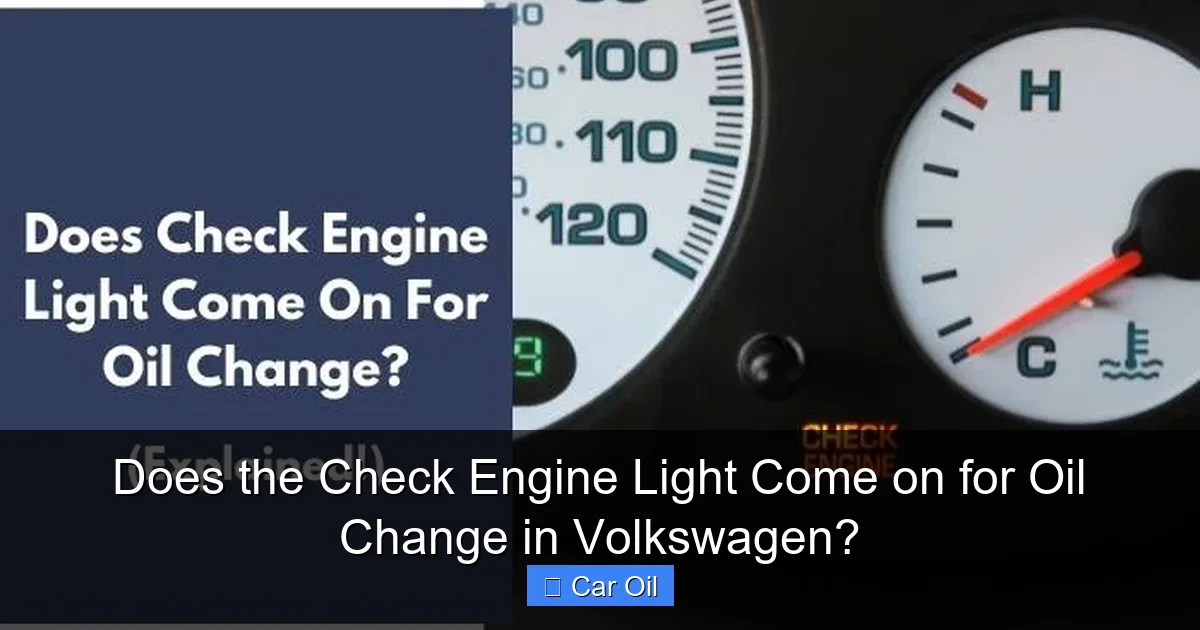
This is the star of our show—the yellow, amber, or orange engine-shaped icon. Its formal name is the Malfunction Indicator Lamp (MIL). This light is governed by the car’s On-Board Diagnostics II (OBD-II) system, a standardized computer network that monitors dozens of sensors and components related to emissions and engine performance. When a sensor sends a reading that is out of spec, the computer stores a diagnostic trouble code (DTC) and, for many issues, turns on the CEL to get your attention.
It’s vital to understand that the CEL is not a single “problem” light. It’s a general alarm that says, “Hey, something in my emissions or engine control system isn’t working correctly. I’ve stored a specific code about it. Please read it.” The severity of the issue can range from “tighten your gas cap” to “the engine is misfiring and damaging the catalytic converter.”
The Oil Pressure Warning Light: The Critical Emergency Signal
There is a third, often-confused light: the oil pressure warning light. This is usually a red or amber icon that looks like an oil can (sometimes with a droplet). This is NOT the check engine light. This light means your engine has dangerously low oil pressure at this very moment. Low oil pressure means your engine’s critical moving parts are not being lubricated and will be destroyed within minutes, if not seconds, of driving. If this light comes on, you must safely pull over and shut off the engine immediately. Do not drive. Call for a tow. This is an emergency, not a reminder.
How Volkswagen Tracks Oil Change Needs (The Service Reminder System)
So, if the check engine light isn’t for oil changes, how does your Volkswagen know when you need one? It’s all down to the Flexible Service Interval display, a smart system that has evolved from simple mileage counters.
Visual guide about Does the Check Engine Light Come on for Oil Change in Volkswagen?
Image source: piketransit.com
Beyond the Mileage Sticker: The Science of Oil Life
Gone are the days of the “3,000-mile sticker” on the windshield (though some shops still use them). Volkswagen’s system doesn’t just count miles. It uses data from the engine control unit (ECU) to assess the actual condition of the oil. Factors it considers include:
- Total Engine Runtime: How long the engine has been running since the last reset.
- Engine Load and RPM: Frequent high-RPM driving or towing degrades oil faster.
- Operating Temperature: Short trips where the engine never reaches full operating temperature cause fuel dilution and sludge, degrading oil quicker.
- Ambient Temperature: Extreme cold or heat affects oil viscosity.
This means your oil change interval could be 7,500 miles if you mostly drive long highway miles, but might come on at 5,000 miles if you do constant city commuting. The system is designed to optimize engine life and performance by changing the oil when it’s truly needed, not on a arbitrary calendar.
Recognizing the Service Reminder Notification
When your VW’s service interval is due, you’ll see a clear message. It will not be the engine-shaped light. You’ll see:
- A wrench icon illuminate in the gauge cluster or on the infotainment screen.
- A message: “Service Now”, “Inspection Due”, or “Oil Change Service”.
- Sometimes, it will display the remaining mileage or days until service is due.
This is your cue to schedule an oil change and any other due maintenance (like tire rotation or cabin filter replacement). After the work is done, the technician (or you, if you DIY) must use the vehicle’s menu system or a scan tool to reset the service interval counter. If this isn’t done, the reminder will continue to appear. This reset process is specific to Volkswagen and is different from clearing a check engine light. For a conceptual understanding of how a service light reset works on other vehicles, you can look at procedures for a Dodge Grand Caravan, which involves a sequence of dashboard button presses—VW’s method is similar in concept but uses different steps.
What Actually Triggers the Check Engine Light in a VW?
Now we get to the heart of the matter. The check engine light illuminates for hundreds of reasons, all logged as specific OBD-II codes. These codes are grouped into categories (P0xxx, P1xxx, B0xxx, C0xxx, etc.), but the most common are generic “P” codes related to the engine and emissions. Here are the frequent culprits, none of which are simply “time for an oil change.”
Visual guide about Does the Check Engine Light Come on for Oil Change in Volkswagen?
Image source: volkswagenbuddy.com
Common Emissions and Engine Management Faults
These are the top reasons a VW’s CEL comes on, and they are almost always unrelated to oil quality or change intervals:
- Loose or Faulty Gas Cap: The #1 cause. A cap that isn’t tightened properly or has a bad seal breaks the sealed fuel system, allowing vapors to escape. The EVAP (evaporative emissions) system detects this and throws a code (often P0455, P0456). Tighten the cap until it clicks, and the light may go off after a few drive cycles.
- Oxygen (O2) Sensor Failure: These sensors monitor exhaust gases. A failing sensor (codes like P0130-P0134 for Bank 1, Sensor 1) reduces fuel efficiency, increases emissions, and can damage the catalytic converter.
- Mass Airflow (MAF) Sensor Issues: This sensor measures incoming air. If it’s dirty, damaged, or has bad wiring (codes P0100-P0103), it causes poor performance, rough idle, and higher emissions.
- Catalytic Converter Efficiency: Codes like P0420 indicate the catalytic converter isn’t cleaning exhaust as it should. This can be caused by failing O2 sensors or, if ignored, lead to converter failure.
- Ignition System Misfires: Codes P0300-P0304 indicate a cylinder is misfiring. This is serious. Causes include bad spark plugs, ignition coils, or fuel injectors. A persistent misfire can overheat and destroy the catalytic converter.
Could Low Oil *Ever* Trigger the Check Engine Light?
This is a critical nuance. The dedicated oil pressure warning light is for immediate, catastrophic low pressure. However, extremely low oil level (not pressure) might eventually cause an engine-related fault that sets a check engine code, but it’s not direct or guaranteed. For example:
- Severe oil starvation could lead to a mechanical failure, like a valve train component breaking, which would cause misfires (P030X codes) and illuminate the CEL.
- Some high-end vehicles with oil level sensors might have a separate low oil level warning, but this is typically a different message, not the standard CEL.
The key takeaway: You should never wait for the check engine light to tell you to check or change your oil. That’s the job of the service reminder. By the time low oil causes a CEL, you’ve likely already done significant damage. Regular oil checks and adherence to the service reminder are your primary defenses.
What to Do When the Check Engine Light Comes On
So, the engine icon is glowing. It’s not your oil change reminder. What now? Your reaction depends on the light’s behavior.
Step 1: Assess the Severity – Blinking vs. Solid
A Solid, Steady Light: This means a non-emergency fault has been detected. Your car is safe to drive for a short period to get it diagnosed, but you should schedule a repair appointment as soon as possible. Do not ignore it for weeks.
A Flashing or Blinking Light: This is a SEVERE EMERGENCY. It indicates a condition that is actively damaging your catalytic converter, most commonly a severe misfire (multiple cylinders). If the CEL is blinking, you must pull over safely and shut off the engine immediately. Have the vehicle towed to a repair shop. Driving with a blinking CEL can destroy the catalytic converter, leading to a repair bill of $1,500 or more.
Step 2: Perform Simple, Safe Checks
Before you panic or head to the shop, you can do two quick, safe checks:
- Tighten the Gas Cap: Remove it, inspect the seal, and screw it back on firmly until you hear a click. This solves a huge percentage of CEL issues.
- Check Engine Oil Level: Use the dipstick to ensure you have adequate oil. While a low level won’t directly turn on the CEL, it’s a critical habit that could reveal a separate, serious problem like a leak or consumption issue.
After tightening the cap or adding oil, drive normally for a few days. The car’s computer may need to complete several “drive cycles” (specific conditions of engine runtime, speed, and temperature) to verify the problem is gone. If the light goes off on its own, it was likely a transient or minor issue. If it returns, you need a diagnosis.
Step 3: Get the Diagnostic Trouble Code (DTC) Read
This is the most important step. You need to know the specific code. You have options:
- Auto Parts Store Scan: Many national chains (AutoZone, Advance Auto Parts, O’Reilly) offer free OBD2 code reading. They plug in a scanner and give you the code number (e.g., P0171) and a brief definition. This is a great first step.
- Independent Mechanic or VW Specialist: They will read the code and, more importantly, use their expertise and advanced tools to diagnose the root cause. A code like P0171 (System Too Lean) could mean a dirty MAF sensor, a vacuum leak, or bad fuel pressure. The code points to the circuit, not the exact failed part.
- DIY Scanner: If you’re handy, you can buy a basic OBD2 Bluetooth adapter ($20-$50) and use a free app on your phone to read and clear codes.
Once you have the code, you can research it intelligently. For example, a P0302 code (Cylinder 2 Misfire Detected) tells you exactly where to start looking: spark plug, ignition coil, or injector for cylinder 2. This targeted approach saves time and money.
Proactive Maintenance: Keeping Your VW’s Systems Happy
Prevention is the best strategy for avoiding both service reminders and check engine lights. A well-maintained Volkswagen is a happy, reliable one.
Adhere to the Service Reminder, Not a Mileage Myth
When your VW’s wrench icon or “Service Now” message appears, schedule your oil change promptly. Use the correct oil specification—Volkswagen 502 00 or 504 00/507 00 for most gasoline models, and 507 00 for diesels. Using the wrong oil can degrade engine components and, over time, potentially contribute to sensor or system issues that could trigger a CEL. The cost of a proper VW oil change is an investment; you can learn more about typical costs from resources like articles detailing VW oil change pricing.
Address Small Problems Before They Trigger the CEL
The CEL often warns of issues that start small. Be proactive:
- Replace spark plugs and ignition components at the recommended intervals (often every 60,000-100,000 miles on modern VWs with long-life plugs).
- Inspect and replace the engine air filter regularly (every 15,000-30,000 miles). A clogged filter can cause MAF sensor issues and lean conditions.
- Use high-quality fuel. Poor-quality gasoline can cause carbon buildup and sensor contamination.
- If you have an older VW, consider having the throttle body and MAF sensor cleaned periodically as part of preventive maintenance.
Understand the Relationship Between Systems
Modern cars are deeply interconnected. A failure in one system can cascade. For instance, a failing EVAP purge valve (common on some VWs) can cause a lean condition and set a CEL. A severely clogged catalytic converter, often from ignored misfires, will eventually set its own efficiency code. This web of interdependence is why a professional diagnosis is so valuable—they understand how these systems talk to each other.
Conclusion: Knowledge is Power (and Saves Money)
Let’s bring it all home. Your Volkswagen’s check engine light is not an oil change reminder. That job belongs to the dedicated service reminder system—the wrench icon or text message. The check engine light is a serious diagnostic tool that alerts you to faults in the engine and emissions control systems, faults that can range from trivial to catastrophic. Confusing the two means you might either ignore a real emergency or waste time and money on an unnecessary oil change.
The next time that engine-shaped icon glows, take a breath. First, check if it’s blinking (stop driving immediately) or solid (drive cautiously to get diagnosed). Second, tighten your gas cap and check your oil level—two simple, free actions that solve many issues. Third, get the specific diagnostic trouble code read. This code is your roadmap to the problem. Finally, address the issue promptly. Whether it’s a $20 gas cap or a more involved repair, handling it early prevents small issues from becoming thousand-dollar nightmares. By understanding your VW’s language, you move from a worried driver to an informed owner, capable of making smart decisions for your car’s health and your wallet.
Frequently Asked Questions
Can low oil level cause the check engine light to come on in a Volkswagen?
Not directly. Low oil level will trigger the dedicated red oil pressure warning light if pressure drops dangerously low. The check engine light (MIL) is for electronic system faults. However, extremely low oil that leads to engine damage like a misfire could then set a check engine code. You should never rely on the CEL to check your oil.
How do I reset the oil change service reminder on my Volkswagen?
The reset procedure varies by model year and trim. Generally, you use the steering wheel stalk buttons or the infotainment touch menu to navigate to “Service” or “Oil Change Service” settings and select “Reset.” Always perform the oil change first, then reset. Consult your owner’s manual for the exact steps for your specific model.
Is it safe to drive my Volkswagen with the check engine light on?
It depends. If the light is solid and steady, and the car is running normally (no strange noises, smoke, or performance loss), it’s generally safe to drive a short distance (under 50-100 miles) to get it diagnosed. However, if the light is flashing/blinking, you must stop driving immediately and have the car towed, as this indicates a severe misfire that will damage the catalytic converter.
What is the difference between the check engine light and the service required light?
The check engine light (engine icon) warns of an active fault in the engine/emissions systems. The service required light (wrench icon or text message) is a maintenance scheduler reminding you of due service like an oil change, tire rotation, or inspection based on time/mileage/conditions.
How much does it cost to diagnose a check engine light on a VW?
Many auto parts stores offer free code reading. A professional diagnosis at a repair shop or VW dealership typically ranges from $80 to $150. This fee often gets applied to the repair if you proceed with the shop. A proper diagnosis includes reading the code, performing tests to find the root cause (not just replacing the part the code suggests), and providing a repair estimate.
Will an overdue oil change eventually turn on the check engine light?
Unlikely. An overdue oil change will trigger the service reminder light. The check engine light is not programmed to come on based on oil change intervals. However, running with severely degraded oil for an extremely long time could cause internal engine wear or sludge that might lead to sensor failures or pressure issues, which could then set a CEL. By then, major damage is likely done. Always follow the service reminder.
