
What Type of Battery Is in a 2006 Maserati Quattroporte?

The 2006 Maserati Quattroporte requires a specific Absorbent Glass Mat (AGM) battery, not a standard flooded acid battery. This high-performance sedan uses an AGM unit to handle its complex electrical systems, including start-stop functionality and high accessory load. Using the correct OE-specification battery is critical for reliable starting, system health, and preventing costly electrical faults.
Key Takeaways
- AGM Technology is Mandatory: The 2006 Quattroporte’s electrical system is designed for an Absorbent Glass Mat (AGM) battery, which offers superior power, durability, and is spill-proof.
- Critical Specifications Matter: The correct replacement must match the original’s physical size (Group 49 or H8), Cold Cranking Amps (CCA, typically 900-1000), and reserve capacity.
- Why Not a “Regular” Battery?: A conventional flooded lead-acid battery will fail prematurely and can damage the car’s sensitive computer modules and charging system.
- Location is Key: The battery is located in the trunk, under a panel, which is common for luxury cars to optimize weight distribution and cabin space.
- Maintenance is Minimal but Specific: AGM batteries are “maintenance-free” but require a smart charger for longevity and must be kept securely mounted to prevent vibration damage.
- Professional Installation Recommended: Due to the trunk location and sensitive electronics, professional installation ensures proper handling, reset of battery registration (if applicable), and system checks.
- Brands and OE Suppliers: Look for batteries from brands like Bosch, VARTA, or Continental that meet Maserati’s original equipment (OE) specifications.
📑 Table of Contents
- Understanding the 2006 Quattroporte’s Power Demands
- The Heart of the System: AGM Battery Technology
- Decoding Battery Specifications for the Quattroporte
- Replacement Guide: Step-by-Step
- Maintenance and Longevity Tips for Your AGM Battery
- The Future of Automotive Batteries and Your Classic Quattroporte
- Strong Conclusion
Understanding the 2006 Quattroporte’s Power Demands
Let’s talk about the heart of your 2006 Maserati Quattroporte’s electrical system—the battery. You might think, “It’s just a car battery, right?” But in a masterpiece of Italian engineering like the Quattroporte, every component is chosen for a specific, high-performance reason. The 2006 model year was a significant one, representing the fourth generation (M139) of this luxury sports sedan. Under its hood sits a potent Ferrari-sourced V8 engine, and throughout the cabin, a suite of sophisticated electronics, comfort features, and control modules are constantly drawing power, even when the car is off.
This isn’t a simple, old-school machine. It has multiple control units (computers), a premium sound system, memory seats, climate control, and alarm systems that all need a stable, reliable power source. A weak or incorrect battery doesn’t just mean a slow crank; it can cause erratic behavior, warning lights, and even damage to these expensive modules. That’s why Maserati didn’t just grab any battery off the shelf. They specified a particular type built to handle the demands of a modern luxury performance car. So, what *is* that type? The answer is a key piece of knowledge for any owner or prospective buyer.
The Electrical Ecosystem of a Luxury Performance Sedan
To truly understand the battery requirement, picture the Quattroporte’s electrical “ecosystem.” When you turn the key (or press the start button), a massive surge of current is needed to spin that 4.2L V8 engine to life. That’s the Cold Cranking Amps (CCA) rating in action. But the job doesn’t end there. Once running, the alternator takes over, but it’s a smart, regulated system. In a car with so many electronic control units, the voltage must be incredibly stable. Fluctuations or a weak battery can cause voltage drops that confuse these computers, leading to poor performance, failed diagnostics, or system resets.
Furthermore, features like the premium audio system, heated/ventilated seats, and the complex climate control are “accessory loads.” The battery must be able to handle these loads when the engine is off without being deeply discharged. A standard battery, designed for simple starting and short accessory use, would be quickly drained and damaged by this cycle. The Quattroporte’s system expects a battery that can handle deeper cycle use and recover quickly—enter the AGM.
The Heart of the System: AGM Battery Technology
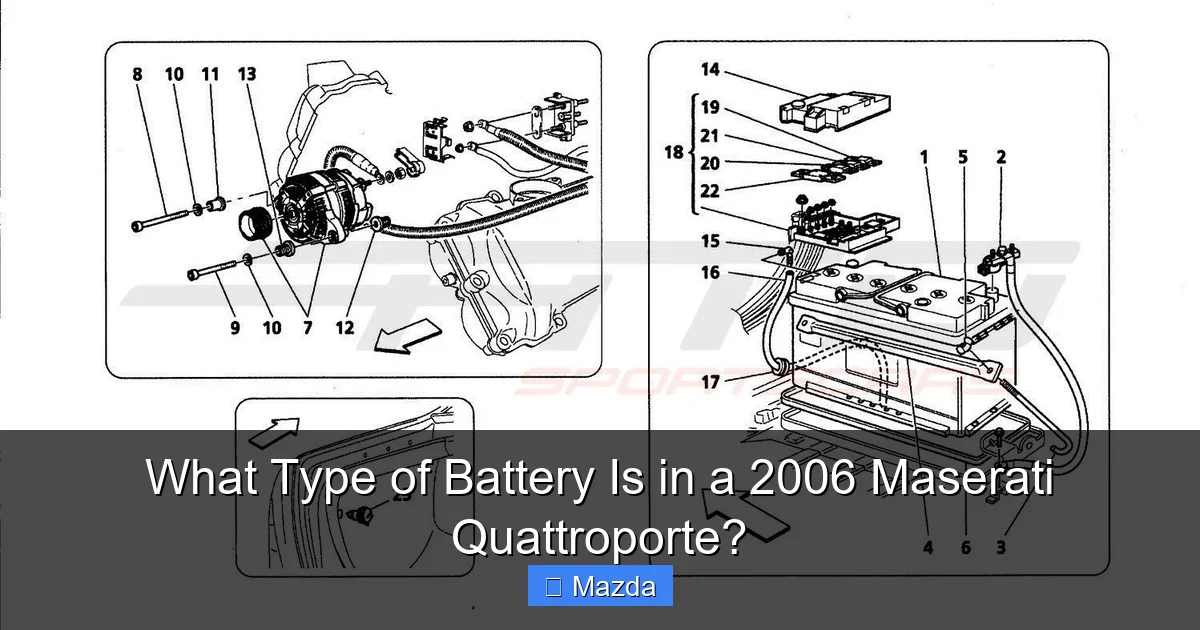
So, what type of battery is in a 2006 Maserati Quattroporte? The definitive answer is an Absorbent Glass Mat (AGM) battery. This isn’t just a preference; it’s an engineering requirement. To understand why, let’s break down what makes an AGM battery different from the conventional “flooded” or “wet cell” battery you might find in a basic commuter car.
Visual guide about What Type of Battery Is in a 2006 Maserati Quattroporte?
Image source: media-server.atd-sportscars.de
How AGM Batteries Work: The Glass Mat Advantage
In a traditional flooded lead-acid battery, the lead plates are submerged in a liquid electrolyte solution of sulfuric acid and water. This design works, but it has drawbacks: it can leak if tipped, requires venting of gases, and the liquid can slosh, causing internal damage over time from vibration. More critically for our Quattroporte, it’s not great at handling repeated deep discharges.
An AGM battery is a sealed, spill-proof, and highly engineered unit. Inside, the electrolyte is not a free-flowing liquid. Instead, it’s absorbed into ultra-thin fiberglass mats that are sandwiched between the lead plates. This design creates several massive advantages:
- Superior Power Density: The mat design allows for more active material (lead) to be packed into the same case size, delivering much higher Cold Cranking Amps (CCA) and reserve capacity.
- Extremely Low Internal Resistance: This means faster charging, more efficient power delivery, and a more stable voltage output—critical for sensitive electronics.
- Vibration and Shock Resistant: The mats hold the plates rigidly in place, making AGM batteries far more resistant to damage from the road vibrations a high-performance sedan like the Quattroporte experiences.
- Truly Maintenance-Free and Spill-Proof: Being sealed, they can be installed in any orientation (like the trunk location) without risk of acid leaks. They also recombine the hydrogen and oxygen gases internally, so there’s no water loss and no need to top up electrolyte.
- Better Deep Cycle Capability: They can handle being discharged more deeply and recover better than standard batteries, perfect for handling those accessory loads.
Why Maserati Chose AGM for the 2006 Quattroporte
The decision comes down to system compatibility and longevity. The Quattroporte’s charging system is calibrated for an AGM battery’s specific charging profile. AGM batteries require a slightly higher charging voltage (typically 14.4V to 14.8V) than flooded batteries (14.0V to 14.4V). The car’s voltage regulator is set for this. If you put a flooded battery in, the alternator might overcharge it, causing gassing, overheating, and rapid failure. Conversely, an AGM battery in a system designed for flooded might not get fully charged.
Furthermore, the Quattroporte’s “Start-Stop” or similar energy management systems (common in European cars of this era to meet emissions standards) rely on the battery’s ability to handle hundreds of thousands of micro-starts and deep cycles over its life. An AGM is built for this. Using the correct battery type is a non-negotiable part of preserving the car’s original performance and reliability. It’s a perfect example of how a seemingly small component is integral to the entire vehicle’s design philosophy.
Decoding Battery Specifications for the Quattroporte
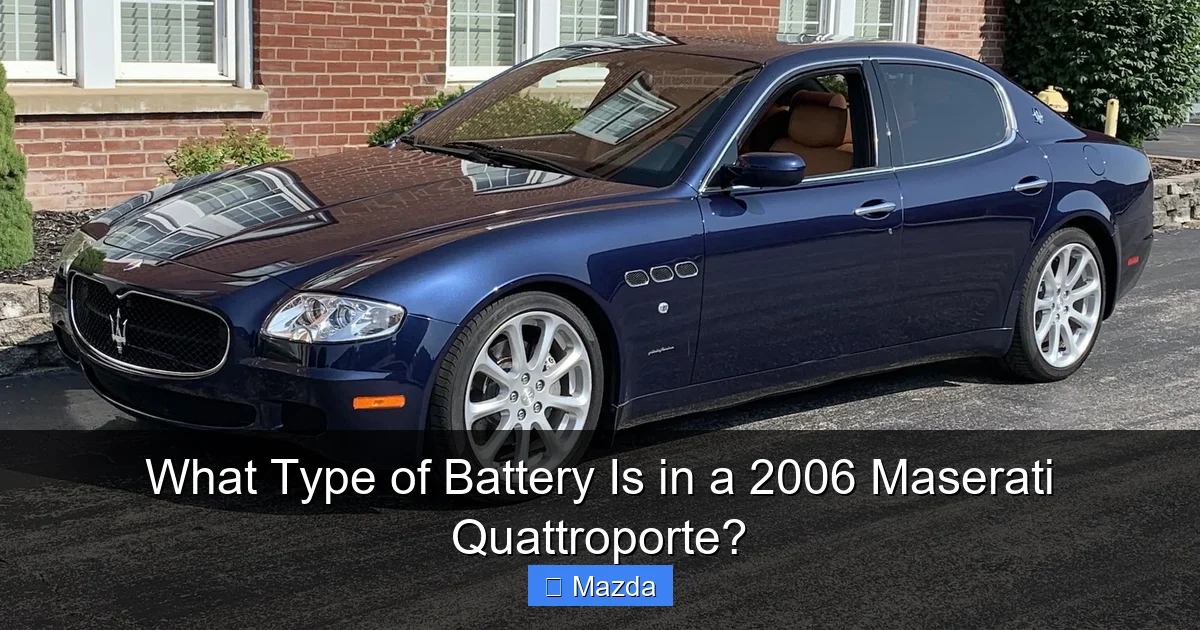
Knowing it’s an AGM is the first step. But you can’t just walk into a store and buy “an AGM battery.” You need the exact specifications that match what Maserati installed. For the 2006 Quattroporte (M139 platform), the standard original equipment battery is a Group 49 (H8) AGM battery. Let’s break down what that means and the key numbers you must match.
Visual guide about What Type of Battery Is in a 2006 Maserati Quattroporte?
Image source: cdn1.mecum.com
Physical Size and Terminal Layout: Group 49 (H8)
The Battery Council International (BCI) defines standard battery group sizes based on physical dimensions (length, width, height) and terminal type/location. Group 49, also commonly called H8, is a large, powerful battery. For the 2006 Quattroporte, the dimensions are approximately:
- Length: 11.0 inches (279 mm)
- Width: 6.8 inches (173 mm)
- Height: 7.6 inches (193 mm)
The terminals will be of the top-post variety, with the positive terminal typically on the left when facing the battery posts. This physical fit is critical. The battery must sit securely in the trunk’s dedicated battery tray, with cables reaching their terminals without strain. An incorrect group size won’t fit or will cause cable stress, leading to poor connections and potential fire hazards.
Performance Specs: CCA and Reserve Capacity
While size gets you in the ballpark, the performance specs ensure you have the right power. The OEM (Original Equipment Manufacturer) battery for the 2006 Quattroporte typically has:
- Cold Cranking Amps (CCA): 900 to 1000. This is the measure of the battery’s ability to start the engine in cold weather. The Quattroporte’s V8 needs this high number to overcome compression and internal friction on a cold morning. A battery with a CCA significantly lower than this will struggle or fail.
- Reserve Capacity (RC): Often around 180-200 minutes. This measures how long the battery can run essential accessories (like the ECU, fuel pump, lights) if the alternator fails. A higher RC provides a crucial safety buffer for a car with so many electronics.
- Ampere-Hours (Ah): Typically 80-100Ah. This is a measure of total energy storage capacity.
When replacing, your new AGM battery must meet or exceed these OEM CCA and RC ratings. Using a battery with lower ratings is a false economy that will lead to premature failure and potential no-start situations. Always check the manufacturer’s specification sheet for the exact model you purchase.
OE Part Numbers and Cross-References
For absolute certainty, you can look up the original Maserati part number, which is often from a major supplier like Bosch, VARTA, or Continental. For example, a common OE part for this era is the Bosch S5 100 T2 (which is a Group 49/H8 AGM with 1000 CCA). Retailers like Battery Mart, O’Reilly, or Advance Auto have excellent cross-reference tools. Input your 2006 Maserati Quattroporte, and they will list compatible Group 49 AGM batteries from brands like Bosch, Odyssey, Interstate, and DieHard. Filter for AGM and Group 49/H8 specifically. Don’t be tempted by a “universal” or cheaper flooded battery in a similar size; it will not perform correctly and will damage your system.
Replacement Guide: Step-by-Step
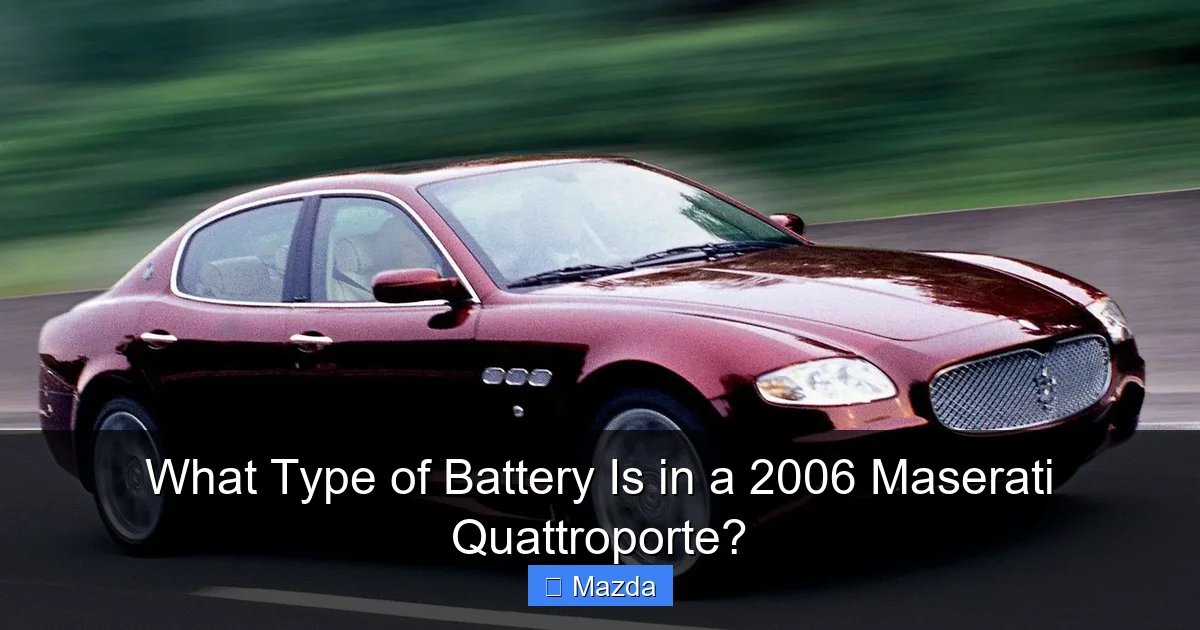
Now that you have the correct Group 49 AGM battery, let’s talk about getting it into your Quattroporte. The battery is located in the trunk, on the passenger side, under a removable trim panel. This location improves weight distribution and keeps corrosive fumes out of the cabin. Here’s a practical, safe replacement guide.
Visual guide about What Type of Battery Is in a 2006 Maserati Quattroporte?
Image source: carsinvasion.com
Tools and Safety Precautions
You’ll need basic hand tools: a 10mm socket and ratchet (for terminal nuts), possibly a trim removal tool for the plastic panels, and a battery terminal cleaning brush. SAFETY FIRST: Always wear safety glasses and gloves. AGM batteries are sealed and safe from leaks, but short-circuiting the terminals can cause sparks, burns, or even an explosion. Ensure the car is off, keys removed, and all doors closed (so no interior lights drain the new battery). It’s also wise to have a memory saver or a 9V battery saver plug if your Quattroporte has radio and ECU memory presets you want to keep.
Step-by-Step Removal and Installation
- Access the Battery: Open the trunk. Locate the rectangular plastic cover on the passenger-side wall. It’s usually secured with plastic clips or a few screws. Carefully pry it off to expose the battery and its hold-down clamp.
- Disconnect the Cables: Always disconnect the NEGATIVE (black, -) terminal FIRST. Loosen the 10mm nut and remove the clamp. Tuck it away so it can’t touch the terminal. Then, disconnect the POSITIVE (red, +) terminal. This order prevents accidental shorting if your tool touches the car’s metal body.
- Remove the Hold-Down: The battery is held by a metal bracket or strap, usually with a bolt through the center or at the base. Remove this bolt and carefully lift the battery out. AGM batteries are heavy (40-50 lbs), so use proper lifting technique or get help.
- Inspect and Clean: Check the battery tray for corrosion or debris. Clean the terminal clamps with a baking soda/water solution and a wire brush. This ensures a perfect connection for the new battery.
- Install the New Battery: Place the new Group 49 AGM battery into the tray, ensuring it sits flat and the terminals align correctly (positive on the left, facing the same direction as the old one). Reinstall and tighten the hold-down clamp securely. Vibration is a battery killer, so this step is crucial.
- Reconnect the Cables: Connect the POSITIVE (red, +) terminal FIRST, tightening the nut securely. Then, connect the NEGATIVE (black, -) terminal. This order also prevents shorting.
- Final Checks: Replace the trunk trim panel. Close the trunk. Start the car and let it idle for a few minutes to allow the alternator to begin charging the new battery. Check for any warning lights on the dashboard. If your car has a battery registration system (more common in post-2009 models, but good to check), you may need a diagnostic tool to tell the car’s computer a new battery has been installed. For a 2006 model, this is less likely but consult your owner’s manual or a specialist.
Maintenance and Longevity Tips for Your AGM Battery
You’ve installed the correct AGM battery. Great! But to get the most out of your investment—these aren’t cheap—proper maintenance is key. The good news is that AGM batteries require far less upkeep than old-school flooded batteries, but they still need care.
Charging: Use a Smart, AGM-Compatible Charger
This is the #1 rule. Never use an old, simple trickle charger or a charger designed for flooded batteries on an AGM. AGMs need a regulated, multi-stage “smart” charger that can deliver the proper voltage profile (usually 14.4V-14.8V absorption phase) and stop charging when full. A cheap charger can overcharge, gassing the internal mats and destroying the battery in a season. If you store your Quattroporte for long periods (common with luxury cars), invest in a quality maintainer/trickle charger like those from CTEK, NOCO, or Battery Tender that has an AGM setting. It will keep the battery at optimal charge without harming it.
Keep It Clean and Secure
While AGMs don’t leak acid, the terminals and clamps can still develop corrosion from environmental factors. Inspect the terminals annually. Clean them with a terminal brush and a solution of baking soda and water. Apply a thin layer of dielectric grease to the terminals after cleaning to prevent future corrosion. Also, periodically check that the hold-down bracket is still tight. A rattling, loose battery is a fast track to internal plate damage from vibration.
Monitor Health and Know When to Replace
Even AGM batteries have a lifespan, typically 4-7 years in a demanding automotive environment. You can check its health with a simple multimeter. With the car off and resting for a few hours, a fully charged AGM battery should read about 12.6V to 12.8V at the terminals. If it’s consistently below 12.4V, it’s weak. You can also have a professional perform a load test. Don’t wait for a complete failure. A weak battery strains the alternator and leaves you stranded. Proactive replacement is cheaper than a tow and a missed drive in your Maserati. For more on battery health, understanding concepts like CCA (Cold Cranking Amps) and proper voltage readings is invaluable.
The Future of Automotive Batteries and Your Classic Quattroporte
Looking at the automotive landscape in 2026, we see a rapid shift towards 48-volt mild-hybrid systems and full electric vehicles. But for a beloved internal combustion engine icon like the 2006 Maserati Quattroporte, its 12-volt AGM battery remains the heart of its electrical system for the foreseeable future. Understanding its role connects you to the car’s original engineering intent.
AGM as the Bridge Technology
AGM technology was the bridge that allowed luxury cars in the 2000s to pack more electronics without the limitations of flooded batteries. It provided the cycle life and power density needed for early start-stop systems and high accessory loads. For your Quattroporte, respecting this design choice means preserving its authentic driving experience. A failing or incorrect battery can make the car feel “off”—sluggish starts, glitchy electronics—undermining the very essence of a Maserati.
Sourcing Batteries in 2026 and Beyond
As we move further from 2006, finding exact OE replacements can become a challenge. Major suppliers like Bosch and VARTA still manufacture Group 49 AGM batteries, but specific fitments may be listed under broader categories. Your best strategy is to rely on the core specifications: Group 49/H8, AGM, 900+ CCA, and ~200 RC. Reputable auto parts stores and online retailers specializing in batteries will have cross-reference charts. You might also explore brands known for high performance, like Odyssey or NorthStar, which offer AGMs in Group 49 with even higher specs, providing an upgrade in longevity and power. Always verify the physical dimensions and terminal placement before purchasing.
Maintaining your Quattroporte’s battery is part of a larger maintenance ritual. Just as you’d research the correct oil for a different vehicle to protect its engine, you must use the correct battery to protect the Quattroporte’s electrical nervous system. It’s a small detail with a huge impact on reliability and enjoyment.
Strong Conclusion
So, there you have it. The 2006 Maserati Quattroporte is not just powered by a V8 engine; it’s sustained by a sophisticated Absorbent Glass Mat (AGM) battery, specifically a Group 49 (H8) unit with high CCA and reserve capacity. This is not a suggestion from Maserati—it’s a requirement written into the car’s engineering DNA. Choosing the correct AGM battery is an act of preservation, ensuring your Quattroporte’s complex electronics remain happy, its starts are authoritative, and its legendary performance is never compromised by a simple power issue.
Treat this knowledge as a tool. When it’s time for a replacement, walk into that parts store or search online with confidence: “I need a Group 49 AGM battery with at least 900 CCA.” Install it carefully, maintain it with a smart charger, and you’ll have a reliable power source that does justice to the Italian masterpiece it serves. In the world of high-performance luxury automobiles, getting the fundamentals right—like the battery—is what separates a cherished driver from a frustrating project. Your Quattroporte deserves nothing less.
Frequently Asked Questions
Can I use a regular flooded car battery in my 2006 Maserati Quattroporte?
No, you should never use a standard flooded (wet cell) battery. The Quattroporte’s charging system and electrical load are designed specifically for an AGM battery’s voltage profile and resistance. A flooded battery will likely fail prematurely and can damage the alternator and sensitive electronic modules.
What is the average lifespan of the AGM battery in a 2006 Quattroporte?
With proper maintenance and use of a smart charger, a quality AGM battery in a 2006 Quattroporte can last 4 to 6 years. Factors like extreme temperatures, frequent short trips, and deep discharging from accessory use will shorten its life.
How can I safely jump-start a 2006 Maserati Quattroporte with an AGM battery?
Jump-starting an AGM battery is similar to a standard battery, but with caution. Connect the positive (red) clamp to the dead battery’s positive terminal, then the positive clamp to the donor car’s positive. Connect the negative (black) clamp to the donor car’s negative, and finally, the other negative clamp to a solid, unpainted metal ground on the Quattroporte’s engine block or chassis, away from the battery. This reduces spark risk near the battery. Once started, let it run to recharge.
What is a typical cost for a correct replacement Group 49 AGM battery?
A high-quality Group 49 AGM battery from a reputable brand (Bosch, VARTA, Odyssey, Interstate) typically costs between $200 and $350. Premium brands with higher specs or warranties can run higher. This is an investment in protecting your car’s complex $10,000+ electrical system.
Is replacing the trunk battery in a Quattroporte a good DIY project?
For someone with basic mechanical skills and the right tools, it’s a feasible DIY job. The key steps are disconnecting negative first, securing the heavy battery properly, and reconnecting terminals tightly. However, if you are uncomfortable with car electronics or lack tools, professional installation is recommended to ensure no damage occurs and to handle any potential memory saver needs.
Why is my battery constantly dying even though I just replaced it?
A “parasitic drain” is the most likely culprit—something (an aftermarket alarm, a faulty module, a glovebox light) is drawing power when the car is off. This is common in luxury cars with many systems. A mechanic can perform a “draw test” with an ammeter to find the drain. Another possibility is a failing alternator that isn’t recharging the battery properly, which you can check by measuring voltage at the battery while the engine runs (should be ~14.4V-14.8V for an AGM system).
