
What Maintenance Is Recommended for a 2020 Toyota Corolla?

Maintaining your 2020 Toyota Corolla is straightforward and key to its legendary reliability. Following Toyota’s recommended service schedule—primarily every 5,000 miles or 6 months—covers essential oil changes, tire rotations, and multi-point inspections. Key focus areas include using the correct 0W-16 synthetic oil, monitoring tire pressure and tread, and replacing engine and cabin air filters regularly. Adhering to this schedule protects your investment, ensures optimal fuel efficiency, and prevents costly repairs down the road.
Key Takeaways
- Stick to the 5,000-Mile/6-Month Schedule: The core of Corolla maintenance is regular service intervals for oil, filter, tire rotation, and a comprehensive inspection.
- Use Only 0W-16 Synthetic Oil: The 2.0L Dynamic Force engine requires this specific low-viscosity oil for fuel economy and longevity; never substitute.
- Don’t Neglect Tire Pressure and Rotation: Monthly pressure checks and rotations every 5,000 miles ensure even wear, safety, and maximize the Corolla’s excellent fuel economy.
- Replace Filters Proactively: Engine air and cabin air filters are inexpensive and easy to change; doing so regularly protects your engine and improves cabin air quality.
- Understand Your Service Lights: The “MAINT REQUIRED” light is a simple mileage counter, but other warning lights (check engine, tire pressure) demand immediate attention.
- Fluid Checks Are Your Friend: Regularly check engine oil, coolant, brake fluid, and windshield washer fluid levels between services.
- Battery Health Matters: While the factory battery is good, extreme temperatures and short trips can shorten its life; test it annually after the third year.
[FEATURED_IMAGE_PLACEHOLDER]
📑 Table of Contents
- Introduction: Why Maintenance is Your Corolla’s Best Friend
- Decoding the Factory Maintenance Schedule
- Fluid Fundamentals: The Lifeblood of Your Corolla
- Engine and Filtration: Breathing and Running Clean
- Tires, Brakes, and Wheels: Your Connection to the Road
- Battery and Electrical System: Keeping the Juice Flowing
- Routine Inspections and Proactive Replacements
- Conclusion: Your Partner in Reliability
Introduction: Why Maintenance is Your Corolla’s Best Friend
You’ve chosen a 2020 Toyota Corolla, and that’s a smart move. It’s consistently one of the most reliable, fuel-efficient, and practical sedans on the market. But that stellar reputation doesn’t happen by accident. It’s built on a foundation of consistent, proper maintenance. Think of it like this: your Corolla is a high-performance athlete. Even the best athlete needs regular check-ups, the right fuel, and proper rest to perform at their peak and avoid injuries. Your car is no different.
This guide is your playbook. We’re going to walk through every recommended maintenance item for your 2020 Toyota Corolla, demystifying the service schedule and giving you the knowledge to talk confidently with your mechanic, perform simple checks yourself, and ultimately get the most value and years of worry-free driving from your exceptional sedan. We’ll cover everything from the non-negotiable oil change to the often-overlooked cabin air filter, all in plain English.
Decoding the Factory Maintenance Schedule
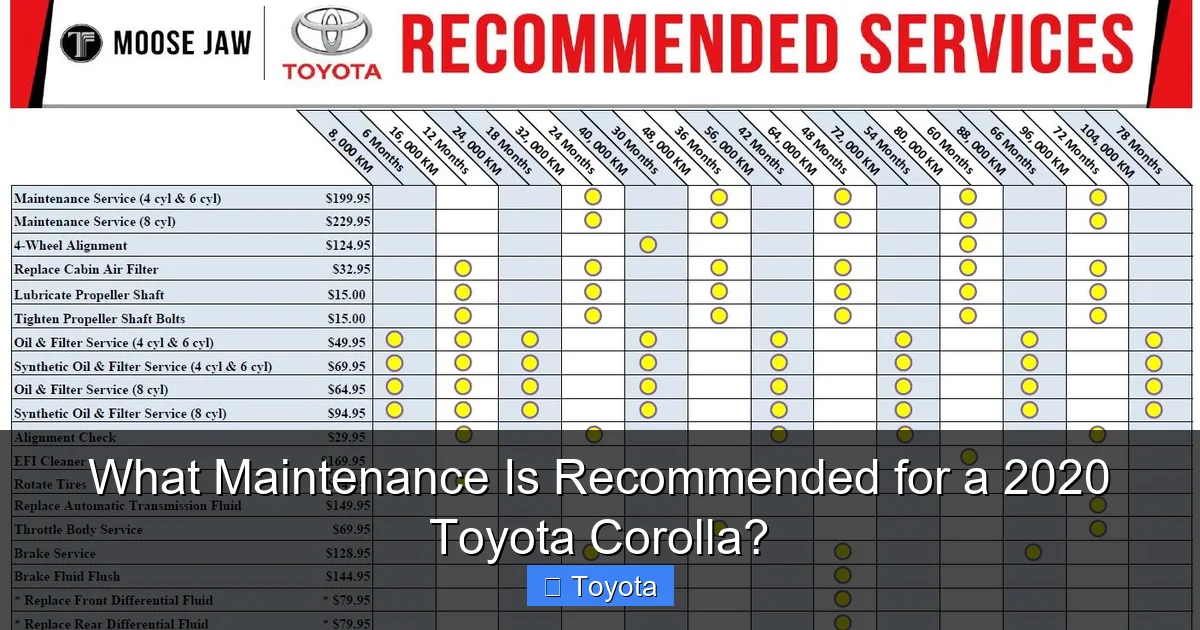
Toyota provides a detailed, mileage-based maintenance schedule in your owner’s manual. For the 2020 Corolla, the backbone is the 5,000-mile / 6-month service interval. This is the “standard” service for normal driving conditions. If your driving is considered “severe” (lots of short trips under 5 miles, extreme temperatures, dusty roads, heavy loads, or primarily idling), you should shorten these intervals.
Visual guide about What Maintenance Is Recommended for a 2020 Toyota Corolla?
Image source: d2a8ommgzxxngz.cloudfront.net
What’s Included in a Standard 5,000-Mile Service?
This is the workhorse of your maintenance plan. A typical visit at this interval includes:
- Oil and Filter Change: The absolute most critical item. The 2020 Corolla’s 2.0L four-cylinder engine (code M20A-FKS) requires 0W-16 synthetic oil. This specific weight is mandated for its fuel economy and engine protection benefits. Using the wrong oil can void your warranty and harm the engine.
- Tire Rotation: Front and rear tires wear differently. Rotating them (usually front-to-rear, sometimes cross-pattern) every 5,000 miles promotes even wear, extends tire life, and maintains handling balance.
- Multi-Point Inspection: This is where a good technician earns their keep. They should check: tire pressure and condition, all fluid levels (engine oil, coolant, brake fluid, transmission fluid, washer fluid), battery health, belts and hoses, lights, wiper blades, and brake pad/shoe thickness. Don’t skip this visual check!
- Brake Inspection: Often part of the multi-point, but worth highlighting. Pads, rotors, calipers, and brake lines are checked for wear and condition.
At 10,000 miles (or one year, whichever comes first), the service adds an inspection of the cabin air filter and engine air filter. At 20,000 miles, these filters are typically replaced. Major services occur at 30k, 60k, 90k, etc., involving things like spark plugs, transmission fluid (for the CVT), and coolant.
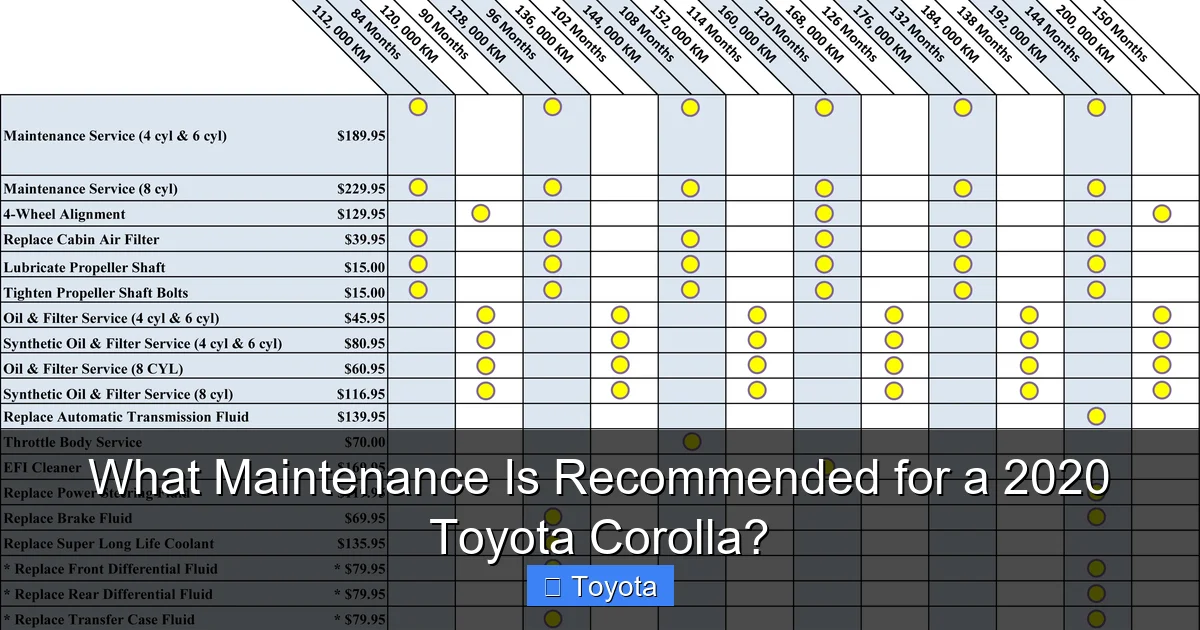
Fluid Fundamentals: The Lifeblood of Your Corolla
Modern cars like the 2020 Corolla run on a cocktail of specialized fluids. Keeping them at the correct level and condition is half the battle.
Visual guide about What Maintenance Is Recommended for a 2020 Toyota Corolla?
Image source: d1l9oib0dboqqi.cloudfront.net
Engine Oil: The Non-Negotiable
As stated, use only Toyota-approved 0W-16 synthetic oil. The “0W” means it flows like a thin oil in cold starts (the “W” stands for winter), protecting engine parts immediately. The “16” is its viscosity at operating temperature, formulated for the tight tolerances of modern engines for maximum efficiency. Check your oil level monthly with the dipstick (engine warm, parked level). The manual states it’s normal to consume a small amount of oil between changes. If you’re more than a quart low at the 5,000-mile mark, have it checked.
Coolant (Antifreeze)
Your Corolla uses a specific, long-life pink or red coolant (Toyota Super Long Life Coolant or equivalent). It’s not just for winter; it’s vital for year-round engine temperature regulation. Check the level in the translucent reservoir when the engine is cold. It should be between the “MIN” and “FULL” lines. A significant drop indicates a leak. The coolant should be replaced according to the schedule (often at 100,000 miles initially), as it loses its corrosion-inhibiting properties over time.
Brake Fluid
Brake fluid is hygroscopic, meaning it absorbs moisture from the air over time. This moisture lowers its boiling point, which can compromise braking performance, especially under hard use. It should be checked at every service and typically replaced every 2-3 years, regardless of mileage. This is a critical safety item often overlooked.
Transmission Fluid (CVT)
The 2020 Corolla’s Continuously Variable Transmission (CVT) uses dedicated Toyota CVT fluid. While Toyota states it’s “lifetime” fluid for normal use, many mechanics recommend a proactive drain and fill service around 60,000 miles for long-term durability, especially in severe conditions. Check the level via the dipstick (if equipped; some are sealed) according to the manual’s procedure.
Windshield Washer Fluid
Simple but essential. Keep it topped up, especially in winter. Use a fluid with antifreeze properties if you live in a freezing climate.
Engine and Filtration: Breathing and Running Clean
Your engine needs clean air and clean fuel to run efficiently. Filters are its guardians.

Visual guide about What Maintenance Is Recommended for a 2020 Toyota Corolla?
Image source: scout.customerscout.net
Engine Air Filter
This paper or fabric filter traps dust, pollen, and debris before it enters your engine’s intake. A clogged filter chokes your engine, reducing power and fuel economy. It’s inspected at every service and typically replaced every 15,000 to 30,000 miles, depending on driving environment (more often in dusty areas). It’s one of the easiest and cheapest DIY replacements—just locate the air box under the hood, unclip it, and swap the filter.
Cabin Air Filter
Often forgotten, this filter cleans the air you breathe inside the car. It traps pollen, dust, soot, and odors. A dirty cabin filter makes your HVAC system work harder, reduces airflow, and can make your car’s interior smell musty. It’s usually located behind the glovebox. Replace it every 15,000 to 20,000 miles. If you have allergies or drive in heavy traffic, consider changing it annually. If you’re curious about other climate control features in your Corolla, like the Eco Heat & Cool setting that optimizes efficiency, you can read more about it here.
Fuel Filter
The 2020 Corolla’s fuel filter is typically located inside the fuel tank and is considered “lifetime” by Toyota. It’s not a regular service item unless there’s a specific fuel delivery issue diagnosed by a professional.
Tires, Brakes, and Wheels: Your Connection to the Road
This is your direct link to safety, handling, and fuel economy. Neglecting these components is dangerous and expensive.
Tire Pressure: The #1 Efficiency Tip
Check your tire pressure at least once a month and before long trips. Use the pressure rating on the sticker inside the driver’s door jamb, NOT the number on the tire sidewall. The correct pressure (usually 32-33 PSI for the Corolla) ensures optimal grip, even wear, and the best possible miles per gallon. Under-inflated tires increase rolling resistance, killing fuel economy. Over-inflated tires wear unevenly in the center and reduce contact patch. A quality digital tire pressure gauge is a cheap, invaluable tool.
Tire Rotation and Alignment
We mentioned rotation every 5,000 miles. Why so often? Front tires on a front-wheel-drive car like the Corolla endure the forces of steering, acceleration, and most of the braking. They wear on the edges. Rear tires wear more evenly but can develop cupping. Rotation evens this out. Wheel alignment (checking camber, caster, and toe) should be checked annually or if you notice pulling, vibration, or after hitting a pothole. An alignment prevents rapid, uneven tire wear and saves you from buying new tires prematurely.
Tread Depth and Age
Use the penny test: insert a penny into the tread with Lincoln’s head down. If you can see the top of his head, it’s time for new tires. Also, check for uneven wear patterns (inner/outer edges, cupping) which indicate alignment or suspension issues. Even if tread is okay, tires degrade with age. Most manufacturers recommend replacing tires 6-10 years from the date of manufacture (DOT code on the sidewall), regardless of tread depth.
Brake System
Your inspection will cover pad thickness (usually measured in millimeters), rotor condition (scoring, warping), and caliper slide function. Listen for squealing (wear indicator) or grinding (metal-on-metal). A pulsating brake pedal often means warped rotors. Brake fluid, as noted, absorbs moisture and should be flushed periodically. Understanding what the correct tire pressure is for any Toyota model, including the larger Sienna, is a similar principle of safety and efficiency, which you can explore here.
Battery and Electrical System: Keeping the Juice Flowing
The 2020 Corolla uses a standard 12-volt lead-acid battery. It starts your engine and powers all accessories when the engine is off.
Battery Care and Lifespan
Average battery life is 3-5 years. Factors that shorten life include extreme heat (under-hood heat evaporates fluid), frequent short trips (the alternator doesn’t fully recharge the battery), and leaving lights or accessories on. At your service, they should check the battery’s cold cranking amps (CCA) and overall health. You can do a simple visual check yourself: look for white, crusty corrosion on the terminals (clean with a baking soda/water solution and a wire brush if needed) and ensure the hold-down clamp is tight.
Alternator and Starter
These are not regular service items but are inspected during the multi-point. Symptoms of failure include: dimming lights/weak accessories (alternator), or a slow-cranking engine or click when turning the key (starter or battery).
Lighting
Check all exterior lights—headlights (low and high beam), taillights, brake lights, turn signals, and reverse lights—monthly. A burned-out bulb is a safety issue and can get you a ticket. Replacing bulbs, especially in the modern LED headlights, can sometimes require professional assistance to avoid damage.
Routine Inspections and Proactive Replacements
Beyond the 5,000-mile cycle, there are other components with their own timelines.
Spark Plugs
The 2020 Corolla’s iridium-tipped spark plugs are designed for long life. Toyota’s schedule calls for replacement at 120,000 miles. However, if you experience rough idling, misfires, or decreased fuel economy before that mileage, they could be the culprit. This is a moderately difficult DIY job on this engine.
Wiper Blades
Rubber degrades. Inspect them every 6 months. If they streak, skip, or leave spots, replace them. Most last 6-12 months. The correct size for a 2020 Corolla is typically 26″ (driver) and 16″ (passenger), but always verify for your specific trim.
Serpentine Belt
This long belt drives the alternator, power steering pump, and air conditioning compressor. Inspect it at every service for cracks, glazing, or fraying. Toyota’s schedule often calls for inspection and replacement around 60,000 miles. A broken belt leaves you stranded.
Shocks and Struts
There’s no set mileage for replacement. Have them inspected annually for leaking fluid, physical damage, or worn bushings. Signs of failure include excessive bouncing over bumps, nose-diving when braking, or uneven tire wear (cupping). Replacement is usually needed between 60,000 and 100,000 miles.
A comprehensive Toyota Multi-Point Inspection, which is the gold standard for these routine checks, covers all these items and more. Understanding exactly what that inspection entails helps you ensure your technician is being thorough.
Conclusion: Your Partner in Reliability
Maintaining a 2020 Toyota Corolla isn’t about complex, expensive procedures. It’s about consistency and attention to detail. By following the factory schedule, using the specified 0W-16 oil, keeping tires properly inflated and rotated, and not ignoring the little warning lights or sounds, you are investing directly in the car’s famed reliability and resale value. You’re ensuring that your Corolla remains the safe, efficient, and trouble-free companion it was designed to be for hundreds of thousands of miles. Keep your owner’s manual handy, find a trusted technician, and don’t be afraid to ask questions. A well-maintained Corolla isn’t just a car; it’s a promise kept.
Frequently Asked Questions
What happens if I miss an oil change on my 2020 Corolla?
Missing one oil change likely won’t cause immediate damage, but oil breaks down over time, losing its lubricating and cleaning properties. Going significantly over the interval allows sludge and wear to accumulate, which can lead to premature engine wear, reduced performance, and potentially costly repairs. Always try to stay within the 5,000-mile/6-month window.
Can I use a different weight of oil in an emergency?
In a true emergency where 0W-16 is unavailable, using 0W-20 is a safer temporary substitute than a thicker oil like 5W-30. However, you should return to 0W-16 at your earliest convenience and avoid using the wrong viscosity long-term, as it can affect fuel economy, engine performance, and may void the powertrain warranty.
How do I know if my cabin air filter needs changing?
Signs include reduced airflow from the vents, a musty or unpleasant odor when the HVAC is on, or more dust settling on your dashboard. If you’re unsure, a quick visual inspection during a service or by removing the filter yourself will show if it’s clogged with dirt and debris. Replacing it is a simple, inexpensive fix that makes a big difference.
My “MAINT REQUIRED” light came on. What does it mean?
This is not a warning light; it’s a simple maintenance reminder. It illuminates after 5,000 miles have elapsed since it was last reset and indicates it’s time for your routine service (oil change, tire rotation, inspection). It does not require immediate, panicked action, but you should schedule service within the next few hundred miles.
Why is my tire pressure warning light on?
This light (a cross-section of a tire with an exclamation point) activates when one or more tires drop below a preset pressure threshold, usually 25% below the recommended PSI. Check all tires with a gauge and inflate them to the pressure listed on the door jamb sticker. The light should reset automatically after a few minutes of driving at the correct pressure, or you may need to manually reset it via the vehicle settings menu.
Is the CVT transmission fluid really “lifetime” and never needs changing?
While Toyota specifies the fluid as “lifetime” for normal driving conditions under warranty, many independent mechanics and transmission specialists recommend a proactive drain-and-fill service around 60,000 miles for the CVT, especially if you drive in severe conditions (heat, towing, stop-and-go traffic). This is a relatively inexpensive service that can significantly extend the transmission’s life and performance.
