
What Does Engine Maintenance Required Mean on a Toyota Rav4?

The “Engine Maintenance Required” light on your Toyota RAV4 is a proactive reminder from your vehicle’s computer that scheduled engine maintenance is due, based on mileage and driving conditions. It is not an emergency warning like a Check Engine light, but ignoring it can lead to decreased performance, poor fuel economy, and potential long-term engine wear. Addressing it promptly by following your maintenance schedule and having a certified technician service your vehicle is the best way to ensure reliability and longevity.
You’re cruising down the highway in your trusty Toyota RAV4, the scenery passing by, when suddenly a small amber light illuminates on your dashboard. It’s not the glaring, panic-inducing Check Engine light. This one is more subtle, often accompanied by the words “Engine Maintenance Required” or a small wrench icon. Your immediate thought might be, “Uh oh. What now?” Take a deep breath. In the world of your RAV4, this particular light is less of a siren and more of a polite, persistent tap on the shoulder from your car’s computer. It’s your vehicle’s way of saying, “Hey, it’s been a while since my last check-up, and according to my calculations, I’m due for some routine love.” Understanding what this message truly means is the first step to keeping your RAV4 running smoothly, efficiently, and reliably for years to come. This guide will walk you through everything you need to know, from the technology behind the alert to the exact steps you should take next.
Many drivers mistakenly conflate any dashboard warning with imminent disaster. The “Engine Maintenance Required” message, however, is a cornerstone of Toyota’s sophisticated predictive maintenance philosophy. It’s a system designed to replace the old, rigid “every 5,000 miles” sticker on your windshield with a smart, personalized service schedule. This means your RAV4 isn’t just counting miles; it’s listening to how you drive, where you drive, and how hard it works for you. A car used mostly for quick, stop-and-go city errands will likely need attention sooner than one that mostly cruises on open highways. This light is the tangible output of that intelligence. Ignoring it isn’t just brushing off a reminder; it’s choosing to disregard data that’s specifically meant to protect one of your most significant investments. Let’s decode what your RAV4 is trying to tell you.
Key Takeaways
- It’s a Reminder, Not an Emergency: The “Engine Maintenance Required” light indicates scheduled service is due, not an immediate engine failure. It’s part of Toyota’s Maintenance Minder system.
- Driven by Algorithms: The reminder calculates service needs based on actual mileage, engine run time, and driving habits (like frequent short trips or dusty conditions), not just a fixed mileage interval.
- Common Services Include: An oil and filter change is almost always the primary task, but it may also signal the need for air filter replacement, tire rotation, or other scheduled maintenance items.
- Resetting Requires Professional Action: The light is designed to reset automatically only after the required maintenance is correctly performed and the system is updated by a technician using specialized tools.
- Ignoring It Has Consequences: Postponing service can lead to accelerated engine wear, reduced fuel efficiency, compromised performance, and may even void aspects of your warranty if neglect causes damage.
- Use Genuine Toyota Parts and Fluids: For optimal performance and to maintain your warranty, always insist on Toyota-approved oil, filters, and parts that meet the vehicle’s specifications.
📑 Table of Contents
- Decoding the “Engine Maintenance Required” Message
- Inside Toyota’s Smart Maintenance Minder System
- What Exactly Triggers This Reminder?
- The Essential Services Your RAV4 Needs When the Light Comes On
- Resetting the Light: The Right Way and Why You Shouldn’t Rush It
- The Real Cost of Ignoring the Reminder
- DIY Enthusiasm vs. Professional Expertise: Making the Smart Choice
- Conclusion: Your RAV4’s Invitation to Care
Decoding the “Engine Maintenance Required” Message
So, what exactly is this light telling you? In simple terms, your Toyota RAV4’s onboard computer, often called the Engine Control Unit (ECU), has determined that the engine oil has degraded to a point where its effectiveness is diminishing, or that another maintenance item is due based on the vehicle’s service schedule. The primary trigger is almost always the engine oil. Modern synthetic oils are marvels of engineering, but they have a finite lifespan. They break down from heat, shear forces, and contamination from fuel dilution and combustion byproducts. The “Engine Maintenance Required” alert is the car’s way of saying the oil’s protective properties are wearing thin, and it’s time to drain the old, depleted oil and replace it with fresh, clean fluid along with a new filter.
It is critically important to distinguish this from a Check Engine light (CEL). A Check Engine light illuminates when the ECU detects a fault or abnormal reading from one of the dozens of sensors monitoring your engine and emissions systems. It could indicate anything from a loose gas cap to a failing catalytic converter. The “Engine Maintenance Required” light is a completely different, predetermined notification. It’s not triggered by a sensor reading an error; it’s triggered by a pre-programmed algorithm that says, “Based on the accumulated data, service is now due.” You should never panic when you see this light. Instead, you should plan. It gives you the courtesy of advance notice, allowing you to schedule service at your convenience, rather than breaking down unexpectedly.
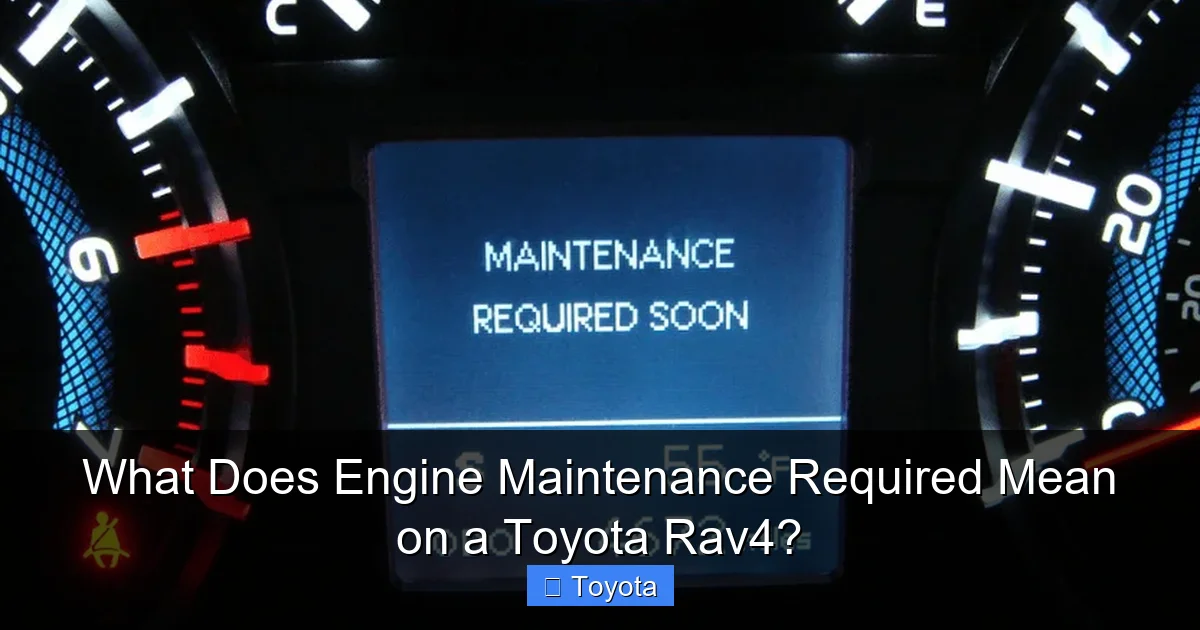
This system is part of what Toyota calls the “Maintenance Minder.” It’s a computerized system that tracks various maintenance intervals and displays them on your multi-information display. You might see codes like “A,” “B,” “A1,” “C1,” etc. Each code corresponds to a specific set of services. For instance, a simple “A” typically means an oil and filter change. A “B” usually means an oil and filter change plus a inspection of numerous systems (brakes, fluids, belts, etc.). Other codes might indicate tire rotation, cabin air filter replacement, or other specific tasks. The “Engine Maintenance Required” message is often the general precursor that appears before a more specific code might be displayed, or it may be the primary message for a basic “A” service. It’s your RAV4’s gentle nudge to check your maintenance minder display for the exact code and consult your owner’s manual for what that specific code entails.
The Technology Behind the Reminder: How It Calculates “Time”
How does your car know? It’s not magic, but it is clever engineering. The Maintenance Minder system uses a complex algorithm that primarily monitors:
- Engine Revolutions: The ECU counts every revolution of the engine. High-RPM driving (like hard acceleration) stresses the oil more than gentle cruising, so it will degrade the oil’s “service life” faster in the system’s calculation.
- Engine Run Time: The total time the engine has been running since the last reset. This is more accurate than just miles, as idling in traffic or using the engine for accessories still counts as “use.”
- Vehicle Speed and Driving Conditions: The system knows if you’re predominantly doing short trips (where the engine never fully warms up, causing fuel dilution in the oil) versus long highway drives. It also factors in ambient temperature.
- Time Since Last Service: Even if you drive very little, certain components like engine oil degrade over time from moisture and chemical breakdown. The system has a maximum time interval (usually 12 months) regardless of mileage.
This means two RAV4 owners with the same model year could see the light come on at vastly different mileages. Person A, who drives 15 miles daily on the highway, might get 7,500 miles between reminders. Person B, who drives 3 miles to the store and back in cold weather multiple times a day, might see it at 4,000 miles. The system is tailored to your usage. This personalized approach is far superior to a one-size-fits-all interval, as it directly correlates to the actual stress placed on the engine oil.
Inside Toyota’s Smart Maintenance Minder System
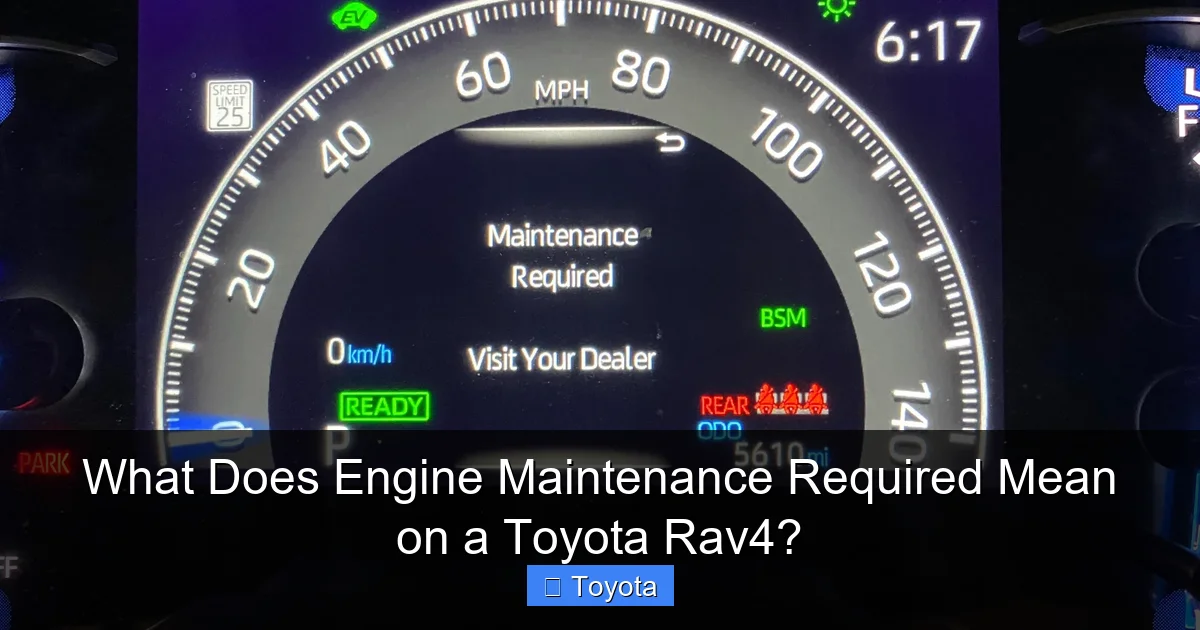
To fully grasp the “Engine Maintenance Required” light, you need to understand its parent system: the Toyota Maintenance Minder. This isn’t just a simple mileage counter; it’s an onboard service advisor. When you turn the key (or press the start button), the system performs a quick check. If maintenance is due, it will display a message on the instrument panel’s multi-information display, often alongside the main warning light. The message will typically show a code, such as “MAINTENANCE REQUIRED” or “SERVICE DUE,” and sometimes a specific alphanumeric code like “A” or “B1.”
Visual guide about What Does Engine Maintenance Required Mean on a Toyota Rav4?
Image source: roadsumo.com
Here’s a breakdown of the most common codes you might encounter on your RAV4 (always verify with your specific owner’s manual, as codes can vary slightly by model year and trim):
- Code A: This is the most basic and common code. It indicates an oil and filter change is required. This is the service most directly associated with the “Engine Maintenance Required” message.
- Code B: This is a more comprehensive service. It includes everything in Code A (oil and filter) plus a detailed inspection of the brake system, fluid levels (coolant, washer fluid, etc.), steering linkage, driveshaft boots, and other key components.
- Codes with Numbers (e.g., A1, B2, C1): The number indicates a secondary maintenance item that coincides with the primary letter code. For example, an “A1” means perform an oil/filter change (A) and inspect or replace the tire air pressure (1). A “B2” means perform the B service and replace the cabin air filter (2). The number codes can refer to tire rotation, cabin filter, engine air filter, and more.
The system resets automatically once the required service is completed and the technician uses a diagnostic tool to update the maintenance minder. This reset tells the computer to start its calculation anew based on the fresh oil and new service data. The system is designed this way to prevent a simple reset without the actual work being done, which would defeat its purpose of protecting your engine.
Understanding the “ET” Code
You might occasionally see a code like “ET” appear on your display, especially on newer Toyota models. This can be confusing. The “ET” code is part of the Maintenance Minder system and stands for “Engine Tune-up” or is related to specific engine system checks. It often appears in conjunction with other codes or as a reminder for services related to spark plugs, ignition coils, or throttle body inspection, depending on the vehicle’s programmed schedule. It’s a more specific reminder than the general “Engine Maintenance Required” light. If you see “ET,” it’s a clear sign to consult your owner’s manual or a dealer to understand the exact inspection or replacement items due for your specific RAV4 model year and engine type. This level of specificity is what makes the Maintenance Minder so powerful—it moves beyond generic advice to your car’s precise needs. For a deeper dive into Toyota’s service codes, including the meaning of “ET,” you can read our detailed explanation here.
What Exactly Triggers This Reminder?
While the primary and most frequent trigger is engine oil life depletion, the “Engine Maintenance Required” message can sometimes be the umbrella notification for other time- or mileage-based services that are part of the overall maintenance schedule. The algorithm is designed to group related services. So, when it determines it’s time for an oil change, it might also check if it’s time for a tire rotation (which is typically every 5,000-7,500 miles and often coincides with oil changes) or a cabin air filter change (usually every 15,000-30,000 miles). If those secondary items are also due around the same mileage, the system may prompt for them under the same service reminder or with a combined code.
Visual guide about What Does Engine Maintenance Required Mean on a Toyota Rav4?
Image source: thehonestmechaniccolorado.com
Here are the most common scenarios that will cause the light to illuminate:
- Standard Oil Change Interval: This is the #1 reason. The system has calculated that the current oil has used up 90-100% of its estimated service life. The exact interval varies but is often between 5,000 and 10,000 miles for modern synthetic oil, heavily influenced by your driving style.
- Time-Based Service: Even if you only put 3,000 miles on your RAV4 in a year, the system may trigger the reminder because 12 months have passed since the last service. Oil degrades over time from moisture and oxidation, not just from use.
- Severe Driving Conditions: If your daily drive involves constant stop-and-go traffic, extremely hot or cold temperatures, dusty or sandy environments, mountainous terrain, or frequent short trips (where the engine doesn’t reach full operating temperature), the system will accelerate the service reminder. These conditions are harder on the engine and oil.
- Other Scheduled Maintenance: As part of a “B” service code or similar, the reminder may appear to signal that inspections, fluid top-offs, or component replacements (like the engine air filter) are due in addition to the oil change.
It’s rare, but not impossible, for an electrical glitch or a faulty sensor related to the Maintenance Minder system to cause a false alert. However, this is exceptionally uncommon. The default assumption should always be that your vehicle is accurately reporting its needs based on real data. If the light comes on immediately after a service, it could mean the technician failed to properly reset the system, which is another reason to verify the work was completed correctly before leaving the shop.
The Essential Services Your RAV4 Needs When the Light Comes On
When that wrench icon appears, it’s time to open your owner’s manual and check the specific Maintenance Minder code displayed. However, there are core services that are almost always included, especially with an “A” code. Treating this service as a simple oil change is a missed opportunity. It’s your RAV4’s scheduled wellness check.
Visual guide about What Does Engine Maintenance Required Mean on a Toyota Rav4?
Image source: rav4resource.com
The Mandatory: Oil and Filter Change
This is non-negotiable. The engine oil is the lifeblood of your engine. It lubricates thousands of moving parts, reduces friction, cools components, seals piston rings, and suspends harmful contaminants. Over time, oil loses its viscosity and its ability to perform these critical functions. Using degraded oil is like running a marathon in worn-out shoes—it leads to excessive wear and tear. Always use the oil viscosity specified in your owner’s manual, typically 0W-20 for recent RAV4 models. Equally important is a high-quality Toyota-approved oil filter. A cheap filter can allow contaminants to circulate or fail under pressure, negating the benefit of fresh oil. This single service is the most important thing you can do for engine longevity.
The Highly Probable: Tire Rotation
Tire rotation is almost always paired with an oil change service. Tires wear unevenly because the front and rear wheels do different jobs (steering vs. power delivery) and carry different weights. Rotating them (typically moving front tires to the rear and crossing them) ensures even wear, maximizes tread life, improves fuel economy, and provides a smoother, safer ride. The standard interval is every 5,000 to 7,500 miles, which aligns perfectly with most oil change intervals. Your RAV4’s maintenance schedule will specify this. Neglecting tire rotations leads to premature tire replacement, which is a costly oversight. You can learn more about the standard tire specifications for your RAV4 here.
The Often-Included: Cabin Air Filter Replacement
Your RAV4’s cabin air filter is the unsung hero of your driving comfort. It traps pollen, dust, pollutants, and allergens before they enter the cabin through the HVAC system. Over time, it becomes clogged, restricting airflow and forcing your blower motor to work harder, reducing the efficiency of your heating and cooling. A clogged filter also means you’re breathing lower quality air. This filter is often due at the same interval as your oil change (around 10,000-15,000 miles) or at the “B” service. Replacing it is a quick, inexpensive job that has a huge impact on air quality and HVAC performance. If your RAV4 is equipped with the advanced Eco Heat & Cool system, a clean cabin filter is even more crucial for optimal operation of that sophisticated climate control technology.
The Comprehensive: The Full “B” Service Inspection
If your display shows a “B” code or a similar comprehensive reminder, the scope broadens significantly. Alongside the oil/filter change and tire rotation, a technician will perform a multi-point inspection. This typically includes:
- Checking and topping off all fluid levels (engine coolant, brake fluid, power steering fluid, windshield washer fluid).
- Inspecting the brake pads, rotors, calipers, and brake fluid condition.
- Examining belts and hoses for cracks, wear, or leaks.
- Inspecting the steering linkage and suspension components.
- Checking the driveshaft and CV boots.
- Inspecting the engine air filter (a separate filter from the cabin air filter).
- Verifying the operation of all lights, wipers, and other safety systems.
This thorough check is designed to catch small issues before they become big, expensive problems. It’s the automotive equivalent of an annual physical exam.
Resetting the Light: The Right Way and Why You Shouldn’t Rush It
Once the required maintenance is completed, the “Engine Maintenance Required” light should go out on its own after you drive for a short while. The technician uses a specialized diagnostic scan tool to access the Maintenance Minder system and reset the service interval counter to zero. This action is the final step that formally acknowledges the work has been done and tells the computer to start counting down to the next service.
This is where a major warning is needed: Do not, under any circumstances, try to reset this light yourself without performing the actual maintenance. There are ways to reset it using a sequence of buttons on your steering wheel or dashboard (detailed in your owner’s manual), but doing so is fraudulent and dangerous. You are effectively telling your car’s computer, “The oil is new and everything is inspected,” when it absolutely is not. You are then driving with the false confidence that your engine is protected when it is, in fact, being slowly damaged by old, dirty oil. This action completely voids the purpose of the intelligent reminder system and puts your engine at severe risk. The reset must only be done after a qualified technician has completed the necessary work.
If the light comes back on very soon after a service (e.g., within 500 miles), it’s a red flag. It could mean:
- The wrong oil viscosity was used.
- A low-quality filter was installed.
- The technician failed to reset the system properly.
- There is an underlying engine issue causing excessive oil degradation (unlikely but possible).
In this case, return to the service center immediately for verification. A proper reset should last for the full calculated interval.
The Real Cost of Ignoring the Reminder
It’s easy to think, “It’s just a light. I’ll get to it next week.” But with engine maintenance, procrastination has a direct and escalating cost. The oil in your RAV4 is not an infinite resource; it has a finite lifespan. Pushing it beyond its designed interval initiates a cascade of negative effects:
- Increased Engine Wear: As oil breaks down, its lubricating film weakens. Metal-on-metal contact increases, scoring cylinder walls, wearing camshaft lobes, and damaging bearings. This wear is permanent and cumulative, leading to reduced engine compression, lower power, and eventually, catastrophic failure.
- Sludge and Deposit Formation: Degraded oil loses its ability to suspend soot and combustion byproducts. These contaminants clump together, forming sludge—a thick, abrasive paste that can clog oil passages, starve components of lubrication, and coat parts in varnish. Cleaning sludge from an engine is a costly, invasive process, often requiring a full engine teardown.
- Reduced Fuel Economy: A well-lubricated engine runs efficiently. An engine fighting thickened, dirty oil has to work harder, increasing internal friction. This directly translates to more fuel burned for the same amount of work. You’ll see your MPG drop at the pump.
- Poor Performance and Rough Running: Sludge and varnish can affect valve operation and sensor readings, leading to rough idling, hesitation, misfires, and a general lack of responsiveness.
- Potential Warranty Implications: While the maintenance reminder is a guide, not a warranty requirement, neglecting scheduled maintenance can be used by a manufacturer to deny a warranty claim if they can prove that the neglect directly caused the failure. Keeping detailed service records is your best defense.
- Expensive Repairs: The ultimate cost is an engine rebuild or replacement, which can easily exceed $5,000. The price of a few regular oil changes is a tiny fraction of that cost. It’s the definition of false economy.
Think of the “Engine Maintenance Required” light as a $50 check writing to avoid a $5,000 bill. The choice seems clear when framed that way.
DIY Enthusiasm vs. Professional Expertise: Making the Smart Choice
For the mechanically inclined, changing your own oil and filter is a classic DIY project. It can save you money on labor and give you a sense of connection to your vehicle. However, when the Maintenance Minder light comes on, it’s not *just* an oil change—it’s a signal that your RAV4 is due for its scheduled maintenance according to Toyota’s specific protocol. This is where the lines blur.
When DIY Might Be Okay: If you are experienced, have the proper tools, a safe workspace, and you dispose of the old oil and filter responsibly, changing the oil and filter yourself for an “A” code is feasible. You must then correctly reset the Maintenance Minder system using the procedure in your owner’s manual. Failure to reset it will cause the light to remain on, and your car’s computer will still think it’s due for service, potentially affecting its future calculations. This reset step is the critical part many DIYers miss or perform incorrectly.
Why Professional Service is Often the Smarter Path:
- Completeness: A professional service for a “B” code or any reminder includes that vital multi-point inspection. You might discover a leaking serpentine belt, low brake fluid, or worn brake pads that you would have missed. Catching these early saves immense money and prevents breakdowns.
- Warranty and Records: Having the service performed at a Toyota dealership or a reputable independent shop creates an official, traceable record in your vehicle’s service history (often in the cloud or on a national database for dealers). This is invaluable for warranty claims and future resale value.
- Expertise and Recalls: Technicians have access to the latest technical service bulletins (TSBs) and recall information. They might perform a related software update or address a known issue while your car is in the bay.
- Proper Disposal and Parts: You are guaranteed proper environmental disposal of fluids. You also get genuine Toyota parts and the exact oil specification, which is crucial for modern engines with tight tolerances.
- Convenience and Peace of Mind: You drop the car off and get a loaner or shuttle. You know the job is done right, the system is reset, and you have a receipt. The mental overhead of doing it yourself is eliminated.
For most RAV4 owners, especially those under warranty or who value their time and long-term vehicle health, entrusting this service to a certified professional is the low-stress, high-reward choice. It ensures the “Engine Maintenance Required” message is not just a light that goes out, but a prompt that leads to a comprehensive health check for your vehicle.
Conclusion: Your RAV4’s Invitation to Care
The “Engine Maintenance Required” light on your Toyota RAV4 is not an adversary. It is a sophisticated feature, a digital mechanic whispering crucial advice based on thousands of data points collected from your unique driving habits. It represents a shift from arbitrary, calendar-based maintenance to intelligent, condition-based service. Heeding this call is an act of stewardship for your vehicle. It’s the single most effective routine action you can take to ensure your RAV4 delivers the legendary Toyota reliability, fuel efficiency, and driving pleasure you expect for the long haul.
When that light glows, don’t ignore it or panic. Check your Maintenance Minder display for the specific code. Open your owner’s manual to see what that code entails. Then, schedule an appointment with a trusted Toyota technician. Discuss the code, ask to see the old oil and filter, and confirm the system will be reset. By treating this reminder with the seriousness it deserves, you invest in the health of your engine, the safety of your journeys, and the value of your asset. You turn a simple dashboard notification into a powerful tool for prevention, saving you from costly surprises down the road. Your RAV4 is asking for its check-up. The best response is a timely “yes.”
Frequently Asked Questions
Is the “Engine Maintenance Required” light the same as a Check Engine light?
No. The “Engine Maintenance Required” light is a scheduled service reminder from your Maintenance Minder system. A Check Engine light indicates a detected fault or malfunction in the engine or emissions system that needs immediate diagnosis.
How many miles can I drive after the “Engine Maintenance Required” light comes on?
While it’s not an immediate emergency, you should plan to service your RAV4 within 500-1,000 miles of the light illuminating. Driving beyond the recommended service interval increases the risk of accelerated engine wear and potential damage from degraded oil.
Can I reset the “Engine Maintenance Required” light myself without doing the service?
Technically, yes, using a button sequence from your owner’s manual. However, you should never do this. Resetting the light without performing the required maintenance is dishonest and dangerous, as it leaves your engine unprotected and can lead to severe damage or void warranty coverage.
How much does a typical “A” service (oil change) cost for a Toyota RAV4?
Costs vary by region and shop, but a typical “A” service (synthetic oil, Toyota filter, tire rotation) at a dealership usually ranges from $60 to $100. Independent shops may be slightly less. A more comprehensive “B” service with inspections typically costs $120 to $200+.
What happens if I completely ignore the “Engine Maintenance Required” light?
Ignoring it leads to oil breakdown, causing increased friction, sludge formation, and permanent engine wear. This results in poor fuel economy, loss of performance, and can ultimately cause catastrophic engine failure, requiring a very expensive rebuild or replacement.
Will the light go out by itself after I get an oil change?
Not automatically. The technician must use a diagnostic scan tool to reset the Maintenance Minder system after completing the service. If the light remains on after a proper service, return to the shop to have them verify the reset was performed correctly.
