
How Do You Turn Off the Check Engine Light on a 2007 Toyota Yaris?

Turning off the check engine light on a 2007 Toyota Yaris is a simple process once the underlying issue is fixed. You can reset it using an OBD2 scanner or by temporarily disconnecting the car’s battery. However, the light is a warning, not a nuisance to be cleared without addressing the problem first. Always diagnose the trouble code to avoid serious engine damage and ensure your vehicle passes emissions tests.
Key Takeaways
- The check engine light is a critical warning system: It indicates a problem with the engine, emissions, or related systems that needs attention, not just a cosmetic issue to be turned off.
- Never reset the light without diagnosing and repairing the cause: Clearing the code without fixing the problem will cause the light to return and could lead to costly damage or failed inspections.
- Two primary reset methods exist: Using an OBD2 scanner is the standard, professional method. Disconnecting the battery is a manual workaround but may reset other vehicle systems.
- A “loose gas cap” is the most common and easily fixable cause: Always check and tighten your gas cap first, as it’s a frequent trigger for the check engine light on the Yaris and many vehicles.
- Professional diagnosis is recommended for complex codes: While you can read codes yourself, interpreting them correctly and performing repairs often requires a mechanic’s expertise.
- Preventative maintenance reduces occurrences: Regular oil changes, using quality fuel, and addressing small issues promptly keep your Yaris’s engine healthy and the light off.
📑 Table of Contents
- That Glowing Reminder: Understanding Your Yaris’s Check Engine Light
- Why You Should Never Just “Turn Off” the Light (The Golden Rule)
- Step 1: Diagnose the Problem Before You Reset
- Step 2: How to Reset the Check Engine Light (After the Fix)
- When the Light Won’t Stay Off or You’re Unsure: Seek Professional Help
- Proactive Care: Preventing Unnecessary Check Engine Lights
- Debunking Myths and Final Thoughts
That Glowing Reminder: Understanding Your Yaris’s Check Engine Light
You’re driving your reliable 2007 Toyota Yaris, maybe on your way to work or running errands, when suddenly an amber glow catches your eye from the instrument cluster. That little engine-shaped icon—the check engine light—has illuminated. Your heart might sink a little. What does it mean? Is it serious? And most pressing of all: how do you turn off the check engine light on a 2007 Toyota Yaris?
First, take a breath. This light is one of the most misunderstood features in your car. It’s not a “death sentence” for your engine, but it is your car’s way of saying, “Hey, we need to talk about something.” It’s part of the On-Board Diagnostics (OBD-II) system, a standardized computer network that monitors your engine’s performance, emissions, and other critical systems. When it detects a parameter outside the normal range, it stores a trouble code and turns on the light to alert you.
This guide will walk you through everything you need to know. We’ll cover what the light actually means, the absolute necessity of diagnosing the problem before resetting, step-by-step methods to turn off the light, and when it’s time to call a professional. Our goal isn’t just to help you make that light go out; it’s to ensure your Yaris stays safe, efficient, and reliable for years to come.
Why You Should Never Just “Turn Off” the Light (The Golden Rule)
Before we dive into the “how,” we must hammer home the “why not.” The check engine light is a messenger. Shooting the messenger—by simply clearing the code without fixing the issue—doesn’t solve the problem. The underlying fault remains, and the light will almost certainly return, often within a few drive cycles. More importantly, you could be ignoring a small problem that’s about to become a huge, expensive one.
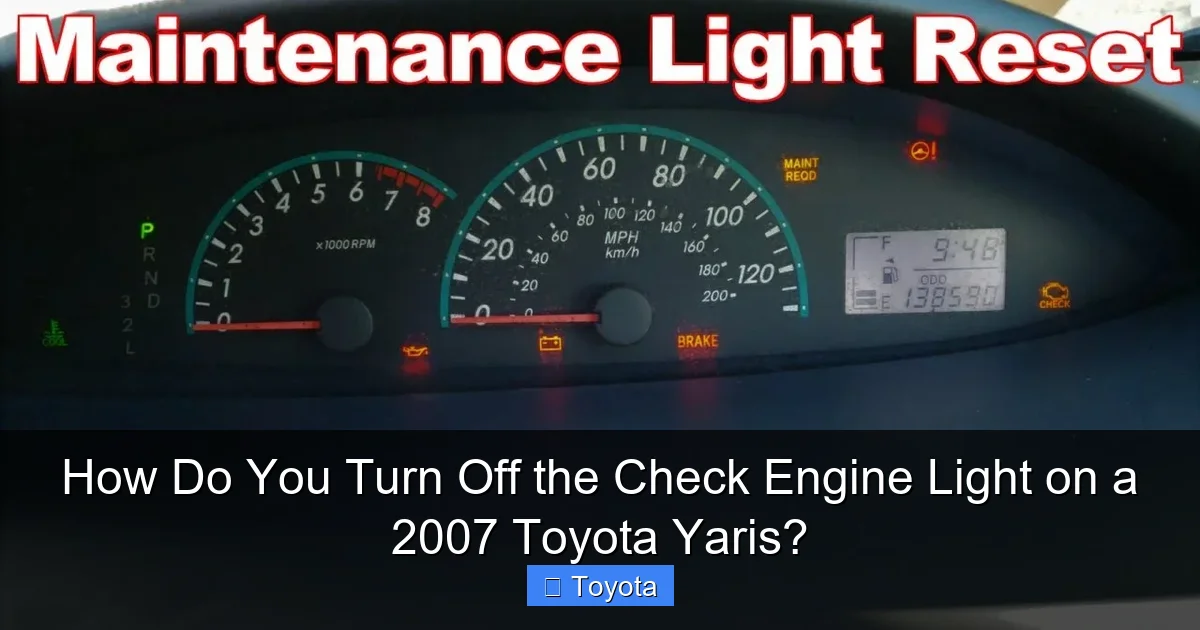
Visual guide about How Do You Turn Off the Check Engine Light on a 2007 Toyota Yaris?
Image source: i.ytimg.com
The Real Risks of Ignoring the Root Cause
Imagine your Yaris’s computer detects a misfire in one cylinder. It turns on the light. If you just reset it and keep driving, that misfire continues. Unburned fuel is now washing away the oil on your cylinder walls. This can lead to premature engine wear, damaged catalytic converters (a very expensive part), and a complete loss of engine power. A $200 repair could become a $2,000 rebuild. Other serious triggers include faulty oxygen sensors (killing fuel economy), failing mass airflow sensors (causing rough running), or issues with the emission control system that will cause you to fail a state-mandated smog test.
Think of it like a smoke alarm. If it beeps because of a burnt piece of toast, you can clear the alarm by waving a towel (resetting the light). But if there’s a real fire (a serious mechanical fault), clearing the alarm without investigating is dangerous. The check engine light is your car’s smoke alarm for engine and emissions trouble.
Step 1: Diagnose the Problem Before You Reset
This is the most critical step. You must know why the light is on. For your 2007 Yaris, this means retrieving the Diagnostic Trouble Codes (DTCs) stored in the car’s computer. There are two main ways to do this.
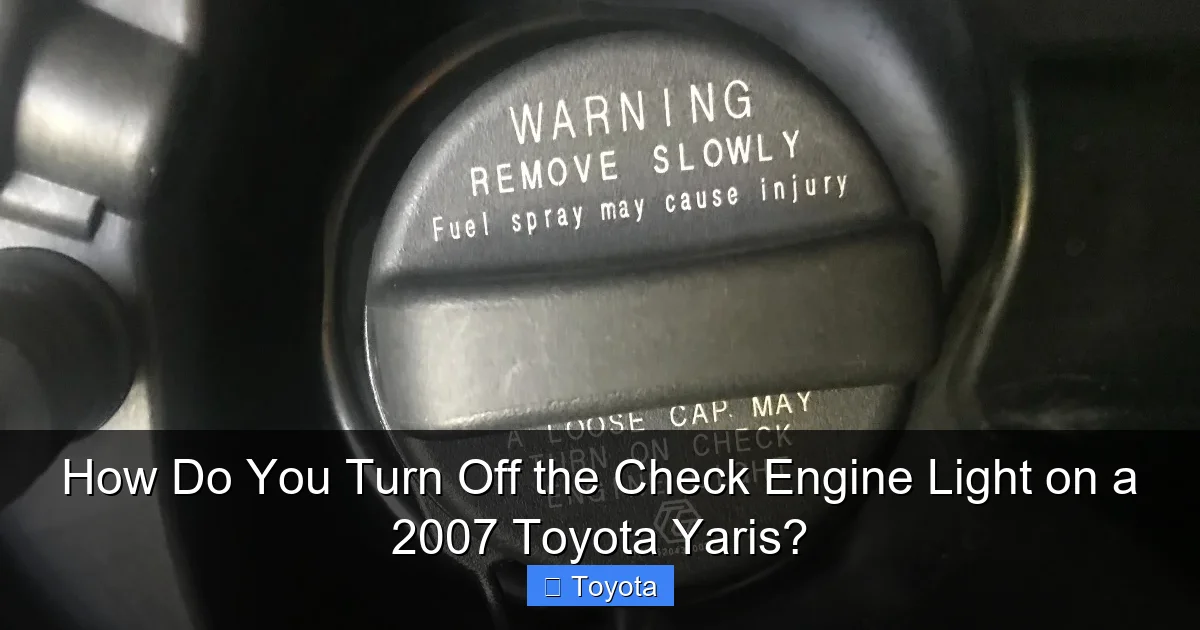
Visual guide about How Do You Turn Off the Check Engine Light on a 2007 Toyota Yaris?
Image source: motorbiscuit.com
Method A: Use an OBD2 Scanner (The Professional Approach)
Since 1996, all cars sold in the US, including your Yaris, have an OBD-II port. This is usually located under the dashboard, to the left of the steering column. You’ll need an OBD2 scanner or code reader. These range from simple, inexpensive models ($20-$50) to advanced professional tools.
- How to use it: Plug the scanner into the OBD-II port with the ignition in the “ON” position (engine off). Follow the scanner’s prompts to “Read Codes.” It will display one or more alphanumeric codes (e.g., P0300, P0420, P0455).
- What to do with the codes: Write them down. You can look them up online for a general description (e.g., P0300 = Random/Multiple Cylinder Misfire Detected). However, the code tells you what the system detected, not why. A P0455 (Evaporative Emission System Leak Detected) could mean a loose gas cap, a cracked hose, or a faulty purge valve. The code is your starting point, not the final diagnosis.
Method B: The “Free” Check at an Auto Parts Store
Major auto parts retailers like AutoZone, Advance Auto Parts, and O’Reilly will often scan your check engine light for free as a customer service. This is a great option if you don’t own a scanner. They’ll plug in their professional-grade tool, print out the codes, and often give you a brief explanation. This service is typically limited to reading codes; they won’t diagnose the root cause or perform repairs.
Common Culprits on a 2007 Toyota Yaris
While any code is possible, some are more frequent on this model and era:
- P0455 / P0456: EVAP (fuel vapor) system leak. **Always check and tighten the gas cap first!** A worn or missing gas cap seal is the #1 cause.
- P0300-P0304: Cylinder misfire. Could be spark plugs, ignition coils, or fuel injectors.
- P0420: Catalyst system efficiency below threshold. Often means a failing catalytic converter, but can be caused by a faulty O2 sensor or even a bad spark plug that’s poisoning the cat.
- P0171/P0174: System too lean (not enough fuel). Could be a vacuum leak, dirty fuel filter, or failing fuel pump.
Once you have the code(s) and have addressed the mechanical issue (e.g., tightened the cap, replaced the spark plug, fixed the vacuum leak), then and only then should you proceed to reset the light.
Step 2: How to Reset the Check Engine Light (After the Fix)
Now that you’ve repaired the problem—let’s say you replaced a leaking gas cap or changed a faulty spark plug—it’s time to clear the stored trouble code and turn off the light. You have two reliable methods.
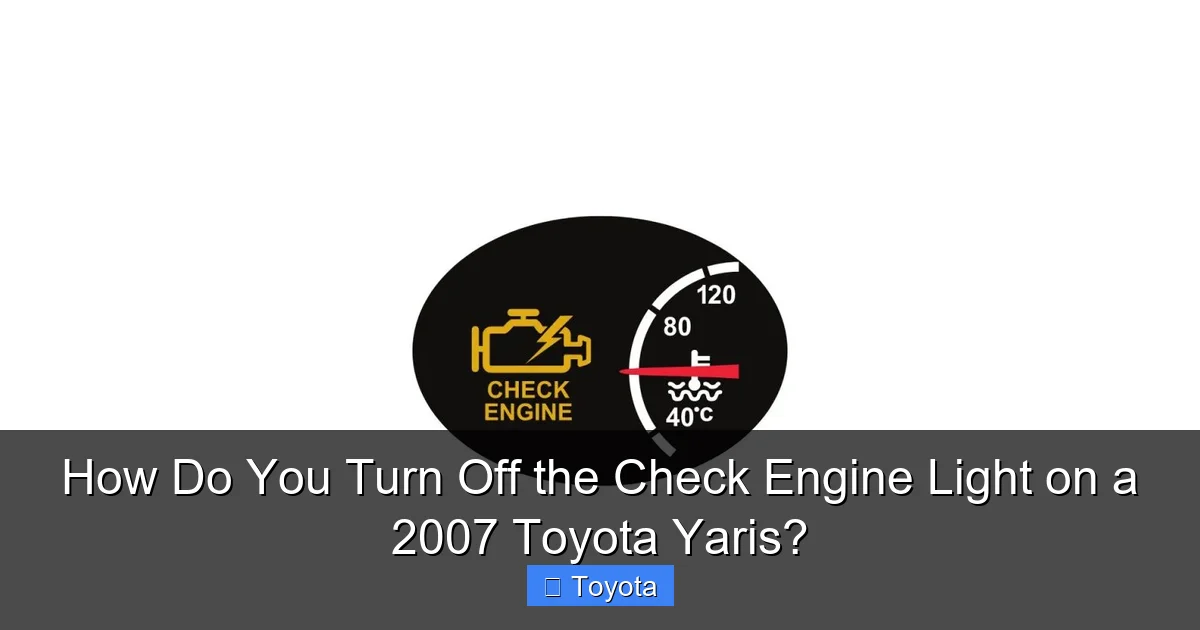
Visual guide about How Do You Turn Off the Check Engine Light on a 2007 Toyota Yaris?
Image source: vehiclechef.com
Method 1: The OBD2 Scanner Reset (Easiest & Best)
This is the same tool you used to read the codes. After your repair, reconnect it to the OBD-II port.
- Turn the ignition to the “ON” position (do not start the engine).
- Navigate the scanner menu to find “Erase Codes,” “Clear DTCs,” or “Reset MIL” (Malfunction Indicator Lamp).
- Select that option. The scanner will communicate with the car’s computer and clear the fault code.
- The check engine light should immediately go out. Start the engine to ensure it stays off.
Pro Tip: Some scanners have a “Drive Cycle Monitor” or readiness monitor check. After clearing codes, drive the car under varying conditions (city, highway, idle) until all monitors show “Ready” or “Complete.” This indicates the car’s systems have had a chance to re-test and confirms your repair was successful. This is crucial for passing a smog test.
Method 2: The Battery Disconnect Method (The Manual Reset)
If you don’t have a scanner, you can perform a hard reset of the car’s computer. This method has a major side effect: it will also reset your radio presets, clock, and any learned data in the engine control module (ECM), which may cause the car to run slightly rough for the first drive as it re-learns optimal settings.
- Safety First: Ensure the car is parked, turned off, and the parking brake is set. You’ll need a wrench or socket to loosen the battery terminal.
- Locate the Battery: In the Yaris, it’s in the engine bay, typically on the driver’s side.
- Disconnect the Negative Terminal: Loosen the nut on the negative (-) cable (usually black). Carefully lift the cable off the terminal and tuck it away so it cannot touch the battery post.
- Wait: Leave it disconnected for at least 10-15 minutes. This allows the residual power in the car’s electrical system (the “keep-alive memory”) to fully drain, forcing the ECM to reset.
- Reconnect: Secure the negative cable back onto the terminal and tighten the nut.
- Start the Car: Turn the key to start the engine. It may idle a bit high or rough for a moment—this is normal as the computer relearns. The check engine light should be off.
Important Note: On some newer vehicles (post-2000), disconnecting the battery may not clear all codes, especially permanent or manufacturer-specific ones. For a 2007 Yaris, it usually works, but the OBD2 scanner method is more reliable and targeted.
When the Light Won’t Stay Off or You’re Unsure: Seek Professional Help
There are scenarios where DIY resetting is not the answer. If the check engine light comes back immediately or after a short drive, your repair may not have been successful, or there is a secondary issue. A persistent light means the fault is still present.
Signs You Need a Mechanic Now
- The light is flashing: A flashing check engine light indicates a severe misfire that is potentially damaging the catalytic converter. Stop driving immediately and have the car towed. Driving with a flashing light can destroy the cat converter in minutes.
- You see smoke, smell burning, or hear strange noises: These are emergencies. The light is confirming a serious, active problem.
- The car is running poorly: Noticeable loss of power, severe shaking, or difficulty starting.
- You’ve cleared the code but it returns with a different code: This suggests a complex, interconnected problem that needs advanced diagnostics.
- You’re not comfortable with the diagnosis: If the code points to something like an internal engine sensor or transmission-related issue, it’s time for a pro.
A certified mechanic will use a sophisticated scan tool to read not just the code, but also live data streams (oxygen sensor voltages, fuel trim numbers, etc.) to pinpoint the exact faulty component. They have the experience to distinguish between a bad sensor and the problem it’s reporting. For instance, a P0420 code could be a bad catalytic converter, but it could also be a lazy oxygen sensor giving false readings. A pro knows how to test and tell the difference.
Proactive Care: Preventing Unnecessary Check Engine Lights
The best way to “turn off” the check engine light is to never see it come on in the first place. Consistent, basic maintenance is your strongest defense.
Fuel Cap Discipline
As mentioned, this is the champion of avoidable codes. Always turn the gas cap until you hear at least three clicks. Ensure the cap’s seal is clean and undamaged. If the light comes on after refueling, tighten the cap first before assuming anything else. It’s a simple habit that saves a diagnostic fee.
Stick to Your Service Schedule
Don’t skip oil changes. Dirty oil and a clogged oil filter can lead to sludge buildup, affecting sensors and engine performance. Replace spark plugs and ignition components at the manufacturer’s recommended intervals. A failing spark plug is a classic cause of misfire codes. Use quality fuel from reputable stations; poor-quality or contaminated gasoline can trigger multiple sensor and combustion codes.
Listen to Your Car
Pay attention to new sounds, vibrations, or changes in performance. A slight rough idle that gets worse over a week is a pre-cursor to a misfire code. Catching these early, during a routine inspection, can prevent a costly repair and an illuminated dashboard.
Related Resource: If you’re working on your Yaris’s maintenance, you might also need to reset the separate maintenance required light on a Toyota Yaris, which is a different system for oil change reminders.
Debunking Myths and Final Thoughts
Let’s clear up some confusion. The check engine light is not the same as the “service required” or “maintenance needed” light, which is usually a wrench icon and is based on mileage/time for scheduled upkeep. The check engine light is emissions and engine performance related. They can sometimes illuminate together, but they are separate systems. If your Yaris has a maintenance reminder, you’ll need a different procedure to reset it, often involving the odometer button, not an OBD2 scanner.
Another myth: “If the car seems fine, I can just keep driving.” This is a gamble. Modern engines are finely tuned. A slightly lean condition you can’t feel can overheat valves and damage the catalytic converter over time. The computer knows something is wrong before your butt dyno does.
In conclusion, turning off the check engine light on your 2007 Toyota Yaris is a two-step dance: Diagnose & Repair, then Reset. Never skip step one. Use an OBD2 scanner for the cleanest reset. The battery disconnect method works but has drawbacks. When in doubt, especially with a flashing light or persistent codes, invest in a professional diagnosis. Your Yaris is a fantastic, fuel-efficient car. Treating its warning systems with respect will keep it on the road and out of the repair shop for major work. Remember, that little light is your friend—it’s trying to help you avoid a breakdown and keep your car clean for the environment.
For other Toyota models: While this guide is specific to the 2007 Yaris, the fundamental principles of OBD-II diagnostics apply to virtually all modern vehicles. The process to reset the check engine light on a Toyota Corolla is identical, for example. Always consult your owner’s manual for model-specific nuances.
Frequently Asked Questions
Can I drive my Yaris with the check engine light on?
If the light is steady and the car runs normally, you can drive it a short distance to get it diagnosed, but you should avoid long trips. If the light is flashing, stop driving immediately and seek help, as it indicates a severe misfire that can damage the engine.
Will the check engine light turn off by itself?
Sometimes, if the problem was temporary and the system completes several successful drive cycles without detecting the fault, the light may turn off on its own. However, you should never rely on this. The stored code will remain in the computer’s memory for retrieval by a scanner.
Do I need an expensive scanner to reset the light?
No. Basic OBD2 code readers that can read and clear codes are very affordable ($20-$60). They are sufficient for most common issues on a 2007 Yaris. More advanced scanners provide live data but are not strictly necessary for a simple reset after a repair.
I fixed the problem (like the gas cap), but the light is still on. Why?
The car’s computer needs to complete a “drive cycle” to verify the repair. This involves specific conditions of speed, engine load, and temperature. Drive normally for 50-100 miles, and the light should go out if the problem is truly resolved. You can also clear it with a scanner after the repair.
What’s the difference between a steady and a flashing check engine light?
A steady light indicates a non-emergency issue that needs attention soon (e.g., a loose gas cap, faulty sensor). A flashing light signals a severe engine misfire that is dumping unburned fuel into the exhaust, risking immediate and expensive damage to the catalytic converter. A flashing light requires immediate, safe shutdown of the engine.
Will my Yaris pass a smog test with the check engine light on?
Absolutely not. In states with emissions testing, a vehicle with an illuminated check engine light will automatically fail the test. The light itself is proof that the car’s emission control system is not functioning properly. You must diagnose, repair, and reset the light to pass.
