
How Much Does It Cost to Replace a Hybrid Battery in a Toyota Prius?

Replacing the hybrid battery in a Toyota Prius typically costs between $2,000 and $4,500 for a new battery from a dealer, with lower prices for used or rebuilt units. The final price depends heavily on your model year, battery type (NiMH vs. lithium-ion), and whether you use a dealership or independent mechanic. Always get multiple quotes and check warranty coverage, as this is one of the most significant repair costs you’ll face with a hybrid. Proper maintenance can extend your battery’s life for 10-15 years, delaying this major expense.
Let’s talk about the elephant in the room for any long-term Toyota Prius owner: the hybrid battery. You love your Prius for its incredible fuel economy and reliability. But one day, that dashboard warning light might pop on—the one that looks like a car with an exclamation point, or perhaps a message simply saying “Check Hybrid System.” Your heart sinks a little. You know what this probably means. The big one. The hybrid battery. And your first thought is, “How much does it cost to replace a hybrid battery in a Toyota Prius?” It’s a scary question, but I’m here to give you the complete, unfiltered answer. Think of this as your friendly, no-nonsense guide through one of the most significant repair costs in hybrid ownership.
The truth is, the Toyota Prius hybrid battery replacement cost isn’t a single number. It’s a range, influenced by dozens of factors. It’s the difference between a $1,500 used core and a $5,000 dealership swap. It’s about understanding what you’re paying for, knowing your options, and making a smart decision for your specific car and budget. We’re going to break it all down: the types of batteries, where to buy them, the real cost of labor, whether DIY is even possible, and most importantly, how to make this huge expense feel manageable. By the end, you’ll know exactly what to expect and how to proceed with confidence.
Key Takeaways
- Cost Varies Widely: A new Prius hybrid battery from a dealer averages $2,500-$4,500+, while used/rebuilds can drop to $1,000-$2,500, but carry more risk.
- Model Year Matters: First-gen (2001-2003) and second-gen (2004-2009) Prius models use older, often cheaper NiMH batteries, while later models may have more complex lithium-ion packs.
- DIY is Risky & Often Not Cheaper: While buying a core battery is possible, the high-voltage system requires special tools and safety knowledge. Professional installation is strongly recommended.
- Warranty is Critical: New batteries come with 8-10 year/100,000-mile warranties. Used/refurbished warranties vary widely (often 90 days to 1 year). Always get the warranty in writing.
- Maintenance Extends Life: Simple habits like avoiding deep discharges, keeping 12V battery healthy, and regular engine tune-ups can add years to your hybrid battery’s lifespan, delaying replacement.
- Recycling Saves Money: Most shops offer a “core charge” refund when you return your old battery. This can save $200-$500 off the new battery price.
- Total Cost Includes Labor: Labor adds $300-$800 to the bill. Independent shops are usually 20-30% cheaper than dealerships for the same part.
📑 Table of Contents
- Understanding the Prius Hybrid Battery: It’s Not Your Average Car Battery
- The Price Tag: Breaking Down Average Replacement Costs
- Key Factors That Influence Your Final Bill
- DIY Replacement: A High-Voltage Gamble Most Should Avoid
- How to Extend Your Hybrid Battery’s Life and Delay the Inevitable
- Making the Right Decision: A Step-by-Step Guide
- Conclusion: Knowledge is Power (and Savings)
Understanding the Prius Hybrid Battery: It’s Not Your Average Car Battery
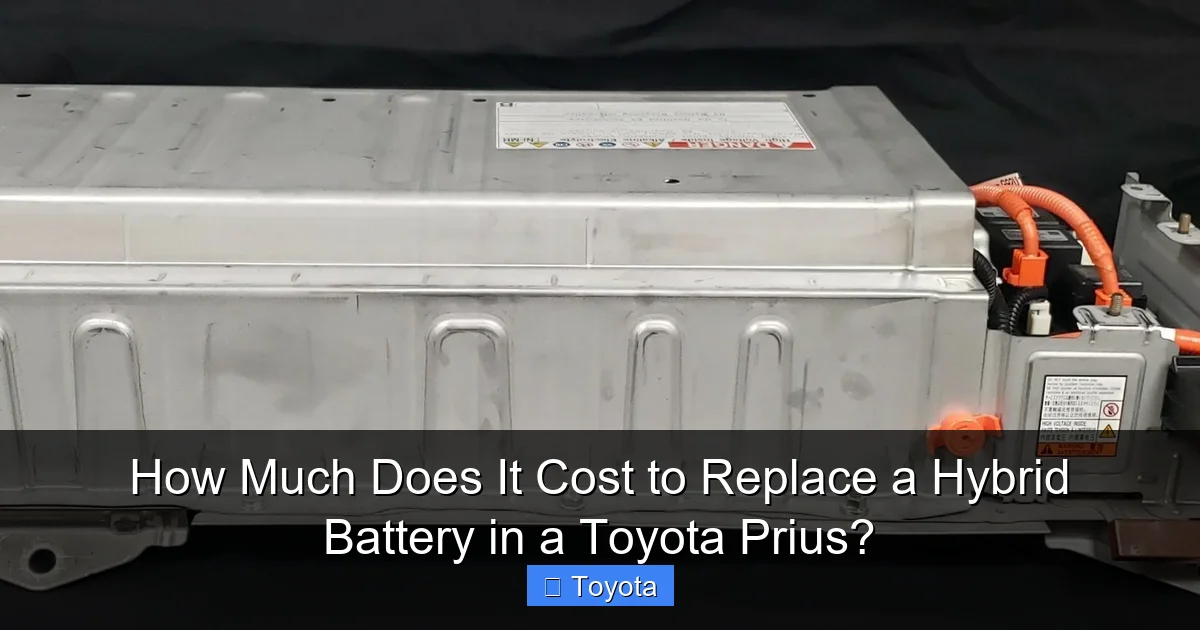
First, let’s clear up a huge misconception. The hybrid battery in your Prius is NOT the small, 12-volt battery under the hood that starts your car and powers the radio. That’s the auxiliary battery, and replacing it is a simple, cheap task—often under $200. You can read more about general car battery costs in our article on auxiliary battery replacements. The hybrid battery is a completely different beast. It’s a high-voltage (over 200 volts!), high-capacity battery pack located behind the rear seats, and it’s the heart of your Prius’s hybrid system. It works in tandem with the gasoline engine, storing energy from regenerative braking and providing electric power for low-speed driving and acceleration.
This battery pack is made up of many individual cells, grouped into modules. Over time, these cells degrade. They lose their ability to hold a charge, just like your phone battery gets worse over a couple of years. But in a car, this degradation becomes noticeable. You might see a drop in fuel economy, the engine running more often, sluggish acceleration, or that dreaded warning light. The battery itself is a complex piece of engineering, and its cost reflects that.
NiMH vs. Lithium-Ion: The Technology Divide
The type of battery in your Prius is the single biggest factor in replacement cost. For most of its history, the Prius used Nickel-Metal Hydride (NiMH) batteries. These are robust, reliable, and have been the workhorse of the hybrid world for two decades. They are generally less expensive to replace.
Starting with the fourth generation (2016+ model year in the US), Toyota began using lithium-ion (Li-ion) batteries in the Prius. Li-ion batteries are more energy-dense, lighter, and can potentially last longer. However, they are more complex to manufacture and repair, and their replacement cost is typically higher. If you have a 2016 or newer Prius, you’re almost certainly dealing with a lithium-ion pack, which will push your replacement cost toward the higher end of the spectrum. Knowing your battery type is the first step in getting an accurate quote.
The Price Tag: Breaking Down Average Replacement Costs
Now, the number you’ve been waiting for. Let’s talk cold, hard cash. I’ve gathered data from dealerships, independent mechanics, hybrid battery specialists, and owner forums to give you realistic price ranges for 2024. Remember, these are estimates. Your local labor rates and specific part availability will determine your final bill.
Visual guide about How Much Does It Cost to Replace a Hybrid Battery in a Toyota Prius?
Image source: exclusivelyhybrid.com
Option 1: New Battery from a Toyota Dealership
This is the “gold standard” in terms of reliability and warranty, and also the most expensive path. A brand-new, OEM (Original Equipment Manufacturer) hybrid battery pack from a Toyota dealer will typically cost between $2,500 and $4,500+ for the part alone, depending on your model year and battery type. Add in 4-8 hours of labor at a dealership rate of $120-$180 per hour, and your total bill easily lands between $3,500 and $5,500. For a late-model Prius with a lithium-ion battery, it’s not uncommon to see quotes of $4,000-$4,800 all-in. The major benefit here is the full Toyota warranty, usually 8 years/100,000 miles (and in some states, 10 years/150,000 miles per emissions regulations). This warranty often transfers to subsequent owners, which is a huge selling point for used Prius buyers.
Option 2: Used or “Core” Battery
This is the budget option, but it comes with significant caveats. You can find used hybrid battery packs pulled from salvage yard Priuses or sold by hybrid recyclers. These are often called “core” batteries. The price for just the battery core can range from $500 to $1,500. However, you must factor in core testing, shipping, and installation. A tested, ready-to-install used battery from a reputable specialist might cost $1,200 to $2,200 installed. The risk? A used battery’s remaining life is a guess. It could last 5 years or 5 months. There is usually only a short-term warranty (90 days to 1 year). This option is a gamble, but for an older Prius with high mileage, it can make economic sense.
Option 3: Rebuilt / Remanufactured Battery
This is the middle ground. Reputable hybrid battery specialists will take your old pack, disassemble it, test every single cell, replace the weak ones, and reassemble it into a “rebuilt” or “remanufactured” unit. They often upgrade the components with better cells. The cost for a professionally rebuilt battery, installed, is typically $1,800 to $3,000. These usually come with a solid warranty of 2-3 years or 24,000-36,000 miles. This is often the best value for money, offering near-new reliability at a 20-40% discount off a dealer price. You’re paying for the expertise and warranty.
Real-World Example: For a 2010 Toyota Prius (a very common model with a NiMH battery), here are sample quotes:
- Dealer New: $3,200 battery + $600 labor = ~$3,800 total.
- Independent Shop (New OEM): $2,800 battery + $450 labor = ~$3,250 total.
- Reputable Rebuilder: $2,200 remanufactured battery + $500 labor = ~$2,700 total.
- Used Core (Installed): $1,500 core + $500 labor/testing = ~$2,000 total.
Key Factors That Influence Your Final Bill
Why is there such a wide range? Several critical factors come into play. Understanding these will help you negotiate and avoid overpaying.
Visual guide about How Much Does It Cost to Replace a Hybrid Battery in a Toyota Prius?
Image source: i.ytimg.com
Your Prius’s Model Year and Generation
As mentioned, a 2005 Prius (Gen 2) uses a different, often less expensive NiMH pack than a 2021 Prius (Gen 4) with its lithium-ion system. The physical design and number of modules also change between generations, affecting part availability and labor time. Always specify your exact model year and VIN when getting quotes.
Dealership vs. Independent Shop vs. Hybrid Specialist
This is the biggest lever on price. Dealerships charge a premium for OEM parts and brand-name labor. Independent general mechanics might be cheaper but may lack specific hybrid experience. Hybrid battery specialists (there are many nationwide) are often the sweet spot: they focus exclusively on this repair, have deep expertise, use high-quality remanufactured parts, and offer strong warranties at a lower cost than dealers. They also often provide mobile installation. When comparing quotes, ensure you’re comparing the same type of battery (new OEM, remanufactured, used) and the same warranty terms.
Geographic Location and Labor Rates
Labor rates vary dramatically. Replacing a hybrid battery is a 3-6 hour job for a skilled technician. In a major metro area like New York or San Francisco, labor can be $180-$220/hour. In a smaller town or Midwest city, it might be $90-$130/hour. This can mean a $600-$1,200 difference in your total bill just for labor. Getting quotes from shops in neighboring counties or suburbs can sometimes yield significant savings.
Additional Parts and Core Charges
The battery pack itself isn’t always the only part. Sometimes, related components like the battery fan (which cools the pack), the battery control module, or high-voltage cables need replacement. A good shop will inspect these and include them in the quote. Also, expect a “core charge” of $200-$500 for a new battery. This is a deposit you pay upfront that is fully refunded when you return your old battery pack for recycling. It’s not an extra cost, but it does increase your initial out-of-pocket expense.
DIY Replacement: A High-Voltage Gamble Most Should Avoid
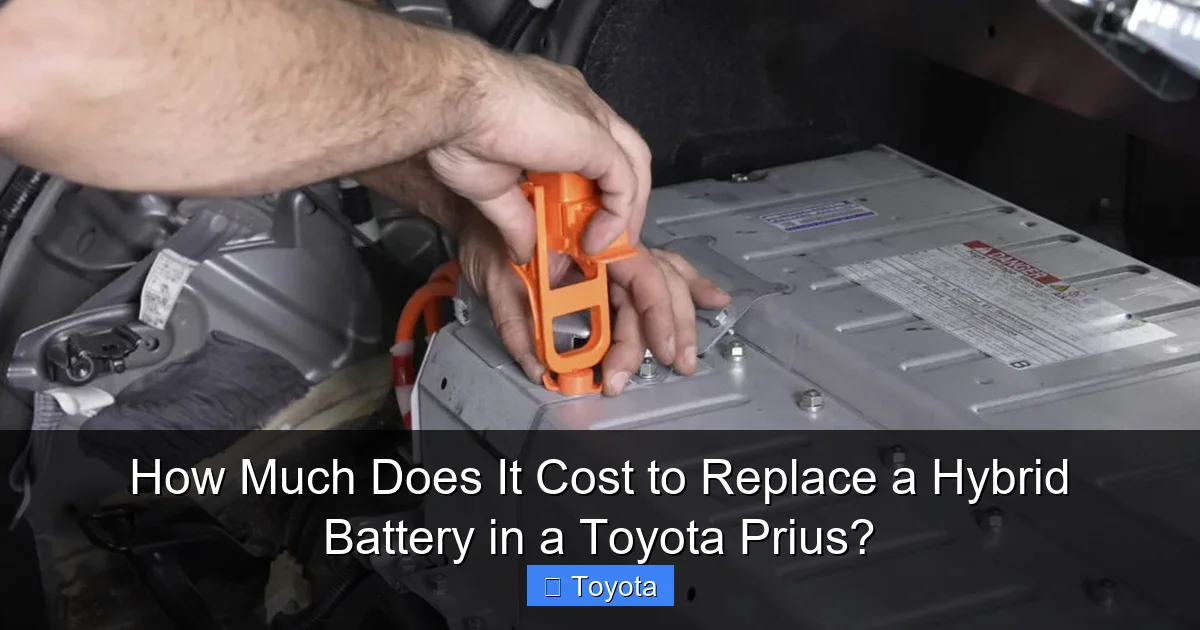
You might be a hands-on car enthusiast. You’ve replaced brake pads, changed oil, and maybe even tackled a timing belt. You see a $1,500 used battery core on eBay and think, “I can save thousands!” Stop. Take a breath. Replacing a Prius hybrid battery is not a typical DIY project. It involves working with a system that carries over 200 volts and can deliver a lethal electric shock even when the car is “off.”
Visual guide about How Much Does It Cost to Replace a Hybrid Battery in a Toyota Prius?
Image source: carscoops.com
The Extreme Safety Risks
The high-voltage hybrid battery system is isolated from the car’s 12-volt system, but it’s always “live.” There is no master shut-off switch a layperson can safely access. Special insulated tools, high-voltage gloves, and rigorous safety protocols are mandatory. One slip with a metal tool can cause a massive short circuit, fire, or instant electrocution. I cannot stress this enough: this is not a job for someone without specific hybrid vehicle training and certification. The risk of severe injury or death is very real.
The Technical and Practical Hurdles
Even if you somehow bypassed the safety risk, the process is intricate. You need to:
- Properly disable the high-voltage system using a factory scan tool or a dedicated hybrid service plug.
- Safely remove the heavy (80-100 lb) battery pack from the rear of the vehicle.
- Disconnect and reconnect high-voltage cables to exact specifications.
- Reinstall the pack, ensuring all cooling ducts and mounts are secure.
- Clear fault codes and perform a full system calibration with a professional-grade scan tool.
Doing this incorrectly will either prevent the car from starting or, worse, create a dangerous intermittent fault. The cost of a professional-grade scan tool alone can exceed $1,000. When you factor in your time, the risk, and the potential for catastrophic error, the supposed savings of a DIY job vanish. For the vast majority of owners, professional installation is the only safe and sensible choice.
How to Extend Your Hybrid Battery’s Life and Delay the Inevitable
Prevention is always better than cure. While hybrid batteries are designed to last a long time—Toyota often claims 10-15 years—their lifespan can be dramatically affected by your driving habits and maintenance routine. Investing a little in care can save you thousands in the long run.
Essential Maintenance Practices
The hybrid battery’s health is tied to the entire vehicle’s health. The most important thing you can do is follow a strict maintenance schedule.
- Engine Oil & Filter: Clean oil reduces stress on the engine, which in turn reduces strain on the hybrid system. Stick to the 5,000-10,000 mile interval. For more on routine upkeep, see our guide on oil change costs and frequency.
- Air Filter: A clogged engine air filter makes the engine work harder, generating more heat and vibration that can affect the battery. Replace it annually or as recommended.
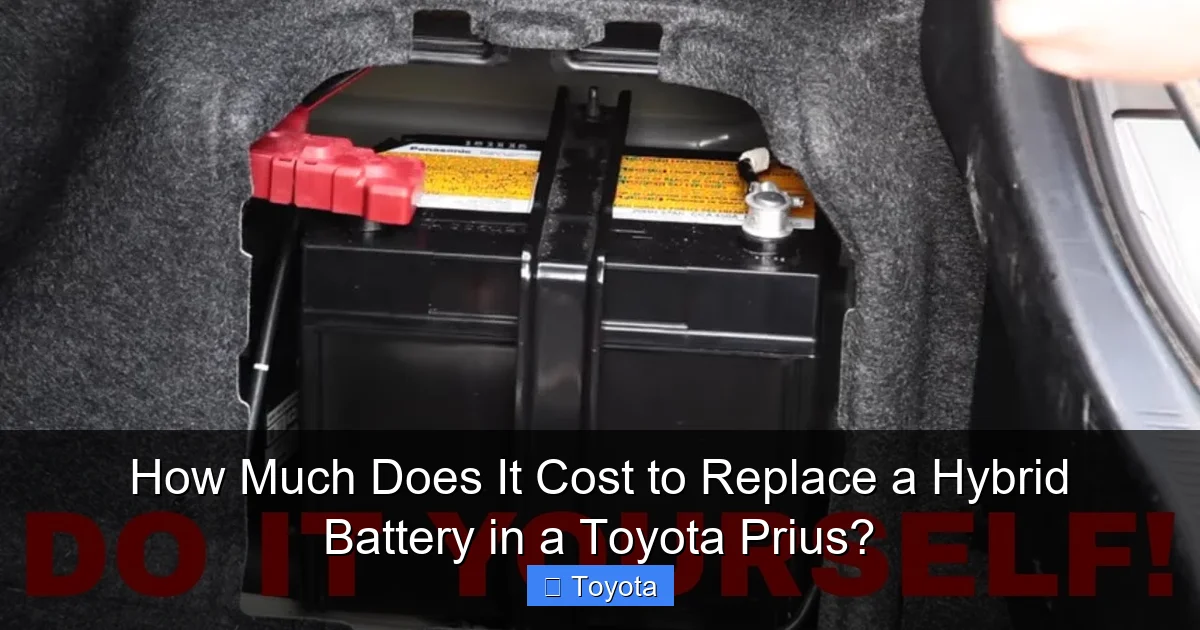
- 12-Volt Auxiliary Battery: A weak 12V battery can cause voltage fluctuations that stress the hybrid battery’s control systems. Replace the 12V battery every 4-5 years, even if it seems fine.
- Cooling System: The hybrid battery has its own dedicated cooling circuit (often using the same coolant as the inverter). A leak or blockage can cause the battery to overheat and degrade rapidly. Have this system inspected for leaks and proper flow during major services.
Driving Habits That Help (and Hurt)
How you drive matters more than you think.
- DO: Drive gently. Smooth acceleration and braking maximize regenerative charging and minimize deep discharge cycles. Use the “EV Mode” button (if equipped) for short, low-speed trips to keep the battery in its optimal charge state.
- DON’T: Constantly floor it. Aggressive driving forces the battery to deliver high current repeatedly, heating it up and accelerating wear. Also, avoid letting the car sit unused for months at a time with a partially charged battery. If storing the car, connect a smart charger to the 12V battery and consider a trickle charger for the hybrid system if you’ll be gone for over 3 months.
- Climate Control: In extreme cold or heat, the battery’s performance and longevity suffer. Using the cabin heater/AC aggressively draws power from the battery. Dress appropriately and use seat heaters/ventilated seats if available, as they are more efficient than the main HVAC system.
Making the Right Decision: A Step-by-Step Guide
So, the warning light is on. You’ve gotten a few quotes. What’s the smart move? Here’s a practical framework.
Step 1: Get a Definitive Diagnosis
Don’t assume it’s the battery. A failing 12V battery, a loose high-voltage connector, or a faulty sensor can trigger the same warning. Have a reputable shop (preferably a hybrid specialist) perform a full diagnostic scan of the hybrid system. They will read the individual cell voltages and health data. This diagnostic usually costs $100-$200 but is worth every penny to confirm the battery is the culprit. A good shop will apply this fee to the repair if you proceed with them.
Step 2: Evaluate Your Car’s Overall Condition and Value
This is a harsh but necessary reality check. If your Prius is a 2005 model with 250,000 miles, rust, and a failing transmission, spending $3,000 on a new battery might not make financial sense. Check your car’s private-party value (on Kelley Blue Book or similar) before the battery replacement. If the battery cost is more than 50% of the car’s total value, you might be better off selling it as-is (to someone who wants a project or can do the swap cheaply) and putting that money plus your repair budget toward a newer, more reliable used car. However, if your Prius is in good shape with low to moderate mileage (under 150,000 miles), a battery replacement can buy you another 8-10 years of reliable, cheap transportation. It’s often the single biggest repair you’ll ever need to make on that car.
Step 3: Shop Smart and Negotiate
Get at least 3 written quotes. Be specific: “Please quote for a remanufactured hybrid battery with a 3-year/36,000-mile warranty, installed, for a 2012 Prius VIN #XXXX.” Compare the warranty terms first—the length and what it covers (parts only? labor included?). Then compare the bottom line. Don’t be afraid to use a lower quote from a reputable independent shop to negotiate with a dealership. Sometimes they’ll match it to keep the business. Ask about payment plans. Some hybrid specialists offer financing for this big-ticket item.
Step 4: Ensure Proper Recycling and Documentation
Hybrid batteries are hazardous waste. The shop you use is legally required to recycle the old pack. Ensure they provide you with a receipt for the core return so you get your core charge back if you paid one. Also, get a detailed invoice that lists the part number, whether it’s new, used, or remanufactured, the full warranty terms, and the labor hours. This documentation is vital for future resale and for any warranty claims.
Conclusion: Knowledge is Power (and Savings)
Facing a Toyota Prius hybrid battery replacement cost is a rite of passage for dedicated Prius owners. It’s a significant, often shocking, expense. But it doesn’t have to be a financial catastrophe. By understanding the landscape—the difference between new, used, and remanufactured; the importance of warranty; the extreme risks of DIY—you transform from a scared consumer into an informed buyer. You can compare apples to apples, negotiate from a position of strength, and choose the solution that best fits your car’s value and your budget. Remember, a well-maintained Prius with a new hybrid battery can easily provide another decade of 50+ mpg reliability. This one repair, while painful upfront, is an investment in many more years of ultra-low-cost driving. Do your homework, get multiple quotes from trusted hybrid specialists, and make the choice that puts you and your Prius back on the road with confidence.
Frequently Asked Questions
What is the absolute cheapest way to replace a Prius hybrid battery?
The cheapest path is a used “core” battery from a reputable hybrid recycler, installed by an independent mechanic. This can run $1,500-$2,200 total. However, this carries the highest risk of short-term failure and comes with minimal warranty (often 90 days). It’s best suited for older, high-mileage Priuses where a short-term fix is acceptable.
How long should a Toyota Prius hybrid battery last before needing replacement?
With proper maintenance, a Prius hybrid battery should last between 10 and 15 years, or 100,000 to 150,000 miles. Some last even longer. Failure before 100,000 miles is uncommon and may indicate an underlying issue like a failing cooling system or a defective 12V battery that stressed the hybrid system.
What are the most common signs my Prius hybrid battery is failing?
Key symptoms include: a significant drop in fuel economy (5-10 mpg loss); the “Check Hybrid System” warning light; the engine running constantly, even at highway speeds; sluggish acceleration; and the hybrid battery charge gauge behaving erratically or showing very low charge quickly. A definitive diagnosis requires a professional scan of the battery’s cell health.
Does Toyota or my extended warranty cover hybrid battery replacement?
The factory hybrid battery warranty is 8 years/100,000 miles (and 10 years/150,000 miles in California and states adopting CARB rules). If your Prius is within this mileage and age, the replacement should be covered at no cost. Always check with a dealer with your VIN. Aftermarket extended warranties often exclude hybrid battery coverage or have extremely high deductibles, so read the fine print carefully.
Is a used Prius hybrid battery reliable enough to buy?
It’s a gamble. A used battery’s remaining life is unknown. It could be perfect or fail in months. Reliability depends entirely on the source. A used battery pulled from a low-mileage, non-accident Prius and tested by a specialist is more reliable than one from a salvage yard with no history. For a used battery, insist on a written warranty of at least 1 year/12,000 miles.
Can I maintain my hybrid battery to avoid replacement?
Yes, you can significantly extend its life. The most effective steps are: 1) Adhering strictly to all factory maintenance, especially engine oil changes and cooling system checks. 2) Replacing the 12V auxiliary battery every 4-5 years. 3) Driving smoothly to avoid deep discharges and extreme heat buildup. 4) Ensuring the battery cooling fan and ducts are clean and unobstructed. These habits can add years to your battery’s service life.
