
How to Adjust Steering Wheel Tesla Model Y

Adjusting the steering wheel in your Tesla Model Y is a straightforward process using the electric controls on the steering column. You can fine-tune both the tilt (up/down) and telescoping (in/out) to achieve the perfect driving position. The vehicle’s memory function can save these settings for multiple drivers, activated automatically via the profile linked to the key or phone. Always make these adjustments while the vehicle is stationary and parked for maximum safety.
Hey there, fellow Tesla enthusiast! So you’ve got yourself a sleek, futuristic Tesla Model Y, and you’re itching to get everything just right. One of the very first things you’ll want to dial in is your driving position, and that all starts with the steering wheel. Getting this right isn’t just about comfort—it’s a cornerstone of safe, confident driving. In this complete guide, we’re going to walk through every single step of how to adjust the steering wheel on your Tesla Model Y. We’ll cover the basics, dive into the clever memory settings, troubleshoot the rare hiccup, and chat about why ergonomics matter so much in an EV. Consider this your personal tutorial from a friend who’s spent countless hours behind the wheel of a Model Y.
Now, before we dive in, a quick heads-up: the process is incredibly simple and intuitive, thanks to Tesla’s minimalist design. There are no confusing levers or ratcheting mechanisms. It’s all done with a couple of clicks on a stalk. But that simplicity also means you need to know exactly where to look and what to do. We’ll get you there. And while we’re talking about customizing your Model Y experience, if you’re also thinking about enhancing the interior feel or protecting that beautiful cabin, you might want to check out our guide on the best Tesla Model Y car seat covers to add a personal touch and extra comfort.
Key Takeaways
- Electric Adjustment: The Tesla Model Y uses an electric motor for smooth, button-controlled steering wheel tilt and telescoping adjustments, located on the steering column stalk.
- Memory Integration: Steering wheel position is saved as part of your driver profile, automatically adjusting when you select your profile or enter the vehicle with your paired key/phone.
- Safety First: Always adjust the steering wheel only when the car is in “Park” and stationary. The system will not operate while driving to prevent accidental changes.
- Common Issues: If adjustments fail, check for 12V battery disconnect, blown fuses, or software glitches; a simple reboot often resolves minor hiccups.
- Ergonomic Importance: Proper adjustment ensures you have a clear view of the instrument cluster and road, reduces fatigue on long drives, and maintains optimal control for safety.
- No Manual Override: Unlike some traditional cars, there is no physical manual lever; the entire system is electronically controlled.
📑 Table of Contents
- How the Steering Wheel Adjustment System Works in Your Model Y
- Step-by-Step: Adjusting Tilt and Telescoping
- Mastering Memory Settings for Multiple Drivers
- Troubleshooting: What to Do If the Steering Wheel Won’t Adjust
- Safety and Ergonomics: Finding Your Perfect Driving Position
- Conclusion: Your Personalized Command Center
How the Steering Wheel Adjustment System Works in Your Model Y
Understanding the “how” makes the “doing” even easier. The Tesla Model Y employs a fully electric steering wheel adjustment system. This means there’s a small, quiet electric motor connected to the steering column that moves the wheel for you. You don’t pull a lever and heave the wheel around; you simply press a button, and the motor does the work. This allows for incredibly precise and smooth adjustments.
The Control Stalk: Your Command Center
The controls are integrated into the right-hand steering column stalk (the one that also controls the turn signals and wipers). On this stalk, you’ll find a small, ridged button. This is your steering wheel adjustment button. It’s designed to be easily identifiable by touch, so you don’t have to take your eyes off the road to find it once you know where it is. The button itself is a rocker-style switch. Pressing the top part of the button will tilt the steering wheel upward. Pressing the bottom part will tilt it downward. To adjust the telescoping action (how far the wheel is from you), you actually press and hold the same button while simultaneously pushing or pulling the steering wheel itself. The system is smart enough to know you want to move it in or out when you physically move the wheel while holding the button.
Tilt vs. Telescoping: What’s the Difference?
This is key. Tilt adjustment changes the angle of the steering wheel, pivoting it up or down. This is crucial for ensuring you have a clear, unobstructed view of the digital instrument cluster (the screen directly behind the wheel) and the road ahead. If the wheel blocks your view of the display, you need more tilt. Telescoping adjustment changes the distance of the steering wheel from your chest. This is all about reach. You want to be able to hold the wheel at the “9 and 3” (or “10 and 2” for older advice) positions with a slight bend in your elbows, not with your arms fully locked out or scrunched up. Getting both of these settings correct is the foundation of a great driving position. Once you have your ideal position, the Model Y’s memory system will remember it, which we’ll cover next.
Step-by-Step: Adjusting Tilt and Telescoping
Alright, let’s get practical. This is the meat of it. Follow these steps exactly, and you’ll have your steering wheel perfectly positioned in under 30 seconds. Remember: the car must be in Park (P) and not moving for these controls to work. This is a critical safety feature.
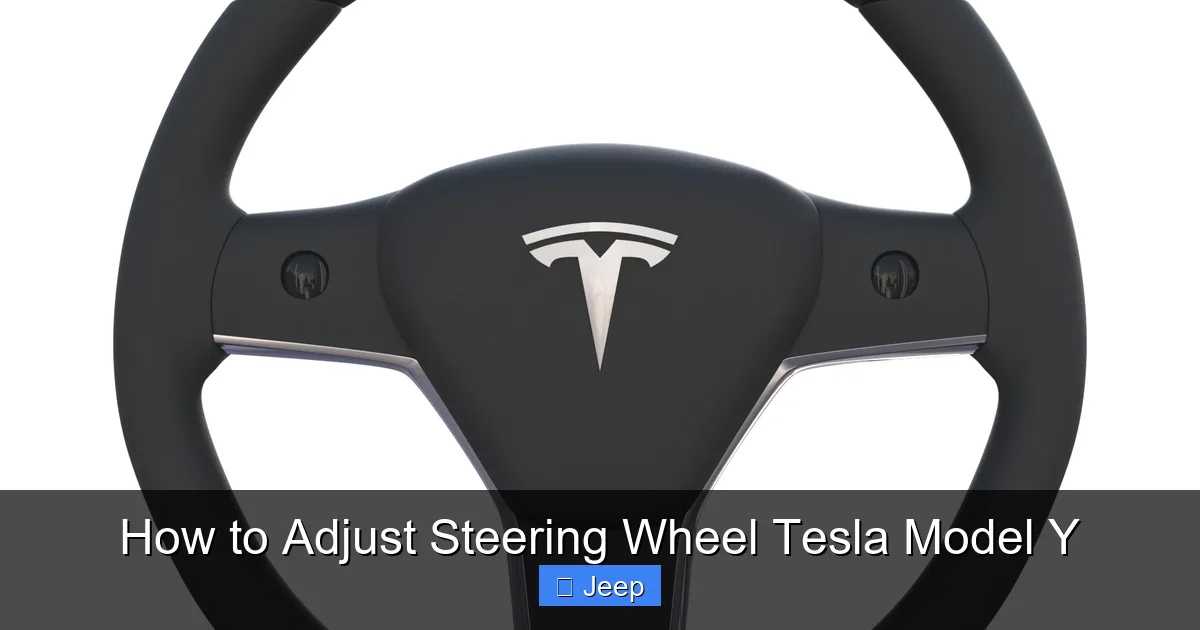
Visual guide about How to Adjust Steering Wheel Tesla Model Y
Image source: assets.superhivemarket.com
Step 1: Prepare Your Vehicle
Make sure your Model Y is parked on level ground, in Park, and the parking brake is engaged (it usually is automatically in Park). Sit in your normal driving position with your seat adjusted first. It’s generally best to adjust your seat height, backrest angle, and seat cushion position before you touch the steering wheel. Your seat position determines your fundamental reach and sight lines. Once your seat is set, you’re ready to fine-tune the wheel.
Step 2: Locate the Adjustment Button
Reach for the right-hand steering column stalk. Feel for the small, rectangular button with a textured surface. It’s on the flat part of the stalk, facing slightly towards you. You’ll use your thumb to operate it.
Step 3: Adjusting Tilt (Up and Down)
While looking at the instrument cluster, simply press the top of the button to raise the steering wheel or the bottom to lower it. Do this in small increments. Watch the display. You want the top rim of the steering wheel to sit just below the bottom edge of the driver’s display screen, ensuring you have an full, clear view of all the vital information—speed, range, Autopilot status, navigation prompts. A common mistake is setting it too high, which blocks the screen. Adjust until you have a perfect line of sight.
Step 4: Adjusting Telescoping (In and Out)
This one requires a two-handed motion. First, press and hold the same adjustment button. You’ll hear a soft whir as the system activates. While continuing to hold the button down, use your other hand to gently push the steering wheel away from you (to extend it) or pull it towards you (to bring it closer). Again, do this in small movements. The goal is to have your arms slightly bent at the elbows when your hands are at the 9 and 3 o’clock positions on the wheel. You should be able to rest your wrists on top of the wheel without stretching. This position gives you maximum leverage and control, reducing fatigue and improving reaction time. Once you release the button, the wheel locks into place.
Step 5: Final Check and Save
Once you’re happy with both tilt and reach, sit back and pretend you’re driving. Place your hands properly. Can you see everything clearly? Are your arms comfortable? Is the wheel not pressing into your legs or chest? If yes, perfect! If not, go back and tweak it. Now, here’s the magic: if you are logged into a driver profile (more on that next), your Model Y will automatically save this position to that profile the moment you put the car in Drive. No separate “save” button needed. It just knows.
Mastering Memory Settings for Multiple Drivers
This is where the Tesla really shines compared to many traditional cars. The steering wheel adjustment is seamlessly integrated into the vehicle’s comprehensive driver profile system. This means every preference—seat position, mirror angles, steering wheel setting, climate control preferences, radio stations, even suspension height (if equipped)—can all be saved and recalled instantly.
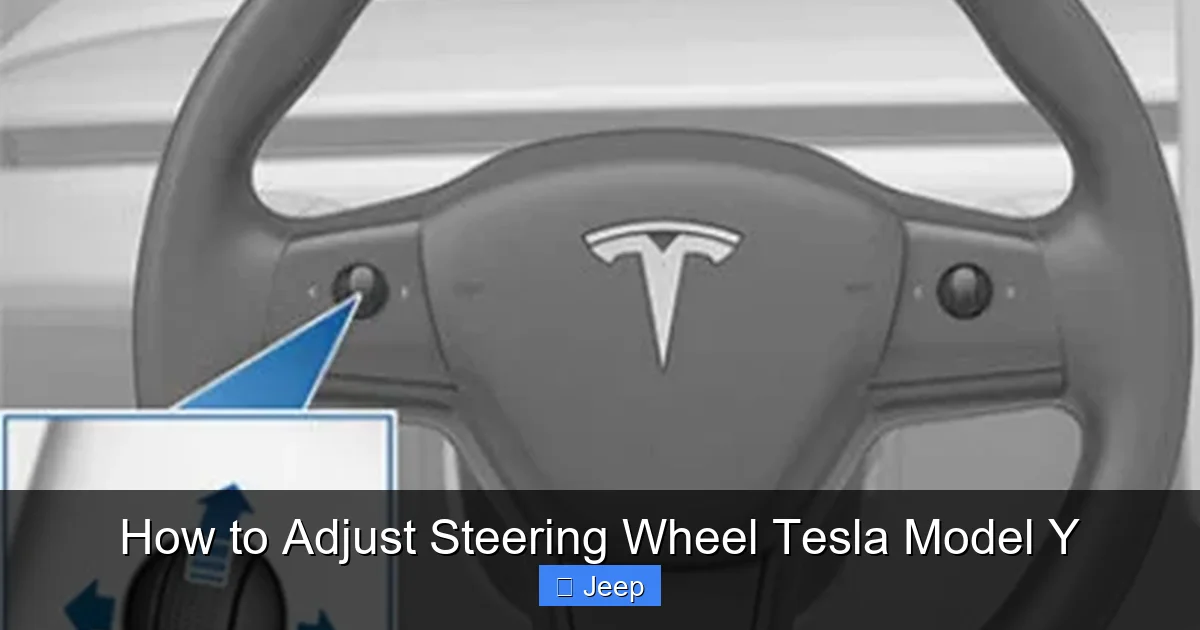
Visual guide about How to Adjust Steering Wheel Tesla Model Y
Image source: cdn.shopify.com
Setting Up Your Driver Profile
First, you need to have a driver profile created. Tap the car icon on the bottom center screen, then select “Drivers.” You can add a new driver, name it (e.g., “Dad,” “Mom,” “Teen Driver”), and link it to a specific key card, phone key, or even a specific seatbelt click (though phone key is the most common). Once a profile is active (it will show on the top left of the screen), make your steering wheel and seat adjustments exactly how you like them. Then, simply shift the car into Drive. The system will automatically prompt you: “Save adjustments to [Your Profile Name]?” Tap “Save.” That’s it. It’s all stored in the cloud and on your local vehicle.
How Automatic Recall Works
The recall is wonderfully seamless. When you approach the car with your paired smartphone (or use your key card), the car will “know” it’s you. As you open the door and sit down, the screen will show your profile loading. Before you even press the brake, the seat will start moving, the mirrors will adjust, and the steering wheel will tilt and telescope to your saved position. It’s a genuinely futuristic and convenient touch. If you have a passenger who uses the car occasionally, they can simply select their profile from the list on the screen after they get in, and the car will adjust to their saved settings. This eliminates the daily manual tweaking that’s required in many cars with manual memory sticks. For those who also love customizing the look of their Model Y’s exterior, you might be curious about the cost to wrap a Tesla Model Y—another great way to personalize your ride.
What’s Included in the Profile?
Beyond the steering wheel and seat, your driver profile saves a huge array of settings. This includes: mirror positions, steering wheel adjustment, seat position (all axes), climate control (temperature, fan speed, seat heater/ventilation settings), audio source and volume, navigation home/work locations, browser bookmarks, driver-assist settings like follow distance and lane change confirmation, and even some suspension and steering feel settings on Performance models. This holistic approach means one-touch return to your perfect, personalized cockpit.
Troubleshooting: What to Do If the Steering Wheel Won’t Adjust
While the system is robust, very occasionally you might encounter an issue. Don’t panic. Most problems are minor and have simple fixes. Here’s a logical troubleshooting guide.
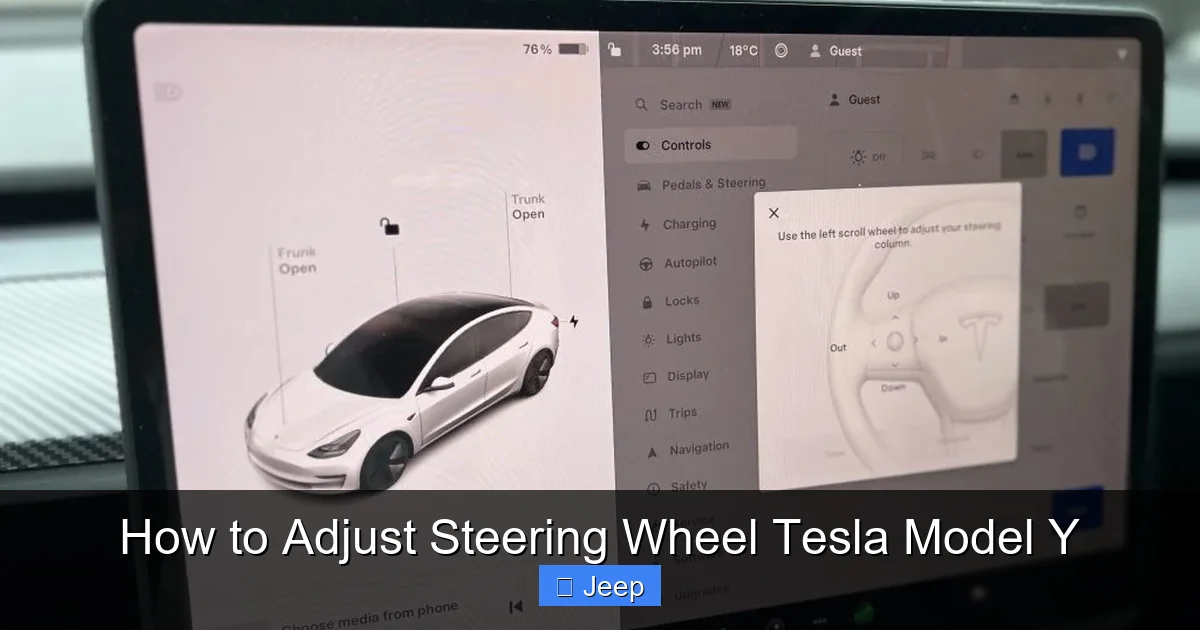
Visual guide about How to Adjust Steering Wheel Tesla Model Y
Image source: tesloid.com
First, the Obvious Checks
Is the car in Park? Is the parking brake engaged? The adjustment system is interlocked and will not function if the car thinks it could move. Is the 12V battery (the small auxiliary battery in the frunk) completely dead? A severely depleted 12V battery can cause all sorts of electronic oddities, including disabled steering column adjustments. If the car is totally unresponsive, this might be the culprit, requiring a jump start or service. Also, ensure you’re pressing and holding the button correctly for telescoping—just a quick press won’t do it.
The Classic Tech Fix: Reboot the System
Just like your smartphone, your Tesla’s computer can sometimes get a temporary glitch. The first and most effective step is a soft reboot. Put the car in Park, then on the touchscreen, go to “Controls” > “Safety & Security” > “Power Off.” Confirm “Power Off.” Wait two full minutes. Do not touch anything. Then, press the brake pedal or open a door to wake the car back up. This process restarts the MCU (Media Control Unit) and often resolves minor software bugs that could be inhibiting the steering wheel motor. After the reboot, try adjusting again.
Check for Error Messages
Look at your touchscreen. Is there any warning icon or message related to the steering system, power steering, or a general vehicle alert? If so, note what it says. A message like “Steering Wheel Adjustment Unavailable” or “Service Required” indicates a more serious issue. It could be a faulty motor, a broken gear mechanism, a wiring problem, or a failed position sensor. At this point, the only recourse is to schedule a service appointment through your Tesla app. Do not attempt to force the wheel manually; you could cause damage.
Fuse and Physical Inspection (Advanced)
For the technically inclined, there is a fuse dedicated to the steering column controls in the lower fuse box (accessed from the front passenger footwell). Consult your owner’s manual for the exact fuse location and amperage. If that fuse is blown, replacing it might fix the issue. However, a blown fuse often indicates a deeper short circuit, so this is a diagnostic step, not always a cure. Visually, you could inspect the base of the steering column for any obvious obstructions or loose plastic shrouds, but be very careful not to interfere with the moving parts or airbag wiring.
Safety and Ergonomics: Finding Your Perfect Driving Position
Adjusting the steering wheel isn’t just about comfort; it’s a fundamental safety and performance practice. A proper driving position ensures you have maximum control, can react quickly, and avoids injury in the event of an airbag deployment. Let’s talk about the ideal setup.
The “10 and 2” Evolution and Modern Guidance
We’ve all heard “10 and 2” on the clock face. However, with modern steering wheels (especially those with smaller diameters and airbags) and the prevalence of advanced driver-assist systems, many safety experts now recommend the “9 and 3” position. Why? It keeps your arms and hands away from the deploying airbag’s path (which blows upward and forward), gives you better leverage for quick steering corrections, and aligns your hands with the natural position of the wheel for most turning maneuvers. Your adjusted steering wheel distance should allow you to hold the wheel at 9 and 3 with a comfortable, ~120-degree bend in your elbows. You should be able to press the pedals fully without your legs being hyper-extended, and your view over the dashboard should be clear without craning your neck.
Interaction with Pedals and Seat
Your steering wheel adjustment works in tandem with your seat settings. The sequence matters. First, slide the seat forward or back so you can fully depress the pedals with a slight knee bend. Then, adjust the seat backrest so your shoulders are comfortably against it. Finally, adjust the steering wheel tilt and telescoping so your arms are at the correct angle and you can see the displays clearly over the top rim of the wheel. You should never have to stretch your arms to reach the wheel or hunch forward to see the screen. If you find yourself doing either, your position is wrong. A proper setup reduces fatigue on long trips and allows for smoother, more precise inputs, which is especially important when using features like all-wheel drive systems in challenging conditions, though that’s a different system altogether.
The Importance of Head Restraint
While we’re on ergonomics, don’t forget your head rest! It should be adjusted so the top of the head restraint is level with the top of your head. In a rear-end collision, this prevents whiplash by stopping your head from snapping backward. Your steering wheel position shouldn’t interfere with this; if it does, you need to re-adjust. For those with specific comfort needs, exploring options like specialized headrest adjustments from other vehicles can give you ideas, though your Model Y’s are likely power-adjustable if equipped.
Airbag Safety Note
The Model Y’s steering wheel houses a powerful airbag. Never place your hands or any object over the airbag cover (the center emblem area). The “9 and 3” position keeps your forearms and thumbs clear of the deployment path. Never rest your thumbs on the rim of the wheel while gripping it; keep them wrapped around the outside. This is a key reason the telescoping adjustment is so important—it lets you sit far enough back to be safe.
Conclusion: Your Personalized Command Center
And there you have it! You are now a certified expert on adjusting the steering wheel in your Tesla Model Y. It’s a beautifully simple system that, when mastered, transforms your driving experience. You start every journey with the wheel perfectly positioned, your displays in clear view, and your arms in a relaxed, ready state. Remember the core steps: Park, use the stalk button for tilt, hold and move for telescoping, and trust your memory profile to do the rest. If anything goes wrong, a reboot is your best first friend. Taking these few minutes to get it right pays dividends in comfort, control, and safety every single time you get behind the wheel. Your Tesla is an extension of you—make sure it fits you perfectly. Now, go enjoy that perfectly adjusted drive!
Frequently Asked Questions
Can I manually adjust the steering wheel if the electric system fails?
No, the Tesla Model Y does not have a manual override lever or mechanism. The steering wheel adjustment is entirely electric. If the system fails due to an electrical issue, you will need to have it repaired by a Tesla Service Center. Forcing the wheel manually can damage the motor or gearing.
How do I reset or clear a saved steering wheel position from my driver profile?
You don’t need to manually “clear” it. Simply adjust the steering wheel (and seat, if desired) to a new position while your profile is active. When you shift into Drive, the car will prompt you to save the new adjustments to your profile. If you say “Yes,” the old position is overwritten with the new one.
Why does my steering wheel adjustment feel slow or jerky?
A slow or jerky movement usually points to a lack of lubrication in the steering column mechanism or a weakening motor. It could also be caused by debris or obstruction in the column’s path. This is not normal and should be inspected by Tesla Service to prevent a complete failure.
Will adjusting the steering wheel affect my Autopilot or Full Self-Driving engagement?
No. Adjusting the steering wheel is a manual, stationary function. It does not affect the calibration or function of Autopilot or FSD. Those systems rely on cameras and sensors, not the physical position of the wheel when you’re setting it. However, you should always have the wheel properly adjusted to maintain control when using these driver-assist features.
My steering wheel memory doesn’t recall the correct position. What’s wrong?
First, ensure you are actually selecting the correct driver profile when you enter the car. The profile name appears on the top left of the screen. If the wrong profile is active, it will load that person’s settings. Also, check that your phone key or key card is correctly paired to your specific profile in the settings. If the problem persists, try deleting and re-creating your driver profile to reset the saved data.
Is there a way to temporarily disable the automatic steering wheel adjustment with my profile?
Not directly. The system is designed to automatically adjust when your profile is active. The only way to prevent it is to either not have a profile active (use “Guest” mode) or to manually adjust the wheel after the automatic movement has completed. The car will not save this temporary manual override unless you save it to your profile, in which case it becomes the new default.
