
How to Manually Close a Jeep Renegade Sunroof

If your Jeep Renegade’s power sunroof stops working, don’t panic. You can manually close it using a simple tool like a screwdriver to access the manual override mechanism located behind the interior trim panel. This process requires care to avoid damaging the headliner or sunroof glass. Always disconnect the car battery first for safety, and work slowly to guide the panel closed properly. If you’re uncomfortable, seek professional help to prevent costly repairs.
Key Takeaways
- Safety First: Always disconnect the vehicle’s battery before attempting any work on the sunroof mechanism to prevent electrical shorts or accidental activation.
- Locate the Override: The manual close mechanism is typically a square or star-shaped socket hidden behind a small plastic cover on the sunroof’s rear interior trim panel.
- Use Correct Tools: A Torx T20 or T25 screwdriver (most common) or a flathead screwdriver is usually needed. Using the wrong tool can strip the socket.
- Gentle Pressure: Turn the manual crank slowly and steadily. Never force it. If it binds, stop and reassess—the panel may be off its tracks.
- Reconnect & Test: After closing, reconnect the battery and test the power sunroof function before driving. If it doesn’t work, the motor or switch may need replacement.
- Know When to Stop: If the glass is severely misaligned or you feel excessive resistance, stop immediately. Forcing it can break the glass or damage the tracks, leading to a very expensive repair.
- Preventive Care: Regularly clean sunroof tracks and lubricate them with a silicone-based spray to prevent debris jams that cause motor failure.
📑 Table of Contents
- Why You Might Need to Manually Close Your Jeep Renegade Sunroof
- Understanding Your Jeep Renegade Sunroof System
- Essential Tools and Preparation Steps
- Step-by-Step: Accessing the Manual Override
- Step-by-Step: Manually Closing the Sunroof
- After the Close: Reassembly, Testing, and Troubleshooting
- Preventive Maintenance and Long-Term Care
Why You Might Need to Manually Close Your Jeep Renegade Sunroof
Let’s face it, a power sunroof is a fantastic feature. It lets in light, fresh air, and makes any drive feel more open and enjoyable. But like any complex piece of machinery with motors, gears, and tracks, it can fail. You might turn the switch and hear nothing but a faint click, or the sunroof might stop halfway, leaving your interior exposed to rain, snow, or prying eyes. When the automatic function on your Jeep Renegade sunroof gives up the ghost, knowing how to manually close it isn’t just a handy skill—it’s an essential one to protect your vehicle’s interior from water damage and theft.
The good news is that Jeep, like many manufacturers, builds a manual override into almost all its power sunroof designs. This hidden feature allows you to physically crank the panel closed when the motor, switch, or wiring has failed. It’s a straightforward process that requires minimal tools and a calm, steady hand. This guide will walk you through every step, from understanding your sunroof’s anatomy to safely completing the manual closure. We’ll also cover critical safety precautions and what to do if things don’t go smoothly.
Understanding Your Jeep Renegade Sunroof System
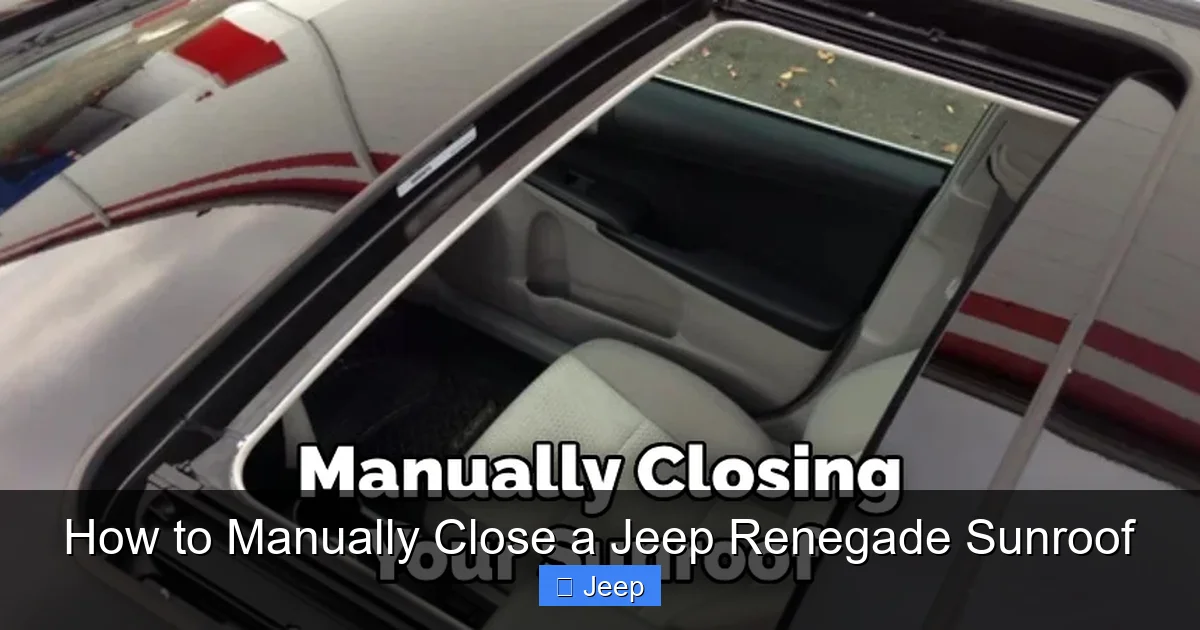
Before you start prying anything apart, it helps to understand what you’re working with. The Jeep Renegade’s power sunroof is a self-contained unit made up of several key components. The glass panel itself slides along a set of steel tracks on either side of the roof opening. A powerful electric motor, usually located near the rear of the sunroof opening, drives a system of cables and gears that pull the panel forward to open and push it back to close. The whole assembly is secured to the vehicle’s roof sheet metal and is covered by a stylish interior trim panel, often made of plastic or fabric-covered cardboard.

Visual guide about How to Manually Close a Jeep Renegade Sunroof
Image source: jeepfixes.com
The Manual Override Mechanism Explained
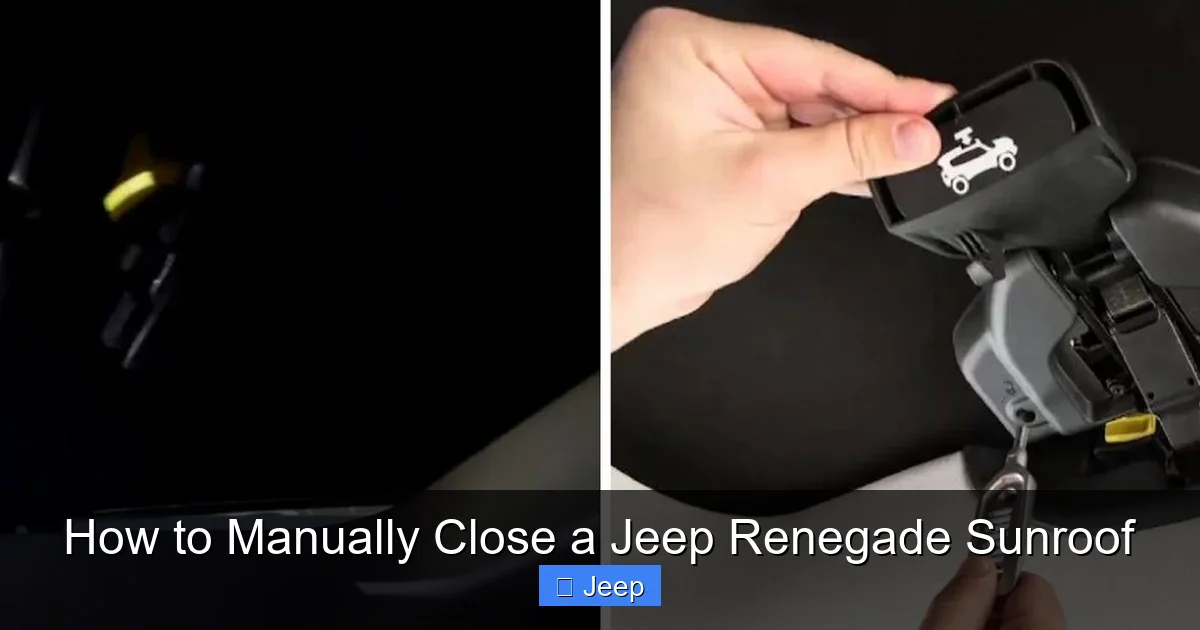
Nestled within this assembly is the hero of our story: the manual override. This is essentially a direct mechanical connection to the sunroof’s drive system. When you insert a tool into the override socket and turn it, you are physically rotating the same shaft the electric motor would turn. This bypasses all the electrical components—the switch, the motor brushes, the wiring harness—and gives you direct, manual control. On most Jeep Renegade models (2015-2023), this socket is located on the rear portion of the sunroof’s interior trim, close to where the glass panel tucks away when fully open. It’s almost always covered by a small, often round or square, plastic cap that may have a tiny slot or indentation.
Essential Tools and Preparation Steps
Preparation is 80% of the success in this job. Rushing in with the wrong tool or without disconnecting power can lead to a stripped socket, a short circuit, or even accidental activation of the sunroof while your hands are in the mechanism. Take five minutes to gather your tools and set up a safe workspace.
Visual guide about How to Manually Close a Jeep Renegade Sunroof
Image source: jeepfixes.com
Tools You’ll Likely Need
The absolute essential tool is a Torx T20 or T25 screwdriver. These are the most common sizes for the sunroof override socket in Jeep Renegades. It’s a six-pointed star-shaped driver. If you don’t have one, a small flathead screwdriver (1/4″ width) might work in a pinch, but it increases the risk of slipping and damaging the plastic cap or socket. You’ll also need a plastic trim removal tool or a very flat, wide putty knife to pry off the small access panel without scratching your headliner. A good flashlight or your phone’s light is crucial, as the area is dark and cramped. Finally, have some clean microfiber cloths on hand to protect the glass and interior surfaces.
Critical Safety Precautions
The very first step, non-negotiable, is to disconnect the negative terminal of your Jeep’s battery. Locate the battery in the engine bay (the Renegade’s battery is typically in the front left corner). Use a 10mm wrench to loosen the nut on the negative (black) cable clamp and tuck the cable safely away from the terminal. This kills all power to the sunroof motor and prevents any accidental movement while your hands are inside the mechanism. It also protects your vehicle’s electrical system from any potential shorts caused by your tools touching metal parts. Once the battery is disconnected, wait a full minute before proceeding to ensure any residual capacitor charge in the sunroof control module is drained.
Step-by-Step: Accessing the Manual Override
Now for the hands-on part. You’ll be working entirely from inside the vehicle. Make sure the ignition is off and the keys are out of the car. Pop the sunroof shade open if you have one. You’ll be looking at the opaque, solid headliner panel that forms the ceiling just behind the windshield.
Visual guide about How to Manually Close a Jeep Renegade Sunroof
Image source: jeepfixes.com
Step 1: Identify and Remove the Access Panel
Sit in the driver’s seat and look straight up at the sunroof’s rear interior trim. You’re searching for a small, usually circular or square, plastic insert. It’s about the size of a quarter. It might be a slightly different color or texture than the surrounding headliner. On many Renegades, it has a tiny slot that a flathead screwdriver can fit into. Carefully insert your plastic trim tool or flathead into this slot. Apply gentle, outward prying pressure. The cap is held by plastic clips and should pop off with a soft snap. Be meticulous here—excessive force can crack the brittle plastic. Once the cap is off, you’ll see the manual override socket, a deep hole with a star-shaped pattern at the bottom.
Step 2: Verify Socket and Insert Tool
Shine your light into the hole. Confirm you see the Torx socket. Now, take your Torx T20/T25 screwdriver and press it firmly into the socket. It should seat deeply and snugly with no play. A loose fit means you have the wrong size or it’s not fully engaged. Give it a gentle test turn. You should feel the mechanism engage with some resistance. If it spins freely without resistance, the socket might be stripped, or you’re not connected to the drive shaft correctly—stop and reassess.
Step-by-Step: Manually Closing the Sunroof
This is the moment of truth. Your goal is to rotate the override shaft to wind the cables and pull the sunroof glass panel backward until it seals completely against the roof frame. The direction you turn depends on your Renegade’s model year and sunroof type (tilting vs. sliding), but there’s a universal rule.
Determining the Correct Turning Direction
The simplest way to know which way to turn is to watch the sunroof glass. From your vantage point inside the car, you should be able to see the rear edge of the glass panel. If you turn the screwdriver clockwise (to the right), the panel should begin to move backward (toward the rear of the car). If it moves forward, you’re turning the wrong way. Turn counter-clockwise. Proceed in small increments: turn the driver about a quarter to a half turn, then pause and observe. The movement might be slow and deliberate. This is normal. You are manually powering a heavy glass panel against its seals and through its tracks.
Guiding the Panel and Avoiding Binding
As the panel moves, keep a close eye on both the front and rear edges. They must remain parallel to the roof opening. If you see one side start to rise or dip, stop immediately. This indicates the panel is binding on a track or has come off its guide rollers. Gently wiggle the visible edge of the glass with your fingers (be careful, it’s glass!) to try and reseat it, then continue turning very slowly. The final few inches of closure require the most force as the glass compresses the weatherstripping seal. You’ll feel a significant increase in resistance. This is normal. Continue turning until you feel a solid “thunk” or can visually confirm the glass is flush with the roof and the front lip is fully engaged. Do not overtighten or force it past this point.
After the Close: Reassembly, Testing, and Troubleshooting
Once the sunroof is securely closed and sealed, your immediate manual task is complete. But your job isn’t done until you’ve verified everything is functional and safe for the road.
Reinstall the Access Cap and Reconnect the Battery
Simply press the plastic access cap back into its opening until it clicks into its retaining clips. Do not force it. Then, go back to the engine bay and reconnect the negative battery cable, tightening the nut securely. Close the hood.
Power Sunroof Function Test
Now, enter your Renegade, turn the ignition to the “ON” position (do not start the engine), and test the sunroof switch. Press the “close” button. The sunroof should operate normally. Listen for any abnormal grinding, clicking, or straining noises. If it works perfectly, great! The manual override has saved you. However, if the sunroof still does not move, or if it moves erratically, the fault lies deeper—likely a failed motor, a broken cable, or a faulty control module. The manual override process has confirmed the tracks and panel themselves are not jammed.
What to Do If Manual Closing Fails or Causes Damage
If you encountered excessive binding, if the panel wouldn’t move at all, or if you suspect you’ve misaligned it, stop and seek professional help. Forcing the issue can snap the cable system, break plastic guide components, or crack the glass. A damaged sunroof assembly can cost anywhere from $500 to over $2,000 to replace. At this point, a diagnosis from a qualified automotive technician or a sunroof specialist is the most cost-effective path. They have the tools to realign tracks and diagnose motor or cable failures. For context, major repairs on a Jeep Renegade, like a windshield replacement, also require precision to ensure proper sealing and structural integrity.
Preventive Maintenance and Long-Term Care
Sunroof failures are often preventable. The number one culprit is debris and dirt buildup in the tracks. Over time, leaves, pine needles, dust, and grit work their way into the channel where the glass slides. This creates friction, jams the mechanism, and ultimately burns out the motor. A simple, regular maintenance routine can add years to your sunroof’s life.
Regular Cleaning is Non-Negotiable
At least twice a year, especially after fall and spring, open the sunroof fully. You’ll see a long, narrow channel on either side of the roof opening. Use a vacuum with a crevice tool to suck out all loose debris. Then, spray a silicone-based lubricant (like 303 Aerospace or Permatex Silicone Spray) directly into the tracks while moving the sunroof back and forth to work it in. Never use WD-40 or a petroleum-based product; they attract more dirt. Wipe away any excess lubricant that might get on the glass or roof paint. This simple 10-minute task reduces strain on the motor dramatically.
Listen and Act Early
Pay attention to your sunroof’s behavior. Does it sound slower than usual? Does it hesitate at the beginning or end of its travel? These are early warning signs of increased friction or a weakening motor. Addressing the issue by cleaning the tracks at the first sign of trouble can prevent a complete failure that would leave you stranded with an open roof. Think of it like checking your oil—proactive care avoids catastrophic failure. Similarly, understanding your vehicle’s other capacities, like how much oil your Jeep Renegade takes, is part of being a responsible owner.
Frequently Asked Questions
Will manually closing my Jeep Renegade sunroof damage it?
No, the manual override is designed for this exact purpose. Damage only occurs if you use excessive force, use the wrong tool and strip the socket, or force the panel when it’s binding off its tracks. Always work slowly and stop if you feel heavy resistance.
What if I don’t have a Torx screwdriver? Can I use something else?
A Torx T20 or T25 is ideal and fits perfectly. A flathead screwdriver may work in an emergency, but it has a high risk of slipping and damaging the plastic cap or the metal socket inside. It’s worth buying a small Torx set (they cost under $10) to do the job correctly and safely.
How often can I use the manual override?
The manual override is for emergency use only when the power system fails. It’s not meant for daily operation. Frequent manual use indicates a persistent electrical or motor problem that needs diagnosis and repair by a professional.
My sunroof is stuck open and it’s raining. What’s the absolute first step?
First, park your vehicle in a safe, covered area if possible. Then, immediately disconnect the negative battery terminal to prevent any electrical issues. Then, gather your Torx driver and flashlight and proceed with the access panel removal. The priority is getting the glass closed to prevent water ingress.
The sunroof moves a little but then gets stuck. What should I do?
Stop turning immediately. The panel is likely binding on a track or has come off a guide roller. Do not force it. Try gently wiggling the visible edge of the glass with your fingers to see if you can free it. If it doesn’t budge easily, you need a professional to avoid breaking the cable or glass.
After manually closing it, my sunroof switch still doesn’t work. Is the override broken?
Not necessarily. The manual override bypasses the electrical system. If the sunroof still won’t work with power, the fault is with the sunroof motor itself, the control switch, a fuse, or the wiring. The manual process confirmed the mechanical parts (tracks, cables) can move, so the issue is electrical. A diagnosis is needed.
